
The One Thing North Carolina Crape Myrtles Need Before Fall Or The Late Blooms Never Come Back

Crape myrtles are one of summer’s best shows in North Carolina, and plenty of homeowners wonder if there is a way to get a second round of color before the season ends. There is one small action worth trying: lightly removing a spent flower cluster soon after the first bloom fades, while warm weather still has weeks to run.
That cut may encourage another late-summer flush on some plants, but it is not a guarantee, and skipping it will not ruin your tree or erase future blooms forever.
Treat deadheading as an opportunity, not a deadline
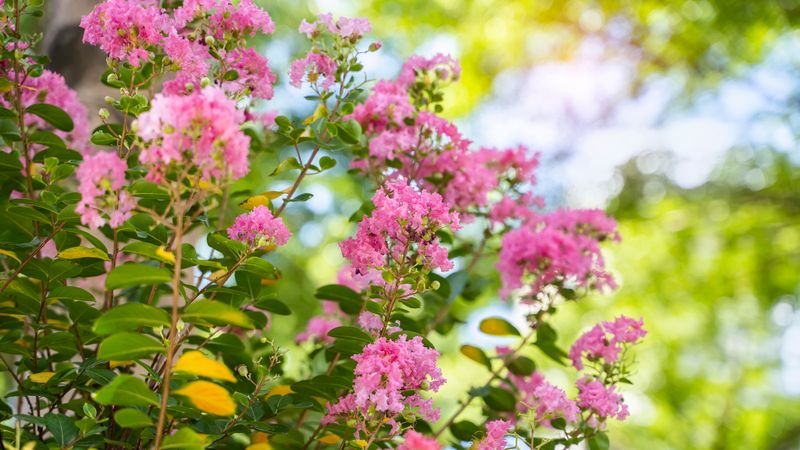
Somewhere along the way, crape myrtle advice started sounding like a warning: do this one thing before fall or your blooms are gone for good. That framing is too absolute, and it is worth setting straight before picking up a pair of pruners.
No single statewide deadline exists, and missing a particular date will not permanently prevent your tree from flowering in future seasons.
The useful action is simpler and gentler than the alarm suggests. Lightly removing a spent flower cluster soon after the first flush fades, while substantial warm growing weather remains, may encourage a second round of blooms on some cultivars.
University of Georgia Cooperative Extension guidance on crape myrtle culture notes that removing faded flower blossoms can stimulate new growth and another late-summer bloom on some plants. That is a reasonable payoff for a few minutes of careful work, as long as readers understand it is a possibility rather than a promise.
Virginia Tech Extension adds an important qualifier: summer tip-pruning produces inconsistent results and is most likely to offer any benefit at all when the first bloom has finished by roughly mid-July. Later-blooming plants may simply not have enough warm season remaining to push out another meaningful flush, regardless of what the gardener does.
Crape myrtles flower on new growth produced during the current growing season, so the amount of warm weather still ahead matters. Virginia Cooperative Extension pruning guidance reinforces that the window for encouraging rebloom is tied to remaining growing time, not a fixed calendar date.
Think of deadheading as an opportunity you can take when conditions are right, not an obligation with permanent consequences if you miss it.
New growth creates the possibility of another bloom
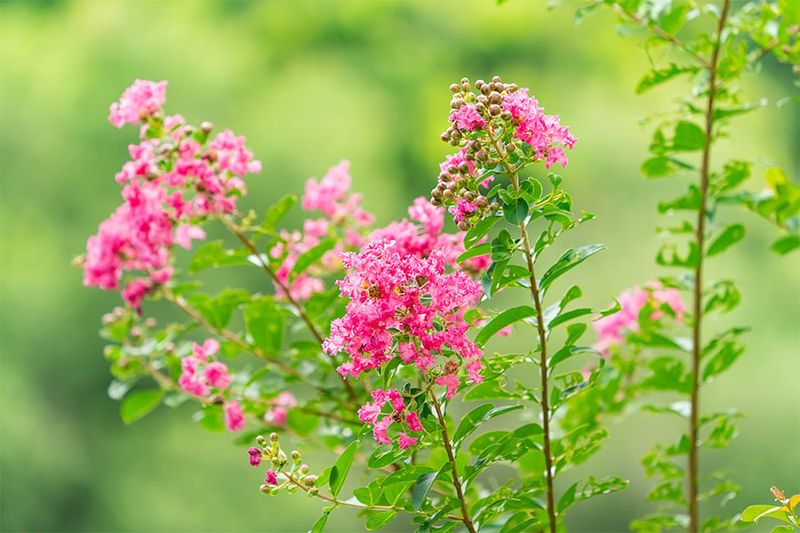
Crape myrtles do not store up blooms from one year and release them the next. Every flower you see was produced on new growth that grew during the current season.
NC State Extension’s Woody Ornamentals handbook confirms that crape myrtles flower on current-season growth, which is why the amount of warm weather still ahead of you matters so much when thinking about a possible second flush.
When a flower cluster fades, the branch tip has essentially finished its job for that cycle. Removing that spent cluster may prompt the branch to push new side growth, and if enough warm weeks remain, that new growth has a chance to develop flower buds and open.
The key word is “may.” Healthy established plants do not require any pruning in order to flower normally, and some will attempt a second bloom on their own without any intervention at all.
Deadheading is therefore an optional experiment rather than a maintenance requirement. Virginia Cooperative Extension and University of Georgia both describe it as a possible stimulus for new growth and rebloom, not a guaranteed outcome.
If your tree is vigorous, well-watered, and growing in a sunny spot, the odds of a response are better than if the plant is stressed or shaded. But a crape myrtle that never gets deadheaded is not damaged or deprived; it is simply running its natural course, and that course includes flowering reliably year after year on its own schedule.
Remove the faded cluster and stop there
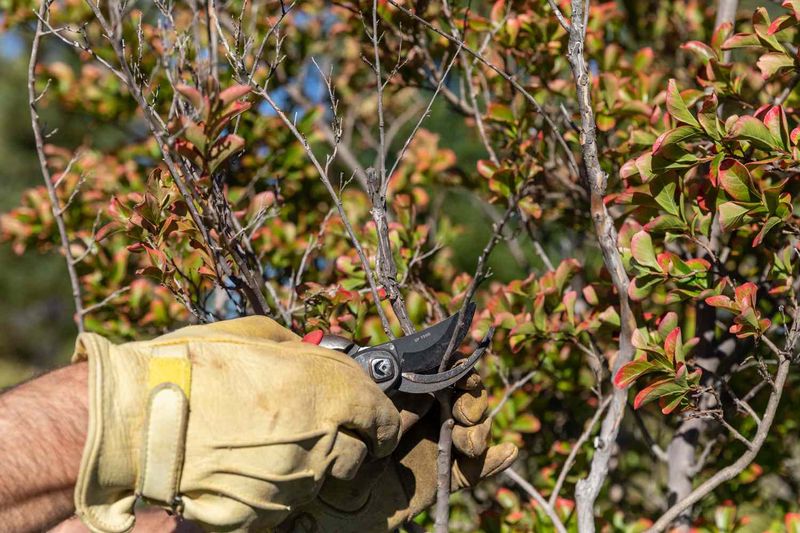
The actual cut is smaller than most people expect. Find the spent flower cluster or seedhead, trace the stem down to the first healthy leaf joint, lateral bud, or side shoot below it, and make a clean cut just above that point.
That is the entire procedure. A good pair of bypass pruners handles the job easily, and the cut itself takes only a few seconds per cluster.
Clemson Cooperative Extension’s crape myrtle pruning guidance and University of Georgia both describe this as a targeted removal of the faded flower portion, not a shortening of the branch itself. The goal is to leave behind healthy wood with an active bud or shoot that can grow and potentially form a new flower.
Cutting further down into green, actively growing wood is unnecessary and moves the practice from light grooming into something closer to summer pruning, which carries different risks.
Keep the scope of the work narrow. This is not the moment to even out the canopy, reduce the height, remove crossing branches, or tidy up the silhouette of the tree.
Those tasks belong in late winter to early spring, before new growth begins. University of Georgia’s crape myrtle culture publication is clear that structural pruning and rebloom deadheading are separate jobs with separate timing and separate purposes.
If a cluster has already dried into a hard seedhead, the same approach applies: snip it off just above the nearest healthy leaf joint and move on. There is no need to strip every seedhead from the tree in one session.
Work through the clusters that have clearly finished blooming, make clean cuts, and resist the urge to keep cutting once the spent portions are gone.
Early-blooming plants have the strongest opportunity
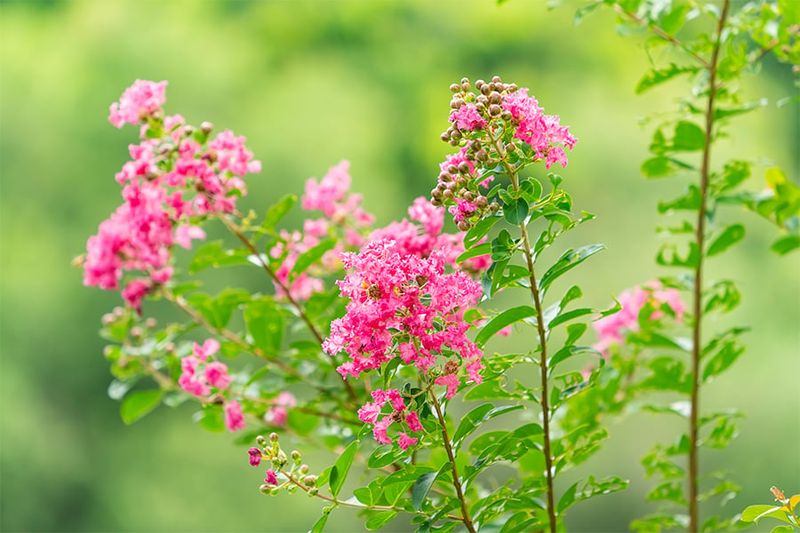
Not every crape myrtle in North Carolina has the same shot at a second bloom, and cultivar timing is the single biggest factor separating a realistic opportunity from wishful thinking. Plants whose first flush wraps up by roughly mid-July still have a meaningful stretch of warm weather ahead of them.
That remaining window is what gives new growth time to develop, mature, and produce flower buds before temperatures drop in the fall.
Virginia Cooperative Extension’s pruning guidance for crapemyrtles states directly that summer tip-pruning is inconsistent and that whatever benefit it may offer generally applies only to cultivars that bloom before mid-July. A plant whose first bloom opens in late July or early August is already close to the edge of the season, and deadheading it is unlikely to produce another full flush before cold weather arrives, regardless of where in North Carolina the tree is growing.
Plant vigor also shapes the outcome. A well-established crape myrtle growing in full sun with adequate moisture has more capacity to respond to a deadheading cut than one that is young, recently transplanted, or coping with drought or pest pressure.
Stressed plants tend to conserve resources rather than invest them in new flower production.
University of Georgia notes that results vary by cultivar, first-bloom timing, sunlight, water, and the length of the remaining warm season. Treat deadheading as a trial worth running on early-blooming plants in good condition, and hold your expectations loosely.
Some years the second flush is showy and satisfying; other years it amounts to a handful of smaller clusters. Both outcomes are normal, and neither reflects a mistake in how the gardener managed the tree.
Support flowering with sun and sensible watering
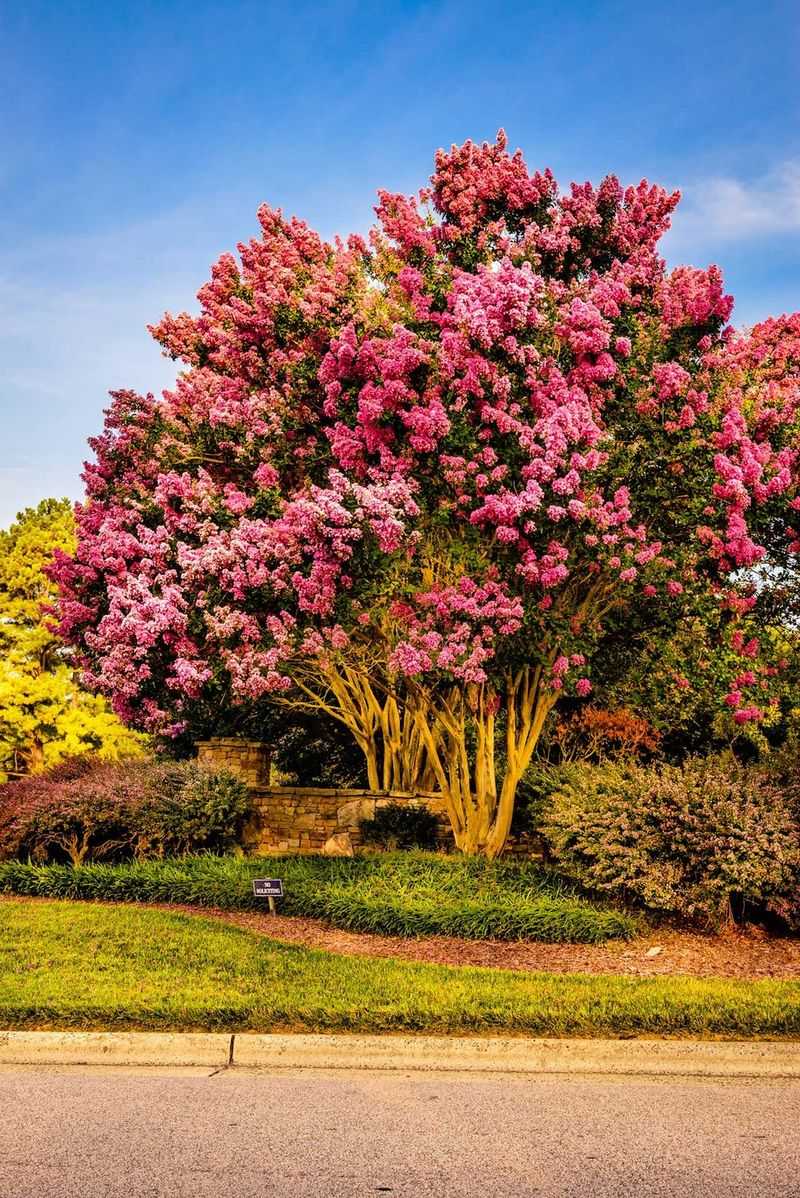
The conditions surrounding a crape myrtle matter as much as anything a gardener does with pruners. Full sun is the baseline for abundant flowering.
A tree growing in partial shade from nearby large trees or structures will produce fewer blooms, grow more slowly, and have less capacity to push out a second flush after deadheading. If your crape myrtle sits in a spot that gets fewer than six hours of direct sun, adjusting expectations makes more sense than adjusting the pruning schedule.
Water plays a supporting role during the flowering season, especially when summer turns dry. Established crape myrtles tolerate drought reasonably well, but University of Georgia’s crape myrtle culture resource notes that flowering is enhanced when plants receive water during dry periods in the blooming season.
A deep soak once or twice a week during a dry stretch is more useful than frequent shallow watering, which encourages surface roots rather than a deep, stable root system.
These steps support the plant’s overall performance, but they cannot overcome the limits set by cultivar timing or a short remaining season. A late-blooming crape myrtle growing in perfect sun with reliable moisture will still struggle to produce a second meaningful flush if its first bloom wraps up in August.
Sun and water are conditions that help the plant do what it is already capable of doing; they do not change what the cultivar’s internal calendar allows.
Skip fertilizer by default
A second bloom attempt can start to feel like a project, and projects have a way of collecting extra steps that do not actually help. Fertilizer is one of those extras that gardeners often reach for when hoping to push a plant toward more flowers.
For crape myrtles in late summer, the default recommendation should be to skip it.
NC State Extension’s guide to fertilizing trees and shrubs explains that excess nitrogen encourages excessive shoot growth and can actually reduce flowering. Applying a high-nitrogen product in late summer to try to stimulate a second bloom may produce exactly the opposite of what you want: lots of soft new leafy growth and fewer flowers.
The same guide cautions against fertilizing plants that are under drought stress, which is a common condition for many North Carolina yards in July and August.
If your crape myrtle has been growing well, blooming reliably, and showing no signs of nutrient deficiency such as yellowing leaves or stunted growth, it almost certainly does not need a fertilizer application. Healthy established trees in decent soil can go years without supplemental feeding and continue to perform well.
Any decision to fertilize should be tied to observed plant need or a soil test result, not to a hope that a bloom booster will deliver a second flower show on demand.
Do not confuse deadheading with topping
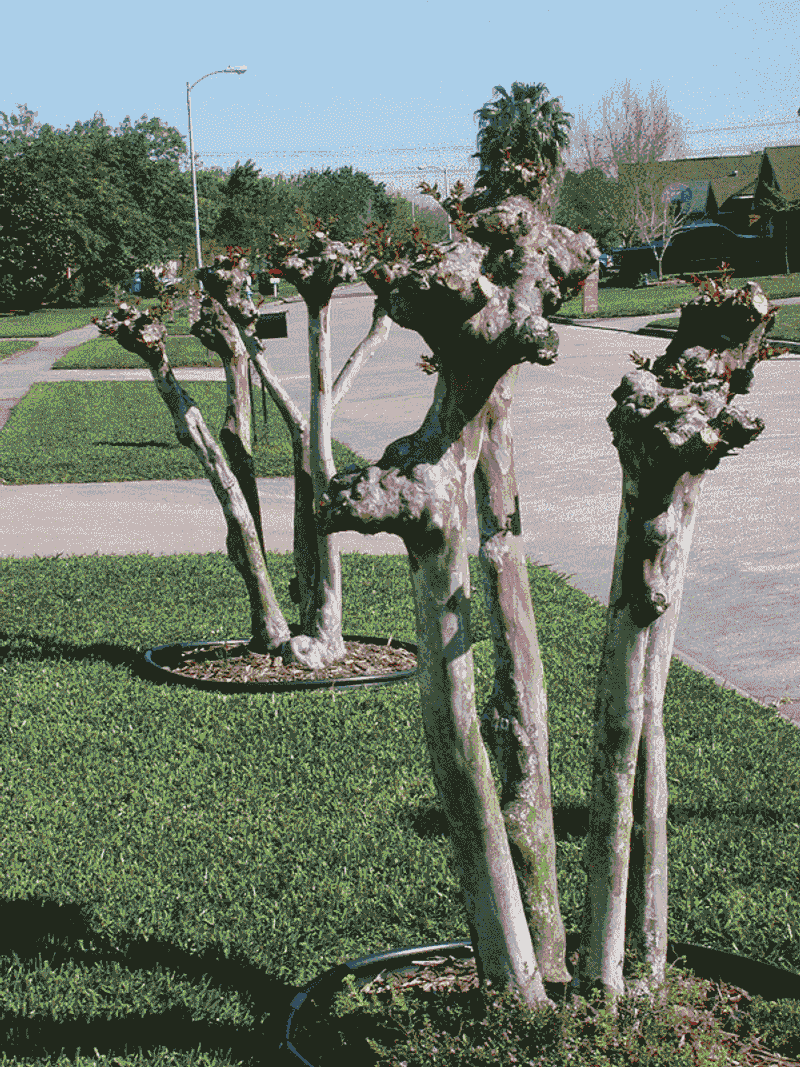
Crape myrtle topping, sometimes called crape murder, is one of the most widespread pruning mistakes in the Southeast. It involves cutting the main branches back to blunt stubs, often at an arbitrary height chosen for tidiness or clearance rather than any benefit to the tree.
The result looks dramatic, and many homeowners assume that a hard cut must be producing equally dramatic results underground. The opposite is true.
Virginia Cooperative Extension’s crapemyrtle pruning publication documents the problems that follow topping: weak, fast-growing shoots that are poorly attached to the stub, increased susceptibility to decay, excessive suckering at the base, poor natural form that compounds with each passing year, and a shorter overall bloom display. University of Georgia adds that this kind of severe cutting can delay dormancy and increase freeze-injury risk when done too late in the season.
None of those outcomes help a tree rebloom.
Deadheading a spent flower cluster is a completely different action. The cut removes only the finished flower portion and leaves all structural wood, including the branch that carried the flower, completely intact.
The tree’s natural silhouette is unchanged. No stubs are created, no major limbs are shortened, and no wound large enough to invite decay is produced.
One more thing worth knowing: leaving seedheads on the tree is a perfectly reasonable choice. They can provide modest winter interest and do not harm the plant.
Removing them is optional grooming or a targeted rebloom attempt, not a health requirement. University of Georgia’s crape myrtle guidance confirms that seedheads can remain on the plant without causing problems, so gardeners who prefer the look of the dried clusters over winter have full permission to leave them alone.
Read North Carolina’s regional fall clock
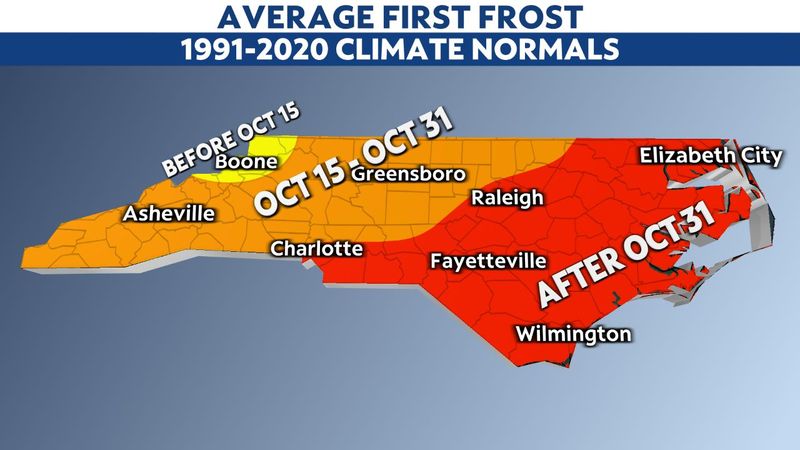
North Carolina stretches from a coast that stays warm well into November to mountain valleys where a hard freeze can arrive in October. That range means “before fall” cannot translate into a single date on a shared statewide calendar.
A homeowner in Wilmington and a homeowner in Boone are working with genuinely different growing seasons, and the advice that fits one does not automatically fit the other.
National Weather Service frost and freeze maps for North Carolina show the regional variation clearly. The Coastal Plain typically sees its first fall freeze weeks later than the mountains, and the Piedmont falls somewhere in between.
Before deciding whether enough warm season remains after a first bloom to justify deadheading, check your local frost history rather than assuming a regional average applies to your yard.
That regional awareness should also govern how far you take any late-summer pruning. A few precise cuts to remove spent flower clusters are not the same as reshaping the canopy or shortening branches.
NC State Extension’s Woody Ornamentals handbook notes that pruning after roughly early July can leave new growth without enough time to mature before cold weather sets in. University of Georgia warns separately that early-fall pruning can delay dormancy and raise freeze-injury risk.
Those cautions apply to broad pruning, not to snipping off a faded flower cluster, but they are a reminder to keep the scope of late-season work narrow.
A possible second bloom is a bonus, not a measure of how well you cared for the tree. Crape myrtles that never get deadheaded bloom faithfully year after year across all three regions of North Carolina.
The small cut described in this article is worth trying when your early-blooming plant finishes its first flush with warm weeks still ahead, but a crape myrtle that simply runs its natural course is doing exactly what it should.