
The One Thing North Carolina Crape Myrtles Need Right After Their First Bloom Flush Or The Second Show Never Comes
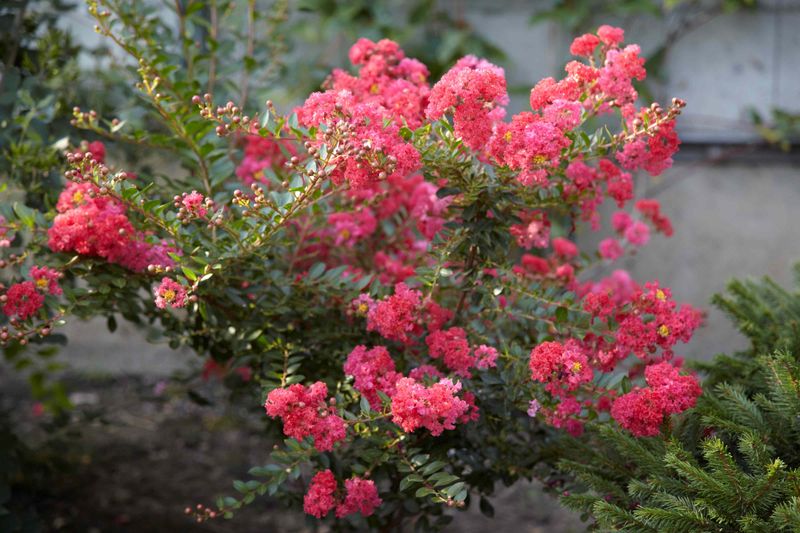
Crape myrtles put on one of the most reliable summer flower shows in North Carolina yards, but what happens right after that first flush can shape whether the plant tries again later in the season. Removing faded flower clusters soon after they finish – a practice called deadheading – may encourage fresh shoots and improve the odds of a late-summer second round of blooms.
That said, no single task guarantees a second display; cultivar, remaining warm weather, sunlight, and plant health all have a say in the outcome. Knowing when to cut, where to cut, and when to leave the tree alone gives you the best realistic shot at more color before fall.
Deadheading can help, but the second bloom is not guaranteed
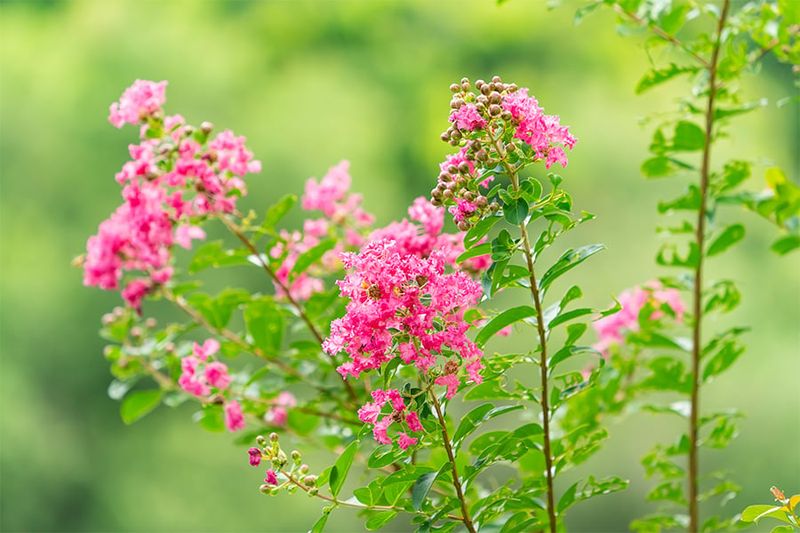
Crape myrtles are one of the most widely planted flowering trees across North Carolina, and the first bloom flush – typically arriving sometime between July and September depending on cultivar and location – is usually the most dramatic. Once those flower clusters fade and drop their petals, a window opens where selective deadheading may encourage the plant to push out new shoots and, with some luck, another round of flowers before fall.
UGA Cooperative Extension’s crape myrtle culture guide describes removing spent blossoms and developing seed clusters as a way to stimulate new growth and a possible late-summer flush, while being clear that results are not guaranteed.
Crape myrtles flower on current-season growth, which means the fresh shoots that develop after deadheading are the ones most likely to carry new flower buds. That growth cycle is why timing matters so much: a plant that finishes its first flush early in the summer still has weeks of warm weather ahead, while one that blooms late in the season may not have enough growing time left to stage a second show worth waiting for.
The common North Carolina bloom window for Lagerstroemia indica types runs roughly July through September, though NC State’s plant profile for crepe myrtle notes that bloom timing varies by cultivar and that plants at lower elevations differ from those in higher-elevation areas. Removing seed capsules is an optional grooming step that may support a later flush, but the honest framing is this: deadheading gives some plants a better chance at a second bloom, and cultivar, timing, remaining warm weather, sun, moisture, and overall health determine whether that chance pays off.
Wait until the flower clusters fade, then make selective cuts
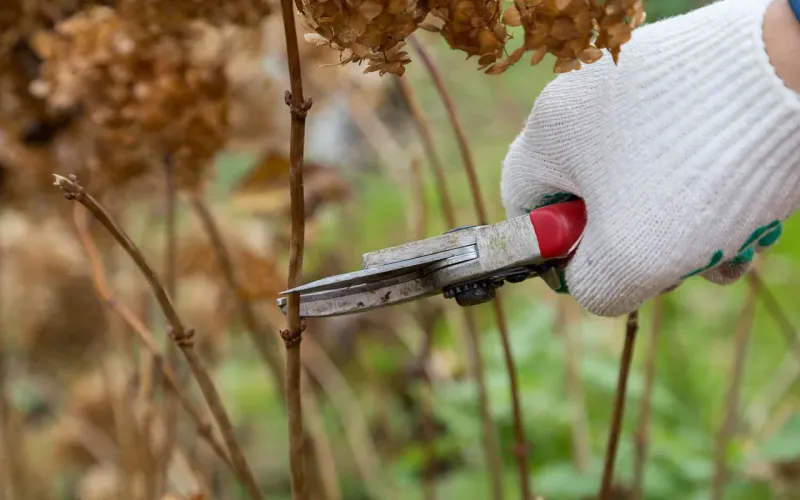
Patience is the first tool you need here. The right moment to deadhead is after a flower panicle has clearly finished – petals dropped, color gone, the truss turning brown or straw-colored.
Cutting into an actively blooming panicle that still looks good sacrifices the current display without improving your odds of a second one. Clemson Cooperative Extension’s crape myrtle pruning guide specifically recommends removing flowers immediately after they fade and cutting just above a lateral bud when heading back a branch.
Once a truss has finished, remove it along with any developing seed capsule attached to the same stem tip. Make the cut back to a lateral bud, a side shoot, or a leaf rather than cutting into a large limb or removing significant sections of the canopy.
The goal is a clean, modest snip that leaves the plant’s natural framework intact and gives the new shoot below the cut a clear path to develop. NC State’s Extension Gardener Handbook on woody ornamentals notes that faded flower trusses can be snapped off as soon as flowers fade, which means sharp bypass hand pruners or even careful finger-pinching works fine for smaller stems.
Work through the plant methodically, addressing each faded cluster as you find it rather than waiting for every single panicle to finish at once. Fresh blooms and faded ones often coexist on the same plant during a long flush, so check each branch individually.
UGA Extension supports this selective approach, describing the removal of spent blossoms and seed clusters as the mechanism for stimulating new growth rather than a wholesale canopy reset.
Choose reachable flower trusses instead of reshaping the tree
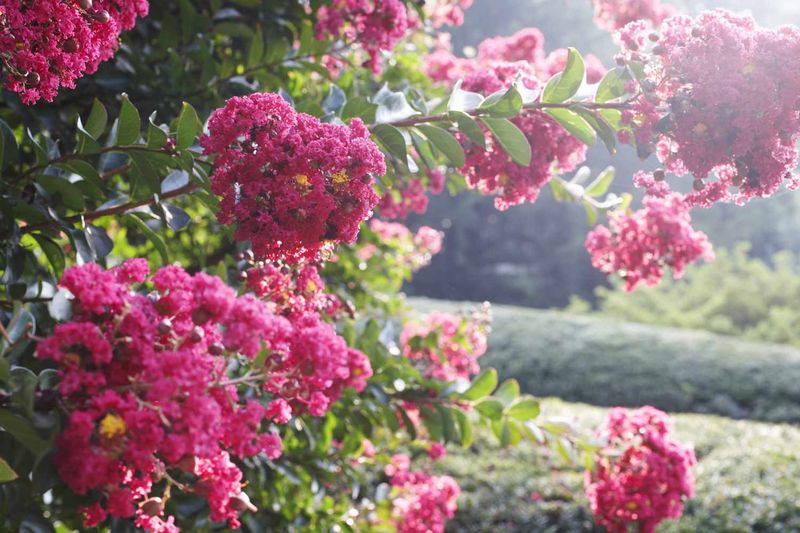
Keeping this task small and safe is the point. Each faded truss gets a modest cut back to a lateral bud or side shoot, and that is where the work stops.
A gardener who finishes the reachable clusters and then steps back has done the job correctly. Climbing a ladder to chase seed heads near the top of a fifteen-foot tree, or shortening major limbs to bring high clusters within reach, turns a light grooming task into something far more disruptive than the potential reward justifies.
NC State’s woody ornamentals chapter draws a clear line between the kind of in-season grooming described here and the structural pruning, thinning, and size-correction work that generally belongs in late winter or early spring before new growth begins. Those are different tasks with different goals, and mixing them up during the summer growing season can remove developing flower buds, stress the plant, and disrupt its natural form.
Deadheading during the growing season is about removing what has already finished, not reshaping what is still growing.
Clemson Extension advises that mature trees can simply retain their seed heads if clusters are out of reach, since those heads will naturally drop as new growth begins the following season. University of Florida IFAS guidance on crapemyrtle pruning reinforces the same principle: heavy growing-season pruning can stress the plant and remove the very growth that would have carried the next round of buds.
Work from the ground, use hand pruners or loppers for stems you can reach comfortably, and preserve the plant’s branching structure throughout.
Set expectations by cultivar, size, and North Carolina region
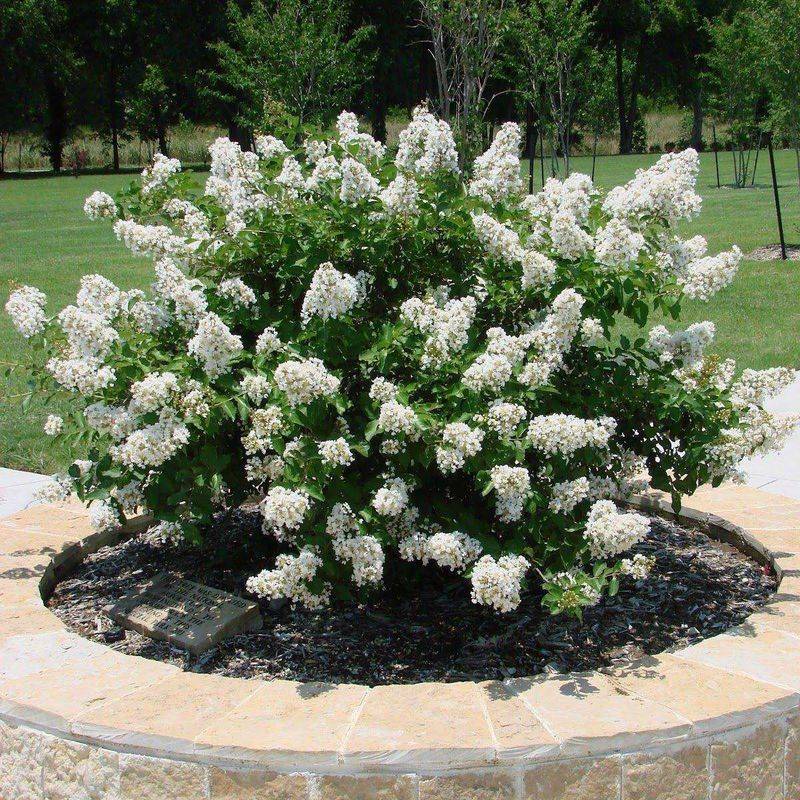
Not every crape myrtle is an equally good candidate for a meaningful second flush, and understanding why makes it easier to set honest expectations before you pick up the pruners. Dwarf and shrub-form crape myrtles – the ones that stay under six feet and are easy to reach from top to bottom – are the most practical plants for thorough deadheading.
Their manageable size lets you remove spent clusters completely and consistently, which gives new shoots the best environment to develop. UGA Extension notes that cultivars beginning to bloom after mid-July may not have enough growing season left to produce a meaningful second flush, which is a realistic check on enthusiasm regardless of how carefully you deadhead.
Early-blooming cultivars that finish their first flush by mid-July are the most likely to respond with additional flowers, because they still have a full stretch of warm weather ahead of them. Some plants that appear to produce a second flush may actually be continuing a long or staggered first flowering period rather than generating a truly distinct second show – a distinction worth keeping in mind when evaluating results.
Clemson Extension confirms that mature trees can safely keep their inaccessible seed heads without any harm to plant health, so there is no need to stress over clusters you simply cannot reach.
North Carolina is not a single climate, and bloom timing reflects that. The Coastal Plain generally holds warmth longer into the fall, giving plants there a slightly wider window for a second attempt.
Piedmont summers are hot and long enough for rebloom on early cultivars, but the window narrows as August progresses. In the mountains, NC State’s crepe myrtle profile notes that commonly planted L. indica types may not reliably survive at higher elevations, and a shorter growing season reduces the odds of a second flush even on plants that do establish.
NC State’s broader Lagerstroemia genus page documents substantial variation in mature size, bloom season, and growth habit across cultivars, reinforcing that cultivar identity shapes the outcome more than any single management step.
Sun, water, and plant health support the next flush
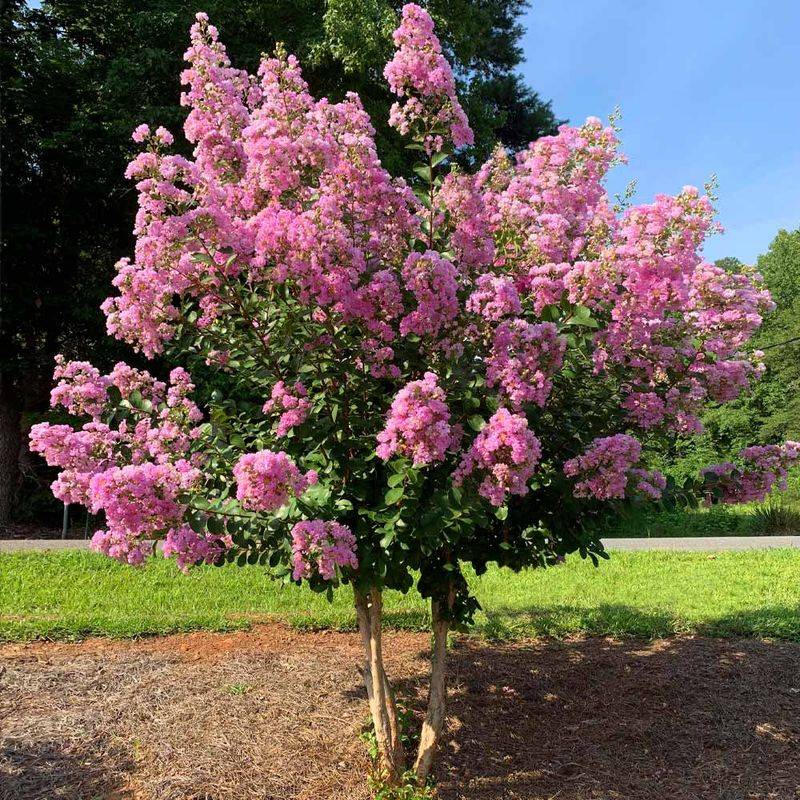
Deadheading a plant that is struggling in poor conditions will not fix the underlying problem. Crape myrtles are sun-dependent plants, and NC State’s Lagerstroemia genus profile recommends full sun and well-drained soil as the baseline for healthy flowering.
A plant growing in part shade may bloom adequately but often produces fewer flowers and responds less vigorously to grooming than one receiving six or more hours of direct sun each day. Overly fertile soil can shift the plant’s energy toward producing lush foliage rather than flowers, so more is not always better when it comes to soil amendment.
Water management during summer dry spells matters more than most homeowners expect, especially for plants that are still establishing or facing extended drought. Deep, infrequent watering of the root zone encourages roots to grow downward and gives the plant the moisture it needs to push new growth after deadheading.
University of Maryland Extension’s crapemyrtle problem guide identifies drought stress, insufficient sunlight, poor soil, excessive nitrogen, and pest pressure as factors that can all limit flowering regardless of how carefully a plant is pruned or groomed.
Fertilizer deserves particular caution here. UGA Extension warns that automatic high-nitrogen feeding can push vegetative growth at the expense of flowers, and late-season fertilizer applications can create winter-hardiness concerns for the plant.
Rather than reaching for a fertilizer bag after the first bloom, run a soil test through NC State Extension or contact your local cooperative extension office to find out whether a nutrient deficiency actually exists before correcting it. Treating a problem that is not there rarely improves flowering and sometimes makes things worse.
Avoid topping, severe pruning, and bloom-forcing treatments
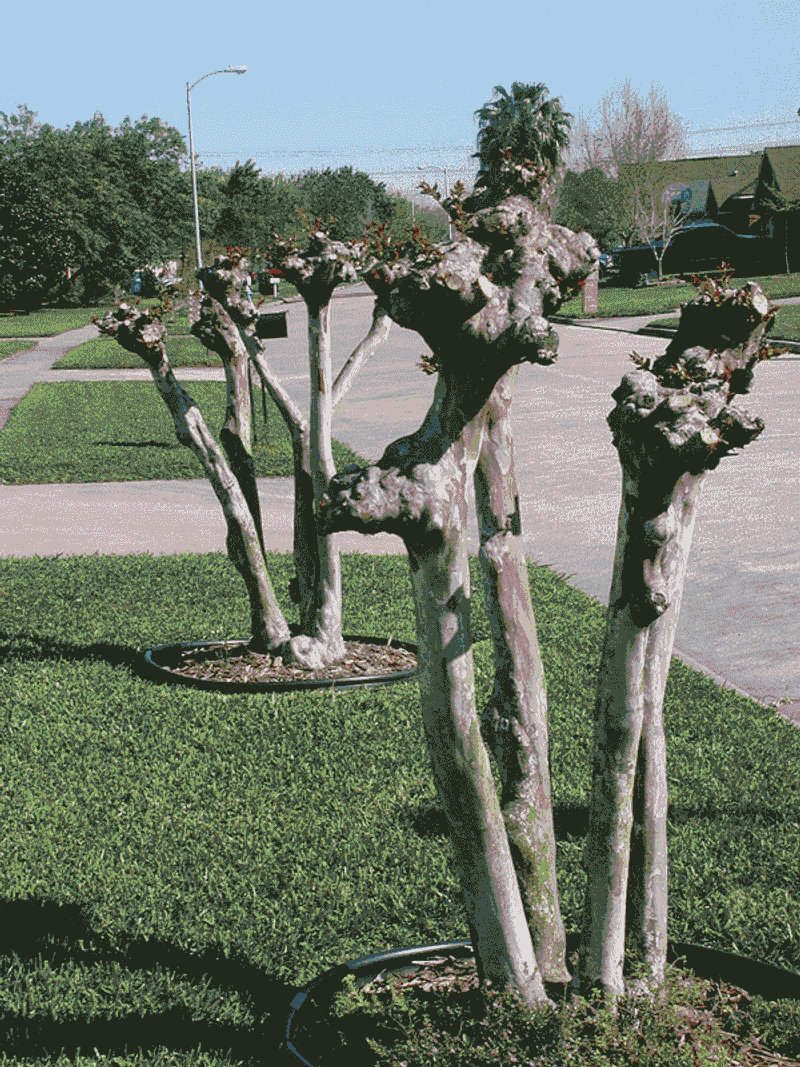
Selective deadheading of faded flower trusses and wholesale cutting back of the tree are not the same thing, and conflating them is one of the most common ways homeowners accidentally harm a plant they are trying to help. Extension horticulturists across the Southeast consistently advise against topping crape myrtles – cutting main trunks or large branches down to stubs – because the practice produces excessive, weakly attached shoots, destroys the plant’s natural vase-shaped form, and does not reliably improve flowering.
University of Florida IFAS guidance on crapemyrtle pruning identifies heavy growing-season pruning as a source of plant stress that can remove developing flower buds and force the plant to spend energy recovering rather than blooming.
Research on the specific effects of different pruning methods found cultivar- and method-specific outcomes in the plants studied. A University of Florida study on pruning method effects in crapemyrtle examined ‘Natchez’ and ‘Carolina Beauty’ and found that topping increased sprouting, delayed peak flowering, and in some cases reduced the flowering period or flower display compared with less aggressive treatments.
Those findings apply to those specific cultivars under the conditions studied; they do not translate directly to every crape myrtle in every North Carolina yard. The broader extension message, however, is consistent: topping and pollarding cause enough documented problems that they are not worth the risk regardless of cultivar.
UGA Extension also cautions against treating fertilizer as a bloom-forcing tool, particularly high-nitrogen products applied automatically after the first flush. Similarly, spraying insecticide on a healthy plant in hopes of triggering more flowers has no factual basis and can harm the pollinators that visit crape myrtle blooms.
If you are tempted to do something dramatic to the plant because the first flush disappointed you, the better move is to diagnose the underlying cause – shade, drought, soil issues, or pest damage – rather than reach for a pruning saw or a spray bottle.
Treat bark scale as a plant-health problem, not a flowering shortcut
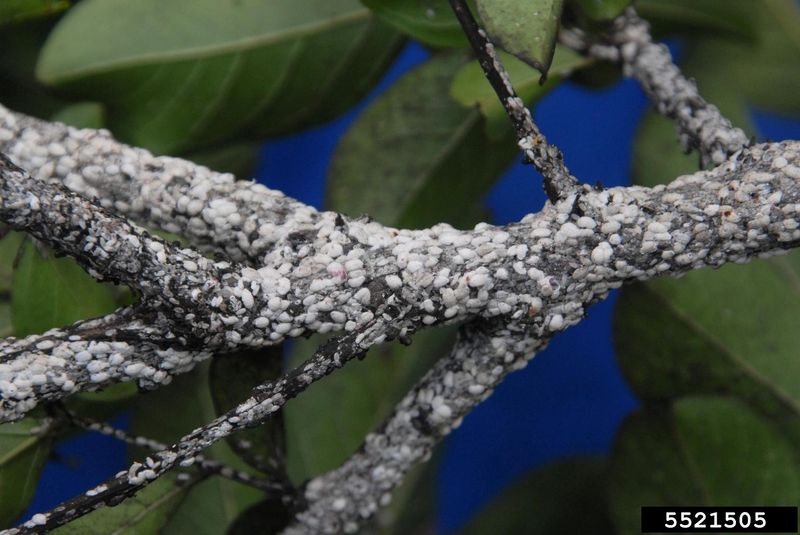
Crape myrtle bark scale has become a genuine plant-health concern in North Carolina over the past several years, and it deserves its own diagnostic step rather than being lumped in with general post-bloom care. The signs are fairly recognizable once you know what to look for: white or gray waxy material clustered on trunks and branches, sticky honeydew dripping onto surfaces below the plant, and black sooty mold growing on bark or leaves where that honeydew collects.
NC State Extension’s guide to crape myrtle bark scale management explains that heavy infestations can weaken plants and reduce their overall vigor, which in turn can affect flowering.
The important step is identification before treatment. Not every white deposit on bark is bark scale, and applying a systemic insecticide to a plant that does not need one poses unnecessary risks to pollinators, including native bees and butterflies that actively visit crape myrtle flowers.
NC State’s crape myrtle bark scale resource advises confirming the pest before choosing a management approach and following product label directions carefully, including precautions for pollinator protection during and after application.
Treating bark scale – if it is genuinely present and causing harm – is a plant-health decision, not a bloom-promotion strategy. Spraying insecticide after the first flush does not reliably bring flowers back, and treating a healthy plant for a pest it does not have accomplishes nothing useful.
Address bark scale as a separate issue from deadheading, and handle it on its own timeline based on what you actually observe on the plant.
Use the simple post-bloom checklist and let the season decide
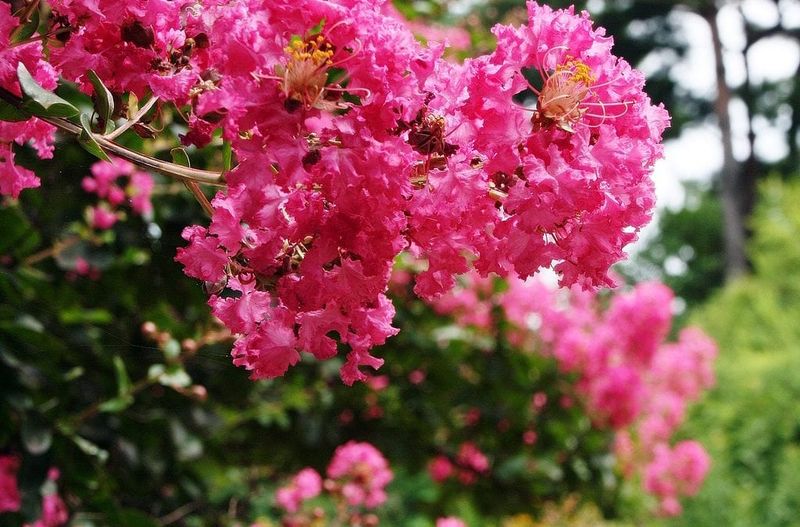
The practical sequence is straightforward. Watch for panicles that have finished blooming and lost their color.
Once a cluster is clearly faded, remove it along with any attached seed capsule, cutting back to a lateral bud, side shoot, or leaf. Work only on stems you can reach comfortably from the ground or a stable step.
Water the root zone deeply during dry stretches, check that the plant is getting full sun, and give the plant time to respond on its own schedule.
Clemson Extension and NC State’s woody ornamentals guidance both support leaving inaccessible clusters on tall mature trees alone, since those seed heads cause no harm to the plant and removing them is not worth the risk of unsafe climbing or aggressive limb removal. Any structural pruning, thinning, or size correction the tree may need belongs in late winter or early spring, not during the summer growing season.
UGA Extension puts the honest bottom line well: this grooming step gives some crape myrtles a better shot at another display, but the season, the cultivar, and the growing conditions have the final vote. A healthy, well-sited plant that gets a timely trim after its first flush has done everything right; what comes next is up to the tree.