
The One Thing North Carolina Fall Broccoli Needs When You Transplant It Now Or The Heads Stay Loose
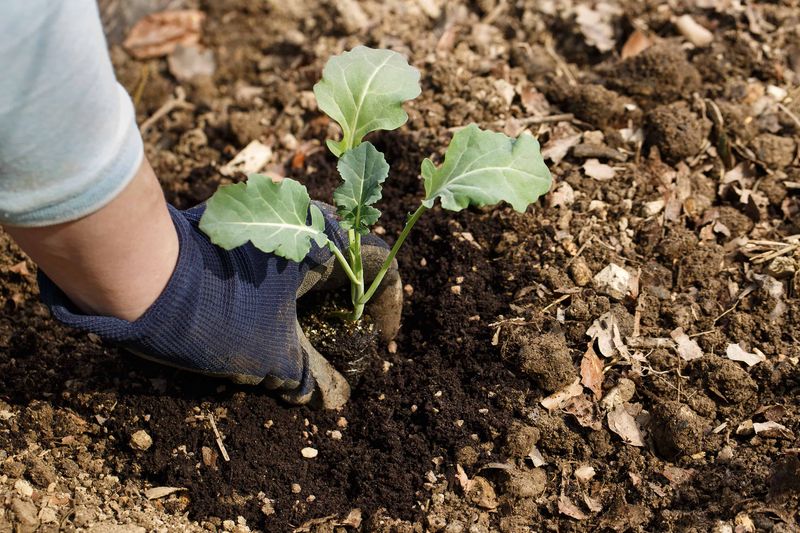
Fall broccoli is one of the most rewarding crops a North Carolina gardener can grow, but it has a narrow window to form those firm, tight heads everyone wants. Miss that window and the odds of ending up with loose, open florets go up fast.
Getting your transplants in the ground at the right time for your specific region, then keeping the soil evenly moist while the plant establishes, gives your crop the best shot at producing heads worth harvesting.
Start with your North Carolina region, not a statewide deadline
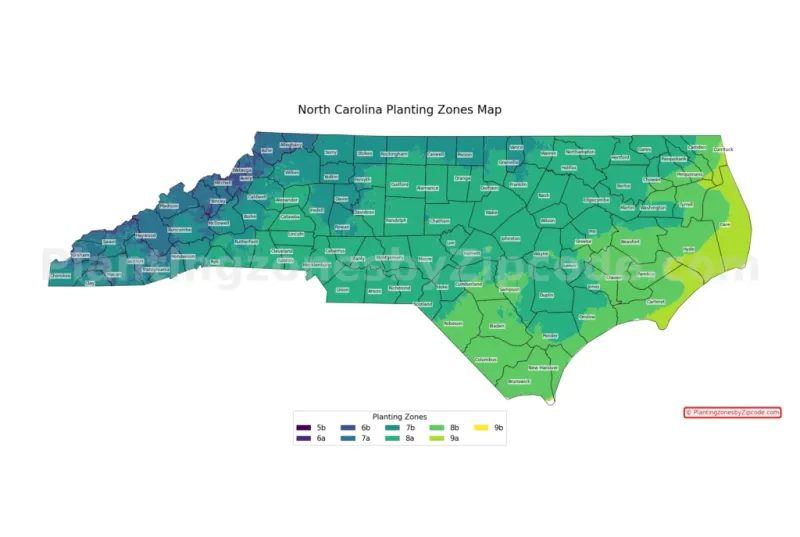
Knowing your corner of North Carolina matters more than any single calendar date when you are deciding whether to transplant fall broccoli. The state stretches from tidal marshes at sea level to mountain ridges above 6,000 feet, and the growing windows are genuinely different across those regions.
A date that works perfectly for a Raleigh gardener can be too late for someone in Boone and still well within range for a gardener near Wilmington.
For eastern North Carolina, NC State Extension’s broccoli production guidance lists August 1 through September 15 as the fall planting window. That wider range reflects the Coastal Plain’s longer frost-free season and the region’s tendency to stay warm well into autumn.
A transplant going into the ground in early September near the coast still has a reasonable shot at maturing before cold weather shuts things down.
Piedmont gardeners face a tighter situation. NC State advises planting 60- to 80-day fall crops around August 1 in the Piedmont, where the first frost arrives earlier than along the coast.
Waiting until late August or September in the Piedmont does not automatically doom the crop, but it does shrink the time available for establishment and maturity, and that margin matters when October nights start cooling fast.
Western and mountain gardeners operate under a different set of rules entirely. NC State’s commercial broccoli guidance does not recommend fall broccoli in western North Carolina, and community garden resources for mountain areas generally advise stopping fall planting earlier than anywhere else in the state.
If you garden in the foothills or mountains, check with your local cooperative extension office rather than applying a Piedmont or Coastal Plain timeline to your beds.
Before you fill in a single planting hole, compare three things: your region’s general planting window, the days to maturity listed on your chosen cultivar’s seed packet or plant tag, and your local average first frost date. Count back from that frost date using the cultivar’s maturity figure and allow a week or two for establishment after transplanting.
That calculation tells you whether you still have a workable window, and it is far more useful than any statewide deadline.
Understand why a late transplant increases risk
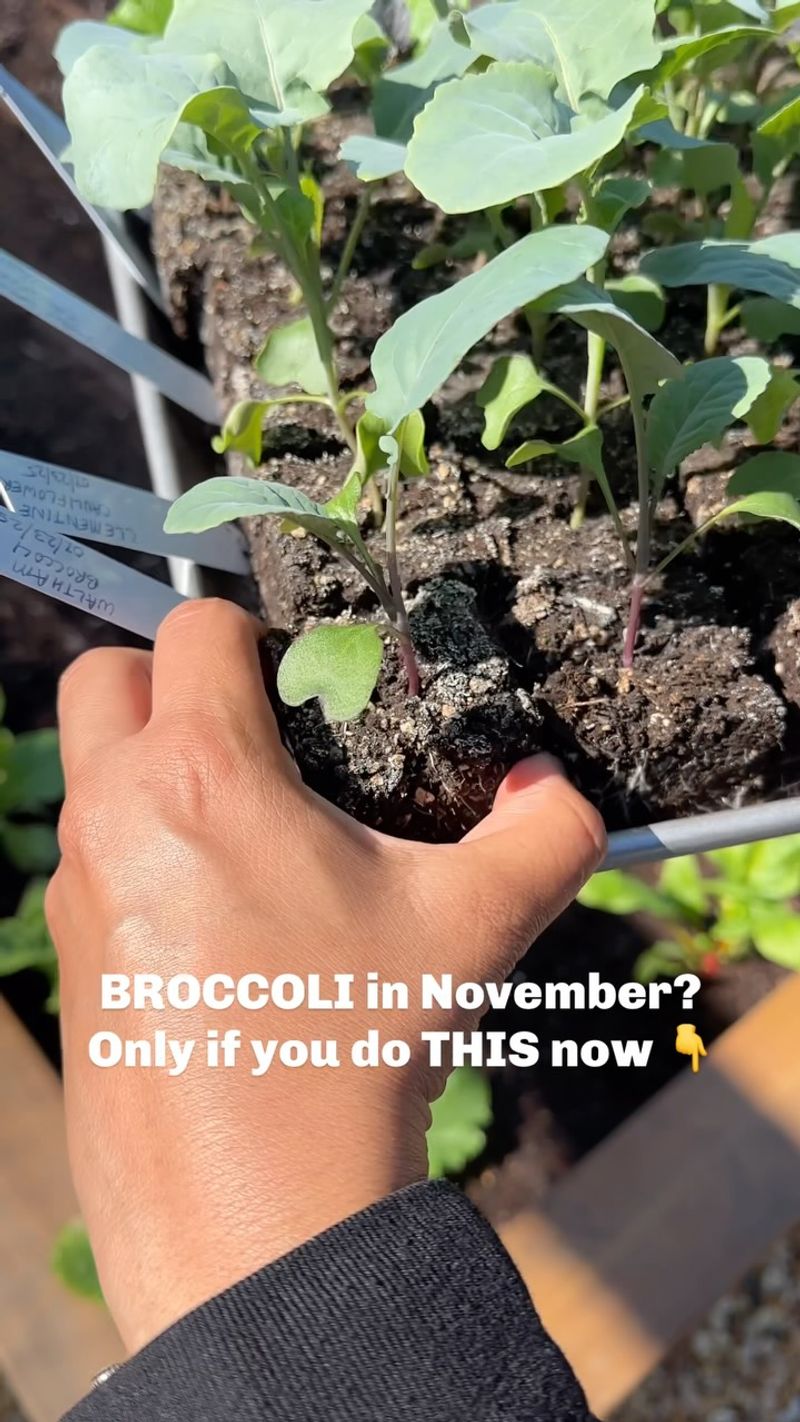
Timing a transplant is really about buying the crop enough runway to do its job. A broccoli plant needs time to push roots into surrounding soil, build leaf area, and move through its vegetative phase before it can even begin forming a head.
When a transplant goes in late, that runway gets shorter, and shorter runway means the plant is more likely to be caught mid-development when frost arrives or when conditions turn unfavorable.
The indirect risk from late planting runs through the conditions the crop encounters, not through the calendar date alone. A plant set out too late may still be in active vegetative growth when the first hard freeze hits.
Alternatively, it may initiate a head during a warm spell, only to have that head develop under erratic autumn temperatures rather than the steady, moderate cool that broccoli prefers. NC State’s production guidance frames the planting windows around exactly this logic: get plants established while conditions allow, then let head formation happen as temperatures moderate.
Loose or misshapen heads are a separate story from transplant timing, though the two are connected. The factors most directly tied to poor head quality are heat during the period when the head is actually developing, drought or inconsistent soil moisture around that same period, and harvesting too late after the buds begin to open.
USU Extension’s brassica production problem guide identifies heat and water stress as primary causes of loose, open, or misshapen heads, separate from the question of when the transplant went into the ground.
A late transplant can set the stage for those problems by compressing the establishment and maturity timeline, but it does not by itself decide whether the heads are tight or loose. Two plants set out a week apart in the same bed may perform similarly if conditions cooperate, or differently if a heat event hits one at a vulnerable stage and not the other.
The honest takeaway is that planting promptly within your regional window improves the odds without guaranteeing the result.
Give young transplants a low-stress start
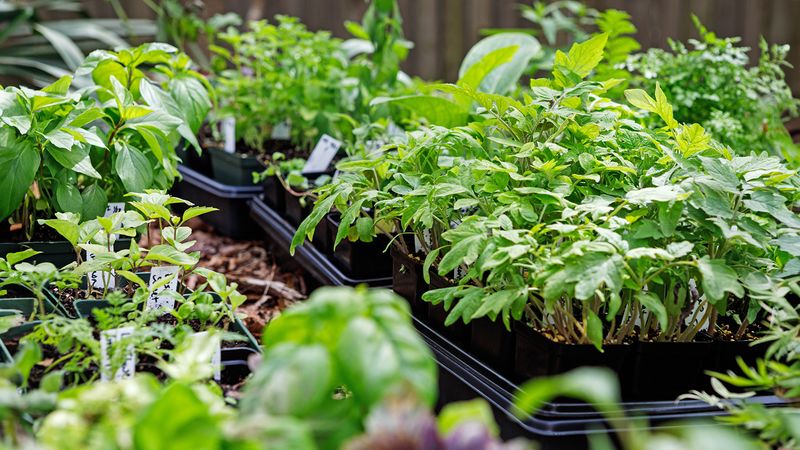
The transplant itself is a stressful event for the plant even under ideal conditions. Roots are disturbed, the stem is handled, and the plant suddenly has to draw water and nutrients from unfamiliar soil while also adjusting to outdoor temperatures.
In late summer, when the air is still hot and the sun is strong, that stress compounds quickly. Giving the plant a low-stress start is one of the most practical things you can do to protect the investment of time and money you have already put into getting a transplant to the garden.
Start with reasonably young, healthy plants. NC State reports that broccoli transplants are commonly ready about four to five weeks after seeding, which gives you a useful benchmark for what a garden-ready plant looks like.
Older, larger transplants that have been sitting in trays too long are more prone to buttoning, which is the formation of a tiny, premature head triggered by stress or root confinement before the plant has built enough leaf area to support a full-sized head. A compact, vigorous plant with healthy roots and no signs of yellowing or root circling is the goal.
NC State’s vegetable gardening guidance recommends transplanting on a cloudy day or in the early evening when possible, and specifically advises avoiding periods of extreme heat, heavy rain, or hail. Moving plants in the cooler part of the day reduces the immediate moisture demand on a root system that has not yet had time to colonize the surrounding soil.
Handle the root ball carefully, avoid compressing or tearing roots, and set each plant at the same depth it was growing in the tray or pot.
Temporary protection can help newly planted transplants survive a stretch of severe heat immediately after planting. NC State’s Extension Gardener Handbook notes that summer transplants may need short-term heat protection for several days after going in the ground.
A shade cloth propped above the plants, not resting directly on them, can reduce heat load during that initial period. Keep in mind that any covering can trap heat if it is not managed properly, so check underneath it during the warmest part of the day and remove or vent it as needed.
The goal here is reducing shock, not insulating the plant from the world indefinitely.
Keep soil moisture even through head formation
Water is the follow-through that makes everything else work. A transplant can go into the ground at exactly the right time, with the right cultivar, on a cool cloudy evening, and still underperform if the root zone dries out repeatedly during the weeks that follow.
Broccoli roots are shallow and quick to feel the effects of dry soil, especially in the sandy soils common in eastern North Carolina or the dense clay that many Piedmont gardeners contend with.
NC State’s broccoli production guidance puts the general water requirement at about 1 to 1.5 inches per week, but that figure is a starting point, not a rigid schedule. Sandy soils drain faster and need more frequent watering.
Clay soils hold moisture longer but can become waterlogged, which creates its own problems. Hot, dry stretches in September require more water than a week of overcast days with moderate temperatures.
Check the root zone by pushing a finger two to three inches into the soil; if it feels dry at that depth, the plant needs water.
Consistency matters more than volume during head formation. USU Extension’s brassica irrigation guidance notes that inconsistent moisture around head development can produce rough, uneven, or misshapen heads.
Cycles of dry soil followed by heavy watering stress the developing head tissue in ways that show up as quality problems at harvest. Steady, even moisture from transplant through harvest is the practical target.
Mulch is one of the most useful tools for achieving that consistency without dramatically increasing irrigation time. A two- to three-inch layer of straw, pine needles, or shredded leaves laid around the base of each plant slows evaporation from the soil surface, moderates soil temperature during warm spells, and reduces weed competition that would otherwise pull moisture away from the broccoli roots.
NC State identifies mulch as a reliable way to conserve soil moisture and reduce weed pressure, and UGA Extension recommends pine straw or leaves specifically for moisture preservation in comparable southeastern garden conditions. Mulch does not replace irrigation, but it stretches each watering session further and smooths out the wet-dry cycles that create head quality problems.
Match the cultivar and transplant age to the season
Correct timing cannot make up for a cultivar that was never built for the conditions it will face. Broccoli varieties differ significantly in days to maturity, heat tolerance during head formation, head density, and how long a finished head holds its quality before the buds begin to open.
Choosing a cultivar that fits your region’s fall window is as consequential as choosing when to plant.
NC State’s cultivar selection guidance for North Carolina emphasizes matching maturity time, heat tolerance, head quality, and holding ability to the regional planting window. A cultivar that takes 85 or 90 days to mature may push head development into November in the Piedmont, where frost can arrive well before that.
A cultivar that matures in 55 or 60 days might produce heads before conditions are ideal and may be difficult to catch at peak quality before the buds loosen. The sweet spot is a cultivar whose maturity window aligns with the period when your local temperatures are expected to moderate into the range broccoli prefers for head development.
Heat tolerance is particularly relevant for eastern and Piedmont NC gardeners who are transplanting during August or early September, when afternoon temperatures can still push into the upper 80s or low 90s. Not every cultivar handles that establishment-phase heat equally well.
Check current cultivar trial results from NC State or your local extension office, since variety performance can shift as seed companies release new genetics and as regional conditions evolve.
Transplant age ties directly to cultivar choice. NC State notes that transplants are generally ready four to five weeks after seeding, and USU Extension warns that older, oversized transplants face elevated buttoning risk, especially when combined with any kind of environmental stress.
If you are starting your own transplants from seed, count backward from your target planting date and start seeds at the appropriate time so your plants are garden-ready but not root-bound or overgrown when they go into the ground.
Diagnose loose heads before blaming the transplant date
A loose or poorly formed broccoli head is frustrating, but it is rarely caused by just one thing, and blaming the transplant date alone often leads to the wrong fix. Several distinct problems can produce heads that look open, uneven, or unusable, and they have different causes, different diagnostic signs, and different prevention strategies.
Heat during head development is one of the most common culprits. USU Extension’s brassica production problem guide identifies heat stress as a direct cause of loose, open, or deformed heads, separate from the question of when the transplant went in the ground.
Research published in npj Sustainable Agriculture identifies roughly 16 to 18 degrees Celsius (about 61 to 64 degrees Fahrenheit) as favorable for head initiation and notes serious developmental disruption above 30 degrees Celsius (about 86 degrees Fahrenheit), though cultivar, duration, nighttime temperature, plant stage, and water status all affect how a specific plant responds. Those figures are useful context, not a precise threshold you can apply uniformly to every variety in every yard.
Drought or irregular watering during head formation produces a different pattern, often showing up as rough, bumpy, or misshapen heads rather than fully open florets. Buttoning, which is a small premature head forming on a plant that has not yet built enough leaf area, is a separate disorder tied more closely to transplant stress, cold snaps on young plants, or root-bound transplants than to heat.
Brown bead is another distinct condition where individual florets turn brown, often linked to calcium uptake problems or rapid temperature swings rather than to anything the gardener did at transplant time.
Over-maturity is probably the most common cause of loose, opening heads that gardeners mistake for a crop failure. UGA Extension’s home garden broccoli guidance recommends harvesting when the outer florets begin to loosen but the center remains tight and green.
Yellowing buds or visibly opening flowers are signs of over-maturity, not symptoms of a transplant problem. Cut the main head before that stage and the plant will typically produce secondary side shoots that are worth harvesting even when the main head was disappointing.
Use a steady care plan through harvest
Pulling a firm, tight broccoli head out of a fall garden requires a sequence of decisions that starts before the transplant goes in the ground and does not end until the knife comes out. Getting one step right while skipping another reduces the odds, and the crop is honest enough to show you exactly where things went sideways.
Start by confirming that your regional window and cultivar schedule still leave enough time for the plant to establish and mature before frost. If the math works out, transplant promptly rather than waiting.
Reduce shock at planting by choosing a cool or cloudy time of day, handling roots carefully, and watering the transplant in thoroughly. NC State’s Extension Gardener Handbook recommends avoiding extreme heat and heavy rain at transplant time and notes that some summer transplants benefit from a few days of temporary heat protection while roots get established.
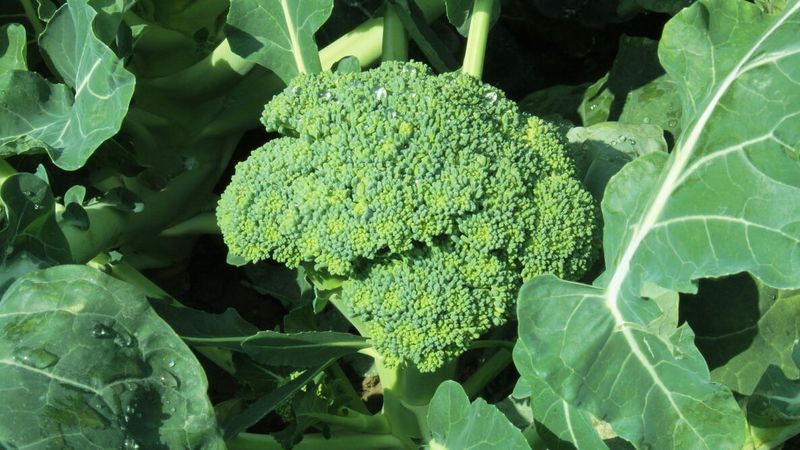
From transplant through harvest, keep the root zone evenly moist and layer mulch around the base of each plant to hold that moisture between watering sessions. Monitor the developing heads as temperatures cool and watch for the signs that harvest is approaching: a dense, dome-shaped head with tight, dark green buds that have not yet begun to separate or yellow.
UGA Extension advises cutting while the center remains firm and green, before the outer florets begin to open visibly.
On the fertilizer side, resist the impulse to apply large amounts of nitrogen or boron as a fix for slow growth or poor head quality. NC State warns that excess nitrogen can drive rapid, poor-quality growth and contribute to tip burn under high temperatures, while unnecessary micronutrient applications can injure plants and create nutrient imbalances.
A soil test before planting is the most reliable guide to what your specific beds actually need. Prompt planting improves the odds of timely maturity, but the care you put in between transplant day and harvest day is what ultimately decides whether the heads in your hands are worth eating.