
The One Thing North Carolina Fall Carrots Need When You Seed Them Now Or The Roots Come Out Stunted
Fall carrots are one of the most rewarding crops a North Carolina backyard gardener can grow, but they punish procrastination more than almost any other vegetable. Miss the right planting window and the roots may not have enough time to size up before cold weather shifts the season.
Seed them in poor soil or let the seedbed dry out after sowing and you can lose the entire planting to slow, patchy germination. Getting your timing, moisture, and soil preparation lined up now is what separates a harvest of full, sweet roots from a row of stubby disappointments.
North Carolina’s carrot calendar depends on location
Planting calendars for North Carolina carrots are not one-size-fits-all, and treating them that way is where many gardeners go wrong. NC State Extension’s vegetable gardening handbook treats August as the main fall-planting month for carrots and places 60-to-80-day crops around early August for the Piedmont region.
That early-August target is a planning guideline, not a hard cutoff with a guaranteed failure on either side of it.
Western North Carolina and higher-elevation mountain areas generally need to start even earlier because the growing season shortens faster as elevation rises. The Coastal Plain, on the other hand, usually allows a later planting window because frost arrives later and the season stretches further into fall.
NC State’s Eastern North Carolina planting calendar reflects that longer coastal window, which is why a single statewide deadline misleads more gardeners than it helps.
As of August 14, many North Carolina gardeners can still sow fall carrots, but the comfort level varies sharply by region. Piedmont gardeners are right at or just past the early-August target, so the margin is tighter than it was two weeks ago.
Coastal Plain gardeners generally have more runway ahead of them. Mountain gardeners at higher elevations may already be working with a compressed schedule and should check their local first-frost dates before committing seed to the ground.
The Central North Carolina planting calendar lists carrots with a broad fall window running through mid-September, which gives Piedmont gardeners some room, but that window assumes a variety with roughly 70-to-80 days to maturity. Sow now with that range in mind, factor in your specific location, and use the calendar as a planning tool rather than a promise.
Count backward from the harvest you actually want
Once you know your region’s planting window, the next step is working backward from the harvest you want rather than forward from today’s date. Most fall carrot varieties need approximately 70-to-80 days to reach full size, which lines up with the 8-to-10-week range that NC State’s cool-season vegetable guidance describes for carrots.
That estimate shifts based on cultivar, soil temperature, moisture, and whether you want small baby roots or full-size mature carrots.
University of Georgia Extension’s fall vegetable gardening guide similarly lists 70-to-80 days as an approximate maturity range, and both sources make clear that the number is a planning estimate, not a clock. A long, mild fall can push that timeline shorter; a stretch of unusual heat right after germination can stretch it longer.
Frost is worth knowing about, but it should not be treated as an automatic harvest deadline. Carrots tolerate light frost and can actually improve in sweetness after cold exposure.
UGA’s commercial carrot production guide notes that carrots left in the ground can overwinter in many conditions, which means a North Carolina gardener who sows a little late may still pull decent roots in early winter or even after the new year in warmer coastal areas.
If the math shows your remaining window is tight, choose a faster-maturing variety or accept baby carrots as the likely outcome. A 55-day Nantes type planted today gives you a realistic shot at small-to-medium roots before conditions turn cold.
Planting a 80-day Imperator type on the same date is a longer bet. Match the variety to the time you actually have, not the time you wish you had.
Keep the seedbed moist through emergence and establishment
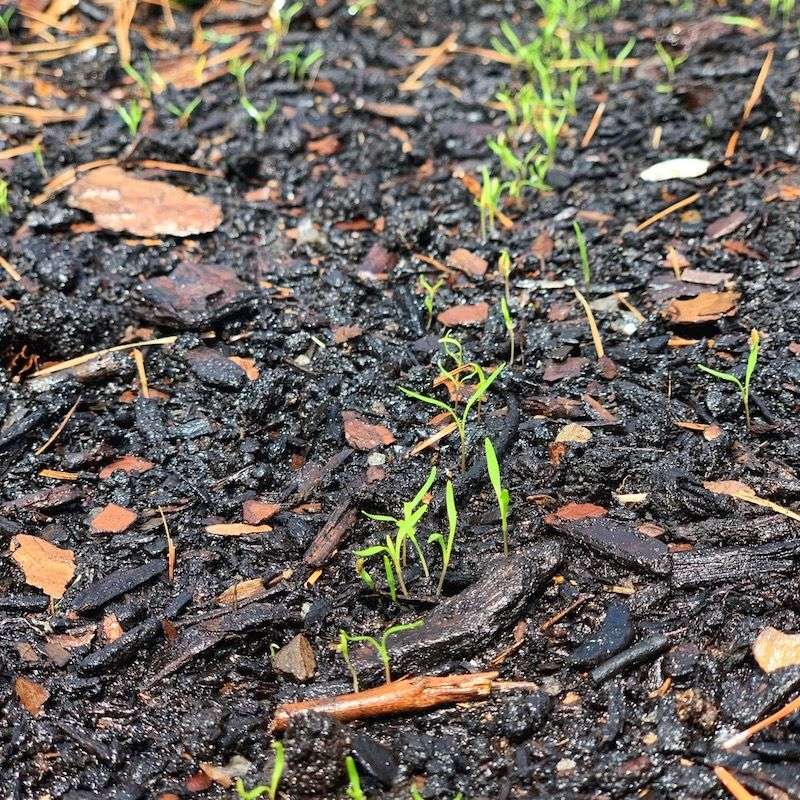
After seeds go in the ground, keeping the shallow seedbed evenly moist becomes the most immediate practical job on the list. Carrot seeds are slow starters.
Johnny’s Selected Seeds carrot growing information notes that emergence can take anywhere from one to three weeks depending on soil temperature and moisture, which means you need to protect that seedbed consistently, not just for a few days after planting.
The goal is evenly moist soil, not muddy or waterlogged soil. NC State’s vegetable gardening handbook stresses adequate moisture for germination and establishment, and UGA’s commercial carrot guide adds that water deficits can delay maturity and that inconsistent watering, alternating between dry and soaked, can contribute to root splitting later in the season.
Both problems are avoidable with steady, light watering rather than heavy, infrequent irrigation.
August in North Carolina means hot afternoons, low humidity on some days, and the kind of surface drying that can kill a shallow seedbed within hours. Check moisture at least once a day, and twice a day during a heat spell.
A light mulch of straw or shredded leaves over the seedbed can slow evaporation without smothering the emerging seedlings, but lift it gently once you see green sprouts pushing through.
After emergence, moisture management does not stop. Young carrot seedlings are still developing their root systems and need consistent soil moisture through the early establishment phase.
UGA’s fall vegetable gardening guide reinforces that adequate moisture is essential through both germination and early growth. Steady watering during this phase is the bridge between a good sowing and a healthy stand of seedlings worth thinning.
Prepare loose soil for straight roots
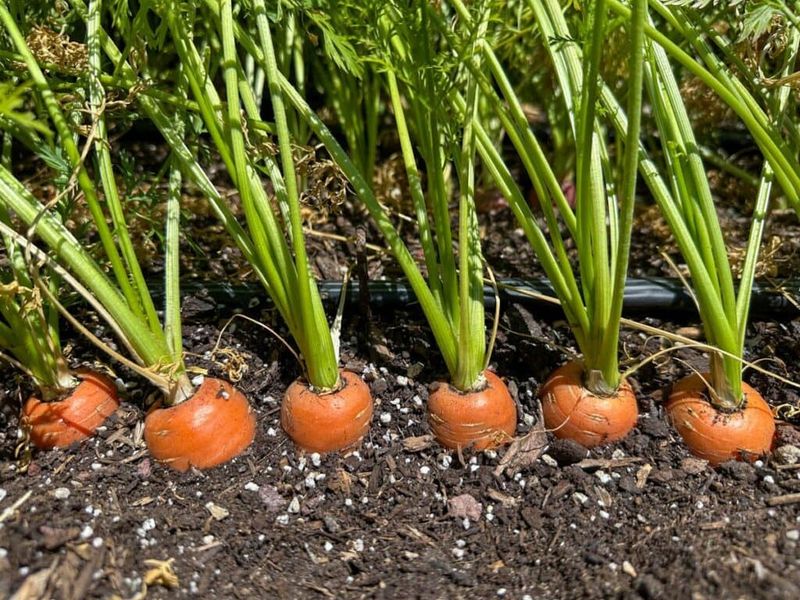
Soil preparation is where the shape and size of your harvest are largely decided before a single seed goes in the ground. Carrots are a root crop, and the root follows the path of least resistance downward.
University of Minnesota Extension’s guide to growing carrots and parsnips recommends deep, loose, well-drained soil and directs gardeners to remove stones and break up compacted layers before planting. Rocks and hard clods sitting in the root zone physically deflect the growing tip, which is how you end up with forked or twisted roots even when everything else goes right.
University of Maryland Extension’s resource on deformed root crop vegetables confirms that compacted soil, rocky soil, and overly wet conditions are among the most common causes of short, forked, or otherwise misshapen carrot roots. That means a gardener who seeds on time but skips soil prep can still end up with a bin of crooked, stubby roots at harvest.
Timing matters, but the physical structure of the seedbed matters just as much.
Carrots should be direct-seeded about one-quarter inch deep, a depth that gives the seed enough soil contact without burying it so far that emergence is delayed. Transplanting is not a practical option because disturbing the developing taproot early on causes exactly the kind of forking and deformity you are trying to avoid.
Prepare the bed before you seed, not after.
For North Carolina gardeners working with heavy clay or compacted native soil, a raised bed filled with loose, well-drained growing mix can make a significant difference. University of Minnesota’s carrot root diagnosis tool points to compaction and soil obstructions as primary contributors to forked roots, which raised beds directly address.
If raised beds are not an option, work compost into the top 12 inches of soil and consider shorter or rounder varieties. Nantes, Atlas, and Little Finger types are better suited to shallow or heavy soil than long Imperator-style roots, which need more depth to develop properly.
Thin seedlings before they compete

Thinning is one of the most skipped steps in home carrot growing, and it shows up at harvest as a bin of pencil-thin, tangled roots. Crowding limits the space each root has to expand sideways and forces plants to compete for moisture and nutrients during the window when root bulk is developing.
University of Minnesota Extension recommends thinning carrot seedlings so mature plants end up roughly 2 to 4 inches apart, with the final spacing depending on variety.
Sow as thinly as you can manage from the start, which reduces how much thinning you need to do later. Carrot seeds are small and tend to clump, so even a careful sowing usually produces a denser stand than you want.
When seedlings reach about an inch tall, thin to one plant every two inches. When they reach two to three inches, thin again to the final spacing for your chosen variety.
Cutting or pinching excess seedlings at soil level is better than pulling them out, because pulling can disturb the roots of neighboring plants. University of Maryland Extension’s deformed root crop resource identifies crowding as a documented contributor to malformed carrot roots, which makes thinning a direct prevention strategy, not just a housekeeping task.
For a late-summer planting where every week of growing time counts, getting this step done promptly matters more than usual. Crowded seedlings steal resources from each other during the same weeks when the root is trying to establish and expand.
NC State’s vegetable gardening handbook backs adequate spacing as part of sound carrot culture. Thinning cannot give back time lost to a genuinely late sowing, but it removes a completely preventable reason for small roots in a planting that still has a reasonable chance at a decent harvest.
Diagnose stunted or misshapen roots before blaming the date
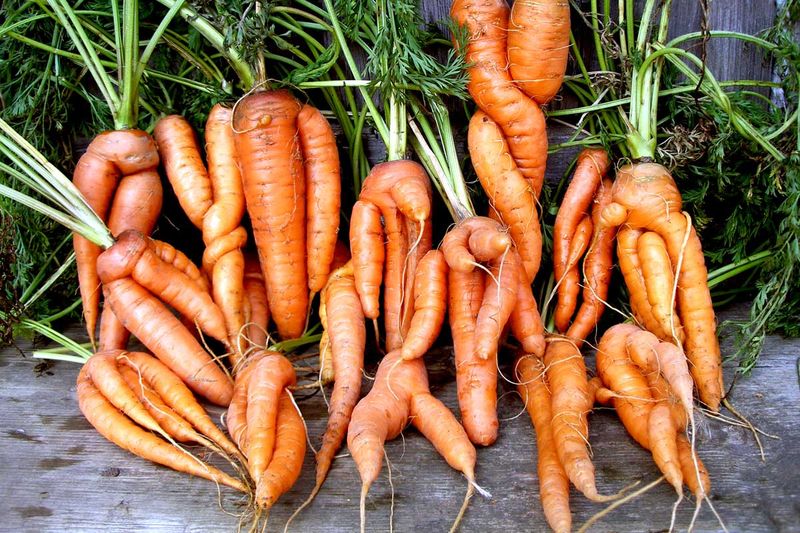
Undersized carrots at harvest do not automatically mean you planted too late. Timing can shorten the growth window, but short, forked, branched, swollen, or hairy roots often point to a different problem entirely.
University of Maryland Extension’s deformed root crop guide traces forked and misshapen roots primarily to compacted or rocky soil, excessive soil wetness, and physical obstructions in the root zone. Those causes produce deformed roots whether you planted in July or September.
Roots that are generally small but otherwise normal in shape are more consistent with a shortened growth window, crowding, or moisture stress during the bulking phase. Roots that are forked, branched, or growing sideways usually reflect a soil structure problem.
Roots with bumps, swellings, or an unusually hairy surface may indicate root-knot nematode activity. University of Minnesota’s carrot root diagnosis tool walks through these symptom distinctions and is a useful starting point for figuring out what actually went wrong.
Root-knot nematodes are a real concern in North Carolina, particularly in sandy soils that warm quickly. NC State Extension’s nematode control guide notes that carrots are susceptible and that nematode activity is favored by soil temperatures around 70 to 85 degrees Fahrenheit, which describes much of a North Carolina August.
If you are seeing widespread stunting, branching, galls, or hairy roots across multiple plants, nematodes deserve a closer look before you blame the calendar.
Reach for fertilizer last, not first. Heavy nitrogen application does not fix compacted soil, nematode damage, crowding, or drought stress.
NC State’s home vegetable gardening quick reference guide cautions against overfertilizing, noting that excess nitrogen tends to push leafy top growth at the expense of the root. Work through the most likely physical and biological causes before adding any inputs, and you will have a clearer picture of what actually needs to change next season.
Use a late sowing as a calculated bet
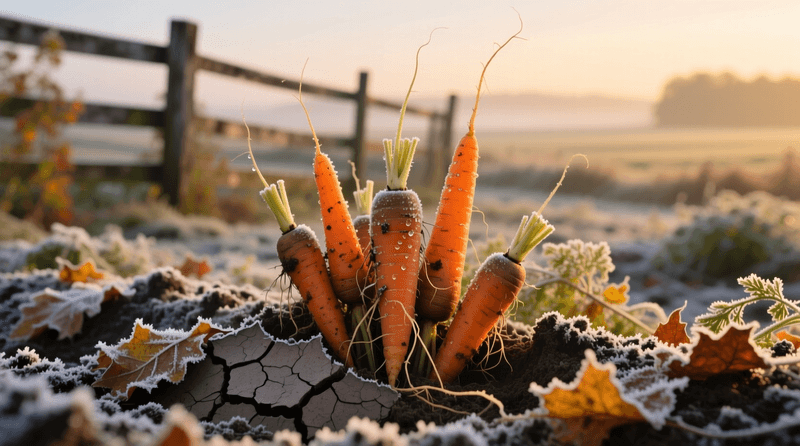
Sowing carrots after the optimal window has passed is not automatically a wasted effort, but it does require honesty about what you can reasonably expect. If your regional calendar still leaves approximately 70 to 80 days before conditions are likely to shut down growth, go ahead and sow.
Choose a variety whose days-to-maturity fits the time you actually have. NC State’s cool-season vegetable guidance lists shorter Nantes types and round varieties like Atlas as options that suit tighter timelines and heavier soils better than long-rooted types.
Accept baby carrots as a legitimate outcome when the window is genuinely tight. A row of tender three-inch carrots pulled in late October is a better result than a row of stunted full-size varieties that never had enough growing time.
Hot, sunny conditions in August can stress young seedlings even when soil temperature is adequate for germination. UGA’s commercial carrot production guide notes that heat and moisture stress can delay maturity, so keeping the seedbed moist during the first weeks after sowing is especially important when late-summer heat is still running high.
Carrots can overwinter in much of North Carolina, which means a late sowing in the Coastal Plain or even the Piedmont may produce roots that stay in the ground through winter and get pulled in early spring. That is a separate consideration from fall root size, and it comes with its own caveat: spring warming and increasing day length can trigger bolting in carrots that have experienced enough cold.
Plan for that possibility if you intend to leave roots in the ground past mid-winter.
Row covers and mulch can extend the effective season by a few weeks and protect young seedlings from temperature swings. NC State’s community food gardening handbook mentions season-extension materials as a useful tool, but they cannot fix poor soil structure, active nematode pressure, or a timing gap that is simply too large to bridge.
Use them as a margin-widener, not a rescue plan.
Make the decision with two checks
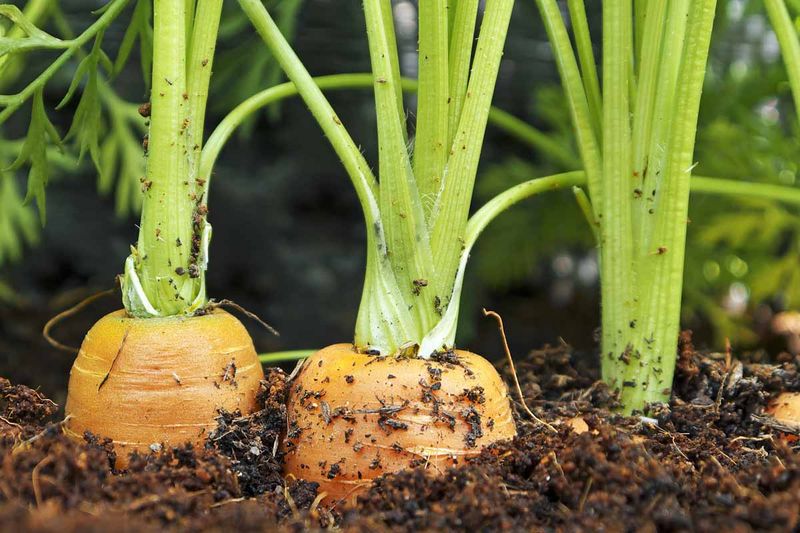
Before you open the seed packet, run two quick checks. First, confirm that your local planting window still leaves approximately 70 to 80 days for the variety you have chosen to reach the harvest size you actually want.
NC State’s Central North Carolina planting calendar and the equivalent regional calendars are the right starting point for that calculation, adjusted for your elevation and expected frost timing.
Second, commit to keeping the seedbed evenly moist from the moment seeds go in through emergence and into early seedling establishment. UGA’s fall vegetable gardening guide and NC State’s vegetable handbook both support consistent moisture as a core requirement through germination and early growth.
That means checking the seedbed daily, not relying on rainfall alone during a warm August week.
Neither check alone guarantees straight, full-size roots. Loose soil, adequate spacing, and freedom from nematode pressure all contribute to the final result.
August 14 is still a workable sowing date for many North Carolina gardens, but how much margin you have depends entirely on where you garden in this state. The gardener who checks both conditions honestly before sowing is already ahead of the one who just presses seeds in and hopes for the best.