
The One Thing North Carolina Vegetable Beds Need This Fall So Crops Share Space Instead Of Fighting For It
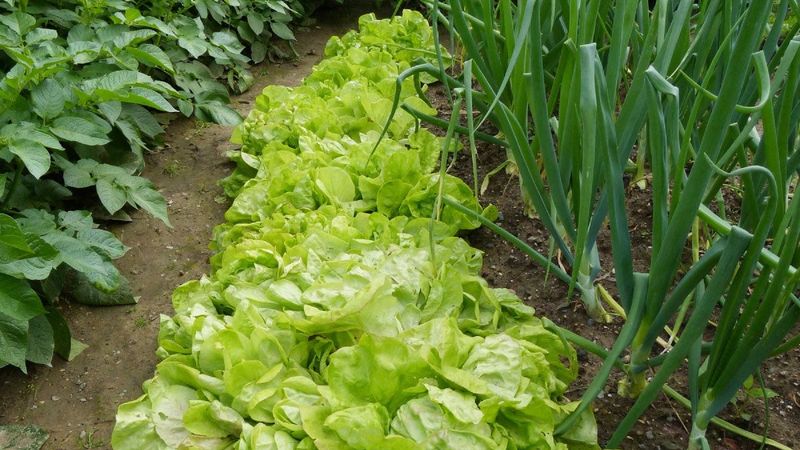
Squeezing more food out of a single raised bed sounds appealing until two crops start competing for the same patch of sunlight and moisture. Planting a slower, larger fall crop alongside a faster, smaller one – a practice called intercropping – can help some North Carolina gardeners get more total food from limited space without adding a single square foot of garden.
The title of this article makes it sound like every NC vegetable bed needs one special companion plant, but that framing overstates the case: intercropping is one optional strategy, and how well it works depends on the crops you choose, your timing, your spacing, and your willingness to monitor the bed as it grows.
A timed intercrop can make a fall bed work harder
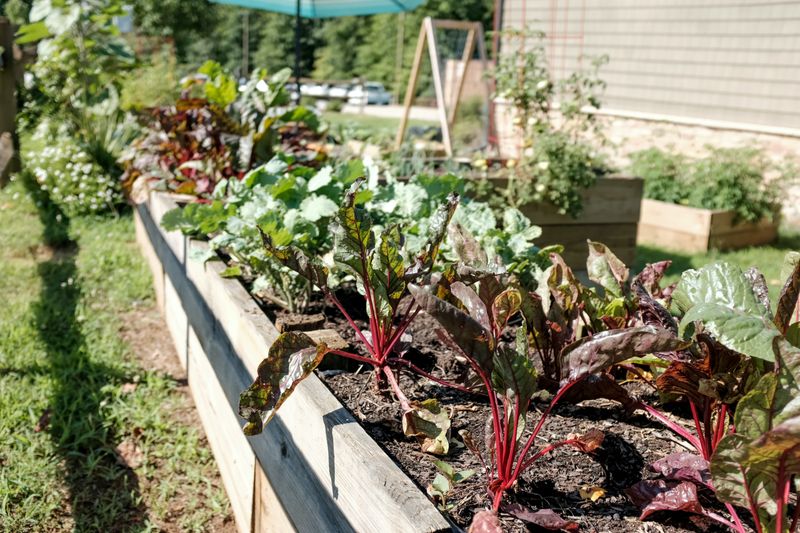
Fall vegetable beds in North Carolina face a particular challenge: most crops need to go in during a narrow August window, yet they mature at very different rates. One practical way to use that gap is intercropping, which means growing two or more crops in the same space at the same time.
NC State Extension’s vegetable gardening guide specifically recommends interplanting to increase production and reduce weeds, citing examples such as quick radishes planted near slower-growing broccoli and shade-tolerant lettuce or spinach placed beneath taller crops.
The goal is straightforward: the fast crop occupies ground that the slow crop has not yet filled, and the gardener harvests the fast crop before it starts to crowd the main crop. Combined, the bed can yield more total food per square foot than either crop grown alone.
That said, a major review published in the Journal of Economic Entomology found that specialty vegetable combinations are highly variable: benefits in land-use efficiency, weed suppression, and pest management appear in many systems, but competition for light, water, and nutrients can reduce individual-crop yield even when the combined harvest improves.
Intercropping is not the same as succession planting, which means staggering planting dates to extend the harvest of one crop over several weeks. It is also different from crop rotation, which means moving plant families to different beds across seasons or years to reduce disease and pest buildup.
The broader term companion planting covers all of those ideas and also includes flowers grown for insect habitat – and a fair amount of gardening folklore. Intercropping is the specific, space-sharing practice this article focuses on, and it is one practical option, not something every North Carolina vegetable bed requires.
Choose partners by growth rate, size, and harvest timing
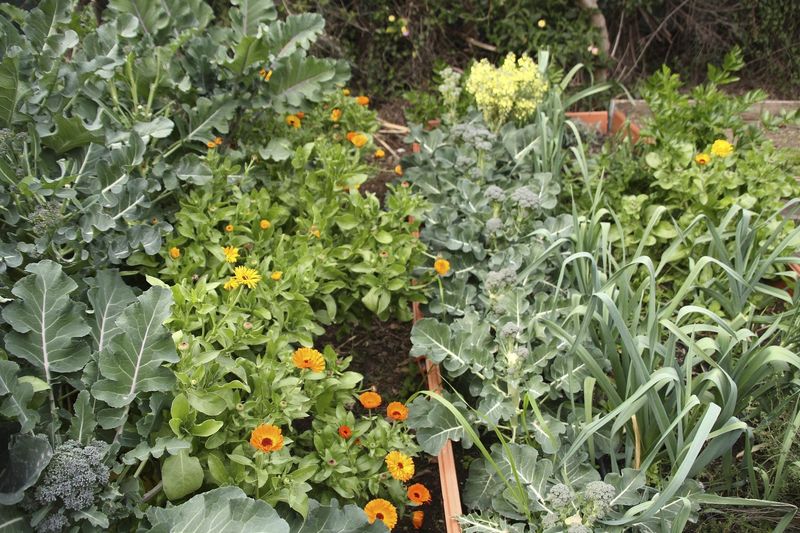
Picking a good intercrop pair starts with a simple question: will the fast crop be out of the way before the slow crop needs the space? That means comparing mature height, canopy width, growth rate, expected harvest date, shade tolerance, and rough root depth before you put a single seed in the ground.
NC State Extension advises gardeners to consider growth pattern, maturity date, light, nutrients, and moisture when combining crops, and warns that incompatible combinations can compete for resources or even produce allelopathic effects – where one plant chemically inhibits another.
Broccoli paired with radishes is a reasonable first trial because the timing difference is real and measurable. Radishes can be ready to pull in as little as 25 to 30 days, while broccoli typically takes 60 to 80 days to form a head.
During those early weeks, young broccoli plants are relatively small and the gap between transplants holds open ground that radishes can use productively. The catch is that both crops still need water and nutrients from the same soil, and if conditions are dry or the radishes are planted too densely, they can stress the broccoli before they are ready to harvest.
A peer-reviewed spacing study on lettuce intercropped with rocket found that planting density is a central factor in whether a combination succeeds or produces yield losses from competition – a finding that applies broadly to other vegetable pairings. Quick leafy greens such as spinach or loose-leaf lettuce can also work alongside broccoli, but they need enough light to grow well and enough airflow to stay healthy.
Research on intercropping systems consistently shows that the combination’s success depends on the specific crops, their arrangement, and how carefully the gardener manages moisture and spacing throughout growth – not just at planting time.
Use regional timing instead of one statewide planting date
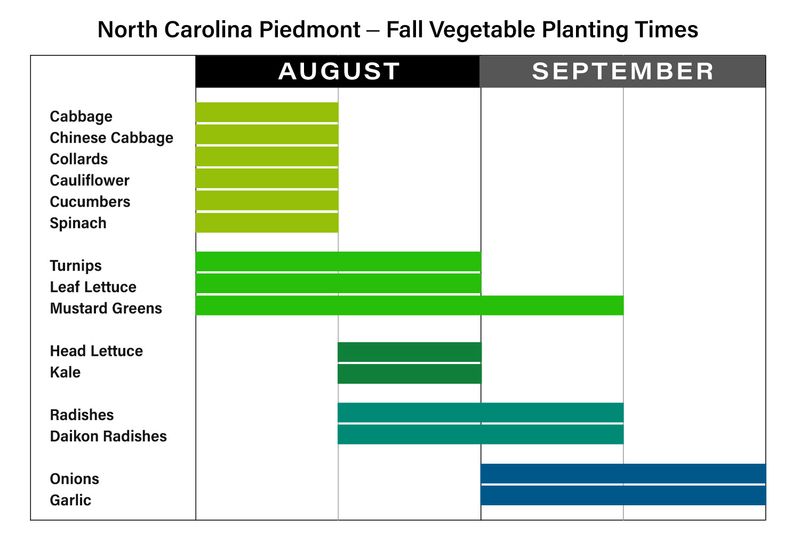
North Carolina stretches from the Atlantic coast to elevations above 6,000 feet, and a single fall planting date cannot serve all of it. For Piedmont gardeners, August is the main planting period for fall vegetables.
Crops that need roughly 60 to 80 days to mature – broccoli, cabbage, cauliflower, Brussels sprouts – generally go in around the beginning of August to finish before the first hard frost. Quicker crops such as turnips, mustard, leaf lettuce, and radishes can follow around September 1 and still have enough season to produce.
NC State Extension’s vegetable gardening handbook notes that western North Carolina planting dates may shift 10 to 20 days earlier than the Piedmont, while Coastal Plain gardeners may have 7 to 14 additional days on the back end of the season. Those ranges are guidelines rather than guarantees.
Mountain gardeners in particular should check local frost dates rather than relying on any statewide recommendation, because frost timing varies significantly by elevation and valley position in the Blue Ridge and Appalachians.
The Central North Carolina Planting Calendar is the most reliable starting point for Piedmont gardeners: it lists crop-specific planting windows, days to harvest, and recommended spacing, and it notes that staggered plantings within the window can extend the harvest period. Coastal Plain and mountain gardeners should use that calendar as a rough reference and then adjust based on their county Extension office’s local guidance.
When you are timing an intercrop, remember that both crops need to fit inside the available frost-free window – the fast crop must mature and be removed before the main crop needs full access to the bed’s light and moisture.
Lay out the bed for mature spacing from the start
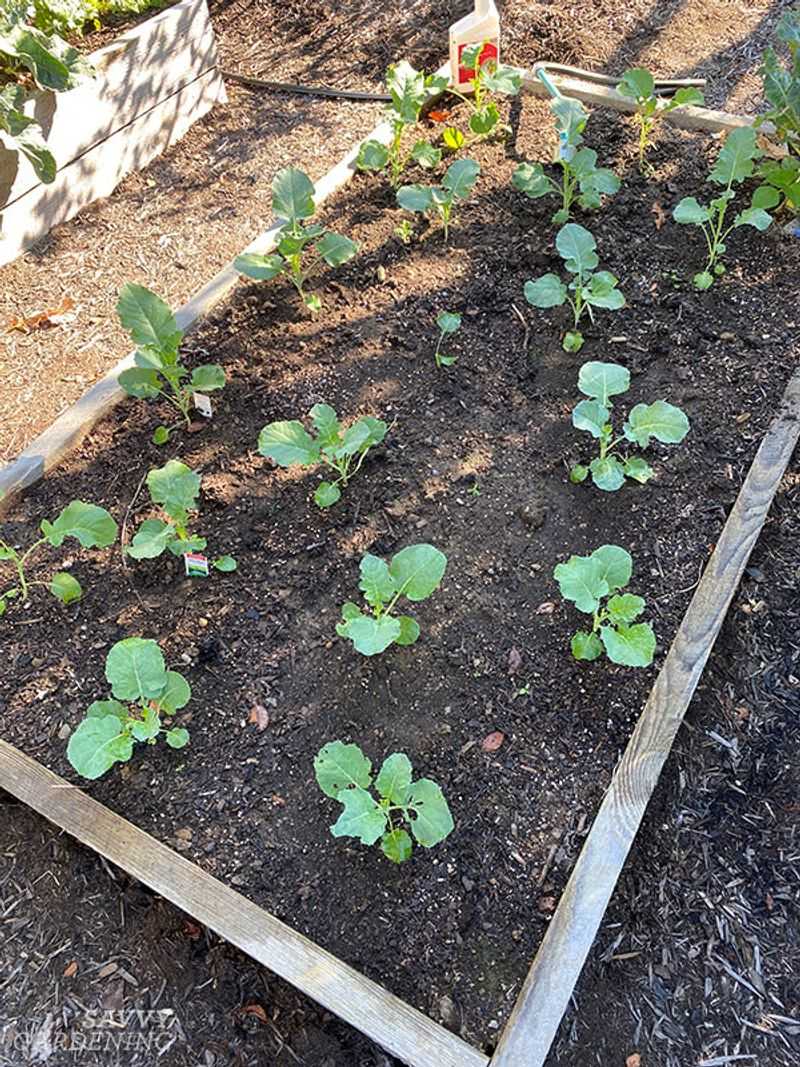
Before a single seed or transplant goes into the fall bed, mark out where the main crop will stand at full size. Broccoli, for example, typically needs 18 inches or more between plants to develop a full head and maintain adequate airflow.
NC State Extension’s intensive planting guidance lists approximate spacings – broccoli at 6 to 12 inches in intensive beds, cabbage at 9 to 12 inches, kale at 6 inches, leaf lettuce at 4 to 6 inches, and radishes at 1 to 2 inches – but these numbers should not be read as permission to crowd a large crop. The larger plant’s mature size and airflow requirements govern the final layout, and the quick crop fills only the ground that will still be open after the main crop expands.
Place tall or trellised crops on the north side of the bed when that arrangement reduces unwanted shade on shorter crops. NC State’s quick reference guide for home vegetable gardening recommends organizing beds north to south so that taller crops do not shade shorter ones unnecessarily – a layout that matters even more when two crops share the same bed.
If the quick crop is shade-tolerant, such as spinach, it can go on the north side of a short main crop without much penalty. Radishes, which prefer full sun, should stay in the open gaps between main-crop transplants.
The practical sequence is to set the main crop transplants at their intended mature spacing first, then sow or transplant the quick crop only in the spaces that will remain available during early growth. Mark the main-crop positions clearly so that later weeding or harvesting of the quick crop does not disturb the broccoli or cabbage roots nearby.
The entire layout should allow you to reach every plant for scouting, watering, and harvesting without stepping on the bed or compacting the soil around the main crop’s root zone.
Watch for competition before the quick crop is ready
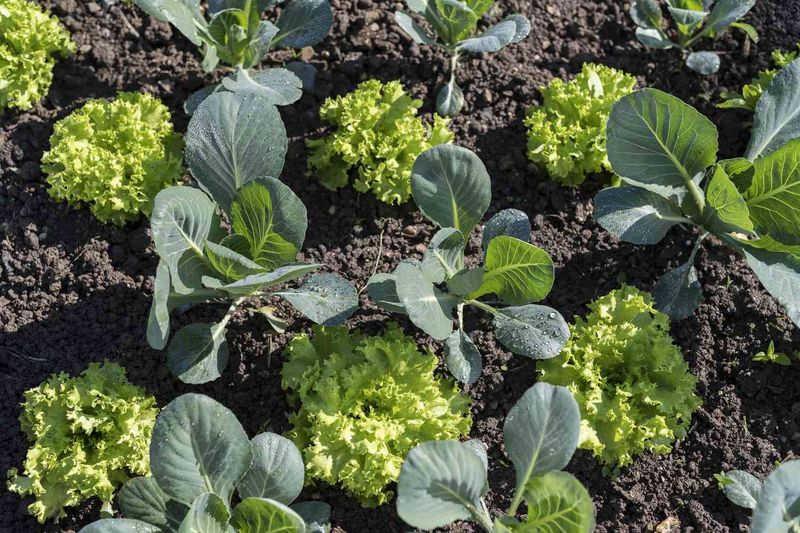
Putting two crops in the same bed does not mean walking away until harvest time. Once the quick crop is established between the main-crop transplants, the management job is to watch whether it begins to interfere with the broccoli’s light, moisture, roots, or airflow before it reaches harvestable size.
If the radishes are growing vigorously and the broccoli looks healthy, water and nutrient competition is manageable for the moment. If the broccoli leaves start to yellow, wilt between waterings, or look stunted while the radishes are still weeks from maturity, remove the radishes early rather than waiting for a perfect harvest.
Fall soil in North Carolina can be hot and dry in August and early September, and that creates a real establishment challenge for direct-seeded crops. NC State Extension notes that seeds may need to be planted deeper than in spring to reach adequate moisture, and that gardeners without reliable irrigation may have better results using transplants for longer-season crops such as broccoli and collards rather than direct seeding them.
A light mulch over the soil surface helps retain moisture and moderate soil temperature for both crops during the critical first few weeks.
A study on intercropped lettuce and rocket confirmed that density and spacing decisions at planting time are among the strongest predictors of whether competition develops – a finding consistent with broader intercropping research showing that outcomes vary significantly by arrangement and growing conditions. Water the bed at soil level when possible to reduce the time foliage stays wet, and check the bed every few days rather than on a fixed schedule.
The quick crop’s job is to finish and leave; your job is to make sure it actually does that before the main crop is compromised.
Treat pest reduction as a possibility, not a promise
Mixed plantings can make some pests’ jobs harder. When a garden bed holds more than one crop type, certain insects have more trouble locating their preferred host plant by sight or smell, and a wider variety of flowering plants nearby may support predatory or parasitic insects that keep pest populations in check.
A meta-analysis of cabbage intercropping systems found reduced pest injury in some diversified arrangements, particularly those involving living mulches or strong spatial mixing. However, the outcomes varied widely by crop combination, pest species, planting density, timing, and climate – meaning no single pairing reliably controls pests across all situations.
University of Delaware Cooperative Extension and other land-grant programs caution that many traditional companion-planting lists are based on limited evidence and that mechanisms vary from one pairing to the next. One point worth stating plainly: broccoli, cabbage, kale, collards, mustard, and turnips are all brassicas, and they share the same pest complex – including imported cabbageworms, cabbage loopers, and harlequin bugs.
Pairing two brassicas in one bed for space efficiency is reasonable, but it is not a pest-prevention strategy. NC State’s integrated pest management guidance notes that spreading related crops around the garden can reduce the chance that a localized outbreak affects every plant at once, but diversification is not the same as protection.
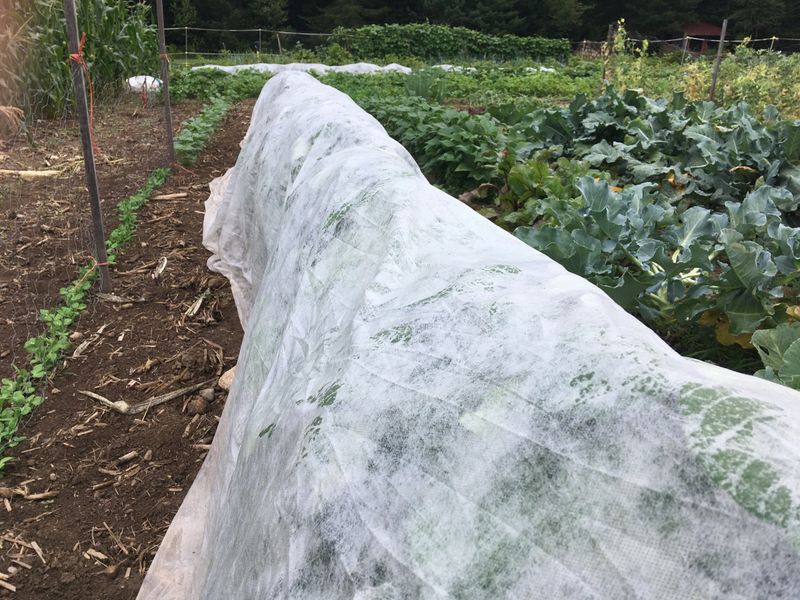
A more targeted option for cole crop pests is a properly selected floating row cover. NC State’s season extenders guide explains that floating row covers can exclude adult moths and other flying insects from cole crops, but only when the cover goes on before pests are present.
Covers must be checked regularly, ventilated when temperatures climb, and removed if pests are already inside – leaving an infested bed covered makes the problem worse. Scouting, sanitation, and crop rotation remain the foundation of any practical pest plan.
Protect the bed with moisture, airflow, and sanitation
An intercropped bed that is too dense becomes its own problem. When plants grow close together and foliage stays wet, disease pressure rises and airflow drops – two conditions that favor fungal infections and make scouting for pests significantly harder.
Maintaining the main crop’s intended mature spacing from the start is the single most effective safeguard against this outcome. The quick crop fills only the genuinely open ground, not the space the main crop will eventually need.
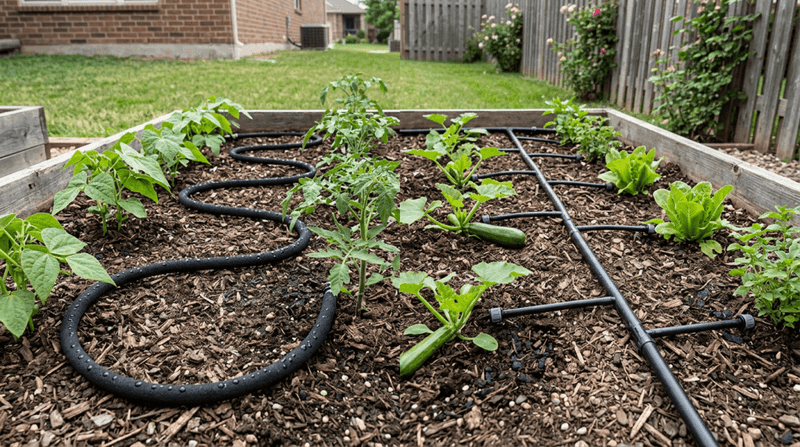
Water management matters as much as spacing. NC State’s lettuce production guide specifically notes that drip irrigation reduces leaf wetness and lowers disease pressure compared to overhead watering – a principle that applies to any dense planting.
When drip lines or soaker hoses are not available, water at the base of plants with a wand rather than overhead, and water in the morning so foliage has time to dry before temperatures drop in the evening. Remove any leaves that show yellowing, spotting, or mold as soon as you notice them, and clear plant debris from the bed surface to reduce overwintering sites for pathogens and pests.
Row covers add another layer of management responsibility. NC State’s season extenders guidance is clear that covers must be installed correctly, inspected on a regular schedule, and removed or vented when heat builds up inside or when the crop needs pollinator access.
A cover left unattended over an infested or overheating bed does more harm than good. NC State’s vegetable gardening handbook also reminds gardeners that dense plantings increase competition for resources, so the goal is always to keep the bed productive and manageable rather than packed as tightly as possible.
Regular visits to the bed – two or three times per week during active growth – let you catch problems early enough to act on them.
Rotate related crops when the bed allows
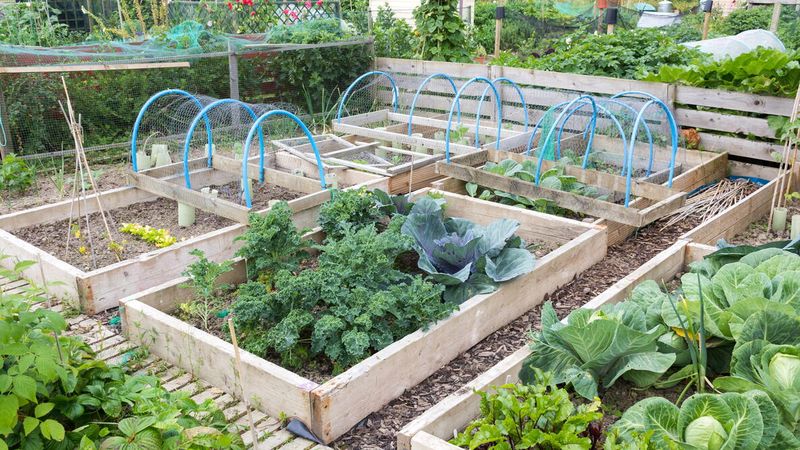
An efficient intercrop this fall does not cancel the need to think about where brassicas go next year. Broccoli, cabbage, kale, collards, mustard, and turnips all belong to the same plant family and share a pest and disease complex that can build up in the soil when the same family returns to the same bed season after season.
NC State’s quick reference guide for home vegetable gardening strongly recommends avoiding repeated planting of the same plant family in the same location, with a suggested rotation interval of three to four years where the garden layout allows it.
Rotation reduces risk rather than eliminating it. Clubroot, black rot, and some soil-dwelling caterpillar pests can persist in the soil even after a gap of several years, and a small residential garden with only two or three beds has limited room to move crops around.
NC State’s IPM guide frames rotation as part of a broader set of cultural practices – alongside sanitation, resistant varieties, scouting, and timely intervention – rather than a standalone solution. If your garden is too small for a true three- to four-year rotation, even moving brassicas to a different part of the bed and pairing that shift with thorough end-of-season cleanup gives some benefit.
Intercropping research consistently shows that land-use efficiency gains are real but variable, which is exactly why the strategy works best as part of a broader plan rather than as a standalone fix. The repeatable approach for next fall is straightforward: choose one main crop and space it for full maturity, add one faster crop only in the gaps, monitor moisture and plant vigor throughout the season, and pull the quick crop the moment it begins to compete with the main crop’s light, roots, or airflow.
Good beds are not the ones packed with the most plants – they are the ones managed closely enough that every plant in them actually finishes well.