
The Two Native Fruit Trees Almost No North Carolina Yard Has, But Every Backyard Should
Walk through almost any North Carolina neighborhood and you will see Bradford pears, crepe myrtles, and boxwoods, but hardly ever a fruit tree that actually belongs here. Two native trees, the pawpaw and the American persimmon, grew wild in our woods long before anyone planted a lawn.
They feed butterflies, birds, box turtles, and you, all while asking for very little care. If you want a yard that works for wildlife and tastes good too, these two deserve a spot.
1. Pawpaw (Asimina triloba)
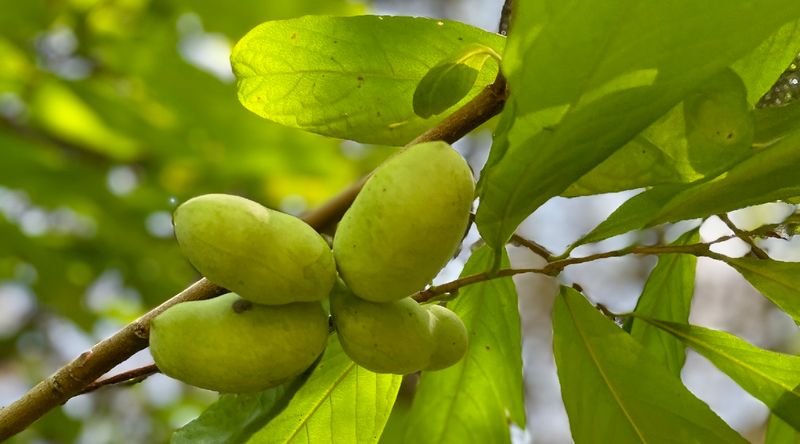
Picture a fruit that tastes like banana custard swirled with mango, growing wild along NC creek banks. That is the pawpaw, the largest edible fruit native to North America.
Most neighbors have never tasted one, which is exactly why you should grow it.
The bigger reason is a butterfly. Pawpaw is the only larval host plant for the zebra swallowtail, so no pawpaw means no zebra swallowtails in your yard.
Plant a couple and you may soon spot those striped wings drifting through every summer.
Pawpaws also feed a crowd. Opossums, raccoons, foxes, wild turkeys, and songbirds go after the fallen fruit, and box turtles are known to snack on it too.
Deer usually leave the leaves alone, since they contain compounds that taste bad to browsers.
Here is the practical part. Pawpaws like moist, rich soil and handle partial shade, so a woodland edge or the spot under taller trees works well in the Piedmont, mountains, or Coastal Plain.
Plant at least two genetically different trees, because they need a partner for cross-pollination.
Fun fact: the odd maroon flowers smell a little like rotting meat to attract flies and beetles instead of bees. Some growers even hang roadkill nearby, though you can safely skip that step.
2. American Persimmon (Diospyros virginiana)
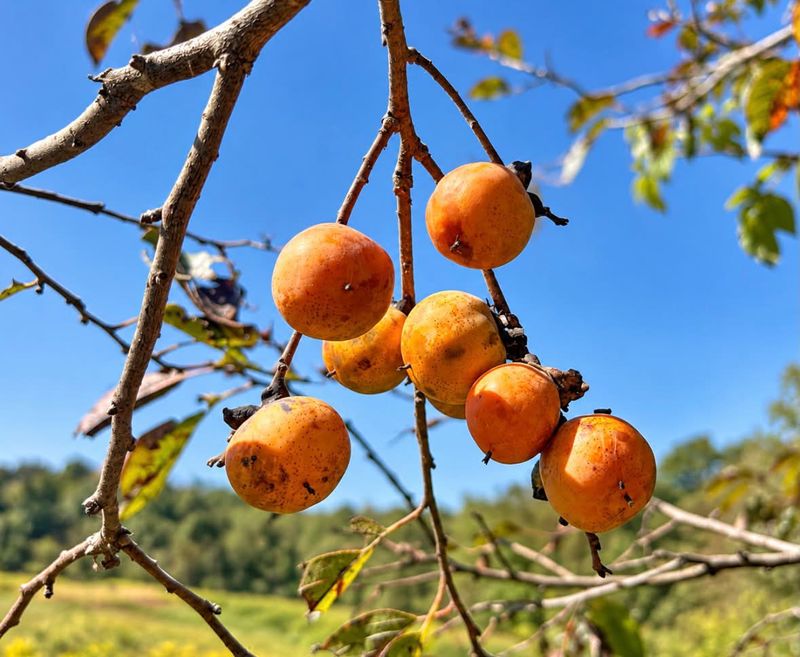
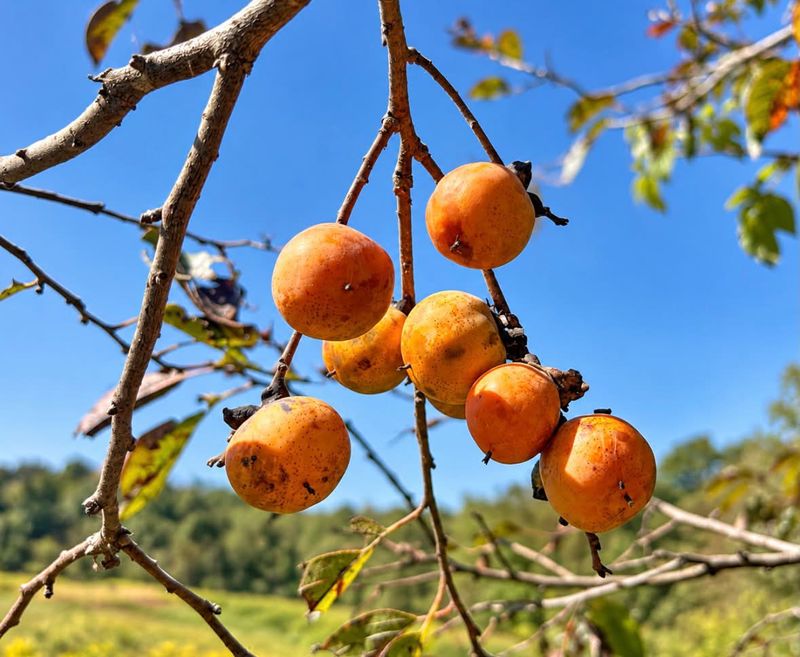
Anyone who bit into an unripe persimmon as a kid remembers the shock. Your whole mouth puckers like it is full of chalk.
Wait until the fruit turns soft and wrinkly after fall cold, though, and it becomes sweet as honey.
Timing makes this tree a wildlife hero. Persimmons ripen from late fall into early winter, right when food gets scarce, and more than 28 animal species eat them.
Deer, foxes, opossums, wild turkeys, and overwintering songbirds all show up for the feast.
The spring flowers offer nectar for native bees and moths, and the leaves host caterpillars like the luna moth. A luna moth flitting under your porch light in May is a pretty sweet reward.
Persimmons are tough. They handle poor clay soil and dry spells once established, and the deep taproot can help hold soil on slopes.
Plant one away from patios and driveways so dropped fruit lands on grass or mulch.
One catch slows people down: most trees are either male or female, and seedlings may take 10 years or more to fruit. Grafted or self-fertile cultivars can bear in just a few years, making this a smart native swap for an invasive Bradford pear this fall.