
The Weed In North Carolina Lawns That Can Help Feed Pollinators Through Parts of Summer While You Try To Pull It
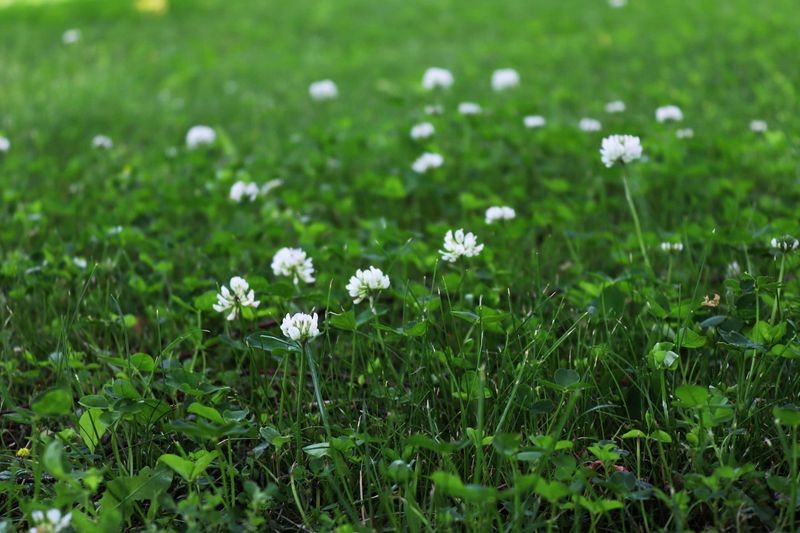
Every summer, North Carolina homeowners yank at a low-growing, three-leafed plant that keeps coming back no matter how often they pull it. That persistent weed is white clover, and it turns out the bees in your yard already know something about it that most of us overlook.
Before you grab the sprayer or the trowel again, it helps to understand what white clover actually does, where it fits in a well-kept yard, and when removing it is still the right call.
The Three-Leaflet Lawn Weed Is White Clover
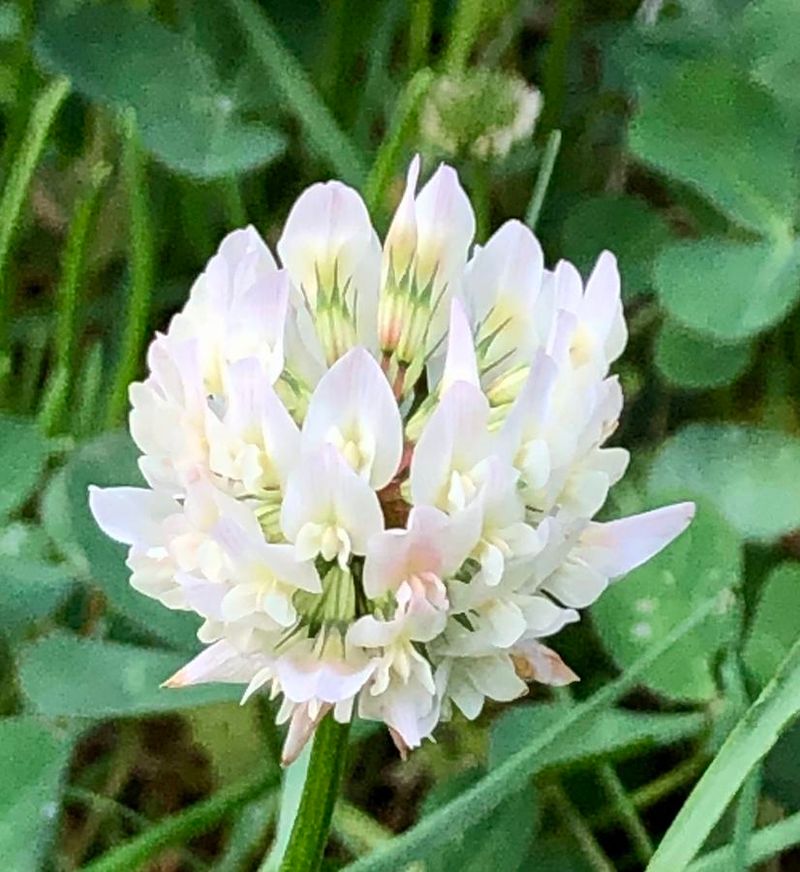
White clover – Trifolium repens – is the plant quietly colonizing lawn edges, bare patches, and low spots across North Carolina from the Coastal Plain to the Piedmont to the mountains. You can confirm the identification quickly: look for low-growing stems that creep along the ground and root wherever a node touches moist soil.
That spreading habit is exactly why patches seem to reappear even after you pull the visible tops.
The leaves are the clearest field mark. Each stem carries three oval leaflets, and most of them show a pale crescent or V-shaped watermark near the center – a detail that sets white clover apart from other three-leafed plants like wood sorrel.
The flower heads are rounded globes made up of many small individual florets, usually white or faintly pinkish-white, held up on upright stalks above the leaf layer. NC State Extension’s white clover profile describes this growth form precisely and is a useful reference if you want to compare what you are seeing against a confirmed description.
NC State lists white clover across all three of North Carolina’s major regions as a lawn weed, a ground cover option, and a pollinator plant – which tells you something about how complicated this plant’s reputation actually is. The NC Extension Gardener Plant Toolbox entry for Trifolium repens notes that its origin is European; it is naturalized throughout North America but is not a North Carolina native.
That distinction matters when you are deciding how much tolerance to extend it. The rest of this article focuses on white clover specifically, not every flowering lawn weed, because the identification shapes every decision that follows.
What Visits a Blooming Patch?
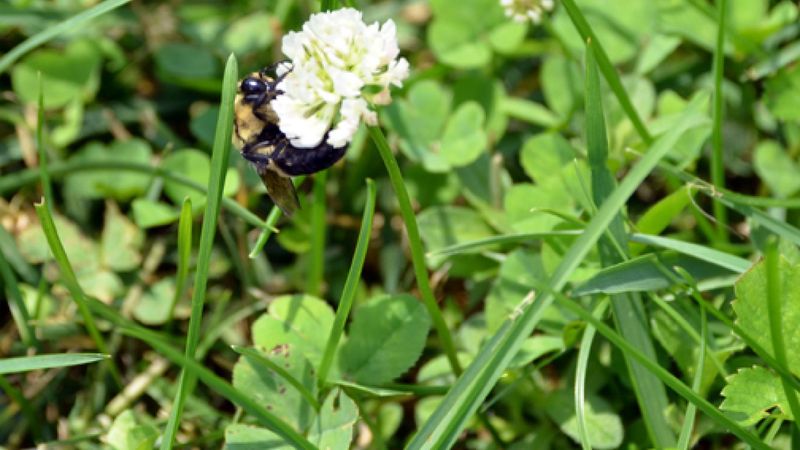
Flowering white clover does not just sit there looking pretty – it offers something tangible to insects that need food. The florets produce both nectar and pollen, and NC State lists native bees, honey bees, butterflies, and moths among the wildlife associated with white clover in bloom.
For a plant most homeowners treat as a nuisance, that is a meaningful list of visitors.
The strongest peer-reviewed evidence comes from a lawn pollinator study conducted in central Kentucky, which recorded roughly 50 insect-pollinator species visiting dandelion and white clover in urban and suburban lawns, including about 37 bee species. White clover attracted proportionately more honey bees and bumble bees than dandelion did, and that pattern was especially pronounced during summer sampling.
The study is careful, geographically specific science, and it is worth being equally specific when you apply it to your North Carolina yard: this was central Kentucky, not a census of every southeastern lawn. The finding is relevant because the landscape type – suburban turf with flowering broadleaf weeds – resembles many North Carolina neighborhoods, but your actual visitor list will depend on which bee species are established locally, what else is blooming nearby, and how your yard is managed.
What the study tells you practically is that a patch of flowering white clover in a residential lawn can attract a variety of bees, with bumble bees and honey bees showing up reliably when flowers are present and conditions are right. NC State’s plant toolbox entry reinforces that native bees and butterflies are genuine visitors, not an occasional sighting.
That is enough reason to pause before pulling every last stem – but not enough to treat a single clover patch as a complete pollinator habitat on its own. The next section explains why the seasonal picture is more complicated than it first appears.
What “All Summer” Gets Wrong
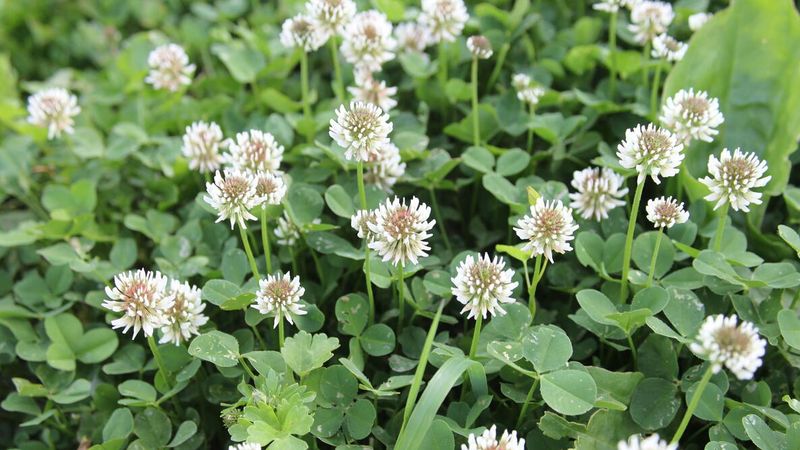
The phrase “all summer” is the part of white clover’s reputation that needs a closer look. White clover can flower from spring into fall, and NC State’s plant toolbox lists both spring and summer bloom periods for North Carolina.
That range sounds generous, but flowering intensity is a different matter from flowering possibility.
Penn State Extension identifies late spring to early summer as the peak flowering window for white clover in lawns. Heat, drought, mowing frequency, and soil moisture all affect how many flowers a patch produces at any given time.
A clover patch that buzzes with bees in May can go largely dormant on blooms during a hot, dry July stretch, then rebound if temperatures ease and rain returns. The honest framing is that white clover can provide nectar and pollen during parts of summer – not that one patch continuously sustains pollinators from June through August regardless of conditions.
That correction matters because it changes what you should expect from a clover patch you decide to keep. It also points toward why diverse plantings make a stronger long-term contribution to pollinator support.
NC State research found that adding wildflower plantings near lawns nearly doubled the number of observed pollinator species compared to turf alone – a result that reflects what plant variety and bloom succession can do across a season. That study was not a comparison of white clover against native plants, and it does not tell us that clover alone produces the same outcome.
What it does show is that a lawn patch of clover, however useful during its flowering windows, works best as one part of a broader yard habitat rather than the whole answer. Penn State’s Center for Pollinator Research cautions that non-native lawn weeds tend to favor common generalist pollinators and may not improve native-pollinator communities or overall biodiversity the way a diverse, locally appropriate planting can.
Leave a Patch Where It Fits
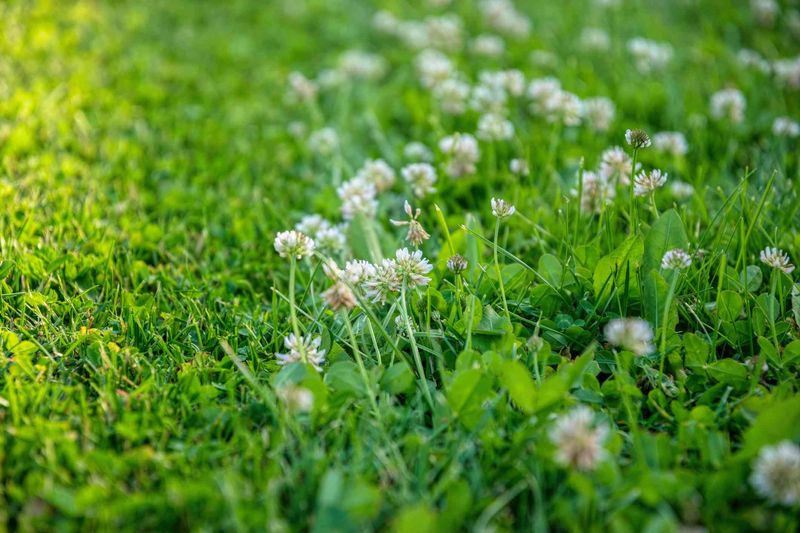
Selective tolerance is a practical middle ground, and it starts with location. Low-traffic sections of the yard – a strip along a fence line, the far edge of a back lawn, or an area near existing pollinator plantings – are reasonable places to let a clover patch flower.
High-use play spaces, the area around a patio where people walk barefoot, and the border immediately next to vegetable or flower beds are better kept clover-free for reasons covered in the safety and removal sections ahead.
NC Cooperative Extension’s guidance on turf weeds includes a clear caution: allowing weeds to proliferate can increase weed pressure in adjacent vegetable, flower, groundcover, and shrub beds. White clover spreads through creeping stems that root at the nodes, so a patch left to expand without a defined edge will eventually move into spaces where you do not want it.
Deciding in advance where the patch ends – and checking that boundary a few times each season – is what makes selective tolerance actually work rather than just postponing a larger removal job.
Keeping a patch also does not mean treating white clover as a native wildflower or a substitute for diverse North Carolina-appropriate plantings. Pollinator researchers at Penn State note that non-native lawn weeds tend to serve common generalist species rather than the full range of native pollinators that a more varied, locally appropriate planting can support.
White clover is a non-native plant naturalized from Europe, as NC State’s plant toolbox confirms, and its value is real but limited. Think of a tolerated patch as a small supplemental food stop, not a habitat plan.
The decision is not all-or-nothing: you can keep clover where it contributes without letting it run the whole yard.
How to Keep Flowers Available

Keeping a clover patch productive for bees means thinking about mowing timing before anything else. Mowing removes flower heads, which cuts off nectar and pollen availability until the plant re-blooms.
NC Cooperative Extension specifically identifies reduced mowing and allowing clover to bloom as practices that can support pollinators in turf settings. When flowers are actively open and bees are visiting, delaying the mower on that section preserves the resource.
Once the patch has been mowed, flowers will return over the following days to weeks depending on conditions.
Less frequent mowing at a somewhat higher blade height generally gives flowering plants more time to develop between cuts. Iowa State Extension’s pollinator lawn guidance recommends mowing at least 3 inches high and roughly every two weeks as a general framework for supporting flowering in a mixed lawn.
That guidance was developed for a different region and should be adapted to your specific turfgrass type – bermudagrass, centipedegrass, tall fescue, and zoysia each have their own recommended height ranges for North Carolina conditions. Check NC State recommendations for your grass before adjusting your routine.
Also keep in mind that mowing less frequently can allow other unwanted weeds to flower and set seed alongside the clover, so monitoring the patch for species you do not want to encourage is part of the plan.
On the fertilizer and chemical side, skip any broadleaf weed-and-feed product on sections you are managing for clover. Those formulations are designed to kill broadleaf plants, and white clover will not survive them.
White clover does form a relationship with Rhizobium bacteria that can fix atmospheric nitrogen, which NC State’s cover crop nitrogen fixation resource explains in detail. That biological process is real, but the amount of usable nitrogen that actually transfers to surrounding turf depends on the plant’s growth, biomass, soil conditions, and management.
A clover patch in a home lawn is not a replacement for a proper fertilization program based on a soil test.
Protect People and Pollinators
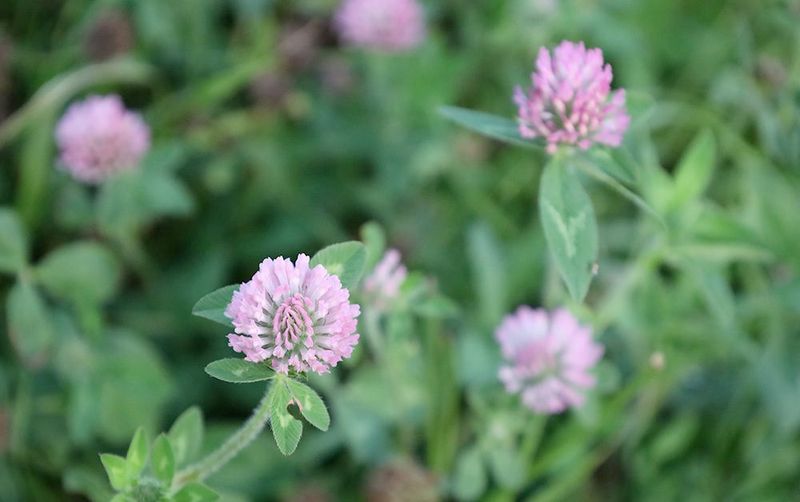
A flowering lawn patch changes the activity level in your yard, and that is worth accounting for before you decide where to leave clover blooming. Bees foraging on flowers are generally focused on the flower, not on the people nearby, but that does not mean the location is irrelevant.
NC State Extension’s guide to bees in turf notes that solitary ground-nesting bees are generally considered low-risk, but management may be appropriate when bee activity overlaps with children at play, pets, barefoot users, or anyone in the household with a severe bee allergy. The risk level depends on the people involved, not just the bee species present.
A practical approach is to keep flowering clover away from the areas where your household actually moves around barefoot – near the back door, around a play set, or across a main path through the yard. A patch along a fence line or at the far edge of the property poses less daily overlap.
If someone in the household carries an epinephrine auto-injector for bee stings, that household’s threshold for tolerating bee activity near living spaces is different from one where no one has a severe allergy, and that difference should shape where you draw the boundary.
On the pesticide side, the rule is straightforward: avoid applying insecticides while clover or other flowering weeds are attracting bees. NC State’s turf pollinator best management practices recommend removing flower heads before an insecticide application when treatment cannot be delayed, preventing spray drift onto flowering plants, and following all label directions.
Insecticide exposure during active foraging can harm the bees you are trying to support, so timing and targeting matter as much as product choice. Protecting people and protecting pollinators are not competing goals here – they both point toward keeping flowering patches away from high-activity zones and being deliberate about when and where any chemical is applied.
When Removal Makes Sense
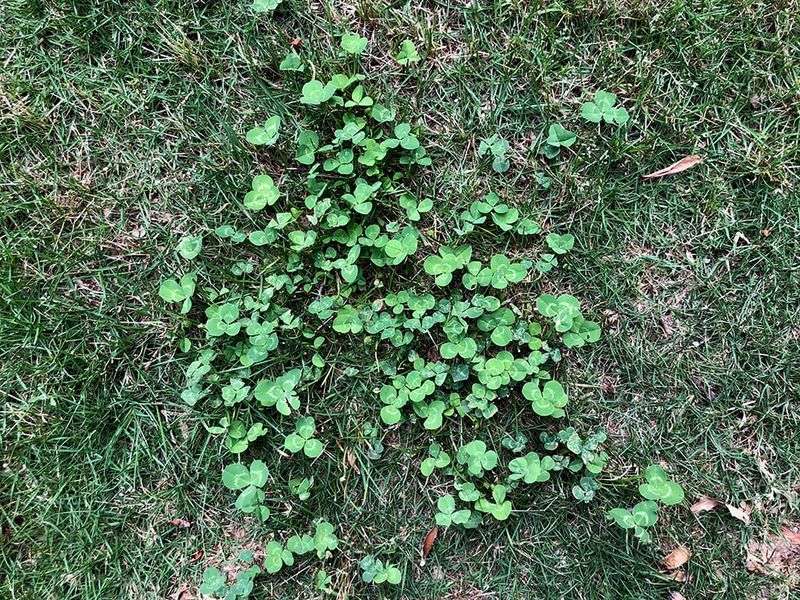
Removing white clover is the right call in several clear situations: when it has crept into a vegetable bed, flower border, groundcover planting, or shrub area; when it is crowding out turf or other plants you are trying to establish; or when it is flowering in a high-traffic zone where bee activity creates a genuine conflict for your household. The plant’s creeping stems root at the nodes, so surface pulling without getting the stem network often just delays regrowth rather than ending it.
For small patches, hand-pulling after a rain or thorough watering gives you the best chance of getting the root structure. Work along the creeping stems rather than just grabbing the visible leaf cluster, and check the surrounding area for stems that have already rooted nearby.
NC State Extension’s white clover publication points toward turf and site management as a more durable long-term approach than repeated spraying alone. Improving turf density through proper seeding, overseeding bare areas, and managing nitrogen and phosphorus levels reduces the open, low-competition conditions that white clover exploits.
A thick, healthy stand of the right grass for your region and site is the most effective competition white clover faces.
When a patch is too large or well-established for hand removal and herbicide becomes necessary, use only a product labeled for your specific turfgrass species and follow the North Carolina label and pesticide guidance. The 2025 North Carolina Agricultural Chemicals Manual provides current herbicide guidance for turf situations.
Keep in mind that broadleaf herbicides are not selective about which broadleaf plants they affect – they will remove desirable flowering plants alongside the clover. And consistent with the safety guidance already covered, NC State’s turf pollinator best practices are clear that herbicide or insecticide applications should not happen while bees are actively visiting flowers.
If the patch is still blooming, mow it first to remove the flower heads, wait for bee activity to drop, and then treat. NC Cooperative Extension’s turf weed guidance reinforces that monitoring and selective management, rather than blanket treatment, leads to better outcomes for both the lawn and the surrounding yard.
Choose Selective Tolerance Over Absolutes
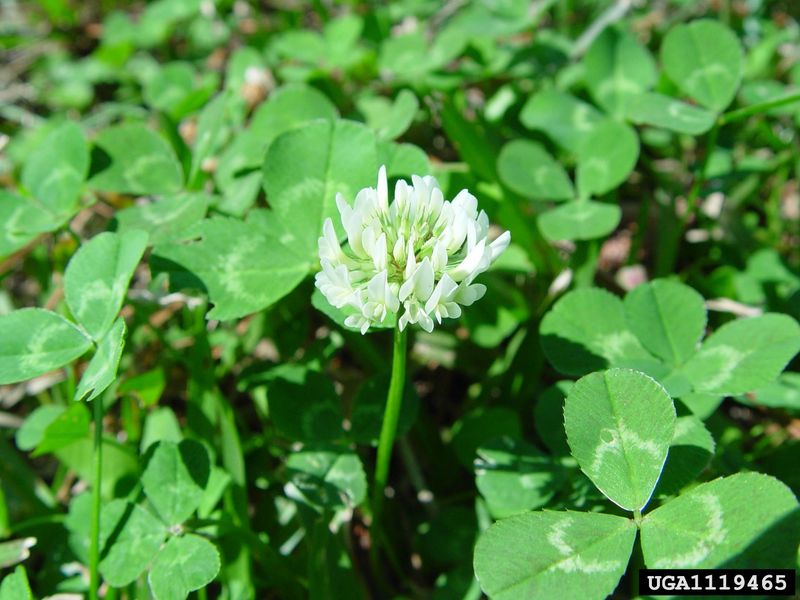
A reasonable action sequence looks like this: confirm the plant is white clover using the leaf and flower details described earlier, then decide whether any part of your yard has a low-traffic spot where a flowering patch fits without conflicting with play areas, barefoot paths, or valued beds. If it does, mark that boundary and hold it through the season by checking the edges and mowing the rest of your lawn on your normal schedule.
Delay mowing the kept patch while flowers are actively open, and skip broadleaf herbicide products on that section entirely.
Where clover has moved somewhere it does not belong – into a bed, across a main path, or into a space where bee activity creates a genuine household concern – remove it deliberately using the hand-pulling and turf-improvement approach first, with herbicide as a last resort applied according to the North Carolina label. NC Cooperative Extension and NC State’s plant toolbox both treat white clover as a plant that rewards managed coexistence rather than either blanket removal or blanket acceptance.
White clover can provide a limited food source for some pollinators during favorable flowering periods, but it should not replace a diverse planting of North Carolina-appropriate native plants, which offer resources for a broader range of pollinators across more of the season. Pollinator researchers consistently point toward plant variety and local species as the foundation of meaningful habitat.
You do not have to choose between a presentable lawn and a yard that supports wildlife – the choice is really about where you draw the line, not whether you draw one at all.