
The Weed You Fight All Summer In Cracked Soil Is Actually One Of The Best Omega-3 Greens You Grow
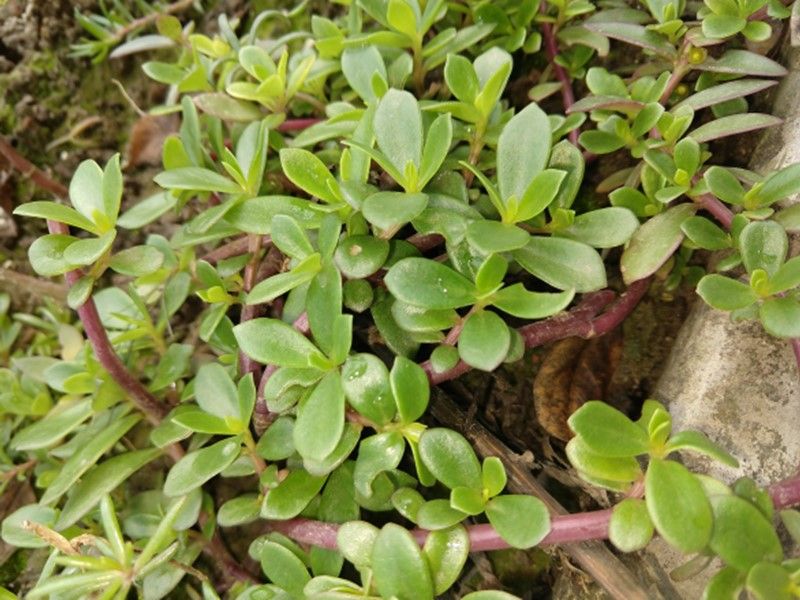
Most gardeners spend the summer yanking purslane out of every crack and dry corner of the yard, never realizing they are pulling up a plant people have eaten for centuries. Common purslane is a drought-tolerant summer annual, and research shows its leaves contain a notable amount of plant-based omega-3 fatty acid.
Before you toss the next handful into the compost, it is worth knowing what you actually have, whether your site is suitable for harvest, and how to manage the plants you do not want coming back next year.
Why purslane appears in summer cracks
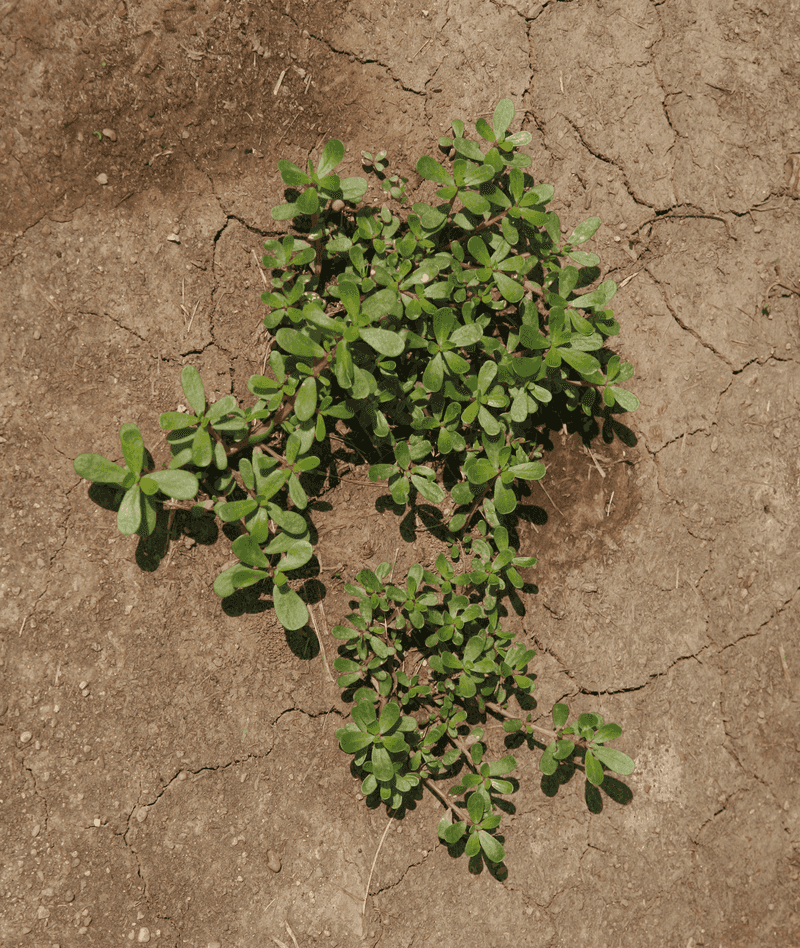
Purslane shows up in the same spots every summer for a simple reason: the plant is built for heat and dry conditions. Common purslane (Portulaca oleracea) is a warm-season annual that germinates when soil temperatures rise and thrives in the kind of open, disturbed ground that most vegetables find difficult.
Pavement cracks, bare patches between rows, and baked garden edges are exactly where it feels at home.
The secret is in its tissues. Purslane stores water in its thick, fleshy stems and leaves, which gives it a head start when rain is scarce and soil hardens.
Penn State Extension’s purslane profile describes the plant as tolerating moderate drought, and a separate Penn State resource on turfgrass weeds notes that under more extreme dry conditions purslane can drop leaves as a stress response. Tolerance is not the same as immunity: a plant sitting in a bone-dry crack for weeks will show it.
That distinction matters for anyone thinking about harvest. A purslane plant growing in cracked pavement is proof of the plant’s drought tolerance, not proof that it is safe or suitable to eat.
Growing conditions, soil history, and nearby pesticide use all factor into whether a specific plant is a reasonable candidate for your plate. The reframing from weed to potential salad green is real, but it starts with understanding why the plant is there in the first place, and then asking a few more questions before picking it.
Identify purslane before you pick it
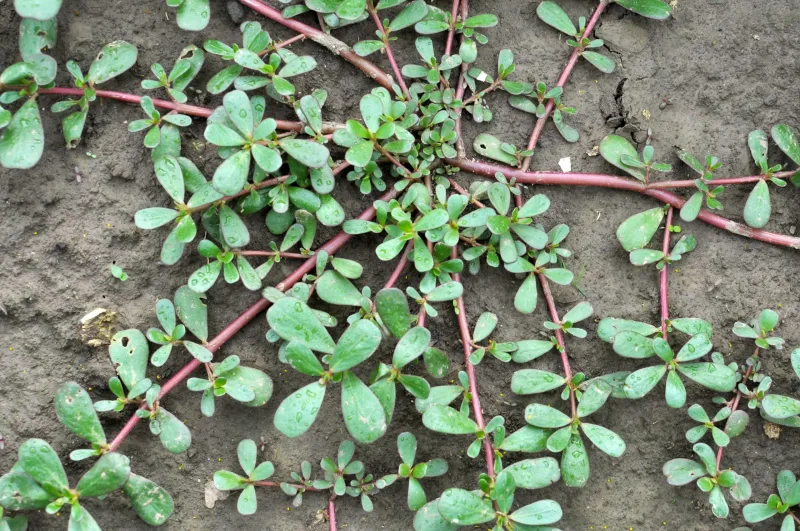
Purslane has a look that becomes easy to recognize once you know what to check. The stems spread low and wide, often turning reddish or pinkish as the plant matures.
The leaves are small, oval, and notably thick, with a smooth, almost waxy surface. Tiny yellow flowers, usually five-petaled, appear at stem joints and open in morning sunlight.
The whole plant has a slightly succulent feel when you press a leaf between your fingers.
The plant that causes the most confusion is prostrate spurge, and mixing them up is a real concern. Spurge also grows flat against the ground in hot, dry spots, and at a quick glance the two can look similar.
The clearest way to tell them apart is to snap a stem: spurge bleeds a milky white sap, while purslane produces clear sap. Mississippi State University Extension’s guide to common purslane flags this milky sap as the key distinguishing feature, and also notes that spurge can cause illness and skin irritation, which makes correct identification genuinely consequential.
A single feature is not enough to go on. Photo identification apps can misread plants, especially when lighting is poor or the plant is young.
Cross-check what you see against multiple characteristics: stem color, leaf texture, sap color, flower color, and overall growth habit. If any feature does not match, or if you are uncertain about even one detail, set the plant down and consult a reliable local extension resource or a knowledgeable gardener before eating anything.
Confidence in identification is the first gate, and there is no reason to rush past it.
Check the harvest site and rinse the leaves
Knowing what plant you have is only the first step. Where that plant has been growing matters just as much, and the two questions need to be answered separately.
A correctly identified purslane plant growing in a spot that has been treated with herbicides, pesticides, or unknown chemicals is not a safe harvest, regardless of how healthy the plant looks. Washing does not neutralize chemical residues, and it cannot undo what the soil or nearby spray applications have already delivered to the plant’s tissues.
University of Florida IFAS Extension’s purslane publication is direct on this point: harvest only from areas you can confirm have not been treated with pesticides. If you are unsure about the history of a spot, whether it is a roadside crack, a neighbor’s fence line, or a bed that was managed by someone else, leave those plants alone.
The uncertainty itself is reason enough to pass.
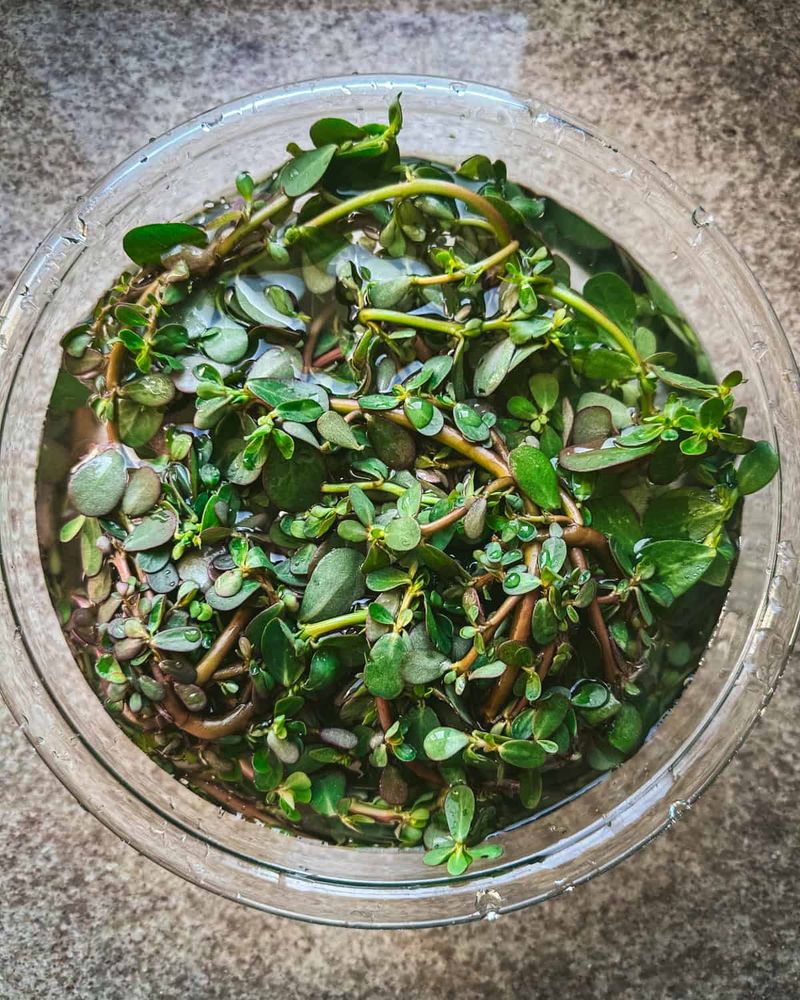
For purslane growing in a site you know well and trust, rinse the harvested leaves and stems thoroughly under cool running water before eating them. The FDA’s guidance on selecting and serving produce safely advises against using soap or commercial produce washes on fresh vegetables, since residues from those products can linger on porous plant surfaces.
A thorough rinse under running water reduces microbial contamination meaningfully, but no washing method eliminates it entirely. Treat harvested purslane the same way you would any fresh garden green: rinse well, use it soon, and refrigerate what you do not eat right away.
Purslane’s omega-3 is ALA, and amounts vary
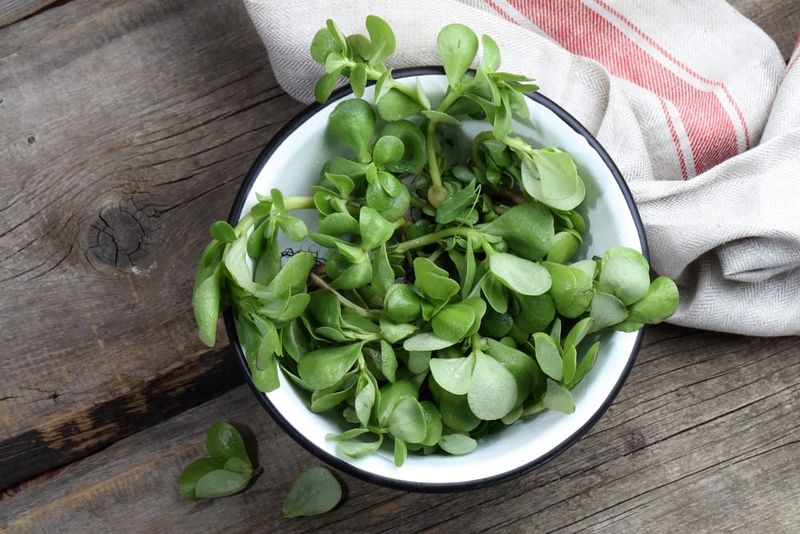
When researchers talk about omega-3 fatty acids in purslane, the specific compound they are measuring is alpha-linolenic acid, or ALA. ALA is a plant-based fatty acid, and it is different from the omega-3s found in fatty fish.
Fish-derived omega-3s are primarily EPA and DHA, which the body uses directly. ALA has to be converted by the body before it can be used in the same ways, and that conversion rate is limited.
Purslane is not a substitute for fish in any nutritional sense, and describing it that way would misrepresent what the research actually shows.
What the research does show is meaningful on its own terms. A 1992 study by Simopoulos and colleagues measured approximately 300 to 400 milligrams of ALA per 100 grams of fresh purslane leaves and found that purslane contained more ALA than spinach in those tested samples.
That comparison applies to the specific plants and conditions in that study, not to every purslane plant in every garden. Growing conditions, soil type, water availability, and how much sun the plant receives all influence fatty acid content.
A peer-reviewed review of purslane’s nutritional attributes confirms that ALA is present across samples but notes that reported values vary. Research on harvest timing adds another layer: a study on polyunsaturated fatty acid concentrations at different stages of harvest found that ALA levels shift as the plant matures, which means younger leaves and older leaves from the same plant may not carry the same amount.
Purslane is a real and worthwhile source of plant-based ALA among leafy vegetables. Translating that into a ranking above all other greens, or into a health treatment, goes further than the evidence supports.
Remove unwanted plants before they set seed
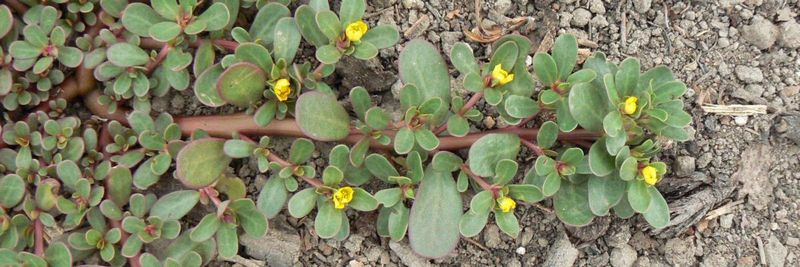
Purslane that you do not want in your garden is best dealt with early, and timing is the key. Each plant can produce a very large number of seeds, and those seeds are known to remain viable in the soil for years, sometimes decades.
Waiting until the plant flowers and sets seed means next summer’s problem is already in the ground before you pull a single stem this year.
The goal is to remove plants before flowers finish and seed capsules form. University of Florida IFAS Extension notes that purslane’s seed production and longevity make early removal the most practical management approach for gardeners who want to limit its spread.
Hand-pulling works well in small beds, especially after rain or irrigation when the soil is loose enough to get the roots out cleanly.
One detail catches many gardeners off guard: uprooted purslane does not die as quickly as most pulled weeds. Stems and fragments left on moist soil can re-root and continue growing, which means a pile of pulled plants sitting on a damp bed edge may not actually be removed at all.
Cornell University’s weed profile for common purslane points out this survival trait as a reason to dispose of pulled plants properly rather than leaving them on the ground. Let uprooted plants dry on a hard surface in full sun, or bag them and send them out with yard waste rather than composting them.
No single removal session will clear purslane permanently from a garden with established seed banks, but consistent early removal each season does reduce how much comes back the following year.
Keep the oxalate evidence in proportion
Purslane contains oxalate, a naturally occurring compound found in many common vegetables including spinach, beets, and Swiss chard. For most people eating ordinary portions, oxalate from food is not a concern.
The body handles it through normal digestive and kidney processes, and moderate consumption of oxalate-containing vegetables is part of a typical varied diet.
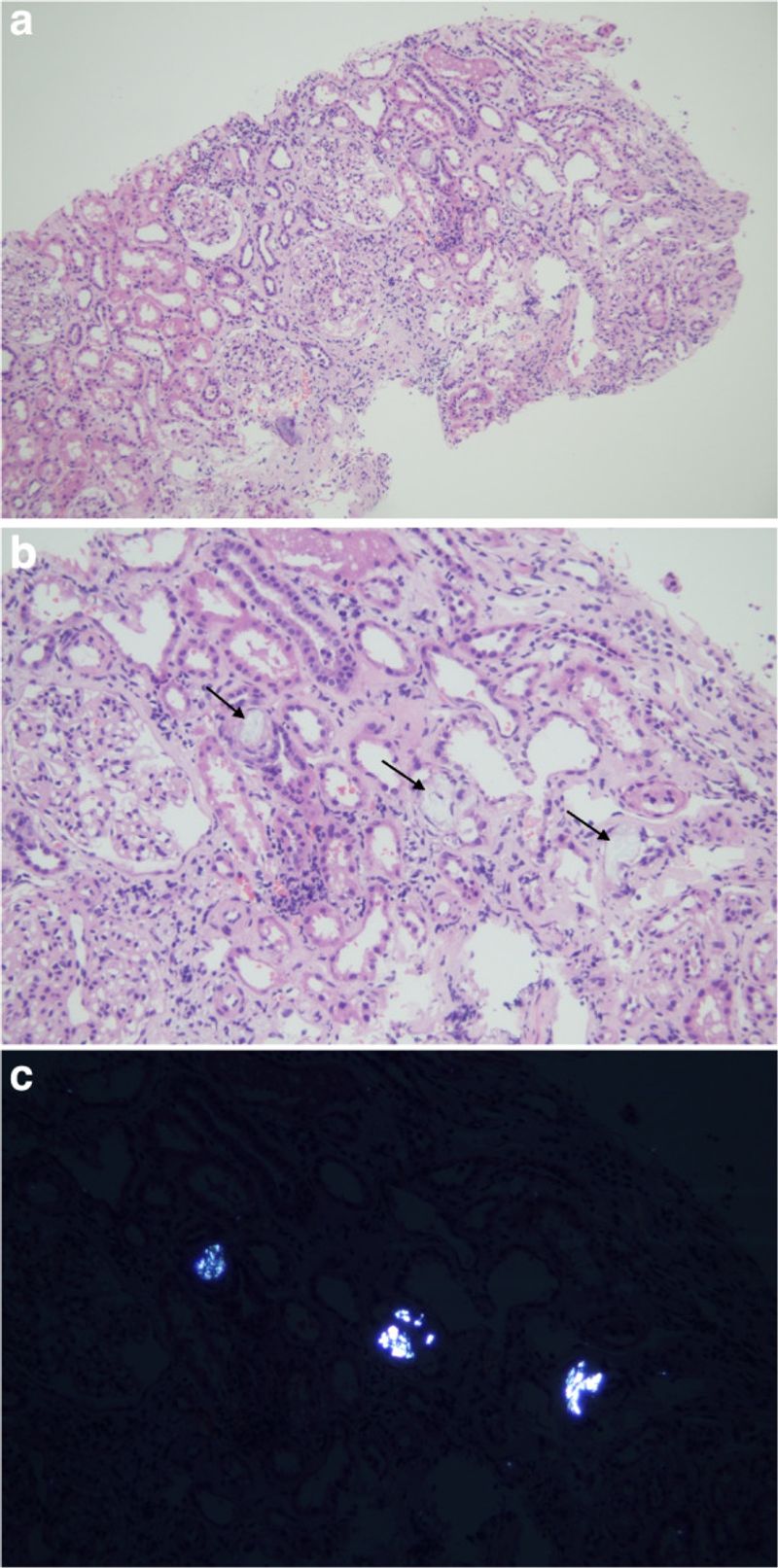
There is, however, a published case report describing oxalate-related kidney injury following purslane consumption. A single case report documents what happened to one person under specific circumstances; it does not establish that typical servings carry the same risk for the general population.
Reading that report as a blanket warning against purslane would overstate what it shows, just as ignoring it entirely would be careless.
The practical middle ground is straightforward. If you have a history of kidney stones, reduced kidney function, or another condition your doctor has connected to oxalate intake, ask your doctor before adding purslane to your regular diet.
That conversation is worth having regardless of how the plant is prepared or how small the serving. For everyone else, the oxalate content in purslane is one factor among several to keep in mind, not a reason to treat the plant as off-limits.
The clearer rule applies to everyone: harvest only plants you have positively identified from a site you know is suitable. A purslane plant you cannot confidently identify or cannot vouch for stays in the ground, not on your plate.