
These Underrated North Carolina Native Shrubs Fill Shady Corners And Keep Berries For Birds Until Spring
That dark corner under your oaks does not have to be bare dirt and leftover leaves. A handful of North Carolina native shrubs actually like a little shade, and many of them hold their berries deep into winter when birds are hungriest.
Planting them is one of the easiest ways to feed robins, bluebirds, and cedar waxwings while pushing out invasives like nandina and privet. Here are eight tough, local shrubs that turn a forgotten spot into a winter bird cafe.
1. American Beautyberry (Callicarpa americana)
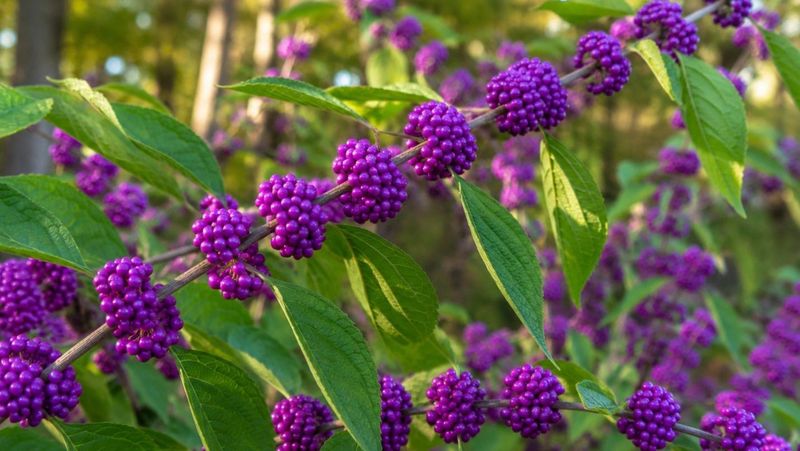
Neon purple is not a color you expect to find growing wild in a Carolina woods. Yet there it is every fall, wrapped in tight clusters around the stems of American beautyberry.
One plant expert put it simply: no other plant in the Southeast makes fruit in that shade.
Beautyberry grows naturally along woodland edges from the Coastal Plain through the Piedmont. It handles partial shade well, though in deep shade it stretches out and gets a bit lanky.
Eastern towhees, mockingbirds, catbirds, robins, and sparrows pick at the berries from fall into winter, and foxes and opossums grab the ones that drop.
Want more berries next year? Cut the whole plant back to about two feet tall in February or March.
Fruit forms on new wood, so a hard trim means more flowers for small native bees and more fruit for birds.
Here is the steward swap: if you have invasive Chinese beautyberry or nandina in your yard, pull it and plant this one instead. Nandina berries can even be toxic to cedar waxwings, so the trade does real good.
2. Winterberry Holly (Ilex verticillata)
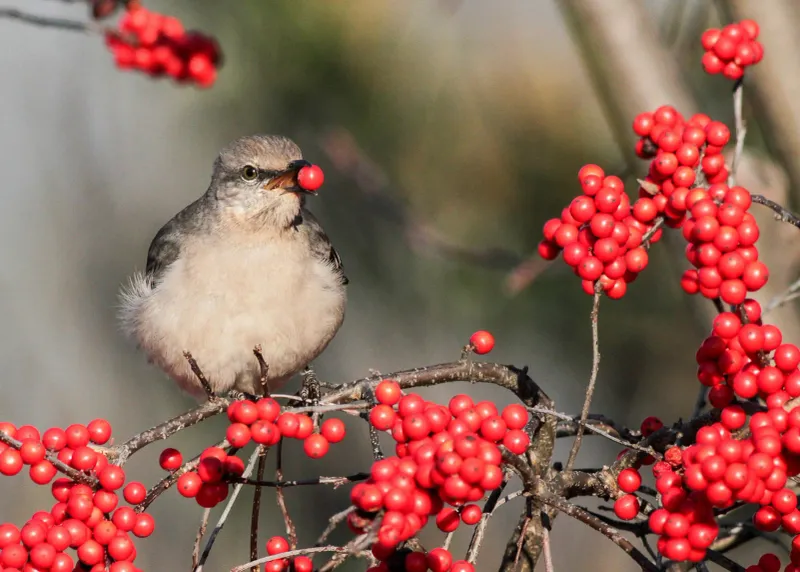
Picture a gray January morning, the yard all brown and bare. Then a flock of cedar waxwings drops onto one bush glowing with red berries and strips it in minutes.
That bush is winterberry, and it is a show-stopper when nothing else is.
Unlike most hollies, winterberry drops its leaves in fall. That leaves the scarlet fruit fully on display right when birds need it most.
At least 48 bird species eat the berries, including bluebirds, robins, and those hungry waxwings.
It takes part shade and loves soggy soil, so it fits that wet low spot where nothing else thrives. Coastal gardeners will like that it shrugs off salt spray, and deer tend to leave it alone more than many shrubs.
One catch matters a lot. Only female plants make berries, and they need a male nearby.
Plan on one male for every five females, and ask your nursery to label them.
3. Spicebush (Lindera benzoin)
Scratch a twig and sniff. That spicy, almost wintergreen smell is how old-timers in the Carolina hills found spicebush in the woods.
This shrub is built for life under trees. Give it the filtered light under oaks or maples and it settles right in.
Tiny yellow flowers open in very early spring, feeding native bees when almost nothing else is blooming.
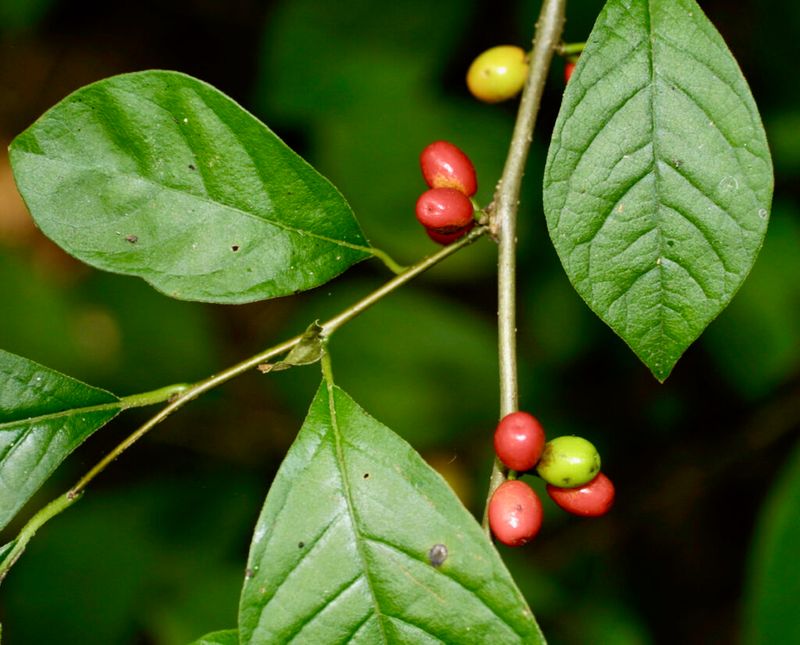
By late summer, female plants carry shiny red berries rich in fat, perfect fuel for thrushes and other migrating songbirds. Like winterberry, you need a male and a female nearby for fruit.
In fall the leaves turn a clear butter yellow that lights up a shady corner.
Fun fact: spicebush is a host plant for the spicebush swallowtail, whose caterpillars look like tiny green snakes with fake eyes. Deer usually skip it too.
4. Inkberry Holly (Ilex glabra)
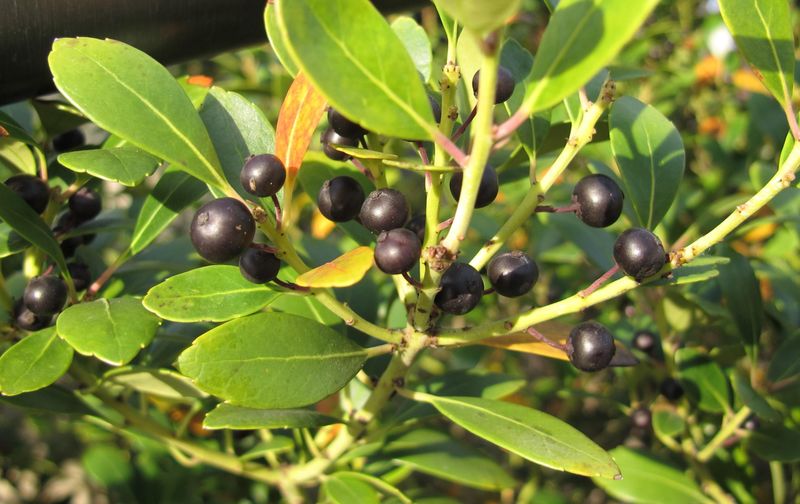
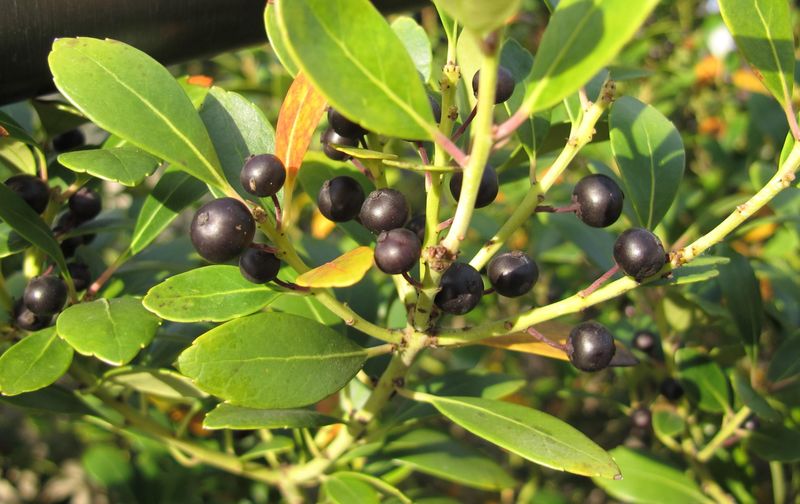
Most of the shrubs on this list go bare in winter. Inkberry stays green, and that makes it a quiet hero.
Soft, glossy leaves with no prickly spines give it a neat, tidy look near patios and walkways. It is happy in part shade and does not mind wet feet, so rain gardens and soggy edges suit it fine.
Compact types fit small yards without constant trimming.
Small black berries hang on through winter and get eaten late in the season, after flashier fruit is gone. Even more useful is the shelter.
On cold, windy nights, the thick evergreen branches give cardinals, wrens, and sparrows a safe place to roost.
If you are tearing out invasive privet or a non-native boxwood hedge, inkberry is a smart native replacement that keeps the same green wall.
5. Possumhaw (Ilex decidua)
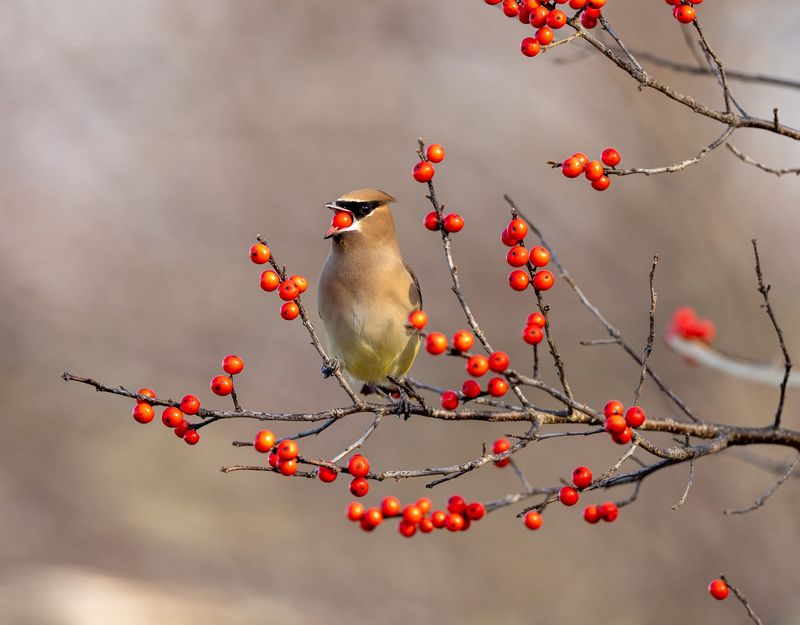
Ever noticed a scraggly bush along a creek in February, bare except for bright orange-red berries? You probably spotted possumhaw, one of the most overlooked natives in the state.
It is a cousin of winterberry but tougher about dry clay, so it works in Piedmont yards that are not wet. It handles part shade and slowly grows into a small multi-stemmed tree.
Here is the bird-friendly trick. The berries are not very tasty early on, so birds tend to leave them alone until late winter.
That means fruit is still hanging when robins, bluebirds, and mockingbirds come looking in February and March.
As with all hollies, plant a male nearby so the females set fruit. Possums really do eat the dropped berries, which is how it got the name.
6. Arrowwood Viburnum (Viburnum dentatum)
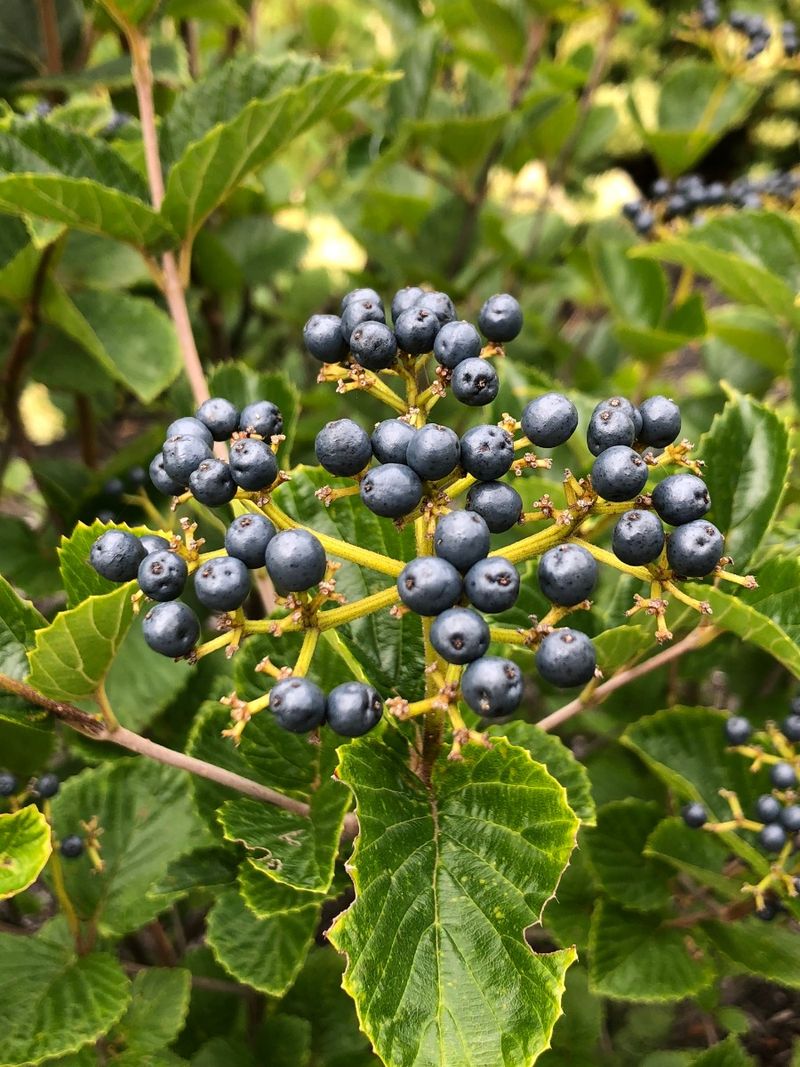
Native people once used its straight young stems for arrow shafts, which is where the name comes from. Today it is better known as a bird magnet.
Arrowwood grows in sun or part shade and handles most North Carolina soils. Flat white flower clusters in late spring pull in butterflies and native bees.
By fall, those turn into dark blue berries that bluebirds, catbirds, and thrushes love.
Leaves shift to red and purple in autumn, adding color to a dim corner. Plant two or three different plants rather than one, since cross-pollination gives you heavier fruit.
Many of its berries get eaten in fall, so pair it with hollies that hold fruit longer. Together they spread the buffet across the whole cold season.
It also makes a fine native swap for invasive burning bush.
7. Coralberry (Symphoricarpos orbiculatus)
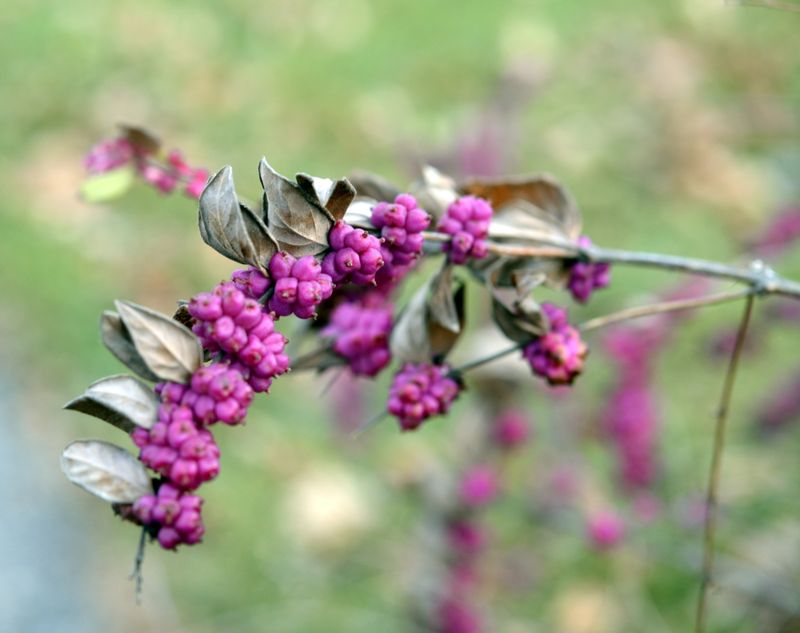
Low, spreading, and loaded with little pink-purple beads, coralberry looks like someone strung tiny candy along its branches.
It only grows two to four feet tall, which makes it ideal for shady slopes and the ground under trees. Spreading roots hold soil in place, so it doubles as erosion control on a bank where grass keeps failing.
Berries often cling to the stems all winter. Birds tend to eat them late, after other foods run out, so they act like an emergency pantry for robins, bobwhites, and wintering sparrows.
The thick, low cover also shelters ground birds and may give box turtles a shady hiding spot in summer.
Use it in place of invasive English ivy or periwinkle under trees. You get a living groundcover that actually feeds wildlife.
8. Yaupon Holly (Ilex vomitoria)
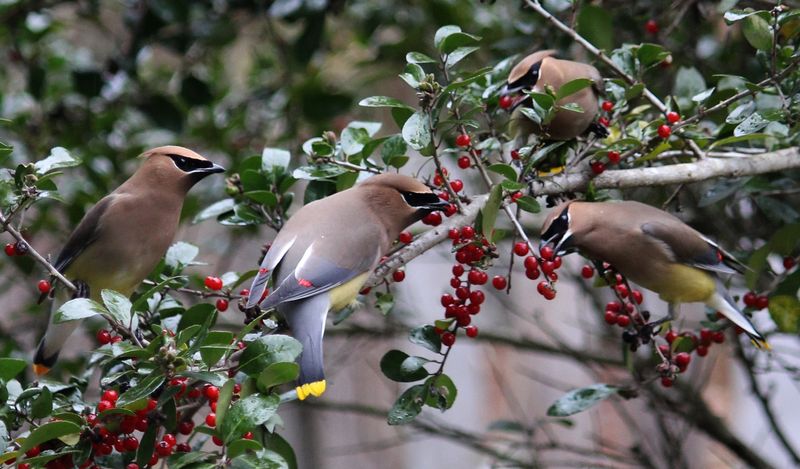
Long before coffee reached the Carolina coast, people there brewed a caffeinated tea from yaupon leaves. It is the only native plant in North America with caffeine.
For your yard, though, the real draw is the berries. Female plants are covered in small, shiny red fruit that often lasts all winter.
Mockingbirds guard them fiercely, and waxwings and robins swoop in for late-season feasts.
Yaupon is evergreen, takes part shade, and handles sandy soil, salt, and drought. It grows wild on the Outer Banks and does well across the Coastal Plain and Piedmont.
Dense branches give birds year-round cover.
It makes an easy swap for invasive Chinese or Japanese hollies. Just buy female plants for fruit, since wild males nearby usually handle the pollination.