
This Native North Carolina Plant Keeps Goldfinches Feeding In Your Yard Into Fall
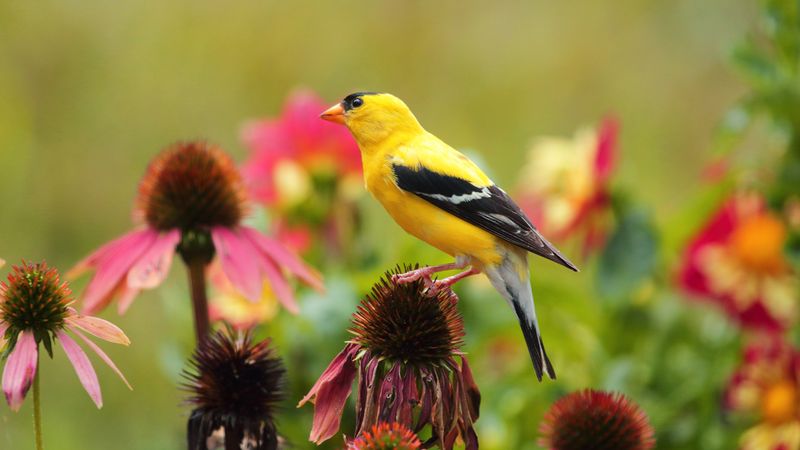
A small native perennial called orange coneflower can turn a sunny North Carolina yard into a natural goldfinch feeding spot from late summer well into fall. Unlike a plastic feeder that needs constant refilling, this plant produces seed-packed heads that goldfinches cling to and pick clean on their own schedule.
Knowing which plant to buy, where to put it, and how to manage it makes the difference between a thriving patch and a missed opportunity.
Start with the right Rudbeckia
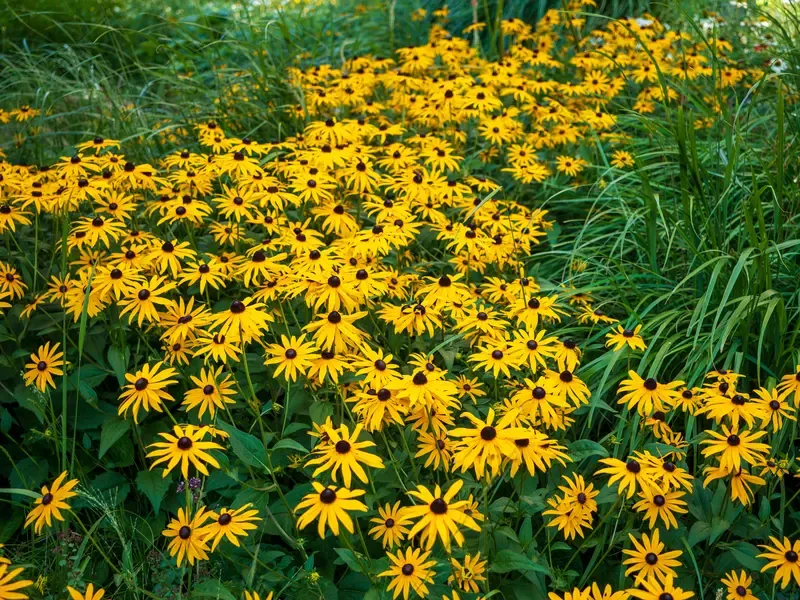
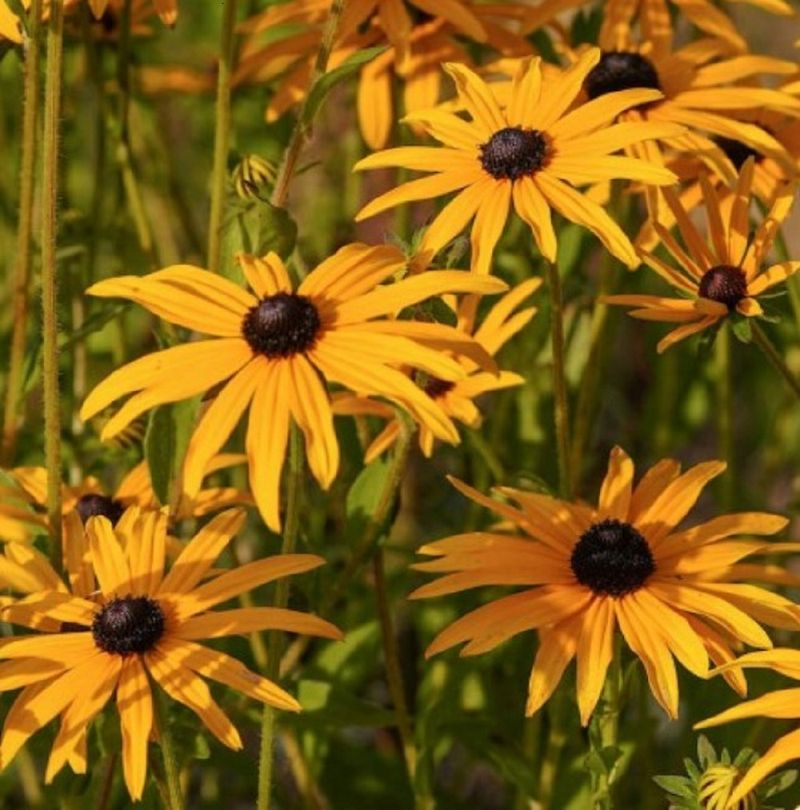
Garden centers in North Carolina sell several plants under the name “black-eyed Susan,” and that overlap causes a common buying mistake. The plant this article is about is orange coneflower, Rudbeckia fulgida, a true herbaceous perennial native to the eastern United States and documented by NC State Extension as native across the Coastal Plain, Piedmont, and Mountains.
At maturity it typically reaches two to three feet tall and one to two feet wide, forming a spreading clump through underground rhizomes.
The clumping, returning nature of R. fulgida is exactly what makes it a well-supported match for the “plant once” framing. It comes back year after year, gradually widening its footprint, and produces new seedheads each fall without requiring replanting.
That reliable recurrence is the core of its value for goldfinch habitat.
The confusion with “black-eyed Susan” is real and worth taking seriously before you shop. NC State also uses that common name for Rudbeckia hirta, a separate species that is generally treated as an annual, biennial, or short-lived perennial rather than the dependable clumping perennial described for R. fulgida.
Both species are native to North Carolina and both can feed goldfinches, but R. hirta’s shorter life cycle makes it a weaker fit for a planting you expect to return and expand each season.
When you shop, ask for Rudbeckia fulgida by its scientific name, or look for named cultivars such as ‘Goldsturm’ that are sold as R. fulgida. Garden centers often carry cultivars rather than wild-type plants, which is fine, but keep in mind that cultivar performance can vary in form and that wildlife value should not be assumed identical across every ornamental selection without cultivar-specific evidence.
Buying the correctly identified species is the single most important step before any site preparation begins.
Why goldfinches work the seedheads
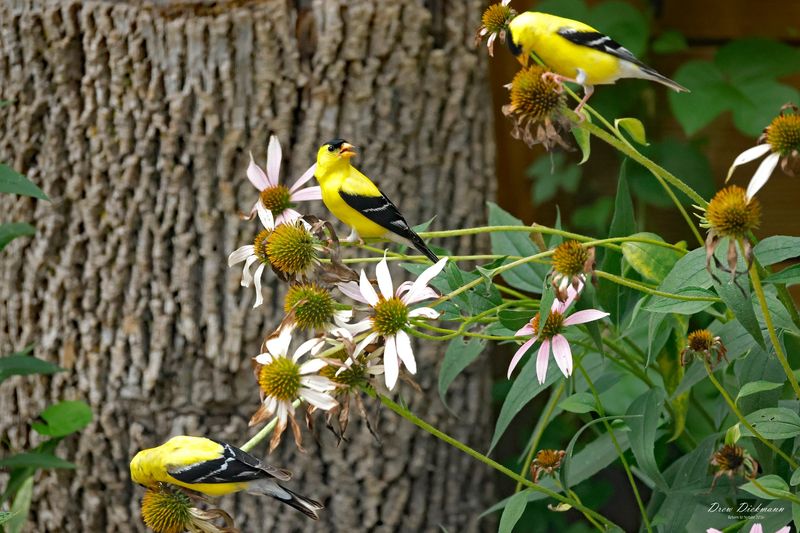
American goldfinches are among the most seed-dependent songbirds in North America. Cornell Lab of Ornithology describes their diet as almost exclusively seeds, with a strong preference for composite plants such as sunflowers, asters, and thistles.
They forage by landing directly on seedheads and picking out individual seeds while clinging to the stem, which means a plant has to hold its heads upright and accessible to be useful.
Orange coneflower fits that foraging style well. As the flowers finish blooming, the central cone dries into a firm, bristled head packed with small seeds.
Goldfinches land on those cones, grip the stiff stems, and work through the seeds methodically. NC State Extension lists American goldfinches among the songbirds that eat orange coneflower seeds in fall, connecting the plant’s documented seed production directly to the bird’s feeding behavior.
Preserving those dried heads is what makes the connection possible. A gardener who deadheads every spent bloom to keep the bed looking tidy removes the food before it can be used.
The seed resource only exists if the heads are allowed to mature and remain standing after the petals drop.
Even with mature, accessible heads in place, a goldfinch visit is not guaranteed. The birds’ presence in any specific yard also depends on surrounding habitat, nearby food sources, seasonal and migratory movements, and local pressures such as outdoor cats or predators.
Orange coneflower improves the odds by putting a natural food source in the right place at the right time, but it works best as part of a yard that already offers open space, nearby shrubs or trees for perching, and a reasonable degree of safety for foraging birds.
The feeding window begins in late summer
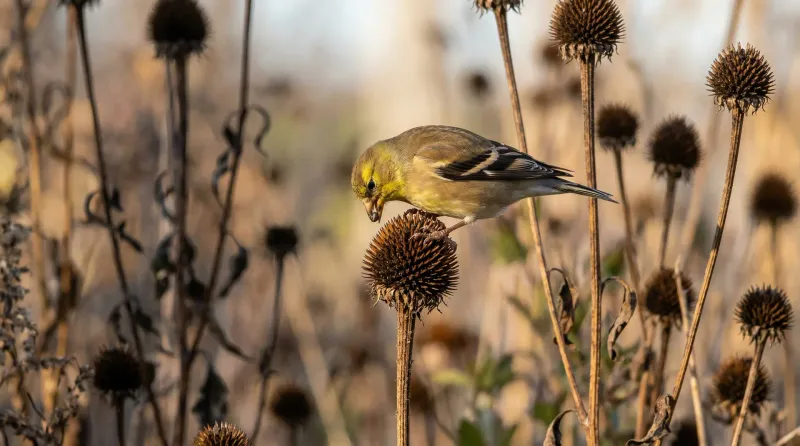
Orange coneflower follows a calendar that lines up well with the period when many North Carolina homeowners want natural food sources most. NC State Extension documents the plant flowering from August through October, and its bird-habitat table lists orange coneflower seed availability from August through November.
That window covers the stretch when summer feeders are often neglected and before winter feeding routines are fully established.
For a homeowner in the North Carolina Piedmont, that timing means the first mature seedheads may appear while August heat is still building. In the Mountains, where nights cool earlier, goldfinches may begin working the heads before September ends.
Along the Coastal Plain, the window can stretch later into November before cold sets in consistently. The documented August-through-November seed availability reflects a range, not a guarantee that every head in every yard will be productive on the same schedule.
NC State’s plant profile confirms the flowering period, and the overlap between late bloom and early seed maturation means some heads are ripening while others are still open. That staggered timing extends the period when seeds are accessible rather than concentrating them into a single short window.
Avoid treating a specific first-frost date as the hard endpoint of the feeding opportunity. Frost dates differ significantly across North Carolina’s three regions, and within each region individual yards can vary by several days depending on elevation, proximity to water, and local tree cover.
The practical takeaway is straightforward: leave the heads standing from the time petals drop through the end of fall and into early winter, and let the birds set their own schedule within that window.
Plant it where a North Carolina yard can support it
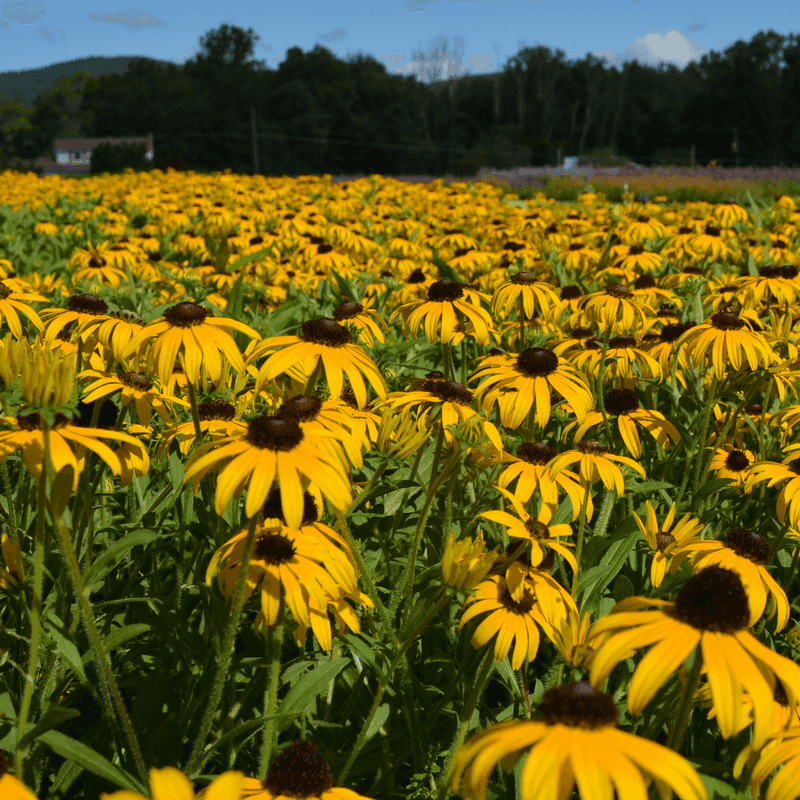
Site selection determines whether orange coneflower thrives or struggles, and a struggling plant produces fewer seedheads for birds. Full sun is the best starting point: six or more hours of direct sunlight daily gives the plant the energy it needs to flower heavily and set seed reliably.
NC State Extension notes that orange coneflower tolerates partial shade, so a spot that gets afternoon shade in a hot Piedmont or Coastal Plain yard can still work, though flowering may be somewhat reduced compared to a fully open site.
Soil drainage matters more than soil richness. Orange coneflower handles clay, shallow rocky ground, occasional dry spells, heat, and the humid summers that are standard across North Carolina once the plant is established.
The one condition it does not tolerate well is persistently soggy soil. A low spot that holds standing water after rain, or a compacted area where water pools rather than draining, is a poor choice regardless of how much sun it receives.
NC State lists the species as native across the Coastal Plain, Piedmont, and Mountains, so there is no regional exclusion to work around. A homeowner in Asheville, Raleigh, or Wilmington can all plant it with reasonable confidence that the species is adapted to local conditions, though individual yard microclimates still matter.
Fall is generally the best planting season for native perennials in North Carolina because it sidesteps the state’s most punishing summer heat. Cooler temperatures and more reliable rainfall give roots time to establish before the plant needs to support heavy summer growth.
NC State’s landscaping-for-wildlife guidance supports fall planting as a sound approach for establishing natives in residential yards across the state. Spring planting works too, but it demands more consistent watering through the first summer to compensate for the heat stress new plants face.
Establishment turns a perennial into a recurring resource
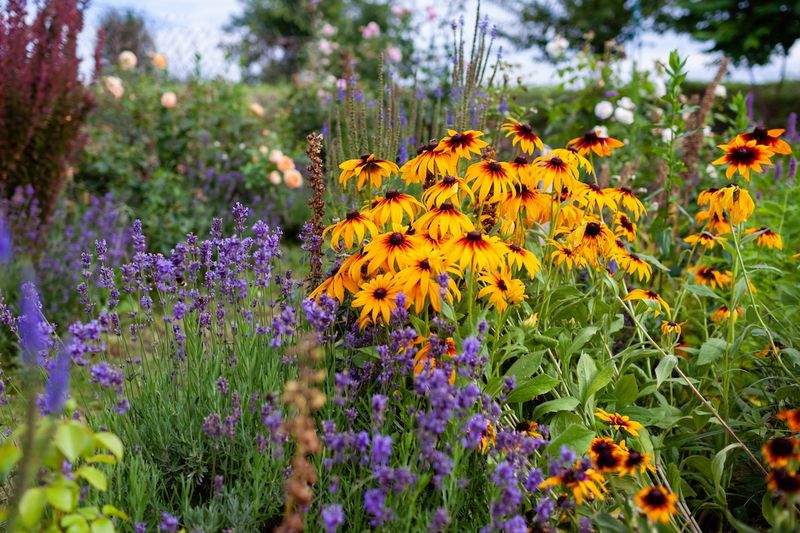
Calling orange coneflower a “plant once” perennial is a fair description of how it behaves over years, but the first season requires genuine attention. NC State Extension’s native plants handbook is clear that newly planted natives need regular watering for the first few weeks or until roots have established in their new location. “Native” describes where the plant evolved, not how little care it needs while it is still adjusting to a new spot.
Water new plants deeply and consistently during the first few weeks, especially if you plant in fall before rains become reliable or in spring when temperatures climb quickly. Once the roots are established, orange coneflower handles North Carolina’s summer heat and occasional dry stretches without much intervention.
Getting through that first season in good shape is what unlocks the low-maintenance years that follow.
Beyond watering, the site factors covered in the previous section continue to matter after planting. Poor drainage, heavy soil compaction, deep shade, or a spot that is too crowded will limit performance regardless of how well the plant was watered at the start.
Choosing the right site is establishment care too.
NC State’s plant profile notes that orange coneflower spreads through underground rhizomes and forms widening clumps over time. That spreading habit is part of what makes it a recurring resource rather than a one-time planting, but it also means the clump will eventually need management.
Dividing the clump in spring or fall every few years keeps it healthy, prevents overcrowding, and gives you additional plants to expand the planting or share with neighbors. Propagation by seed is also possible, though division is generally the faster and more reliable method for home gardeners who want to multiply an established patch.
Leave the heads standing for the birds
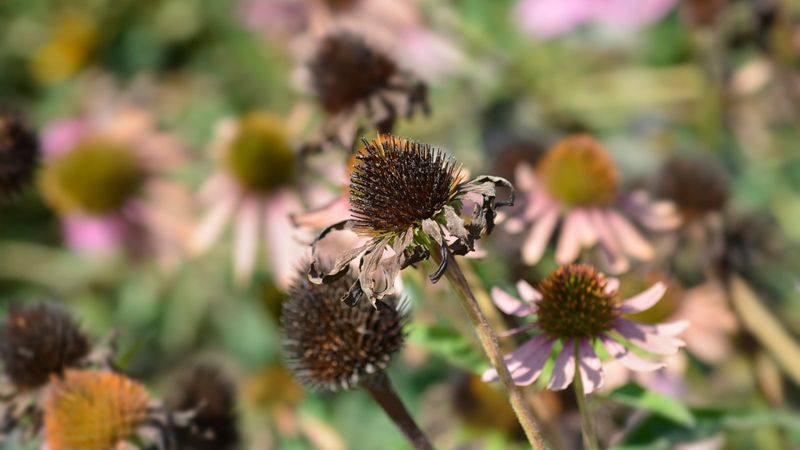
The single management decision that most directly affects whether goldfinches can use your orange coneflower is whether you leave the seedheads standing. NC State Extension specifically recommends leaving orange coneflower seedheads as winter food for birds, and NC Wildlife echoes that advice by encouraging homeowners to let dried flower heads remain on plants through the season.
Cutting everything down after the first frost, or deadheading every spent bloom to keep the bed tidy, eliminates the food resource before the birds have a chance to use it.
A practical middle ground works well for most yards. Leave most mature heads standing from the time the petals drop through late winter.
Remove stems that have collapsed, broken, or are causing a problem in the bed, but treat the upright, intact heads as intentional wildlife habitat rather than spent garden debris. NC Wildlife’s responsible wildlife feeding guidance supports leaving natural seed sources in place as a lower-maintenance alternative to concentrated feeding stations.
The value of those standing heads extends beyond goldfinches. Orange coneflower provides nectar for native bees, bumblebees, and butterflies during its bloom period from August through October.
It also serves as a larval host plant for the wavy-lined emerald moth and the silvery checkerspot butterfly, both of which depend on the foliage during their caterpillar stage. Leaving the plant largely intact through the growing season and into winter supports that full sequence of wildlife interactions, not just the seed-eating birds that arrive in fall.
Resist the temptation to cut the whole planting back in one pass at the end of the season. A late-winter cleanup in February or early March, before new growth emerges from the base, gives birds the maximum time to work the heads and still leaves the garden looking intentional rather than neglected through the coldest months.
One coneflower cannot replace a wildlife-friendly yard
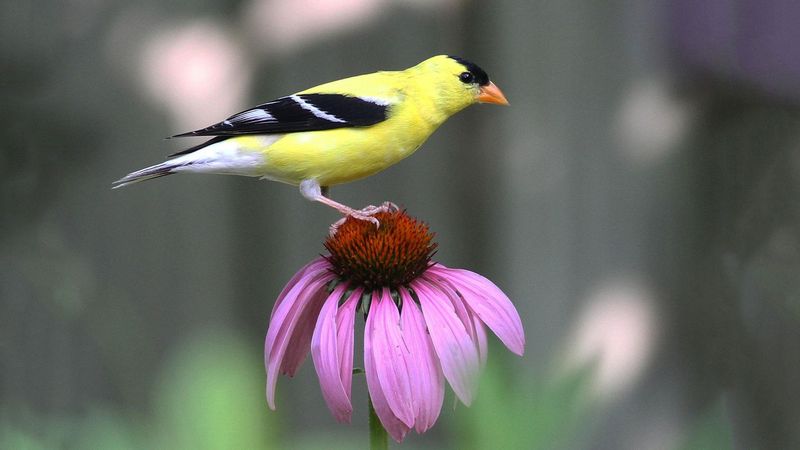
Orange coneflower is a well-supported addition to a goldfinch-friendly yard, but it works within a larger system rather than replacing one. Cornell Lab identifies goldfinch habitat as open woodland edges, weedy fields, floodplains, suburbs, parks, and backyards that combine seed-producing plants with nearby shrubs or trees.
A patch of coneflower in an otherwise bare or heavily manicured yard may produce seeds that no goldfinch ever finds, simply because the surrounding conditions do not support foraging birds.
Nearby perching structure matters. Goldfinches typically move between a sheltered spot and a feeding area, so shrubs, small trees, or even a fence line close to the coneflower patch gives visiting birds a place to land, assess safety, and return between feeding bouts.
Outdoor cats, hawks, and other predators also influence whether birds are willing to feed in a given spot, and no plant can change that calculus on its own.
A natural seed source like orange coneflower avoids some of the concentrated-contact problems that come with traditional feeders, but it does not eliminate the need for other habitat elements. NC Wildlife recommends a variety of native flowers, shrubs, and trees because different species provide seeds, fruits, insects, and shelter across different seasons.
If you use supplemental feeders alongside native plantings, clean them regularly and follow NC Wildlife’s guidance to remove them temporarily if sick or dead birds appear nearby.
NC Wildlife’s bird sanctuary guidance points out that many songbirds, including goldfinches raising young, depend heavily on insects rather than seeds during the nesting period. One coneflower cannot supply all of that.
A yard that layers native plantings, reduces pesticide use, and maintains some structural diversity in its vegetation will support a broader range of bird life stages than any single species can provide on its own.
Use orange coneflower as one dependable part of the plan
The steps that make orange coneflower a reliable fall food source are straightforward. Buy Rudbeckia fulgida by its scientific name from a reputable native-plant nursery or a local NC Extension-recommended source to avoid the common-name confusion with R. hirta.
Place it in a full-sun or partial-shade spot with well-drained soil anywhere in the Mountains, Piedmont, or Coastal Plain, and water it consistently through its first few weeks in the ground.
Once established, let the plant do its seasonal work. Skip the fall cleanup on most stems and leave the mature seedheads standing.
NC State’s bird-habitat table documents seed availability from August through November, which is the window when your patience with an untidy garden edge pays off for foraging birds. Goldfinch visits are possible under the right conditions, not guaranteed, but a yard with mature, accessible seedheads and suitable surrounding habitat gives them a genuine reason to land.
Pair the coneflower with other native species as the planting matures, and the yard becomes more than a single-season food stop. Orange coneflower earns its place not by doing everything, but by doing one thing well, year after year, without being replanted.