
This Tall North Carolina Flower Blooms From Midsummer Into Fall, Pulling In Bees, Hummingbirds, and Butterflies
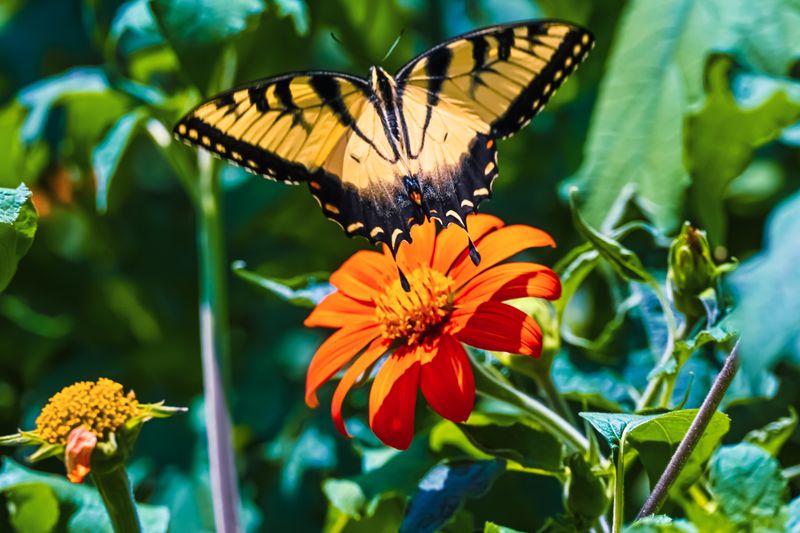
Few garden plants earn their space quite like Mexican sunflower, a towering warm-season annual that lights up yards across North Carolina with bold orange-red blooms from midsummer into fall. Bees, butterflies, and hummingbirds all find its flowers worth visiting, making it a practical choice for anyone who wants to see more wildlife in the yard without a complicated setup.
Growing it well does take some know-how, from picking the right spot to managing it through the season, and pairing it with native plants will stretch its value even further.
Meet the tall annual that blooms from midsummer into fall
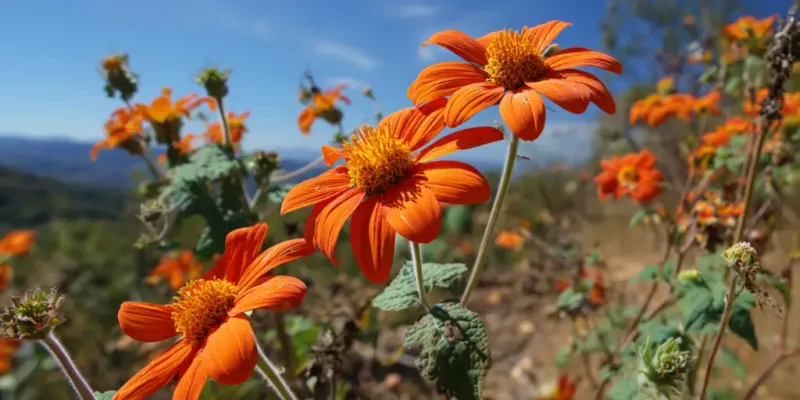
Mexican sunflower, known botanically as Tithonia rotundifolia, is a fast-growing warm-season annual that can reach somewhere between 3 and 6 feet tall and spread roughly 2 to 3 feet wide. Its flowers are a vivid orange-red, plentiful across the top of the plant, and NC State Extension confirms that bees, butterflies, and hummingbirds are among the visitors it can attract.
That combination of height and color makes it one of the more visually striking choices for the back of a pollinator bed or border planting.
One point worth getting straight from the start: Mexican sunflower is not a spring bloomer. Its documented flowering period begins in midsummer, generally around July, and continues into fall, often until frost shuts it down.
Gardeners hoping to fill the garden with color from April onward will need other plants for that earlier window.
The plant is native to Mexico and Central America, not to North Carolina, so it does not function as a native host plant in the ecological sense. That does not make it harmful or invasive based on current research, but it does mean it works best as a complement to native plantings rather than a stand-alone solution.
For sheer late-season height and flower production in a sunny spot, though, it is a genuinely useful annual to have in the lineup.
What pollinator activity you may see in the right conditions
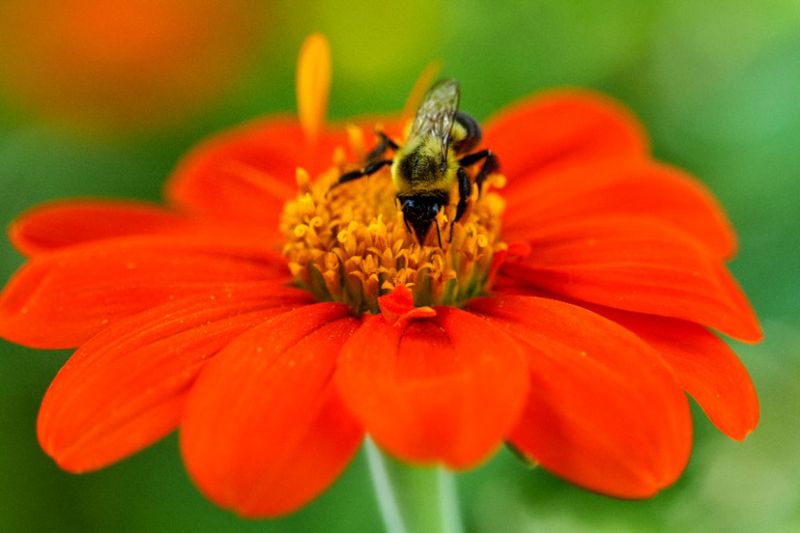
When Mexican sunflower is growing in a good sunny spot and actively blooming, its flowers can draw real attention from pollinators. Bees tend to work the blooms efficiently, butterflies linger on the wide flower heads, and hummingbirds are known to visit the tubular florets for nectar.
The display can be easy to watch simply because the plant holds its flowers up high and keeps producing them across a long stretch of the season.
That said, what actually shows up in any given yard depends on a handful of real-world variables. Pollinator Partnership garden guidelines make clear that visitation is shaped by sunlight levels, the total number of flowers available, surrounding habitat, local weather patterns, and which pollinator species happen to be active in the area.
Pesticide exposure in the yard or nearby properties can also reduce activity significantly.
Whether the plant is actually flowering matters too. Mexican sunflower does not begin blooming until midsummer, so expecting visitors before then will lead to disappointment.
Once it hits its stride, a well-grown plant in full sun with a generous number of blooms gives pollinators a reliable source to return to through late summer and into fall. Think of the activity as something you can reasonably expect to observe under the right conditions, not something that is guaranteed regardless of the garden’s situation.
Choose full sun, good drainage, and enough room to grow
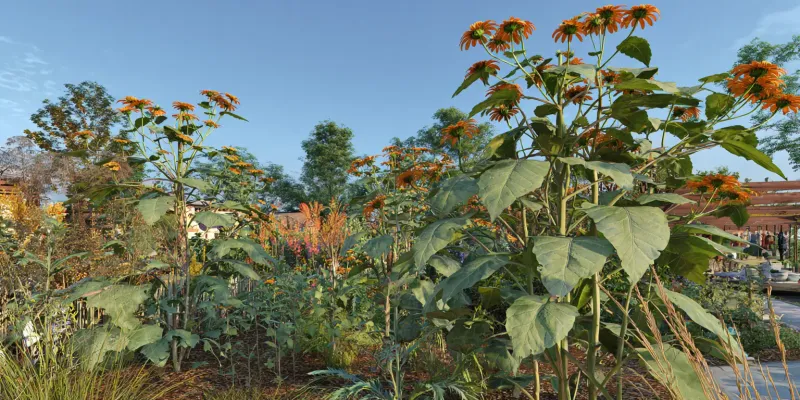
Mexican sunflower is not shy about what it needs, and giving it the right spot from the start saves a lot of trouble later. Full sun means at least six hours of direct sunlight each day, and more is generally better.
Shaded locations produce leggy, weak stems that flop over and bloom poorly, so a south- or west-facing bed with open sky above it is the target.
Soil quality is more forgiving than you might expect. NC State Extension notes that the plant often performs best in average or even relatively poor, well-drained soil, and it handles heat, drought, and dry conditions without much complaint.
Deer tend to leave it alone as well, which is a practical bonus for yards in the Piedmont and mountain regions where deer pressure is common. Rich, heavily amended soil can actually push the plant toward leafy growth at the expense of flowers, so skip the extra fertilizer unless your soil is genuinely poor.
Spacing and placement both deserve thought given how large this plant gets. Allow the full 2-to-3-foot spread per plant so stems have room to develop without crowding each other.
Because mature plants can top 5 or 6 feet, placing them toward the rear of a bed keeps them from blocking shorter companions. Tall stems may become unstable during summer storms, so check periodically and stake any that start to lean before they fall over and damage neighboring plants.
A simple bamboo stake and soft garden tie placed early in the season is easier than trying to rescue a bent stem later.
Plant after frost danger passes in your region
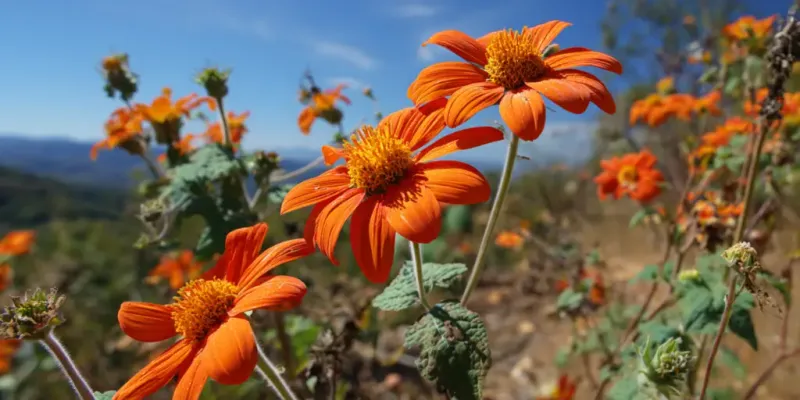
Mexican sunflower is a tender annual, meaning frost will kill it. There is no single planting date that works across all of North Carolina because the state’s frost timing varies considerably by region and elevation.
A gardener in Wilmington on the coast may be safely past frost risk weeks before someone gardening at higher elevations in the Blue Ridge.
The practical approach is to check local frost information for your specific area rather than relying on a general statewide calendar. NC State’s guidance on freeze and frost probabilities explains how to interpret regional frost data so you can make a confident call for your county.
Once your area’s last-frost risk has reliably passed, you have two options: sow seed directly in the garden bed or transplant nursery-grown seedlings.
Direct seeding works well because Mexican sunflower germinates quickly in warm soil. Press seeds shallowly into moist, prepared ground and keep them watered until they sprout.
NC State Extension’s herbaceous ornamentals handbook confirms that warm-season annuals like this one are frost-sensitive and should not go in the ground until that danger has cleared. Transplants from a nursery will get you to bloom a little faster, but either method works fine once temperatures are consistently warm.
Keep in mind that even a well-established plant cannot survive a late frost, so when unusual cold is forecast after planting, be ready to cover young transplants overnight.
Deadhead selectively to balance flowers and seed
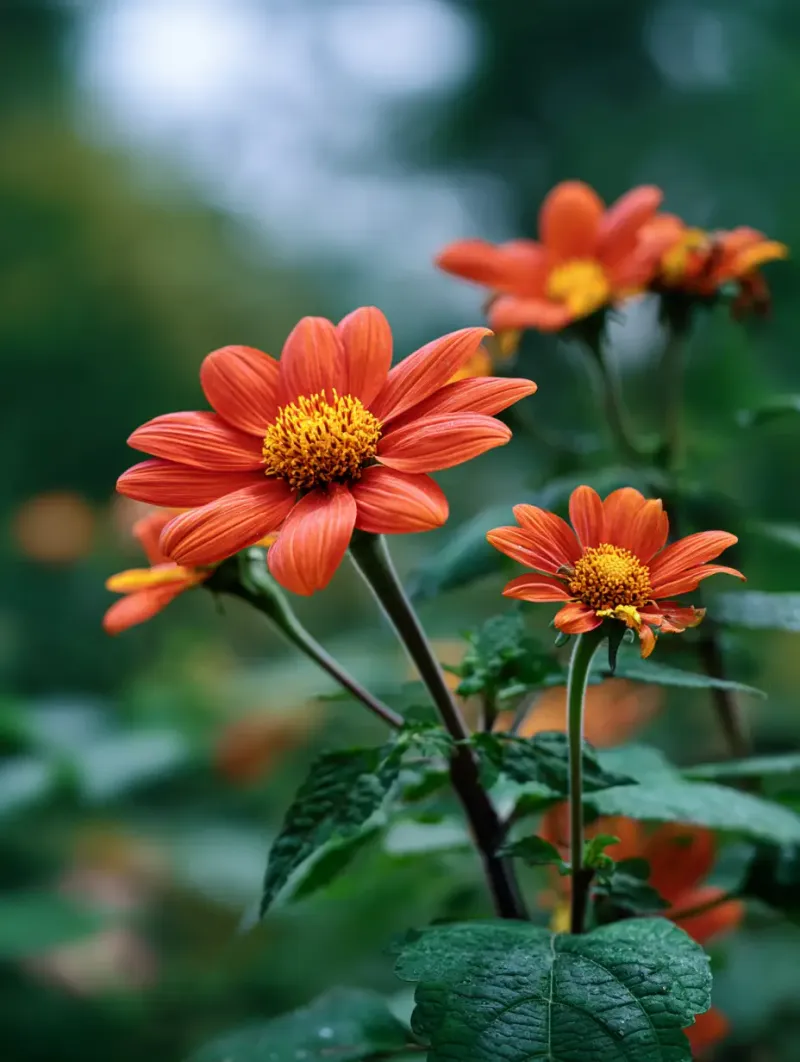
Removing spent flowers from Mexican sunflower encourages the plant to keep producing new blooms rather than putting energy into seed development. Regular deadheading through late summer can noticeably extend the flowering display and keep the plant looking tidy rather than ragged at the top.
Pinch or cut the stem just below the finished flower head, and new buds will typically follow within a week or two.
There is a trade-off worth considering, though. Seed heads that are allowed to mature can feed birds, particularly finch species that search garden beds for seeds in late summer and fall.
Removing every spent flower through the entire season eliminates that resource. A practical middle path is to deadhead consistently during the peak of summer to sustain the nectar display, then ease off toward the end of the season and let some heads go to seed as fall approaches.
That way the plant serves both purposes.
Staking fits naturally into this routine. Tall stems that are checked and tied during deadheading sessions are less likely to snap or lean heavily after a summer storm.
NC State Extension notes that the plant may need staking because of its height, and catching the problem early is much easier than correcting a stem that has already bent. A quick look at the plant every week or two while you are managing spent flowers takes only a few minutes and keeps the whole structure upright through the season.
Build a pollinator garden around one annual
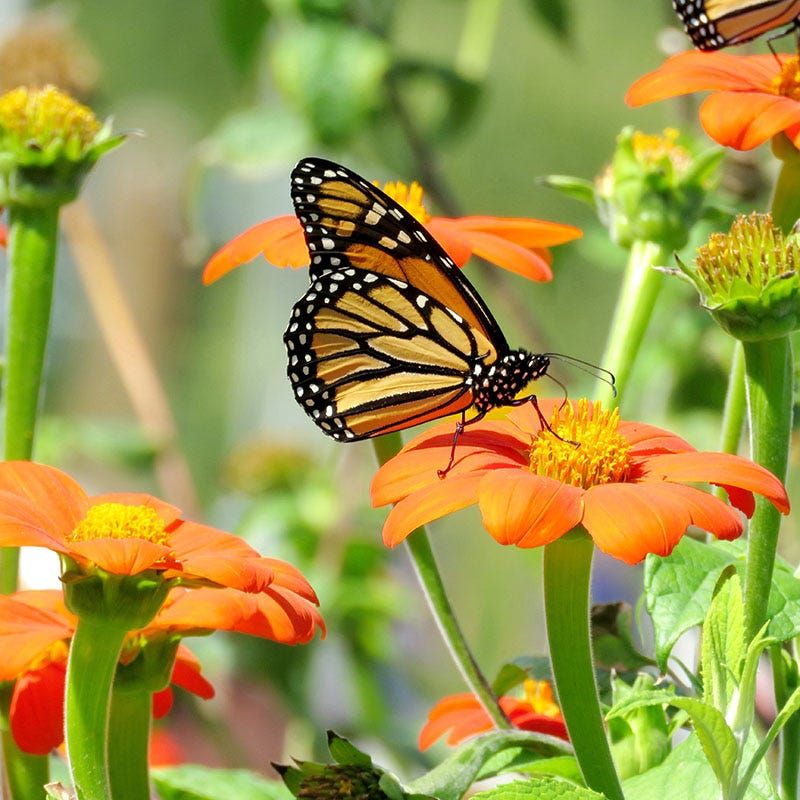
Mexican sunflower covers a real gap in the garden calendar, providing nectar from midsummer into fall when some other plants have already finished. What it cannot do is supply food in early spring, provide overwintering structure, or feed butterfly and moth caterpillars.
Those are different needs that require different plants, and no single annual can cover all of them.
That last point about caterpillars matters more than it might seem. Nectar flowers feed adult butterflies, but most butterfly and moth larvae depend on specific host plants for food during the caterpillar stage.
Pollinator Partnership’s garden cards identify host plants by region and can help North Carolina gardeners choose species that support the full life cycle of local butterflies and moths, not just the adults visiting flowers.
For a more complete garden, pair Mexican sunflower with plants that bloom at different times and serve different functions. Scarlet bee balm is a summer-blooming native that can reach about 4 feet and attracts bees, hummingbirds, and butterflies, though it prefers moist, well-drained soil and is native to the mountains and Appalachians, making it a better fit for some sites than others.
Black-eyed Susan is a North Carolina native that blooms from midsummer into mid-fall with deadheading, tolerates full sun to partial shade, and generally stays shorter than Mexican sunflower, making it a good front-of-border companion.
Autumn phlox can carry blooms into September and October, bridging toward the end of the season. NC State’s hummingbirds and butterflies resource lists additional regionally appropriate plants worth exploring.
The broader principle, backed by Pollinator Partnership guidelines, is that a garden supporting pollinators well needs diverse plantings with overlapping bloom periods, host plants for caterpillars, and nesting or shelter habitat alongside any nectar source.
Protect visiting pollinators from unnecessary pesticide exposure
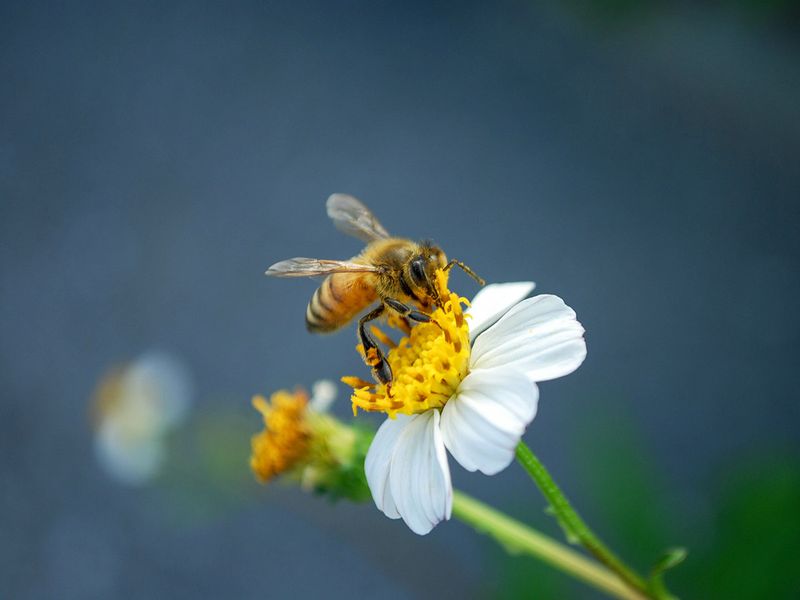
Pollinators visiting Mexican sunflower can be harmed by insecticide applications on or near the plant while it is blooming. The straightforward rule is to avoid routine insecticide use on flowering plants, full stop.
Bees, butterflies, and hummingbirds that contact treated surfaces or consume contaminated nectar can be injured or killed even when the product label does not seem alarming at first glance.
EPA guidance on pollinator protection recommends following every product label carefully, observing any bloom-time or time-of-day restrictions, reducing spray drift toward flowering plants, and avoiding applications during periods when pollinators are actively foraging. Morning and evening applications, when bees are less active, reduce but do not eliminate risk.
EPA tips for reducing pesticide impacts on wildlife reinforce that drift from nearby applications can reach pollinators even when the blooming plant itself is not the direct target.
Seeing insects on Mexican sunflower is not a sign that the plant needs treatment. Most of the insects you will spot are there to feed on nectar or pollen, not to damage the plant.
Resist the impulse to spray anything unfamiliar. If a genuine pest problem develops on another plant nearby, evaluate it carefully, identify the pest, and choose the least harmful management option before reaching for any spray near a plant that pollinators are actively visiting.
Use Mexican sunflower as one useful part of the plan
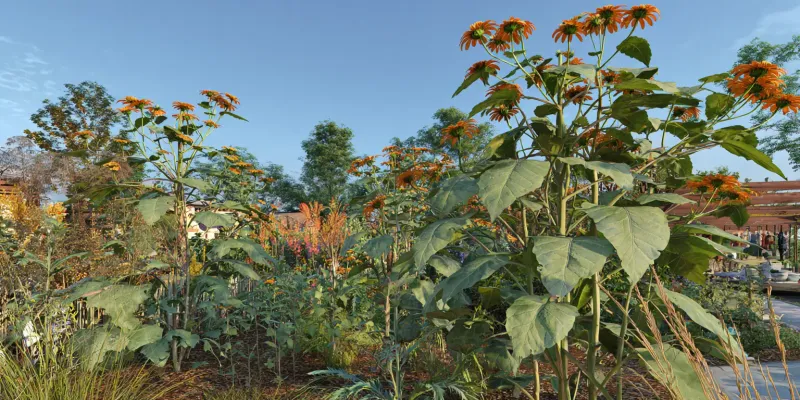
Planting Mexican sunflower in a sunny, well-drained spot gives North Carolina gardeners a tall, colorful nectar source that runs from midsummer into fall, precisely the stretch of the season when some yards start to look spent. Bees, butterflies, and hummingbirds may all find it worth visiting when conditions are right, and the plant’s height and flower abundance make that activity easy to notice and enjoy.
The fuller picture calls for more than one plant, though. NC State Extension’s profile of Mexican sunflower describes a useful seasonal annual, not a complete pollinator habitat.
Adding native flowers with earlier or later bloom periods, host plants for caterpillars, nesting resources, and careful pesticide habits builds something that works across the whole season and supports pollinators through more of their life cycle. Pollinator Partnership’s garden guidelines consistently point to diversity as the foundation of an effective pollinator garden.
Mexican sunflower earns its place in the back of the bed as a reliable, low-fuss annual that fills a genuine gap. Pair it thoughtfully with natives, manage it honestly, and it becomes one solid piece of a yard that actually works for the wildlife visiting it.