
Those Fat Green Caterpillars On Your Parsley Turn Into Swallowtail Butterflies, So Leave A Few Plants For Them
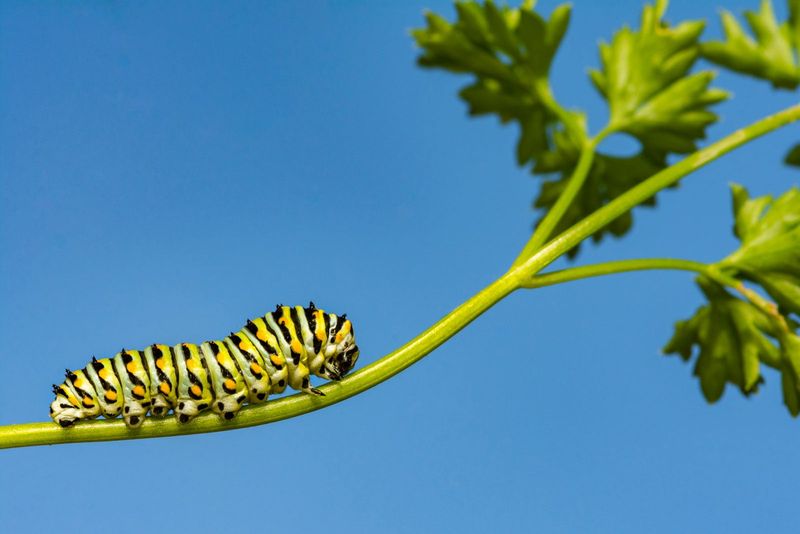
You walk out to snip some parsley and find a plump green caterpillar chewing away. Before you reach for the pruners or a squish, take a closer look.
That striped munching guest is often a swallowtail caterpillar, and it may grow into one of the prettiest butterflies in your yard. Here is how to tell, what it will cost your parsley, and how to share the plant if you choose to.
A parsley caterpillar is often a black swallowtail
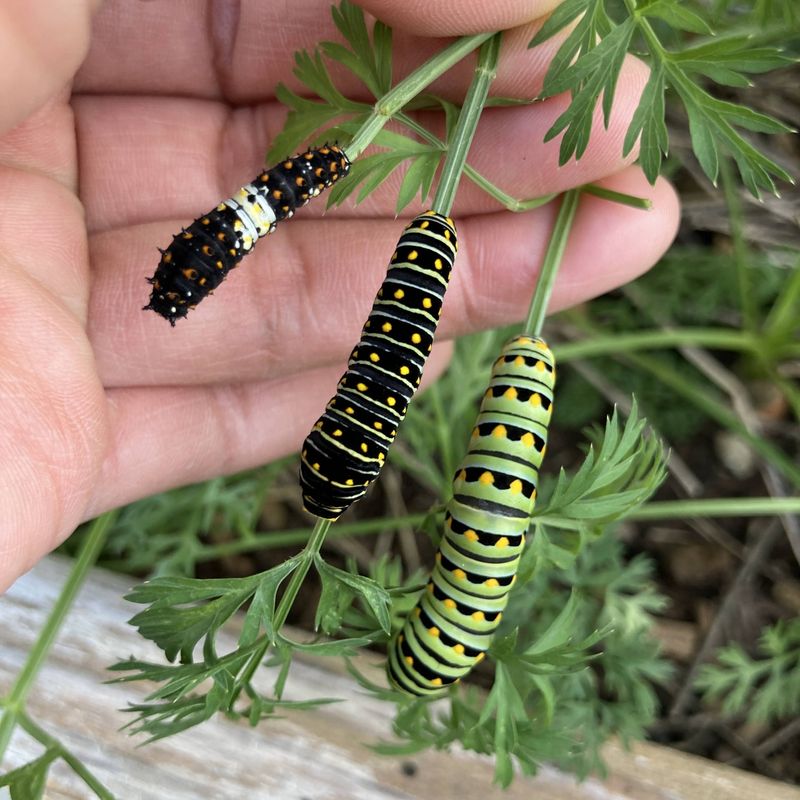
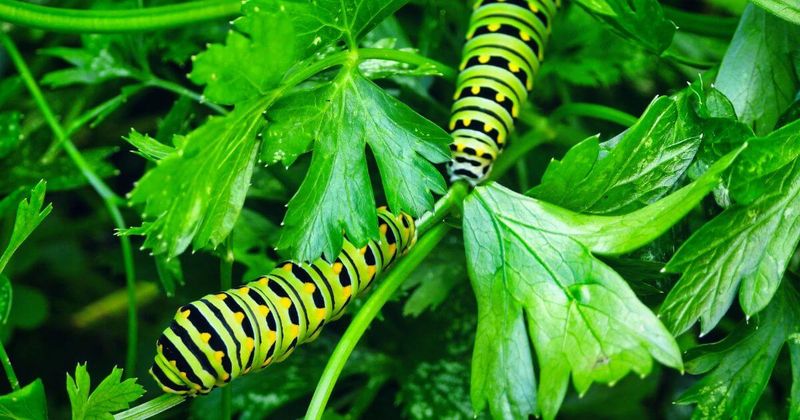
Picture a fat green caterpillar, about as long as your finger, wearing black bands dotted with yellow or orange spots. If it is chewing on your parsley, it is often a black swallowtail caterpillar, also known as a parsleyworm.
Extension experts at Virginia Tech describe the mature larva this way.
Young ones look quite different. Small caterpillars are often dark and spiny-looking, with a pale saddle across the middle, so you might not recognize them as the same creature.
They grow fast and change their look as they get bigger.
Parsley is a strong clue, but it is not proof. In California and parts of the West, anise swallowtails also feed on parsley, according to University of California extension information.
A clear photo and your location help a lot when you want a confident answer.
So what should you do with this knowledge? If the markings match and the plant is a carrot-family host like parsley, a likely swallowtail is a good reason to pause before removing it.
Take a photo, check the stripes and spots, and decide whether you can spare a few stems.
You do not need to be certain to be kind. Even if your visitor turns out to be a different swallowtail relative, the same gentle approach usually works.
The main thing is to look first and act second.
Parsley feeds the next generation of swallowtails
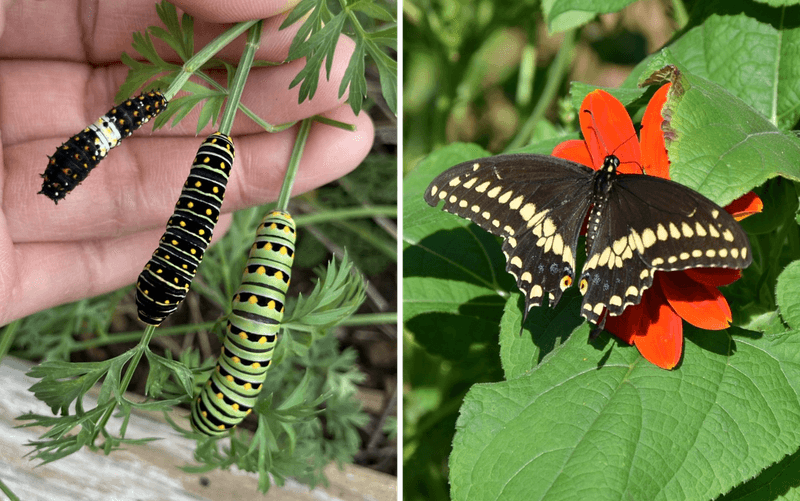
Female black swallowtails look for specific plants to lay their eggs on, and parsley is one of them. The caterpillars hatching there need those leaves to grow.
According to University of Florida IFAS, host plants include other carrot-family favorites such as dill, fennel, carrot, and celery.
That means your herb patch can double as a nursery. The caterpillar you spot may be there because a butterfly picked your plant on purpose.
For a gardener, that turns a chewed leaf into a small sign that your garden is part of the local butterfly life cycle.
The payoff is real, but it is not guaranteed. Black swallowtail larvae and pupae can be lost to predators and parasitoids, as University of Wisconsin Extension explains.
Some caterpillars simply will not make it, no matter how carefully you tend the plants.
Why share at all, then? Many gardeners enjoy watching the process, and a few ragged stems are a fair trade for a chance at a graceful butterfly.
If you grow plenty of parsley, you may find that giving up some foliage feels easy.
The choice is yours. Sharing is a bonus, not an obligation, and you can still harvest what your kitchen needs.
How much parsley can they eat?
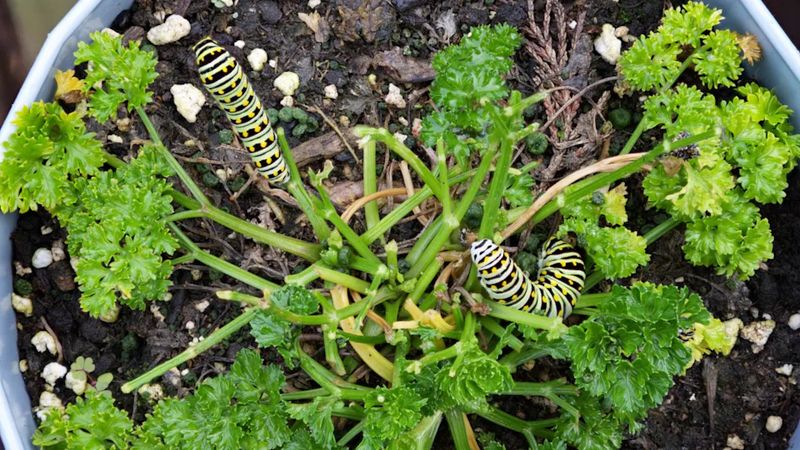
Two reliable sources paint different pictures, and both can be true. University of Wisconsin Extension says the caterpillars are usually not numerous enough to cause a serious problem.
A single plant with one or two larvae may just look a bit nibbled.
The story changes with numbers and size. NC State Extension warns that older larvae can eat whole stands of parsley.
Big caterpillars have big appetites, and a bunch of them on a small patch can strip stems fast.
So what will you see? It depends on how many eggs were laid, how old the caterpillars are, and how large your planting is.
A few young larvae often mean light damage, while several older ones can leave bare stalks.
Check your plants every day or two when you spot caterpillars. If you see more than the plant can handle, you have time to decide on a response before it is stripped.
Keep an eye on the biggest caterpillars, since they do the most feeding.
No one can promise your parsley will stay untouched, and no one can promise it will be ruined. Watching the patch tells you more than any rule.
Extra parsley makes sharing the crop easier
If you want parsley for dinner and caterpillars for butterflies, one simple idea is to plant a bit more. Guidance from Oregon State University Extension encourages gardeners to support helpful insects, and host plants are part of that.
Extra parsley gives you more room to share.
Dill is another option. Since it belongs to the same plant family, University of Florida IFAS lists it among the plants black swallowtails use.
A few feathery dill plants near your parsley widen the menu.
There is no magic number. Nobody can say how many extra plants is right for your yard, because it depends on how many caterpillars show up and how much parsley you like to cook with.
Start small and adjust next season.
Keep expectations realistic too. Caterpillars may not stick to the plants you set aside for them, and they can still wander onto the parsley you meant to harvest.
Think of the extra plants as an invitation, not a fence.
One practical habit is to tuck the sharing plants in a spot you can see easily. That way you can watch the action and still pick from your own rows without a fuss.
What if you need to protect the harvest?
Sometimes the parsley simply has to be saved. Maybe you are cooking for a crowd, or the plant is already thinned out.
You still have options that do not involve squishing anything.
First, a firm rule if you want to keep the caterpillars: skip insecticides on their host plants. Sprays meant to kill caterpillars can kill swallowtail larvae too, as University of Wisconsin Extension notes.
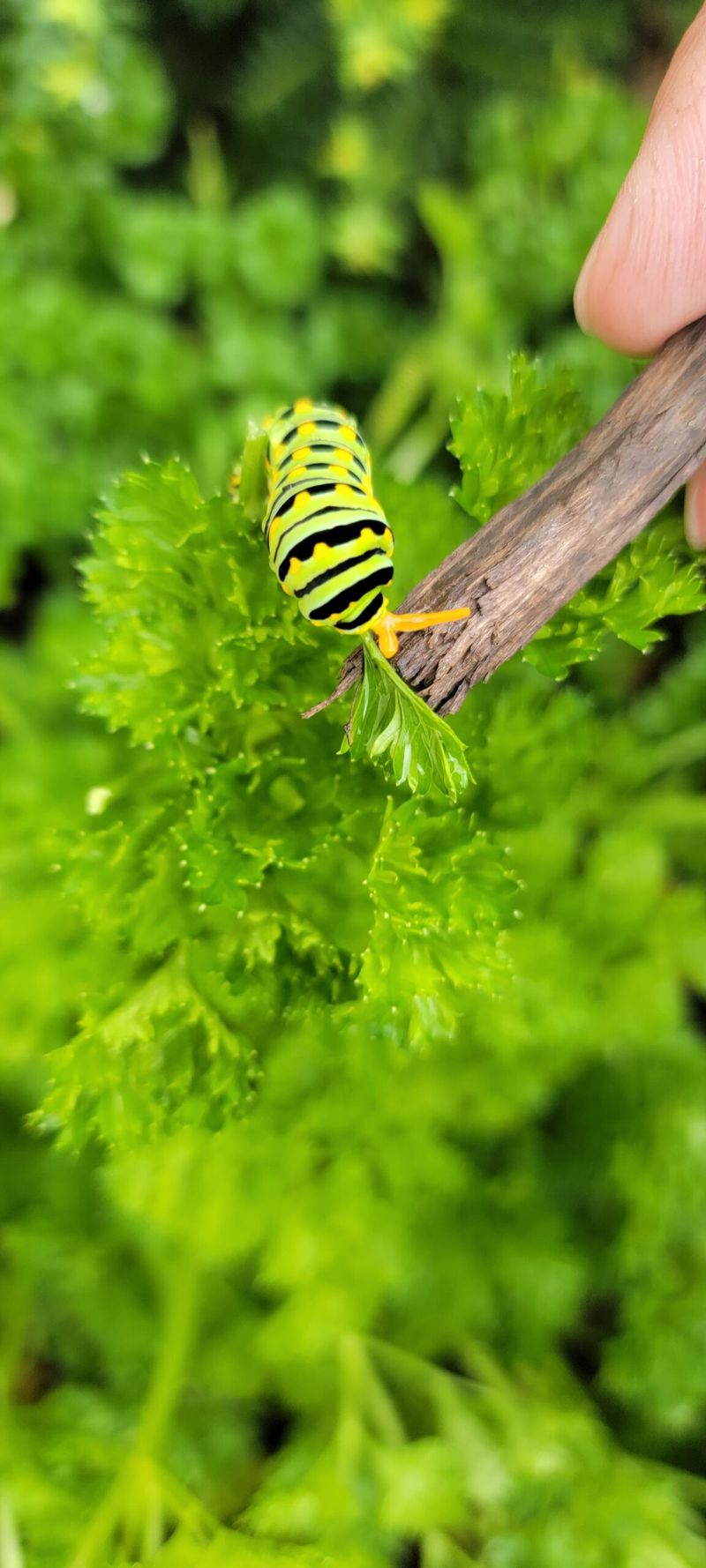
That same source names handpicking and moving larvae to another host plant as an option when you need to protect your crop. Pick the caterpillar up gently, or snip the small stem it is clinging to, and set it on a plant you are willing to share, such as dill or a spare parsley plant.
Be honest with yourself about what this does. Relocating does not guarantee survival, because the caterpillar may wander, get eaten, or struggle on a new plant.
It simply gives the larva a chance and keeps your harvest intact.
If you move one, check on it later in the day. Wear gloves if you like, and wash your hands afterward.
A little care goes a long way toward a fair outcome for both of you.
A butterfly may emerge weeks later—or the following spring
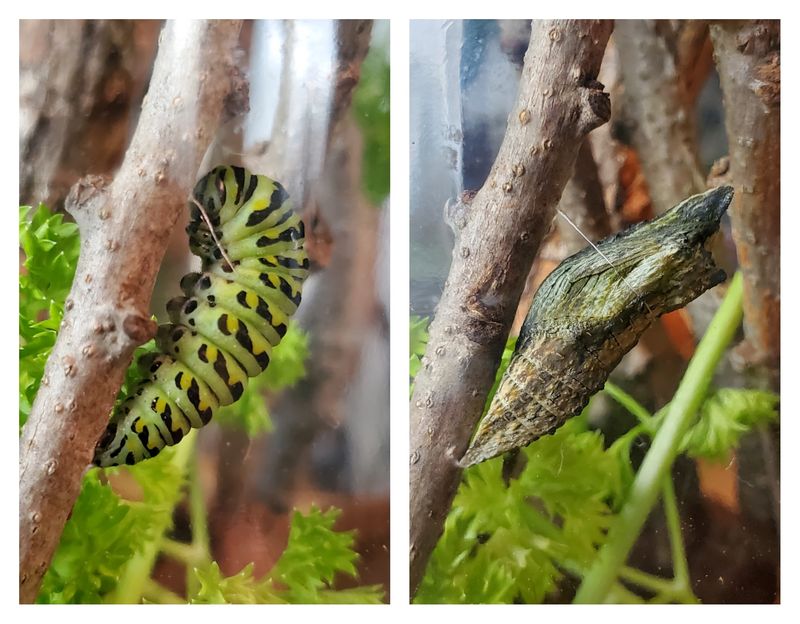
Once a caterpillar finishes feeding, it leaves the parsley to find a spot for its chrysalis. It may travel some distance, so do not be surprised if it vanishes.
University of Wisconsin Extension describes how some pupae overwinter in parts of the range.
Timing depends on your region and season. In warm months an adult may emerge within weeks, while a late-season pupa may wait until spring, and University of Florida IFAS notes that generations vary by location.
Not every pupa survives, so no butterfly is assured.
Leaving nearby stems and plants undisturbed may help avoid bumping a hidden chrysalis, though it cannot prove one is there. A messy corner is a small price for a chance.
Sometimes the best garden work is waiting.