
Topping Your Tomato Plants Late in the Season: When and How to Cut Indeterminate Vines Before Frost
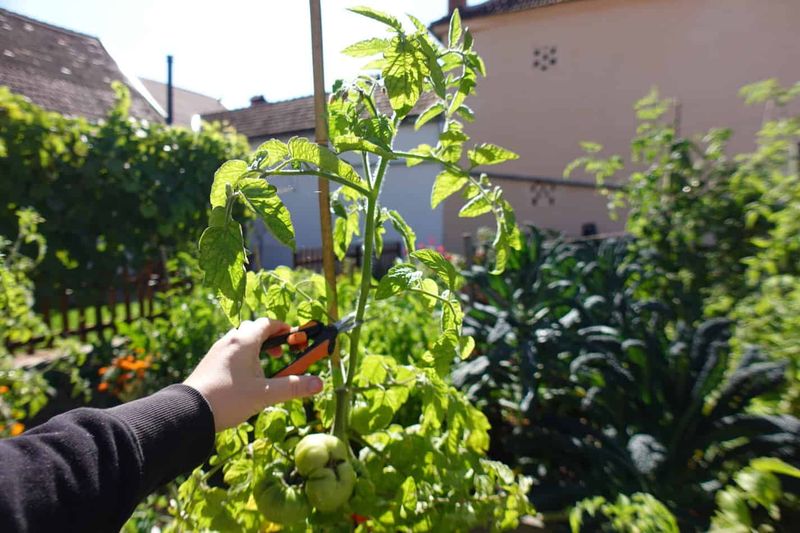
Your tomato vine is still stretching toward the sky, but the nights are getting cooler and there are green tomatoes hanging everywhere. Many gardeners snip the top of the plant in early fall, hoping it will favor the fruit already there.
Does it work, and when is the right time? The answer depends on your plant type, your local frost date, and how healthy your vines look right now.
Topping may favor existing fruit, but it cannot promise ripe tomatoes
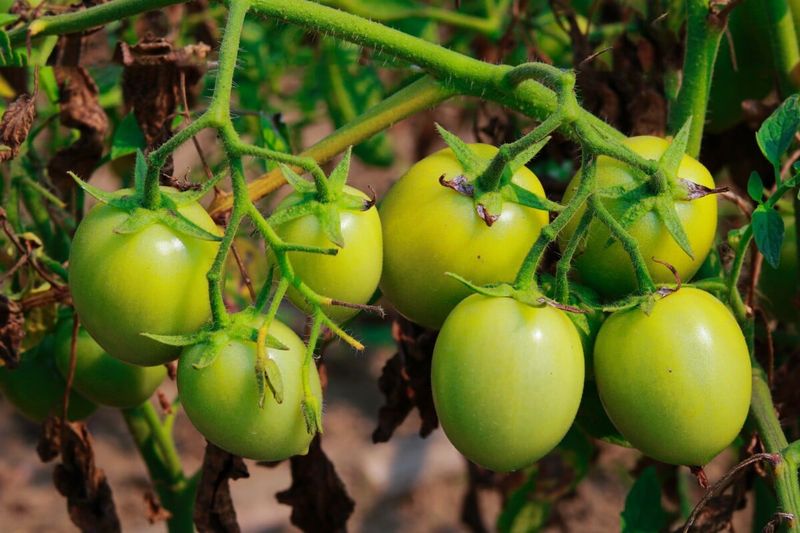
Picture a vine that keeps sending up new shoots while a dozen green tomatoes sit on the lower stems. Iowa State Extension guidance suggests topping indeterminate tomatoes late in the season so the plant favors fruit already developing over continued new growth.
That is a sensible goal when frost is coming.
Here is the catch. Topping may tilt the plant toward the fruit it already has, but it does not guarantee that any green tomato will ripen faster, or that it will ripen before frost.
Extension guidance describes this as an energy shift, which is a simple way to explain the idea. Nobody has shown that a fixed amount of energy moves straight into ripening.
Research on pruning is also narrower than the popular advice. An Oregon State field trial looked at severe single-leader pruning combined with staking.
Early fruit ripened sooner, but total and marketable yield dropped and some fruit defects increased.
That trial did not test a simple late-season topping cut on its own. So it cannot prove that topping speeds up ripening of fruit already on your plant.
Think of topping as a reasonable, low-cost step that may help, not a rescue that works every time.
Use your frost window—not October alone—to time the cut
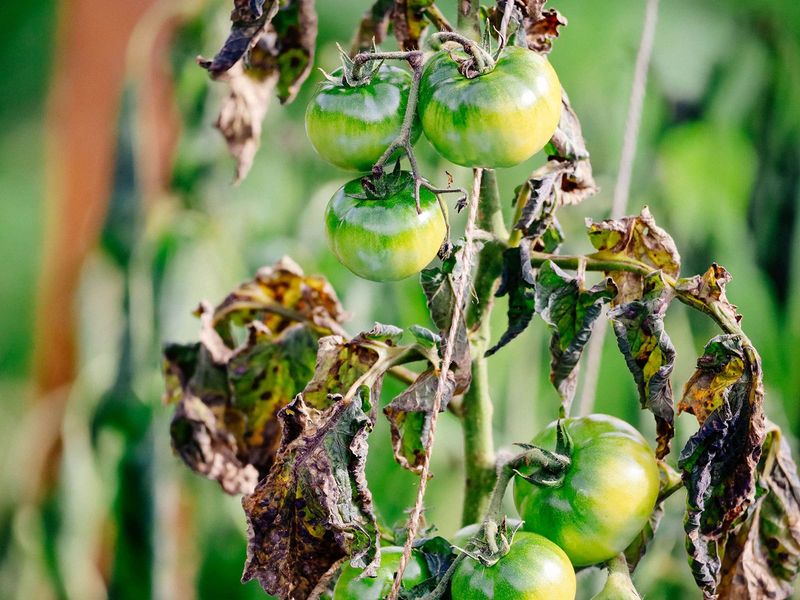
Iowa State Extension gives a timing rule you can actually use: top about four to six weeks before the average first fall frost. Count backward from your own frost date, not from a date on the calendar.
For one gardener that lands in early September, for another it lands in mid October.
The reason is simple. Cold does not arrive on the same schedule everywhere.
NOAA freeze climatology shows first freezes in parts of the Midwest and Northeast as early as mid September to early October, while many southern spots see them much later. Elevation, shoreline, and city heat can shift the date even within one county.
That means early October may be perfect for you, or it may already be too late. If your frost is only two weeks away, a cut now is unlikely to change much, and harvesting mature fruit may be the better move.
Before you cut, look up your local average first frost and the current forecast. Then look at the plant.
If it is still pushing out new shoots and carrying fruit worth saving, topping makes sense. If it is mostly finished, leave it alone.
Check whether your tomato is indeterminate
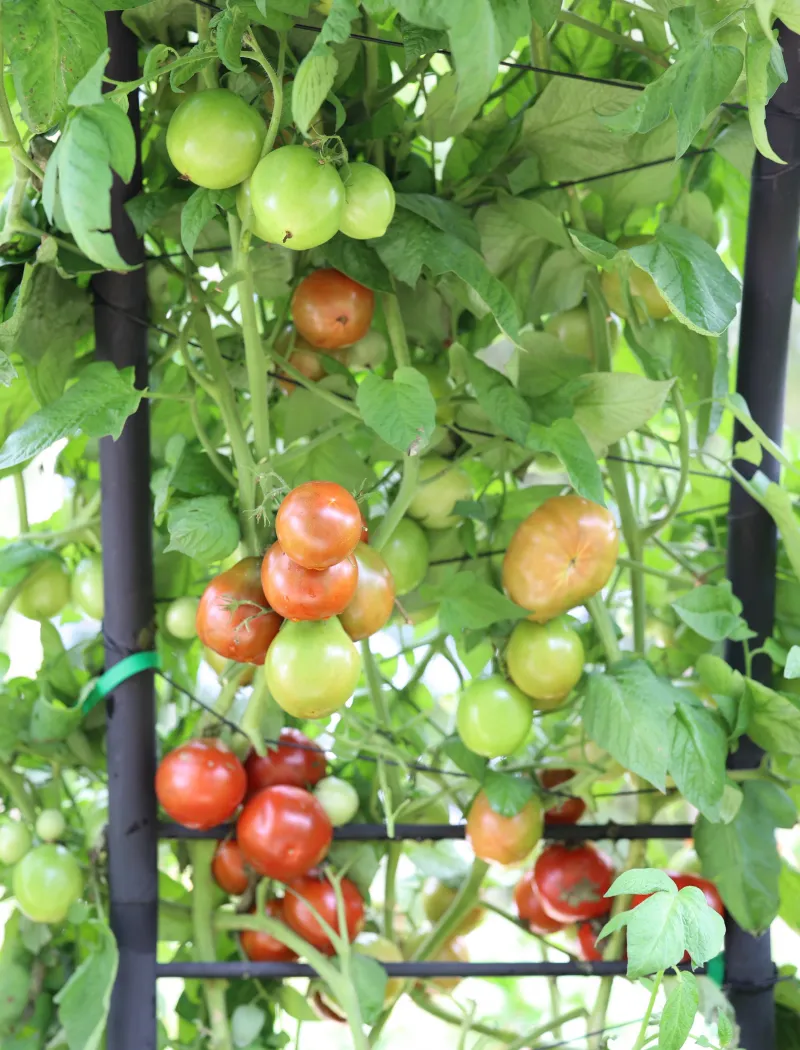
Before any snipping happens, find out what kind of tomato you have. The topping advice applies to indeterminate varieties, which keep growing and setting fruit until cold stops them.
Determinate types follow a more set pattern of growth and fruiting.
This matters because Iowa State Extension warns that topping a determinate plant can significantly reduce yield. A cut that helps one plant can cost you tomatoes on another.
Start with the plant tag or seed packet, which usually says indeterminate or determinate. If you have thrown them away, check the seed company’s website or the nursery listing for the variety name.
Your notes from spring planting may help too.
Do not rely on how the plant looks alone. Size and habit can vary with weather, pruning, and growing conditions, so appearance will not reliably identify every plant.
If you cannot confirm the type, the safer choice is to skip topping and focus on harvesting fruit before cold arrives.
Make one clean cut above a leaf or fruit cluster
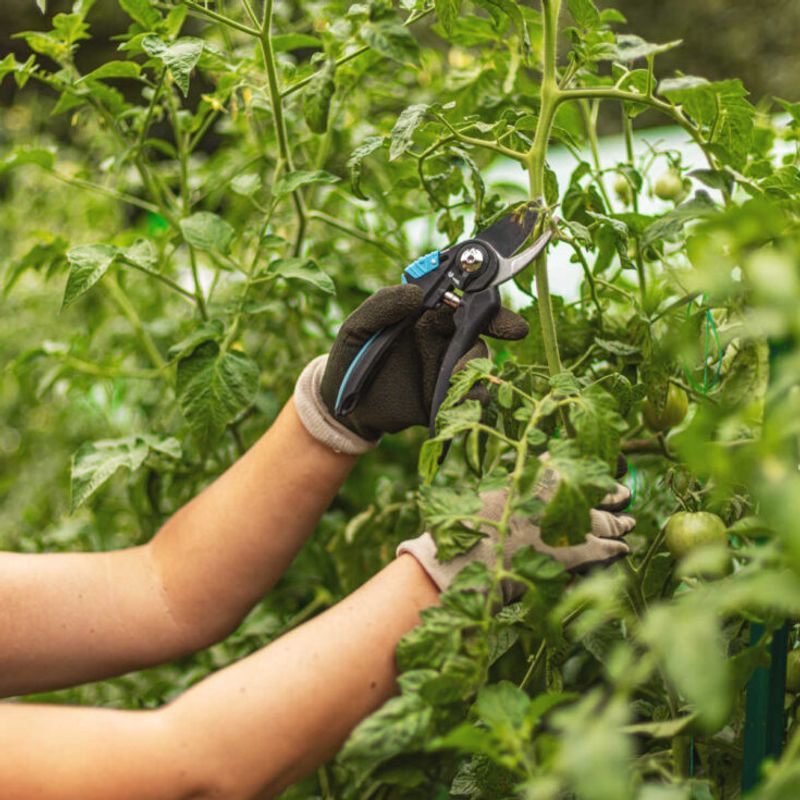
Once you know the timing is right and the plant is indeterminate, the cut itself is quick. Grab clean, sharp pruners.
Wiping the blades with rubbing alcohol first helps avoid carrying problems from plant to plant.
Follow the main stem upward to the tip of the vine. Make a single cut on that main stem just above a leaf or a fruit cluster, following the method from Iowa State Extension.
Leaving a leaf or cluster near the cut keeps the stem from ending in a bare stub.
Pick a dry day. Wet weather makes it easier for problems to enter fresh cuts, so wait for the foliage to dry out before you head out with your pruners.
Also take a hard look at the plant’s health. Skip the cut if drought, disease, or nutrient problems are already stressing it.
A plant that is struggling does not need another injury.
That is the whole job. One tidy cut per vine is plenty, so resist the urge to keep trimming while you are out there.
Remove late flowers carefully and keep leaves that shade fruit
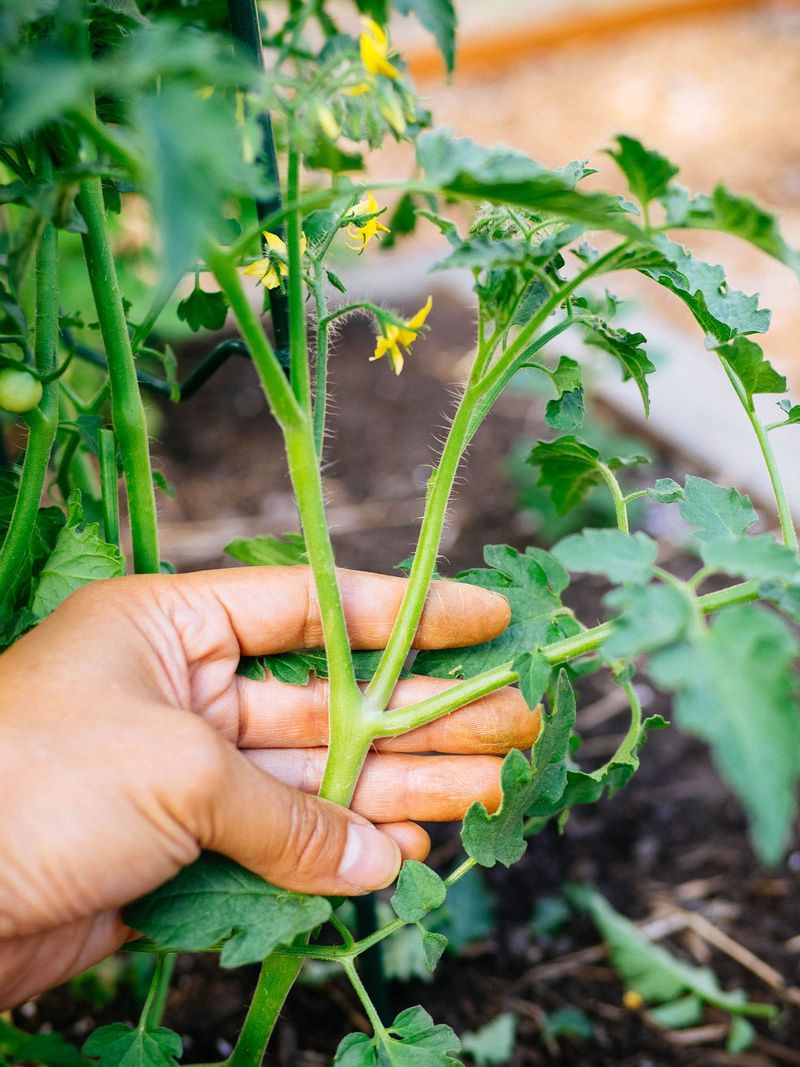
Flower removal is a separate job from topping. Late blossoms will not have time to become mature fruit before cold arrives, so removing them can keep the plant from spending effort on fruit that will never finish.
Iowa State Extension recommends removing newly appearing flowers about four weeks before the first fall frost.
Timing still depends on where you live. A Washington State University Extension tip sheet from the Seattle area gives a mid August example.
That is not a national date, just a sign that shorter seasons call for earlier cuts.
As you work, protect the leaves. Foliage shades fruit, and removing upper leaves can expose tomatoes to sunscald, which shows up as pale, papery patches on the skin.
Iowa State also advises against removing more than one-third of a plant’s foliage at a time.
So skip the idea of stripping the plant bare. If a tomato is suddenly sitting in full sun after a trim, you have likely taken off too much.
Pinch only the new blossoms and leave the leafy cover in place.
Bring mature-green tomatoes indoors before cold threatens
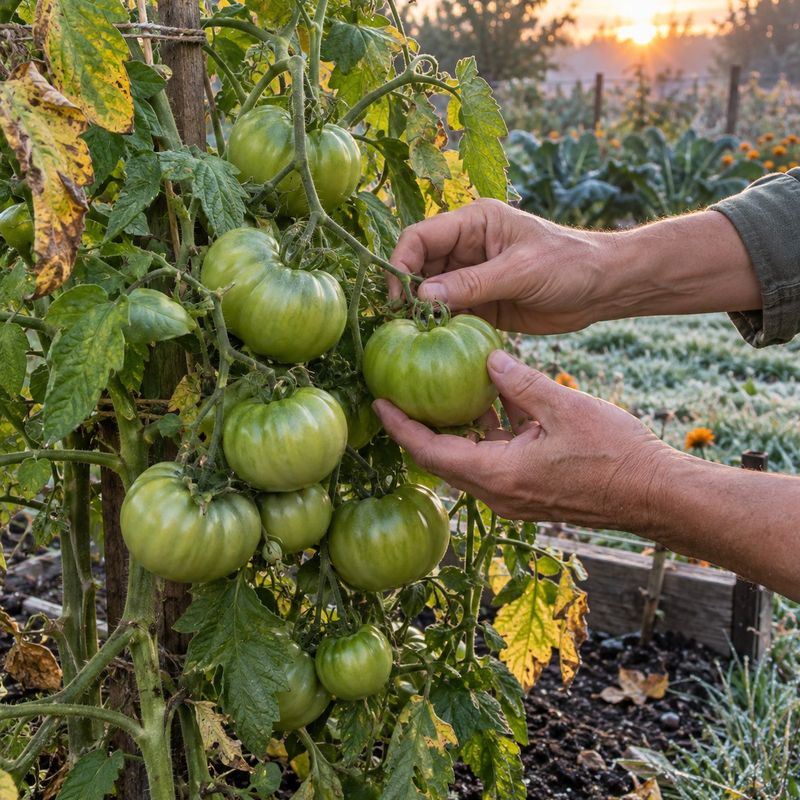
Sometimes the cold wins the race, and that is fine. Your fallback is to pick fruit before frost.
UMN Extension says fully developed, mature-green tomatoes often ripen satisfactorily indoors, while very immature fruit may not develop good flavor.
Choose full-size tomatoes and leave the tiny ones behind. Store them at room temperature and space them apart so they do not press on each other.
Light is not necessary.
Waiting has a cost. Utah State Extension notes that warm-season vegetables, including tomatoes, can be damaged around 33°F.
Treat that as a general warning, not a forecast rule, and watch your own local lows.
Here is a simple decision sequence to keep handy:
1. Check your local frost timing. 2.
Confirm the plant is indeterminate and healthy. 3. Top it with one clean cut and leave the leaves. 4.
If cold arrives first, pick the mature-green fruit.
A tomato on the counter beats a tomato lost to frost.