
Tossing Your Poinsettia After The Holidays Is A Mistake – 13 Steps That Make It Turn Red Again Next December
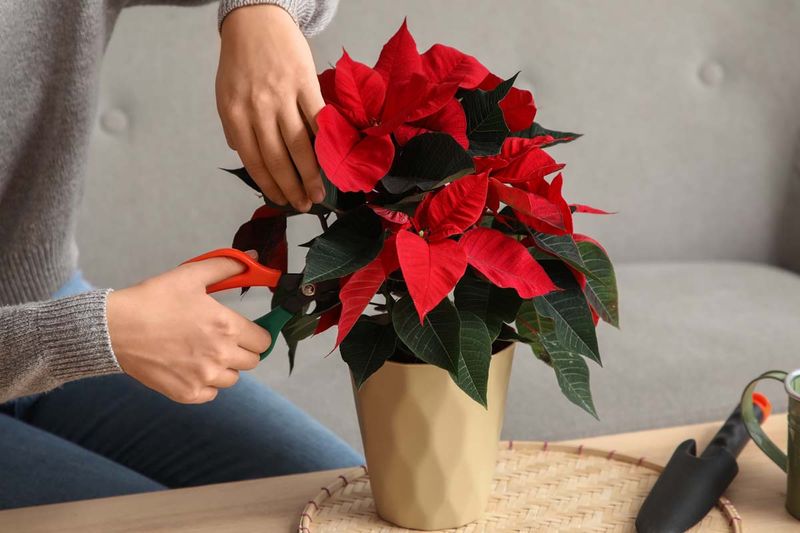
Every January, millions of healthy poinsettias end up in the trash next to the dried-out wrapping paper. That plant on your table is not a short-lived decoration.
It is a tropical shrub that can live for years and turn red again with a little care. Follow these 13 steps through the seasons, and next December your own poinsettia can glow just as bright as the day you brought it home.
1. Keep Watering Through the Bloom Season
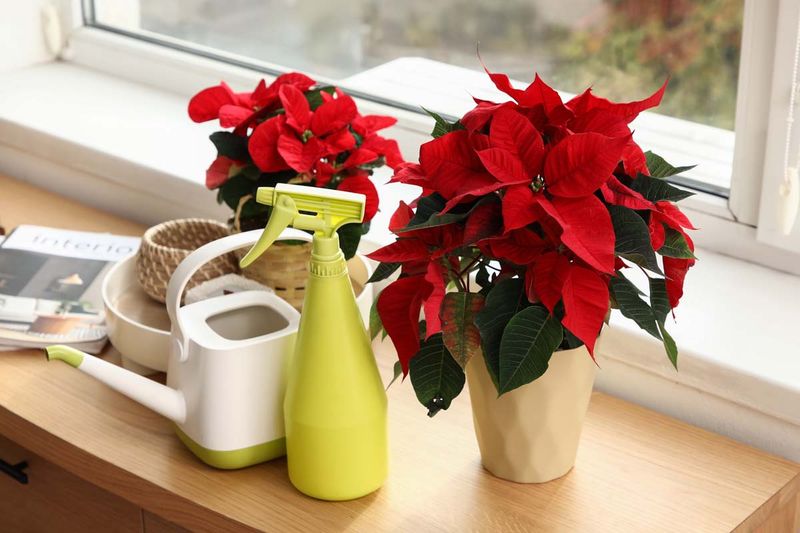
Picture a poinsettia on New Year’s Day, bracts still bright and leaves still green. It is very much alive, and it is still thirsty.
The holidays ending does not change what the plant needs.
Touch the soil every few days. When the top feels dry, water slowly until a little drains out the bottom.
Then pour off whatever collects in the saucer or foil wrapper.
That foil sleeve is a sneaky problem. Water pools inside it, the roots sit soaking, and the leaves start yellowing and dropping.
Poke holes in it or remove it entirely, and your plant gets a far better shot at making it to spring.
2. Skip Fertilizer While It Is Still Colorful
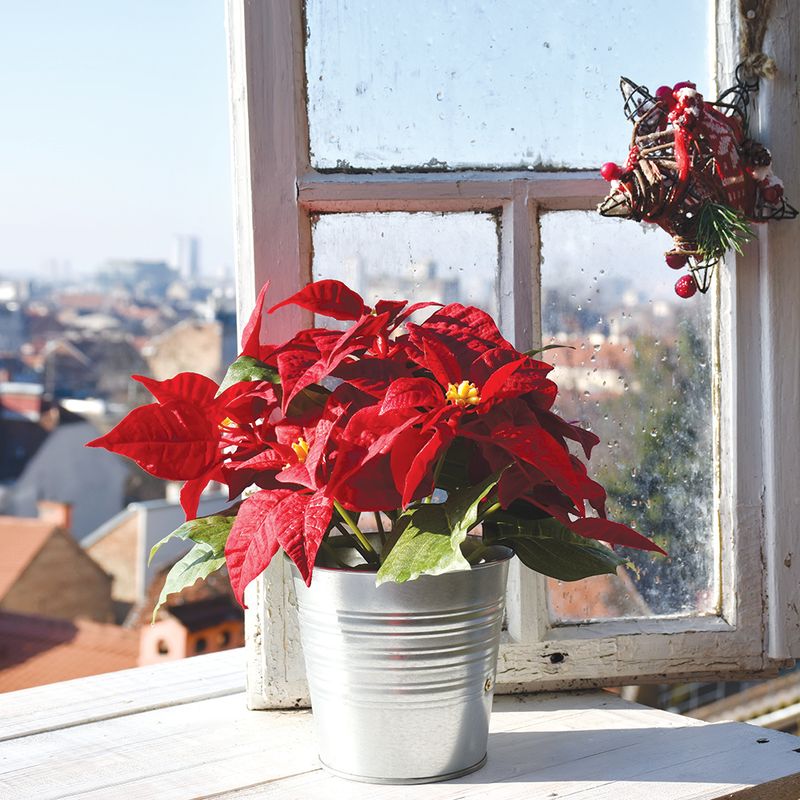
Hold off on the plant food. That advice surprises a lot of people, because feeding feels like the caring thing to do.
While the red bracts are showing, your poinsettia is not actively growing much. Fertilizer at this stage mostly goes unused and can build up as salts in the soil.
Those salts may burn tender roots over time.
Save the bottle for late March or early April. By then the plant will be ready to push new growth, and a half-strength, water-soluble houseplant fertilizer once or twice a month will actually help.
Until then, plain water and a bright spot are all it wants.
3. Give It Bright Light and Steady Warmth
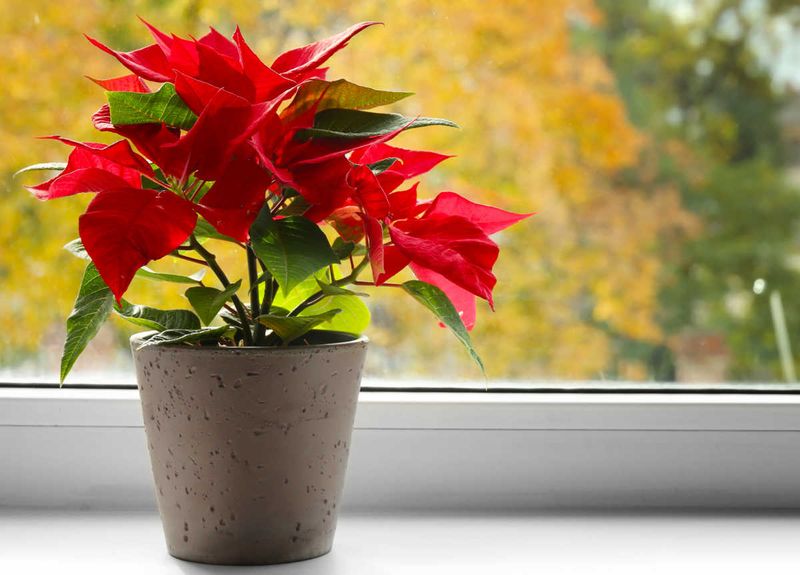
Poinsettias come from the warm hillsides of southern Mexico, where the Aztecs called them cuetlaxochitl. A cold, drafty corner of an American living room in February is a long way from home.
Set your plant near your sunniest window, but keep leaves from touching cold glass. Steer clear of heater vents, fireplaces, and doors that swing open to winter air.
Sudden temperature swings are one of the fastest ways to trigger leaf drop.
Aim for daytime temperatures around 65 to 75 degrees. If you are comfortable in a sweater indoors, your poinsettia probably is too.
4. Cut It Back Hard in Early March
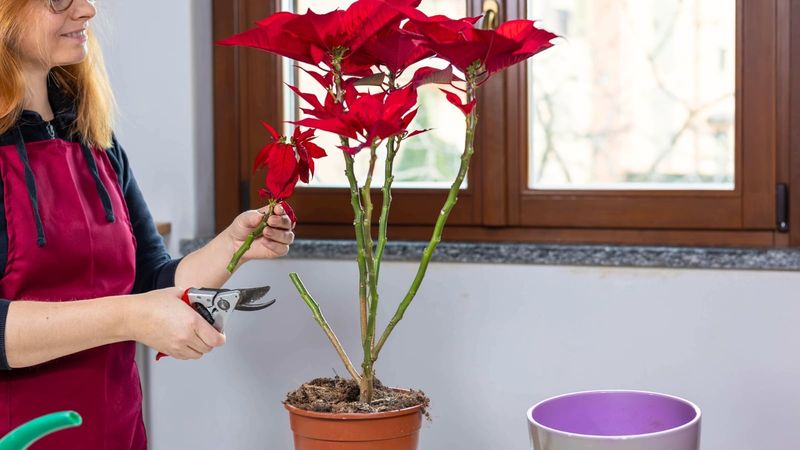
Brace yourself, because this step feels brutal. Around early March, when the bracts fade and look tired, grab clean pruners and cut each stem down to about 4 to 6 inches tall.
Leave one to three leaves on every stem. Those remaining leaves and the buds just above them are where fresh shoots will come from.
Clear away fallen leaves and dried bits from the soil surface, too. Wear gloves if you have sensitive skin, since the milky sap can irritate.
What looks like a sad stump now is the start of a fuller, bushier plant.
5. Let It Rest a Little in April
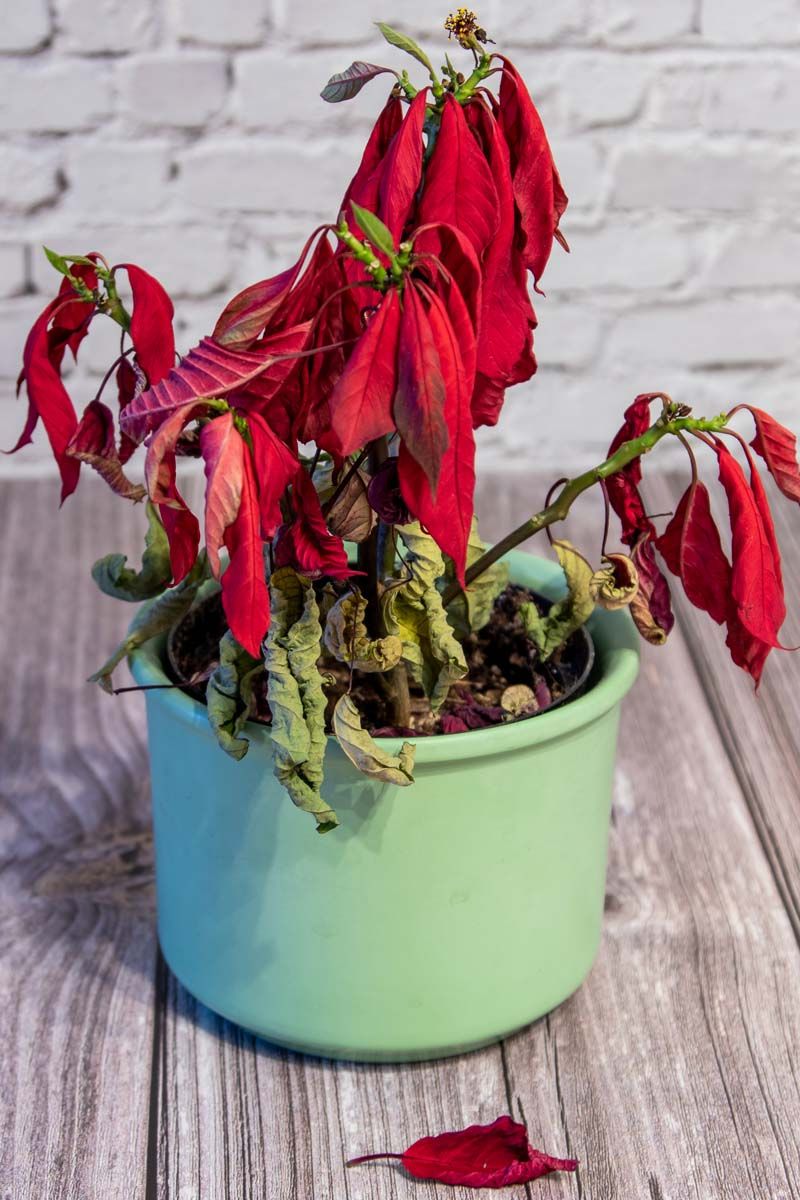
Some growers swear by a short nap. In early April, you can ease back on water, let the soil dry a bit more between drinks, and move the pot somewhere cooler, around 60 degrees, with indirect light.
Think of it as a breather after the big holiday show. The plant slows down and gathers energy for the growing season ahead.
Watch the stems closely, though. If they start to shrivel or wrinkle, the plant is too stressed, so water it and bring it back to brighter light.
This rest is optional, and skipping it will not ruin your chances.
6. Repot Into Fresh Soil in May
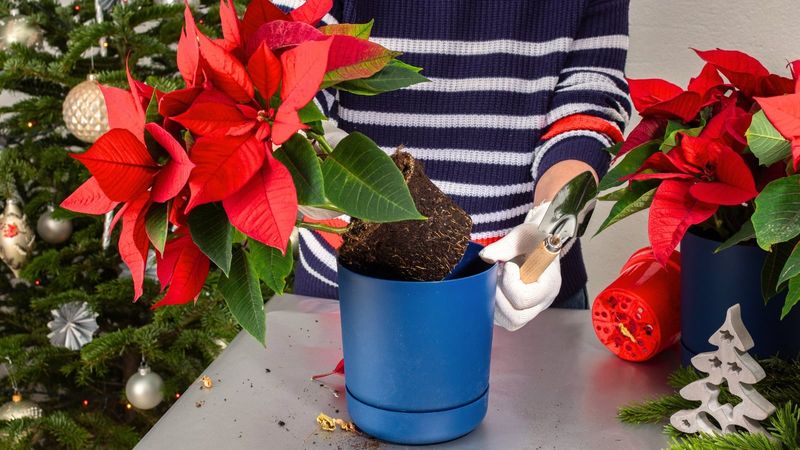
New green shoots popping up in May are your signal. The roots are waking up, and they will appreciate some fresh room.
Choose a pot only an inch or two wider than the old one, with a drainage hole. Fill it with a quality potting mix that drains well, since soggy soil causes more poinsettia deaths than almost anything else.
Trim any lanky stems back to 4 to 6 inches if needed, settle the plant in at the same depth, and water thoroughly. Then park it in a bright window between 65 and 75 degrees while it settles.
7. Start a Regular Feeding Routine
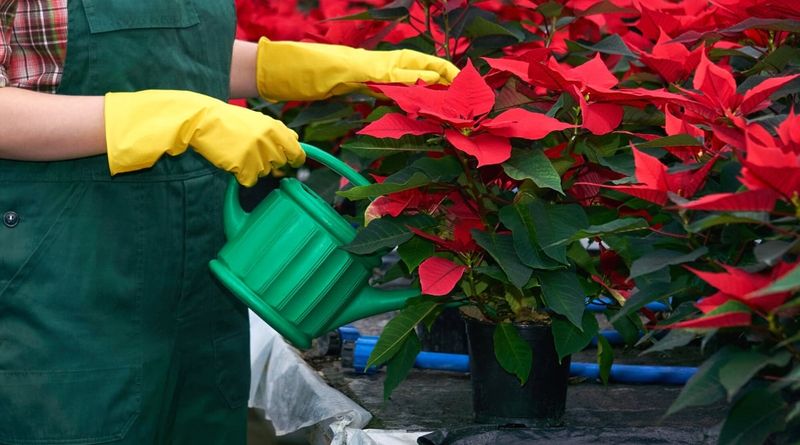
Now the plant food finally comes off the shelf. With new leaves unfolding, your poinsettia is hungry for nutrients to build strong stems.
Use a complete, all-purpose houseplant fertilizer every two weeks. Mixing it at half strength is a safe habit if you are nervous about overdoing it.
Always water the soil first or feed on moist soil, never bone dry. Healthy summer growth means more branches, and more branches mean more colorful bracts come December.
Keep checking soil moisture before each watering, just like you did in winter.
8. Move It Outdoors When Nights Stay Warm
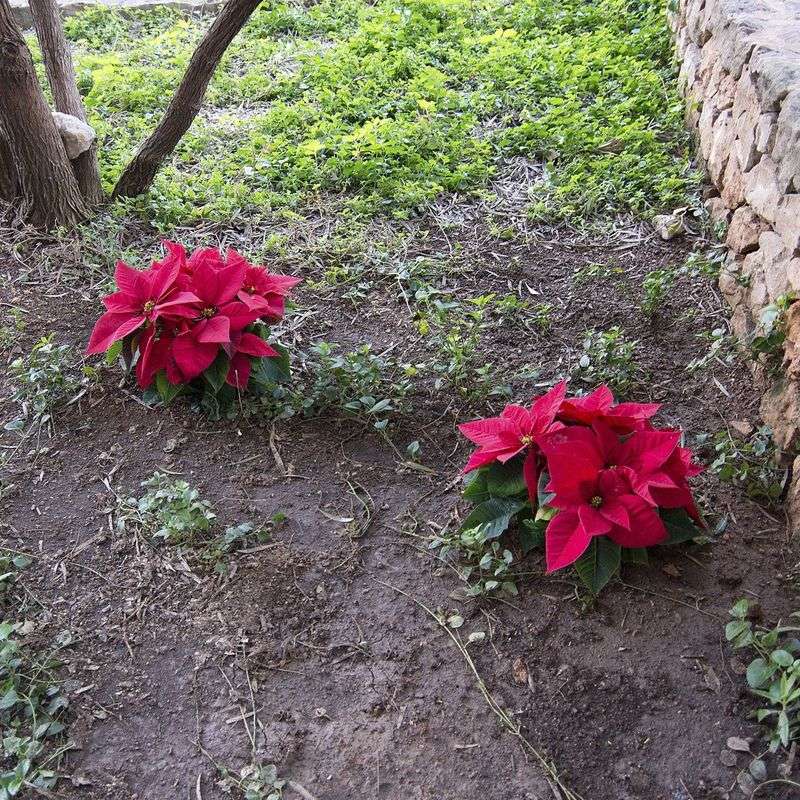
Summer vacation, poinsettia style. Once frost danger is gone and nights stay above 50 to 60 degrees, your plant can head outside.
Start in a shady spot so the leaves do not scorch. Over a week or two, slide it into brighter light, eventually giving it plenty of sun as summer moves along.
In very hot southern areas, afternoon shade is a kindness.
Outdoor pots dry out quickly. Check the soil daily during hot spells, and water deeply when it feels dry.
Many gardeners are shocked how lush the plant gets with fresh air.
9. Pinch for a Fuller Shape in June
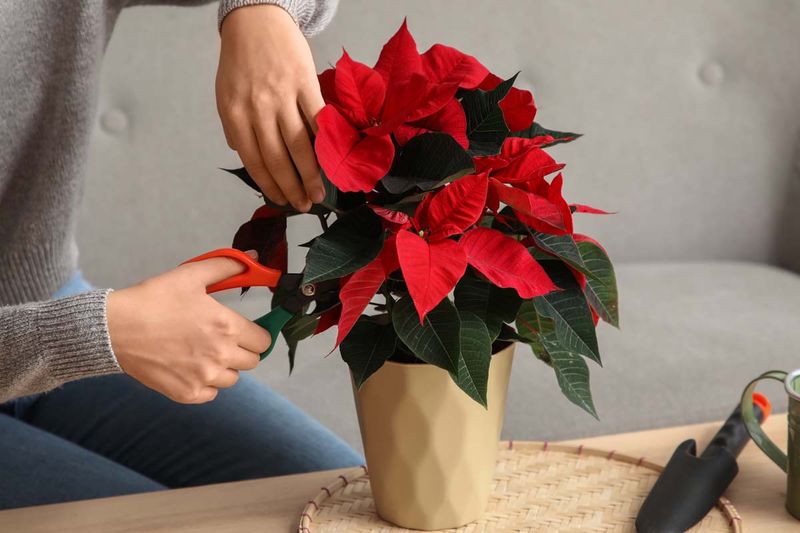
Left alone, poinsettias get tall and gangly, with a few lonely stems. A June trim fixes that.
Snip off two to three inches from the tip of each branch. Every cut encourages side shoots to sprout below it.
Here is the payoff: each of those side shoots can produce its own cluster of red bracts. A plant with eight branch tips can put on a much bigger show than one with three.
It is one of the easiest ways to make your rebloomed poinsettia look store-bought.
10. Keep Pinching Until Mid-August, Then Stop
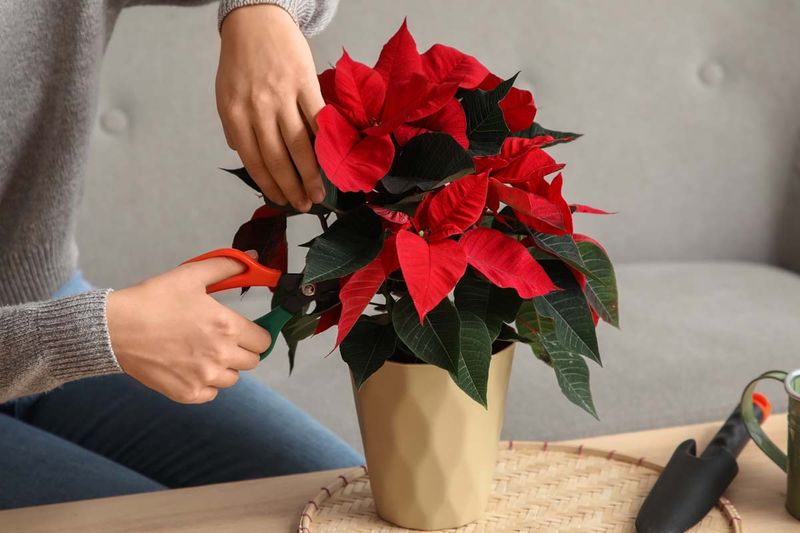
Mark your calendar for this one. In July, pinch about an inch off each stem, and repeat every three to four weeks to keep the plant compact.
By mid-August, put the pruners away for good. Trimming any later than about September 1 can cut off the very growth that would have turned red.
Keep up generous watering and feeding through these hot weeks. A strong, well-branched plant heading into fall is exactly what you want.
11. Bring It Back Inside Before Cool Nights
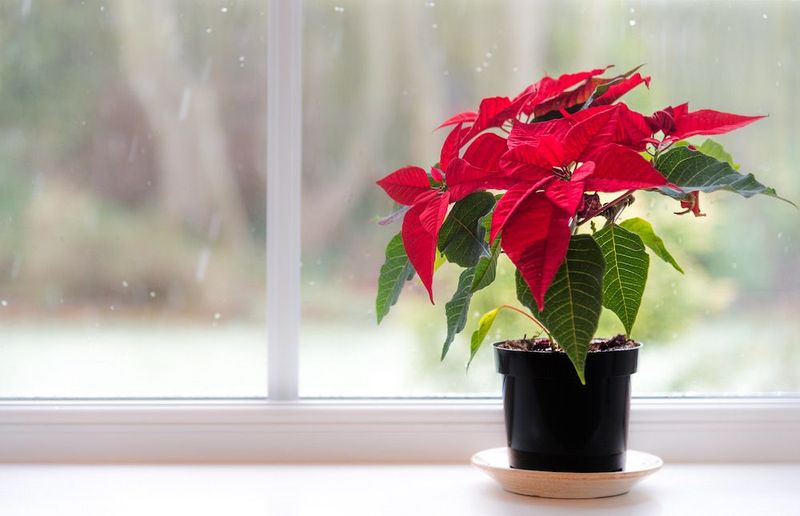
Late August sneaks up fast. When nighttime temperatures start dipping to 55 or 60 degrees, it is time to carry your poinsettia back indoors.
For most of the country, that lands around late August or early September. Northern gardeners may need to move a bit sooner.
Give the leaves a quick look for bugs like whiteflies before it comes in. Then place it in your sunniest window so it can keep soaking up light ahead of the most important step of the year.
12. Give It Long, Total Darkness Every Night

Here is the secret most people never hear. Poinsettias are short-day plants, which means long nights, not cold weather, trigger the red color.
Starting around September 21 or early October, give your plant 13 to 16 hours of complete darkness every night. A closet or a large cardboard box works well, from roughly 5 p.m. to 8 a.m.
Even a lamp or a cracked door can delay blooming, so be strict. Then return it to a bright window for 8 to 11 hours each day, rotating it so all sides get light.
Keep this up for 8 to 10 weeks, until color shows.
13. Watch Night Temperatures and Ease Off Feeding
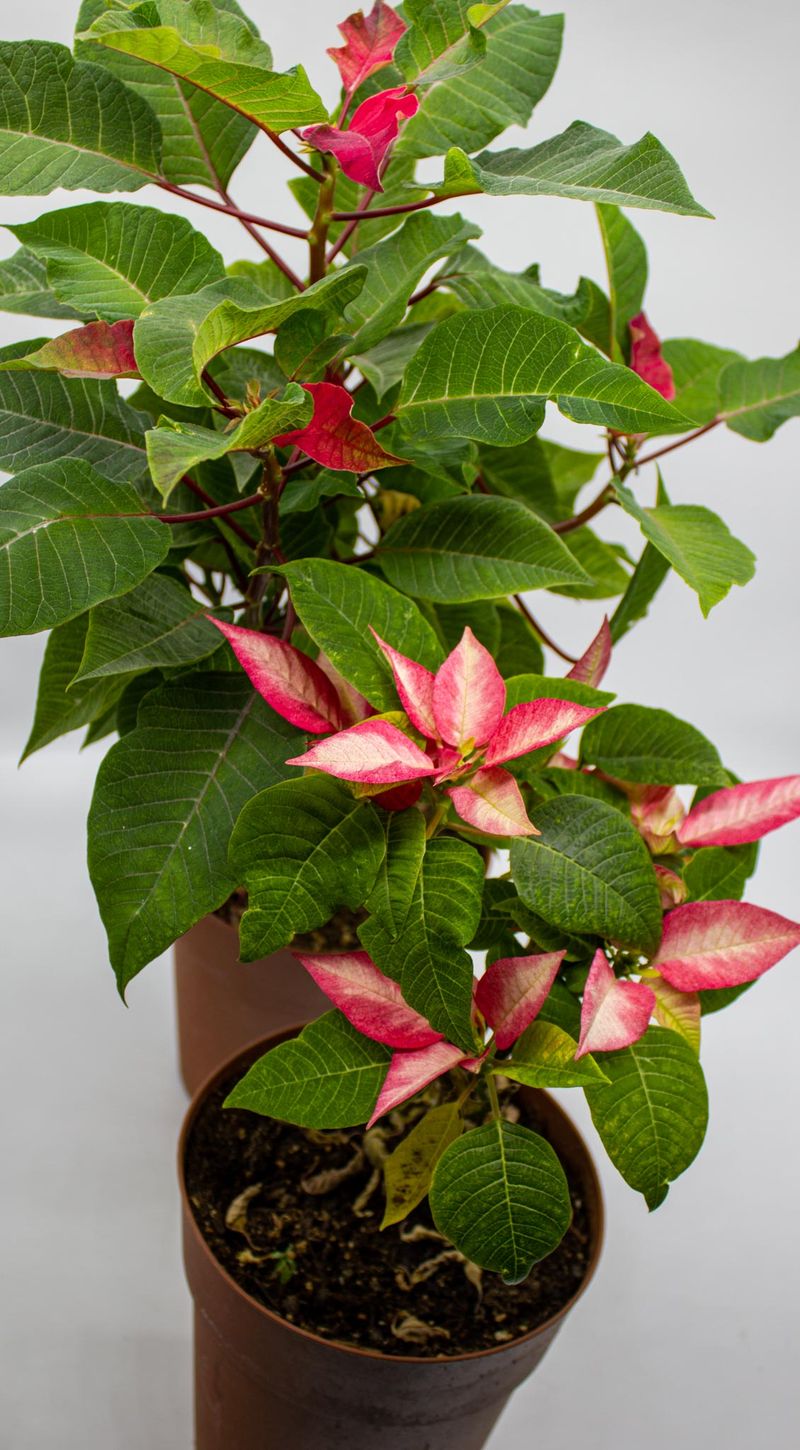
Sometimes the darkness routine is perfect and color still stalls. Warm nights are a common culprit.
Keep night temperatures in the low to mid 60s. Nights above 70 to 75 degrees may delay or block flowering, while days around 65 to 75 are ideal.
Cut back fertilizer in September, and stop completely once red appears around Thanksgiving to help the color last. Keep watering when the surface dries.
Then, sometime in December, you get to admire a plant everyone else threw away.