
What It Really Means When A Barred Owl Starts Calling From The Trees Around Your North Carolina Yard
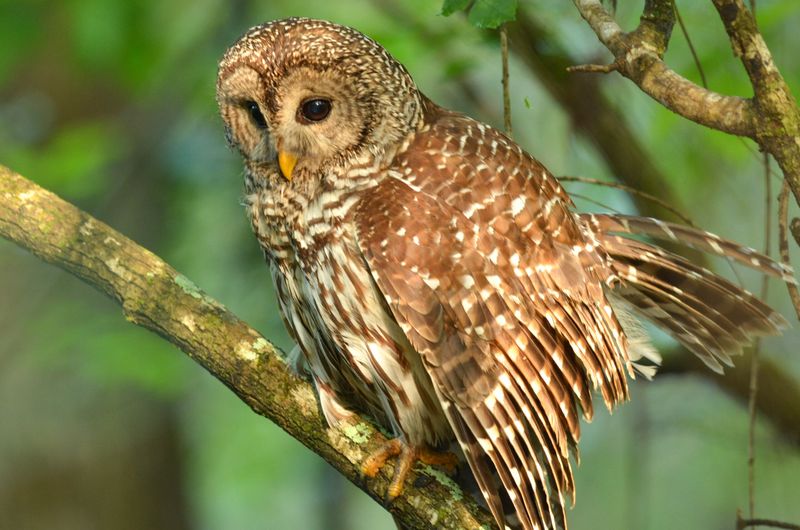
Hearing a Barred Owl call from the trees near your yard at night is one of those moments that stops you in your tracks. Many homeowners immediately wonder whether the bird is signaling a mouse problem, a healthy ecosystem, or something else entirely.
The honest answer is more nuanced than most wildlife articles let on, and getting it right helps you protect both your home and the owl.
The call points to nearby habitat, not a yard diagnosis
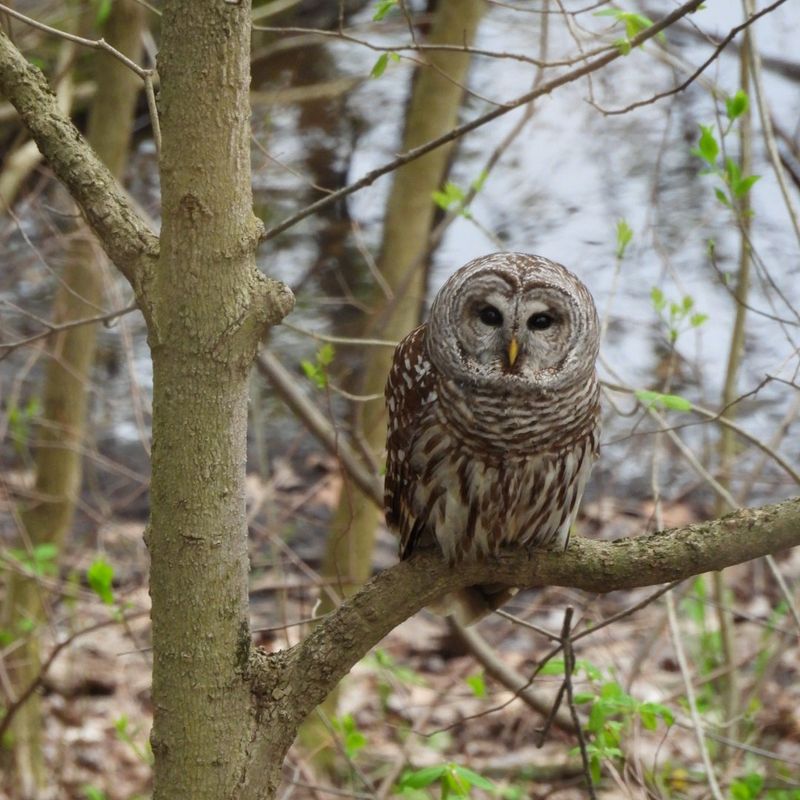
Hearing that deep, resonant “who cooks for you” call drifting through your North Carolina yard after dark is genuinely striking, but the most accurate first read is straightforward: the owl is consistent with usable habitat somewhere in the surrounding landscape, not necessarily with your specific lawn or garden bed. NC Wildlife describes Barred Owls as favoring mature forest near wetlands, waterways, swamps, and bottomlands, and the USGS Barred Owl habitat map confirms that the species uses large forested patches, wooded corridors, and connected natural areas across its range.
What draws an owl to your general area is a combination of features: mature or dead trees with natural cavities for roosting and possible nesting, canopy cover, access to open water or wetland edges, and prey moving through the area. Those conditions may exist on your property, on a neighbor’s lot, along a nearby creek, or in a wooded patch two streets over.
One call from one tree on one night cannot tell you which of those locations the bird is actually using as a home base.
The Cornell Lab of Ornithology’s Barred Owl life history notes that territories can be large and that the birds move through a landscape rather than confining themselves to a single lot. So while the call is a real signal worth paying attention to, it does not function as a diagnosis of your yard’s pest load, soil health, plant diversity, or overall ecological condition.
Think of it as evidence that the surrounding area offers something the owl can use, not as a report card on what is happening inside your fence line.
What repeated calling can—and cannot—tell you
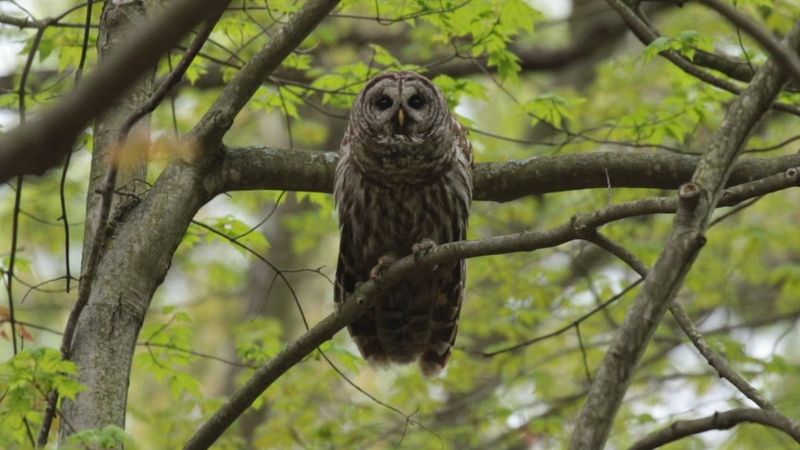
When the same call drifts in night after night from the same general direction, it is natural to read more into it. Repeated calling is compatible with several behaviors: territorial advertisement, communication between paired birds, courtship exchanges, or simply a bird moving through an area it uses regularly.
Audubon’s Barred Owl field guide notes that the species is territorial year-round and especially vocal during the late winter and early spring breeding season, when paired birds often call back and forth in loud, escalating duets.
What repeated calling cannot confirm is whether a resident pair has established a territory on or adjacent to your property, whether nesting is underway, or whether the owl is responding to an unusually high rodent count nearby. The Cornell Lab’s life history account describes Barred Owls as regularly vocal but does not offer a reliable rule linking call frequency or timing to confirmed occupancy or breeding.
Hearing an owl three nights in a row may mean regular use of the area, or it may simply reflect a bird moving through a corridor that happens to pass near your yard.
One more misconception worth clearing up: a call heard during daylight hours does not mean the owl is sick, injured, or disoriented. Barred Owls occasionally call and even hunt during the day, particularly under heavy cloud cover or in shaded forest.
If a daytime call surprises you, that alone is not a reason to contact a rehabilitator. Reserve that call for birds that show obvious physical distress, not just an unusual schedule.
A Barred Owl’s diet is broader than mice
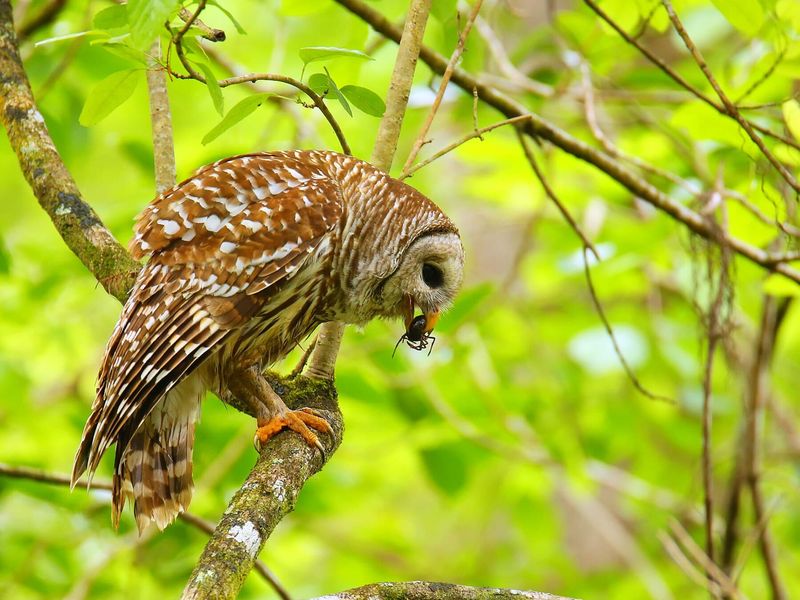
A common assumption is that an owl near the yard means mice are running rampant nearby. That logic works better for Barn Owls, which are closely associated with rodent-heavy agricultural settings, than it does for Barred Owls.
According to both NC Wildlife and the Cornell Lab, Barred Owls are generalist predators with a documented diet that spans small mammals, squirrels, chipmunks, rabbits, opossums, songbirds, frogs, salamanders, snakes, fish, crayfish, and insects.
Small mammals, including mice and voles, are certainly part of that diet and can be important prey items. But the owl hunting near your yard on a given night may just as easily be targeting a frog at a rain puddle, a crayfish along a stream bank, or a squirrel moving through the canopy.
The call alone gives you no way to determine which prey type the bird is pursuing, which means it gives you no reliable information about whether mice or rats are present on your property in worrying numbers.
The distinction between Barred Owls and Barn Owls also matters when evaluating pest-control claims online. Much of the content promising that owls will consume hundreds or thousands of rodents per year is drawn from Barn Owl research, often conducted in California vineyards.
A 2026 study in Ecological Applications examined Barn Owl effects on rodent pests in an agricultural setting – a different species, a different landscape, and a different context than a Barred Owl in a North Carolina yard. Applying those figures to your situation overstates what the available evidence actually supports.
The Audubon field guide reinforces that Barred Owls occupy wetter, more forested habitats and hunt a wider variety of prey than their grassland-adapted relatives.
North Carolina’s landscape changes the context
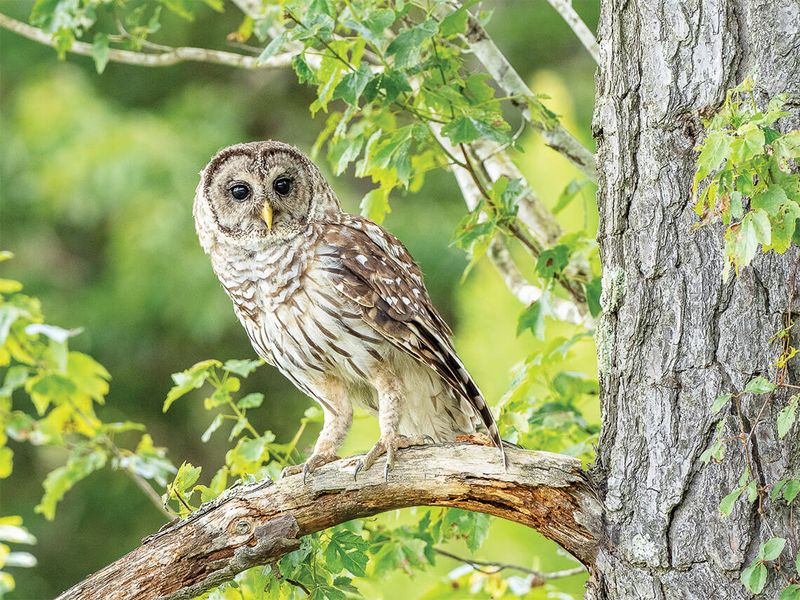
North Carolina stretches from tidal marshes on the Outer Banks to spruce-fir ridges above 6,000 feet, and where you live shapes what a Barred Owl’s presence most plausibly reflects. NC Wildlife describes Barred Owls as occurring statewide but favoring wetter areas and notes that they are relatively scarce in the mountains.
That pattern matters when you are trying to interpret a call.
On a Piedmont property near a creek or pond, the owl is likely using a wooded riparian corridor that threads through the suburban landscape. Those corridors can extend for miles, connecting patches of mature forest and offering the mix of large trees, water access, and varied prey that the species needs.
Along the Coastal Plain, where swamps, bottomlands, beaver ponds, and pocosins are common, Barred Owls are more consistently present and may range across a broader area of suitable wetland habitat. The USGS habitat map shows dense predicted occurrence across much of the eastern and central parts of the state, reflecting exactly this preference for low, wet, forested ground.
Mountain residents in the Blue Ridge or Appalachians who hear a Barred Owl are more likely near a lower-elevation hollow, a stream valley, or a cove forest than on a dry ridge. The Cornell Lab notes that the species generally avoids treeless or highly fragmented terrain.
Regardless of region, the practical takeaway is the same: look outward at the nearby woods, waterways, and natural patches rather than inward at your lawn. The owl is responding to landscape-scale features, not to conditions inside your property line.
Check for rodent evidence independently
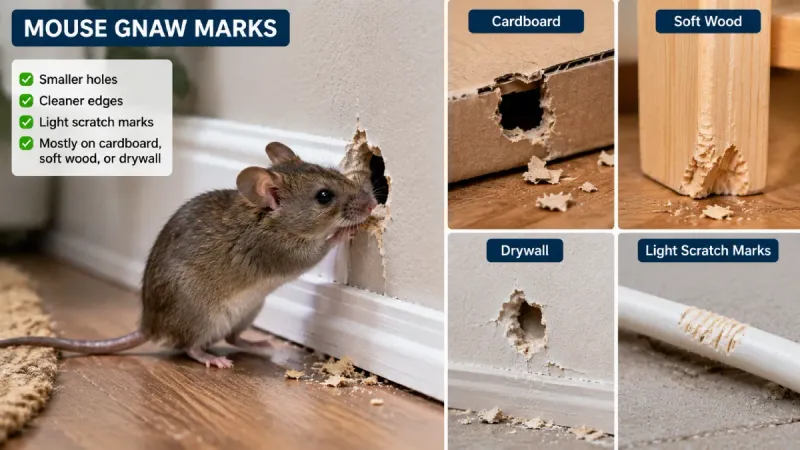
Whether or not an owl is calling nearby, the only reliable way to know whether mice or rats have moved into your home or outbuildings is to look for the signs yourself. The owl is not a diagnostic instrument.
CDC guidance on rodent prevention points to a clear set of physical indicators: droppings along walls or in cabinets, gnaw marks on wood or food packaging, shredded nesting material in hidden corners, greasy rub marks along baseboards, urine odors in enclosed spaces, and sounds of movement in walls or ceilings at night.
Tracks in dust near a garage wall, damaged bird seed bags in a storage shed, or a repeated scrambling sound above the ceiling at dusk are all more actionable clues than an owl call outside. Walk the perimeter of your home and any outbuildings with a flashlight and check where utilities enter the foundation, where the roofline meets siding, and where crawlspace vents are screened.
A gap as small as a quarter inch can admit a young mouse.
When you do find evidence, the response follows a straightforward order. CDC recommends sealing entry points first, then removing food and harborage, then trapping to reduce the population already inside.
Monitoring after trapping tells you whether the problem has been resolved or whether more work is needed. Following the principles of integrated pest management (IPM) keeps the response proportionate to the evidence, avoids unnecessary chemical use, and protects the wildlife, including the owl, that depends on a safe environment around your home.
Manage rodents without poisoning the predator
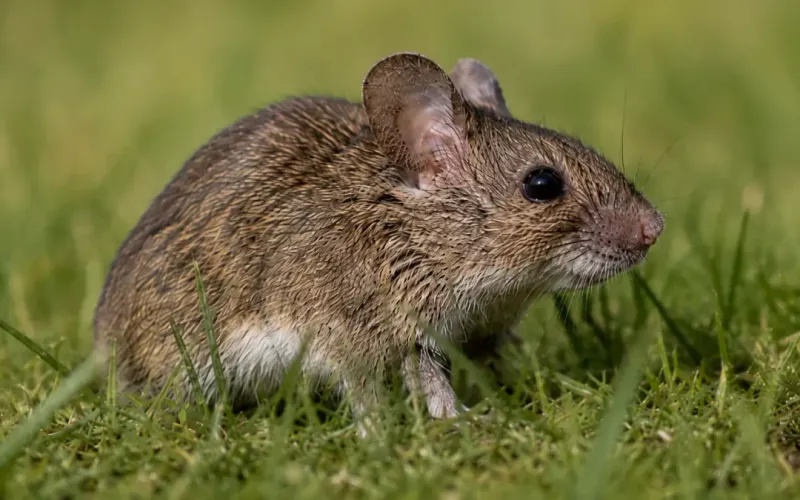
Keeping rodents out of your home without creating a poison hazard for the owl starts with the same steps that make any property less attractive to wildlife looking for easy food. Secure garbage cans with tight-fitting lids, bring in pet food bowls before dark, store bird seed in metal containers, and move feeders at least 10 to 15 feet from the house.
CDC’s integrated pest management framework treats sanitation and exclusion as the foundation of any effective rodent plan, because reducing food and shelter access is more durable than any single treatment.
Physical exclusion comes next. CDC guidance on sealing entry points recommends steel wool or hardware cloth for gaps around pipes, caulk or cement for cracks in the foundation, and door sweeps on garage and exterior doors.
Once the structure is tightened, snap traps placed along walls and in hidden corners are effective, non-toxic, and do not create secondary hazards for predators. Check and reset them regularly until no new activity appears.
Rodenticide baits introduce a serious risk that homeowners near wooded or wet habitat need to understand plainly. When a poisoned rodent is eaten by an owl, hawk, fox, or other predator, the poison transfers.
The EPA’s rodenticide safety review documents this secondary poisoning pathway, and USGS research on anticoagulant rodenticides shows that predatory birds are among the most frequently affected non-target species. Second-generation anticoagulants, the most potent class, pose the highest secondary-poisoning risk.
If a persistent infestation leaves poison as the only remaining option, EPA restrictions on rodenticide products require that residential users apply bait only inside tamper-resistant stations and follow the product label exactly. That compliance reduces, but does not eliminate, risk to wildlife.
Non-toxic exclusion and trapping remain the approaches least likely to harm the predators sharing your landscape.
Give the owl space to remain wild
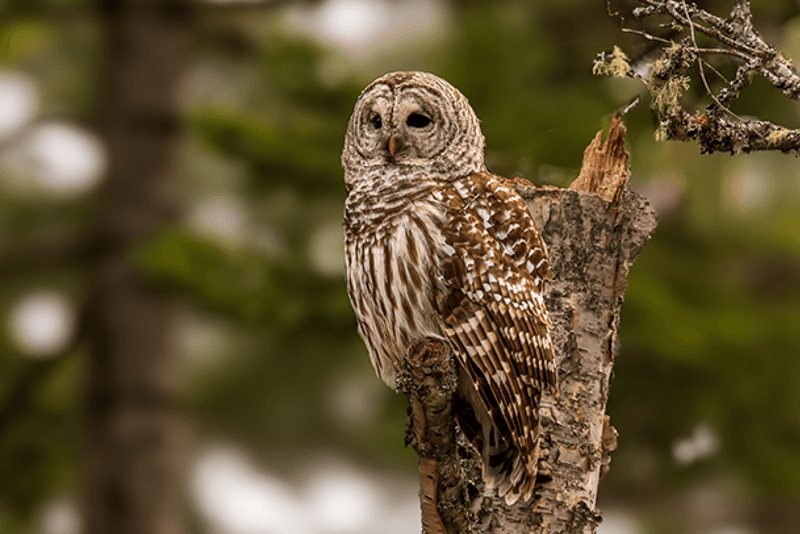
Supporting a Barred Owl that uses your area does not require feeding it, installing a box, or doing anything dramatic. The most useful actions are protective ones: preserve any mature trees, standing dead snags, and cavity-bearing trees on your property that can safely remain.
Cornell Lab notes that Barred Owls depend on large natural cavities for nesting and will not use the small nest boxes designed for screech owls. Keeping wooded cover intact, leaving natural wet areas undisturbed, and reducing unnecessary outdoor lighting near trees all help make your property part of a usable landscape rather than a barrier.
If you find what looks like a young owl on the ground or perched low in a shrub, pause before intervening. Newly fledged Barred Owls regularly spend days on the ground or climbing through low branches while their parents continue to feed and watch over them.
NC Wildlife advises leaving a healthy fledgling alone unless it shows a clear sign of injury, illness, or immediate physical danger such as a cat nearby. If you are uncertain, contact a licensed raptor rehabilitator before touching the bird.
Moving a healthy fledgling can separate it from its parents and cause more harm than leaving it where it is.
Active nests deserve even more space. Adult Barred Owls may strike people who approach too closely, and repeated human presence near a nest cavity can cause adults to abandon it.
Keep a wide buffer, temporarily reroute foot traffic if an adult is swooping near a tree, and avoid probing cavities during the breeding season. Under federal law and North Carolina state law, Barred Owls are protected wildlife.
Capturing, injuring, harassing, possessing, or disturbing an owl or its active nest without proper authorization is illegal. For any situation where you are uncertain about the legal boundaries, direct your questions to NC Wildlife or a licensed rehabilitator rather than acting on general guidance.
Treat the call as an invitation to observe, not assume
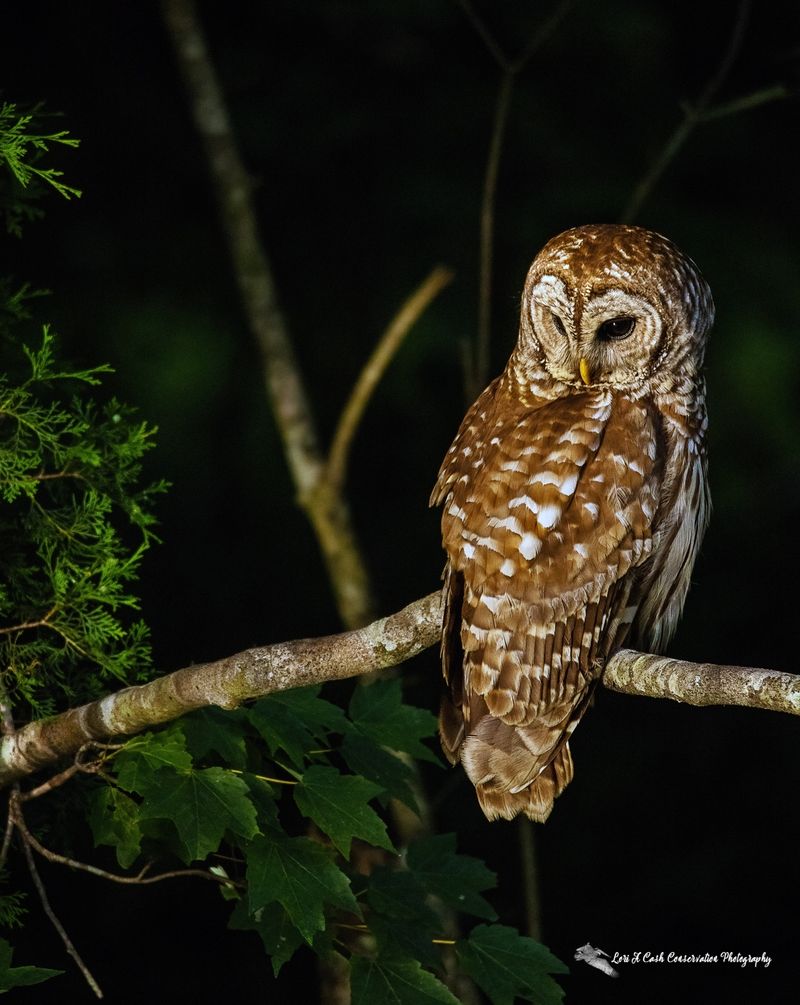
A Barred Owl calling from the trees near your yard is consistent with usable habitat and available prey somewhere in the surrounding landscape. That is a genuine and meaningful signal about the area you live in.
It is not, on its own, evidence of a rodent infestation, a functioning food web, a nesting pair, or a pest-control service about to begin. Keeping those two things separate protects you from acting on a misreading and protects the owl from the consequences of misplaced assumptions.
The practical response is uncomplicated. Inspect your home and outbuildings for actual rodent signs using the physical indicators that matter, and if you find them, use exclusion and trapping as your first tools.
Avoid rodenticide baits in areas where owls and other predators are present, and do not feed, bait, or attempt to attract the owl directly. Leave mature trees, snags, and natural wet areas intact where you safely can, and give any owl or fledgling you encounter the space it needs.
What you have, when a Barred Owl calls from your trees, is a reason to pay closer attention to the landscape around your home. NC Wildlife and Cornell both describe Barred Owls as birds tied to mature, connected, often wet habitat – the kind of landscape worth protecting.
The best response to that call is careful observation and good stewardship, not intervention.