
What It Really Means When A Black And Yellow Garden Spider Builds In Your North Carolina Flower Beds
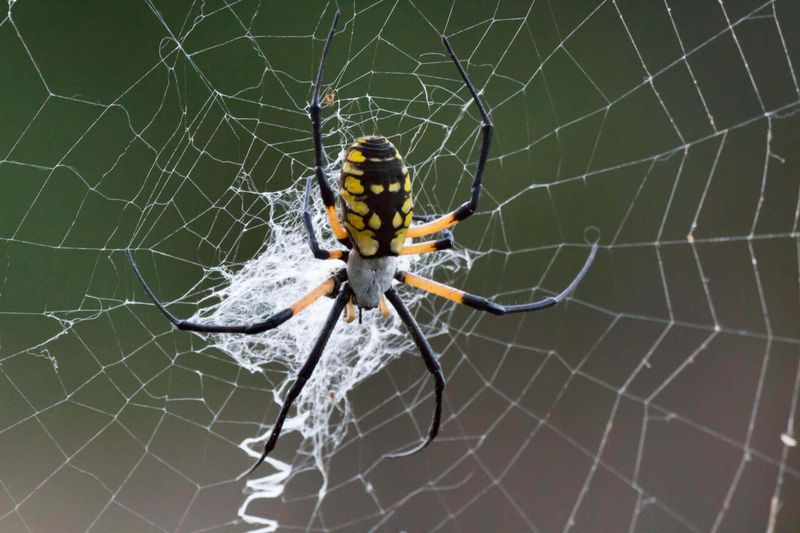
You walk out to check your zinnias and find a big black-and-yellow spider hanging in the middle of a silky web. It looks bold, a little spooky, and very hard to miss.
In North Carolina, late summer and fall are the seasons when these spiders suddenly seem to be everywhere. Here is what the sighting can tell you, what it cannot, and how to treat your new neighbor with care.
A sighting is a clue, not a yard-health score
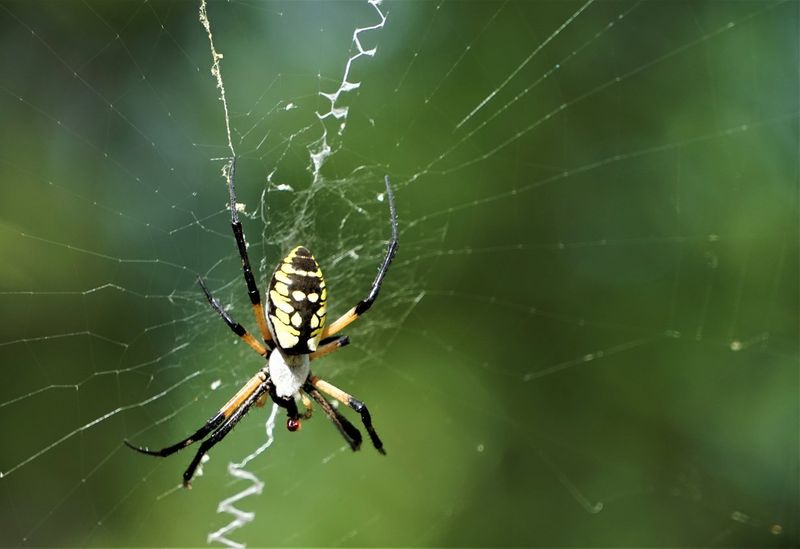
Spotting a big spider in a flower bed can feel like a small event. According to NC State Extension, this species is commonly noticed in late summer and is often seen in fall gardens and yards.
So if one shows up in September, you are seeing something quite normal for the season.
What does the sighting actually tell you? Mostly, it tells you about one spot.
A flower bed can give a spider sturdy plants to anchor silk and a steady flow of insects passing through. That is a good setup for this one animal.
It is tempting to read more into it. Many people like to think a big, colorful spider is a stamp of approval on the whole yard.
That is a nice thought, but one spider cannot certify that your yard is healthy, rich in wildlife, or free of pests.
Think of the spider as a clue instead of a report card. Maybe the bed has tall perennials, a sunny spot, and plenty of small flying insects.
Those details explain why she settled there, and nothing more.
A practical way to use the clue is to simply notice. Look at where she built, what plants hold her web, and what seems to be flying nearby.
That kind of watching helps you learn your own patch of the Piedmont, Coastal Plain, or mountains, without turning a spider into a test score.
The spider and its web offer useful clues
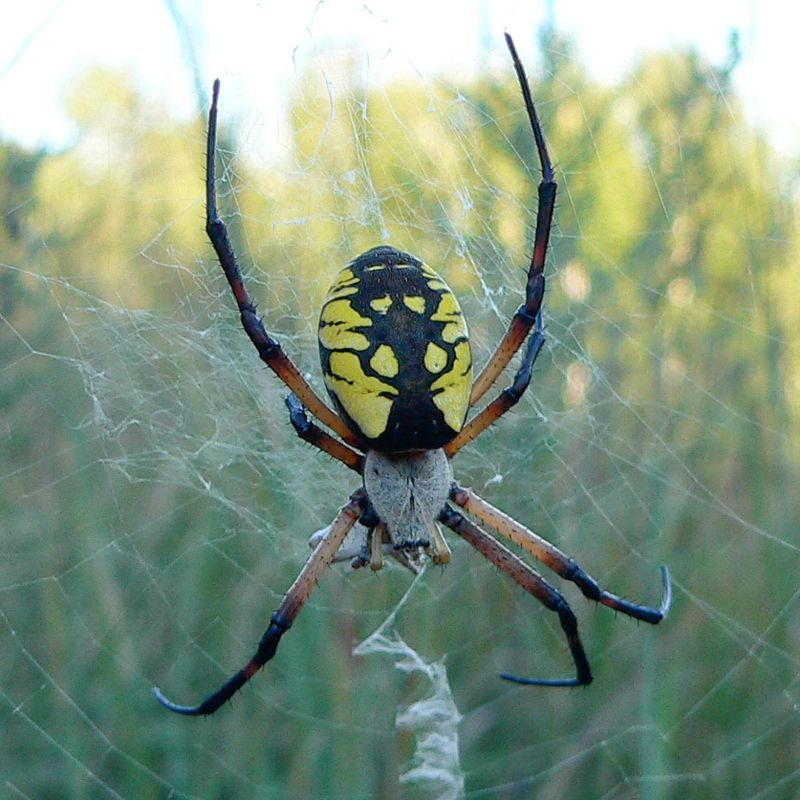
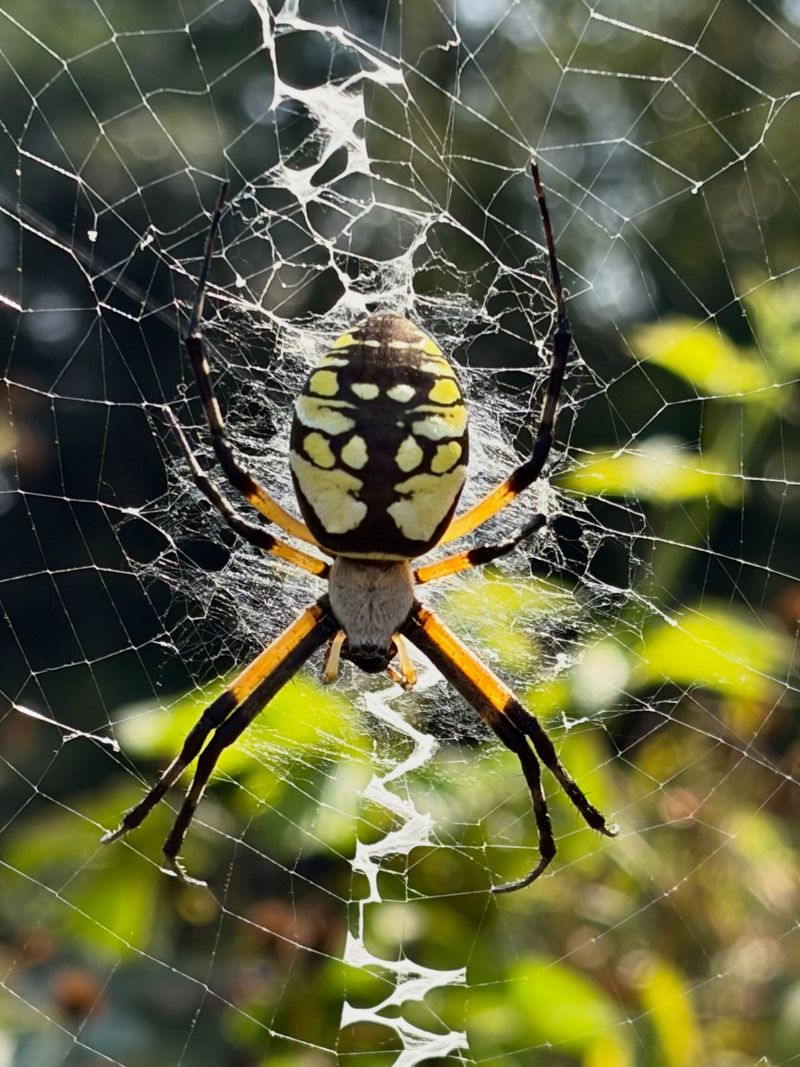
Start with color. A female black-and-yellow garden spider is boldly marked with black and bright yellow, and she is much larger than the male, who is small and easy to overlook.
When people notice a spider this size in a bed, it is nearly always the female.
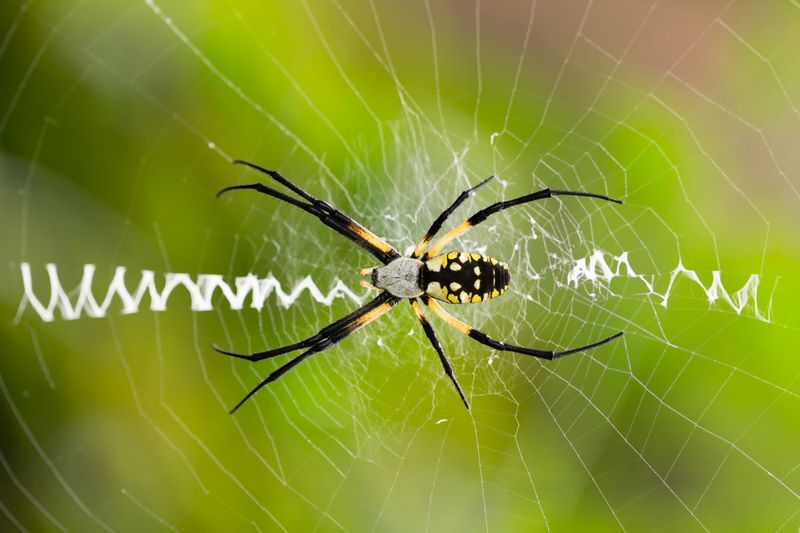
Next, look at the web. She builds a round orb web, often in a sunny spot between tall plants, and she usually hangs head down in the center.
NC State Extension also points to a thick white zigzag band of silk running through the web.
That zigzag has a name: the stabilimentum. People love to guess what it does.
Some say it strengthens the web, some say it lures insects, and some say it warns birds away. Spider experts disagree, and a research review of silk decorations describes several proposed functions with the evidence still debated, so no single purpose is settled.
Put together, a large black-and-yellow spider, a round web, and a white zigzag make Argiope aurantia a very plausible match. Still, a quick description is not a confirmed identification.
If you want to be sure, take a clear photo from a comfortable distance and compare it with extension guides, or ask your local Cooperative Extension office.
Fall is part of its life cycle
Ever wonder why these spiders seem to appear out of nowhere in September? The season is built into their life story.
Per NC State Extension, mating happens in late summer or early fall. By then the females have grown large, which is exactly when homeowners start noticing them.
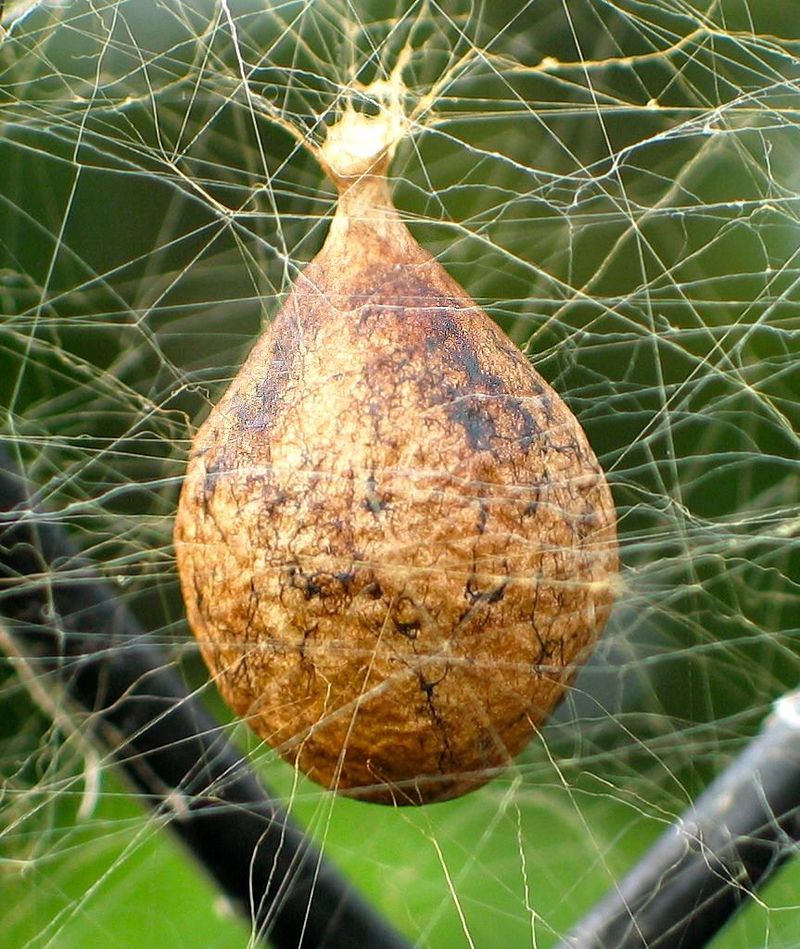
After mating, the female lays eggs and wraps them in a silk cocoon, often a papery, brownish sac near her web. The spiderlings hatch, but they stay tucked inside the cocoon until spring.
So the next generation spends the winter in a quiet, sheltered package.
The adult female generally dies as the season ends. That can be a surprise if you grew fond of her.
A web that goes empty in late fall is usually just the natural end of her year, not a sign that something went wrong in your yard.
The cocoon may stay behind on a stem or plant after she is gone. If you find one in a dried flower stalk, you have found a nursery, not an invasion.
Cleaning up the garden in November is a good time to remember it is there.
Seeing spiders in fall, then, is a seasonal pattern. It is a short, dramatic chapter that follows the same schedule year after year.
Its web catches more than garden pests
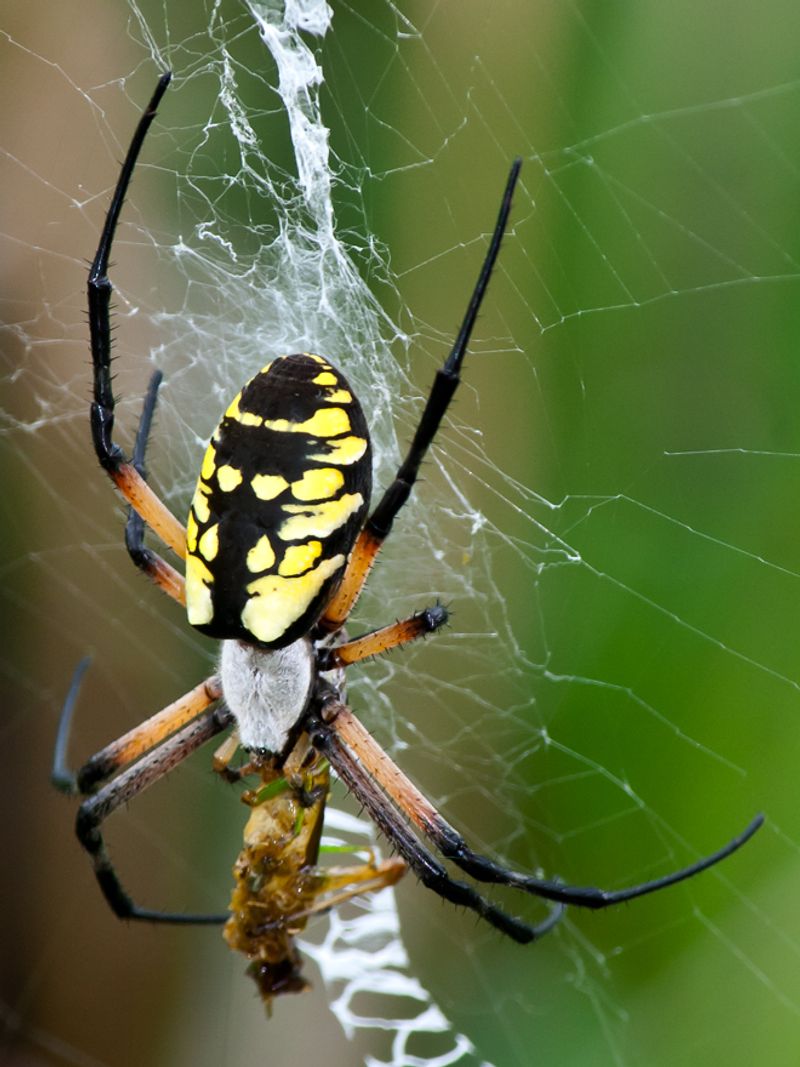
A web is a passive trap, and it catches whatever flies into it. The University of Florida IFAS Extension lists observed prey that includes flies and grasshoppers, along with other insects.
The spider bites, wraps the catch in silk, and eats it later.
That sounds like free pest control, and it can contribute to it. But the same source also records bees and wasps among the prey.
A web does not check whether an insect is a pest or a helpful pollinator before it sticks.
So the honest picture is a general insect-catching predator, not a selective exterminator. A single spider will not clear out the beetles on your squash or guarantee a bug-free bed.
She takes what comes, in the small area her web covers.
Here is a practical example. If her web sits right across a path to your bee-friendly native plants, she may catch a few of those visitors along with the flies.
That is a normal tradeoff of having any web-building spider nearby.
Her real value is as one more predator in the mix, and NC State Extension calls the species beneficial. Just keep expectations modest, and keep your pest plans separate from her web.
Should you worry about a bite?
It is natural to wonder about kids and pets when a spider this big sets up shop. The good news is that NC State Extension describes the species as not aggressive toward people.
It would likely have to be handled carelessly before it would bite.
That points to the simplest rule: look, but do not touch. Teach children to enjoy the spider from a few feet away, and keep curious pets from batting at the web.
Bites are unlikely when she is left alone.
Unlikely does not mean impossible, so it helps to know what to do. If someone is bitten, wash the area with soap and water and watch it.
Most minor spider bites cause only local irritation.
Get advice if symptoms get substantially worse over time, or if there are signs beyond the bite site, such as feeling generally ill. The same goes for anyone with a history of serious allergic reactions.
Poison Control guidance on insect and spider bites explains when to worry, and you can call 1-800-222-1222 in the United States.
Calm, careful distance is all most households need.
Leave the web when you can
If the web is tucked into a corner of the bed, the easiest plan is also the best one: do nothing. NC State Extension says no control is necessary for this spider.
You can enjoy her for the few weeks she is around.
Sometimes a web really does get in the way. Maybe it spans the walkway to your mailbox or the gate you use daily.
In that case, removing the web without chemicals is an option, though it is a convenience step and not pest management.
If you do remove one, use a long stick or broom handle from a distance and take down only the silk. Do not pick up the spider, and do not touch the egg cocoon.
She will often rebuild nearby, so a small shift in where you walk can solve the problem for good.
When you spot a papery cocoon later in the season, leave it where it is whenever practical. Spiderlings stay inside until spring, and a quiet stem is all they need.
Trim around it during fall cleanup instead of cutting it down.
A big spider in the asters is a striking guest and a handy insect predator, but she says little about the rest of your yard. Enjoy the show, then let the season take its course.