
What It Really Means When A Hummingbird Shows Up At Your North Carolina Feeder In December
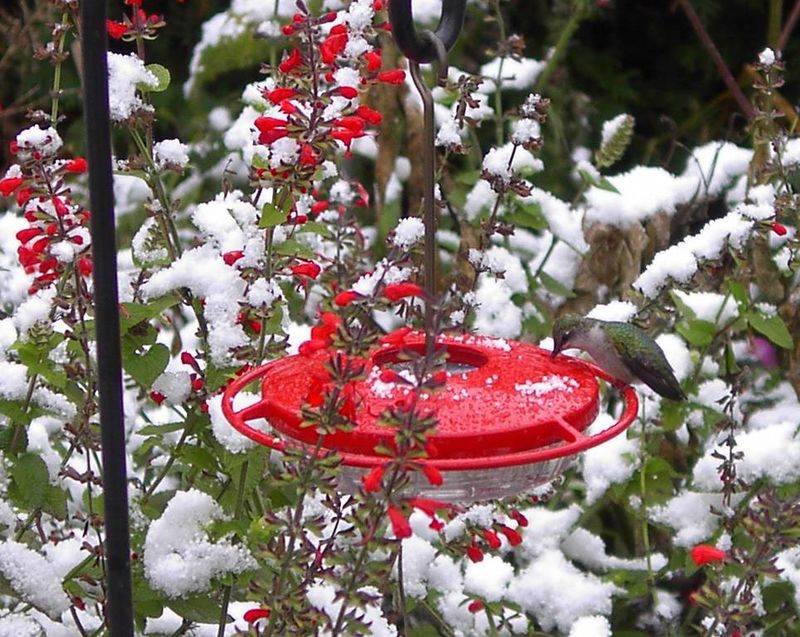
A tiny flash of color at your feeder in the middle of winter can make you stop and stare. Hummingbirds are supposed to be gone by then, so it is natural to wonder what is going on.
The answer is calmer than you might expect, and there are simple things you can do to help. Here is how to make sense of the visit and what to do next.
A December hummingbird is unusual, not impossible
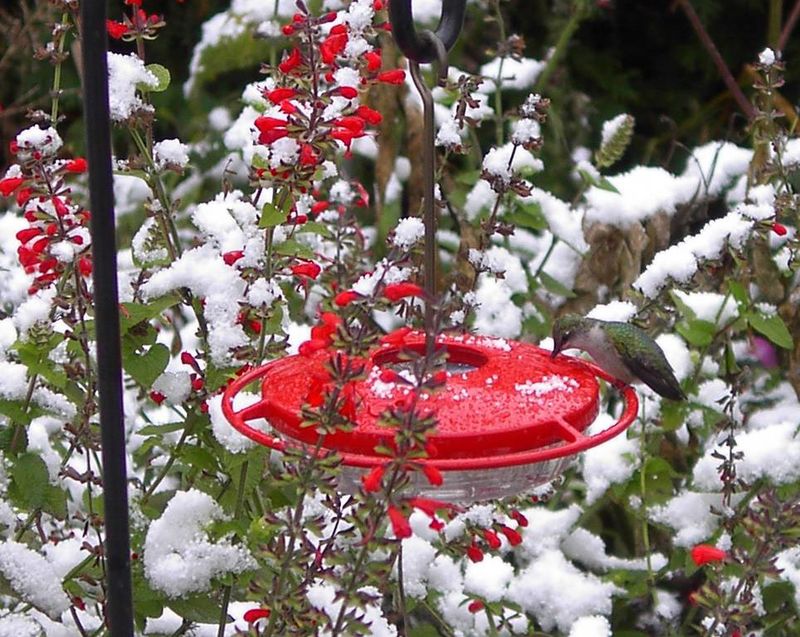
Seeing a hummingbird in December surprises most people, but it is not unheard of. Since 1999, the North Carolina Museum of Natural Sciences has studied unusual hummingbird sightings between October and March, and it asks residents to report them.
That means your visitor belongs to a documented pattern, not a mystery with a worrying cause.
The Carolina Bird Club has long encouraged people to leave feeders up into winter, since a late traveler or a winter guest may show up. Whether you live in the Piedmont, on the Coastal Plain, or in the mountains, a bird at your feeder is a rewarding thing to notice, not an emergency.
One caution is worth keeping in mind. The sighting by itself does not tell you which species the bird is, and it does not tell you why the bird is there.
Those questions need a closer look, and your careful notes can help researchers answer them.
Think of yourself as a backyard observer. Your yard might be one small piece of a larger picture that scientists are still putting together.
Could it be a Rufous?
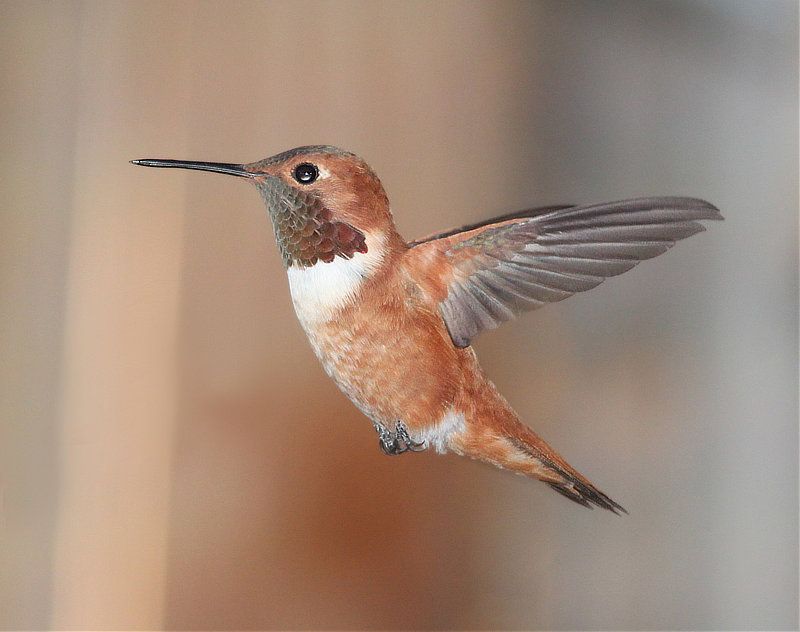
Rufous Hummingbirds are a familiar winter visitor in the Carolinas. The Carolina Bird Club notes that most winter birds investigated have been Rufous, so it is a sensible first thought.
A first thought is not a conclusion, though.
Other western species have turned up too. Females and young birds can look very much alike, and telling them apart can take close study.
A quick glimpse through a kitchen window rarely settles it.
Ruby-throated Hummingbirds also have winter records, especially near the coast. The state’s bird account for North Carolina says females and immature birds of some western species can be hard to separate from Ruby-throats without a careful look.
So the month alone cannot name the bird.
A better habit is to describe what you see instead of guessing. Was the back green or orange-brown?
Did the sides look rusty? Was there a patch of color on the throat?
Was the tail marked with a pattern? Write down the details, and let experienced people weigh in on the species.
What should you record and report?
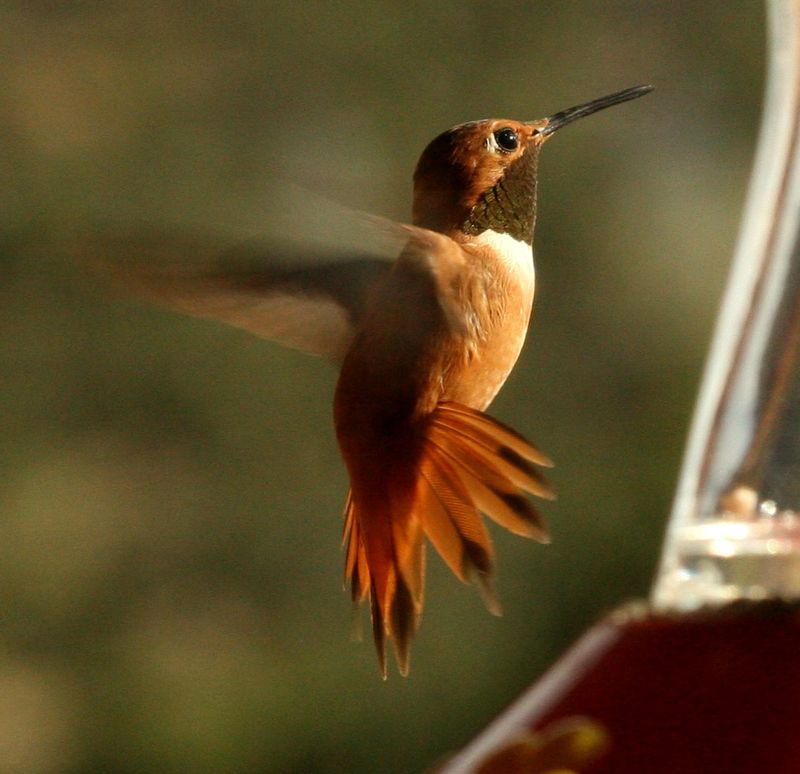
Start with the basics. Note the date, time, county, and what the bird was doing.
Add the habitat, such as a suburban yard or a patch of woods, and the weather. Then list any features you can see clearly, like the color of the back, sides, throat, and tail.
If you can, photograph or record the bird from a respectful distance. Avoid crowding it or chasing it for a better shot.
Even a blurry photo can help, and a short video may show behavior that a still image misses.
Next, send the sighting to NC Hummers using the museum’s hummingbird sighting report. The form asks for the date, descriptions of the bird and its behavior, habitat, and location.
You can also start an eBird checklist. eBird’s documentation advice says to use photos, video, or audio made during the reported observation, and to write a description even when you have photos.
If you think the bird could be a rare species, the Carolina Bird Club’s rare bird report form asks for location, conditions, photos, field marks, and similar species you considered.
Be honest about certainty. If you are guessing, say it is a tentative impression, not a confirmed identification.
Clear notes are more useful than a confident label.
A clean feeder offers supplemental food
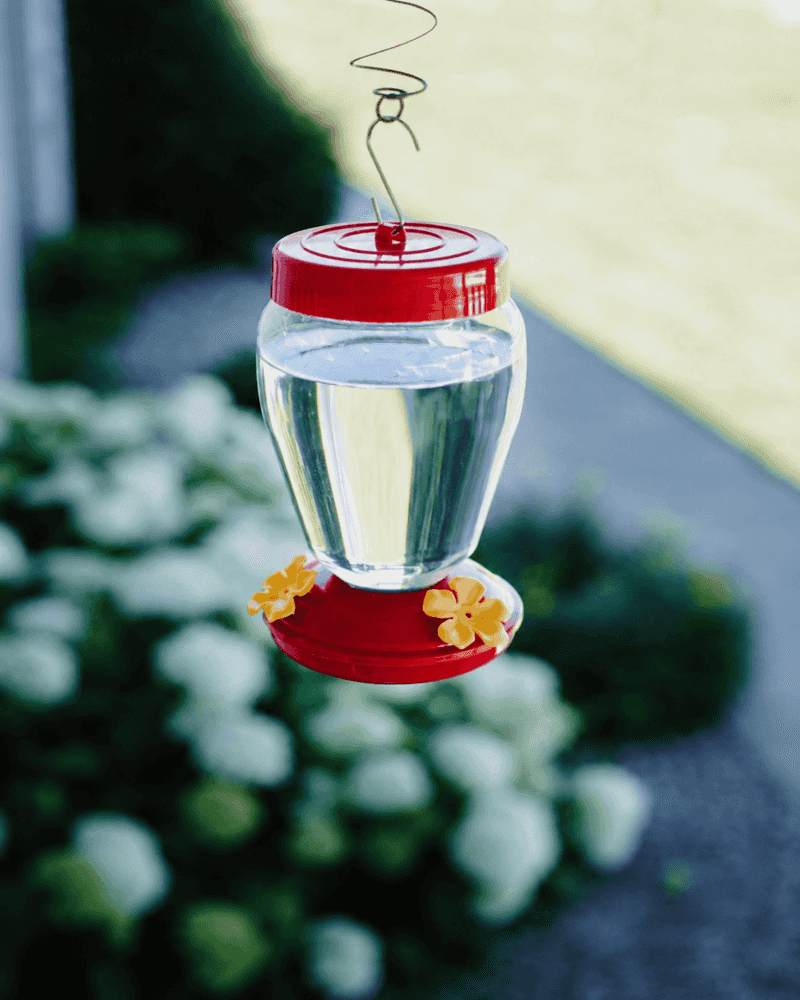
If you decide to feed, keep the recipe simple. Mix one part refined white sugar with four parts water, as both Audubon’s feeding FAQs and the Smithsonian’s National Zoo recipe describe.
Skip the extras. Red dye is unnecessary and may be harmful.
Honey, raw sugar, and artificial sweeteners are not good substitutes for plain refined sugar.
Cleanliness matters as much as the recipe. Audubon advises cleaning about twice a week in cool weather and more often in warmer conditions.
If you spot mold or any other contamination, clean the feeder right away and refill it with fresh nectar.
A good routine is to empty the old nectar, scrub the parts with hot water and a bottle brush, rinse well, and refill. Make small batches so you are not tossing out much.
Remember that a feeder only supplements what the bird finds on its own. Native flowering plants are the best natural nectar source.
Planting NC natives such as coral honeysuckle or trumpet creeper gives your yard a longer-lasting benefit than any feeder.
When freezing weather arrives
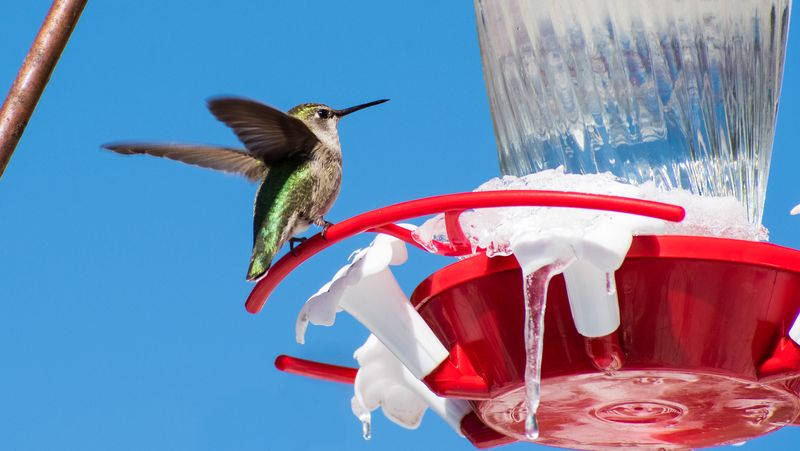
Cold snaps are the trickiest part of winter feeding. Audubon notes that nectar must not freeze in regularly subfreezing conditions.
The goal is to have liquid nectar available again before dawn, since that is when a hummingbird needs it most.
A simple method is to keep two feeders and rotate them. Bring one inside overnight, then put it back out early the next morning while the other warms up indoors.
If you only have one, you can bring it in at night and return it before first light.
Plan ahead for forecast lows. Set an alarm if you need to, and keep a spare feeder clean and ready.
In the mountains, where freezes come often, this routine may be a daily habit. In the Piedmont and on the coast, it may only be needed on the coldest nights.
Avoid shortcuts that could cause harm. A winter feeding guide cautions against metal feeder parts and hazardous wires or strings, and improvised heat sources are not a safe answer either.
Do not change the sugar-to-water ratio to keep it from freezing. Stick with one part sugar to four parts water.
A feeder does not explain every winter sighting
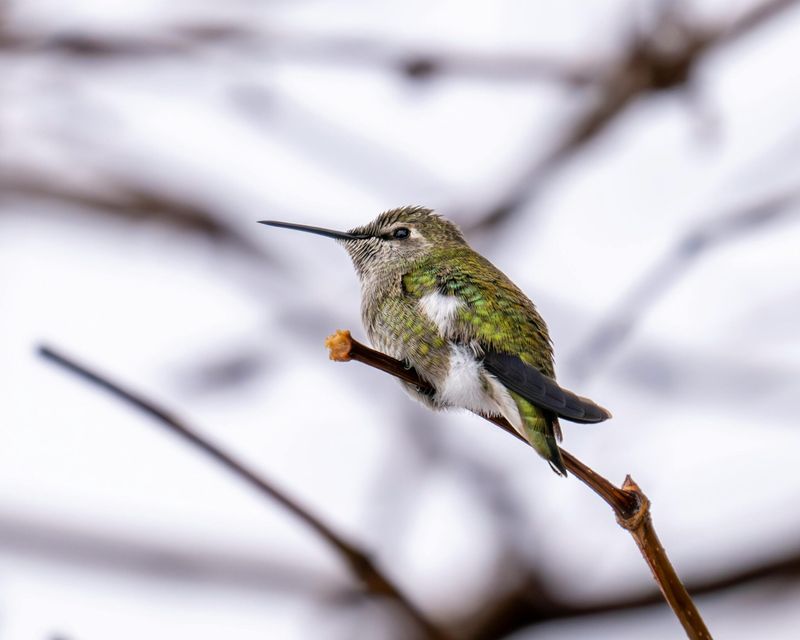
It is tempting to link the bird to your feeder, but the two questions are separate. A feeder in the yard does not tell you why a bird is there or what species it is.
Some people worry that a feeder will stop Ruby-throated Hummingbirds from leaving. The Carolina Bird Club says feeders do not prevent Ruby-throats from migrating, and Audubon’s guidance points the same way.
A feeder can help a late migrant or a winter visitor, but it does not hold anyone back.
Another tempting idea is that more winter reports mean more hummingbirds, or that climate change is the cause. Reports alone cannot show that.
The North Carolina bird account says the rise in records followed wider use of winter feeders, and that it should not be taken as evidence of a global population increase.
More feeders mean more people watching and reporting. That is useful information, and it is a good reason to submit your own sighting.
A still bird is not automatically in distress
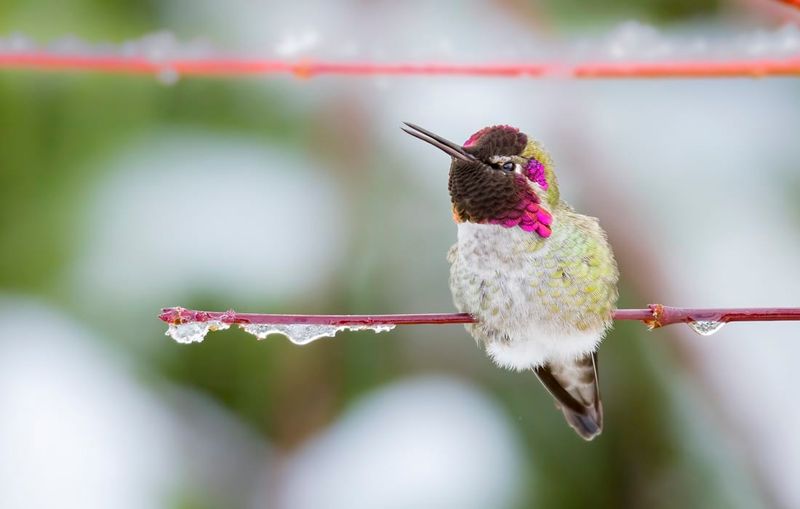
On a cold morning, you might spot a hummingbird sitting very still, fluffed up, and not reacting to you. That can look alarming, but it does not prove the bird is in trouble.
Hummingbirds can enter torpor, a state of lowered activity that helps them save energy.
The best first step is to watch from a distance. Give the bird time, especially early in the day.
Many birds shake off the stillness and return to the feeder once things warm up a bit.
Resist the urge to pick it up or warm it. A winter feeding guide advises avoiding handling unless the bird faces a clear threat, such as a cat nearby or a dangerous spot.
Put your energy into what helps: fresh, unfrozen nectar at dawn, a clean feeder, and a quiet yard. Keep pets indoors while you watch, and let the bird manage on its own terms.
Observe carefully, then support the bird
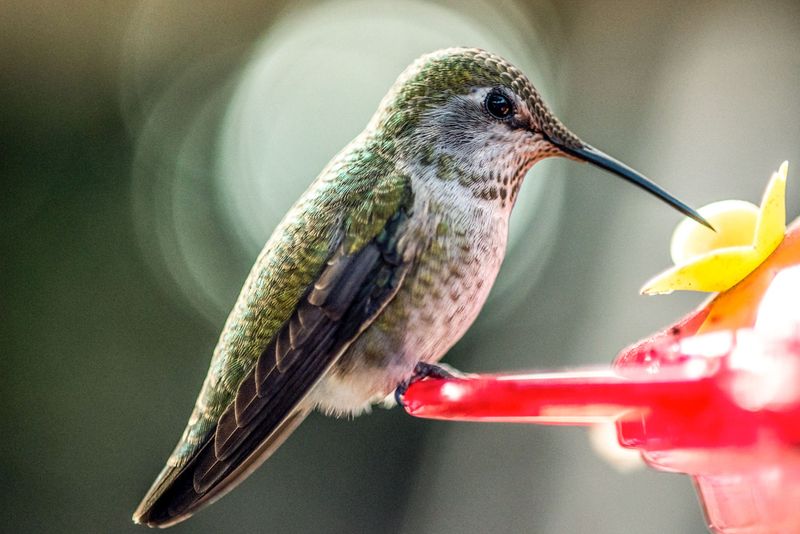
Write down what you actually see, take a photo if you can, and send it in through the NC Hummers report form. Describe the bird without overstating the species.
If you keep a feeder up, follow Audubon’s feeding guidance and keep it clean and safely managed.
A small bird in a bare winter yard is a good reminder that careful attention can be its own kind of kindness.