
What It Really Means When Carolina Wrens Keep Searching Your North Carolina Porch Planters
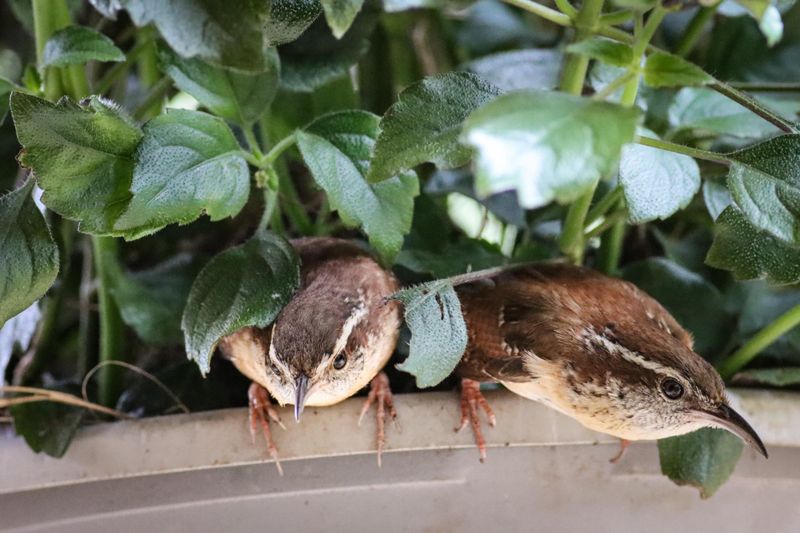
A Carolina Wren hopping through your porch planters and jabbing its bill into the soil is one of those sights that makes you stop and wonder what exactly is going on. Most North Carolina homeowners notice the behavior repeating day after day and start asking whether the bird is nesting, feeding, or maybe signaling something bigger.
The honest answer is more grounded and more interesting than any folklore: the wren keeps coming back because your porch is giving it something useful. Understanding what that something is helps you watch more carefully and protect the bird if it decides to stay.
The repeated visits reveal a useful porch, not a hidden omen
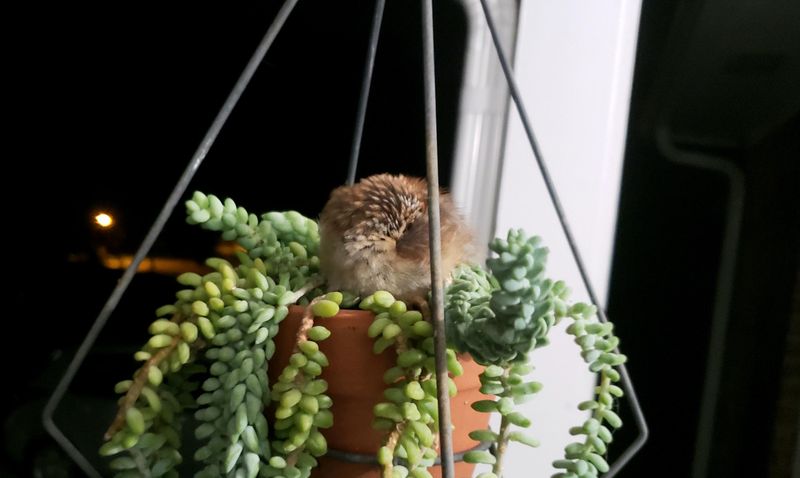
Carolina Wrens are not messengers. When one keeps returning to your porch planters, the explanation sits firmly in ecology, not folklore.
Cornell Lab of Ornithology’s Carolina Wren life history describes the species as a year-round resident that actively forages in dense cover and investigates cavities and partially enclosed spaces near homes. Your planter fits both descriptions.
The most defensible reading of repeated visits is that the porch currently supplies something the bird needs, whether that is prey hidden in the soil and foliage, shelter from weather or predators, or a potential cavity for a nest. No single visit proves which resource the bird is after.
The behavior does not predict rain, announce incoming visitors, signal an unusual wildlife event, or carry any other meaning beyond the ecological one.
Two explanations cover the great majority of cases: the bird is foraging for insects and spiders, or it is investigating a sheltered spot as a possible nest site. NestWatch’s Carolina Wren nesting profile confirms that the species readily uses artificial cavities and objects near human structures, including flowerpots and hanging baskets.
Both possibilities are worth keeping in mind before settling on one interpretation.
Watching the bird’s behavior over several visits, rather than after a single sighting, is the most reliable way to separate feeding from nest-site investigation. Swallowing prey and moving on points toward foraging.
Carrying plant material, repeatedly entering the same enclosed space, or making regular trips to one location points more strongly toward nesting activity. The sections that follow explain each pattern in practical terms so you can read what your planter’s visitor is actually doing.
What the planter offers a hungry Carolina Wren
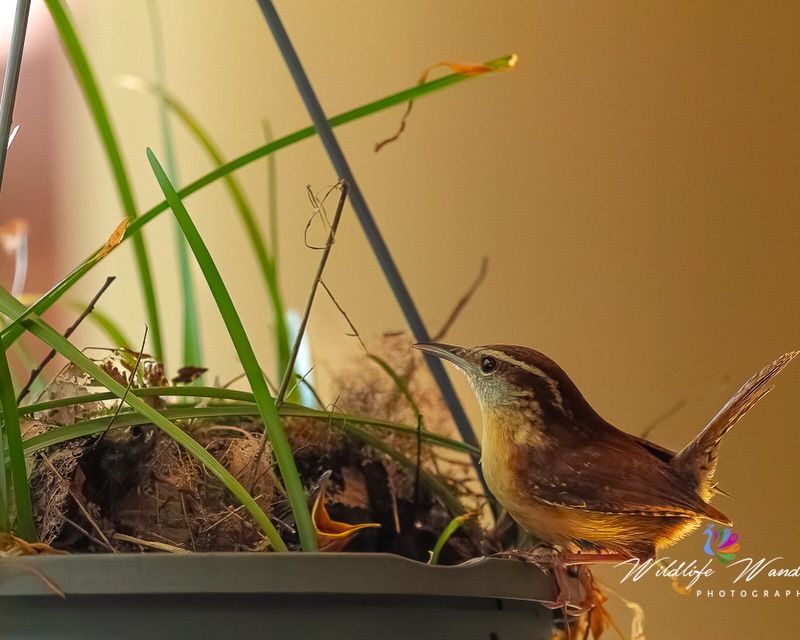
Planters are surprisingly productive hunting grounds for a small insectivore. Cornell Lab records show that Carolina Wrens eat mostly insects and spiders, including beetles, caterpillars, grasshoppers, crickets, moths, and ants, and that they find prey by probing and gleaning among dead leaves, live vegetation, soil, bark, and other surfaces.
A planter concentrates several of those substrates in one small, sheltered space.
Loose potting mix stays moist longer than the surrounding yard, and damp soil supports the kinds of small arthropods a wren is hunting. Leaf litter that collects between plants or along the pot’s rim provides exactly the kind of debris layer the bird likes to flip and probe.
Dense foliage creates shade and humidity at soil level, which favors the beetles and pill bugs that make up a regular part of the wren’s diet. University of Florida IFAS natural history notes on Carolina Wrens reinforce that the species depends on these kinds of moist, sheltered microhabitats for foraging.
A wren may visit the same planter several times in a single morning without ever touching nesting material. Research on wren foraging behavior from the LSU Museum of Natural Science supports the idea that these birds check productive patches repeatedly, working through available prey before moving to the next patch.
If your planter reliably holds insects, the wren is likely treating it the way a person treats a well-stocked pantry: worth revisiting.
Not every planter will be equally productive. A freshly planted pot with sterile commercial soil and no organic debris offers little to a foraging wren.
Pots with accumulated leaf litter, older potting mix, mulch, or dense trailing plants are more likely to attract repeated attention. Recognizing this helps you understand why one specific planter on the porch gets all the attention while another sits untouched.
When does planter-poking point toward a nest?
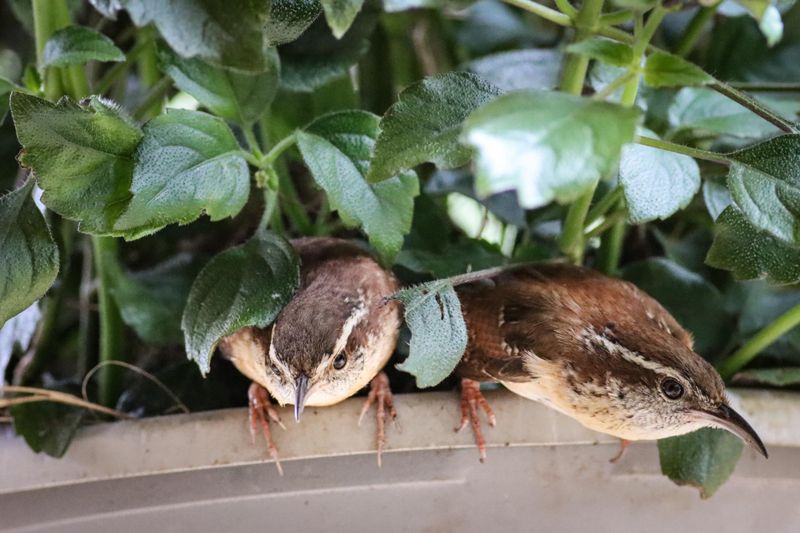
Feeding visits and nest-site visits can look similar at first glance, but the pattern of behavior over time gives them away. A wren that probes briefly, finds something, swallows it, and hops to the next plant is almost certainly foraging.
A wren that enters the same sheltered opening again and again, especially without appearing to eat anything, is showing a different kind of interest.
Carrying material is the clearest behavioral signal. If you see the bird arrive with a twig, a strip of bark, a piece of dried grass, or a clump of moss and disappear into a planter, nest construction is underway or at least being attempted.
NestWatch’s Carolina Wren profile confirms that the species readily nests in artificial cavities and partially enclosed objects near homes, citing flowerpots, hanging baskets, mailboxes, boots, and porch structures as documented sites. Regular food-delivery trips by two adults also suggest active nesting, because both parents typically feed nestlings.
Cornell Lab’s life history account notes that males sometimes build several starter nests before the pair settles on one. This means a wren may begin arranging material in a planter and then stop, which can look like nesting evidence without actually resulting in a completed nest.
Treat early material-carrying as a signal to watch more carefully, not as proof that a full nest is already present.
Planter shape matters more than most people expect. Carolina Wrens favor cavities, overhangs, and partially enclosed spaces.
A hanging basket with dense trailing plants, a shaded container tucked beneath a porch roof, or a pot with a narrow gap between the foliage and the rim are stronger candidate nest sites than an open, flat-topped pot sitting in full sun. Missouri Department of Conservation’s Carolina Wren field guide reinforces that the species gravitates toward covered, sheltered locations when selecting nest sites.
Two birds visiting the same planter is suggestive, but it does not by itself confirm a breeding pair or an active nest.
The planter’s contents matter less than the pattern of use
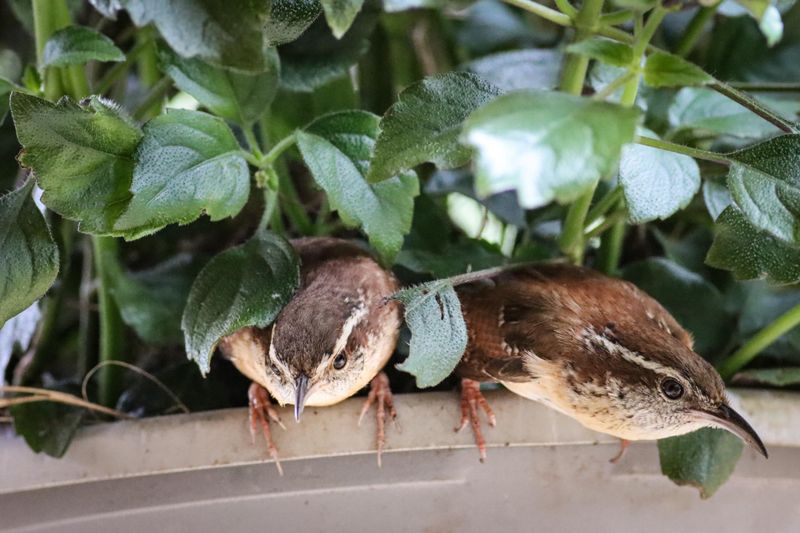
Seeing a wren visit a planter ten times in one afternoon does not tell you whether a nest is present. What tells you is what the bird is doing on each visit and whether a physical nest structure is actually there.
A bulky nest built by Carolina Wrens typically contains twigs, leaves, grasses, and strips of bark, with softer materials such as feathers, moss, or plant down lining the inside. Cornell Lab’s life history page describes the nest as a large domed or covered cup that fills the available cavity.
Ordinary foliage, fallen leaves, or a layer of mulch on top of the potting mix can be mistaken for nest material at a casual glance. Before concluding that a nest is present, look for the distinctive bulky structure rather than just scattered debris.
NestWatch’s nesting profile notes that the nest entrance is often a side opening rather than a top opening, which can make it hard to spot in a densely planted container.
Correct bird identification matters before you apply any of this reasoning. Cornell Lab’s identification overview describes the Carolina Wren as a rich reddish-brown bird with a bold white eyebrow stripe, a slightly curved bill, and a loud, repeating song often written as “teakettle-teakettle-teakettle.” House Finches, Mourning Doves, and other small birds also investigate and nest in planters, and the same behavior in a different species calls for a different response.
Calendar-based guesses about nesting season are less useful than behavior and physical evidence. Missouri Department of Conservation’s field guide confirms that Carolina Wrens are permanent residents in the Southeast and can nest across a broad portion of the year.
In North Carolina, nesting timing varies between the Piedmont, Coastal Plain, and mountains, and it shifts with local weather. Watch the bird, not the calendar.
An active nest changes what a good steward should do
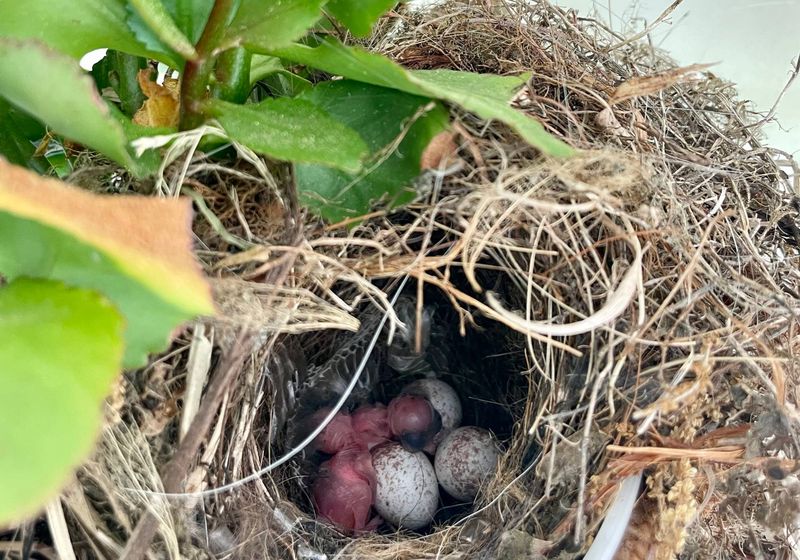
Once you confirm an active nest with eggs or dependent young, the right response is to step back and leave it alone. The U.S.
Fish and Wildlife Service explains that most native bird nests with eggs or dependent young are protected under the Migratory Bird Treaty Act, and the agency advises waiting until the nest is inactive before taking any action unless an immediate health or safety concern exists. Moving the planter, relocating the nest, handling eggs, or blocking the bird’s access can all violate that protection.
Disturbance is the main hazard after the nest is established. Repeated close inspections, even well-meaning ones, can keep the adults away long enough to cool the eggs or attract the attention of predators.
Audubon’s guide to ethical bird photography recommends keeping sessions brief and infrequent, staying as far back as possible, and avoiding any behavior that causes the bird to flush repeatedly. Audubon’s nest photography guidance adds that pruning, rearranging foliage, and other nearby yard work should be paused while a nest is active.
Watering the planter requires a specific adjustment. Overhead watering, the kind done with a watering can or hose spray directed at the foliage, can soak the nest and rapidly chill eggs or young nestlings.
NestWatch addresses this directly, recommending that you water at the roots using a method that limits moisture reaching the nest, such as a slow-drip device or a narrow-spouted can directed at the soil surface rather than the plant above.
If the location creates a genuine hazard, such as a doorway that cannot be used safely or a situation involving a health concern, Audubon’s guidance on inconvenient nest locations suggests consulting a licensed wildlife rehabilitator or your state wildlife agency before taking action. For most porch planters, the nest simply calls for a few weeks of patience and minor routine adjustments.
Protect the porch habitat beyond the planter
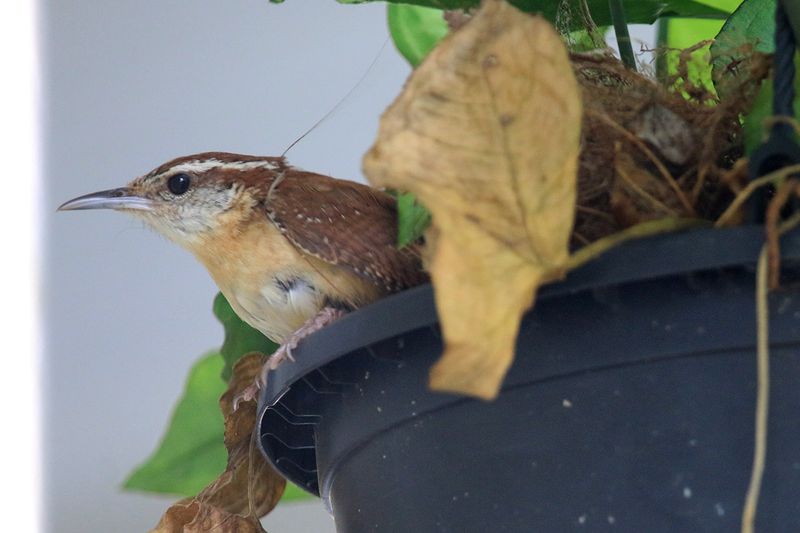
Keeping the porch useful for a Carolina Wren starts with removing the hazards that matter most. Free-ranging cats are among the leading causes of bird mortality in residential areas, and the risk is highest during nesting and fledging when young birds spend time on or near the ground.
NC Wildlife Resources Commission guidance for suburban backyards identifies predator management, including keeping cats indoors, as a core practice for protecting backyard wildlife.
Pesticide use is the second major adjustment worth making. Carolina Wrens depend on arthropods for nearly all of their diet, so a yard treated regularly with broad-spectrum insecticides offers far less food than one managed with a lighter hand.
NC State Extension’s backyard wildlife guidance recommends applying pesticides only when necessary, following label directions carefully, and choosing targeted treatments over broad applications when intervention is unavoidable. NC State’s pest management reference supports the same principle of minimum necessary use.
Native plants do more for a Carolina Wren than a seed feeder will. Wrens rarely visit feeders because they eat live prey, not seeds.
NC State Extension’s native plants landscaping guide explains that diverse native plantings support the insects and spiders that insectivores like wrens depend on throughout the year. The NC State Extension Gardener Handbook’s native plants chapter provides regionally appropriate examples worth considering for Piedmont, Coastal Plain, and mountain yards.
North Carolina natives that provide cover, structure, and arthropod habitat include viburnum, American beautyberry, silky dogwood, spicebush, native hollies, serviceberry, and native oaks, though the right choice depends on your site’s sun, soil, and moisture. The NC Wildlife Action Plan supports diverse native vegetation as a priority for sustaining wildlife populations in residential landscapes.
Leaving some leaf litter undisturbed beneath shrubs and along bed edges adds a foraging layer that benefits wrens directly, because that accumulated debris is where much of their prey lives.
Read the behavior, then let the wren use the porch

A repeatable process makes the repeated visits much easier to interpret. First, confirm the bird is actually a Carolina Wren by checking for the bold white eyebrow stripe, reddish-brown back, and the loud, carrying song.
Then watch the pattern from a comfortable distance over several visits rather than walking up for a close look after each one.
If the bird probes, swallows, and moves on, feeding is the likely explanation. If it enters the same enclosed space repeatedly, carries material, or makes regular trips with two adults involved, shift your attention to whether a nest structure is forming.
Cornell Lab’s life history account and NestWatch’s nesting profile together give you the behavioral and structural details needed to make that call without guesswork.
The wren’s presence does not prove the yard is exceptional or pesticide-free. It shows the porch currently provides something useful, food, cover, shelter, or a candidate cavity, and that is reason enough to protect it.
A bird that finds what it needs and is left in peace will keep using the habitat on its own terms, which is the best outcome a porch steward can offer.