
What It Really Means When Cedar Waxwings Descend On Your North Carolina Yard In Fall
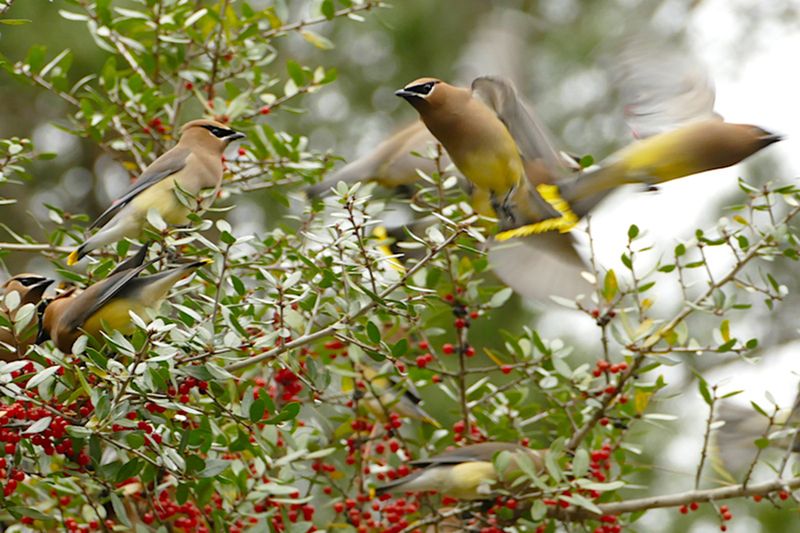
One morning you walk outside and find a dozen or more sleek, masked birds working through a shrub or tree like a tiny, organized harvest crew. Cedar Waxwings have that effect on people, arriving without warning and stripping a plant bare before most homeowners even grab their binoculars.
Understanding why they showed up tells you something real and useful about your yard, and knowing what to do next can make your property a genuinely better place for wildlife.
The flock is following fruit, not delivering a full yard report
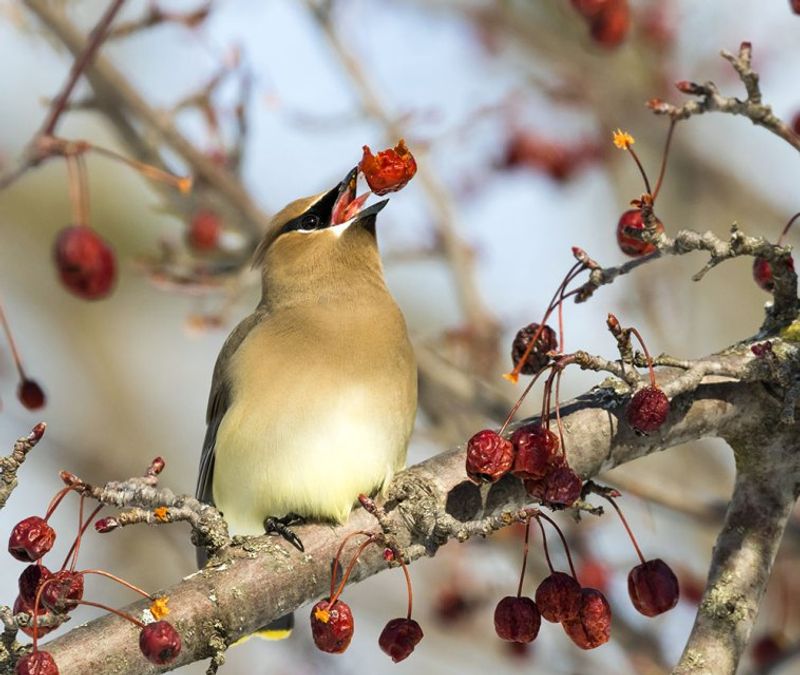
Cedar Waxwings are among the most social birds in North America, and when a flock lands in your yard, the explanation is almost always the same: something nearby is producing ripe, accessible, fleshy fruit right now. Cornell Lab’s Cedar Waxwing profile describes the species as highly nomadic, moving in flocks that follow fruit crops rather than holding fixed territories.
One well-loaded shrub or tree is enough to pull a group off course and onto your property.
The food source does not have to be in your yard at all. A neighbor’s crabapple, a row of fruiting privet along a fence line, a stream corridor lined with wild cherry, or a roadside planting a block away can draw the birds close enough that they appear to be visiting you.
What the flock tells you is narrow and specific: concentrated, accessible fruit is available somewhere in the immediate area at this moment. It does not tell you that your soil is healthy, that your yard has high biodiversity, that you have avoided pesticides, or that your insect community is thriving.
Flocking itself is normal and expected. The species’ life history page notes that Cedar Waxwings remain social even outside the breeding season, gathering quickly wherever fruit is plentiful.
A sudden large group is not a sign that something is wrong with the birds, that a population event is underway, or that the weather is about to shift. Audubon’s field guide confirms that their movements are food-driven and can shift from year to year as local crops change.
The most useful thing you can do when the flock arrives is swap the wonder for a testable question: what plant are they feeding on, and where exactly is it? That single observation unlocks everything else worth knowing about the visit.
What a North Carolina fall arrival actually means
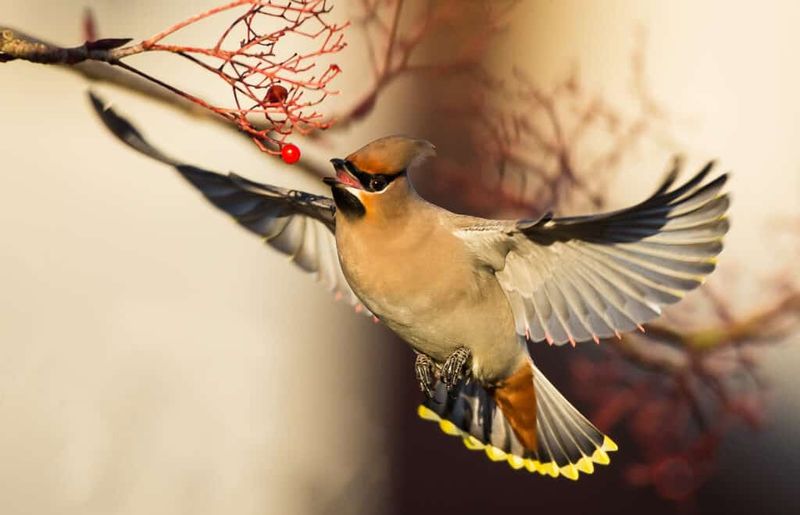
Not every Cedar Waxwing flock you see in fall has flown down from Canada. That assumption is common, but the species’ actual seasonal pattern in North Carolina is more varied.
Cornell Lab’s eBird Status and Trends data place the post-breeding migratory season between mid-August and late December, but the picture looks different depending on where you live in the state.
In the Blue Ridge and mountain counties, Cedar Waxwings can occur year-round, with some birds remaining as year-round residents while others pass through or settle in for winter. In the Piedmont and Coastal Plain, fall and winter flocks are common, often appearing around the time that holly, juniper, and other late-fruiting plants reach peak ripeness.
The birds overwintering statewide can form groups numbering in the dozens or hundreds when a reliable fruit source holds.
What this means practically is that a flock in your Asheville yard in October may represent birds that never left the region, while the same size group in a Raleigh neighborhood likely includes birds moving through or settling in from farther north. Neither origin changes what you should do next, but it should keep you from assuming a dramatic long-distance migration story when a local food shift may explain everything.
Food availability can redirect these birds across large areas and from one season to the next. A bumper crop of American holly or Eastern redcedar berries in your neighborhood this year might draw a flock that skipped your block entirely last fall.
The yard has not necessarily changed; the regional fruit landscape has. Treating the visit as a food-availability signal rather than a verdict on your property keeps your expectations grounded and your next steps practical.
Follow the birds to find the real clue
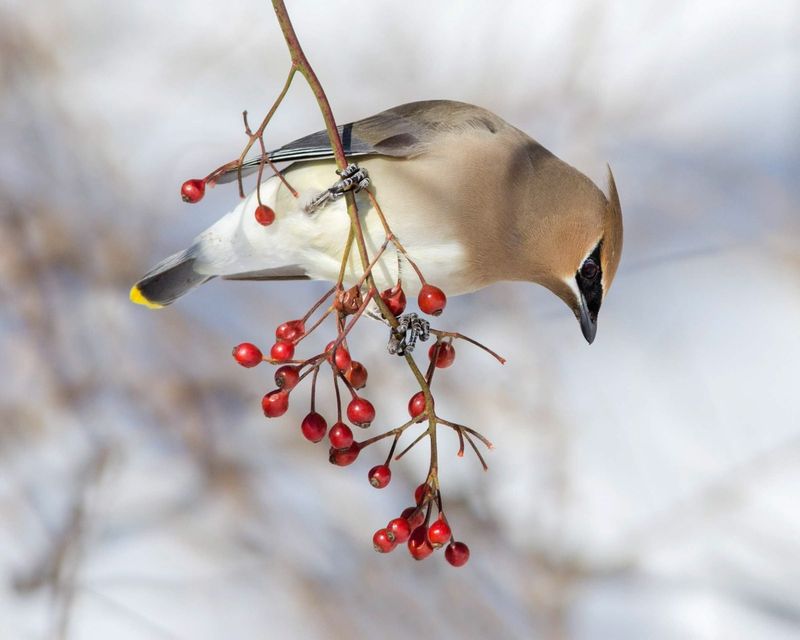
Watching where the flock actually feeds is the most useful thing you can do in the first few minutes. Stand back, give the birds space, and track which plant or plants they are working.
Are they in your yard or a neighbor’s? Is the plant a shrub, a small tree, or a vine?
Are they taking fruit directly from branches, or picking off the ground?
Once you have a location, identify the plant. Record its common name and, if possible, its scientific name.
A free app like iNaturalist or Seek can help with identification from a photo, and your local NC Cooperative Extension office can confirm uncertain IDs. After you have the name, check whether the plant is native to your specific North Carolina region.
Audubon’s Cedar Waxwing guide notes that the birds eat fruit from native, cultivated, ornamental, and even some invasive plants, so the flock’s presence alone cannot tell you which category applies. Do not call the fruit native or beneficial until you have confirmed the plant’s identity and regional status.
Also note the fruiting period. Some plants hold fruit for weeks; others are stripped in a day or two.
If the plant is on your property, record how long fruit remains available across the season. The species’ life history makes clear that waxwings track food across broad areas, so a flock feeding on a neighbor’s tree is a landscape-level event, while birds consistently returning to a plant in your own yard is a yard-specific one.
The distinction matters when you start thinking about what, if anything, to change.
NC State Extension’s guide on managing urban habitats for birds recommends tracking fruiting periods so you can understand food gaps and opportunities across seasons, not just in the moment of an exciting visit.
Native fruiting plants can create seasonal habitat
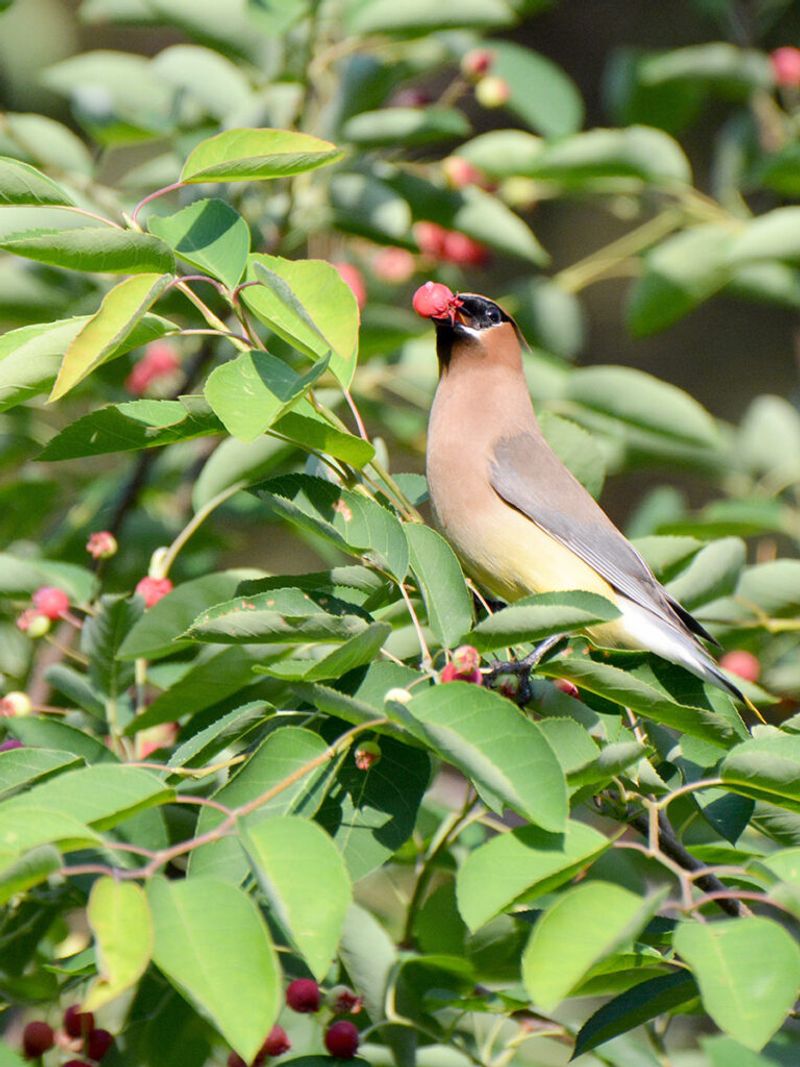
Once you know what the birds were eating and whether that plant is worth keeping, you can start thinking about what your yard could offer over a longer stretch of the season. A single species that fruits for two weeks is useful but limited.
A yard with several native fruiting plants that ripen at different times gives wildlife food from late summer through winter, and it gives you a yard that works harder for the broader ecosystem.
NC State Extension’s urban bird habitat guide recommends building a succession of fruiting species rather than relying on one plant. For North Carolina yards, regionally appropriate native options include serviceberry (Amelanchier species), which fruits early in spring and provides some of the season’s first food; flowering dogwood, which ripens in early fall and is widely adapted across the Piedmont and mountain regions; and American beautyberry, whose vivid purple clusters hold into late fall.
Spicebush and silky dogwood suit wetter or shadier spots, while chokeberry works across a range of soil types.
For winter food, American holly and Eastern redcedar are workhorses. NC State Extension’s landscaping-for-wildlife publication highlights blackhaw viburnum as another reliable late-season option, with fruit that persists well into winter.
Wax myrtle is well suited to the Coastal Plain and provides dense evergreen cover alongside its waxy berries.
Cover matters as much as food. Pair fruiting plants with evergreen shrubs or dense native hedgerows so birds have shelter near feeding sites.
The NC State Extension Gardener Handbook’s native plants chapter explains how combining food and structural cover creates habitat that supports a wider range of wildlife year-round.
One honest caveat: planting any of these species improves habitat and supports wildlife broadly, but it does not guarantee that Cedar Waxwings will visit. Visitation depends on fruit production, plant maturity, competing food elsewhere in the landscape, and factors outside any single yard’s control.
Choose plants responsibly after identifying the food source
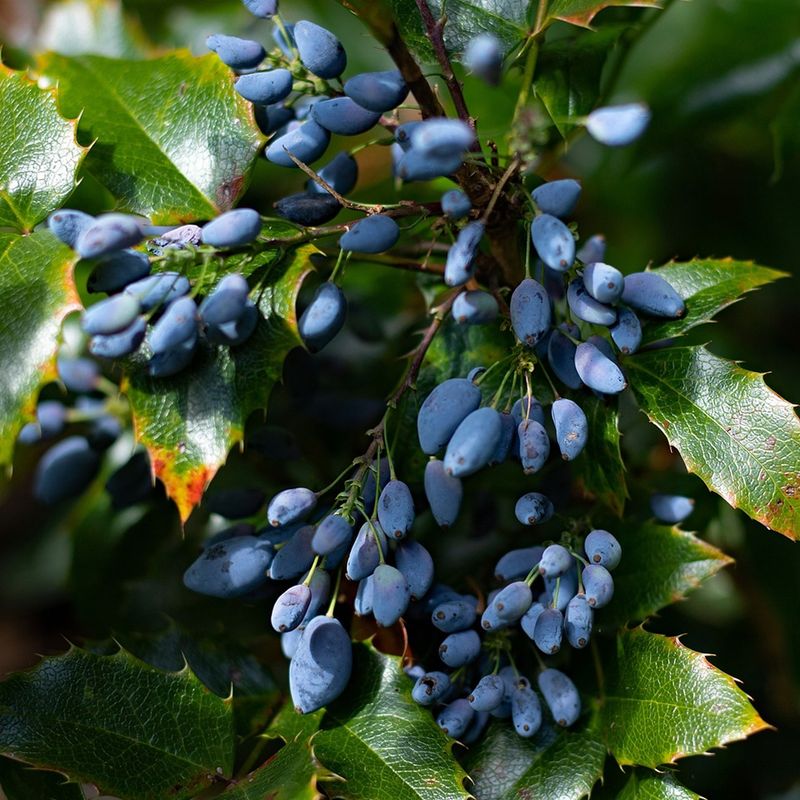
Knowing what plant drew the flock is also the first step toward making a responsible decision about whether to keep it, manage it, or replace it. Not every berry-bearing plant in a yard is a good long-term choice for wildlife or for the surrounding landscape.
Start with pollination requirements before you buy anything new. American holly, wax myrtle, and Eastern redcedar all require both female and male plants nearby to produce fruit reliably.
A yard with only female hollies and no male plant within pollination range may produce little or no fruit regardless of how well the shrubs grow. NC State Extension’s wildlife planting guide advises verifying cultivar and pollination requirements at the time of purchase, not after the plants are in the ground.
If the plant the birds were using turns out to be invasive, the right response is deliberate replacement, not panic removal. Cedar Waxwings readily eat fruit from invasive plants, and their visits to those plants can actually spread seeds across the landscape through their droppings.
The North Carolina Native Plant Society’s invasive plants guide identifies problem species that are commonly found in residential landscapes, including autumn olive, privet, Japanese barberry, burning bush, Bradford pear, and certain invasive honeysuckles, along with native alternatives suited to North Carolina conditions.
Removing an invasive plant while birds are actively feeding on it is disruptive and unnecessary. Plan the removal for late winter or early dormant season, have a native replacement ready to install, and focus on eliminating the invasive root system rather than just cutting the top growth.
Not every non-native plant carries the same ecological risk; a cultivated ornamental that does not spread or naturalize is a different situation from an aggressive invasive that seeds into surrounding wild areas. The NC Native Plant Society’s recommended native species list can help you find regionally appropriate replacements by plant type and growing condition.
Protect the flock from pesticides and glass

Two hazards become more likely the moment a flock of Cedar Waxwings concentrates near your house: pesticide exposure and window collisions. Both are preventable with straightforward steps, and both are worth addressing before the birds arrive rather than after.
Fruiting plants in or near the yard are not a good time to reach for a pesticide sprayer. EPA guidance on reducing pesticide impacts on wildlife recommends using pesticides only when necessary, treating only the affected area, following the label exactly, and taking specific steps to reduce exposure to non-target birds, pollinators, and other wildlife.
Spraying a fruiting plant to disperse a flock is not a label-supported use and can harm birds directly or contaminate the fruit they are eating. If a plant genuinely requires treatment for a pest or disease problem, time the application when birds are not actively feeding, choose the least toxic effective option, and consult your local NC Cooperative Extension agent before spraying near a known wildlife food source.
Glass collisions are a serious and underappreciated risk. North Carolina’s Wildlife Action Plan identifies building glass as a major source of bird mortality statewide, with daytime collisions particularly associated with landscaping near windows.
When a fruiting shrub or tree sits close to a large window or glass door, birds flushed from the plant can fly directly into the glass before they have time to react.
The fix is exterior treatment on the hazardous glass surface. Cornell Lab’s window collision prevention guidance recommends exterior screens, closely spaced exterior patterns, or other bird-safe products that break up the reflective or transparent surface.
A pattern of dots or stripes spaced no more than 2 inches apart horizontally and 4 inches apart vertically is the general standard. One or two interior decals on a large window are not enough to reliably prevent collisions.
If a bird does strike a window, place it gently in a dark, quiet container without food or water and contact a licensed North Carolina wildlife rehabilitator for next steps.
Leave these bird and berry myths behind
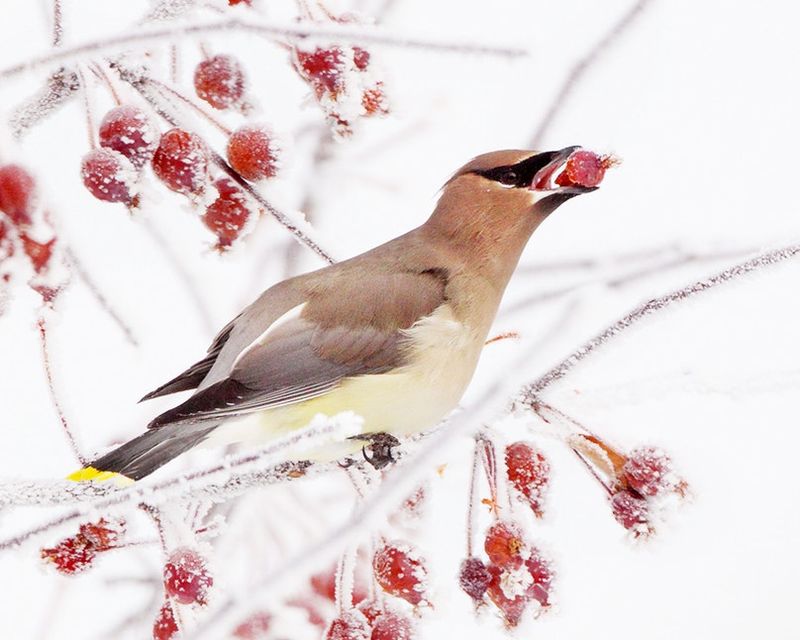
A few well-meaning responses to a Cedar Waxwing visit can do more harm than good. Sorting out the myths makes it easier to help the birds without creating new problems.
Cedar Waxwings are not seed eaters. Putting out a sunflower or millet feeder will not attract them, and U.S.
Fish and Wildlife Service guidance on supplemental feeding notes that feeders can introduce sanitation, disease, predator, and window-collision risks that do not exist when birds use natural habitat. If fruiting plants are available, the birds already have what they need.
A seed feeder is not a useful response to a waxwing visit.
Bird-safe berries are not automatically safe for people or pets. The North Carolina Native Plant Society’s American holly page states clearly that holly fruit is toxic to humans, dogs, and cats and can cause gastrointestinal distress.
The fact that Cedar Waxwings eat holly berries without harm says nothing about safety for other species. Before children or pets spend time around any heavily fruiting plant, confirm its toxicity profile through a reliable botanical or poison control source.
Overripe or fermented fruit can occasionally cause severe impairment in Cedar Waxwings, and there are documented cases where affected birds have been found grounded or disoriented. Cornell Lab’s Cedar Waxwing overview acknowledges this as an occasional hazard.
However, stripping all old fruit from your yard to prevent it is overbroad and removes food that most birds use safely. If you see a bird that appears injured, cannot fly, or seems severely disoriented rather than simply resting after a big meal, place it in a dark, quiet container and contact a licensed North Carolina wildlife rehabilitator.
Do not attempt to diagnose intoxication or treat the bird at home.
One more myth worth retiring: Cedar Waxwings will not meaningfully control ticks in your yard. Their diet is overwhelmingly fruit, and no reliable evidence supports treating them as a residential tick-management tool.
Use the visit as a clue, then improve the habitat
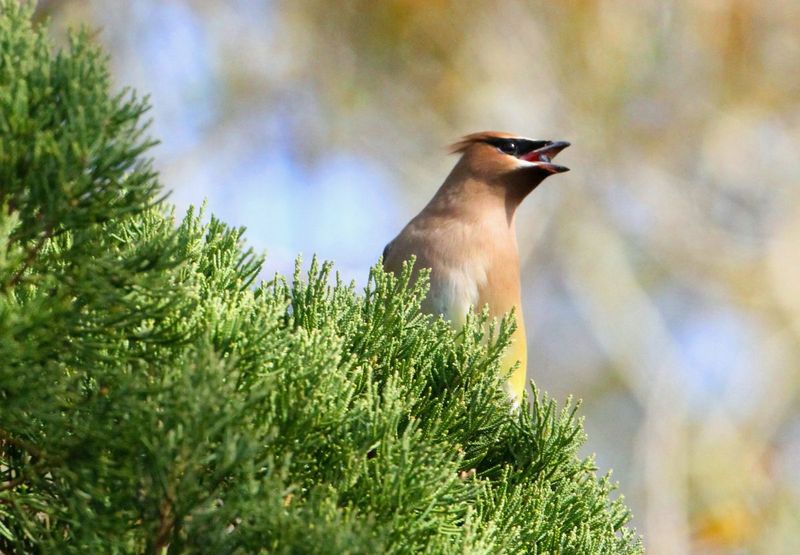
A Cedar Waxwing flock is a narrow, reliable signal: usable fruit is available somewhere nearby right now. That is the full extent of what the sighting proves on its own.
It does not confirm that your yard is ecologically healthy, that your plants are native, or that your practices are bird-safe across the board.
The productive response runs in four steps. Watch the feeding site carefully and identify the plant.
Assess whether it is native to your North Carolina region, invasive, or somewhere in between. Protect the birds from pesticides and hazardous glass while they are present.
Then use what you learned to build a more connected, food-rich yard over time, combining native fruiting species with different ripening periods and structural cover that supports wildlife through every season.
The goal is not to guarantee that the same flock returns next October. A yard with diverse native food and cover, minimal pesticide risk, and bird-safe glass supports Cedar Waxwings, dozens of other species, and the broader web of life that makes a North Carolina yard worth tending.
Whether the waxwings come back is up to them; what you do with the clue they left behind is up to you.