
What It Really Means When Coyotes Start Howling Near Your North Carolina Yard After Dark
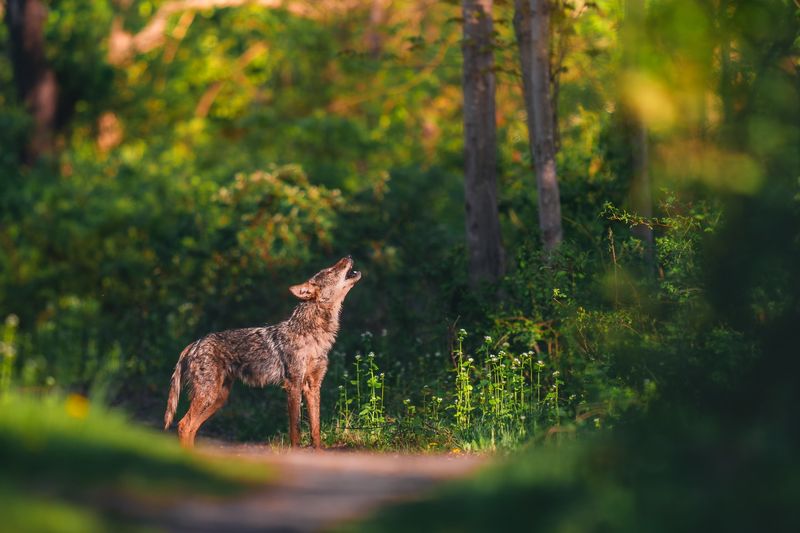
A burst of yips and howls drifting across the yard at night can make your heart jump. Many North Carolina homeowners hear it, especially in fall, and wonder what it means for their pets and their yard.
The sound is real communication, and it tells you less than you might think. Here is what a coyote chorus can and cannot say, and what sensible steps fit the situation.
A chorus is communication, not a yard diagnosis
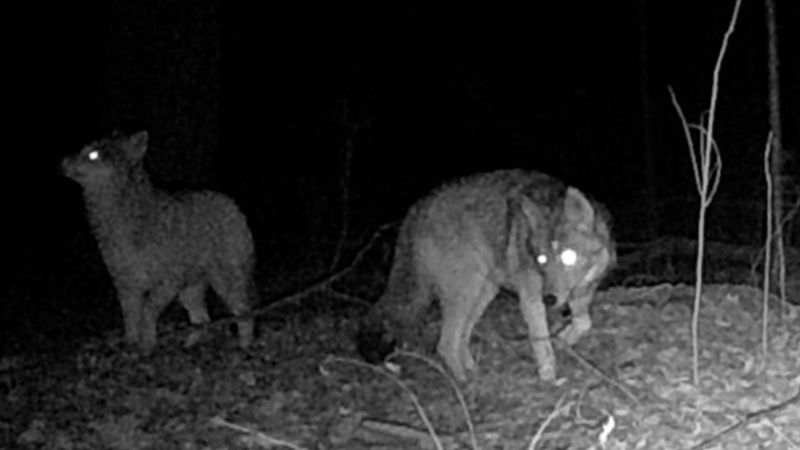
Howls and yips are how coyotes keep in touch. According to North Carolina Wildlife Resources Commission guidance, coyotes are common across the state, including in suburban areas, so hearing them is not unusual.
Calls can help family members locate one another and can communicate about territory.
Think of a chorus as a group text between neighbors rather than a warning aimed at you. A howl tells you that sound traveled to your yard.
It does not show that coyotes live in your yard, that they are close by, or that anything is about to happen.
A wildlife biologist speaking with WUNC described these calls the same way, as ordinary communication. They are not a sign of a kill, and the moon has nothing to do with them.
Hearing coyotes is a good reason to pay attention to your own yard habits. It is not a reason to decide the yard is unsafe.
Later sections cover what to do about pets, food, and den season, but the first step is simply reading the sound for what it is: a conversation happening somewhere within earshot.
Distance is hard to judge at night. Sound carries differently over open lawns, ponds, and wooded creek edges, and a call can seem much nearer or farther than the animals really are.
Treat the chorus as background information, then look at what is actually happening around your home.
Why fall can bring more voices
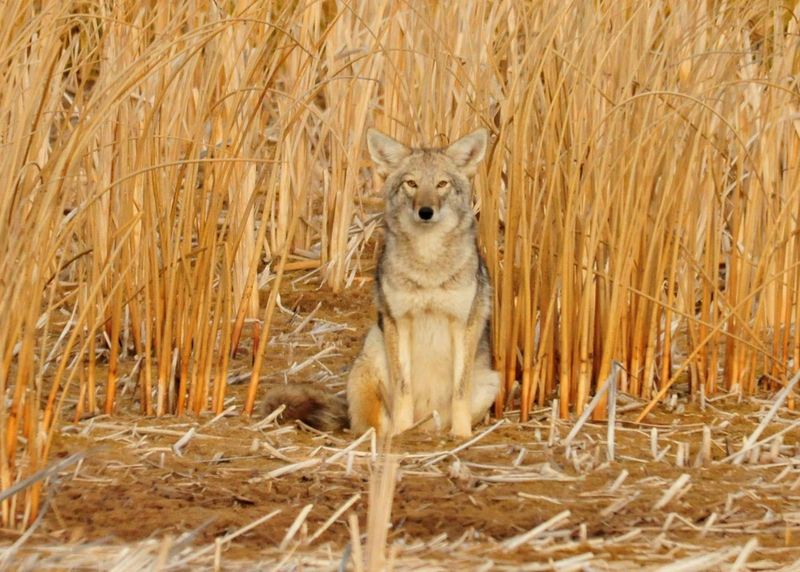
Autumn evenings can sound busier, and young coyotes may be part of the reason. A North Carolina wildlife biologist told WUNC that young coyotes set out in fall.
As they travel, possibly with siblings, they may call to each other or pass through territories that already belong to other coyotes.
Timing is not a calendar switch. A 2012 NCWRC study report says family groups usually begin dispersing by late November or December.
The two descriptions fit together as a loose window, since some young animals head out earlier than others and conditions differ from one county to the next.
So if you hear a chorus in October in the Piedmont, or in December near the coast, dispersal is a reasonable guess. It is only a guess.
Nobody can say that a particular chorus came from a particular young coyote.
Coyotes also call at other times of year. They may be finding family members, answering neighbors, or marking out where their territory sits.
A quiet stretch in fall does not mean something is wrong, and a noisy one does not prove travelers are passing through.
The practical lesson is to expect some seasonal variety in what you hear. Let the sound prompt a quick check of your yard routines rather than a conclusion about what the animals are doing.
Can you tell how many are calling?
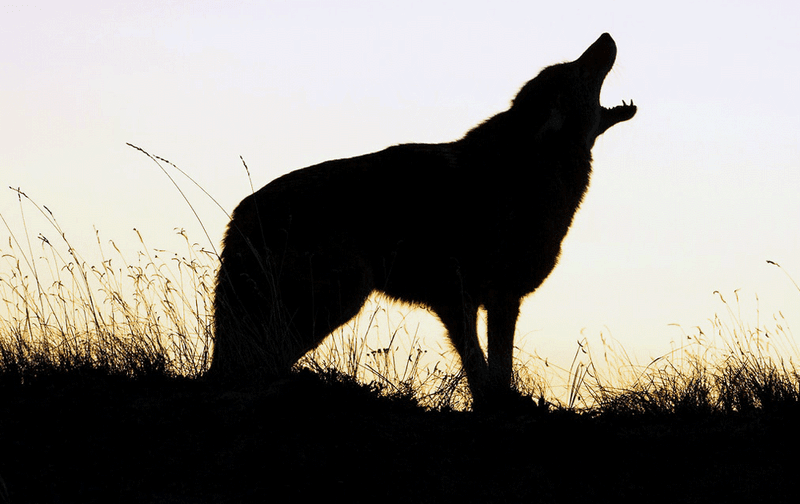
Short answer: no. Counting coyotes by ear is unreliable. In a study by Brewster and colleagues, 427 people listened to recordings of one to four coyotes.
On average, the listeners overestimated the number by nearly twofold.
Coyote voices are a big part of the problem. A single animal can switch between howls, barks, and yips so fast that it sounds like several voices.
A small family can sound like a crowd.
That result is a caution, not an exact formula. You cannot take it and divide the noise in your yard by two.
Backyard conditions, such as trees, buildings, and open ground, differ from the recordings people heard.
The study also does not tell us how well people judge distance. It tested group size only.
So a chorus that seems to be right behind the fence might be a long way off, or the reverse, and the sound alone cannot settle it.
What does this mean for you? Skip the mental headcount.
Instead, notice what you can actually confirm, such as a coyote seen in daylight, tracks, or toppled trash cans, and base your precautions on those clues.
The sound alone says little about pets or yard wildlife
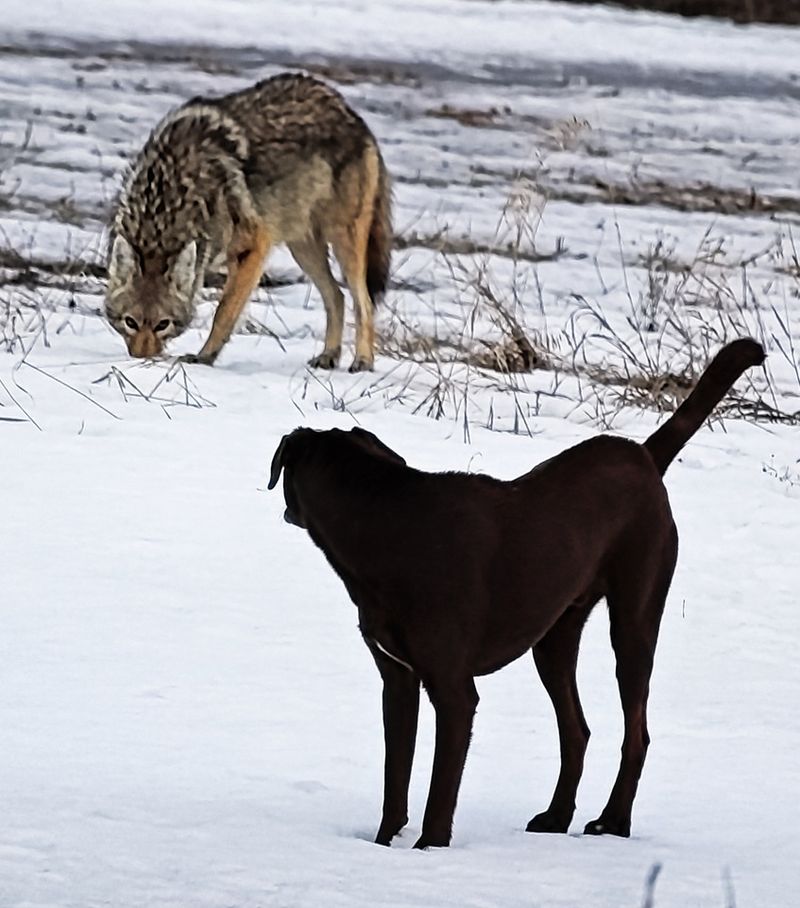
Some concerns are real and easy to manage. NCWRC guidance names pets as a potential concern, and unattended cats and small dogs can face risk from coyotes.
That is true whether or not you ever hear a howl.
The howl itself is a weaker clue. A chorus does not show that a pet is being targeted, and it does not mean a hunt is underway.
The risk comes from leaving small animals alone outdoors, not from the soundtrack.
Supervision does most of the work. Go outside with small dogs, use a leash on walks, and keep cats indoors or in a secure enclosure.
Do the same for small pets and backyard livestock such as chickens or rabbits. Coyotes can also be active around people at times other than night, so sunrise and sunset are good moments to stay alert.
What about the wildlife you value, such as box turtles, fireflies, and songbirds? Coyotes are opportunistic feeders, but their presence or calls do not show that they are harming any particular species in your yard.
Without specific evidence, it is best not to assume damage.
A good yard for wildlife and a safe yard for pets can go together. Supervision and secure housing protect your animals, and they do it without any need to blame coyotes for things they may not be doing.
Remove the food and shelter that can draw repeat visits
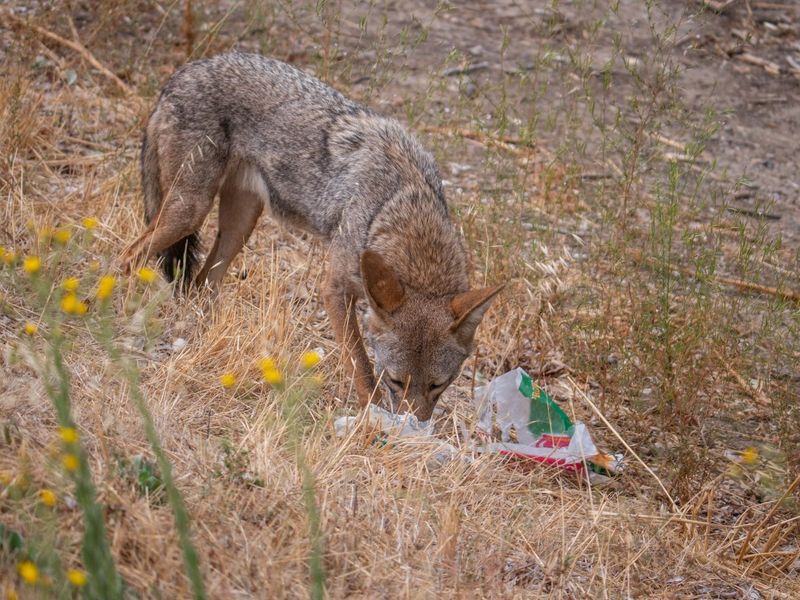
Coyotes pass through yards that offer an easy meal or a cozy hiding place. Taking those away is the most useful thing you can do this weekend.
NCWRC advice points to a short list of steps.
Start with food. Secure trash cans with tight lids or store them in a garage until pickup day.
Feed pets indoors, and pick up any uneaten pet food before dark. Rake up fallen fruit from apple, persimmon, or fig trees.
Bird feeders deserve a look too. Spilled seed can draw rodents, which can in turn draw predators.
Keep the ground beneath feeders clean, and consider bringing feeders in at night.
Next, consider shelter. If a coyote repeatedly uses your yard, NCWRC suggests removing places where it can rest or hide.
Brush piles, dense overgrowth near the house, and open spaces under decks or sheds are common examples. Close off those openings, and keep wild areas you want for wildlife farther from the house and from pet areas.
Talk with neighbors, too. A coyote that finds nothing in your yard may simply find a full trash can next door.
When several households use the same steps, the whole block offers less to come back for.
These measures reduce attractants and repeat use. They do not guarantee that a coyote will never cross your lawn, and that is fine.
The goal is a yard that is dull to a coyote, not a yard that is sealed off.
A den-defense situation calls for extra space
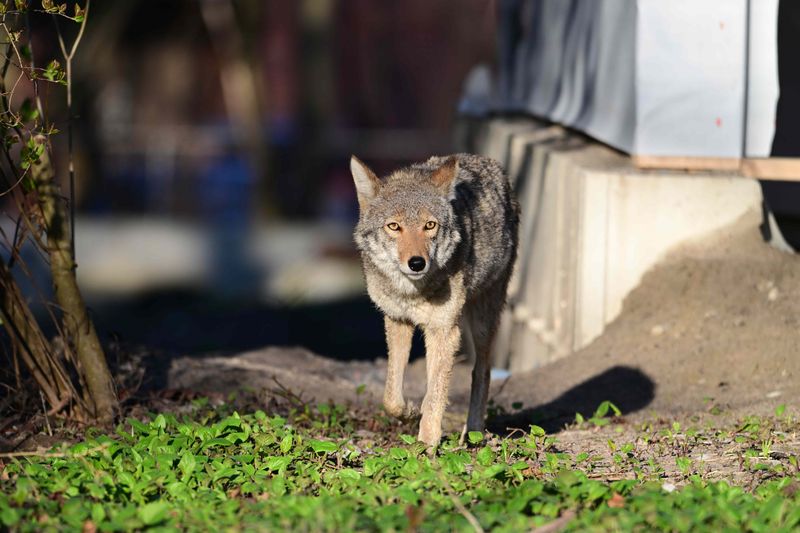
Fall howling and den defense are separate matters. Den season comes later in the year.
According to NCWRC, coyotes mate around February and March, and pups are born around April and May. Pup-rearing runs roughly from February through June.
During those months a coyote may act more territorial near a den. That behavior is about protecting a specific spot, and it has nothing to do with the fall chorus you hear on an October night.
If a coyote seems intent on defending a certain area, give it room. Do not approach it, and do not try to get a closer look at a den or pups.
Leave the area calmly, and keep dogs on a leash well away from that spot until the season passes.
Not every sighting means a den is nearby. A coyote trotting across the road or lawn is usually just passing through.
Pay attention to behavior, such as a coyote that holds its ground or lingers near one patch of cover, rather than assuming the worst.
If you walk the same trail or edge of the yard each day, spring is a good time to watch for the pattern and choose a different route for a few weeks.
Respond to a sighting with calm, practical steps
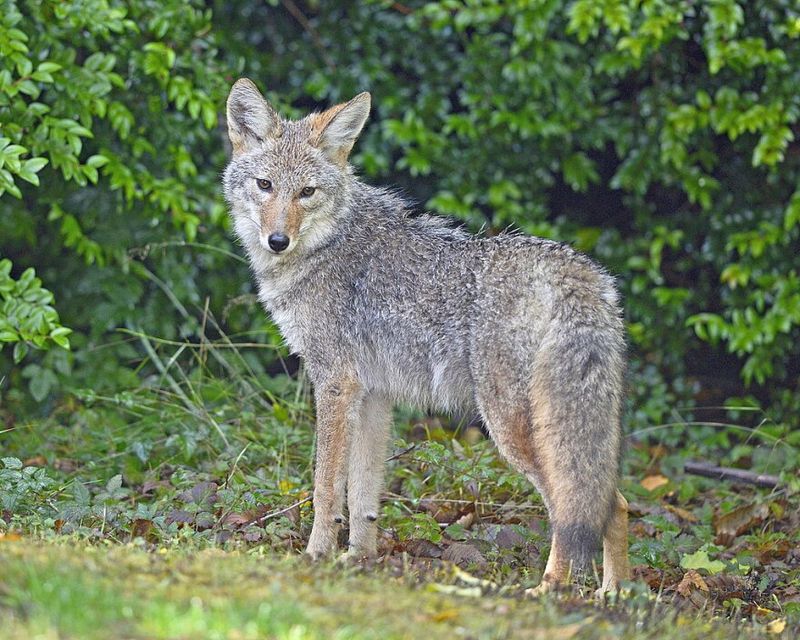
If you see a coyote, stay calm and stand tall. NCWRC advises making noise or waving your arms, and not running.
Most coyotes will move off once they realize you are there.
A sighting alone is not a reason to ask for removal. Report a coyote to local animal control if it acts aggressively for no apparent reason or looks sick.
Removing coyotes from a neighborhood is not a practical long-term fix, since they live throughout the state.
Bring pets inside, secure the trash, and talk with neighbors about the same steps.
A howl in the dark is a good cue to stay aware and keep sensible habits. It is not a reason for panic, and the yard is still yours.