
What It Really Means When Crows Keep Gathering In Your North Carolina Yard At Dusk
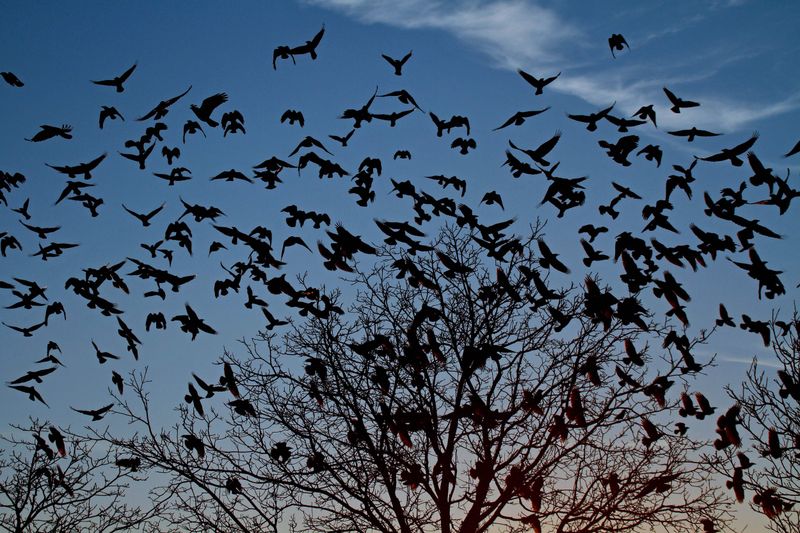
Stepping outside at dusk to find a noisy crowd of crows circling your yard can stop you cold. Most North Carolina homeowners assume something is wrong, but the real explanation is usually far more ordinary and even fascinating.
Understanding why these birds show up, and what your yard is actually offering them, puts you back in control of what happens next.
The dusk gathering usually marks an evening commute
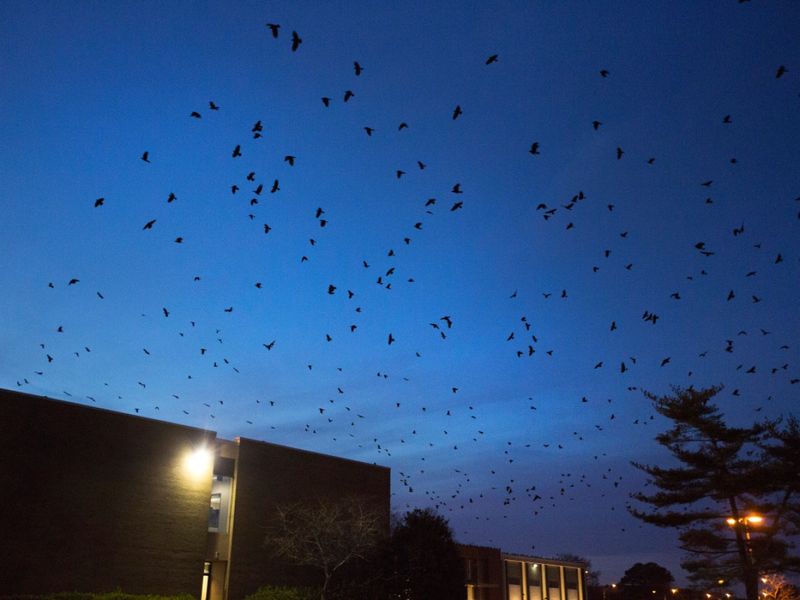
Around sunset, crows across North Carolina begin moving. What looks like an ominous congregation is almost always the tail end of a daily routine: birds that spent the daylight hours foraging across fields, lawns, roadsides, and neighborhoods are now funneling toward a shared sleeping site.
Your yard may simply sit along that flight path.
Cornell Lab’s American Crow life-history account notes that American Crows forage in groups and join communal roosts, especially during the nonbreeding season. Those roosts can hold anywhere from a few hundred birds to many thousands, and the crows commuting to them may pause at intermediate points, including suburban yards, before continuing on.
The nonbreeding season, roughly autumn through late winter, tends to produce the most dramatic evening movements. That said, smaller gatherings can occur at other times of year, particularly when local food is plentiful or when young birds from a family group are still traveling together.
Audubon’s reporting on where crows go at night describes the pre-roost staging behavior that many homeowners witness: birds arriving in waves, calling loudly, and then moving on in the same general direction. That pattern, repeated evening after evening from roughly the same compass heading, is a strong sign that the yard is a waypoint rather than the final destination.
None of this points to an omen, a hidden infestation, or a yard in poor health. The birds are doing what crows do: traveling socially, pausing where conditions allow, and then continuing to a safer overnight site.
Recognizing that rhythm is the first step toward reading the rest of what the gathering tells you.
A yard stop is not necessarily the birds’ bedroom
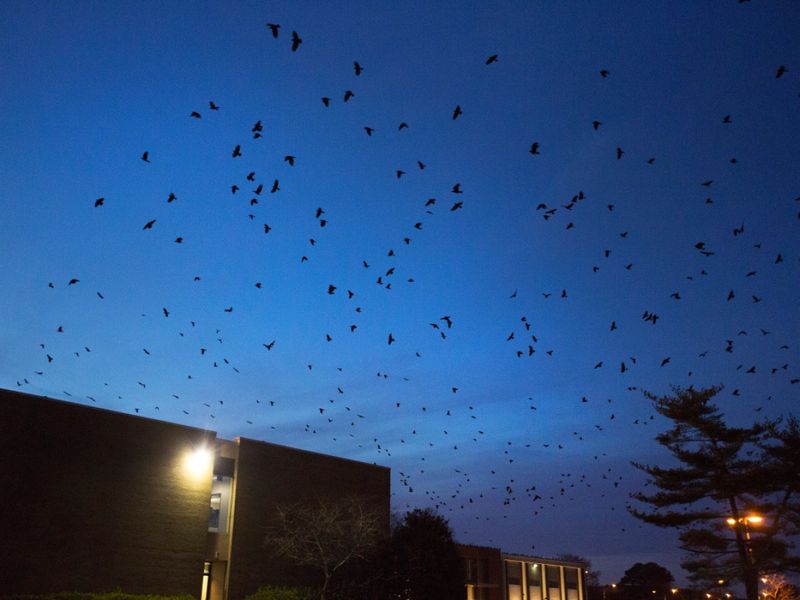
Seeing crows in your trees at 6:30 p.m. does not mean they plan to stay the night. There is a meaningful difference between a brief staging stop and an actual overnight roost, and that difference shapes every decision you might make afterward.
Watch for these two patterns over several evenings. In the staging scenario, birds arrive noisily, land in trees or on open ground, call back and forth, and then lift off together and disappear in a consistent direction, usually within 20 to 40 minutes of sunset.
The yard is essentially a rest stop on a longer commute. In the roosting scenario, birds settle into trees as the light fades and are still present after full dark, with little departing movement.
Audubon’s coverage of crow night roosts makes clear that the actual sleeping site tends to be a specific stand of dense or tall trees, often in a location that offers protection on multiple sides. A yard with a single row of oaks along the fence line is more likely a staging area than a full roost, though exceptions exist.
One evening of observation is not enough to be certain. Crows can arrive and linger longer on cold or windy nights and depart faster when conditions are calm.
Spend three or four consecutive evenings watching from the same vantage point, noting arrival time, departure direction, and whether any birds remain after dark. That short observation window, combined with what Cornell’s life-history data describes about communal roosting habits, will give you a much clearer picture of what role your property actually plays in the birds’ evening routine.
Your yard supplies opportunities, not automatic evidence of trouble
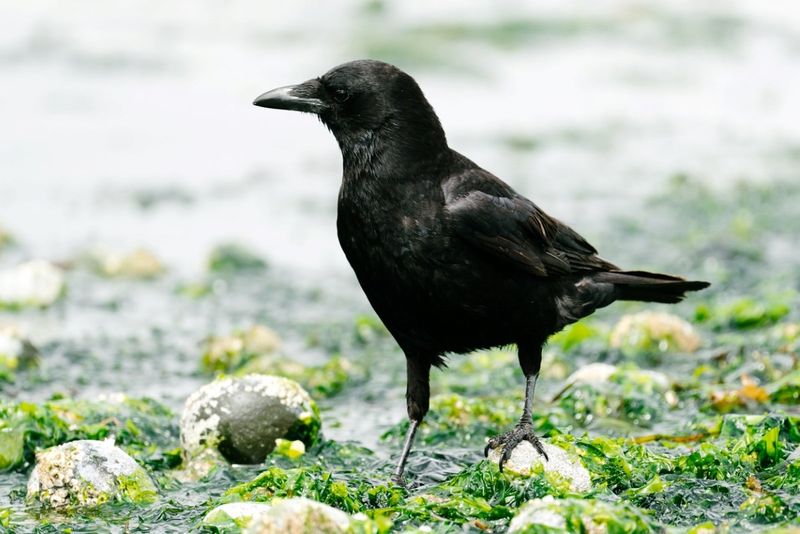
Crows are generalist foragers, which means almost any well-kept yard can offer something worth investigating. A lawn with healthy soil holds earthworms, grubs, and beetles.
Mature trees drop acorns and other mast. A compost pile, an uncovered recycling bin, or a pet dish left outside adds to the appeal.
None of those features signal a problem with your yard; they signal that your yard is ecologically productive.
NC State Extension’s guide to managing backyards for birds identifies food, water, and cover as the three basic resources that draw birds to residential properties. Crows respond to all three, and a yard that offers even one of them reliably can become a predictable stop on an evening route.
The NC State Extension Gardener Handbook’s wildlife chapter lists grasshoppers, caterpillars, grubs, spiders, fallen fruit, seeds, and accessible garbage among the food sources crows use. Cornell’s life-history account adds earthworms, carrion, and nest contents to that list.
The range is wide enough that a crow can find a reason to visit almost any suburban property.
What the birds’ presence cannot tell you on its own is whether your yard has an unusual tick load, a dead animal hidden in the shrubs, or a pest problem that needs attention. Those conclusions require separate, direct evidence: disturbed seedlings, exposed trash, a carcass, or repeated daytime digging in specific spots.
Crows eating insects from a lawn does not confirm that the lawn has more insects than normal; it may simply mean the lawn has insects at all, which is healthy.
Nearby landscape features matter too. A wooded corridor behind the property, a creek, a pond, a park, or a cemetery with tall trees can all connect your yard to a larger roost network.
The birds may be passing through a green corridor rather than targeting your yard specifically.
North Carolina’s flock may include two crow species
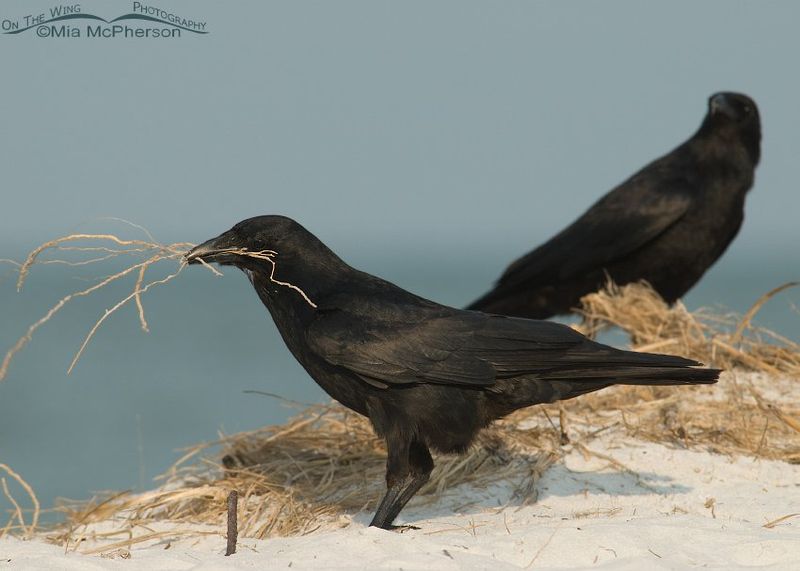
Most North Carolina homeowners automatically assume every black crow in the yard is an American Crow. That assumption holds in many inland Piedmont neighborhoods, but it becomes less reliable near the coast, along major rivers, around swamps, and in estuarine areas where a second species is common year-round.
Fish Crows are slightly smaller than American Crows and share the same glossy black plumage, making visual identification genuinely difficult even for experienced birders. The Audubon Fish Crow field guide notes that the species is strongly associated with coastal, riverine, and wetland habitats across the Southeast, and that it readily mixes with American Crows in winter flocks.
A yard near the Neuse, Cape Fear, or Roanoke rivers, or anywhere along the Outer Banks corridor, has a reasonable chance of hosting Fish Crows as part of a mixed group.
The most practical identification tool is sound, not sight. American Crows give the familiar, full-throated “caw,” while Fish Crows produce a shorter, more nasal call that birders often describe as a doubled “uh-uh” or “nuh-uh.” Listening carefully during an evening gathering can reveal which species, or combination of species, is actually present.
For practical yard-management purposes, the distinction matters less than it might seem. Both species share similar foraging habits, both respond to the same deterrents, and both receive federal migratory-bird protections.
Knowing you have Fish Crows rather than American Crows will not change the first steps you take. What the identification exercise does is build a more accurate picture of your local bird community, which is useful context if you ever need to consult a wildlife professional.
A focused yard inspection tells you what the gathering means locally
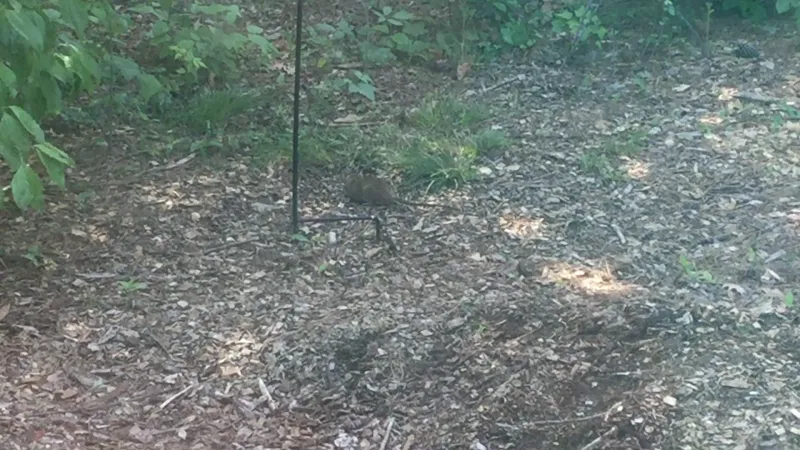
Once you have watched the birds for a few evenings and have a sense of whether they are staging or roosting, the next productive step is a ground-level inspection. The goal is to find concrete evidence of what the crows are actually using, not to confirm a fear or rule one out by assumption.
Start with the most common attractants. Check every trash can, recycling bin, and compost container to confirm that lids are secured and that spillage is not collecting around the base.
Look under any bird feeders for seed accumulation on the ground. Scan the lawn and garden beds for fallen fruit, dropped nuts, or carrion, including anything that may have blown in from a neighboring property.
Check pet feeding stations to confirm food is not left out overnight.
Move to the garden itself. The NC State Extension wildlife chapter identifies newly planted seeds and seedlings as a specific crow damage concern.
If you have recently seeded a lawn area or put in transplants, look for pulled seedlings, scattered seed hulls, or disturbed soil that shows a pattern of digging rather than random scratching.
Then look outward from the property. Note whether there is a wooded tree line, a creek, a detention pond, a park, or a cemetery within a few hundred yards.
These landscape connectors are common roost-route features, and their presence helps explain why crows pass through your yard even when no specific attractant is visible on the ground.
NC State’s urban bird habitat guide recommends assessing actual resources and damage before intervening. If the inspection turns up nothing, the gathering may simply reflect the yard’s position along a commute corridor, and no action beyond continued observation is warranted.
Prevention protects the yard without treating normal behavior as a crisis

When a yard inspection comes up empty, the most appropriate response is usually no response at all. NC State Extension’s wildlife guidance is explicit on this point: the presence of a wildlife species does not automatically mean that control is needed.
If the crows are passing through without damaging anything or creating a sanitation concern, letting them continue is a reasonable and ecologically sound choice.
If the inspection does turn up a specific problem, match the fix to what you actually found. Unsecured trash is the most common attractant and the easiest to address: bungee cords or locking lids on outdoor bins remove the reward quickly.
Pet food left outside overnight, spilled birdseed, and accessible compost can each be handled with minor routine adjustments that also reduce attractants for raccoons, opossums, and other wildlife.
Garden damage calls for physical exclusion rather than deterrents. Lightweight row cover or bird netting draped over newly seeded areas or vulnerable beds protects seedlings without harming anything.
NC State Extension recommends exclusion as a reliable first tool for garden protection, and it has the advantage of working regardless of how habituated the birds become to other methods.
Temporary visual deterrents, such as reflective tape, predator decoys, or mylar balloons, can interrupt feeding in a specific spot for a limited time. Crows are quick learners, though, and they typically habituate to stationary objects within days or weeks.
Moving deterrents regularly and combining them with actual food removal gives them the best chance of working. Penn State Extension’s urban crow roost management guide describes scare devices as temporary tools rather than dependable long-term solutions, a characterization that applies equally to backyard feeding deterrents.
Mature trees deserve special mention. Removing a large oak or pine because crows perch in it trades a permanent habitat asset for an uncertain outcome.
Penn State’s guidance notes that tree removal is not a reliable way to move crow activity and can eliminate urban-tree benefits that the entire yard depends on. Protect the garden with targeted exclusion; leave the canopy alone.
Droppings and legal protections set the boundaries for intervention
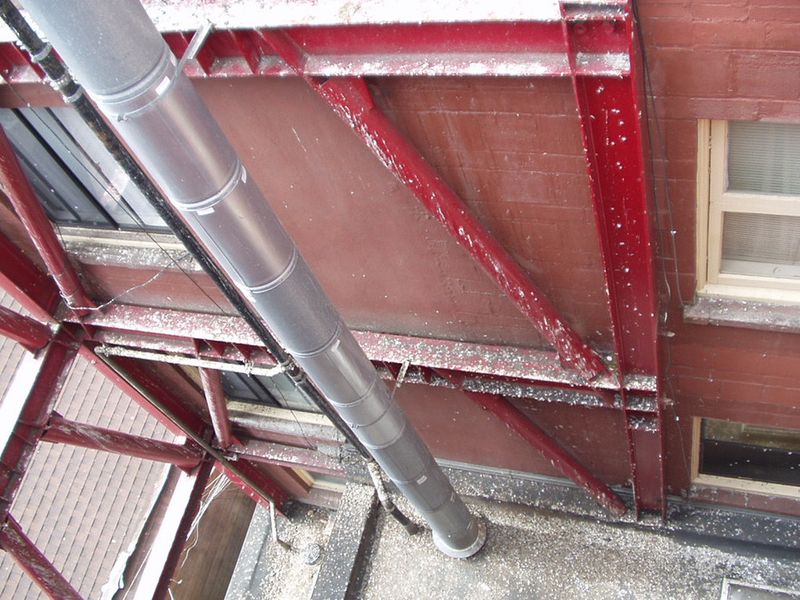
Two practical limits define how far a homeowner can reasonably go when addressing a crow situation: what the law allows and what safe cleanup requires. Understanding both prevents a manageable nuisance from becoming a health or legal problem.
On the health side, the main concern with heavy accumulations of bird droppings is Histoplasma, a fungal organism that can grow in nitrogen-rich material and become airborne when the material is disturbed. CDC guidance on reducing histoplasmosis risk warns specifically against dry sweeping or raking large accumulations of bird or bat droppings, because that action can suspend fungal spores in the air where they may be inhaled.
Wetting the material thoroughly before removal reduces that risk for small amounts on hard surfaces. For large accumulations on decks, under roost trees, or in enclosed spaces, the CDC and NIOSH engineering controls guidance recommend professional assessment and specialized cleanup rather than a DIY approach with a leaf blower or broom.
A passing staging flock that visits for 20 minutes rarely deposits enough material to create a health concern. The risk rises with true overnight roosting, especially when many birds use the same trees repeatedly over weeks or months.
That is another reason the staging-versus-roosting distinction from section two has real practical value.
On the legal side, both American Crows and Fish Crows are listed among the birds protected by the federal Migratory Bird Treaty Act, which generally prohibits taking, killing, or possessing them without authorization. Firearms, poisons, unregulated traps, and pyrotechnic devices used casually in a residential setting can violate federal rules, create risks for neighbors and pets, and in some cases conflict with local ordinances as well.
When prevention does not resolve verified ongoing damage, the correct path is to consult current North Carolina Wildlife Resources Commission regulations or contact a licensed wildlife-control professional who can advise on any available options within the law.
Watch the pattern, then protect what your yard actually needs
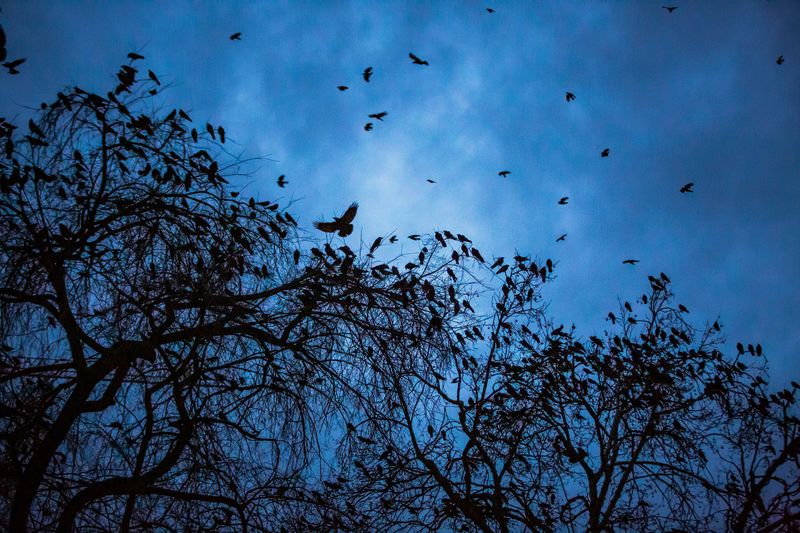
Repeated dusk flocks of crows are almost always a sign of ordinary crow behavior: social foraging, evening commuting, and communal roosting that intensifies during the nonbreeding season. The sight can feel significant, but the birds are following a routine that has nothing to do with omens, yard health scores, or tick forecasts.
The most useful thing a homeowner can do is observe before acting. Watch for several evenings to determine whether the birds stage and move on or settle in for the night.
Inspect the yard for concrete attractants or damage. If the inspection finds nothing, the gathering requires no response.
If it turns up a specific issue, a targeted, proportionate fix, securing food sources, adding exclusion netting, adjusting a routine, is almost always enough.
Audubon’s reporting on crow roosts and NC State Extension’s wildlife guidance both point toward the same practical standard: respond to verified nuisance or sanitation risks, not to the mere presence of wildlife. A yard that crows find worth visiting at dusk is, in most cases, a yard with a functioning ecosystem.
That is worth protecting thoughtfully, on the birds’ terms as much as your own.