
What It Really Means When Fire Ant Mounds Keep Popping Up In Your North Carolina Garden Beds
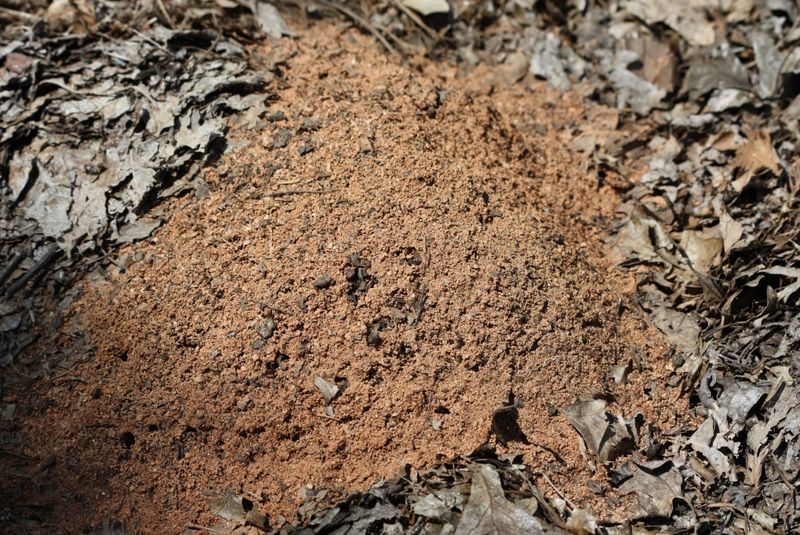
Fire ant mounds showing up again and again in your garden beds can feel like the yard is trying to tell you something went wrong with the soil. The real message is more useful than that, and easier to act on once you understand what the ants are actually responding to.
Across much of North Carolina, imported fire ants are already established in the landscape, so a mound in your flower bed is less a soil failure and more a signal about conditions in that specific spot. Knowing how to read those clues puts you back in control without reaching for a sprayer before you even know what you are dealing with.
A fire-ant mound is not a soil test
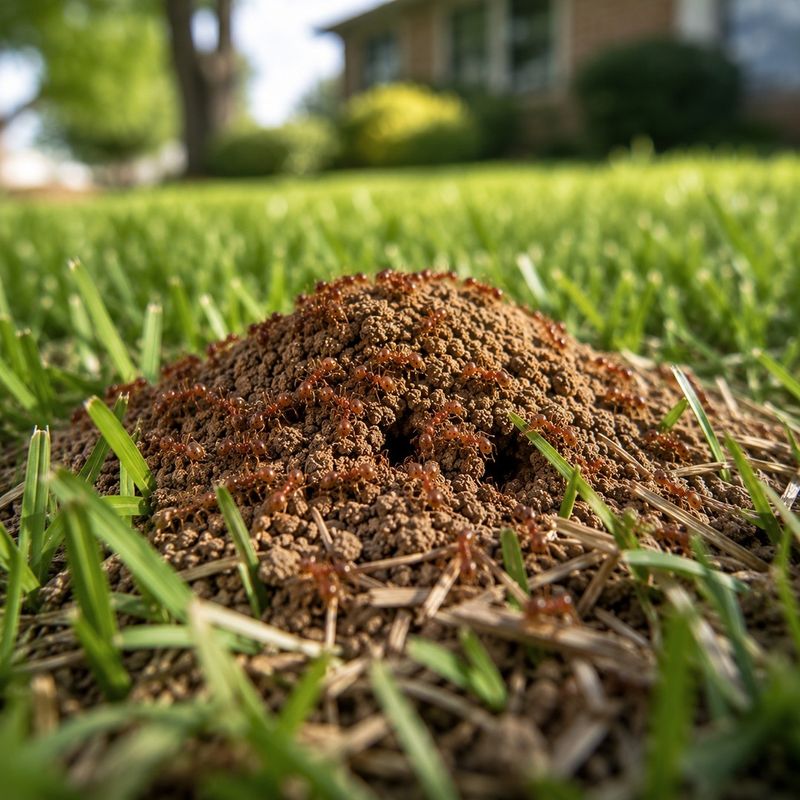
Garden soil gets blamed for a lot of things it did not actually cause, and a recurring fire-ant mound is one of them. Seeing that dome of loose, sandy-looking earth push up through your mulch does not mean the bed is too acidic, too compacted, too wet, or starved of nutrients.
Imported fire ants build mounds in an enormous range of soil types and conditions, so the mound itself tells you almost nothing reliable about whether the soil needs amending.
What the mound does tell you is that the ants found the spot workable for nesting. NC State Extension’s profile of red imported fire ant biology describes the species as favoring warm, sunny, open areas, while also occupying mulched flower beds, compost piles, pavement edges, and areas near sidewalks or driveways in urban landscapes.
Gardens can be attractive because they combine moisture, organic material, warmth, and recently disturbed soil, not because anything is deficient or wrong.
North Carolina makes this especially relevant. The NCDA&CS imported fire ant program currently classifies portions or entire areas of 81 of the state’s 100 counties as generally infested with one or more imported fire-ant species.
That means many North Carolina homeowners are gardening in territory where these ants are already present in the surrounding landscape, and a mound in a bed is often the result of ants moving in from nearby rather than a bed that somehow invited a brand-new problem.
The more productive diagnostic lens looks at warmth, sun exposure, moisture patterns, mulch depth, nearby compost, disturbance history, and the proximity of surrounding colonies. Those are things you can actually inspect and, in some cases, adjust.
If you genuinely want to know whether your soil needs improving for plant health, a soil test from your local Cooperative Extension office answers that question. A fire-ant mound does not.
Confirm the ants without provoking the mound
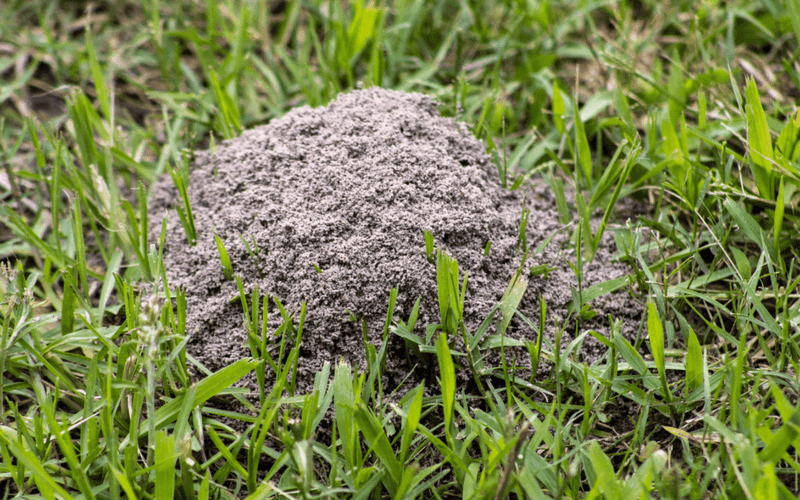
Before doing anything else, take a moment to confirm that what you are looking at is actually an imported fire-ant colony. Other ant species build mounds too, and treating a harmless native ant colony with a fire-ant product wastes money, harms non-target insects, and solves nothing.
Positive identification is a small step that protects both your wallet and the yard’s ecology.
The Texas Imported Fire Ant Research and Management Project’s identification guide describes red imported fire-ant mounds as typically loose and fluffy with no obvious central entrance hole on the surface. Workers are reddish-brown and vary noticeably in size within the same colony, which distinguishes them from many native species where workers are more uniform.
When a mound is disturbed, fire ants swarm upward rapidly and aggressively, which is a distinctive behavior, though you should not be the one triggering it.
Do not poke, kick, shovel, or otherwise disturb the mound to get a look at the ants. NC State’s landscape fire ant guide notes that disturbance can provoke stinging and may also cause the colony or queen to relocate, sometimes splitting into satellite mounds that are harder to track and treat.
A safer approach is to place a small food lure, such as a potato chip or a small piece of hot dog, on the ground near the mound but not directly on it. Step back and observe from a comfortable distance.
NC State’s turfgrass fire ant publication recommends confirming that ants are actively foraging before applying bait, since bait only works when workers are out and moving. Watching for five to thirty minutes, depending on temperature and time of day, gives you a reasonable read on activity level.
Confirmation before treatment is not a technicality; it is the step that keeps you from treating the wrong pest entirely.
What the bed’s location may be telling you
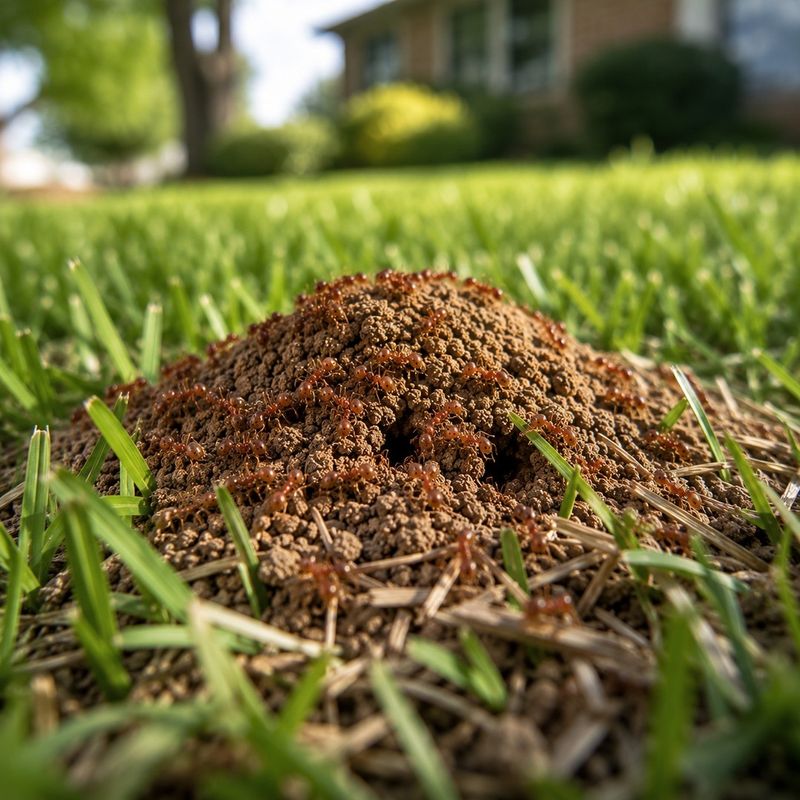
Once you have confirmed the ants, the mound’s location becomes your most informative clue. Recurring activity in the same bed or along the same edge usually means something about that spot is consistently useful to a nesting colony.
Reading the setting carefully can help you understand whether anything is genuinely changeable and whether adjusting it would make a meaningful difference.
Sun and heat are among the strongest draws. NC State’s landscape fire ant resource identifies sunny, open beds and edges near sidewalks, driveways, stones, and other heat-absorbing materials as favored nesting locations.
A south-facing bed that bakes in afternoon sun and sits next to a concrete walkway offers the kind of warmth imported fire ants actively seek. The mound in that spot is responding to the microclimate, not to any flaw in your soil.
Mulch and compost add another layer of appeal. University of Georgia Cooperative Extension’s urban fire ant management bulletin notes that mulched flower beds and compost areas can attract fire ants because they offer both warmth and moisture retention.
A thick layer of bark mulch holds heat longer than bare soil, and an active compost pile provides both food material and a reliably warm interior.
Moisture patterns matter too, though not in a simple cause-and-effect way. Low-lying areas or spots where irrigation overspray pools can be associated with more frequent reinfestation, according to UGA Extension.
That does not mean the bed is overwatered or that you should let it dry out. University of Florida IFAS Extension’s fire ant and landscape guide notes that the relationship between soil moisture and fire-ant density is not consistent enough to justify broad drying as a management tactic.
Fire ants also occupy lawns, pastures, pavement cracks, potted plants, electrical equipment housings, and stumps. The bed is not uniquely responsible for the colony’s presence, and the surrounding landscape is almost always part of the picture.
That broader view becomes the focus of a useful inspection.
Why new mounds keep appearing after rain or disturbance
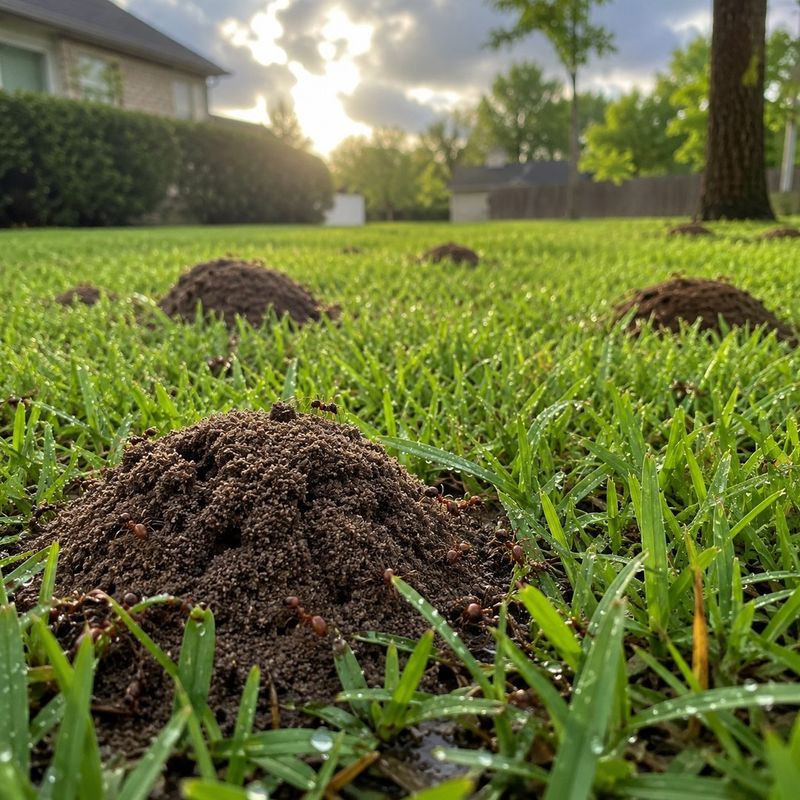
Seeing a new mound appear the day after a heavy rain is one of the most common reasons homeowners start wondering whether they did something wrong. The timing can feel pointed, as if the rain triggered an invasion.
What actually happens is more nuanced, and understanding it changes how you respond.
NC State’s turfgrass arthropod pest guide explains that small colonies may go unnoticed until they build or rebuild mounds in response to accumulating groundwater after heavy rain. The colony was already there.
Rain made it visible by forcing the ants upward, or by prompting mound repair on a colony that had been keeping a lower profile during dry conditions. A USDA Agricultural Research Service study on fire-ant mound building in response to simulated rainfall supports this, showing that mound construction activity increases following rainfall events rather than representing the arrival of a brand-new colony at that exact spot.
Disturbance creates a different but related pattern. When a mound is knocked down, stepped on, or repeatedly disrupted, the colony often relocates rather than disappears.
NC State’s fire ant turfgrass publication notes that mechanical disturbance, incomplete treatment, or mound destruction can leave the queen and brood underground, with the colony simply moving to a nearby spot and rebuilding. This is why flattening a mound tends to produce a new mound somewhere else in the same bed within days.
Reinvasion from the surrounding landscape is another persistent factor. UGA Cooperative Extension’s fire ant management bulletin is direct on this point: bait treatments do not prevent reinvasion, and populations can recover after treatment as newly mated queens fly in or colonies migrate from adjacent lawn areas.
Materials moved around the yard can also carry ants from one spot to another. NC State’s overview of red imported fire ants in North Carolina identifies infested nursery stock, sod, hay, soil deliveries, and potted plants as recognized pathways for spreading colonies.
Checking these materials before moving them is a practical step that reduces how often you inadvertently plant a new colony in a different bed.
Audit the bed and its borders before changing anything
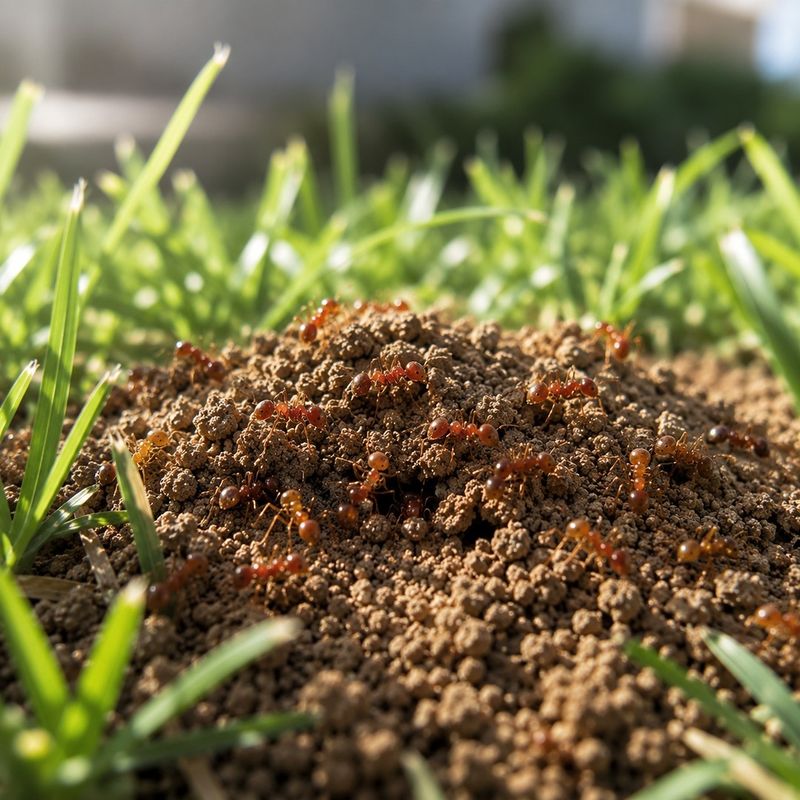
Knowing what to look for is more useful than reacting to the mound itself. A focused walk around the bed and its surrounding area takes maybe fifteen minutes and gives you enough information to make a measured decision rather than a reflexive one.
Keep children, pets, and anyone with a known sting allergy away from active mounds before and during this inspection.
Start at the mound’s immediate setting. Check whether the bed gets full sun for most of the day, whether it sits against a driveway, sidewalk, stone edging, or any other surface that absorbs and radiates heat.
Note the mulch depth and condition. A thick, undisturbed mulch layer holds warmth longer and can make the bed more hospitable for nesting.
NC State’s landscape fire ant guide specifically identifies mulched beds and warm, sunny edges as preferred locations for imported fire ants.
Move to irrigation and drainage next. Look for areas where water pools after rain or where an irrigation head overshoots the bed and saturates a corner.
Check for runoff channels that deposit water from the lawn into the bed’s low spots. These conditions are worth correcting for plant health reasons independent of the ants, and they may also reduce the attractiveness of the site as a nesting location.
Inspect the perimeter of the bed and the surrounding lawn, not just the visible mound. Mississippi State Extension’s vegetable garden fire ant guide notes that surrounding colonies commonly forage into gardens, meaning the source of activity may be well outside the bed itself.
Check any compost piles, potted plants, bagged soil, straw, or mulch deliveries sitting near the bed. NC State’s fire ant overview for North Carolina identifies these materials as regulated movement pathways in quarantine areas.
Inspecting them before repositioning reduces the chance of spreading a colony to a new spot. UGA Extension adds that if a mound is not creating a safety or crop problem, selective monitoring may be preferable to blanket insecticide use, particularly where native competitor ants are present and worth protecting.
Decide whether the ants actually need control
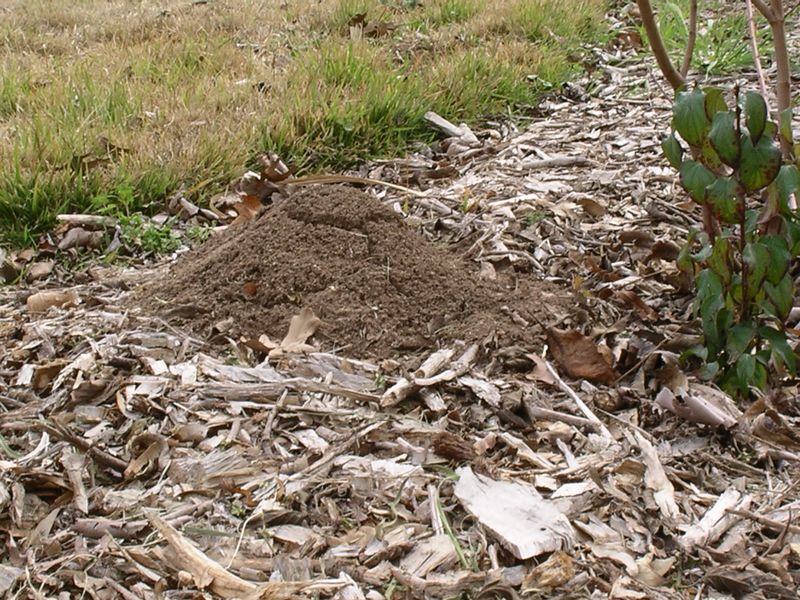
Not every confirmed fire-ant mound requires a treatment response. Setting a threshold based on actual risk rather than mound count alone helps you avoid unnecessary chemical use and protects the native insects that share your yard.
The right question is whether this particular colony is creating a meaningful problem, not simply whether it exists.
A mound located in a remote corner of a bed, well away from foot traffic, play areas, and edible crops, may be worth monitoring rather than treating immediately. UGA Cooperative Extension’s fire ant management bulletin notes that selective monitoring can be preferable in settings where preserving native competitor ants is a priority.
Native ant species can limit imported fire-ant establishment in some circumstances, and broad insecticide applications remove those competitors, sometimes making reinfestation easier over time.
The calculus shifts when the colony poses a genuine risk. Children, pets, elderly family members, and anyone with a documented sting allergy face real danger from an active mound in a high-traffic area.
NC State’s turfgrass fire ant publication identifies individual mound treatment as the more selective option for a few problem colonies, noting it is less likely to affect beneficial insects than broadcasting across the entire yard.
Edible crops add another dimension. Fire ants can damage okra, potatoes, tender seedlings, and young transplants, and they sometimes protect aphid populations on garden plants, which indirectly harms crops.
USDA APHIS’s imported fire ant resource documents risks to native ant communities and wildlife food sources from broad infestations. A mound that sits directly in a vegetable bed warrants a different response than one at the far edge of a shrub border.
Matching the response to the actual risk keeps your yard’s ecology more intact.
Common fixes can move the problem or damage the yard
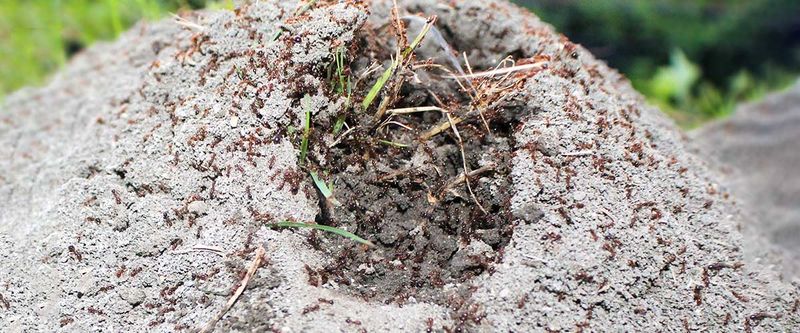
Frustration with recurring mounds tends to push homeowners toward the most immediate-looking solution, and some of those solutions cause more harm than the mound itself. Several popular fixes either relocate the colony rather than eliminating it, damage the surrounding garden, or create safety and environmental risks that outweigh any short-term benefit.
Repeated mound destruction is probably the most common impulse. Knocking down or shoveling out a mound repeatedly does not eliminate the colony.
NC State’s fire ant turfgrass guide explains that mechanical disturbance can leave the queen and brood underground, with the colony relocating and rebuilding nearby. You end up with the same number of ants in a slightly different spot, plus a disturbed bed.
Boiling water is often suggested as a natural solution. UGA Extension’s urban fire ant bulletin acknowledges that hot water can kill some colonies, but results are inconsistent, it may require several gallons per mound, and it can burn nearby plant roots as well as the person carrying the pot.
Reliable long-term control through this method is not well supported.
Grits, lime, wood ash, coffee grounds, and diatomaceous earth are frequently recommended online. NC State Extension specifically rejects the grits claim, and none of the other amendments are supported as fire-ant controls by current extension research.
Adding lime or ash to change soil pH based on a mound sighting is a soil intervention based on faulty reasoning, since the mound does not diagnose acidity.
Gasoline, diesel fuel, bleach, ammonia, battery acid, and similar household chemicals should never go into garden soil. Mississippi State Extension’s vegetable garden fire ant guide strongly discourages these substances because they contaminate soil and groundwater and are dangerous to handle.
Finally, blanket insecticide applications across the entire yard are not the wildlife-friendly default they might seem. Broad spraying affects native ants and other non-target organisms alongside fire ants.
Products marketed as organic or naturally derived, including spinosad, citrus-oil formulations, and pyrethrins, are still pesticides and can harm beneficial insects when misapplied. The label governs appropriate use regardless of how the product is marketed.
Use a targeted treatment that fits the garden
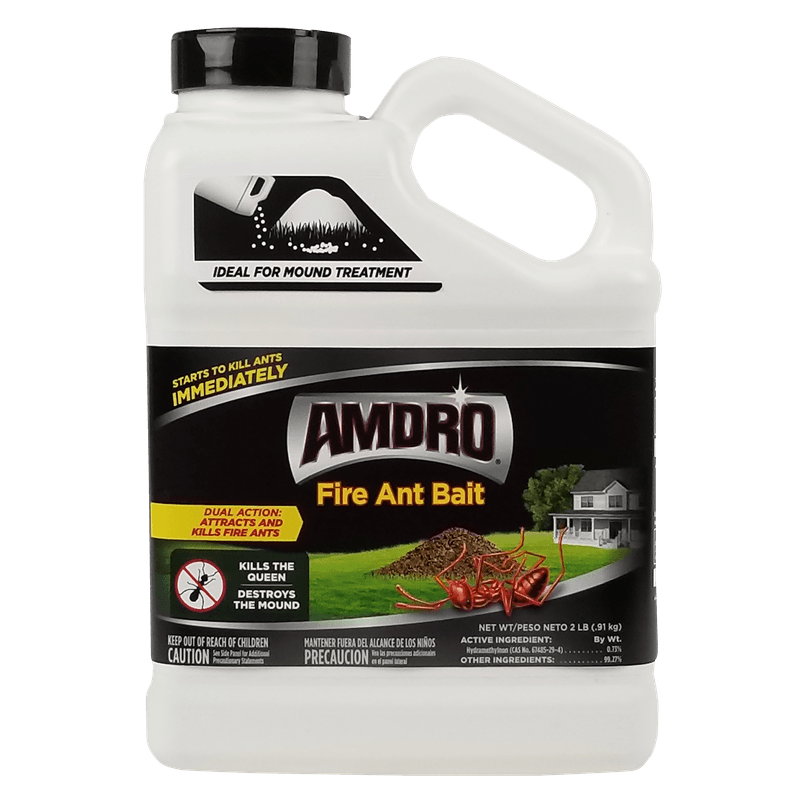
Once you have confirmed the ants, completed your inspection, and identified a real safety or crop problem, treatment becomes a proportionate next step rather than a first reaction. The choice between individual mound treatment and a broader bait program depends on how many problem colonies you have found and where they sit in the yard.
For a few problem mounds, individual treatment is generally the more selective path. NC State’s fire ant turfgrass and landscape publication notes that individual mound treatments are less likely to affect beneficial insects than broadcasting across the yard, though they require more labor and ongoing monitoring.
This approach concentrates the chemical where the problem actually is rather than applying it across areas with no confirmed activity.
For a broader infestation with visible and hidden colonies across the lawn and beds, labeled bait programs can address both. UGA Extension’s urban fire ant management bulletin explains that baits work slowly because foragers carry the product back to the colony, where it is shared with the queen and brood.
Depending on the active ingredient, maximum suppression can take anywhere from several days to a few months. Bait is not a quick fix, and it does not prevent reinvasion from surrounding areas.
Application technique matters for bait to work at all. Ants must be actively foraging when you apply it, so check for surface activity first using the food-lure method described earlier.
Keep bait dry before and after application. NC State advises placing mound-specific bait around the perimeter of the mound rather than dumping it on top, because foragers exit through underground tunnels that surface around the mound’s base, not through the dome itself.
Edible gardens require an extra step before any treatment. Mississippi State Extension’s vegetable garden fire ant guide is clear that a product suitable for a lawn is not automatically legal or safe around vegetables or fruit.
Read the current label for the specific crop you are growing. Acephate, for example, can be absorbed by plant roots and move into leaves and fruit, so it should not be used around edible plants unless the current label explicitly allows it.
EPA guidance on pesticide use states that pesticide labels are legally enforceable directions, not suggestions. Follow all reentry intervals, pre-harvest intervals, protective equipment requirements, and disposal instructions.
Do not apply any fire-ant product before rain, onto wet vegetation, near storm drains, or where runoff can reach ponds, streams, or other surface water, as some fire-ant products are toxic to fish and aquatic invertebrates.
Read the mound as a yard clue, then act selectively

Recurring fire-ant mounds in a garden bed are a landscape signal, not a verdict on your soil or your gardening. The sequence that serves you best is straightforward: confirm the ants safely, walk the bed and its borders to understand what the site is offering the colony, correct any genuine drainage or material-handling issues on their own merits, and treat only when the risk to people, crops, or a specific wildlife-management goal justifies it.
NC State’s landscape fire ant guide and UGA Extension’s urban fire ant bulletin both point toward selective, targeted responses as more compatible with a healthy yard than reflexive blanket treatment. NC State’s fire ant turfgrass publication reinforces that individual mound treatments, when warranted, protect beneficial insects more effectively than broad applications.
Keeping native ants in place where they can compete with imported species is one of the quieter benefits of a measured approach, and it is the kind of stewardship that keeps the whole yard’s ecology working in your favor.