
What It Really Means When Japanese Beetles Swarm One North Carolina Garden And Skip The Next
Watching Japanese beetles pile onto your rose bushes while your neighbor’s garden sits untouched can feel like a personal insult from nature. Many homeowners assume something must be different, better, or richer about the yard getting hit.
The truth is more practical and more useful: the beetles are responding to specific local cues, not grading your soil or your gardening skills. Understanding what those cues actually are gives you a real advantage when deciding how to respond.
First, make sure the swarm is Japanese beetles
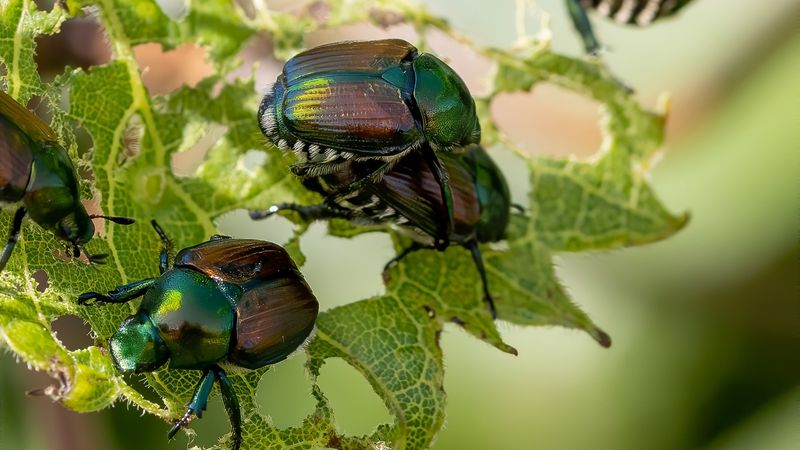
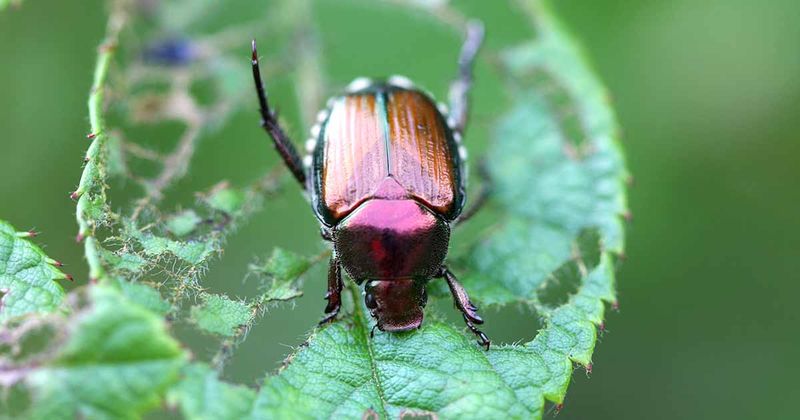
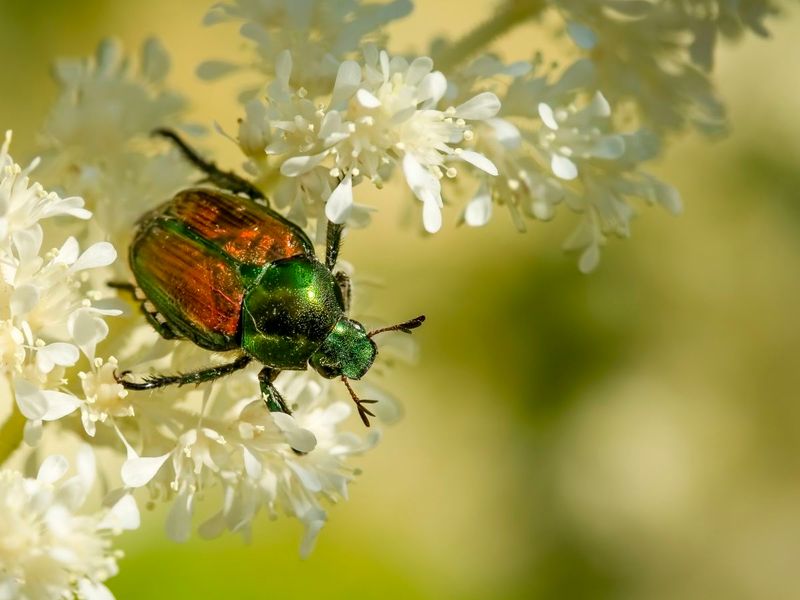
Reaching for a spray can before you know exactly what insect you are dealing with is one of the most common and costly mistakes a backyard gardener can make. Adult Japanese beetles are distinctive once you know what to look for: roughly 3/8 to 1/2 inch long, with a metallic green head and thorax, copper-colored wing covers, and a row of small white hair tufts running along each side of the abdomen.
USDA APHIS identification guidance highlights those white tufts as one of the most reliable field marks, because no other common North Carolina beetle shares that combination of colors and fringe.
North Carolina is home to several other beetles that can cause confusion. Green June beetles, which are common across the Piedmont and Coastal Plain, are larger and more of a velvety green without the copper wing covers.
Fig beetles and some ground beetles share a similar iridescent sheen. Misidentifying any of these as Japanese beetles can send you chasing the wrong problem entirely, so a close look before any action is worth the extra minute.
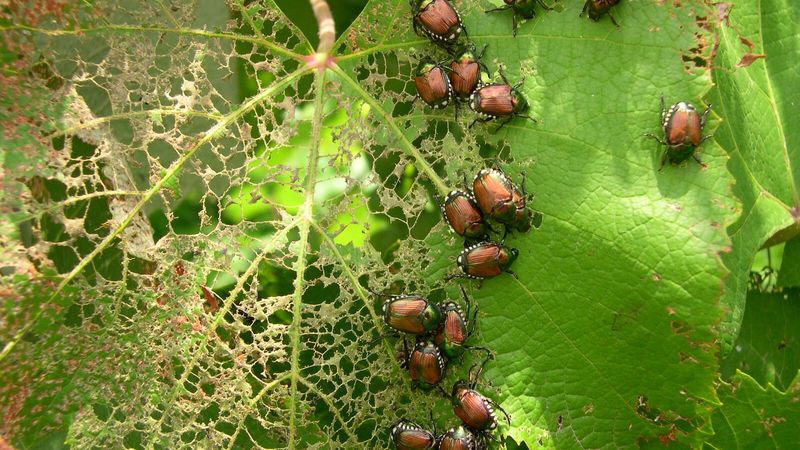
Once you confirm the insect, check the foliage. Japanese beetles feed on leaf tissue between the veins, leaving behind a lacy, skeletonized pattern.
NC State Extension’s arthropod pest guide describes this skeletonization as one of the clearest signs of adult feeding. Adults also feed on flowers and soft fruit, so browning blooms or pitted fruit alongside skeletonized leaves strengthen the case considerably.
Confirming both the insect and the damage pattern is the foundation of the observation-first approach this article builds on, because a wrong identification leads to a wrong response every time.
The beetles are following a local opportunity, not rating your garden
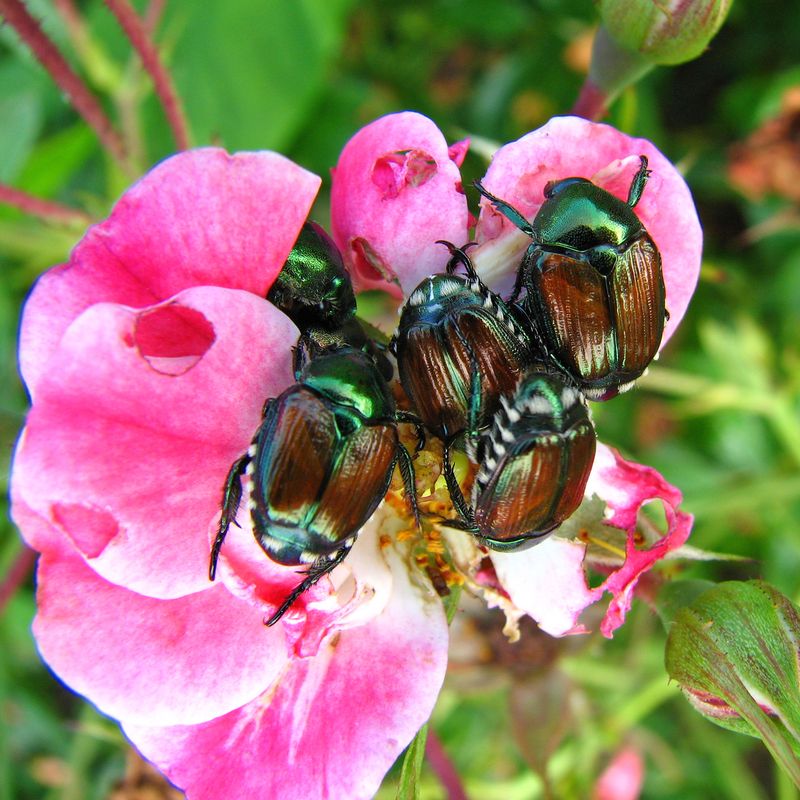
When beetles pile onto one plant while the yard next door looks fine, the explanation is biology, not a scorecard. Japanese beetles are strongly drawn to particular host plants, and they tend to concentrate on the sunniest, most exposed portions of the canopy.
That upper, sun-warmed foliage is where adults spend the most time feeding, mating, and signaling to other beetles. University of Minnesota Extension’s Japanese beetle resource notes that beetles are often most abundant on plants in full sun, which is why a rose in an open border can draw far more insects than a similarly sized shrub growing in shade just a few feet away.
Feeding damage itself makes the situation worse through a chemical feedback loop. When beetles chew foliage, the damaged plant releases volatile compounds that act as a signal to other beetles nearby.
Research by Loughrin, Potter, and Hamilton-Kemp on herbivory-induced volatiles demonstrated that these feeding-related odors function as aggregation cues, drawing additional beetles toward plants that are already being attacked. The result is a visible pile-on effect: one plant becomes a focal point while others nearby receive little attention, not because the attacked plant is superior, but because it is already broadcasting a chemical invitation.
None of this reflects the overall quality of your soil, the richness of your garden bed, or the ecological virtue of your yard. University of Illinois Extension’s analysis of Japanese beetle host preferences makes clear that feeding choices are driven by plant species, plant chemistry, and environmental conditions, not by a beetle’s assessment of garden-wide health.
The swarm does tell you something worth knowing: there is a preferred host plant in a sunny spot that has likely already taken some feeding damage. That is a clue, and it points toward the plant, not toward a judgment of your entire yard.
Why the next garden can be skipped
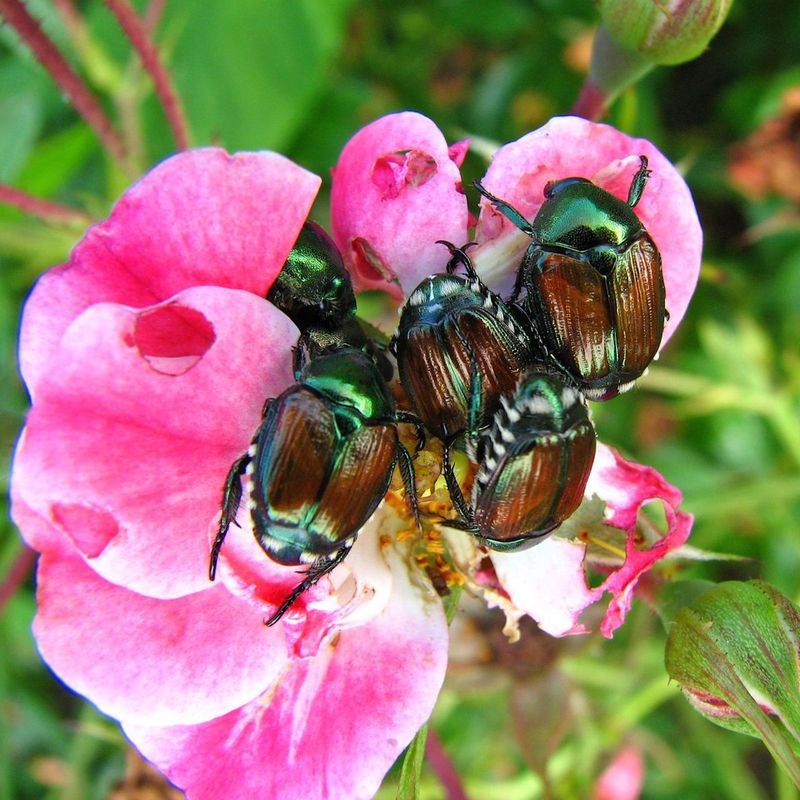
A neighbor’s garden escaping beetle pressure while yours takes a beating rarely means their yard is healthier, better managed, or more ecologically sound. The more likely explanation involves a handful of site-specific factors that have nothing to do with overall yard quality.
Plant species and cultivar are among the most important: Japanese beetles show strong preferences for certain plants, including roses, grapes, lindens, and many stone fruits, while other species and cultivars are far less attractive to them. University of Illinois Extension’s host-preference research confirms that feeding choices are tied to plant chemistry and species identity, meaning a yard without preferred hosts may simply offer less of what beetles are looking for at that moment.
Sun exposure plays a significant role as well. A garden in full sun tends to attract more adults than one that is mostly shaded, even when both contain the same plant species.
Canopy position matters too: beetles often feed on the upper, more exposed portions of plants first. Prior feeding damage amplifies the gap further, because a plant that has already been chewed is releasing the volatile compounds that draw in more beetles, while an undamaged plant nearby stays quiet.
NC State Extension’s Japanese beetle resource points out that adult movement and host plant location are the primary drivers of where beetles concentrate.
Weather and beetle flight patterns also shift the picture. Adults can fly considerable distances, meaning the beetles in your garden may have originated from a property several lots away.
Colorado State University Extension’s beetle overview notes that adult beetles are mobile and can move across landscapes in search of preferred plants. A yard with moist turf nearby may support egg-laying and future grub survival, but that does not establish where the current adult swarm came from.
And a yard being skipped is not necessarily planted with natives, pest-resistant cultivars, or better soil. Beetle pressure, plant chemistry, light, and prior damage can all shift the pattern from one season to the next.
A garden swarm and a damaged lawn are different clues
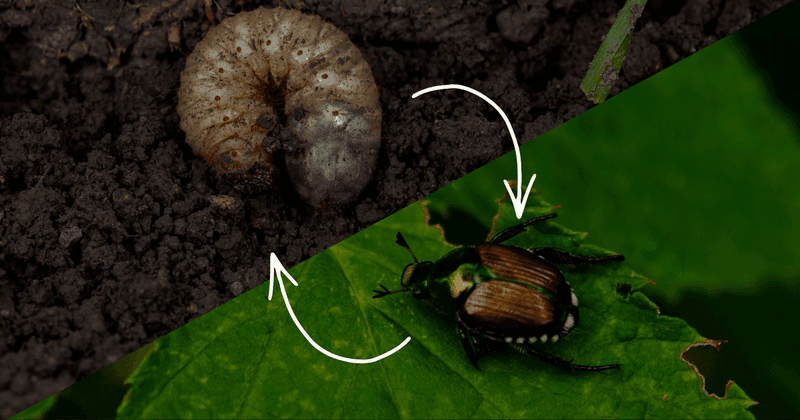
Seeing a swarm of adults on your plants does not automatically mean your lawn is full of damaging grubs. Adult Japanese beetles and their larvae are two separate problems operating in different parts of the yard at different times, and treating one does not reliably address the other.
Above ground, adults chew foliage, flowers, and fruit. Below ground, white grubs feed on grass roots during their larval stage.
NC State Extension’s Japanese beetle resource is explicit that controlling grubs will not dependably reduce the number of adult beetles arriving at ornamental plants during the same season, because adults are mobile and can fly in from neighboring properties.
Female Japanese beetles do prefer sufficiently moist soil for egg-laying, and eggs and very young larvae are vulnerable to drying out. Nearby irrigated turf can make a yard more hospitable for egg survival and grub development.
UMass Amherst Extension’s Japanese beetle fact sheet notes that moist soil conditions support egg-laying and early larval survival. Even so, the presence of moist turf does not establish that the adults currently feeding on your ornamentals came from your own lawn rather than flying in from elsewhere.
Before assuming your turf has a grub problem, look for actual symptoms. Thinning or yellowing grass, brown patches that do not respond to watering, turf that peels up from the soil easily like a loose rug, or animals such as skunks, raccoons, and birds digging repeatedly in the same area are the signs worth acting on.
Colorado State University Extension and University of Minnesota Extension both note that healthy turf can tolerate a moderate number of grubs, with many Extension guides placing thresholds around 8 to 10 grubs per square foot, though that number varies with turf condition and the source consulted. Grub presence alone, without visible turf symptoms, is not an automatic reason to treat.
Inspect the plant before deciding how much damage matters
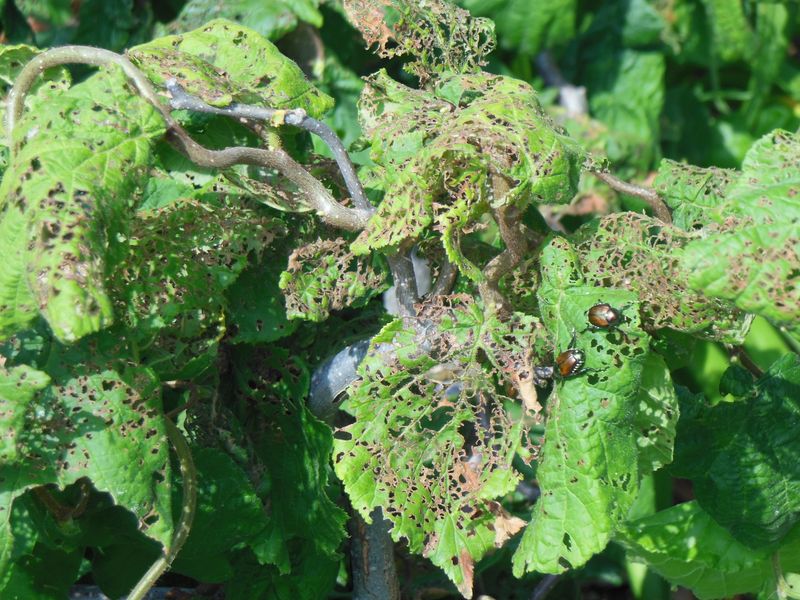
The number of beetles on a plant tells you less than the condition of the plant itself. A mature, well-established oak or linden can lose a significant portion of its leaf canopy to adult feeding and still recover fully by the following season.
That kind of resilience comes from an established root system and stored energy reserves, not from any special resistance to the beetles. University of Delaware Cooperative Extension’s Japanese beetle fact sheet notes that healthy, mature trees and shrubs often tolerate adult defoliation without lasting harm, while plants that are already stressed face a harder recovery.
Young trees, newly planted shrubs, and any plant that is drought-stressed or showing signs of existing disease or pest damage are in a different category. For these plants, heavy feeding during an already difficult period can tip the balance toward serious injury or death.
UMass Amherst Extension emphasizes that plant health affects tolerance and recovery more than it determines whether beetles choose a plant in the first place. A stressed plant hit hard by beetles has fewer reserves to draw on when rebuilding foliage.
Food-producing plants add another layer of urgency. Grapes, peaches, raspberries, and sweet corn are all on the Japanese beetle’s preferred list, and feeding on flowers or fruit directly affects your harvest rather than just the plant’s appearance.
Compare the attacked plant with others nearby and ask practical questions: Is this plant established or newly transplanted? Has it been watered consistently, or has it been struggling through a dry stretch?
NC State Extension frames the response decision around actual injury and recovery prospects, not beetle counts alone. That framing keeps the response proportional to what is actually at risk.
Targeted protection usually beats a spray-can reflex
For most residential gardens in North Carolina, the first practical response to a Japanese beetle problem does not come from a bottle. Hand removal is straightforward and effective at reducing current feeding without exposing pollinators and beneficial insects to chemical risk.
Early morning is the best time to do it: beetles are sluggish in cooler temperatures and are less likely to fly when disturbed. University of Maryland Extension’s guidance on Japanese beetles on trees and shrubs recommends shaking or tapping beetles directly into a container of soapy water, which kills them quickly.
Removing adults also reduces the feeding-related plant odors that draw in additional beetles, so consistent morning removal can help slow the pile-on effect.
Physical exclusion offers protection without any chemical exposure at all. Fine mesh netting or cheesecloth draped over high-value vegetables, herbs, young ornamentals, or individual specimen plants can keep beetles off without interfering with the plant’s needs, as long as the plant does not rely on open-air pollination during the coverage period.
This approach is especially useful for small garden beds or container plants where targeted coverage is practical.
Beetle traps deserve a specific caution. Research published in the Journal of Economic Entomology found that single traps or small arrangements can attract more beetles into an area than they capture, potentially increasing damage to nearby plants.
University of Maryland Extension echoes this concern and advises against using traps as a garden-protection strategy. If you want to use one for monitoring purposes, place it as far from susceptible plants as your property allows.
Turf care during the adult flight period is about building resilience, not chasing a beetle-proof lawn. Colorado State University Extension and University of Kentucky Extension both note that avoiding unnecessary frequent, shallow irrigation during the egg-laying period can make soil conditions less hospitable for egg and young-grub survival.
University of Delaware’s organic lawn guidance supports deeper, less frequent watering as a general turf health practice. Do not deliberately drought-stress valuable plants or a lawn that is already struggling, and remember that none of these turf practices will stop adult beetles from flying in from neighboring properties.
If treatment is necessary, protect the yard’s other residents
Chemical treatment is sometimes the right call, but only after confirming that the damage is real, consequential, and affecting a plant or turf area that genuinely needs protecting. The starting point is always the product label, which is a legal document.
Confirm that the product is registered for your specific crop or site, check restrictions on edible plants, and follow directions for drift, runoff, reentry intervals, and pollinator protections. NC State Extension’s arthropod pest guide advises spraying after petal fall where applicable, which reduces direct exposure to foraging bees and other flower visitors.
Broad-spectrum insecticides applied to or near flowering plants put pollinators at serious risk. Sprays can contact bees and beneficial insects directly, and systemic products such as imidacloprid can move into flowers, where they are then encountered by bees and other flower-visiting insects long after the original application.
Penn State Extension’s Japanese beetle guide and University of Maryland Extension’s white grub resource both caution against applying insecticides to blooming plants. Treating only the specific plant showing confirmed, consequential damage is a more protective approach than blanket spraying.
Whole-yard spraying is not a proportional response to adult Japanese beetle feeding. Adults are mobile, and treating areas that show no confirmed damage exposes beneficial organisms to unnecessary risk without addressing the actual source of the problem.
Grub treatments applied in response to adult feeding are also unlikely to reduce adult pressure in the current season for the same reason: the adults may be arriving from outside your property entirely.
Biological controls and planting strategies deserve honest expectations. Virginia Cooperative Extension’s Japanese beetle resource reports variable and inconsistent results from milky spore under different field conditions, making it unreliable as a guaranteed solution.
University of Maryland Extension’s natural enemies guide notes that tachinid flies and other predators exist but generally do not suppress heavy adult populations on their own. Native plants and natural enemies are valuable parts of a healthy yard, but neither eliminates Japanese beetles.
Read the swarm as a question, not a verdict
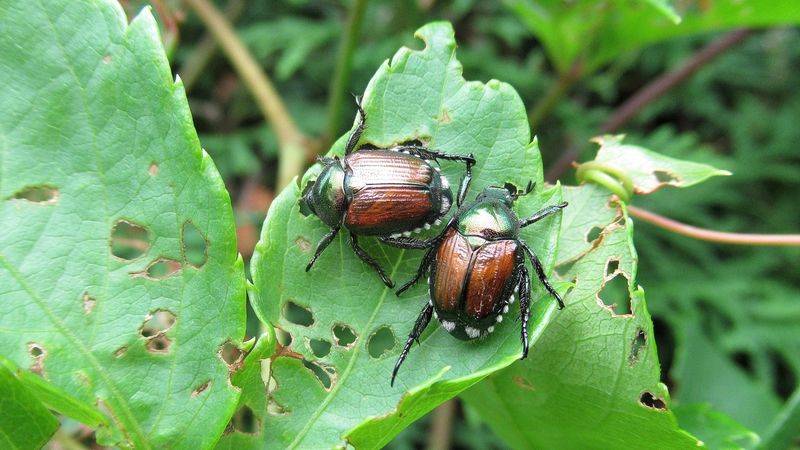
A cluster of Japanese beetles on one plant in your North Carolina yard is an invitation to look more carefully, not a judgment on your gardening. The useful questions it raises are specific: What plant is being attacked, and is it a known preferred host?
Is it in full sun with exposed upper foliage? Has it already taken some feeding damage that could be drawing in more beetles?
Is there irrigated turf nearby that might support egg-laying? NC State Extension and University of Minnesota Extension both frame the response around site-specific observation rather than reflexive treatment.
A practical decision sequence holds up well across most residential situations: confirm the insect, observe the feeding pattern and plant condition, assess whether actual injury threatens a plant’s survival or food production, protect selectively using hand removal or physical exclusion where it is practical, and treat with a registered product only when confirmed damage justifies it and the label permits safe use at that site. Penn State Extension supports this stepwise approach as a way to keep responses proportional to actual risk.
The yard being skipped next door is not a healthier yard. The yard being attacked is not a worse one.
Beetles follow plants, sun, and prior damage signals. Knowing that turns a frustrating swarm into something you can actually work with, and that kind of clear-eyed observation is what good North Carolina stewardship looks like in practice.