
What It Really Means When Mole Tunnels Suddenly Show Up Across Your North Carolina Lawn
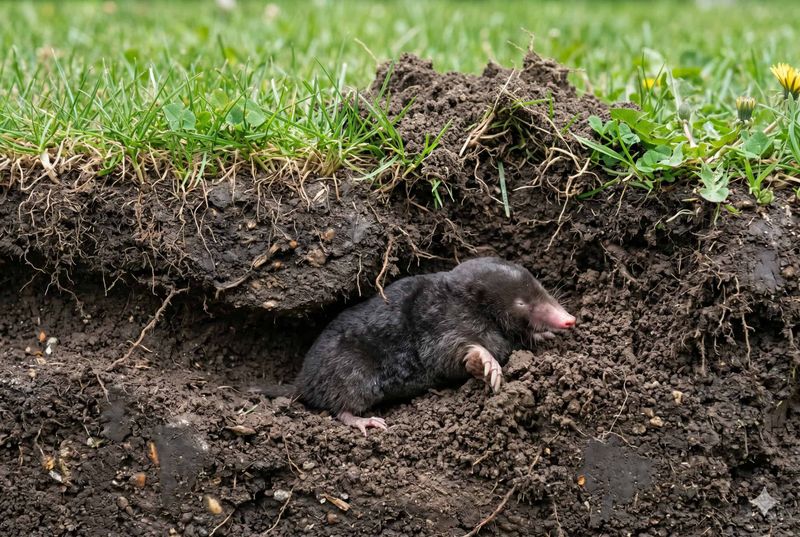
One morning your lawn looks fine, and the next it is crossed with raised ridges and heaved soil running in every direction. Before you reach for a bag of grub killer, slow down – those tunnels are telling you something, and it may not be what you think.
Understanding what is actually happening underground can save you money, protect your soil life, and help you make a smarter decision for your yard.
The tunnels signal active foraging, not a confirmed grub outbreak
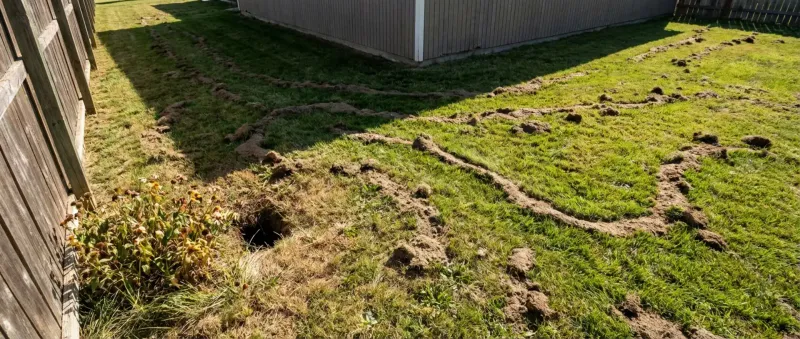
Raised ridges cutting across your lawn almost overnight are a reliable sign that a mole is foraging near the soil surface, finding invertebrate prey in the top few inches of earth. What the tunnels cannot tell you on their own is which prey the mole is after.
NC State Extension’s mole guidance lists earthworms, white grubs, beetles, ants, and other soil invertebrates as mole food, and earthworms are described as a major food source – not a secondary one. Tunnels alone cannot prove grubs are the draw.
That distinction matters because the instinct many homeowners have – treat for grubs immediately – skips a step. Moles follow whatever prey is available and accessible.
A network of fresh-looking ridges says the mole is finding food, not which food it found. Reframing the first question from “How do I get rid of the grubs?” to “What is actually happening under this lawn?” puts you in a better position to respond accurately.
Mole presence may reflect the presence of active soil life, but that does not make a simple equation. NC State’s Extension Gardener Handbook notes that mole tunneling can disrupt shallow-rooted turf and expose or dry roots even when the mole itself is feeding on invertebrates rather than plants.
The ecological picture is genuinely mixed: some soil organisms moles consume are lawn pests, while others, like earthworms, are beneficial. Calling the soil “healthy” or “unhealthy” based on mole activity alone oversimplifies what is a complicated underground community.
The practical path forward involves a short sequence of checks. Confirm that the damage is actually from a mole rather than a vole or mole cricket.
Test whether the tunnels are still active. Sample the soil directly if grubs are a concern.
Each of those steps replaces an assumption with real evidence, and the sections ahead walk through each one.
Why rain can make activity look sudden
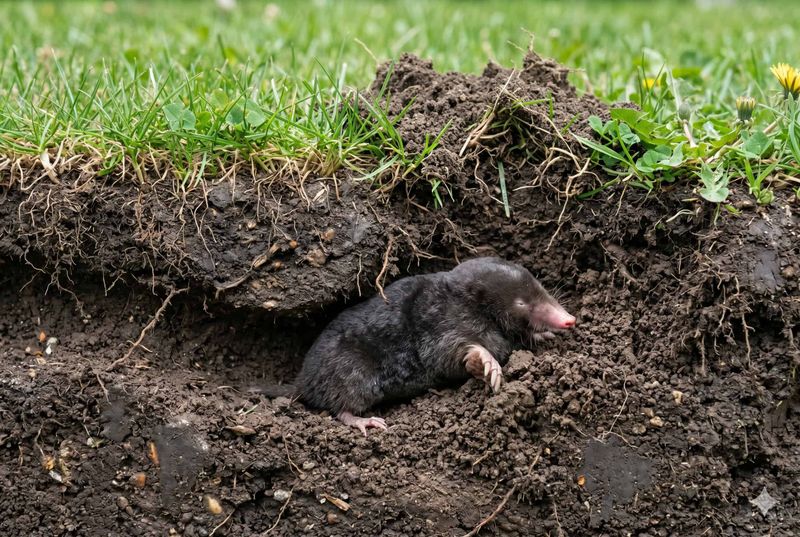
Mole tunnels come in two general types, and the difference helps explain why activity can seem to appear from nowhere after a good rain. Deeper passages function as more permanent travel routes that a mole uses repeatedly.
Shallow feeding tunnels, by contrast, sit just below the grass roots and may be used briefly or only once before the mole moves on.
NC State’s mole resource explains that moles are more active during rainy periods and that during dry weather they tend to follow earthworms into shallower tunnels. Rain or consistently moist soil brings earthworms and other prey closer to the surface, which pulls the mole’s feeding activity upward and makes those shallow ridges more prominent.
A lawn that showed no visible tunneling last week may suddenly look heavily worked after several inches of rain – not because a new mole arrived, but because existing or increased foraging activity became visible at the surface.
A sprawling network of ridges does not necessarily mean a large population is at work. Eastern moles are generally solitary animals, and University of Missouri Extension’s seasonal mole and vole overview notes that one animal can create an extensive system of temporary feeding tunnels in a short period.
Weather is one possible explanation for sudden visible activity, but it is not the only one; a mole may have simply shifted its foraging area, or prey may have concentrated in a particular part of the yard for reasons unrelated to recent rainfall.
Raised ridges and heaved soil show the kind of disturbance associated with mole tunneling, but their appearance cannot confirm that the activity is recent, identify what the mole ate, or date when the tunnel was made. To find out whether a runway is still in use, tamp down or flatten several sections in different parts of the yard, then check back in 24 to 48 hours.
University of Missouri Extension’s mole control guide recommends identifying fresh, straight sections that are pushed back up as likely active runways worth monitoring or addressing, rather than treating every visible ridge as current evidence.
Before blaming moles, identify the animal making the damage
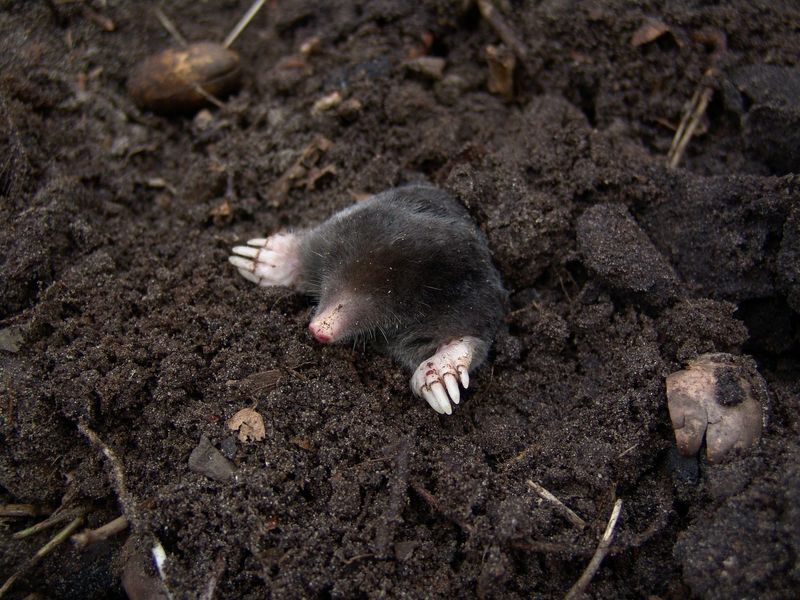
Mole tunnels have a distinctive look: raised, winding ridges just below the surface, sometimes accompanied by volcano-shaped mounds of loose soil pushed up from deeper digging. The animal itself has broad, outward-facing forefeet built for pushing through soil, a pointed snout, and no visible ears.
Crucially, moles leave no gnaw marks on plant material. Their tunneling can lift or expose roots, but they are not eating the grass, bulbs, or root tissue.
Voles are a different animal entirely. They are small rodents that feed on vegetation, and their damage looks nothing like a mole’s.
NC State’s Extension Gardener Handbook describes voles as leaving above-ground runways, clipped grass, and gnaw marks around roots and bark near the soil line. Voles sometimes use existing mole tunnels as travel corridors, which can make their feeding damage appear near mole ridges and cause the two animals to be confused.
If you see chewed plant stems, clipped grass blades, or bark stripped from tree bases, you are almost certainly looking at vole activity, not mole foraging.
Mole crickets add a third possibility, especially in southeastern North Carolina. These are insects, not mammals, and they create smaller, less prominent tunnels while directly damaging turf by feeding on roots and shoots.
NC State’s turfgrass arthropod pest guide covers mole crickets as a significant turf pest in the state’s coastal and southeastern regions, where warm-season grasses like bermudagrass and centipedegrass are common hosts. University of Georgia Extension’s mole cricket resource notes that mole cricket damage often shows as spongy, disrupted turf where the insects have tunneled just beneath the surface while feeding.
Getting the identification right changes every decision that follows. Mole evidence points toward insectivorous foraging, and the appropriate response focuses on whether the tunneling damage justifies action.
Vole or mole cricket evidence requires a separate diagnosis and a different set of control options. North Carolina Wildlife Resources Commission’s mole fact sheet also notes that North Carolina is home to three mole species – eastern, hairy-tailed, and star-nosed – and that species identity matters before any removal is considered.
Spending five minutes confirming what you are dealing with prevents a lot of wasted effort.
A soil sample answers the grub question

Mole activity raises the grub question, but it cannot answer it. The only reliable way to know whether white grubs are present in damaging numbers is to look directly at the soil.
Guessing from tunnel patterns skips the step that actually produces useful information.
The method is straightforward. Use a spade or sharp knife to cut around several one-square-foot sections of sod in different parts of the lawn, particularly in areas where tunneling is concentrated or where the turf looks stressed.
Fold back the sod and examine the top three to four inches of soil and root zone carefully. NC State Extension’s white grub guide recommends this direct inspection approach rather than inferring grub presence from secondary signs.
White grubs are C-shaped, cream-colored beetle larvae with brown heads; they are visible to the naked eye and relatively easy to count once you are looking at the right layer of soil.
Sample several spots rather than one, because grub populations can be uneven across a lawn. Finding grubs in one section does not mean every area is infested, and finding none in a heavily tunneled area is meaningful evidence that earthworms or other invertebrates may be the mole’s primary target in that zone.
Sampling confirms what is present where you looked – it does not prove that grubs caused the tunneling.
NC State’s turfgrass pest management manual gives an average treatment threshold of five or more white grubs per square foot as a point at which insecticide treatment may be worth considering. That figure is a management guideline, not a universal rule.
Turf species, how the lawn is used, its overall condition, location in the state, and whether animals are causing additional damage all factor into whether treatment makes sense at a given count. A lawn with thick, resilient turf and light foot traffic may handle a higher grub load without visible decline, while a high-use or already-stressed lawn might justify action at a lower count.
The number gives you a reference point, not a command.
When grub treatment makes sense—and when it misses the point
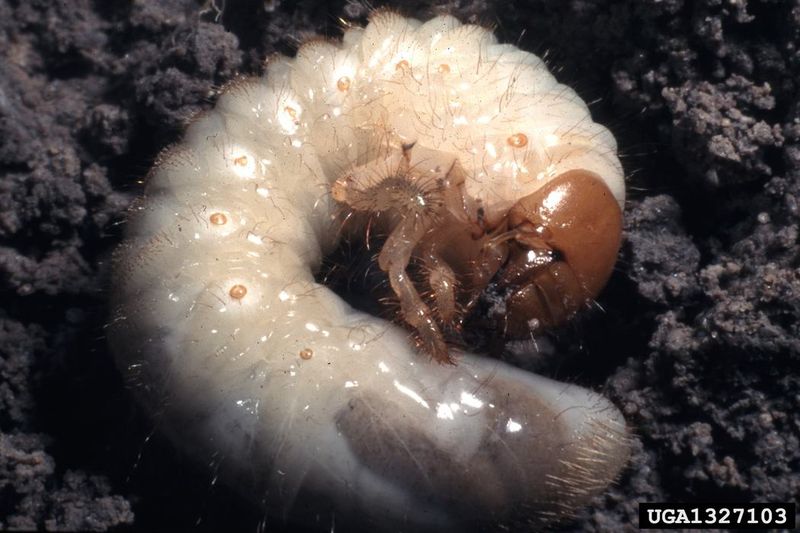
Confirmed grubs above the threshold, combined with visible turf damage, is the scenario where insecticide treatment has a clear rationale. Treating because mole tunnels appeared – without sampling and without visible turf decline – is a different situation entirely, and it often produces disappointing results.
Timing matters considerably for curative grub treatments. NC State’s white grub resource explains that curative applications generally work best when grubs are young and actively feeding near the soil surface, which in North Carolina typically falls from August through October depending on the beetle species and location.
A second window from April to early May can apply for some species as overwintering grubs resume feeding before pupating. Applying a curative product outside these windows – when grubs are large, deep, or inactive – reduces effectiveness significantly.
Preventive treatments follow a different logic. NC State’s lawn care calendar frames preventive grub management as appropriate for sites with a documented history of recurring grub problems, timed around adult beetle flight and egg-laying rather than after grubs are already established.
Using a preventive product on a lawn without a grub history, simply because a mole appeared, inverts the logic of preventive care.
Treating confirmed grub damage may protect the turf, but University of Maryland Extension’s mole guidance makes clear that grub treatment often does not stop mole activity. Moles can shift to earthworms and other invertebrates when grubs become scarce, and earthworms are not removed by grub insecticides.
Expecting the moles to leave after a grub application is a reasonable hope but not a dependable outcome.
Every product used must be applied according to its current label, which is a legal requirement and the most reliable source of application rate, timing, and safety information. The 2025 NC Agricultural Chemicals Manual provides current North Carolina guidance, and EPA lawn and garden pesticide guidance advises sweeping granules off hard surfaces back onto treated turf, preventing runoff into storm drains, and keeping treated areas off-limits to children and pets until dry.
Beneficial soil organisms, waterways, and non-target wildlife all factor into a responsible application decision.
Choose the lightest response that fits the real damage
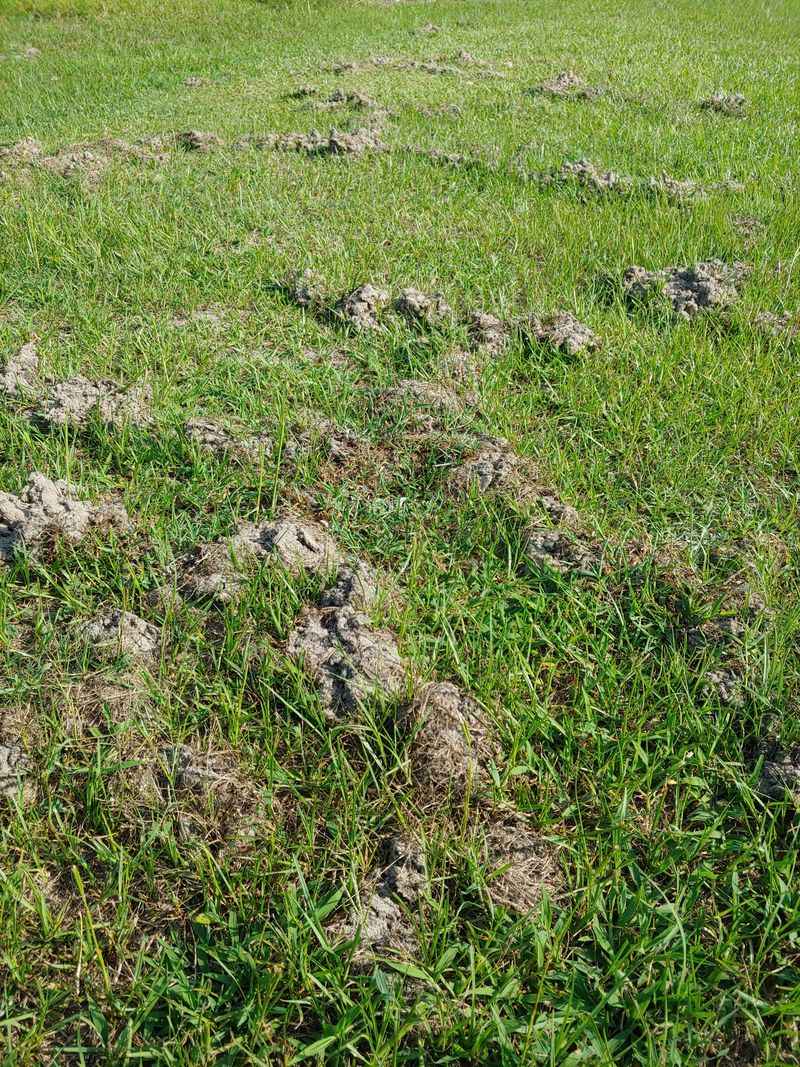
Not every mole runway requires action beyond observation. Cosmetic ridges that flatten easily, leave the turf otherwise intact, and stop appearing after a few weeks may represent temporary foraging that resolves on its own.
Flattening or tamping several sections of tunnel and watching whether they are pushed back up within a day or two is the lowest-effort first step, and it doubles as an activity test. NC State’s Extension Gardener Handbook describes packing evident tunnels as a practical cultural-management step.
If exposed roots appear along a ridge, press the soil back around them and water the area to reduce drying stress on the turf.
For small, high-value planting beds or garden borders where repeated tunneling is causing real plant damage, physical exclusion can work. NC State describes burying sheet metal or hardware cloth beginning at the soil surface, extending at least 12 inches down, and bending outward about 10 inches at the base to discourage tunneling under the barrier.
This approach is labor-intensive and most practical for defined, contained areas rather than an entire lawn.
When repeated tunneling justifies direct removal, trapping is consistently identified as the most reliable method. University of Missouri Extension’s mole control publication and their trapping recommendation article both emphasize placing traps on active, relatively straight runways – sections you have confirmed are being reopened – rather than on random old ridges or mound sites.
Follow the manufacturer’s instructions for the specific trap being used.
Before setting any trap or attempting to relocate a mole, check current North Carolina requirements. The NC Wildlife Resources Commission’s mole fact sheet notes that relocation onto private property with the landowner’s permission is allowed, but relocation is not always a simple or dependable solution – moles may not survive the stress of capture and release in unfamiliar territory.
NC Wildlife’s depredation page and North Carolina General Statutes section 113-300.2 govern wildlife removal rules, and a depredation permit may be required depending on the method used. Most critically, North Carolina is home to the star-nosed mole, a state Species of Special Concern that cannot be removed under ordinary mole-control guidance.
Identifying the species before acting is not optional.
Avoid mole fixes that damage the yard and its wildlife
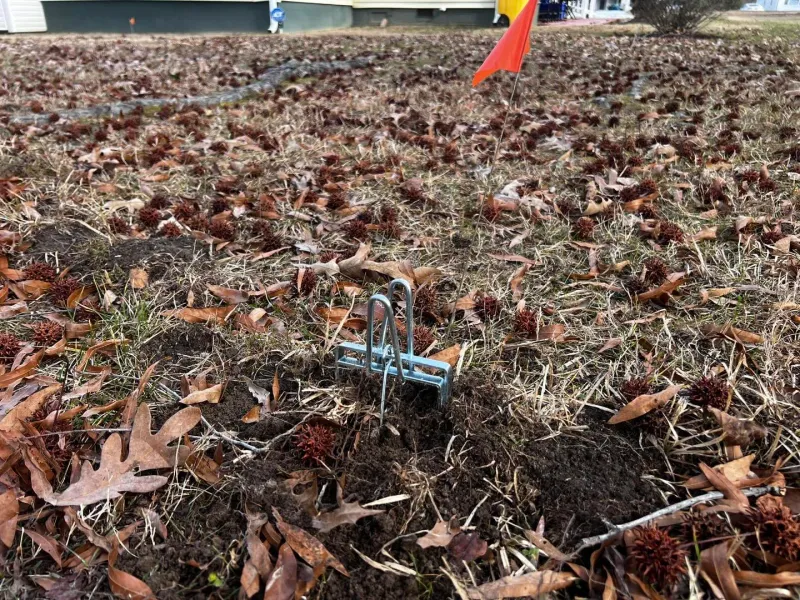
A long list of popular mole remedies circulates online and at garden centers, and most of them either do not work or create new problems. NC State’s mole resource is direct on the subject: ultrasonic, electronic, magnetic, vibrating, and electromagnetic devices have not been shown to be effective at repelling moles.
The same source reports no research supporting the advertised mole-repellent properties of caper spurge, sometimes sold as a “mole plant.” Castor bean plants, marketed similarly, are poisonous to humans and should not be introduced to a yard with children or pets.
Tunnel additives are another category of remedies that carry real hazards without reliable results. NC State’s Extension Gardener Handbook and other university extension sources identify bleach, gasoline, petroleum products, broken glass, razor blades, thorn branches, and chewing gum as unproven home remedies.
Sharp or toxic materials in tunnels create risks for people working in the yard, for pets that dig, for wildlife that may enter the passages, and for the soil itself. Vehicle exhaust directed into tunnels is similarly unsupported as a control method and creates obvious human and environmental hazards.
Flooding tunnels with water is also unreliable and may produce wetter conditions that attract more earthworms.
Targeting earthworms to reduce mole food is one of the more counterproductive ideas that surfaces in mole discussions. University of Missouri Extension’s seasonal mole overview cautions against this approach, and NC State’s earthworm resource explains that earthworms improve soil structure, drainage, and organic matter breakdown – functions that benefit the turf directly.
Eliminating them is neither a dependable way to move a mole nor sound soil stewardship.
Broad insecticide applications made without confirmed pest pressure carry their own costs. EPA lawn and garden guidance notes that pesticides used beyond what the situation requires can affect beneficial soil organisms, pollinators, pets, wildlife, and nearby waterways.
Every pesticide application should be justified by the current label, timed correctly, and limited to the area where a confirmed problem exists.
Read the evidence before you treat the lawn
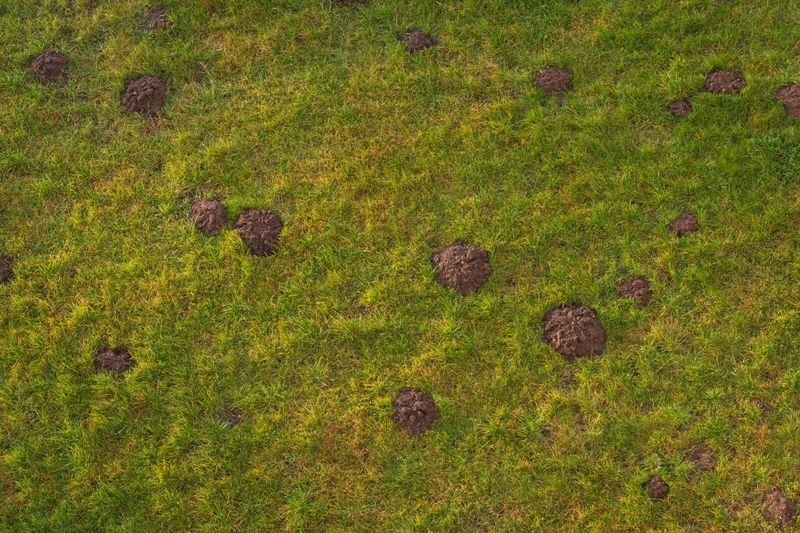
Working through a short sequence of checks turns a frustrating discovery into a manageable situation. Start by confirming the animal.
Raised underground ridges without gnaw marks or clipped vegetation point to a mole rather than a vole or mole cricket, and that distinction changes every decision that follows.
Next, test whether the tunnels are active by tamping several sections and monitoring them over one to two days. NC State’s mole guidance supports this tamping step as a practical way to separate current activity from old disturbance.
If the soil stays flat, the mole may have moved on. If sections are pushed back up, you have confirmed an active runway worth addressing.
If grubs are a concern, sample the soil directly rather than inferring their presence from the tunnels. Cut and lift several one-square-foot sections, inspect the top three to four inches, and count what you find.
NC State’s white grub resource frames that direct inspection as the basis for any treatment decision, not the appearance of mole activity above ground.
Match the response to documented damage: tolerate cosmetic ridges when the turf remains usable, confirm a real grub problem before applying insecticide, and verify North Carolina’s current wildlife rules before removing a mole. A sudden tunnel network most often means one animal is feeding near the surface – and a calm, step-by-step look at the evidence is almost always more useful than an immediate trip to the pesticide aisle.
The lawn that rewards careful observation usually ends up better off than the one treated in haste.