
What It Really Means When You Hear Katydids Calling In Your North Carolina Trees Every August Night
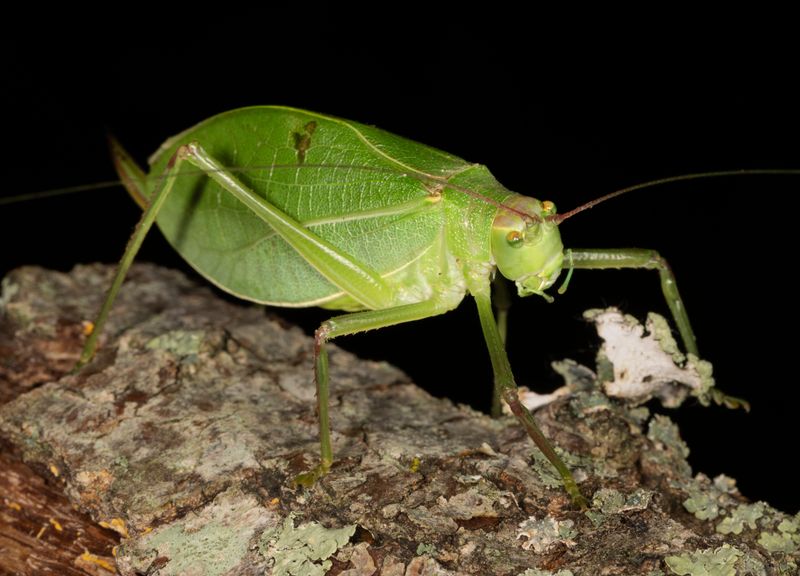
Step outside on a warm August night in North Carolina and you will almost certainly hear it: a steady, rasping chorus drifting down from the tree canopy overhead. Most people assume it means fall is right around the corner, but the real story is a little more interesting than that.
Those sounds belong to katydids, insects spending the late summer doing exactly what their biology demands, and understanding what they are actually doing can change the way you experience your yard on those long, humid nights.
A nighttime August chorus usually points to katydids
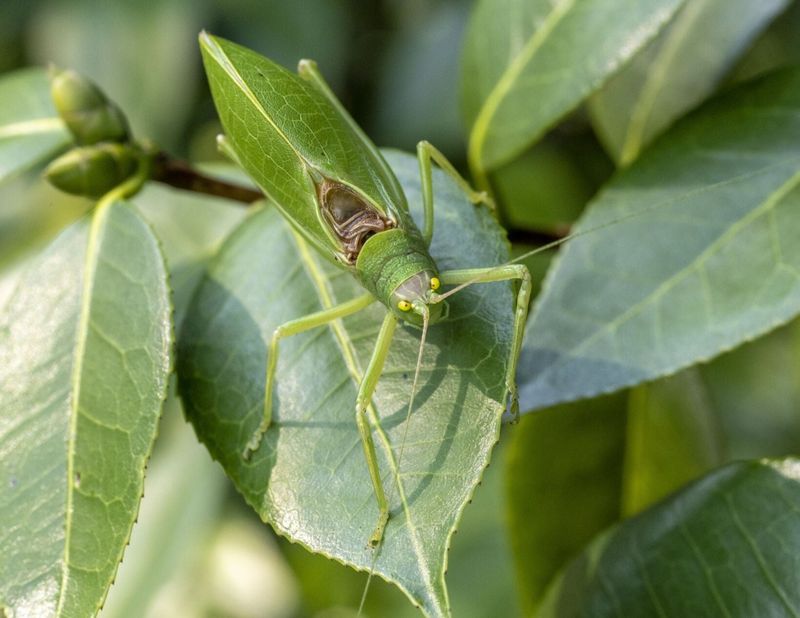
Walk out your back door on a humid August night in the Piedmont or Coastal Plain and that loud, repetitive rasp coming from the tree canopy overhead is most likely adult katydids in the middle of their warm-season calling period. The sound feels like it is woven into late summer itself, but it is worth being precise about what it actually signals.
The Orthopterists’ Society’s Singing Insects of North America account of the common true katydid, Pterophylla camellifolia, places the species in North Carolina from approximately July through October, living in the crowns of deciduous trees, woodlots, and residential yards.
August is a normal, prominent part of that calling window, not a surprise invasion or an unusual concentration of insects. That said, calling is not guaranteed every single night across every part of the state.
Species, local weather, elevation, and habitat all shape whether and how loudly you hear the chorus on any given evening.
North Carolina is home to many katydid species, and the common true katydid is one well-documented example rather than a stand-in for all of them. The state’s Orthoptera checklist documents a wide range of katydid taxa, each with its own habits, calls, and seasonal timing.
When you hear a sustained nighttime chorus from your trees, you are most likely hearing one or more of these species actively calling, but the sound alone cannot confirm which one.
The most important distinction to hold onto from the start: the chorus signals active, warm-season insect life, not an official announcement that autumn has arrived. Research on nightly and seasonal calling patterns in common true katydids frames the August chorus as a late-summer phenology cue, not a frost countdown, population census, or weather forecast.
Hearing it means katydids are out there doing their seasonal work; nothing more precise than that should be read into the sound.
How katydids make the sound
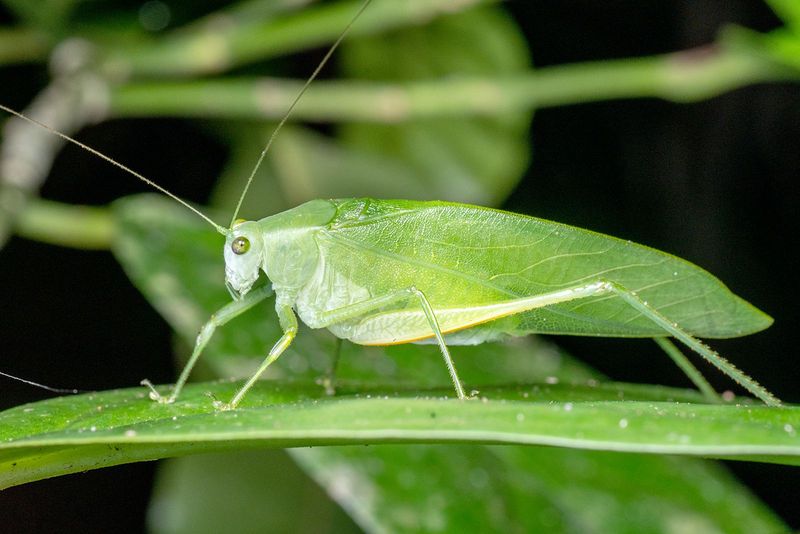
The trees themselves are not singing. Every note in that August chorus is being manufactured by insects perched in the canopy, using a mechanism that has nothing to do with the wood or leaves around them.
Male katydids produce their calls by rubbing specialized parts of their forewings together, a process called stridulation. One wing carries a ridged file structure; the other carries a scraper edge.
When the wings are drawn across each other, the file and scraper interact to generate the distinctive rasping or clicking sound that carries so well through a still summer night.
Females receive those signals through tympanal organs located in the front legs, just below the knee joint. University of Florida entomologist T.J.
Walker’s work on katydids and long-horned grasshoppers describes this sound-production and reception system in detail, noting that the primary function of male calling is reproductive signaling. Males call to attract females, and the call itself is the central event in locating a mate.
Calling can also serve territorial or defensive purposes, so not every sound in the chorus is a pure mating advertisement. Related research on the tuning of hearing organs and call frequency in katydids shows that the match between a species’ call frequency and its hearing sensitivity is often quite precise, which means different species are essentially broadcasting on different channels.
That is part of why North Carolina’s many katydid species can occupy the same landscape without their signals becoming a hopeless tangle.
Because each species has its own call structure, pitch, and rhythm, the chorus from your yard may involve more than one species calling simultaneously. The sound seems to come from the trees because the insects are hidden in the canopy foliage, but the trees are simply the stage.
The insects are doing all the work.
Why August brings a late-summer chorus
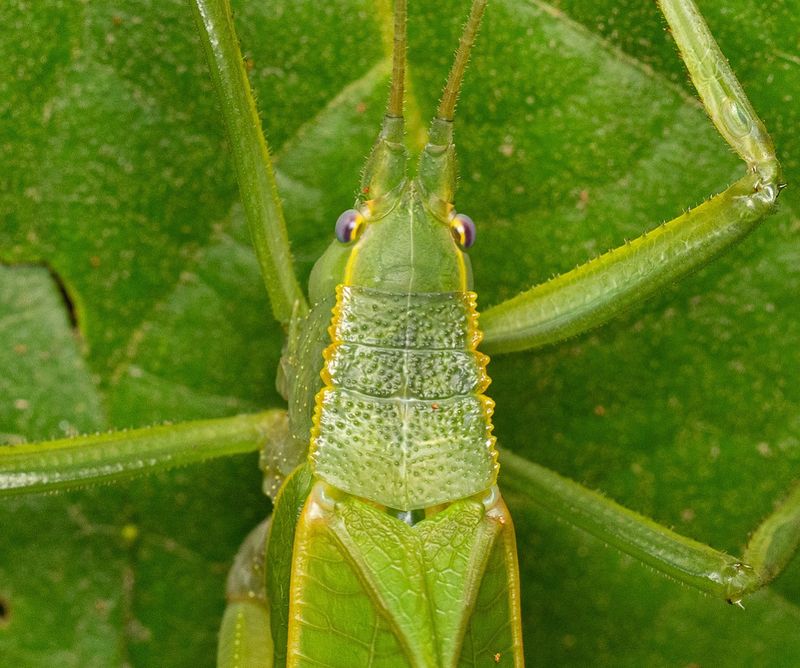
Katydids spend most of their lives as eggs and nymphs, developing slowly through the spring and early summer before reaching adulthood. By the time August arrives, the adults of many species are present, active, and calling.
For the common true katydid in North Carolina, the Singing Insects of North America species account places the calling season from roughly July through October, which means August sits squarely in the middle of the active period rather than at its beginning or end.
The reason August feels like a threshold is partly about human perception. The days are still long and hot, but something in the landscape begins to shift, and the katydid chorus seems to announce it.
What is actually happening is simpler: adult insects that have been maturing all summer are now conspicuous enough in number and voice to register clearly. Their timing coincides with the late-summer transition people associate with approaching fall, but the insects are not responding to a calendar.
They are following their own biological schedule.
Regional variation matters here. North Carolina stretches from the Coastal Plain through the Piedmont and up into the Blue Ridge, and those regions differ in temperature, humidity, tree cover, and species composition.
The state’s Orthoptera checklist reflects that diversity, documenting species with different habitat preferences and elevational ranges. A mountain yard and a Coastal Plain yard may not share the same calling species or the same seasonal peak, so August is a useful general marker but not a single statewide event.
Framing the chorus as a late-summer phenology cue captures its real meaning. The insects are telling you that warm-season biology is in full swing in your specific patch of North Carolina, and that the conditions are right for adult katydids to be active.
That is a genuinely useful piece of yard knowledge, even if it cannot tell you when the first cool night will arrive.
Why one night sounds louder than another
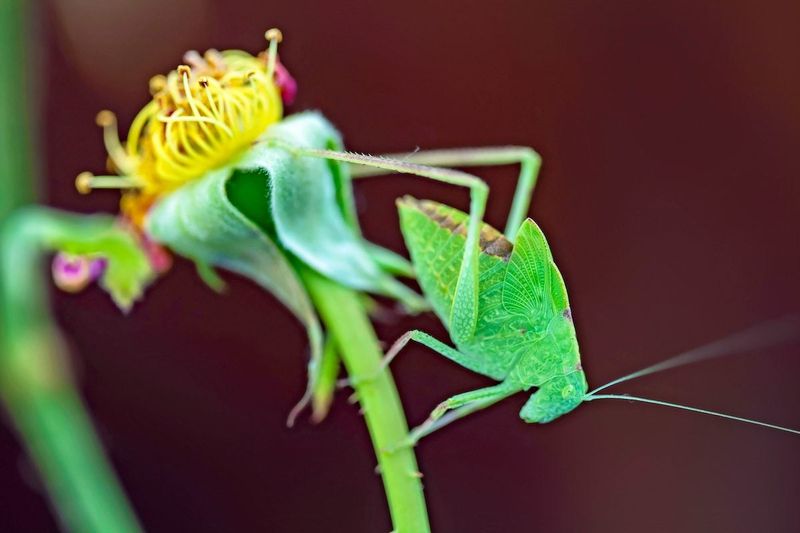
Some August nights the chorus from the trees seems almost overwhelming, and other nights it barely registers. That variation is real, and it has nothing to do with the insects disappearing or with any approaching weather event.
Temperature is one of the biggest factors: katydids, like most insects, are more active and vocal when temperatures are warm. A night that drops into the low 60s will produce noticeably less calling than one that stays in the upper 70s.
Rain, wind, and background noise all reduce what you can actually hear, even when the insects are present. Predator pressure and local population density also play roles.
The published study on nightly and seasonal calling patterns in common true katydids found that temperature and rainfall-related variables strongly influenced calling frequency in the population studied. That research was conducted at a single site in western Maryland, so its specific thresholds should not be treated as precise rules for every North Carolina yard.
A quiet night does not mean the katydids have vanished. Sound also travels differently depending on whether your yard is open, wooded, or surrounded by other houses.
A few males calling from a dense canopy can sound like a large chorus, while a calm night with light wind might carry the sound a quarter mile from a neighbor’s trees. The same study, reproduced in full text, emphasizes that detectability and actual calling intensity are not the same thing.
You may have heard that you can estimate temperature by counting cricket chirps. University of Georgia Extension explains this cricket-temperature relationship as specific to certain cricket species with well-studied call rates.
That formula does not transfer cleanly to katydids, which have different biology and calling patterns. Applying a cricket equation to a katydid chorus will not give you a reliable temperature reading, and louder calling on a given night is not a signal that frost is around the corner.
Treat the chorus as interesting yard wildlife, not as a backyard weather station.
How to tell katydids from cicadas
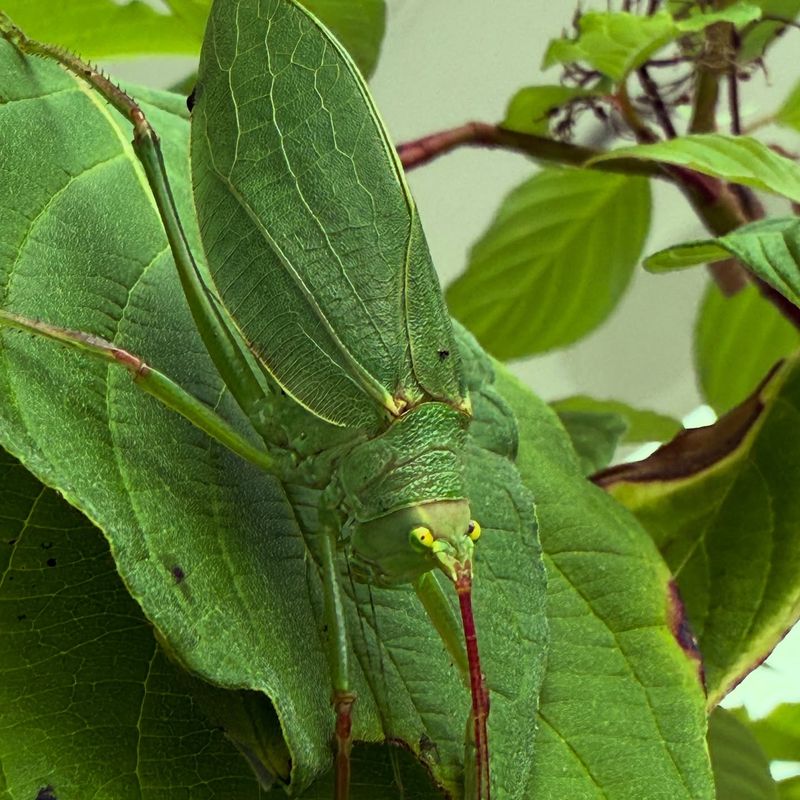
Late July and August in North Carolina bring two of the loudest insect choruses of the year, and they do not come from the same animal. Annual cicadas are buzzing heavily during this same window, and their sound can be genuinely hard to separate from katydid calling if you are not listening carefully.
The key difference most people find useful is timing: NC State Extension’s guide on annual and periodical cicadas notes that annual cicadas tend to stop calling around dusk, while katydids typically begin their chorus as darkness falls. If the sound picks up after dark and continues through the night, katydids are the more likely source.
The calls themselves also differ in character. Many people describe the common true katydid’s call as a repeated phrase that sounds like “katy-did” or “katy-didn’t,” a rhythmic staccato that stands out from the continuous, high-pitched buzz of cicadas.
A University of Maryland Extension IPM report on katydids points out that North Carolina and the broader mid-Atlantic region host multiple katydid species, each with its own call structure, so not every katydid you hear will produce that classic phrase. Some calls are higher-pitched or more continuous than the textbook description.
Crickets and tree crickets add another layer of complexity. Tree crickets in particular produce a sustained, high-pitched trill from shrubs and trees that can blend with katydid calling, especially in a yard with dense vegetation.
The Orthoptera checklist for North Carolina documents both katydids and crickets across the state, a reminder that any single night’s chorus may involve more than one group.
If you want to know exactly what is calling in your yard, the most reliable path is to record the sound on your phone, try to photograph or observe the insect directly, and then bring that material to your local North Carolina county or state Extension office. The NC State Extension Gardener Handbook’s insects chapter is a practical starting point for understanding what you are likely to encounter in a residential yard, but sound alone rarely closes the case on species identity.
What homeowners should do about the chorus
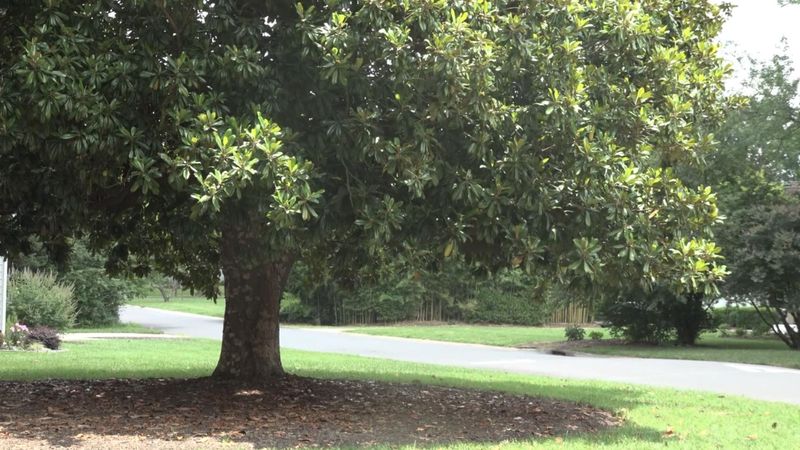
Hearing katydids does not mean your trees are in trouble. University of Minnesota Extension classifies katydids in trees and shrubs as insects that do not harm trees or shrubs when no visible plant damage is present.
If the sound is the only thing you have noticed, the appropriate response is to enjoy it and move on with your evening.
If you do spot chewed leaves, defoliated branches, or other symptoms, the right sequence is to identify the insect first and assess the actual extent of plant damage before reaching for any treatment. A few chewed leaves on a mature oak are not a tree emergency, and katydids feeding on foliage rarely cause injury serious enough to threaten a healthy residential tree.
Document what you see with photographs so you have a record if the situation changes.
Katydids occupy a real place in the local food web. Some species are strictly herbivorous, but others are omnivorous or actively predatory.
The University of Maryland Extension IPM report notes research interest in certain katydid species consuming brown marmorated stink bug egg masses, which has attracted attention as a possible biological control avenue. That finding does not mean the katydids in your yard will reliably patrol for stink bugs, but it does illustrate that these insects can function as predators in some situations.
NC State Extension’s biological control guidance for home gardeners is direct on this point: identifying an unknown insect before treating is essential, because broad-spectrum pesticides can kill beneficial insects and may actually worsen later pest problems by removing natural predators. Spraying your trees because the August chorus is loud is not a yard management strategy; it is a way to disrupt the very ecosystem balance that keeps many pest populations in check.
The practical action rule is straightforward: listen and inspect. Check your trees for actual symptoms.
If something looks wrong and you cannot identify the cause, bring a photograph or specimen to your North Carolina county Extension office before taking any action. The chorus itself is not the problem.
What the sound can—and cannot—tell you
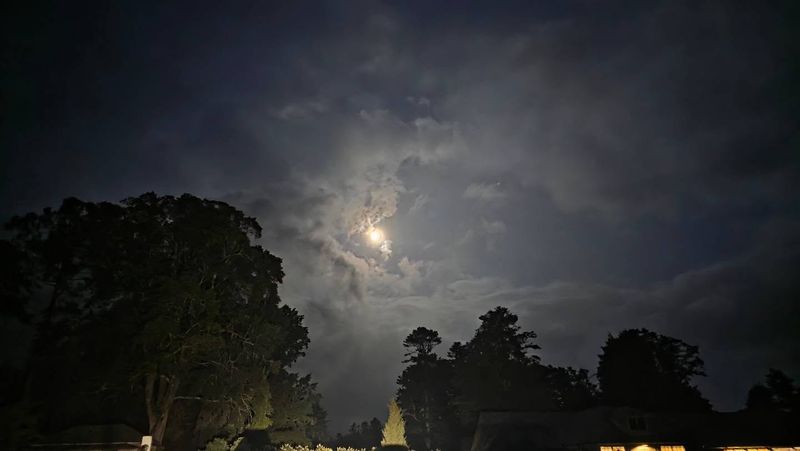
An August nighttime chorus drifting from your trees is most likely adult katydids engaged in warm-season reproductive or social calling. The common true katydid’s documented North Carolina season runs from roughly July through October, so what you are hearing is ordinary late-summer wildlife activity, not a rare event or an alarm signal.
What that chorus cannot tell you is also worth being clear about. It does not confirm that reproduction is succeeding, establish species identity, predict the first frost date, measure how many insects are present, or declare that fall has officially begun.
The biology of katydid calling connects the sound to male signaling behavior, not to outcomes. Hearing the call means males are active; it says nothing about whether females are responding or whether eggs will be laid successfully.
Research on calling patterns shows that intensity varies with temperature, rain, and local conditions, so a loud night and a quiet night both fall within normal range. The sound is not a weather instrument.
Extension guidance is consistent that katydids in trees warrant no action when the plants show no injury.
The stewardship response is simple: listen, look at the actual condition of your trees, and seek identification or treatment advice only if you find a separate problem. The August chorus is one of the more reliable signs that your North Carolina yard is fully alive in the warm season, and that is worth something on its own.