
When to Cut Back Hollyhocks and What to Leave for Next Year
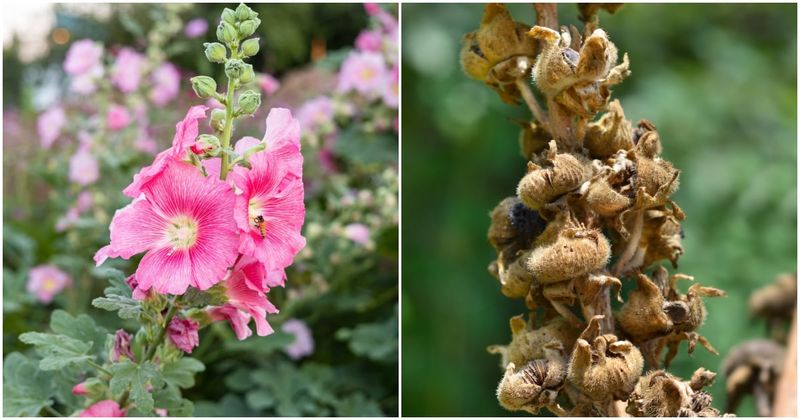
Those tall, brown hollyhock stalks look finished, and you may be wondering if cutting them will cost you flowers next summer. Good news: the spent stalk is not where next year’s blooms are waiting.
What matters is what is going on at the bottom of the plant and whether you want new seedlings. A quick look before you grab the pruners makes the whole job simple.
The spent stalk does not hold next summer’s flowers
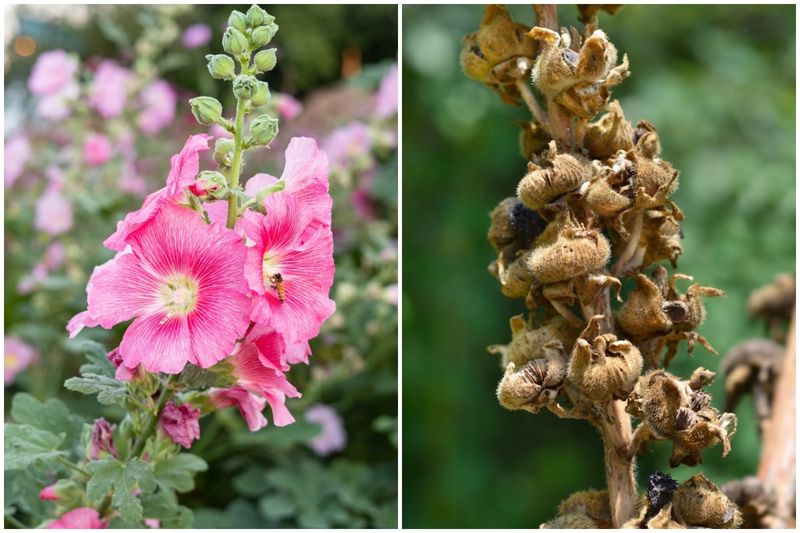
Here is the plain truth about that brown stalk: once it has finished flowering, it is done. It does not store up next summer’s blooms, so you can stop worrying that one snip will wreck your display.
What explains the hollyhocks that keep showing up? Many old-fashioned types are biennials.
According to an Extension answer on hollyhock care, they flower in their second year and then often die, while seedlings take their place.
That is common, but not universal. South Dakota State University Extension notes that some varieties act like short-lived perennials, and some plants may bloom for more than one year.
So your own plants may not follow the usual script.
There is one more thing to keep in mind. When you see hollyhocks in the same spot again, it does not prove the same plant survived.
A patch can look steady because young self-sown plants quietly replace the older ones. First-year plants that have not flowered yet can grow right beside second-year plants that are blooming.
That leaves you with a calmer, simpler job. Look at the base of the plant, decide whether you want seed, and then remove the spent stalk when you are ready.
The next three sections walk through each step in that order.
Check the base before you cut
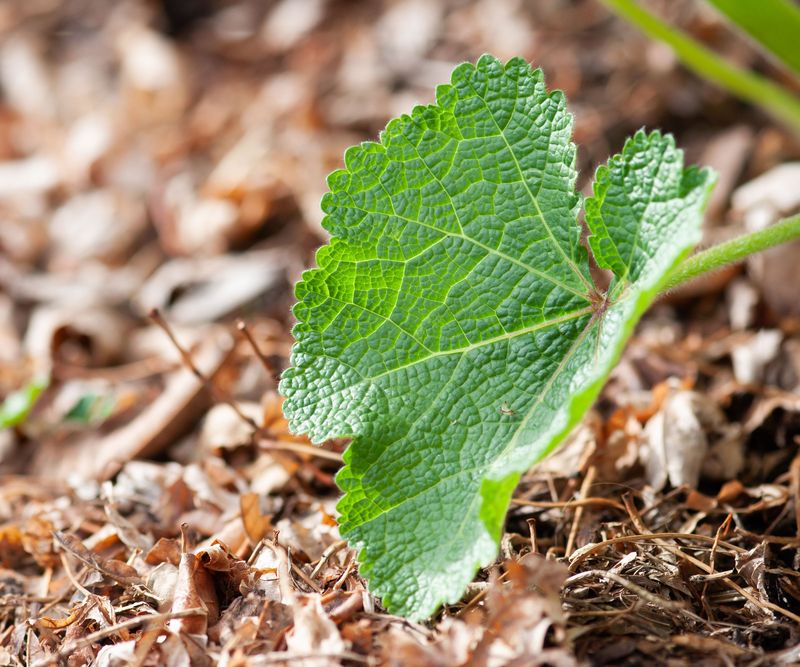
Kneel down and look at the bottom of the plant before any cutting happens. You are trying to tell two things apart: a dry, woody flowering stem and a fresh cluster of leaves sitting low near the soil.
The flowering stem is tall, brown, and brittle, often with dried seed pods near the top. The basal leaves are the opposite.
They are green, soft, and rounded, and they hug the ground in a little rosette.
If you find that leaf cluster, leave it alone. An Extension horticulturist quoted by Ask Extension says healthy basal foliage may be the sign of a plant that could flower again.
Cut the old stalk away from around it, and keep your pruners clear of the green growth.
Please hear the careful wording there. Those leaves are a reason to protect the base, not a promise of blooms.
Some plants with healthy rosettes will flower again, and some will not, and you cannot tell from the leaves alone.
A practical tip: if you have several plants, walk the row and check each one separately. One may have a fine green rosette while the plant next to it has nothing but a bare, dead stalk.
Treat them differently, because they are in different situations.
If the base shows no healthy leaves at all, that plant has likely finished its run. Its stalk is simply ready to come out whenever you choose.
Decide whether to save seed
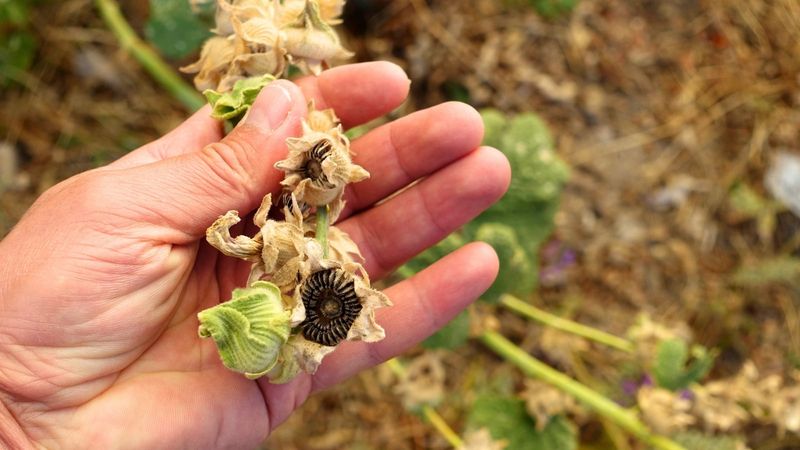
Seed is a separate question from whether your old plant will come back. Think of it as a way to make new plants, not a way to revive the one you are looking at.
If you would like hollyhocks in future years, South Dakota State University Extension suggests keeping some healthy spent flowers until they form mature seed, or letting a few plants drop seed on their own. That can refill the patch with young plants.
It does not make the old stalk bloom again. Once that stalk has flowered, it is finished, and the seeds are the next generation.
Because hollyhocks are often biennial, this is how many gardens keep their tall spikes going. Seedlings that sprout this year may bloom the year after, so you may wait a bit before seeing results.
Nobody can promise where seedlings will land or how many will come up. Some years you may get a crowd, and other years only a few.
Treat any volunteers as a pleasant bonus and move extras if they pop up somewhere inconvenient.
Choose seed heads that look healthy, with no spotted or orange-flecked leaves nearby. If you do not want more hollyhocks, or the plant looks sick, skip this step and cut the stalk.
Saving seed is optional, and it is perfectly fine to say no.
Choose fall or spring for healthy spent stalks
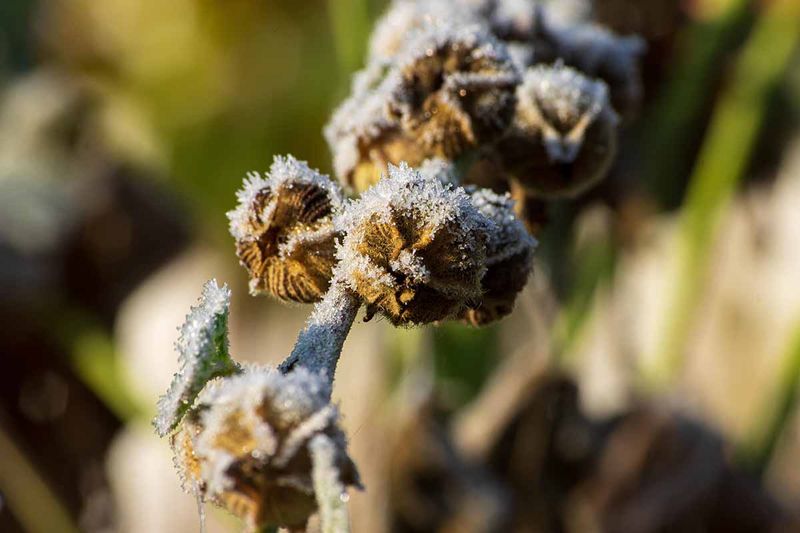
Good news for anyone who lets chores slide: there is no single deadline. The advice from Ask Extension is that once a stalk has finished flowering, it can be cut down, and the dead stalk can come out in either fall or spring.
So pick the season that suits your schedule and your yard. A tidy-minded gardener may like a cleaner bed before winter.
Someone who prefers to wait can handle it once the weather warms up.
Whichever you choose, the rule stays the same. Leave any healthy basal leaf cluster in place and take out only the dead flowering stalk above it.
Timing can also fit neatly with your seed plans. If you are letting seed ripen, you may simply wait until the pods have dried and dropped before you cut.
If you do not want volunteers, you can cut sooner.
Skip fancy techniques here. There is no special cutting height to memorize, and no tool you need beyond clean, sharp pruners.
Just snip the dry stalk and carry it away.
If life gets busy and the stalks stand all winter, that is not a failure. As long as the plant is healthy, you still have the spring option, and your hollyhocks will not hold a grudge.
Remove rust-infected material
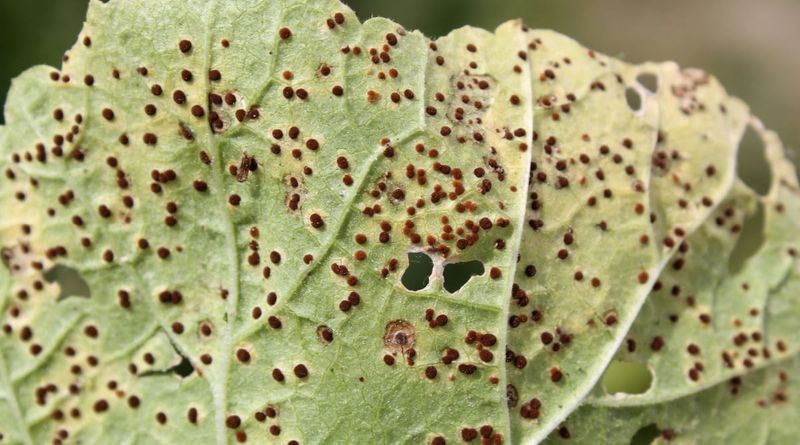
Rust is the one case where cleanup should not wait. If you see orange or brown bumps on the undersides of leaves, or yellow spots on top, sanitation comes first.
According to Colorado State University Extension, you should remove infected leaves and stalks, and clear up fallen debris. Hollyhock rust can spread to the stems, so a stalk with visible rust is not a keeper.
The reason is that the fungus can survive between seasons. Iowa State University Extension and Outreach points out that it lives over on infected plant parts, which is why end-of-season removal matters.
In practice, that means picking up leaves that have dropped around the base, not just cutting what is standing. Bag the material and put it in the trash rather than leaving it in the bed.
Wash your pruners afterward if you handled infected plants.
Be realistic about what this does. Cleaning up can reduce the amount of rust waiting around for next season, but it will not cure the problem or guarantee a rust-free year.
This also changes your seed decision. Do not leave a visibly infected stalk standing as winter protection.
Any healthy green basal leaves can stay, but infected leaves should go.
Use the base, seed, and stalk as your checklist
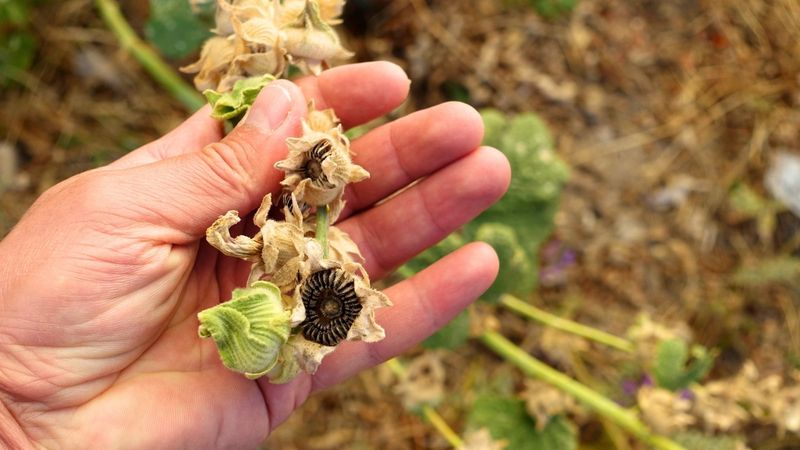
Start at the base: if healthy green leaves are there, protect them. Next, decide on seed, and leave a few healthy seed heads only if you want self-sown plants.
Then cut the spent stalk in fall or spring.
If rust shows up, clean first, following Colorado State and Iowa State advice.
Hollyhocks reward a gardener who looks before cutting.