
Why Are Shoots Appearing Near My North Carolina Sweetgum? Root Suckers vs. Seedlings
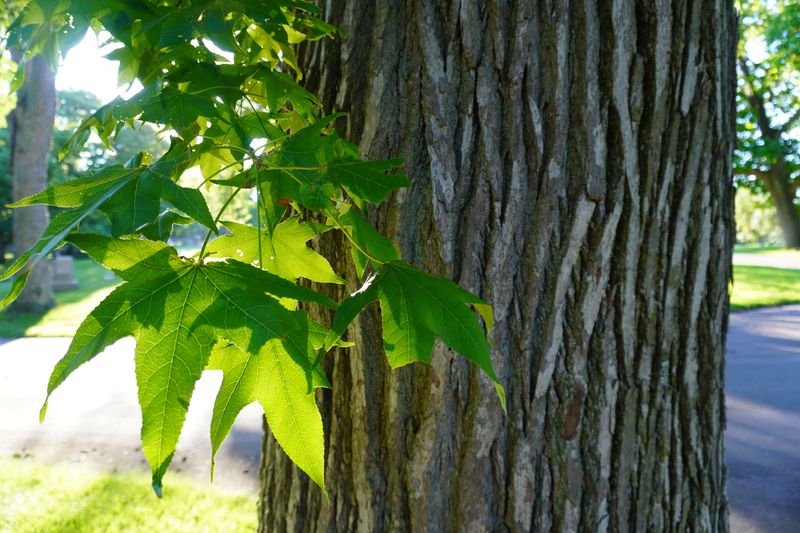
Little green shoots keep showing up near your sweetgum, and every time you cut them, more seem to follow. Before you reach for the mower or the pruners, it helps to know where they are coming from.
Some may grow from the tree’s roots, and others may grow from its winged seeds. Figuring out which is which decides what will actually help your yard and protect your tree.
First Find Out Whether the Shoots Are Suckers or Seedlings
Two very different things can pop up near a sweetgum. A root sucker grows from a pre-existing lateral root of the tree.
A seedling grows from its own seed, with its own tiny root system.
Both are possible in a North Carolina yard. Sweetgum is known for sprouting from roots as well as from seed, so neither answer should be assumed.
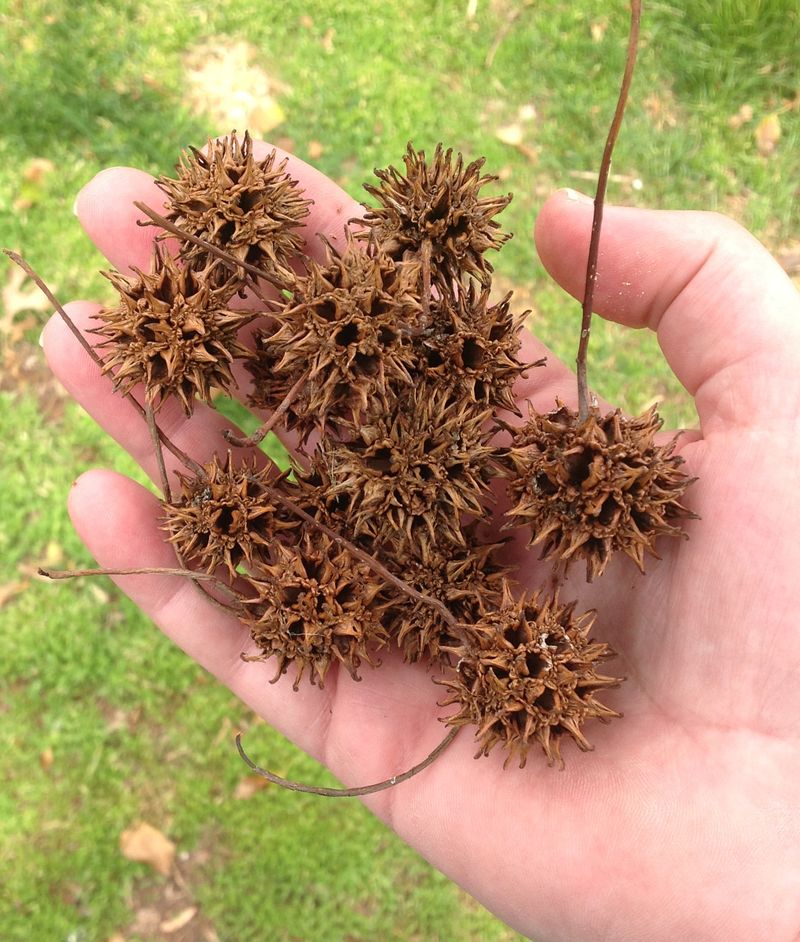
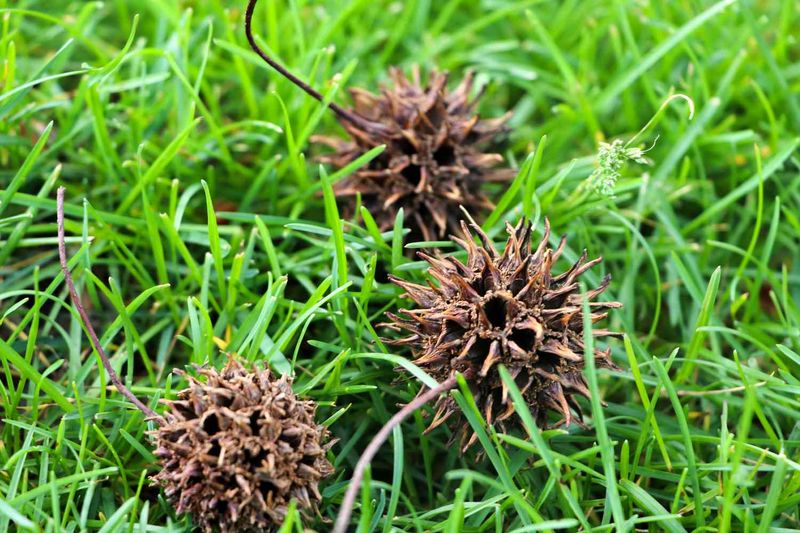
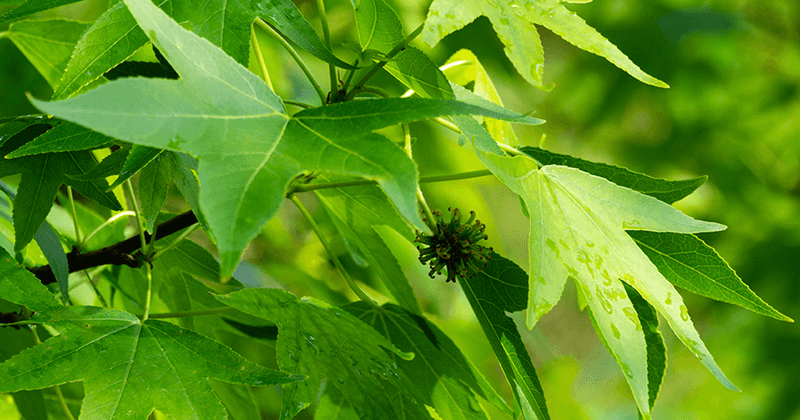
The tree also drops spiky fruiting heads full of winged seeds, and NC State Extension notes that this fruit litters the ground from December through April. That is plenty of chances for seedlings to take hold.
Start by looking, not digging. If a shoot sits right next to a root that is already exposed, see whether the shoot is attached to it.
A shoot joined to a root is a likely sucker. A shoot with its own small root and no connection is likely a seedling.
Resist the urge to excavate and trace every shoot back to its source. UGA Extension warns that cutting or injuring tree roots can harm the tree, and heavy digging can do just that.
Still unsure? Contact your county NC Cooperative Extension office or a qualified arborist.
A quick look from someone trained can save you weeks of guessing and protect the tree you want to keep.
Sweetgum Can Produce Shoots From Lateral Roots
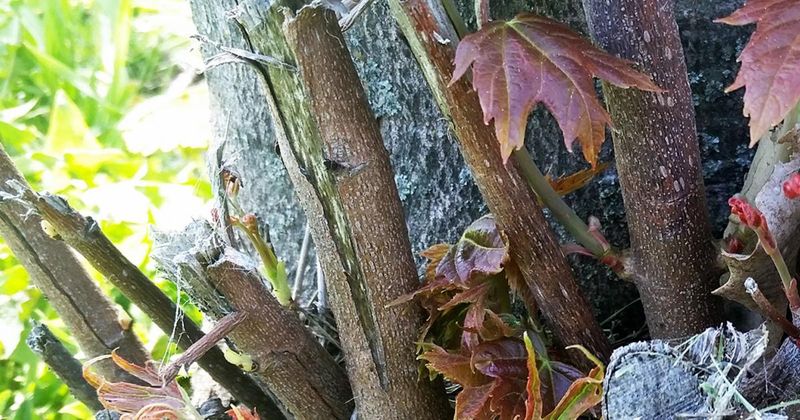
Here is the hidden part of the story. Lateral roots, the ones that spread sideways just below the surface, can carry dormant buds.
When those buds wake up, they grow into shoots called root suckers.
A classic study, Kormanik and Brown’s 1967 research on sweetgum root buds, documented abundant root suckering in Georgia Piedmont sweetgum. It also found that exposing roots to light released buds that had been held back.
The USDA Forest Service’s Silvics account of sweetgum also reports root sprouts in southeastern forest stands.
Context matters, though. This work comes from forestry research, and much of the field evidence involves logged or otherwise disturbed forests.
It shows that sweetgum is capable of root sprouting. It does not show that every sweetgum, or every North Carolina yard tree, will sucker.
It also cannot tell you why a particular patch of shoots appeared in your lawn. Think of it as proof that suckering is a real possibility, which is exactly why checking each shoot is worth the effort.
Possible Triggers Do Not Prove What Caused Your Shoots
When shoots keep coming back, it is natural to hunt for a culprit. Several things may play a part, but none of them is a diagnosis for your yard.
The sweetgum study found that exposing roots to light released suppressed buds, so root exposure or disturbance can set sprouting off. UGA Extension also lists stress or damage to roots, trunk, or canopy as possible triggers for tree sprouting.
Notice the word possible. Routine mowing has not been shown to cause suckers, and a few shoots alone do not mean your tree is sick.
Sweetgum can sprout from roots even when it is perfectly healthy.
If you are worried about the tree itself, look at the bigger picture instead. Check for thinning or dying branches, unusual leaf drop, peeling or cracked bark, fungus at the base, or recent construction and soil changes nearby.
If you spot several of these, a certified arborist can assess the tree in person. Otherwise, treat the shoots as a nuisance to manage, not an alarm bell.
Remove Confirmed Suckers Carefully and Expect Maintenance
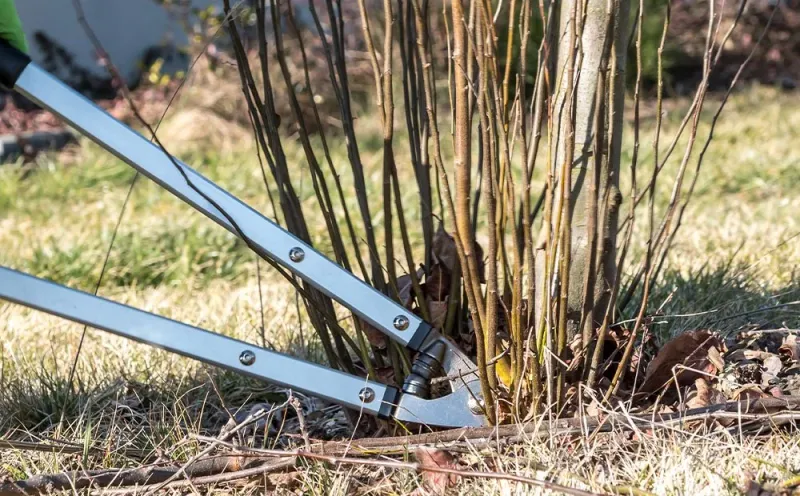
Once you are sure a shoot is a sucker attached to a root, hand pruners are your best tool. Cut each one close to the point where it emerges, and take care not to slice into the parent root itself.
Leaving a long stub is a common mistake. Iowa State Extension notes that leftover stubs can resprout, and that regrowth may continue, so repeated pruning is the practical approach.
Plan on a routine instead of a one-time fix. Walking the area every few weeks during the growing season and snipping new shoots as they appear keeps them from turning into a thicket.
No one can promise a timetable for when they will stop, or how far from the trunk they may show up.
It helps to keep two jobs separate. Cutting a shoot is maintenance.
Cutting an established root is something else entirely, and it can weaken the tree’s health and stability, as UGA Extension cautions about roots.
So skip the shovel and the saw. Clean pruners, a steady hand, and a bit of patience protect the tree while keeping the lawn tidy.
Protect Surface Roots From Lawn-Care Damage
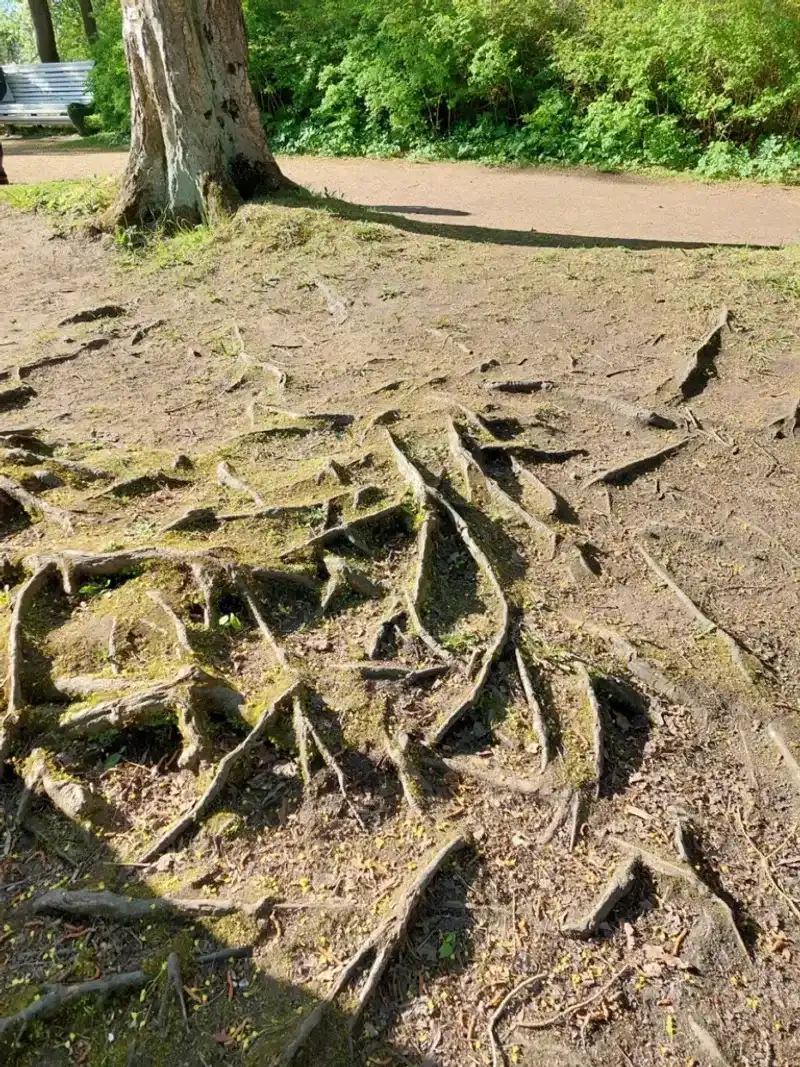
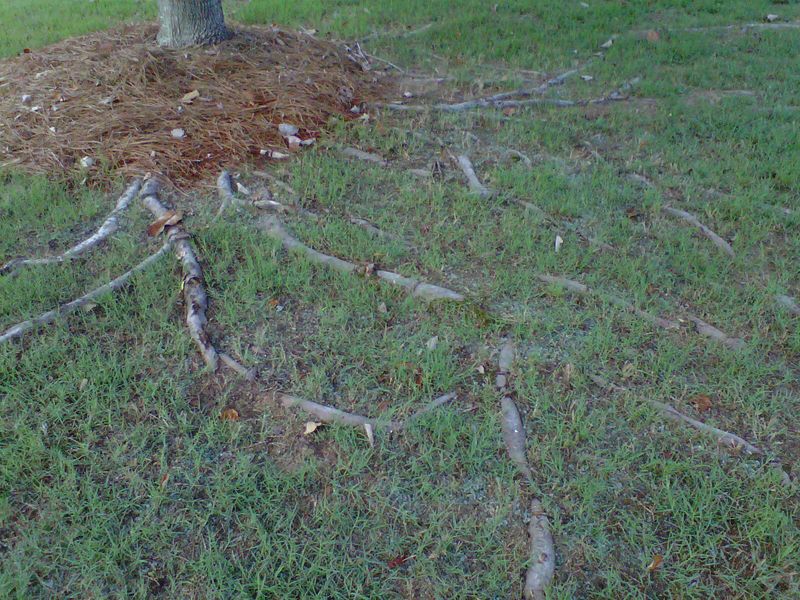
Sweetgum roots often run close to the surface, right where mowers like to roll. Scraping them again and again can wound them, and wounded roots are not good for the tree.
A few habits help. Do not cut back established surface roots, and do not bury them deeply under piles of soil.
Keep mower blades from repeatedly clipping them.
For trouble spots, UGA Extension recommends a 3 to 4 inch layer of mulch over problem surface-root areas. Keep that mulch pulled back from the trunk so bark stays dry and healthy.
Wood chips from a local tree service are often a cheap option.
Be realistic about what mulch does. It protects roots from blades and takes the mowing problem off the table in that patch.
It does not eradicate suckers, and it does not promise that shoots will stop.
Think of it as good housekeeping for the tree. A calmer root zone and a lawn that no longer fights the roots make everything else on your to-do list easier.
Do Not Apply Herbicides to Shoots Connected to a Living Tree
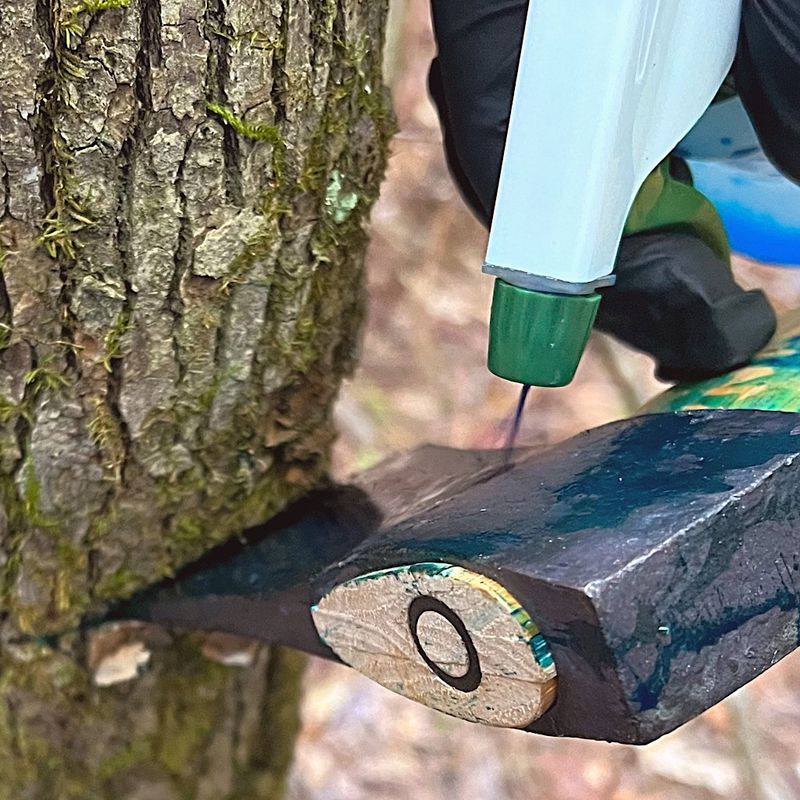
After the fifth round of cutting, a quick spray can look awfully tempting. For a sweetgum you want to keep, it is a shortcut worth skipping.
Suckers share the parent tree’s root system. That means glyphosate or another herbicide put on a connected shoot can travel or leach in ways that injure the tree you are trying to protect.
Iowa State Extension warns that sucker-control sprays may injure the parent tree.
Painting herbicide on a cut shoot or an exposed root does not get around the problem. The shoot and the tree are still connected.
Products sold as sucker inhibitors are in the same boat. They are not established as a permanent solution, and Texas A&M’s Ask Extension answer on sweetgum suckers points out that treating them can harm the parent plant.
Overspray can also hit nearby grass, shrubs, and the native plants that feed pollinators in your yard. For a tree you plan to keep, pruners are slower but safer.
Manage Seedlings Differently From Root Suckers
If your shoots turn out to be seedlings, the game changes. A seedling has its own roots and no link to the parent tree, so it can be handled on its own terms.
Small seedlings generally give way to regular mowing. Because sweetgum fruit litters the ground from December through April, raking up fallen seed balls before spring growth may also cut down on the seed supply.
Pulling young ones by hand works too while they are tiny.
Here is the important part. These steps are for seedlings only.
Mowing and seed-ball cleanup will not eliminate root suckers connected to a living tree, so do not assume they will.
You may come across advice about cutting sprouts over and over to drain a root system’s stored energy. University of Maryland Extension offered that idea for roots left behind after a tree has been removed.
It is not a dependable way to wipe out suckers while keeping a living parent tree, so leave it out of your plan.
Many yards have a mix of both. Sort the shoots first, then match each one to its own approach.
Keeping the Sweetgum Means Managing Confirmed Suckers
The path is simple. Identify each shoot, remove confirmed suckers close to their origin with pruners, protect surface roots, and save mowing and seed-ball cleanup for seedlings.
The guidance behind this plan, including Iowa State’s advice on managing suckers, supports ongoing care on a living tree, not a reliable way to stop suckers for good without harming it.
A sweetgum you love will ask for a little attention each season. That is the price of its shade and its fall color.