
Why North Carolina Fescue Can Thin by Summer After Fall Overseeding

You spread seed in fall, watched green blades fill in, and then July showed up with bare spots. It is natural to hunt for one big mistake you made.
Fescue lawns in North Carolina face a mix of timing, mowing, feeding, weather, and site factors, and sorting them out can save you money and effort. Here is how to match your next move to your region and your lawn.
A thin July lawn does not prove a fall mistake
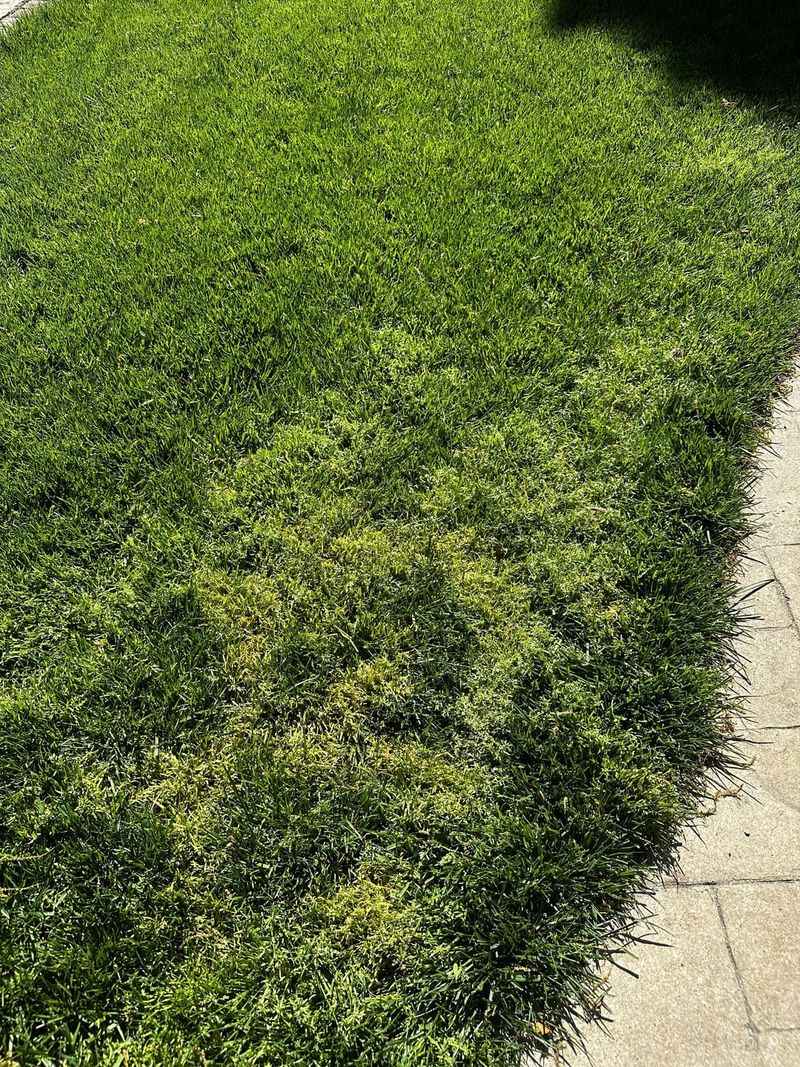
Finding bare patches in July feels like a verdict on everything you did the previous fall. It is not that simple.
A bad mowing or feeding choice can work against a lawn, but nothing shows that one single error reliably undoes overseeding and leaves fescue bare by summer.
Tall fescue is a cool-season grass, and NC State Extension notes that it often struggles with summer stress. It also grows in clumps rather than spreading across open ground, so it does not knit itself back together the way some warm-season grasses can.
Damaged or bare areas may need to be reseeded instead of waiting for neighboring plants to fill them in.
Disease is another player. Fungal problems such as brown patch can thin turf during hot, humid stretches, and NC State turf disease guidance explains how disease management fits into overall lawn care.
A thin lawn in July could point to any of these causes, or to a mix of several.
So before you blame one fall chore, look at the whole picture. Ask when and how the seed went down, how short the lawn was mowed, what the weather did, and what your yard is like.
Is it sunny and sandy, or shaded and loamy? Those answers will tell you far more than guilt will.
The rest of this article walks through each of those pieces so you can decide what your lawn actually needs, and what it does not.
When should you overseed in your part of North Carolina?
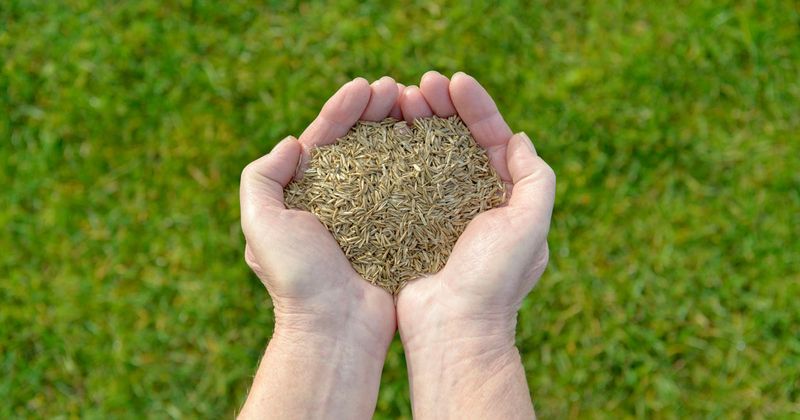
North Carolina stretches from mountain ridges to coastal flats, so one deadline will not fit every yard. NC State’s tall fescue calendar suggests overseeding thin or bare areas from August 15 to September 1 in the western region.
For the Piedmont and Coastal Plain, the window runs from September 1 to October 1.
Why the difference? Cooler mountain nights arrive earlier, and seedlings there need time to mature before cold weather.
Warmer regions can wait a little longer so that seed is not scorched by lingering summer heat. Check where your own yard falls and aim for the middle of your window if you can.
Timing is only part of the story, because the grass itself matters. NC State’s guide to Carolina lawns says tall fescue is best adapted to the mountains and the Piedmont.
In parts of the Coastal Plain, it can be kept going, but full sun and sandy soil may make it perform poorly.
If your fall seeding fizzled, ask two questions. Did the seed go down inside your regional window?
And is your spot a good match for fescue in the first place? A sunny, sandy lot near the coast may keep thinning no matter how carefully you seed, while a Piedmont lawn seeded in mid-September has a much better shot.
New seed needs the right start
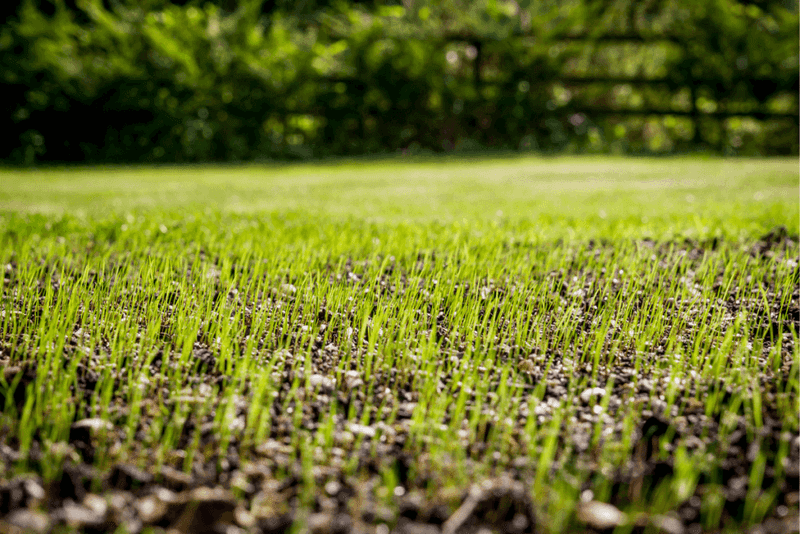
Seed on bare soil is a bit like a newborn: it cannot fend for itself. For fall renovation, NC State recommends 6 pounds of turf-type tall fescue seed per 1,000 square feet.
That number is a target, so measure your lawn area and weigh out the seed instead of guessing.
Resist the urge to scatter extra. Heavier seeding does not automatically give a thicker or healthier stand.
NC State warns that rates above the recommendation can produce crowded, weak seedlings that are more prone to disease and heat stress.
Water is the real make-or-break factor. Keep the seedbed moist with light watering several times a day while the seed germinates and the seedlings get going.
A quick sprinkle at lunchtime and another in the late afternoon often works better than one long soaking, which can wash seed away.
Seedlings should never dry out during establishment. A few warm, windy, rainless days can wipe out progress if you skip a watering routine.
Once the grass is up and rooting, you can gradually water less often but more deeply.
If you cannot commit to this schedule for a few weeks, it may be smarter to wait for a stretch when you can. A well-watered start inside the right window beats a rushed one every time.
How short is too short for tall fescue?

Here is a simple rule to keep: do not cut tall fescue below 2.5 inches. Cutting grass very short stresses it, exposes the soil, and leaves less leaf to feed the plant.
That makes close mowing a habit worth avoiding, though it is not a proven single cause of July bare patches.
You may notice that different guides give slightly different numbers. NC State’s seasonal calendar lists 2.5 to 3 inches from September through November.
NC State’s broader lawn guidance says tall fescue performs best at 3 to 3.5 inches and should not go below 2.5.
The overlap is the useful part. Staying at or above 2.5 inches keeps you safe in every case, and many homeowners settle somewhere in the 3-inch range.
No exact fall height is magic, and no height promises that your overseeding will succeed.
A few practical habits help. Set the mower deck by measuring on a flat driveway rather than trusting the lever numbers.
Keep blades sharp so grass is cut cleanly instead of torn. And if the lawn has grown tall, bring it down in stages instead of scalping it in one pass.
Mowing is one piece of care among many. Treat it as a way to avoid adding stress, not as the lone switch that decides your lawn’s fate.
Fall fertilizer is not automatically the culprit
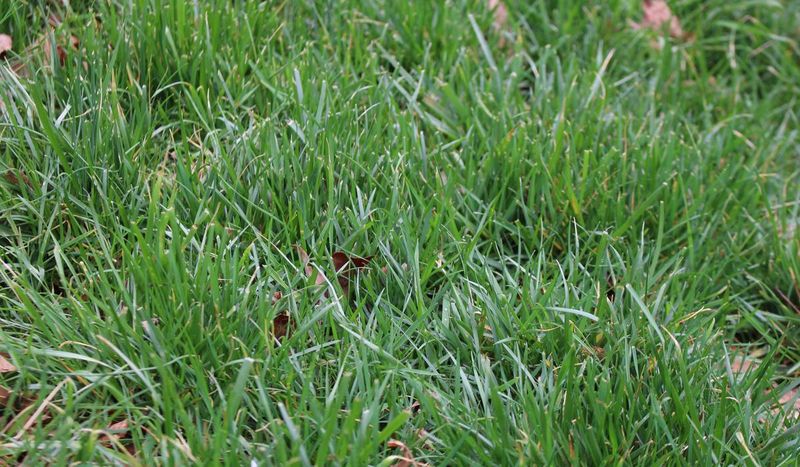
Fertilizing in fall often gets blamed for lawn trouble, yet it is part of standard care for this type of grass. NC State says most nitrogen for cool-season grasses should go on in fall and spring.
The real concern is applying too much, or the wrong product, rather than feeding in fall at all.
It helps to separate two situations. When you renovate with new seed and have no soil-test recommendation, the NC State calendar advises a starter-type fertilizer.
That is a renovation step, not a rule for every lawn.
For an established lawn, the same calendar gives an example of basic fertility: 1 pound of nitrogen per 1,000 square feet in mid-September and again in November. It also says to soil-test and apply the nutrients your lawn needs.
Treat that example as a sample, not a mandatory recipe.
A soil test is the best way to settle the question. It shows phosphorus, potassium, and lime needs, so you are not guessing or paying for nutrients your soil already has.
Your county Extension office can explain how to collect and submit a sample.
Weather matters as well. NC State’s guidance on lawns and the environment warns against applying fertilizer before heavy rain, because runoff can carry nutrients into streams and ponds.
Check the forecast first, and sweep stray granules off driveways and sidewalks.
More fertilizer does not repair thin turf by itself. Feeding to the soil test protects both your grass and the waterways near your yard.
Summer stress and disease can reopen bare patches
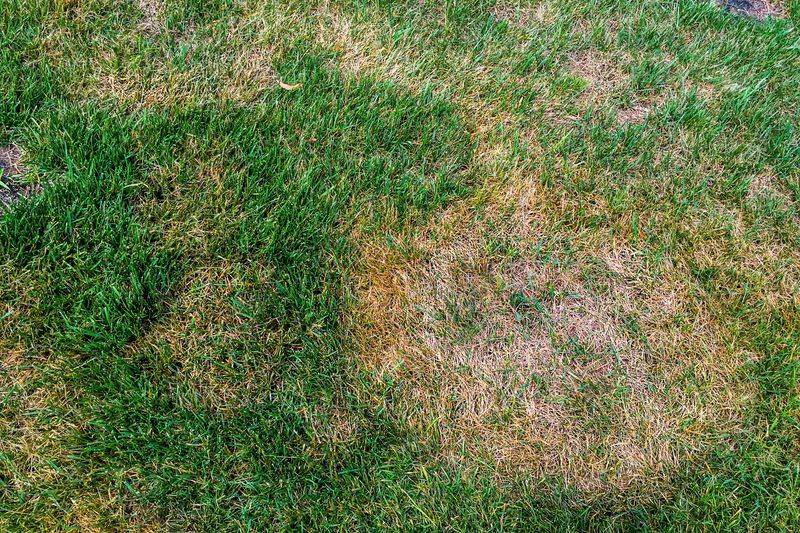
Picture a lawn that looked great by November and then frays by July. Plenty can happen in between, and the summer itself is a leading suspect.
NC State identifies summer stress as a reason tall fescue may thin and need reseeding, since heat and drought are tough on a cool-season grass.
Brown patch is another common contributor. NC State’s brown patch guide links it with hot, humid weather, long periods of leaf wetness, and excessive nitrogen.
It advises no more than 0.5 pound of nitrogen per 1,000 square feet when conditions favor the disease.
Disease problems often look different from simple drought. Patches that grow in rough circles, or that show up after muggy nights and wet evenings, point toward a fungus.
Dry, crispy areas that follow a long rainless spell and sit in full sun suggest heat and water stress instead.
NC State’s turf disease management resource can help you understand how cultural practices fit into prevention. Watering early in the morning rather than at night shortens the time leaves stay wet.
Holding back on heavy summer nitrogen also helps.
No single treatment can promise to prevent summer loss. If you are unsure what you are seeing, your county Extension office can help you sort it out before you spend money on seed or products.
Match the remedy to what your lawn shows

Start with the calendar. Was your seed down inside the window for your region, and did it stay moist while it sprouted?
NC State’s tall fescue calendar is a good checklist for dates and seeding steps.
Next, look at your mower and your soil. Keep the cut at or above 2.5 inches, and use a soil test to decide what to feed.
Then weigh summer stress, brown patch, and whether your site, such as a sunny sandy Coastal Plain lot, suits fescue at all. NC State’s tall fescue page is a handy reference.
These steps cut down on avoidable problems, though no routine can guarantee a dense lawn through every summer. Jot down what you did and what the weather did so next year’s choices come easier.
A thin lawn is a clue, not a confession.