
Why North Carolina Gardeners Might Consider Crimson Clover for Empty Vegetable Beds Before Winter
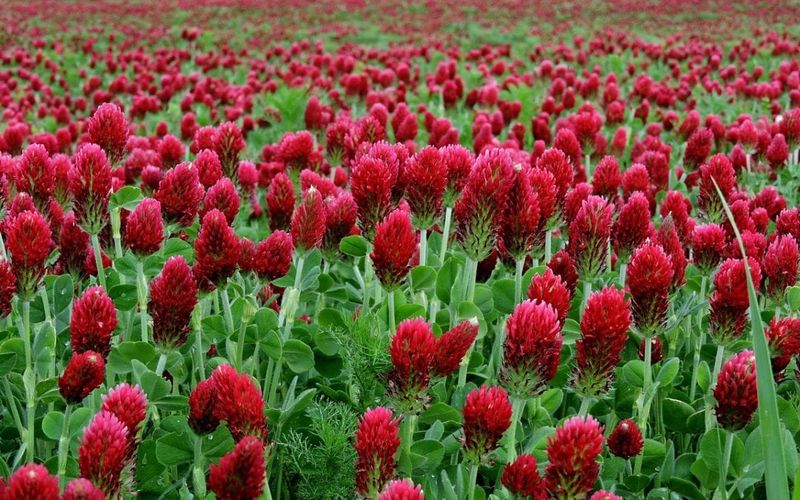
A bare vegetable bed in fall invites winter weeds and washes away good soil. Crimson clover is one cover crop that North Carolina gardeners can sow to keep that space working.
It may feed the soil, compete with weeds, and offer spring flowers for bees. Whether it fits your yard depends on where you live and when you plan to plant vegetables again.
When can North Carolina gardeners still sow?
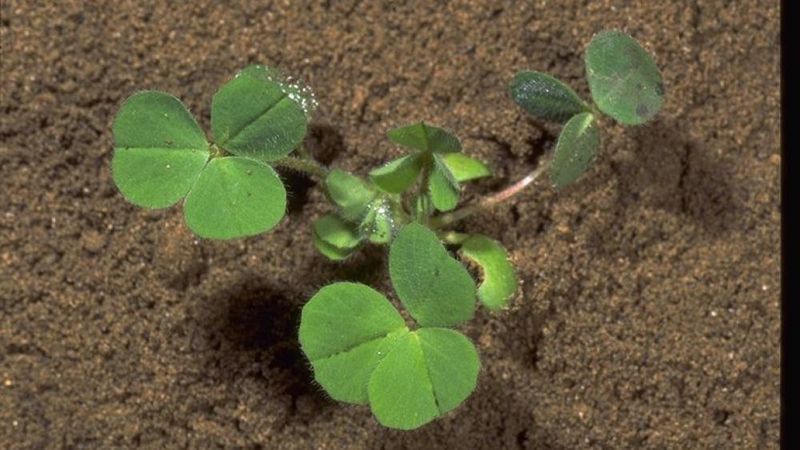
Crimson clover does not have one statewide deadline. NC State gives region-specific planting windows that depend on how soon cold weather arrives where you garden.
In the mountains, the window runs from August 10 to September 15. In the Piedmont, it runs from August 25 to October 1.
In the Coastal Plain, September 1 to 30 is the preferred window, and planting there is possible through October 30.
Notice how short the mountain window is. A mountain gardener reading this in late September has likely missed the recommended dates, while a Coastal Plain gardener in the same week is right in the sweet spot.
Sowing too late carries a real risk. NC State warns that planting from late October into November raises the chance of winter-kill in the mountains and the Piedmont.
Small seedlings that have not grown much before hard freezes may not make it, and a thin stand gives you little to show in spring.
To judge your own situation, check today’s date against your region’s window. Then think about the vegetables you want in that bed next spring.
If your dates line up, crimson clover is a practical option. If you are past the window, you may want to leave the bed mulched or choose a different plan for this year.
What crimson clover can add to a bed
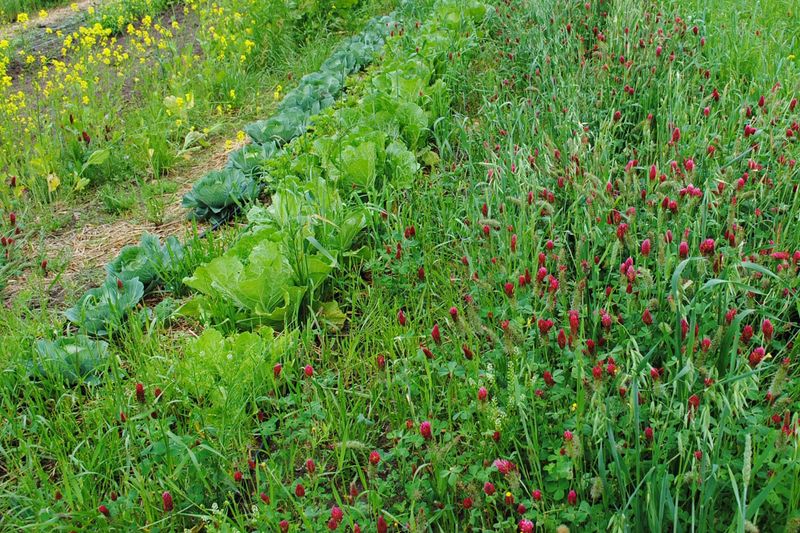
Spring is when crimson clover earns its keep. NC State lists it as a winter annual legume, meaning it grows through the cool months, then finishes its life cycle in spring.
All that leafy growth adds plant material, or biomass, that can be returned to the bed.
As a legume, it can also fix nitrogen. That happens only when helpful root bacteria form working nodules on its roots and the plant grows well enough to support them.
A stand that struggles may fix very little.
Fixing nitrogen and having nitrogen ready for your tomatoes are two different things. According to NC State’s page on nitrogen fixation in cover crops, how much reaches the next crop, and when, depends on how much the clover grew and how the biomass is handled.
Release can also come at a time that does not match what young vegetables need.
So think of crimson clover as a possible soil contributor, not a bag of instant fertilizer. It will not replace a soil test or all of your fertilizer plan.
A thick, healthy stand has the best chance of leaving the bed better off, while a sparse one may do little beyond covering the ground.
Prepare the seedbed and sow at the right rate
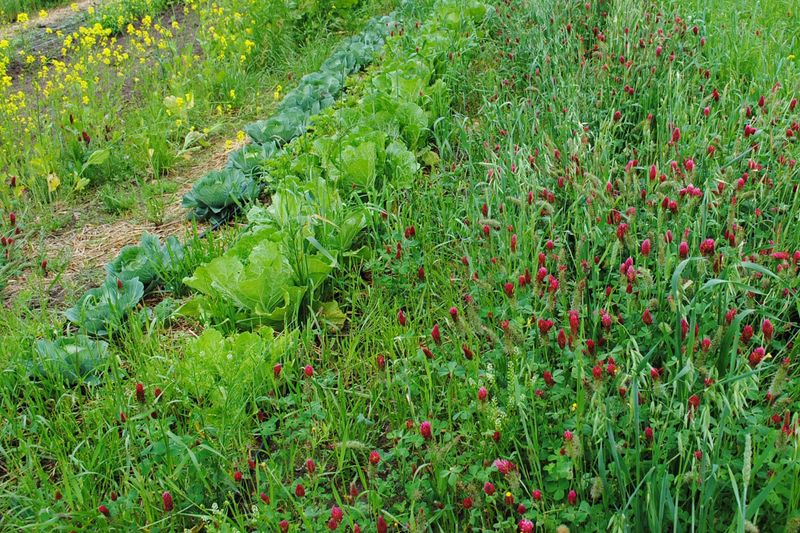
Clear out spent crops and old roots first. Then rake the bed so the surface is loose but fairly smooth, with no big clods that would leave seeds hanging in air pockets.
For home gardens, NC State’s Extension Gardener Handbook lists a seeding rate of one-half to one pound per 1,000 square feet. It also lists a broad September to November sowing window.
Your regional dates from earlier decide whether that whole window works for you, since late sowing in the mountains and Piedmont carries winter-kill risk.
Always check the seed label and your local Extension office before you buy in bulk. Field rates for farms are different from garden rates, so avoid mixing them together.
Broadcasting by hand can work on a prepared, partially smoothed seedbed. What matters most is seed-to-soil contact.
NC State’s cover crop guidance recommends cultipacking afterward, and it describes crimson clover as relatively easy to establish this way.
In a small bed, you can press seed in by walking over it with flat boards under your feet or by using a lawn roller. Field guidance lists a planting depth of one-quarter to one-half inch, so lightly cover the seed rather than burying it deep.
Weed competition depends on a healthy stand
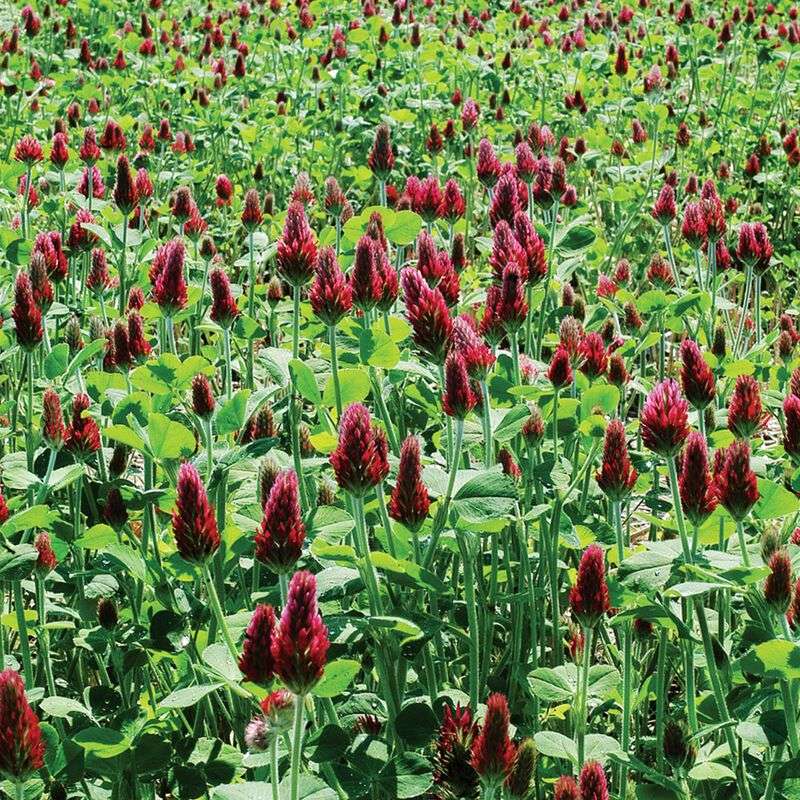
Winter weeds love bare dirt, and a living cover can crowd them out. The same handbook that lists the home seeding rate describes cover crops as tools to suppress weeds, reduce erosion, and improve soil structure.
Still, a cover crop only competes as well as it grows. Crimson clover can help cover soil and compete with weeds when it establishes well.
A thin or late-sown stand leaves gaps where chickweed and henbit can move in.
Research backs this up. A meta-analysis of studies in the southeastern United States found that planting and termination timing are key to how much biomass a cover crop makes.
It also reported sharply lower biomass when the growing window was shortened.
For your bed, that means sowing inside your regional window is your best weed strategy. A gardener who sows at the early end of the Piedmont window will likely see more ground cover than one who scatters seed in late October.
Watch for clues in winter. If you can still see lots of bare soil between clover plants by midwinter, pull weeds by hand while they are small.
Do not count on the clover to do all of that work for you.
Spring flowers offer bees another forage source
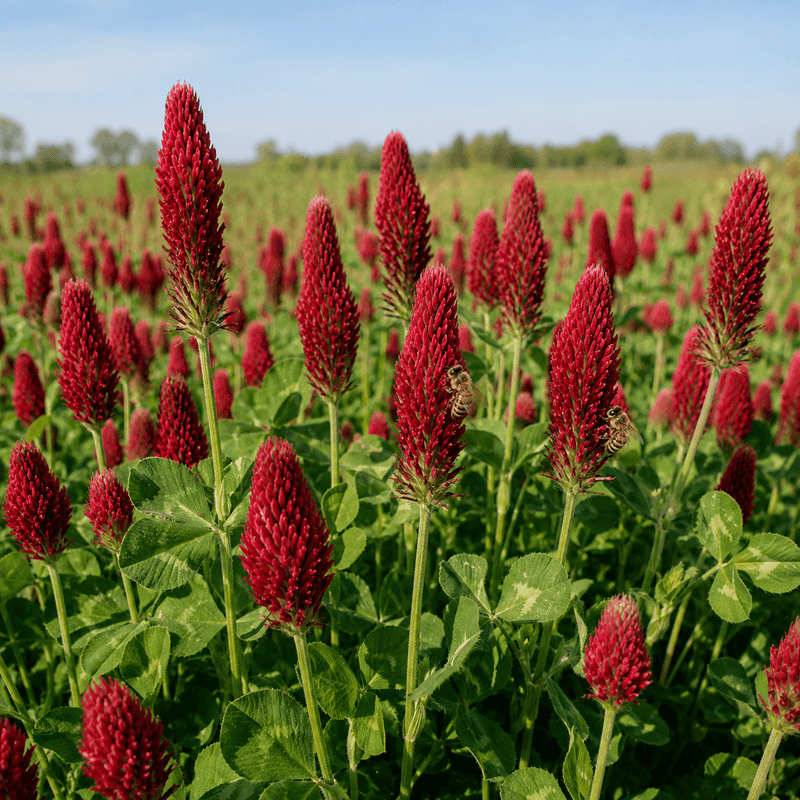
By April, a healthy crimson clover patch turns bright red. NC State’s plant profile for crimson clover notes that it flowers in spring and attracts bees.
Think of those blooms as one more place for bees to feed, not the first food of the year. The North Carolina State Beekeepers Association keeps a flowering plants calendar that lists other bloom sources earlier in the season.
The same calendar gives an approximate Piedmont bloom period of April 10 to May 5. That is a regional average.
Your yard may bloom earlier or later depending on the weather that year and when you sowed.
It also helps to know where this plant comes from. NC State describes crimson clover as originating in Europe and the Middle East and naturalized in the United States.
It is not a North Carolina native.
That means it should not replace native plants in your yard. Bees may visit it, but planting it alone does not support native wildlife.
If you care about local pollinators, keep native shrubs, trees, and perennials growing elsewhere on your property alongside your vegetable beds.
Plan when and how to terminate the crop
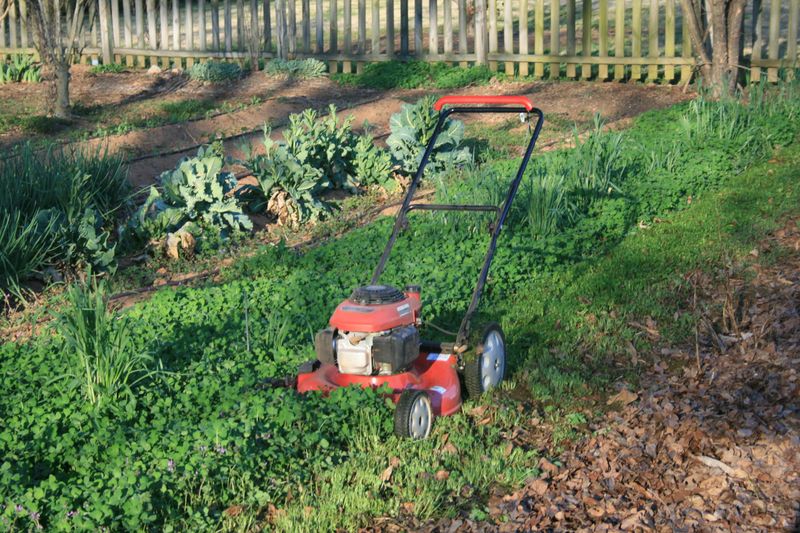
Crimson clover is a temporary guest. Plan to end it before you set out spring vegetables, and before it makes seed if you do not want it coming back on its own.
NC State’s plant profile warns that some cultivars can reseed and have the potential to become weedy.
Leaving it in the bed indefinitely is a mistake. Once seed forms, you may spend next season pulling clover out of your beans and squash.
If you plan to mow, timing matters. SARE guidance on crimson clover says mowing works better at early bud or flowering than while the plant is still vegetative.
Cutting too early may leave plants that simply regrow.
Work backward from your planting date. If tomatoes go in after your last frost, count back a few weeks to give yourself time to mow, cut, and clear the bed.
What you do with the cut material also shapes your results. As NC State’s nitrogen fixation page explains, nitrogen release can be poorly timed for the next crop.
Leaving residue as mulch or working it into the soil changes how fast it breaks down, so watch how your seedlings look and adjust feeding if they seem pale.
Decide based on timing, not a guaranteed payoff
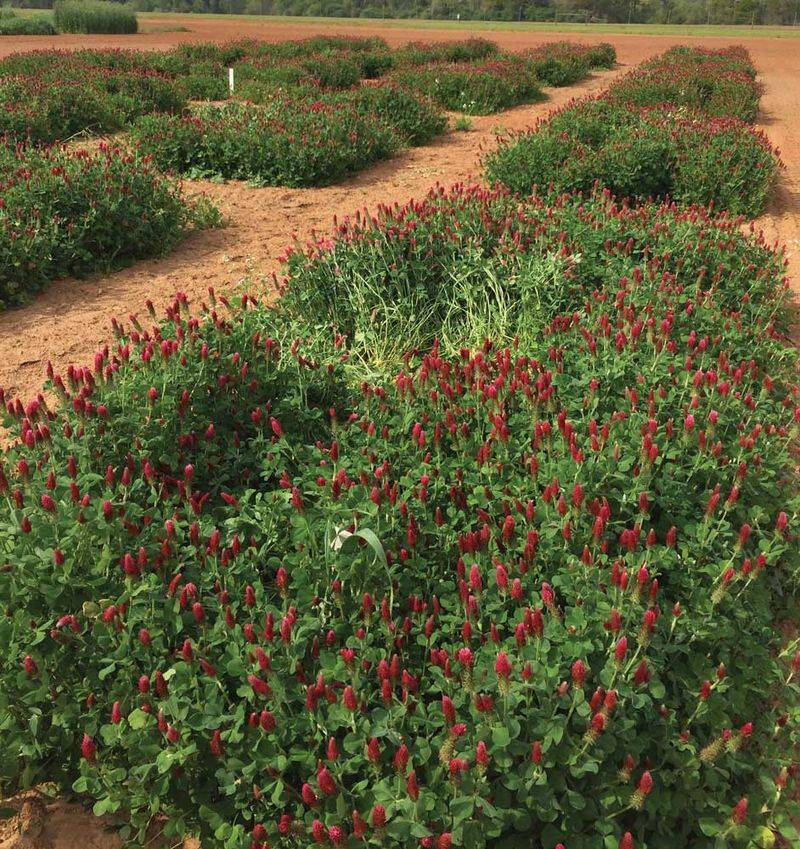
Start with your calendar. If your region’s sowing window is still open and you can clear the bed by spring planting, crimson clover is worth a try.
Judge success by how well it establishes. Nitrogen and weed benefits both follow growth and timing, and the nitrogen it fixes only helps if you manage it on time.
A bed is only as good as the plan behind it, and the best cover crop is the one you can sow and end on schedule.