
Why North Carolina Homeowners Should Think Twice Before Filling In Chipmunk Burrows Along Their Foundation
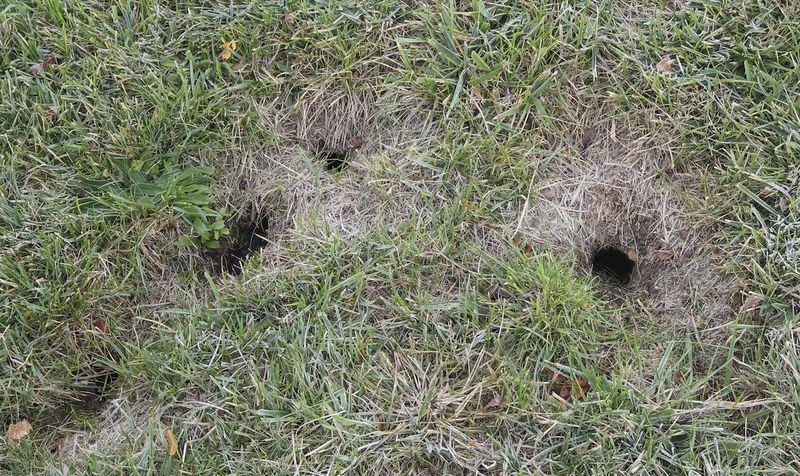
Spotting a small hole near your home’s foundation can feel alarming, and the first instinct for many homeowners is to grab a shovel and fill it in. Before you do, there are a few things worth knowing about what that hole might actually be, who made it, and whether plugging it could cause more problems than it solves.
Eastern chipmunks are common in North Carolina’s Piedmont and mountain regions, and their burrows are not always the threat they appear to be. This guide walks you through how to read the evidence, protect your property, and make a smart call instead of a rushed one.
A Hole Beside the Foundation Is Not Automatically a Foundation Emergency
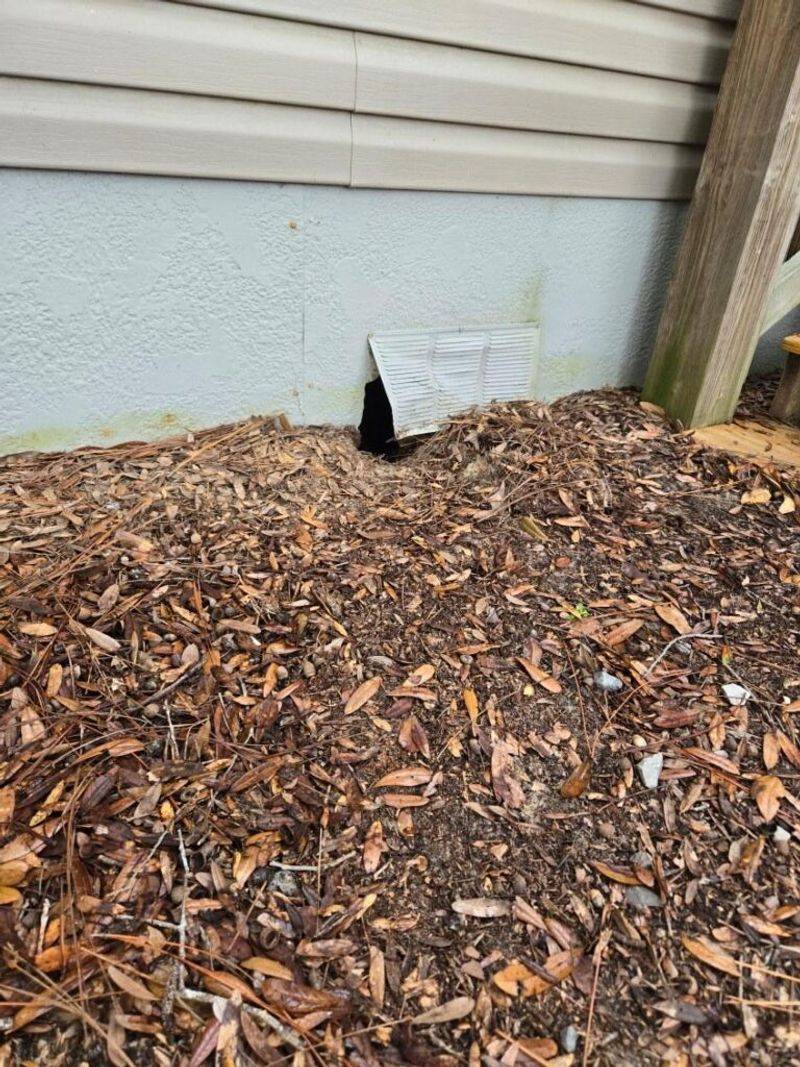
Spotting a small opening next to your foundation is unsettling, but proximity alone does not equal danger. A burrow entrance sitting beside a foundation is a very different situation from a tunnel running beneath a footing, slab, porch stair, or retaining wall.
Before any repair decision, the first question is whether the hole is actually next to the structure or actively undermining it.
The physical signs that matter are settlement, sinking or shifting paving, exposed structural material, cracks in masonry or concrete, water entry, and openings that lead into a crawl space or basement. An isolated entrance in the soil beside a wall, with none of those warning signs present, does not confirm that your foundation is at risk.
Treating every small hole as an emergency leads to unnecessary interventions that can harm wildlife without fixing a real problem.
Confirming the animal is equally important before acting. University of Florida IFAS guidance on identifying burrowing animals notes that small, clean entrances can belong to voles, rats, snakes, or other wildlife, not just chipmunks.
Look for repeated use of the same opening, nearby dense cover such as shrubs or woodpiles, visible tracks, and direct observation of the animal.
Eastern chipmunks are not found uniformly across North Carolina. NC State Parks’ mammal database shows that eastern chipmunks are concentrated in the mountains and Piedmont and are uncommon or absent across much of the Coastal Plain.
A homeowner in Wilmington or the Sandhills may be dealing with a very different animal than one in Asheville or Chapel Hill, and the response should match the actual species.
Penn State Extension’s chipmunk guidance reinforces that the right starting point is identification and inspection, not immediate sealing. Confirm what you have, then look for genuine damage before deciding on a course of action.
The Burrow Gives a Chipmunk More Than One Way to Live
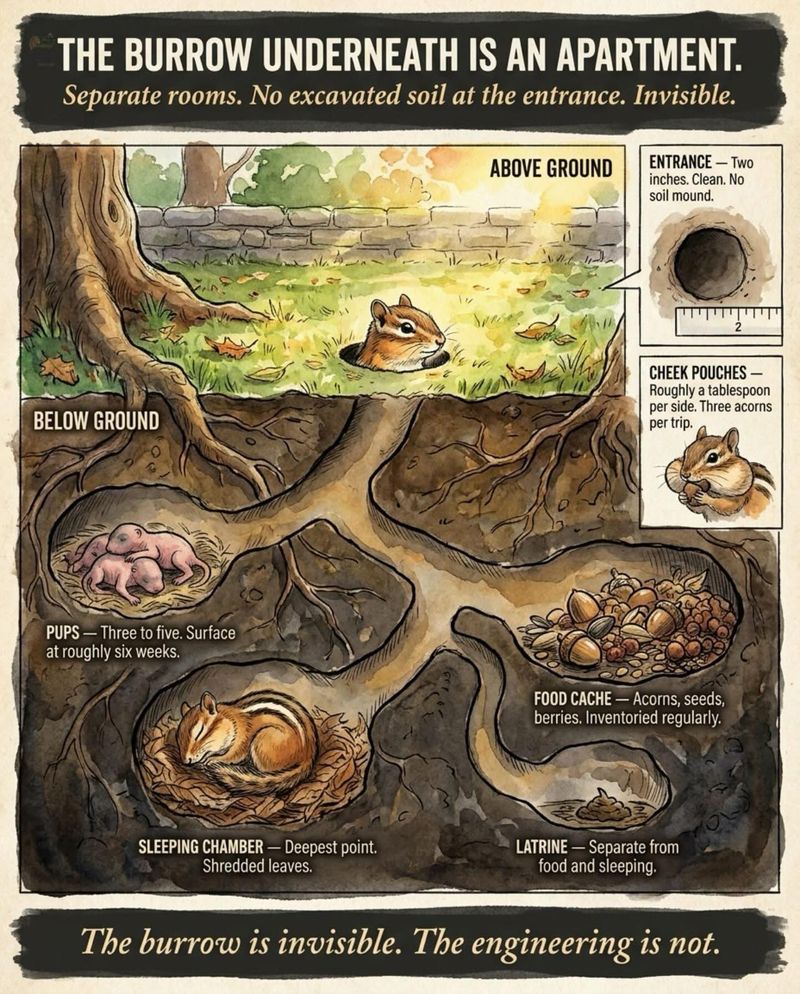
Understanding what is underground helps homeowners make a more informed decision about whether to act. An eastern chipmunk burrow is not a simple hole.
Penn State Extension describes a system that can include a nesting chamber, food-storage chambers, side passages, and one or more escape exits. Main tunnels can extend roughly 20 to 30 feet, though actual dimensions vary considerably based on the site, soil conditions, and the individual animal.
Entrances are typically about 1.5 to 3 inches wide, and one of the more surprising features is how clean they often look. Chipmunks carry excavated soil away from the opening in their cheek pouches rather than piling it at the entrance.
That means a tidy-looking hole with no dirt mound around it is not necessarily abandoned or inactive.
University of Missouri Extension notes that chipmunks typically maintain multiple entrances, which is relevant when assessing a burrow beside a structure. Blocking one opening does not automatically eliminate the system beneath, and the animal may simply redirect activity to another entrance nearby.
Assessing whether a burrow is active requires more than a glance at the opening. Look for fresh soil disturbance around the entrance, visible tracks in soft ground, seed husks or other food debris nearby, and repeated sightings of the animal in the same area.
The NC State Extension animal damage control guide points out that chipmunks are active primarily during the day, which makes direct observation a practical tool. No single clue confirms occupancy with certainty, but a combination of signs across several days builds a reliable picture.
Chipmunks Can Move Seeds Without Becoming Garden Benefactors
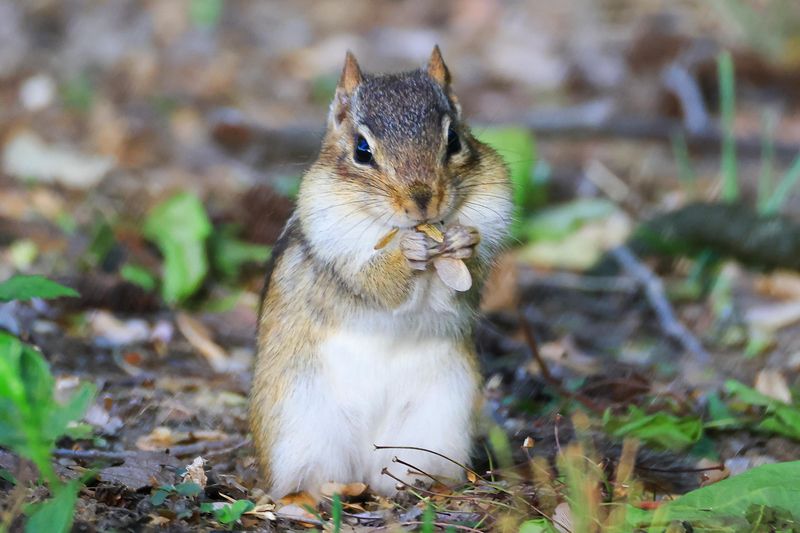
One reason to pause before disturbing an undisturbed burrow is the role chipmunks play in moving seeds around a yard. They eat, carry, and bury seeds, nuts, acorns, and berries, often caching more than they retrieve.
A published study on seed-caching behavior found that chipmunks moved seeds away from parent trees and buried some in locations where seedlings had a better chance of establishing than they would directly beneath the parent canopy. That is a real, documented contribution to seed dispersal.
A functional ecology study on scatter-hoarding rodents adds that the spatial pattern of caching, placing seeds in small, dispersed locations rather than one concentrated spot, can create conditions where some seeds successfully germinate. This is the strongest ecological case for chipmunks in a residential yard: occasional seed movement to new microsites.
The limits of that benefit matter just as much. Chipmunks consume a large share of the seeds they cache, and unretrieved caches do not always produce plants.
Missouri Extension and Penn State Extension both note that chipmunks also eat planted bulbs, garden seeds, seedlings, and fruit, and they are well-known raiders of backyard bird feeders. Seed caching can have mixed outcomes for a garden, and chipmunks are better described as occasional seed movers than as reliable native-plant propagators.
Their role in the food web is also worth noting. University of Kentucky’s wildlife forestry guide identifies chipmunks as prey for hawks, snakes, weasels, foxes, and domestic cats.
That participation in the food web is a legitimate reason to avoid unnecessary harm, but it is not a reason to tolerate burrowing that is actively damaging a structure. The practical takeaway is that a chipmunk living near a foundation without causing structural problems is worth leaving alone, while one that is undermining a porch or patio calls for a different response.
What Is the Burrow Actually Doing to Your Structure?
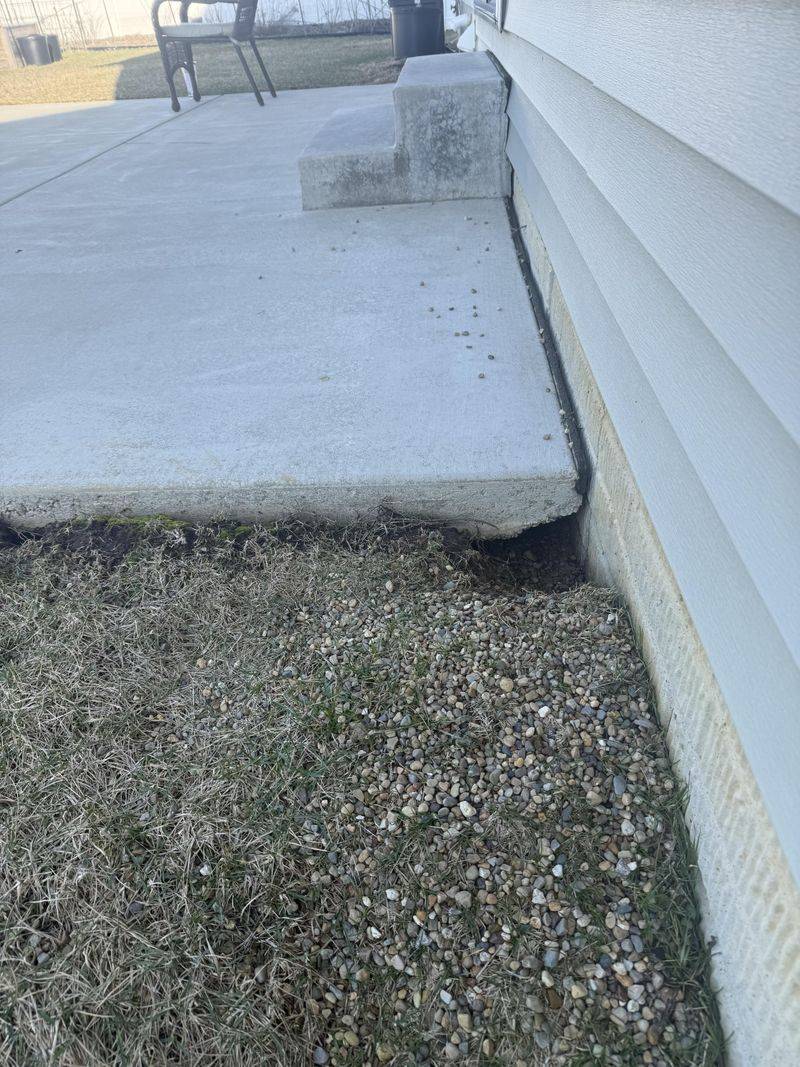
A careful inspection is what separates a burrow that deserves attention from one that can simply be left alone. The goal is to determine whether the tunnel is undermining a footing, slab, porch, stair, patio, or retaining wall, not just sitting near one.
Start by walking the perimeter of the affected structure and looking for specific physical evidence rather than assuming risk from the entrance alone.
Signs of genuine undermining include settlement or sinking in paving stones, concrete, or soil directly above or beside the burrow’s path; exposed footings or structural material that should be covered; new cracks in masonry or concrete near the entrance; moisture or water entry that corresponds with the burrow location; and gaps or openings that lead into a crawl space or basement interior. Penn State Extension and Missouri Extension both flag burrowing beneath foundations, patios, stairs, and retaining walls as a situation that warrants control measures, while also making clear that not every nearby entrance causes that kind of damage.
University of Kentucky’s wildlife guide recommends exclusion and repair when burrowing threatens a structure, and Iowa State Extension’s burrowing mammal resource similarly emphasizes durable barriers over repeated plugging as the more effective long-term response.
The threshold is clear: leave an isolated burrow alone when inspection finds no settlement, no exposed structural material, no cracking, no moisture entry, and no access into the building envelope. Move to exclusion and repair when the inspection reveals any of those warning signs.
Guessing in either direction, either dismissing a genuine threat or treating a harmless entrance as an emergency, leads to a worse outcome than a ten-minute walk-around inspection.
Filling an Empty Entrance Is Different From Sealing an Active Den
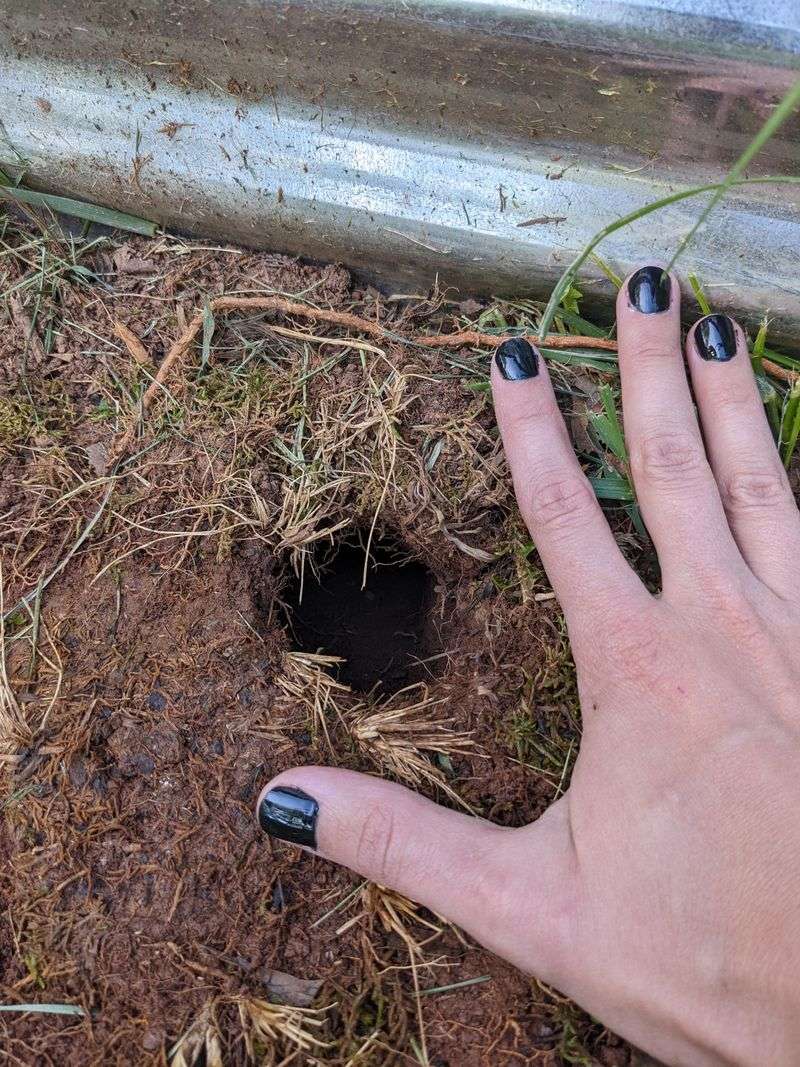
The most important distinction in this entire topic is the one between an empty entrance and an occupied den. Filling a vacant, abandoned burrow entrance with soil is a reasonable step and not inherently harmful.
The problem arises when a homeowner plugs an active entrance without first confirming that the animal and any dependent young have left.
Illinois Extension’s response on chipmunk burrow management specifically notes that filling the entrance with soil can be an appropriate step when the burrow is no longer in use. The key phrase is “no longer in use.” Sealing an active entrance with soil, stones, expanding foam, or concrete can trap a chipmunk inside, or force it to excavate a new route that may end up in a worse location relative to your structure.
Timing matters as much as vacancy. Cornell Cooperative Extension’s pest management guide warns that exclusion and sealing work done in spring and summer can trap young animals inside dens or structures before they are old enough to leave on their own.
If you are working near a burrow between roughly March and August, confirm that no young are present before sealing any entrance.
A practical way to check for activity before filling is to loosely plug the entrance with a small amount of crumpled paper, dry leaves, or loose soil, then check it again in 24 to 48 hours. Penn State Extension and Missouri Extension both describe monitoring techniques that allow homeowners to confirm vacancy without risking harm to an occupant.
If the plug is disturbed, the burrow is still active. If it remains undisturbed after several days, the entrance is likely vacant and can be filled appropriately.
Reduce the Yard Conditions That Keep Chipmunks at the Foundation
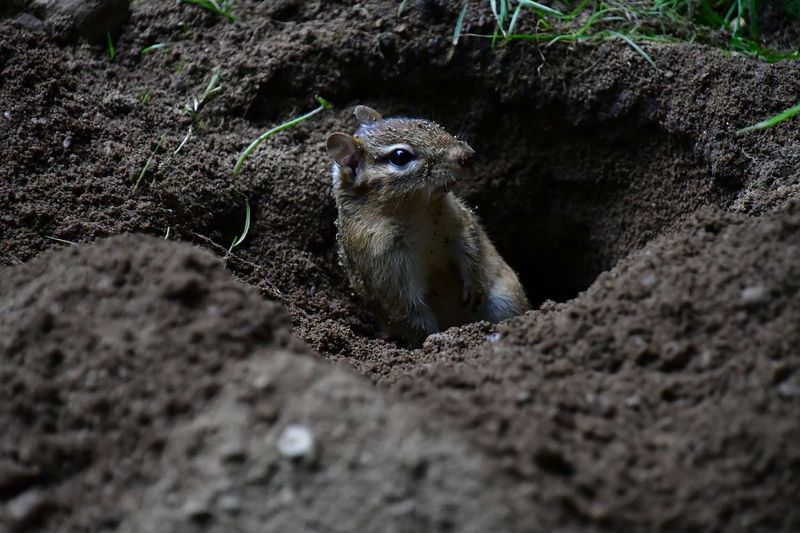
Addressing what draws chipmunks close to the foundation is often more effective over time than repeatedly filling holes. Chipmunks are attracted to reliable food sources and sheltered cover, and residential yards frequently offer both right next to the house.
Removing those attractants does not guarantee that an established resident will relocate, but it does reduce the conditions that invite new activity.
Start with spilled birdseed, which is one of the most consistent chipmunk attractants in a residential yard. Penn State Extension recommends placing bird feeders 15 to 30 feet from buildings to reduce the amount of seed that accumulates near the foundation.
Switching to feeders with trays that catch fallen seed, or using seed types that produce less waste, can further reduce the problem at the source.
Beyond feeders, secure any pet food that is left outdoors, clear brush piles and woodpiles that are stacked directly against the structure, and reduce dense low-growing shrubs or ground cover immediately beside the foundation. Missouri Extension notes that chipmunks rely on nearby cover for escape routes and nesting material, so eliminating dense vegetation right at the foundation edge makes that zone less appealing as a home base.
These steps lower the attractiveness of the area near the structure without harming the animal. They also complement exclusion work: a barrier installed alongside reduced attractants is more likely to stay effective than one installed in a yard that continues to offer food and cover at the foundation line.
Keep expectations realistic though. An established chipmunk with an existing burrow may not abandon it simply because the yard has been tidied up, and these measures alone will not resolve active structural undermining.
When the Burrow Threatens the Structure, Exclude the Animal and Repair the Damage
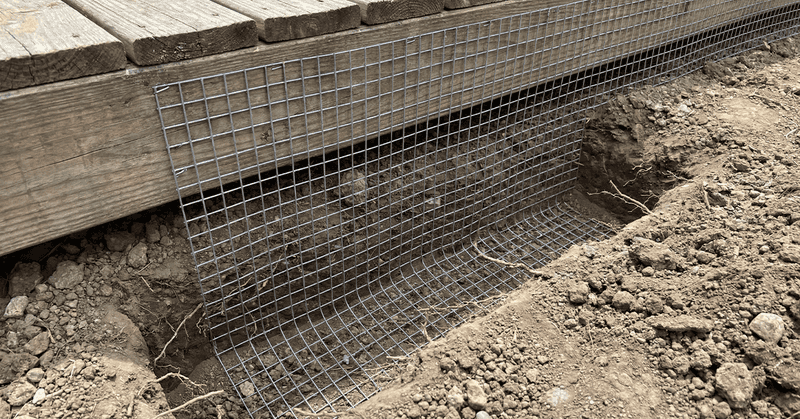
When your inspection confirms actual undermining, repeated plugging of the entrance is not the answer. Each time a hole is filled without addressing the underlying access problem, the chipmunk simply digs through or opens a new route.
The more durable response is to exclude the animal from the vulnerable area and then repair the structural or drainage damage that the burrowing caused.
Hardware cloth with one-quarter-inch mesh is a commonly recommended material for chipmunk exclusion. University of Kentucky’s wildlife forestry guide and University of Georgia Extension’s nuisance wildlife guide both identify appropriately sized mesh as an effective physical barrier.
The barrier should be secured firmly to the structure and extend outward along the soil surface or be buried roughly 6 to 12 inches where digging underneath is a realistic risk.
Iowa State Extension’s burrowing mammal resource emphasizes that the barrier needs to prevent the animal from going around or under it, not just block the existing entrance. Adapt the installation to the specific structure: a porch with open lattice needs different treatment than a poured concrete footing or a dry-stacked retaining wall.
Repair the structural damage after the animal has left and the exclusion is in place. That means filling voids beneath paving, addressing drainage problems that may have contributed to soil erosion, repointing mortar where needed, and closing any gap that leads into a crawl space or basement.
Cornell Cooperative Extension cautions against sealing den entrances until the animal and any dependent young have vacated, particularly during spring and early summer. Confirm vacancy using the loose-plug monitoring method before closing any entrance permanently.
Exclusion combined with repair addresses the actual problem rather than managing a recurring symptom.
Check North Carolina Rules Before Any Trapping or Other Control
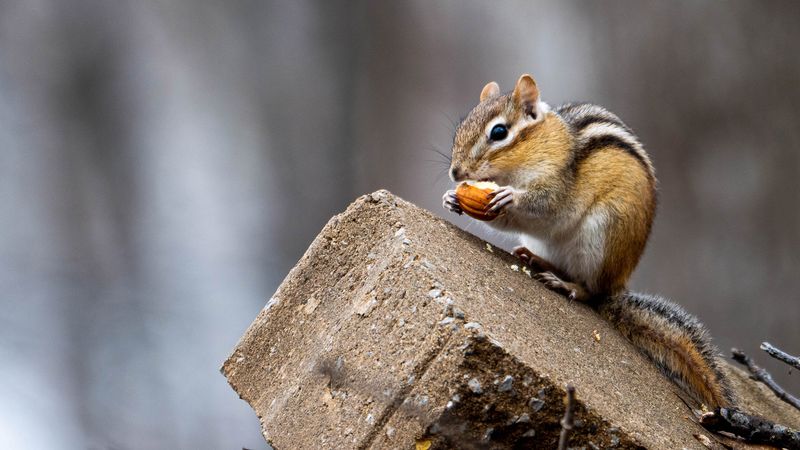
Before moving from exclusion to any form of trapping or lethal control, check what North Carolina law currently allows. NC Wildlife’s eastern chipmunk species page classifies the eastern chipmunk as a nongame species with no regular hunting or trapping season.
That status is relevant, but it does not automatically answer every nuisance-control question, and the rules governing what a homeowner may or may not do can depend on circumstances, method, and current regulatory updates.
The safest path when trapping or removal seems necessary is to consult current guidance directly. NC Wildlife’s wildlife conflict resources page and its wildlife problem FAQ both provide up-to-date information and connect homeowners with certified Wildlife Control Agents who are authorized to handle nuisance wildlife situations within the law.
These professionals can assess the situation, apply appropriate methods, and handle any required permits or documentation.
Several control methods should be ruled out entirely regardless of legality. Poison baits can kill nontarget animals including songbirds, raptors, foxes, and neighborhood cats that consume a poisoned chipmunk.
Glue traps cause prolonged suffering and are not appropriate for wildlife control. Casual relocation of a captured chipmunk to a nearby park or green space can be regulated, may be prohibited for some species or circumstances, and often results in the animal dying from stress, unfamiliarity with the new territory, or territorial pressure from resident animals already living there.
Professional help is the right call when an animal may be inside a structure, when dependent young are likely present, when the damage is difficult to assess on your own, or when installing exclusion safely is beyond your ability given the structure’s design or location. A certified Wildlife Control Agent brings both the expertise and the legal standing to handle those situations correctly, protecting you from unintended harm to wildlife and from regulatory missteps.
Leave a Harmless Burrow Alone—and Act When the Evidence Says You Must
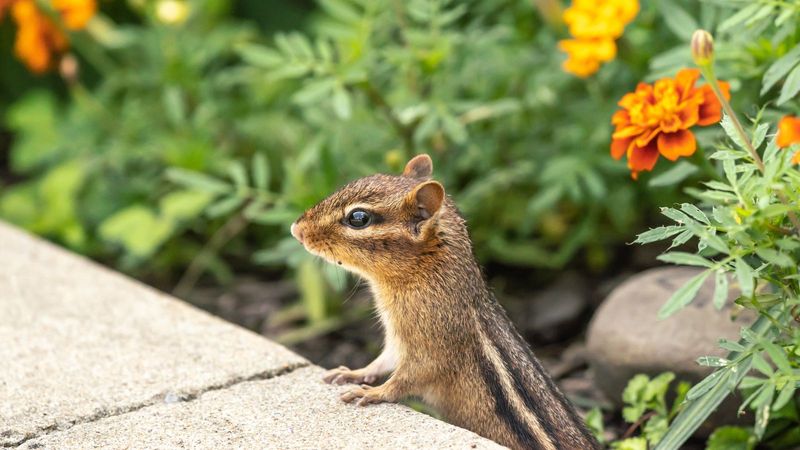
The practical decision rule for a chipmunk burrow near your foundation comes down to four steps: identify the animal, determine whether the burrow is active, inspect the structure for genuine undermining, and then choose the response that matches what you actually found. NC Wildlife’s chipmunk page and Penn State Extension both support starting with observation before intervention.
An isolated entrance that shows no signs of structural undermining and causes no drainage or access problems is best left alone. Filling it reflexively solves nothing and risks sealing an animal inside.
If the entrance is confirmed empty and abandoned, filling it is a reasonable, low-risk step. When inspection reveals actual undermining of a footing, slab, porch, stair, or retaining wall, use durable exclusion with hardware cloth and repair the damage properly rather than plugging the hole repeatedly.
Iowa State Extension and Illinois Extension both support this repair-focused approach as the more lasting solution.
The distinction worth holding onto is the difference between avoiding unnecessary harm and tolerating preventable property damage. A chipmunk that is living quietly beside your foundation without causing structural problems is a neighbor worth leaving in peace.
One that is actively undermining a structure deserves a measured, lawful, and effective response. Knowing the difference is what separates a good steward from someone who either panics at every small hole or ignores a problem until it becomes expensive.