
Your Clematis Blooms Bigger And Brighter When You Feed It On This Simple Schedule Instead Of Guessing
If your clematis flowers look smaller or plainer than you hoped, it is easy to blame yourself. Fertilizer gets named as a suspect a lot, but it is only one possible piece of the puzzle.
Many vines do fine with little or no feeding, and too much can backfire. Here is how to decide when feeding makes sense, starting with what to do before winter.
Going into winter, skip a routine fertilizer dose
Right now, the safest move for most clematis is to put the fertilizer bag back on the shelf. Advice on fall feeding really does conflict.
Oregon State Extension recommends feeding in spring, summer, and fall, while Kansas State Extension suggests organic fertilizer in fall or winter.
Other sources center feeding on spring. Iowa State Extension describes a spring application, and the Royal Horticultural Society also points to spring feeding or a modest yearly dose.
With that much disagreement, skipping a routine fall feed is a cautious choice for a national audience. It is not a universal rule.
If a trusted local extension office or a soil test tells you your garden needs a fall application, follow that instead.
Skipping it does not mean neglecting the plant. You are simply waiting until spring, when you can look at how the vine is actually growing and decide from there.
In spring, assess the vine before you feed
Once new growth appears, take a slow walk around your established, in-ground clematis. Are the shoots sturdy and the leaves a healthy green?
Did it flower well last year? If so, the vine may be telling you it already has what it needs.
That matches what the University of Maryland Extension says. Established ornamentals that are growing well rarely need extra fertilizer unless there is a demonstrated need, such as a soil-test result.
Other extension sources lean the same way. Iowa State says a once-yearly all-purpose fertilizer is typically enough for most home garden soils, and Illinois Extension notes that some clematis in a good location may need none at all.
A better reason to feed than the calendar is a clear signal. That could be pale, weak growth, a soil test showing a shortfall, or a reliable local recommendation for your area.
If none of those apply, you can skip feeding this year and still be a careful gardener. Feeding becomes a response to a need, not an automatic spring chore.
How often should you feed clematis?
Ask five extension offices and you may get five answers. That is not a sign anyone is wrong.
Soils, climates, and growing setups differ, so the advice does too.
Iowa State describes once-yearly all-purpose fertilizer as typically sufficient for most home garden soils. Illinois Extension also suggests once a year, timed after the first bloom for Groups 1 and 2, or after spring pruning for Group 3.
Some sources call for more. UMass Extension recommends a balanced fertilizer in April, June, and August.
Michigan State Extension suggests feeding after pruning and again in early summer.
Treat these as a menu of local approaches, not one national calendar. The best starting point is the extension office nearest you, since it knows your soil and season.
Your own vine matters too. A plant that is already thriving in rich soil is a different case from one in poor, sandy ground.
When in doubt, start at the low end of the range and watch how the plant responds.
More fertilizer can mean fewer flowers
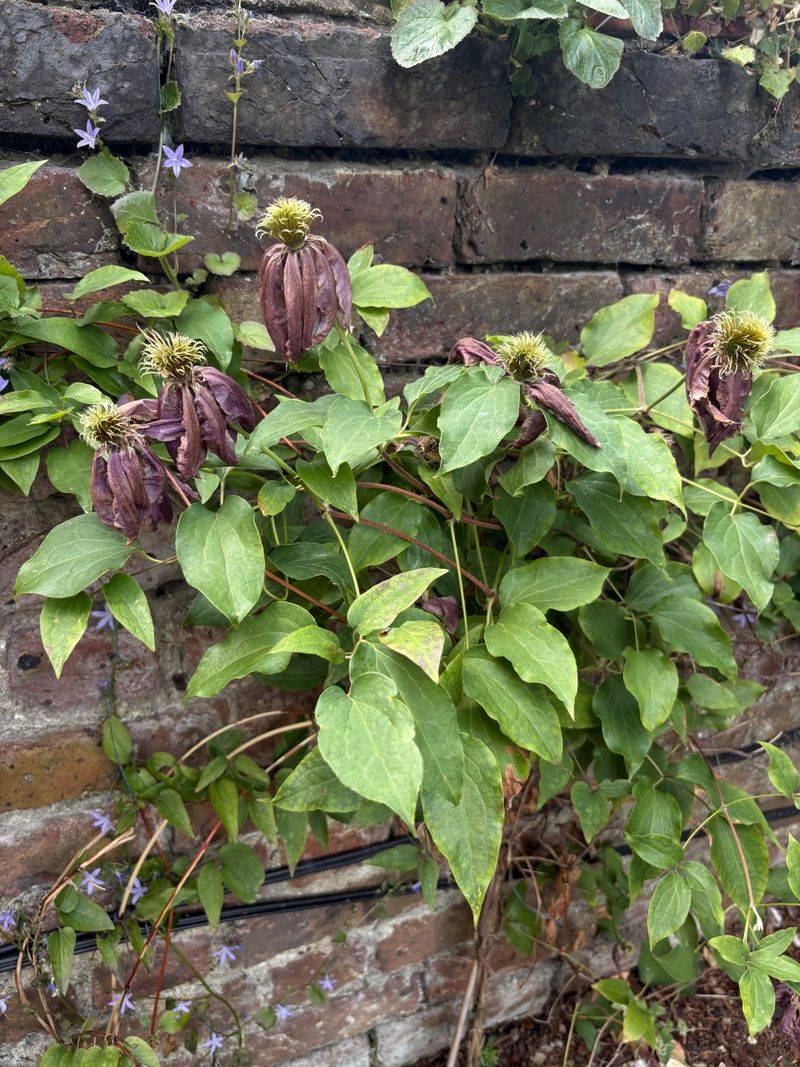
It is tempting to add another scoop when blooms look underwhelming. With clematis, that instinct can work against you.
Extra nitrogen in particular can push leafy growth at the expense of flowers.
The University of Maryland Extension warns that overfertilizing can harm plants, reduce flower formation, and add to stormwater pollution. It recommends soil testing and correcting specific nutrient problems rather than guessing.
Iowa State lists overfertilizing among the reasons a clematis may not bloom, alongside poor fertility. Illinois Extension likewise cautions against overdoing it.
So if feeding is warranted, keep it modest and follow the product label. Skip high-nitrogen formulas unless a test calls for one.
Bloom booster products deserve the same caution. Nothing in these sources shows that extra phosphorus will make flowers larger or brighter, so there is no reason to buy one without a documented need.
Small flowers may have nothing to do with feeding
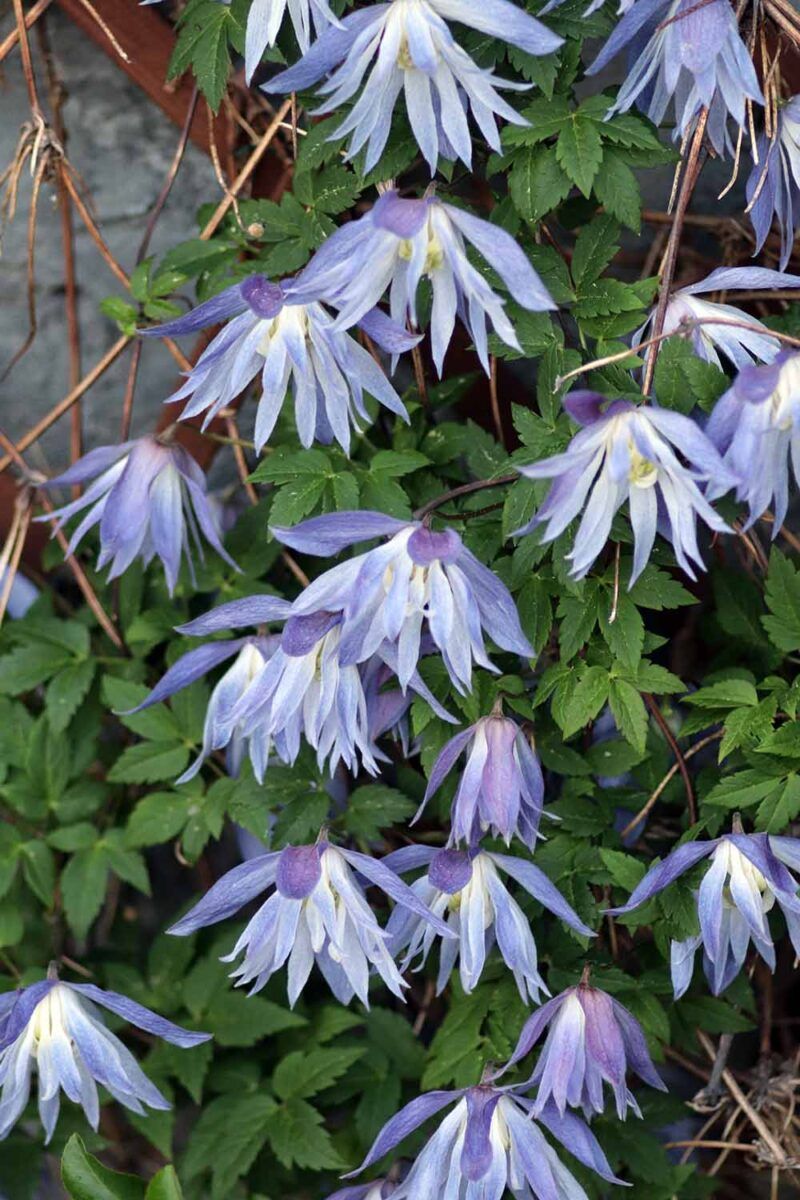
Before blaming fertilizer, separate three problems: small flowers, few flowers, and no flowers. They have different likely causes, and advice about one does not prove anything about another.
Cultivar is a big one for size. Iowa State notes that clematis flowers range from small bell shapes to large star-shaped forms.
Your vine may simply be a small-flowered type doing exactly what it should.
For few or missing blooms, Iowa State lists insufficient light, winter injury, incorrect pruning, and immaturity, and says plants may take up to three years to establish enough to flower. Poor fertility and overfertilizing are on that list too, but they are only two of many.
Color has its own story. Kansas State Extension notes that intense summer sun can wash out flower color.
Pruning deserves extra care because it depends on the group. As the Royal Horticultural Society explains, early bloomers flower on last season’s growth, repeat bloomers use old and new growth, and summer or fall bloomers flower on new growth.
Cutting at the wrong time can remove flower buds.
Find your vine’s group first. Feeding will not fix shade, a hard winter, a young plant, or a mistimed pruning cut.
Container clematis need closer attention
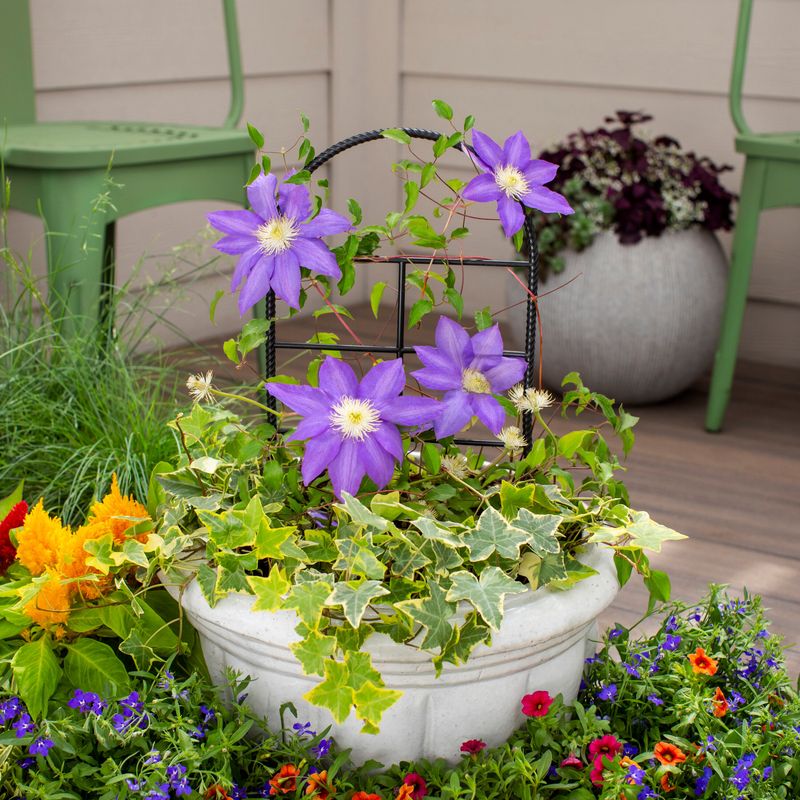
A clematis in a pot lives in a small world. Its roots cannot wander for nutrients or moisture, so the plant depends on you far more than a vine in the ground does.
The Royal Horticultural Society says container plants can be fed during spring and summer with a general-purpose liquid fertilizer, following the label. It also recommends refreshing the top layer of the pot’s compost each spring.
Watering is part of the same routine. Potting mix dries out faster than garden soil, and regular watering also carries nutrients through the pot.
Keep this advice with your containers. It is not a schedule for vines growing in garden beds, where the soil holds more reserves and the guidance is more conditional.
Even in a pot, feeding is not a bloom guarantee. If flowers disappoint, check sun exposure, the plant’s age, and pruning before reaching for more fertilizer.
Use a conditional routine, not a bloom guarantee
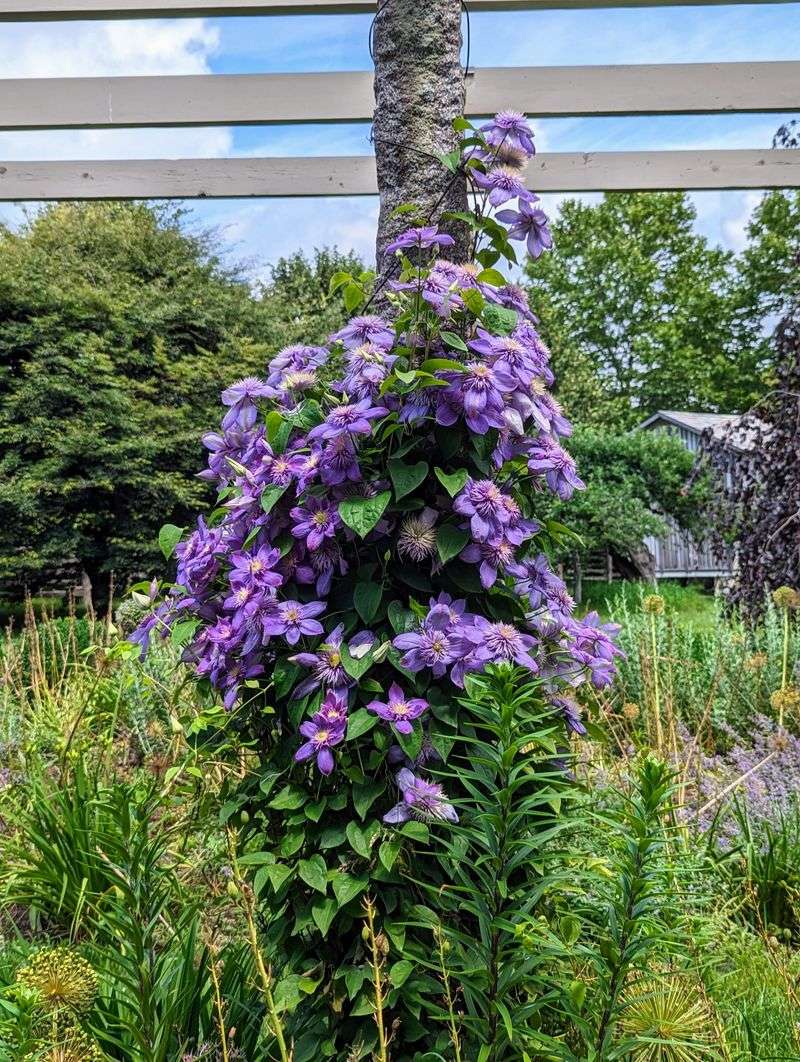
Here is the short version of your plan. Skip routine fall feeding unless local advice or a soil test says otherwise.
In spring, look over your established in-ground vine, and feed modestly only if its condition or reliable local guidance supports it. Pots get their own spring and summer feeding, as the Royal Horticultural Society describes.
Remember that Maryland Extension warns against extra fertilizer without a demonstrated need, and Iowa State points to light, pruning, winter damage, and age as other causes of poor blooming.
A calm vine with healthy leaves is usually doing its job. Sometimes the best feeding plan is the one you do not need.