
Your Clematis Pruning Group Decides How and When to Cut, and Fall Is Usually Not the Time
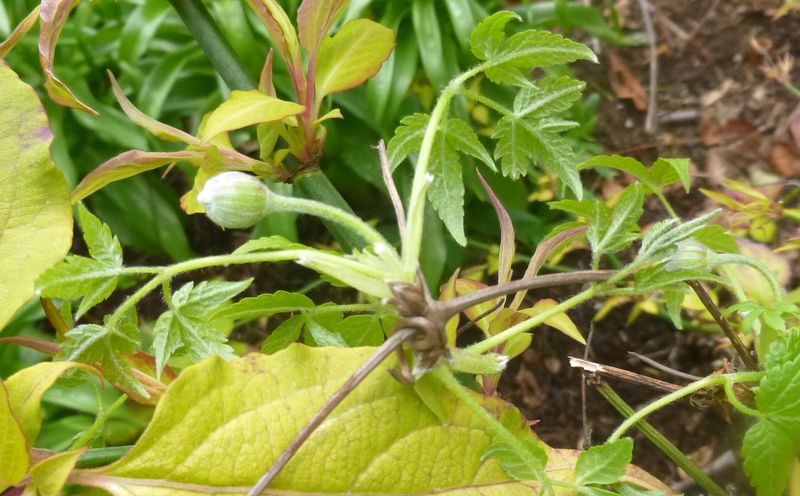
Your clematis may look tired by now, and it is tempting to grab the shears. Hold on, because one wrong cut can remove the stems that carry next summer’s flowers.
The trick is knowing which pruning group your vine belongs to, since that tells you how much to cut and when. Here is how to sort it out without guessing.
Fall Is Usually Not the Time for Routine Clematis Pruning
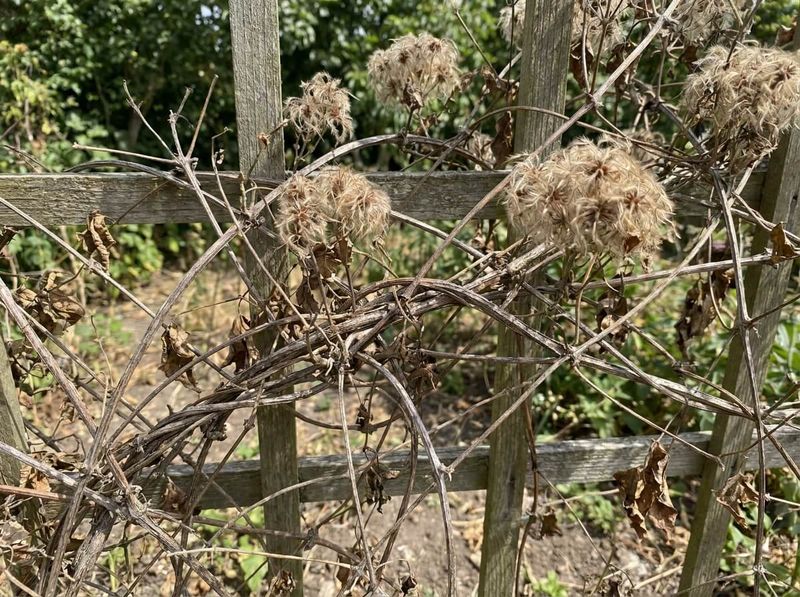
Here is the first thing to know: a clematis’s pruning group decides how much you cut, but it usually does not decide that you cut in fall. In most U.S. guidance, routine pruning happens at other times of year.
Group 1 vines get shaped just after spring flowering, while Group 2 and Group 3 vines are pruned in late winter or early spring.
The reason comes down to where the flowers form. Iowa State Extension notes that Group 1 and Group 2 clematis can bloom on older stems.
A fall haircut on those plants can snip off next season’s buds before they ever open.
That does not mean a mistaken cut will usually doom your plant. The more common cost is fewer flowers and a lopsided look, which is frustrating but not fatal.
Iowa State also says pruning is not essential for clematis, so a plant left alone is rarely in trouble.
Healthy vines do not need a tidy-up before winter. Yellowing leaves and brown-looking stems are normal this time of year, and many of those stems are still alive underneath.
The rest of this guide walks you through finding your group, then gives clear steps for each one. You can also check University of Illinois Extension’s clematis page for a broader overview.
Once you know the group, the right timing becomes simple and your shears can stay put until the proper season.
Use the Plant Label First and Bloom Time as a Clue
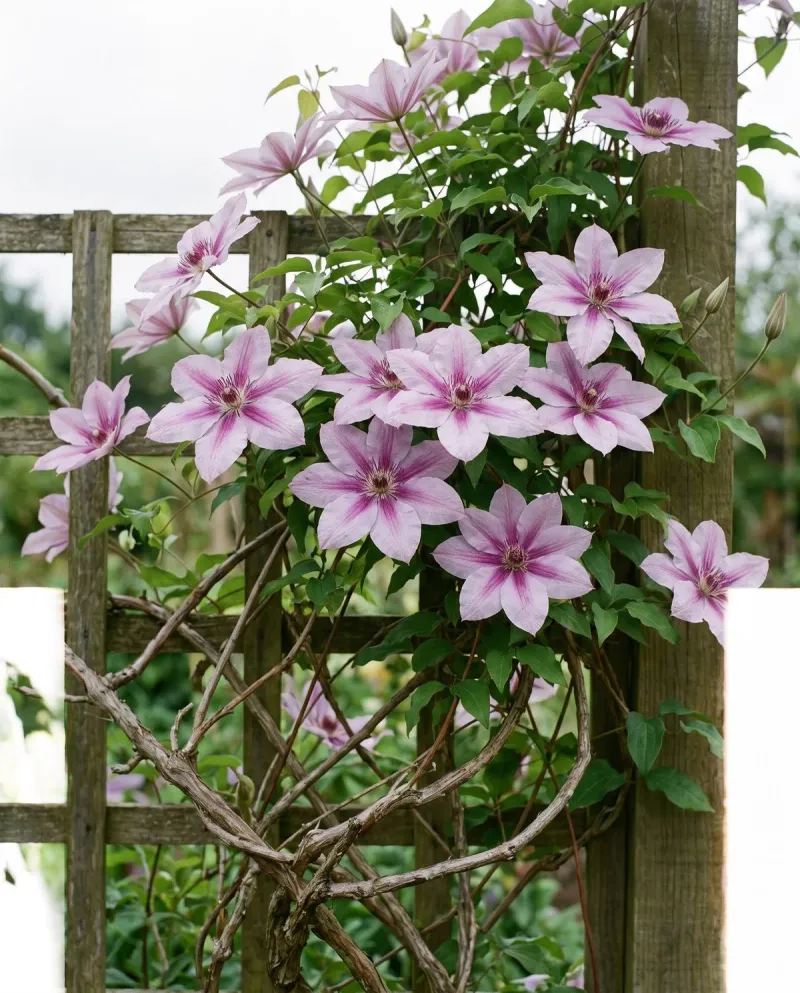
Dig out the plant tag or purchase record before anything else. A cultivar name or confirmed variety is the most dependable way to learn your pruning group.
If you can find it, a quick search of the name usually settles the question.
No label? Bloom timing can give you a hint.
In Iowa, spring bloom suggests Group 1 and two flushes suggest Group 2. A plant that blooms only later could be Group 3, or it could be a Group 2 plant that lost its early growth to winter damage.
That is why bloom time is a clue and not a final answer. Region, cultivar, and weather all shift the calendar.
Some mid- to late-summer bloomers also sit on the border, and the Royal Horticultural Society says they can be treated as Group 2 or Group 3.
‘Hagley Hybrid’ shows how this plays out. It is listed as Group 3 by Iowa State, while the RHS lists it as Group 2 or 3.
One more note on labels. Group 1/2/3 and A/B/C are pruning classifications only.
They are not the same as other systems that sort clematis by plant type, so do not mix them up when reading catalogs. University of Illinois Extension makes the same distinction.
Group 1 Vines Usually Need Only a Post-Bloom Trim
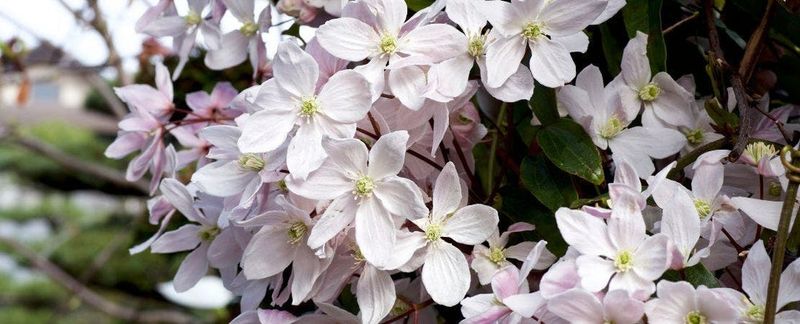
Group 1 (also called A) is the low-maintenance bunch. These vines flower in spring on growth made the previous year, so the buds are already waiting on older stems well before winter arrives.
Iowa State Extension describes this pattern and notes these plants need little or no routine pruning.
If yours has outgrown its spot, the time to shape it is right after the flowers fade. That gives the vine the rest of the season to grow new stems that will carry next spring’s blooms.
Picture a fall trim instead. Those old stems carry the flower buds, so cutting them back removes the spring show.
The vine will grow back, but you may see a bare season and a plant that looks thinner than before.
A few easy habits help:
Pull out only stems that are clearly dead or broken once growth resumes. Untangle rather than chop where you can.
North Carolina State Extension points out that clematis stems are fragile, so slow and gentle work pays off.
For more on how types and timing line up, see University of Illinois Extension. For Group 1, the best tool in fall is patience.
Group 2 Vines Need Their Older Framework Preserved
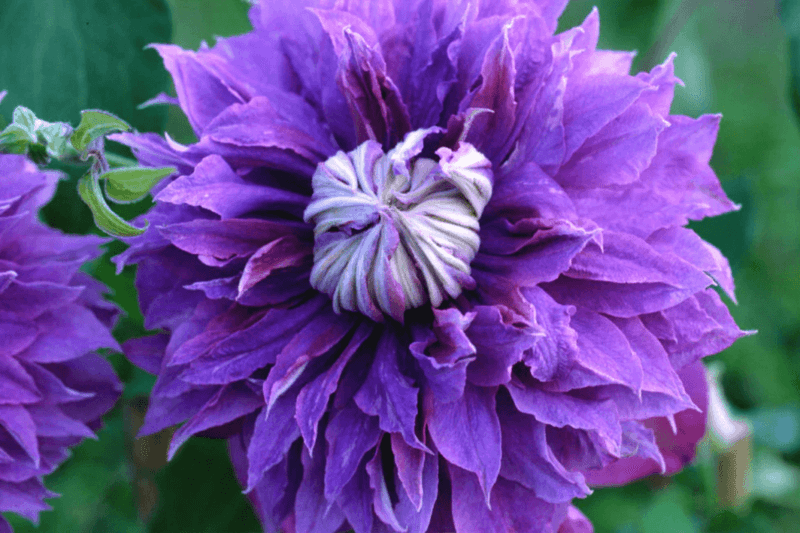
Group 2 (also called B) puts on a double show. The first flush comes in late spring or early summer on short shoots growing from last year’s stems.
Many of these plants then bloom again later on new growth.
That early flush is why the older framework matters. Cut it away and you give up the first round of flowers.
University of Illinois Extension explains how these types bloom on both old and new wood.
The pruning window is late winter or early spring. Keep it light: take out dead or weak growth and leave the sturdy stems in place.
Iowa State Extension adds that dead-looking wood on these plants is best judged once the vine begins leafing out.
Want a bit more shaping? After the first flush finishes, you can selectively trim some stems.
The Royal Horticultural Society’s Group 2 guide describes this as an option, not a requirement. Skipping it will not harm the plant.
Consider a vine that bloomed lightly last spring. Winter damage may have claimed some older stems, which can make a Group 2 plant look like a later bloomer.
Wait for leaf-out, then judge what survived before you cut.
Group 3 Vines Can Be Cut Back Hard in Late Winter
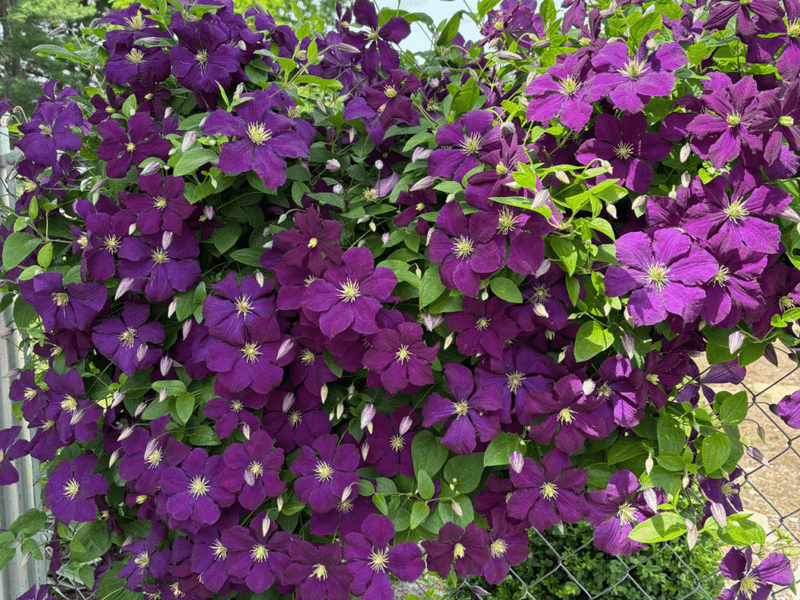
Group 3 (also called C) is the forgiving group when it comes to a big cut. These clematis flower on the current season’s growth, often in summer or fall, so the stems that will carry flowers do not exist yet.
That gives you room to prune hard.
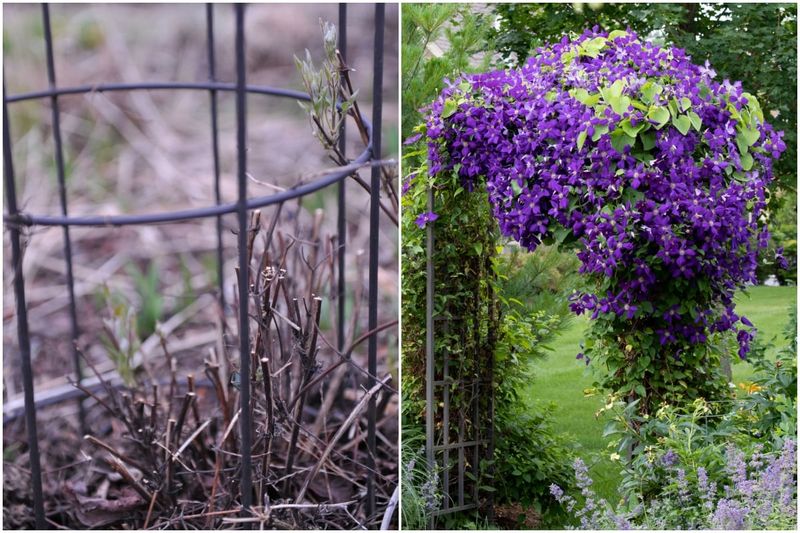
For established vining plants, U.S. sources suggest cutting stems back to roughly 6 to 12 inches in late winter or early spring. Iowa State Extension gives this guidance, and North Carolina State Extension agrees.
Try to leave a pair of healthy buds on each stem.
Be careful about assuming that late bloom proves a plant is Group 3. Iowa State notes that a later bloomer might be a Group 2 plant that lost its earlier growth.
The RHS also says some summer bloomers can go either way.
If you have a confirmed Group 3 cultivar, the hard cut keeps the vine from turning into a bare-bottomed tangle with flowers far out of reach. Wait for winter to ease, then cut.
The 6 to 12 inch cut is a rule for established vining types. Keep University of Illinois Extension’s overview handy if you are unsure, and leave a doubtful plant uncut until you know more.
When You Cannot Identify the Group, Wait and Gather Clues
Not every clematis comes with a tag. If yours is a mystery, start by hunting for any record of the cultivar name, such as a receipt, a garden journal, or an old photo.
Then watch the plant through a full season and write down when it blooms and whether it flowers once or twice.
Meanwhile, skip the hard fall cut. Dead-looking stems can fool you, since winter damage makes it hard to tell living wood from dead.
Iowa State Extension recommends waiting until vines begin leafing out before removing dead-looking growth on Groups 1 and 2. Green buds will show you what is still alive.
Your notes build the clues. Iowa State’s clematis guide shows how bloom patterns can point toward a group, though they are not proof.
Handle tangled stems with care. North Carolina State Extension notes that clematis stems are fragile, so snapped vines are a real risk when you pull too hard.
There are two cases where fall work is reasonable. Herbaceous clematis is the specific exception, and the RHS says it can be cut near ground level in late autumn or early spring.
That advice does not extend to other types.
The other case is sanitation. If your vine had disease problems, a University of Illinois Extension handout recommends removing and destroying the debris in fall.
That is cleanup, not a haircut for healthy vines.
A clematis you cannot name can wait one more season, and it will usually forgive you for it.