
10 Stunning Orange Flowers Hummingbirds Simply Can’t Fly Past In Your Yard
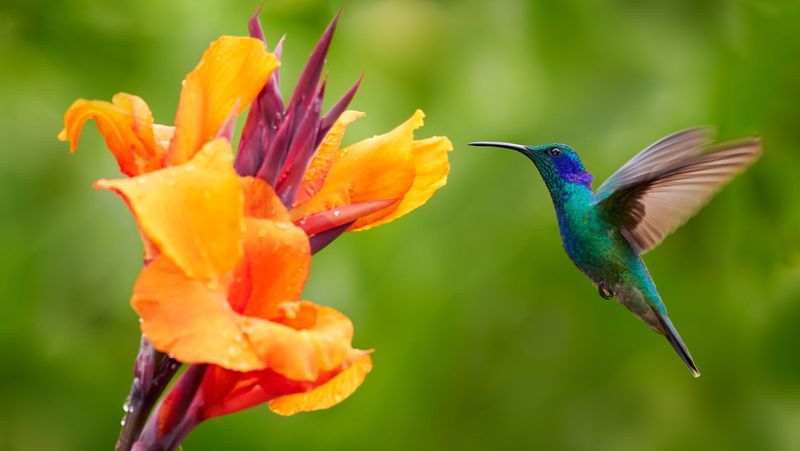
Hummingbirds go wild for the color orange, and the right blooms can turn your yard into a buzzing pit stop all season long. The best part is that most of these plants are easy to grow, even if you worry about accidentally killing them.
Below you’ll find ten orange showstoppers, plus the one basic care tip and quick fix that keeps each one healthy and covered in flowers. Get these small details right, and the hummingbirds will find you.
1. Cuphea ‘Vermillionaire’ (Firecracker Plant)
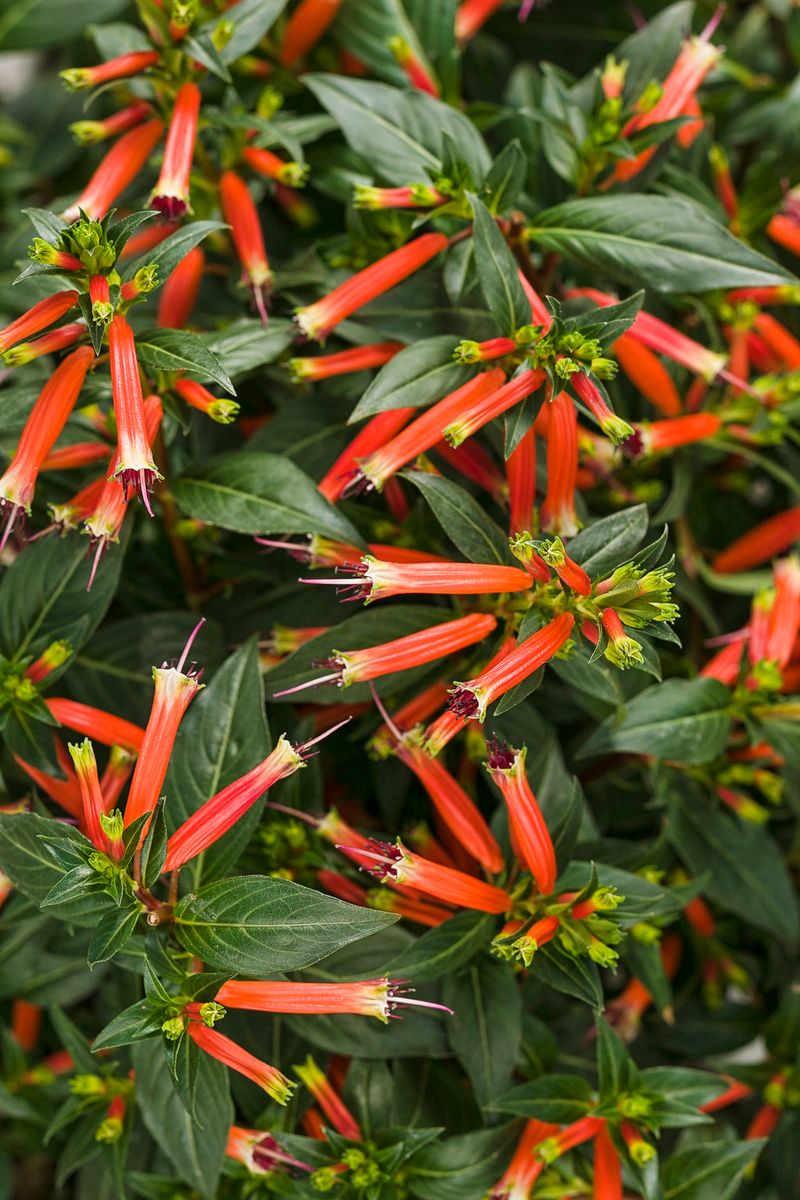
Picture a small mound covered in dozens of skinny orange tubes that look like tiny lit cigars, and you’ve got ‘Vermillionaire.’ Hummingbirds love it because those tubular blooms fit their beaks perfectly and keep coming from spring until frost.
To keep it happy, give it full sun with 6 to 8 hours of light, though a little midday shade helps in scorching summer regions. It likes soil that stays moist but drains well, so it never sits in soggy ground.
If you notice yellowing leaves or leaf drop, overwatering and root rot are usually the culprits, though a nutrient shortage can do it too. Let the top inch of soil dry out between waterings, make sure containers drain freely, and feed with a balanced fertilizer to green things back up.
Getting leggy with fewer flowers? A quick pinch or trim of the stems in spring pushes bushier growth and a fresh wave of blooms.
It’s a forgiving plant that rewards a light touch.
2. Orange Jewelweed (Impatiens capensis)
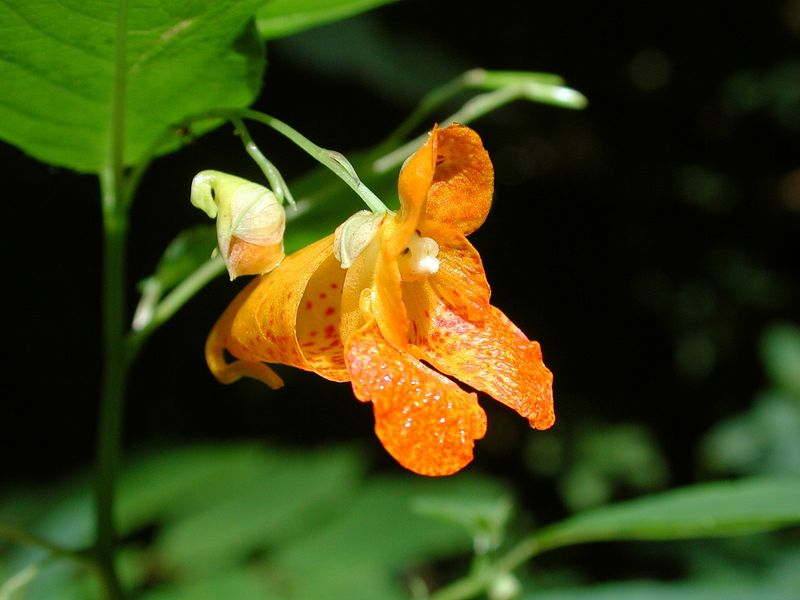
A true North American native, Orange Jewelweed dangles delicate trumpet-shaped flowers in orange to orange-yellow, freckled with reddish-brown spots. Blooming from late spring into early fall, it’s a longtime hummingbird favorite along shady, damp edges.
Unlike most flowers on this list, it actually prefers partial to full shade and soil that stays consistently moist or even wet. Drought is its enemy, so plant it where the ground rarely dries out, like near a downspout or pond edge.
Because it self-seeds so freely, jewelweed can spread more than you bargained for. Snip off spent flowers before they set seed if you want to keep it in bounds.
Damp, still air can invite fungal disease, so give the plants a little breathing room. Improving air circulation keeps the foliage clean, especially in humid climates.
3. Orange Bee Balm (Monarda)
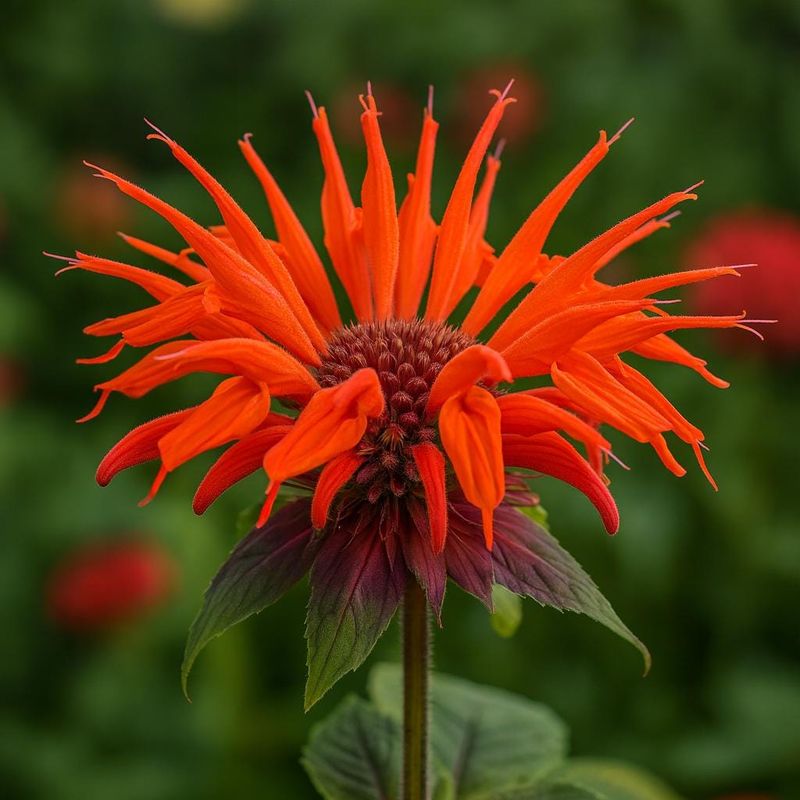
Shaggy, firework-shaped blooms make orange Bee Balm one of the most eye-catching plants a hummingbird will ever visit. Those tubular petals are practically built for a hummingbird’s long tongue.
Plant it in full sun, but in hotter regions a little afternoon shade keeps the leaves from scorching. It wants soil that stays consistently moist yet still drains, so aim for damp, not swampy.
Powdery mildew is the classic Monarda headache, showing up as a grayish-white film on leaves and buds. Too much shade, crowded plants, and drought stress all invite it.
To fight back, space plants for good airflow, go easy on high-nitrogen fertilizer, and remove affected leaves by tossing them in the trash rather than the compost. Choosing mildew-resistant varieties helps too.
If leaves turn yellow, it usually means watering is off, so adjust to keep the soil evenly moist without waterlogging.
4. Orange Million Bells (Calibrachoa)
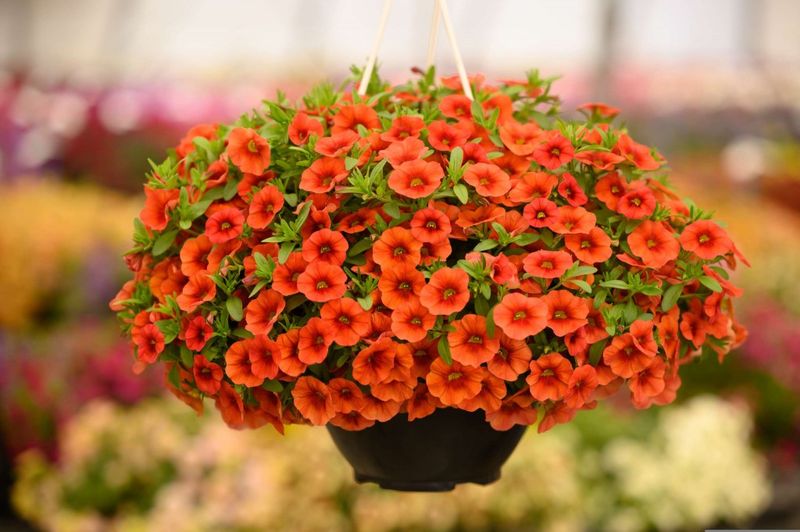
Think of Million Bells as petunias’ tidy little cousin, spilling out hundreds of small, bell-shaped orange blooms all summer. They look fantastic tumbling over the sides of a hanging basket, and hummingbirds stop by for the nonstop nectar.
Give them at least six hours of full sun, because skimping on light means fewer blooms and stretched, leggy stems. They perform best in containers filled with a well-draining, slightly acidic potting mix in the 5.0 to 6.5 pH range.
Overwatering leads to root rot and yellowing leaves, though yellowing can also point to an iron or nitrogen shortage. Let the mix dry down about two inches before watering, keep drainage sharp, and feed with a balanced liquid fertilizer every two to four weeks.
If leaves stay yellow despite feeding, check your soil pH.
One happy bonus: Calibrachoa are self-cleaning, so you can skip deadheading entirely and still get wave after wave of color.
5. Hummingbird Trumpet (California Fuchsia)
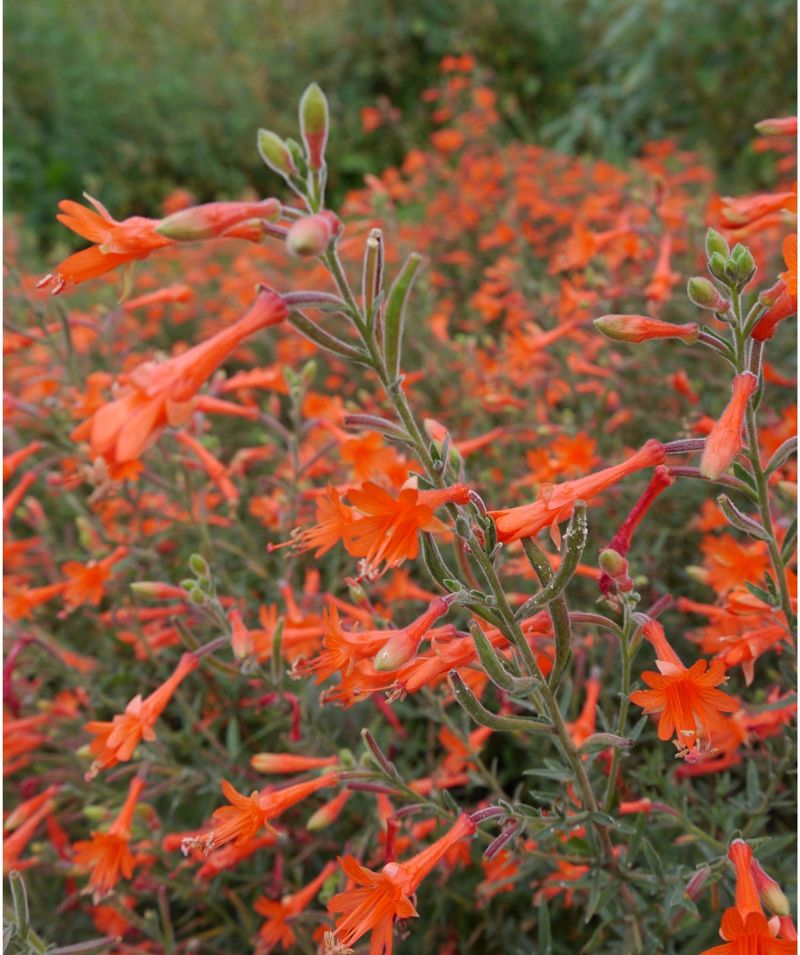
The name says it all: this plant is a hummingbird magnet, drawing them in with brilliant scarlet-orange trumpet blooms late in the season. Also known as California Fuchsia, it lights up the yard when many other flowers are winding down.
It craves full sun, and too much shade leaves it leggy with far fewer flowers. Sandy or gritty, fast-draining soil suits it best, and once established it shrugs off drought like a champ.
Root rot is the main risk, usually from overwatering or heavy, poorly draining soil. Amend clay with sand or grit, then water deeply but infrequently, letting the ground dry between drinks.
Ease off the water even more in fall and winter as the plant goes dormant.
Come cold weather, spread mulch around the base for protection and leave the stems standing until mid-spring before cutting them back. That patience pays off with a vigorous return.
6. Red-Hot Poker (Kniphofia)
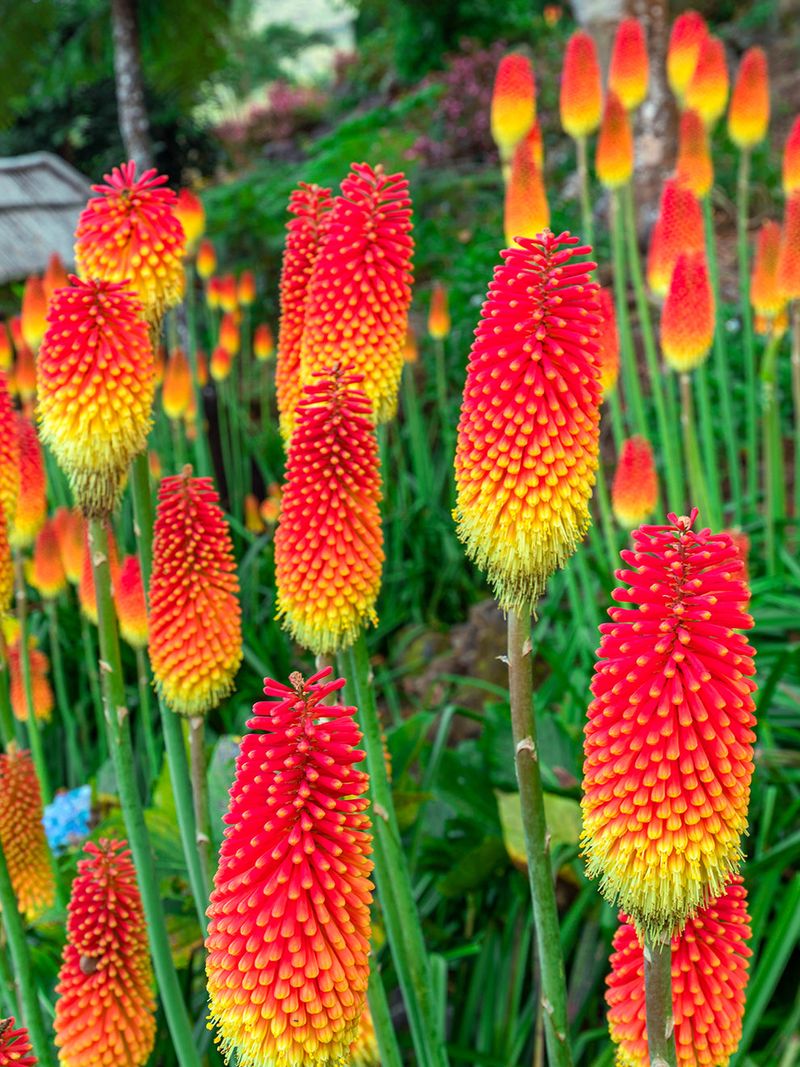
Few flowers make a statement quite like Red-Hot Poker, sending up torch-like spikes that blaze in orange, red, and yellow all at once. Hummingbirds, bees, and butterflies all line up for these fiery blooms.
This perennial demands full sun, at least six hours, to bloom its best. Well-draining soil is a must to dodge root rot, and while it tolerates various soils, moderately rich ground gives the strongest show.
When it refuses to bloom, look at sunlight, soil quality, watering during bud formation, plant age (seed-grown ones can take one to three years), or a phosphorus and potassium shortage. Move it into full sun, work compost into heavy clay, and water deeply but infrequently in hot, dry spells.
A slow-release fertilizer in early spring helps poor soil, and dividing clumps every few years sparks fresh blooms.
Yellow leaves often mean overwatering or missing nutrients, while brown tips point to underwatering or dry air. In cold, wet-winter areas, tuck mulch or straw over the crown for protection.
7. Autumn Sage (Salvia greggii)
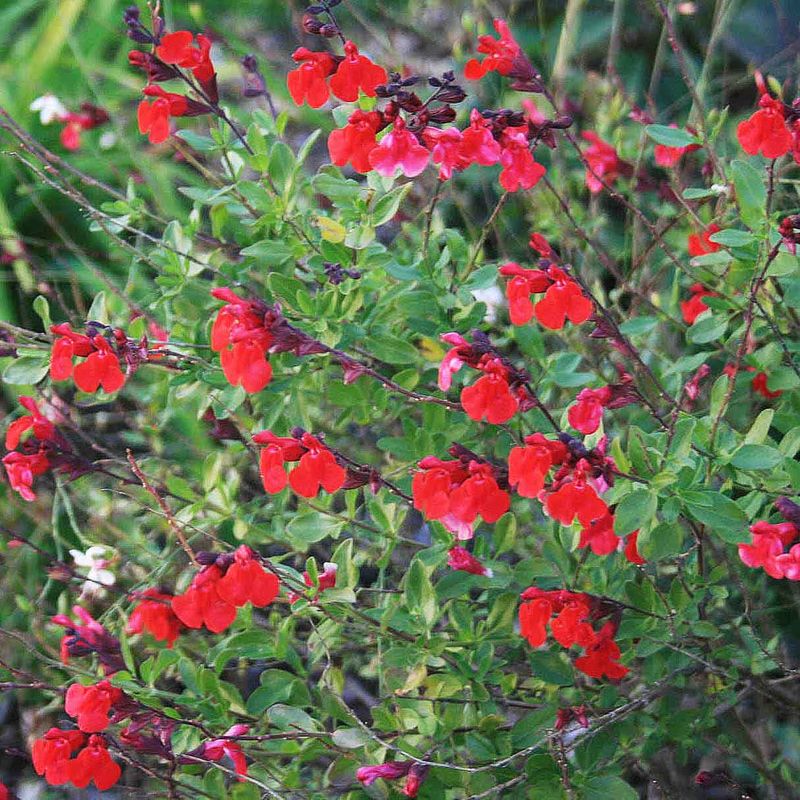
Tough as nails and endlessly cheerful, Autumn Sage pumps out red-orange blooms that hummingbirds adore. Native to southwest Texas, this low-maintenance shrub practically thrives on neglect once it settles in.
Set it in a spot with well-drained soil and full sun, and it will reward you with color for months. Heat and dry conditions don’t faze it, which makes it a smart pick for those tricky hot corners of the yard.
If growth turns spindly or flowering fades, the plant is usually telling you it wants more sun. Move it or clear away anything shading it, and blooming typically bounces right back.
A light trim now and then keeps the shrub full and tidy. Beyond that, it asks for very little, which is exactly why so many gardeners keep planting it.
8. Butterfly Weed (Asclepias tuberosa)
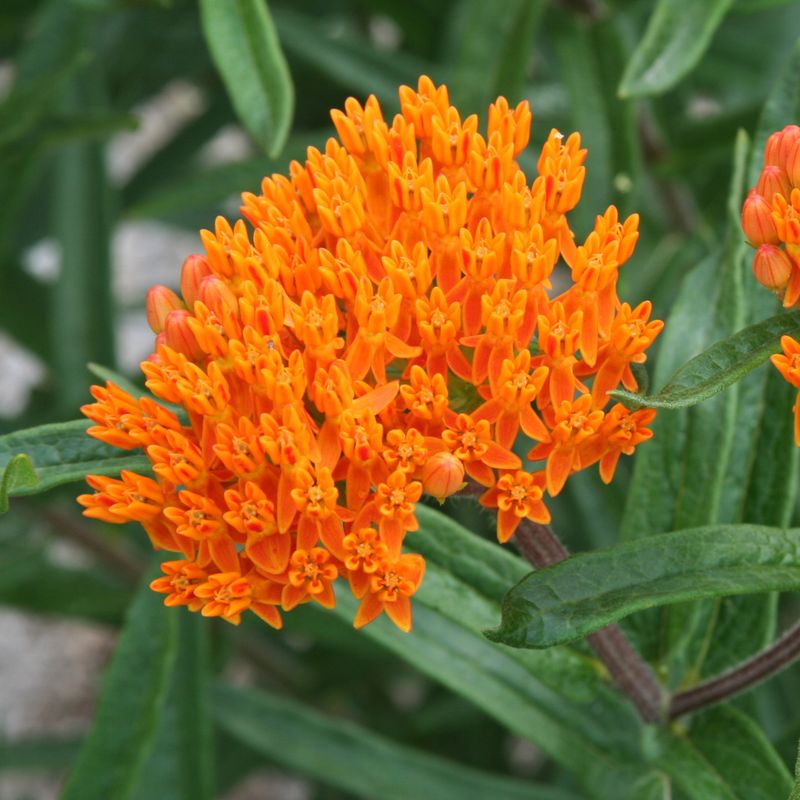
Did you know this native milkweed pulls double duty, feeding hummingbirds while also serving as a monarch butterfly nursery? Its intense clusters of orange flowers are a pollinator party from top to bottom.
Butterfly Weed wants full sun and well-drained soil, ideally sandy, low in fertility, and slightly acidic. A deep taproot makes it drought-tolerant once established, so it rarely needs babying.
Overwatering or soggy soil can cause crown rot, so water new transplants well, then let the soil dry a bit before watering again. Once mature, it thrives on infrequent, deep drinks and excellent drainage.
Bright yellow oleander aphids sometimes cluster on the stems. Lady beetles naturally hunt them down, and avoiding high-nitrogen fertilizer keeps the pests from swarming in the first place.
Skip heavy feeding altogether; a light layer of compost in fall is all this native needs, and it won’t run wild through your beds.
9. Zinnia ‘Orange King’
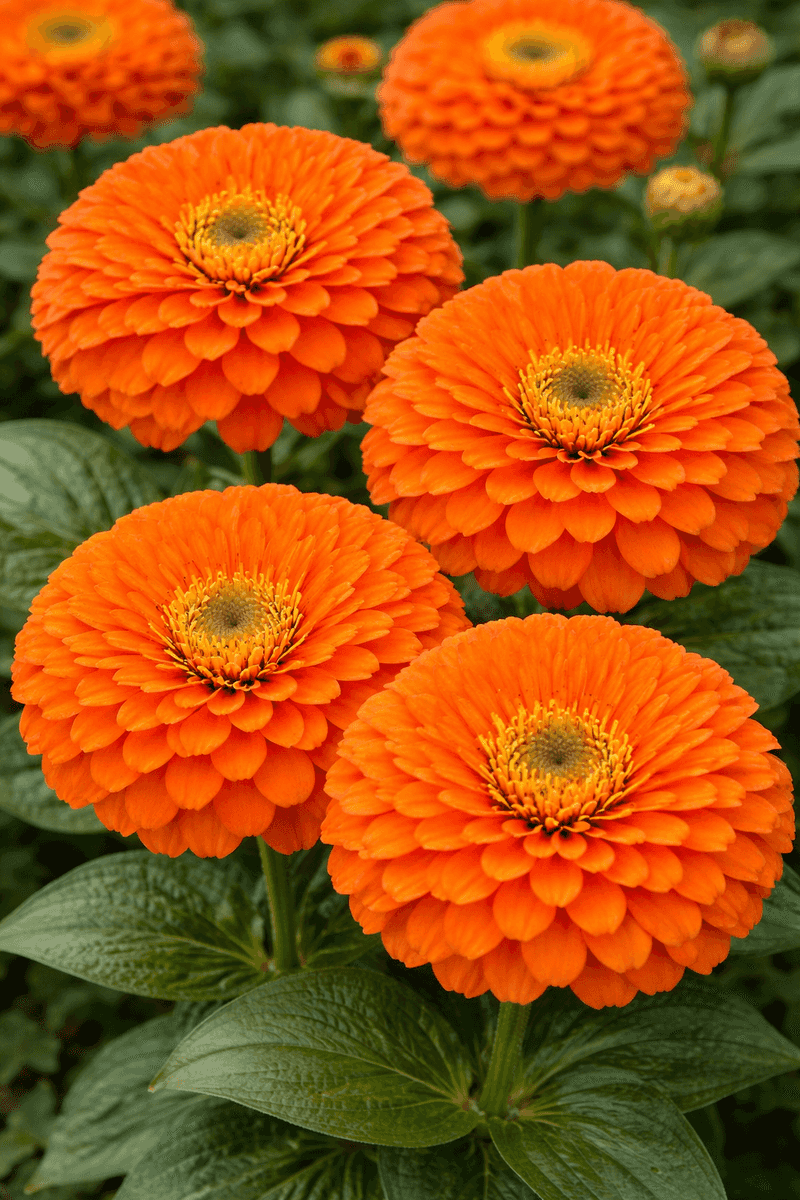
For a bold splash of color that keeps coming, ‘Orange King’ Zinnia delivers big, double blooms in vivid orange from summer straight into fall. Hummingbirds, bees, and butterflies treat it like a landing pad.
An easygoing annual, it wants full sun and well-draining soil, plus steady water during dry stretches. Let the top two inches of soil dry out before you water again.
Powdery mildew and bacterial leaf spot show up in humid or crowded plantings, especially with overhead watering. Space plants for airflow, water at the base rather than the leaves, and pluck off any affected foliage right away.
Blooms tapering off? Deadheading spent flowers regularly keeps new ones coming all season.
And if you see wilting or yellow leaves, check the moisture carefully, since both overwatering and underwatering cause it. Watering early in the morning lets the leaves dry out and helps keep disease at bay.
10. Agastache (Hummingbird Mint)
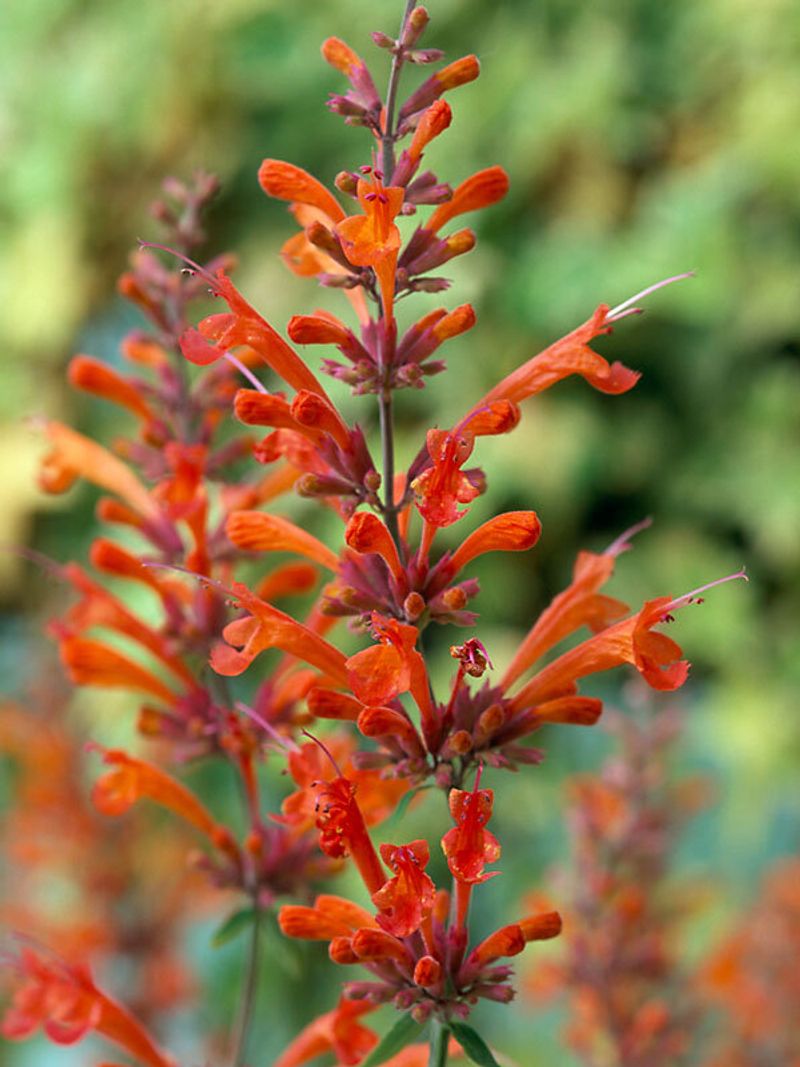
With a common name like Hummingbird Mint, you can guess who shows up when Agastache blooms. Its coral and orange flower spikes carry a soft minty scent and buzz with visitors all summer.
Plenty of sun is non-negotiable here, ideally 6 to 8 hours a day, or you’ll end up with spindly stems and stingy blooms. It needs well-draining soil and hates staying wet, though it handles drought nicely once established.
Overwatering invites both root rot and powdery mildew, so let the soil dry between deep, infrequent waterings. Water at the base to keep the leaves dry, and give plants room for good airflow.
Refusing to bloom? Check for enough sun, the right soil, and correct watering, and lay off heavy fertilizer that pushes leaves instead of flowers.
A single balanced, slow-release feeding in spring or a bit of compost is plenty. Hold off on pruning until early spring, and in bitter-cold zones, a wrap of burlap offers welcome winter cover.