
What It Really Means When A Box Turtle Keeps Returning To Your North Carolina Garden Beds
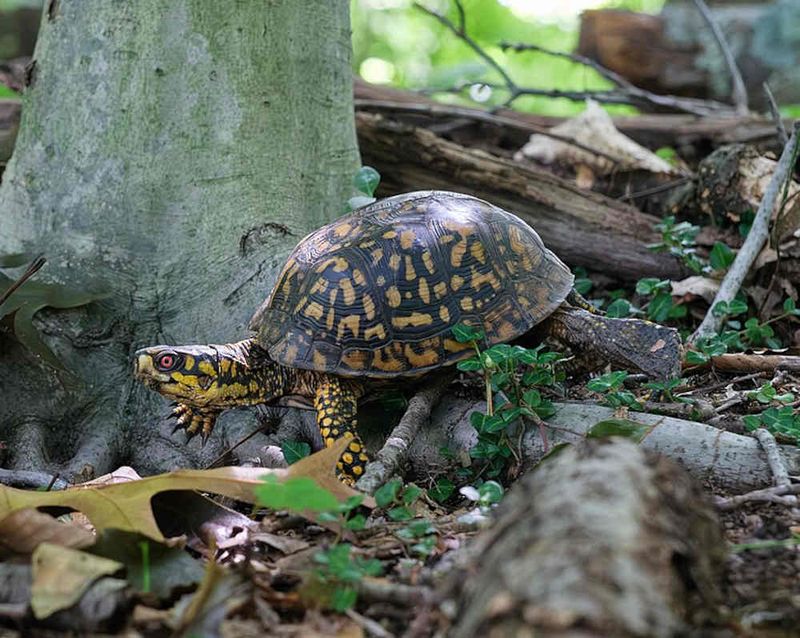
Spotting the same dome-shaped turtle nosing through your garden beds more than once can feel like a sign that you are doing something right. North Carolina homeowners often wonder whether a repeat visitor is drawn by healthy soil, fewer pests, or some other garden quality worth celebrating.
The honest answer is more interesting and more useful than a simple compliment to your compost pile. Understanding why that turtle keeps showing up can help you protect it and manage your yard more wisely.
First confirm that the visitor is an eastern box turtle
Before reading anything into a turtle’s return visits, the most important step is knowing which turtle you are actually looking at. The guidance in this article applies specifically to the eastern box turtle, and it should not be applied automatically to every turtle that wanders through a North Carolina yard.
The state is home to numerous native turtle species, and handling or relocation advice that fits an eastern box turtle can be wrong or even dangerous when applied to a snapping turtle, a painted turtle, or a listed species.
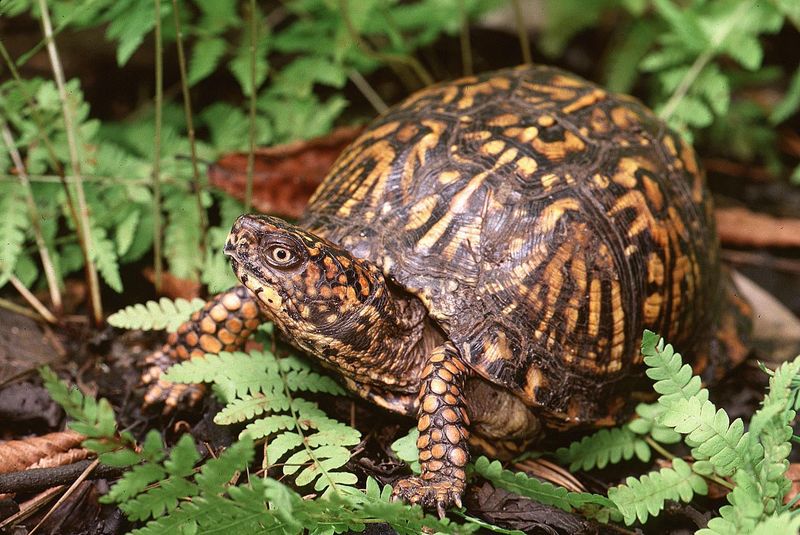
Eastern box turtles are relatively easy to recognize once you know what to look for. They have a high, domed shell that can close almost completely, a feature no other common North Carolina turtle shares in quite the same way.
Shell coloring ranges from olive brown to nearly black, often marked with yellow, orange, or cream streaks and spots. Males typically have red or orange eyes; females usually have brown or yellowish eyes.
The underside of the shell, called the plastron, has a hinge that allows the turtle to pull its head, legs, and tail fully inside. If you are uncertain whether the turtle in your garden matches that description, NC Wildlife’s general guidance on handling wildlife and the Commission’s species pages can help you confirm the identification before taking any action.
Once you have a confirmed eastern box turtle, the next question is what its repeated appearances actually mean. Repeat sightings can involve one individual following a well-worn path through familiar territory.
They can also involve several different turtles that find the same patch of habitat useful, or simply reflect that you are now paying closer attention and noticing animals that were always passing through. Without marking or tracking the turtle, you cannot know which explanation fits.
What you can say with confidence is that a confirmed returning eastern box turtle is almost certainly using your yard as part of a familiar area, not evaluating your garden’s soil quality.
The turtle is following a familiar home range

Eastern box turtles are creatures of habit in a way that surprises many people. NC Wildlife notes that these turtles typically occupy territories of under two acres and show remarkably strong homing instincts, meaning they learn and remember the landscape within that small area over years, sometimes decades.
A turtle that appears in your garden bed on a Tuesday in May and again on a Thursday in June is probably not making a fresh decision each time. It is likely traveling a route it has used many times before, one that happens to pass through or near your property.
Urban and suburban landscapes do not push box turtles out entirely. Research on box turtles in an urbanized North Carolina landscape near Davidson found that turtles can persist in developed areas, but they face higher mortality rates than turtles living in forested habitat.
Roads, lawn equipment, dogs, and habitat fragmentation all raise the risk. A turtle passing through your yard may look perfectly at ease, but its journey through a residential neighborhood carries real hazards that forested movement corridors do not.
Knowing this changes how you should interpret a repeat visit. The turtle did not choose your garden because it assessed the soil or counted the slugs and found conditions superior to your neighbor’s yard.
Your property sits inside, or on the edge of, a territory this individual has used long enough to treat as familiar ground. The bed may offer shade, cover, moisture, or food along a route the turtle already knows.
That same homing instinct is the reason you should never relocate a healthy eastern box turtle to a park, wooded area, or any location across town, even one that looks like better habitat. A displaced turtle will often attempt to return to its home range, crossing roads and unfamiliar terrain in the process, and many do not survive the attempt.
Leaving a healthy turtle where it is remains the safest response, for the animal and for your peace of mind as a steward.
What the garden offers is habitat, not a soil verdict
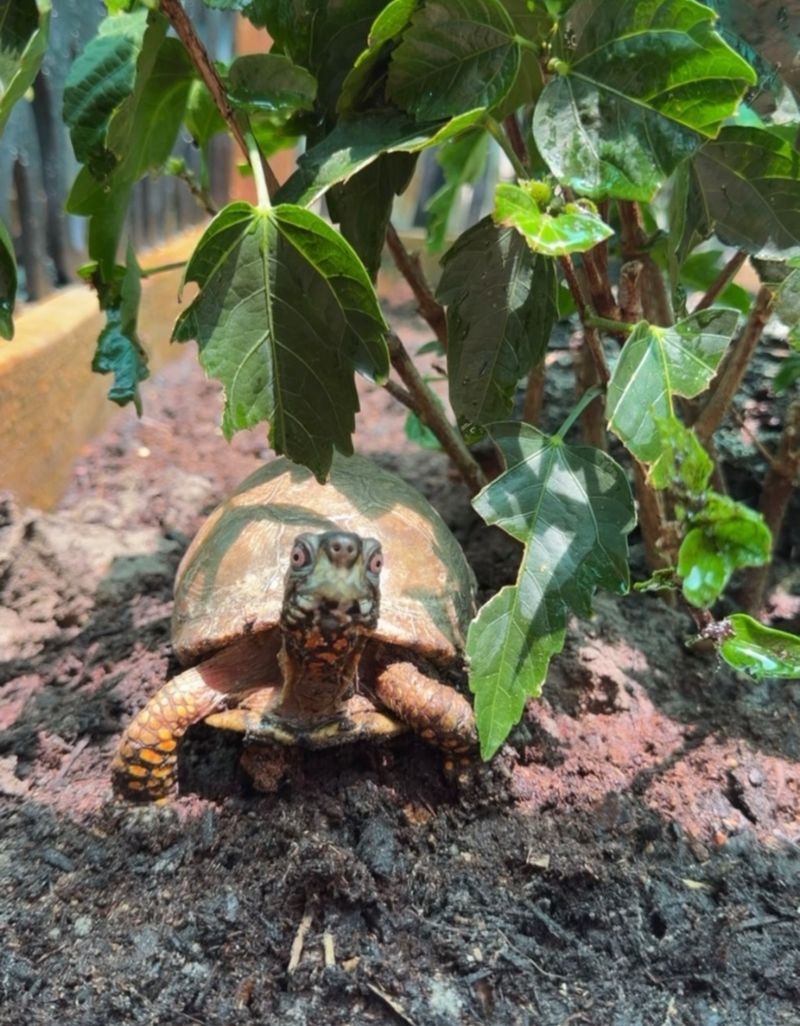
Garden beds tend to collect the conditions box turtles look for: shade from tall plants or trellises, damp soil under mulch, fallen fruit from berry bushes or fruit trees, fungi growing in decomposing organic matter, and a relatively undisturbed layer of leaf litter or ground cover where the turtle can rest or forage. If your beds offer any combination of those features, they are providing habitat.
That is a meaningful thing, but it says nothing about whether your soil pH is correct for tomatoes or whether your nitrogen level is adequate for leafy greens.
A USGS study on eastern box turtle movement and resource selection found that turtles show preference for deciduous forest patches and tend to avoid roads and open trails. In a residential yard, mature trees, shrub borders, and planted areas with dense canopy can mimic some qualities of deciduous forest understory.
That connectivity matters more to the turtle than the chemical composition of your raised bed’s growing mix.
A related point worth making clearly: eastern box turtles are terrestrial animals. A repeat garden visitor does not signal that you need to add a pond or water feature to keep it coming back.
Cover, moisture in the soil and leaf litter, and safe travel routes between patches of suitable habitat are far more relevant to whether a turtle can use your yard than the presence of standing water.
Across North Carolina, conditions vary considerably. A garden in the Coastal Plain may offer different soil textures, humidity levels, and surrounding habitat than one in the Piedmont or the mountains.
A U.S. Forest Service regional analysis of eastern box turtle habitat highlights how broadly habitat quality can differ across landscapes.
What draws a turtle in one part of the state may not apply precisely to another region, and local canopy cover, road density, and surrounding development all shape whether a yard can support a resident or passing turtle. Wildlife-friendly habitat and productive vegetable soil can overlap, but they are not the same goal, and one does not guarantee the other.
Use a soil test for chemical fertility questions
One of the most persistent myths about a returning box turtle is that its presence confirms the soil is healthy, fertile, or free of chemical imbalances. No research supports that interpretation.
A turtle navigating your garden beds cannot measure pH, assess nutrient levels, evaluate cation-exchange capacity, or detect whether your soil has enough calcium, magnesium, or potassium for the plants you are trying to grow. Treating a wildlife visit as a soil report card leads to skipping a step that actually gives you useful information.
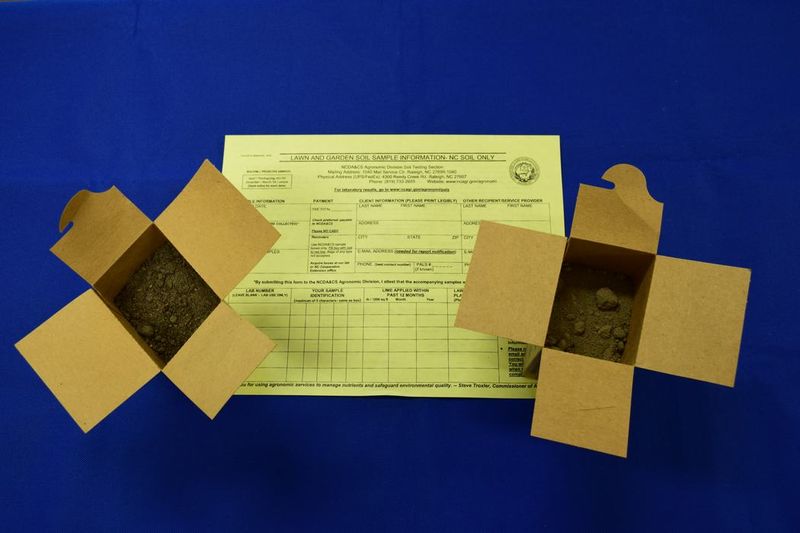
The appropriate tool for diagnosing chemical fertility is a soil test through the NC State soil-testing program. NC State Extension’s guide to soil testing explains that a standard test measures pH, phosphorus, potassium, calcium, magnesium, sodium, and other properties, and returns specific lime and fertilizer recommendations tailored to whatever crop or planting you plan to grow.
Submitting a representative sample from your garden bed takes about fifteen minutes and costs very little through the NC Department of Agriculture and Consumer Services lab.
A soil test is the right diagnostic for chemical fertility and lime or fertilizer needs, but it does not tell you everything about soil condition. Compaction, drainage, pore structure, and biological activity require separate observation or evaluation.
You can press a screwdriver into the bed to check for compaction, observe how quickly water soaks in after rain, and assess earthworm counts when you turn the soil. These are practical steps that give you real information, where watching a turtle forage does not.
NC State Extension’s integrated pest management guidance reinforces the principle of basing fertilizer and lime applications on soil test results rather than guesswork or indirect signals. Applying amendments without a test can create nutrient imbalances that harm plants and contribute to runoff.
The turtle’s presence is a reasonable nudge to think about your yard’s overall health, but the soil test is where that inquiry should actually go.
Its diet offers clues, not dependable pest control
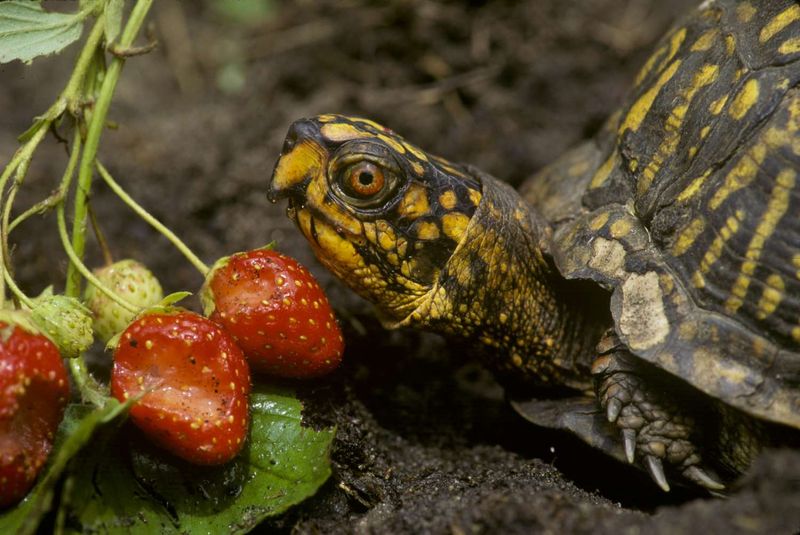
Eastern box turtles eat a wide variety of foods, and that variety is worth understanding honestly. Documented items in the diet include fungi, snails, slugs, beetles and other insects, spiders, earthworms, carrion, wild berries, and other plant material.
The U.S. Forest Service’s species review for the eastern box turtle describes this diet as broad and opportunistic, shifting with season and whatever happens to be available in the turtle’s territory.
That range of foods supports a modest and accurate claim: a turtle visiting your garden may well find something to eat there, whether that is a slug near the strawberries, a beetle in the mulch, or a fallen fig. A peer-reviewed study on insect composition in the box turtle diet confirms that insects make up a meaningful portion of what these turtles consume, including species that gardeners often consider pests.
Where the interpretation needs to stop is at the claim that one turtle will control your garden’s pest population, or that its presence means your beds have fewer pests than your neighbor’s. A single turtle moving through a yard on a familiar route is not conducting systematic pest suppression.
Its diet is broad enough to include earthworms and other beneficial soil organisms alongside the slugs and beetles a gardener might prefer to lose. Pest populations in a garden are shaped by plant selection, irrigation, mulch depth, surrounding habitat, and many other factors that have nothing to do with turtle traffic.
Treating food availability as one plausible reason a turtle visits your garden is reasonable. Using that observation as a substitute for actual pest monitoring or management is not.
Notice what the turtle might be finding, then assess your pest situation directly through observation rather than assuming the turtle is handling it for you.
Leave the visitor alone and make the route safer
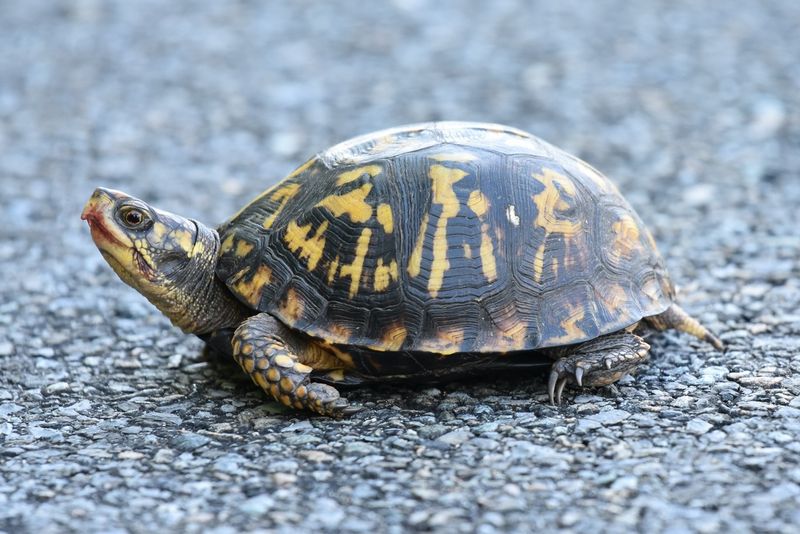
Watching a box turtle move through your garden from a respectful distance is genuinely enjoyable, and it is also the right approach. Avoid picking the turtle up repeatedly, even out of curiosity or affection.
Unnecessary handling causes stress and can disrupt the animal’s normal behavior. Keep dogs away from the turtle while it is in the yard, since even a playful dog can injure a box turtle quickly.
Do not leave food out to attract it, and do not bring it indoors; wild turtles are not pets, and artificial feeding can expose them to inappropriate foods, attract other animals, and alter behavior in ways that reduce their long-term survival.
NC Wildlife’s eastern box turtle page advises that the best thing most homeowners can do is observe from a distance and leave the animal alone. If you want to support the turtle’s use of your yard, preserve the features it is already using: shade from trees or tall plants, leaf litter and mulch where it can rest and forage, and relatively undisturbed movement corridors through or around your beds and fencing.
Minimizing disturbance does not mean assuming the turtle is perfectly safe. USGS research on box turtle movement and the Davidson-area urban study both point to roads, development, and human activity as significant sources of mortality in developed landscapes.
A turtle comfortable in your garden may still face real danger the moment it reaches a road or a neighboring property with hazards you cannot control.
If you find an eastern box turtle on a road in immediate danger, you can help by moving it the shortest distance necessary, ideally less than 50 feet, and in the direction it was already traveling. Moving it further or in a different direction increases the chance it will try to cross the road again to return to its home range.
For a turtle with a cracked shell, visible bleeding, or another obvious injury, the right step is to contact a licensed reptile rehabilitator rather than attempting home treatment. NC Wildlife’s guidance on handling wildlife can help you locate appropriate resources in your area.
Manage garden pests without exposing wildlife
A box turtle using your yard is a reasonable prompt to look carefully at what products you apply and how you apply them. That does not mean abandoning pest management; it means approaching it deliberately.
NC State Extension’s integrated pest management framework lays out a practical sequence: start by monitoring your beds to identify what pest is actually present and at what level, then use cultural controls such as crop rotation, resistant varieties, proper spacing, and sanitation before reaching for a chemical product. Apply fertilizer and lime only when a soil test indicates a specific need, not on a routine schedule.
When a pesticide is genuinely necessary, the label is the law. Read it completely before mixing or applying, follow all application directions, and pay attention to any language about pollinators, aquatic environments, or wildlife.
EPA guidance on reducing pesticide impacts on wildlife emphasizes proper storage and disposal as well as application timing and placement to reduce nontarget exposure. Granular products left on the surface, spray drift onto adjacent cover, and treated prey items are all pathways through which a turtle or other wildlife can be exposed to a product that was not intended for them.
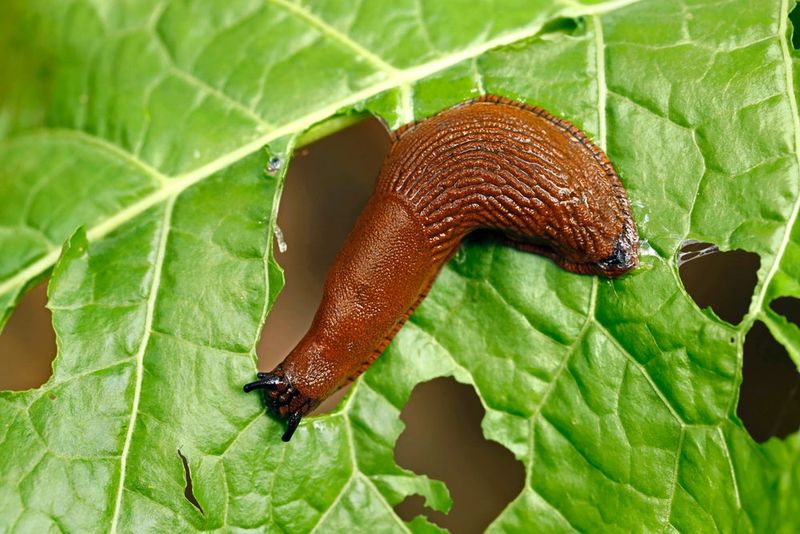
One specific warning applies here. Slug bait containing metaldehyde should not be used in a yard where a box turtle is present, and the turtle’s willingness to eat slugs does not make bait placement a safe strategy.
EPA’s ecological risk assessment for metaldehyde identifies risks to birds and mammals that ingest the bait, and the National Pesticide Information Center’s snail bait guidance confirms that animals eating bait pellets can be poisoned. A turtle that finds and eats bait, or that eats a slug that has contacted bait, faces a real exposure risk.
Physical barriers such as copper tape, hand-picking, and trapping with boards or citrus rinds are safer slug management options in areas where wildlife is active.
Managing pests well and protecting a visiting turtle are not competing goals. They require the same approach: know what is in your yard, use the least-disruptive effective method, and treat chemical products as a targeted last step rather than a routine one.
Treat the return as a habitat clue, not a diagnosis
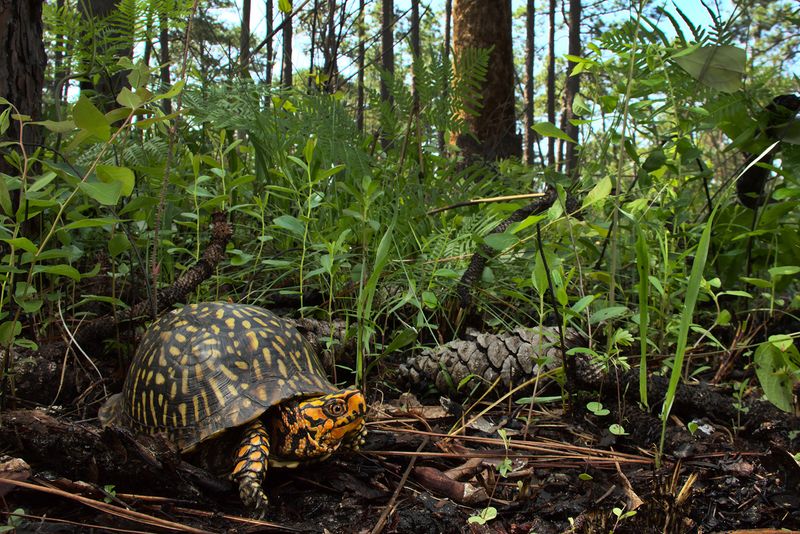
When a confirmed eastern box turtle keeps appearing in your garden beds, the most accurate reading is this: your yard offers something useful along a route the turtle already knows. That something is most likely cover, moisture, food, or safe passage between patches of habitat, not a signal that your soil pH is correct, your pest pressure is low, or your garden is chemical-free.
The turtle cannot measure any of those things, and its presence does not establish them.
Reframing the visit as a habitat clue rather than a diagnosis leads to better decisions. Notice what the turtle seems to be doing: resting under dense foliage, foraging in the mulch, moving along a shaded border.
Those observations tell you something real about which features of your yard are functioning as habitat. They do not replace a North Carolina soil test for chemical fertility questions, and they do not substitute for direct pest monitoring when your plants are showing damage.
The practical checklist is short. Verify the species before applying any handling or relocation guidance.
Leave a healthy turtle in place and reduce hazards such as pesticide use, roaming dogs, and uncovered window wells or drains where a turtle could become trapped. Manage pests with integrated, wildlife-conscious methods and evaluate other soil conditions, including compaction, drainage, and structure, through direct observation.
Contact NC Wildlife or a licensed rehabilitator if the turtle is injured. A turtle that keeps coming back is not grading your garden; it is simply living its life in a landscape that still has room for it.