
11 Reasons Your Hydrangea Leaves Are Turning Brown (And Which Ones Actually Matter This Fall)
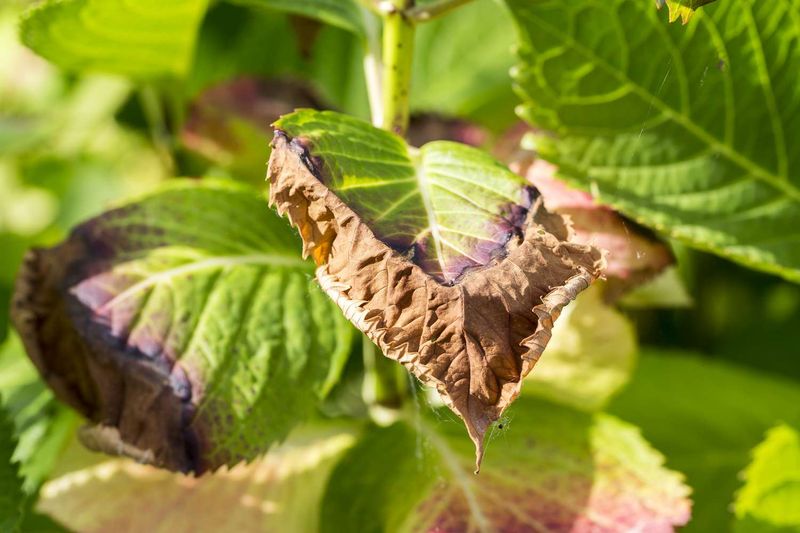
Brown, crispy leaves on your hydrangea can make your stomach drop when autumn rolls around. Before you grab the hose or a bottle of spray, it helps to know that many of these changes are normal.
Some browning, though, is a real message from the plant. This guide groups the possible causes so you can tell which ones deserve your attention.
Fall leaf drop is often part of the hydrangea’s cycle
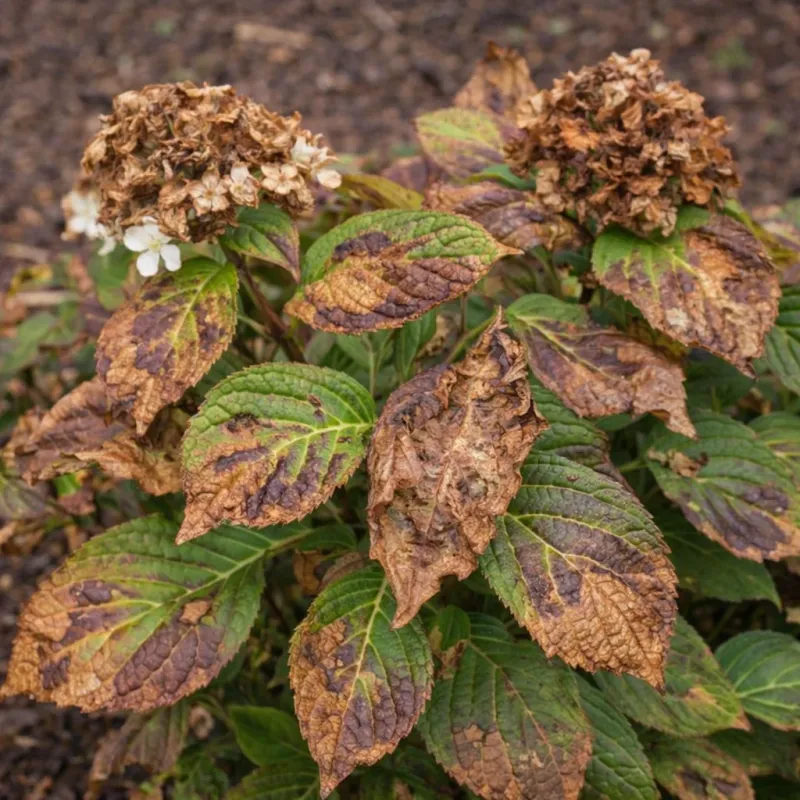
Take a breath before you panic. Most hydrangeas grown in American yards are deciduous, which means they are built to lose their leaves as they head into dormancy.
Leaves may darken, go limp, and drop, especially after a frost.
The pattern is easy to recognize. The whole shrub changes more or less together, the weather has turned cool, and the leaves fade gradually instead of showing sharp damage in one spot.
UC Statewide IPM guidance describes hydrangeas as deciduous shrubs, and some types, especially oakleaf hydrangea, develop red to purple fall color. If yours is an oakleaf, those deep wine shades are a good sign, not a symptom.
Types differ in how they look in autumn. University of Vermont Extension notes that species and cultivars vary in fall color and in other traits, so your neighbor’s shrub may not look like yours.
Do not compare too closely.
In this seasonal pattern, brown leaves alone do not mean your shrub is dying. You can let the leaves fall naturally and skip the treatments.
The rest of this guide helps you spot the cases that look different, such as browning that shows up early, leaves with distinct spots, or damage that follows a hot, dry stretch.
When does browning point to stress instead?
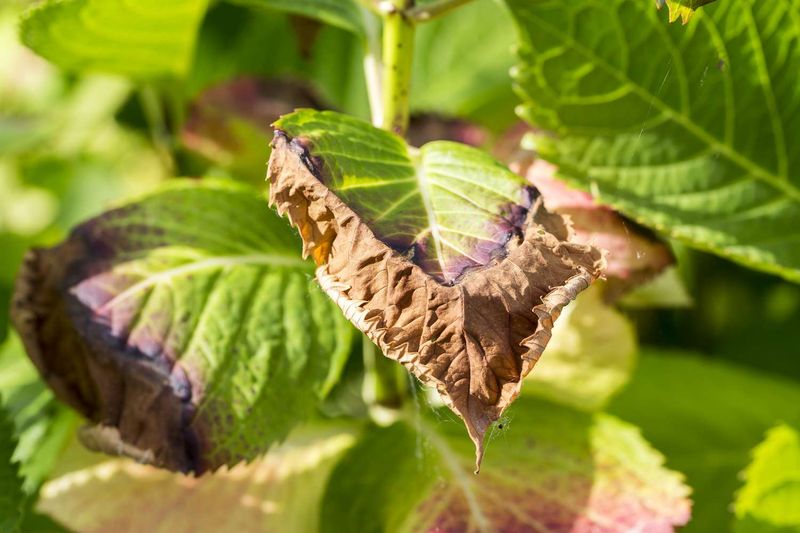
Timing is your first clue. Leaves that darken and drop after a hard frost fit the seasonal pattern.
Browning or fall color that shows up while nights are still warm, or in the middle of a dry spell, deserves a closer look.
According to University of Maryland Extension, early fall color can be a symptom of drought, while seasonal leaf loss after frost can be normal. The calendar alone cannot settle it, so compare what you see with the recent weather.
Run through a few quick questions. When did the change start, and has there been a frost yet?
Has it been hot and dry, or unusually wet? Is the browning spread evenly across the shrub, limited to the sunniest side, or concentrated at the leaf edges?
Then look at the leaf itself. Crispy margins, round spots, fine speckling, fine webbing, and twisted new growth each point in a different direction.
A plain brown leaf, on its own, cannot tell you which one is at work.
Finally, push a finger or trowel a few inches into the soil near the base. Soil moisture below the surface is one of the most useful pieces of evidence you can gather.
The next sections walk through each pattern, starting with heat and dry soil.
Dry soil, heat, and too much sun can scorch leaves
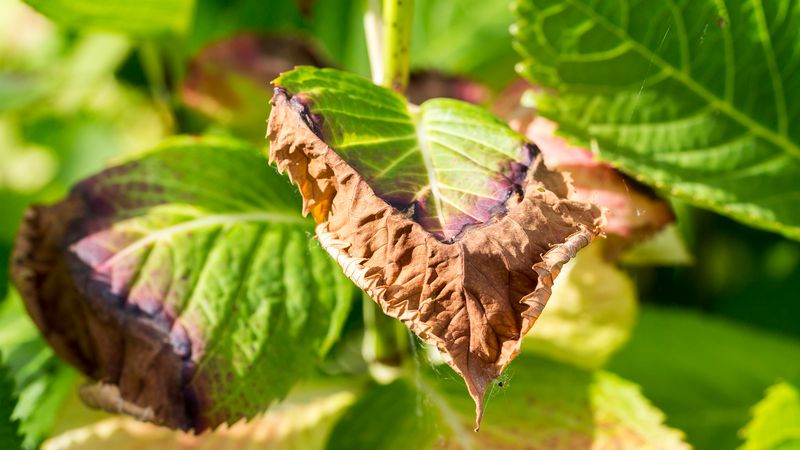
Hot, dry weather is a common reason hydrangea leaves go crispy. Wilting, scorched margins, browning, early fall color, and early leaf drop can all follow a long dry or hot stretch.
Too much sun can add to the problem, and scorch often starts at the leaf edges.
Bigleaf hydrangeas are less tolerant of heat and drought than some other types, so they tend to show stress first. University of Maryland Extension describes these patterns in its drought and heat stress guidance.
A shrub on a west-facing wall will often look worse than one in morning sun and afternoon shade.
Here is the catch: a wilted hydrangea does not always need water. Short-lived heat wilt on an afternoon can ease once the temperature drops, even without extra water.
So check before you act. Dig a few inches down near the roots.
University of Maryland Extension’s watering advice says to check the soil below the surface, and if it is dry, water deeply at the roots. If the soil is moist, wait.
Scorched leaves will not turn green again, so do not keep watering in hopes of fixing them. Focus on protecting the roots from here on.
A layer of mulch and a deep soak during future dry spells can help the shrub handle the next hot season.
Soggy roots can create a dry-looking leaf problem
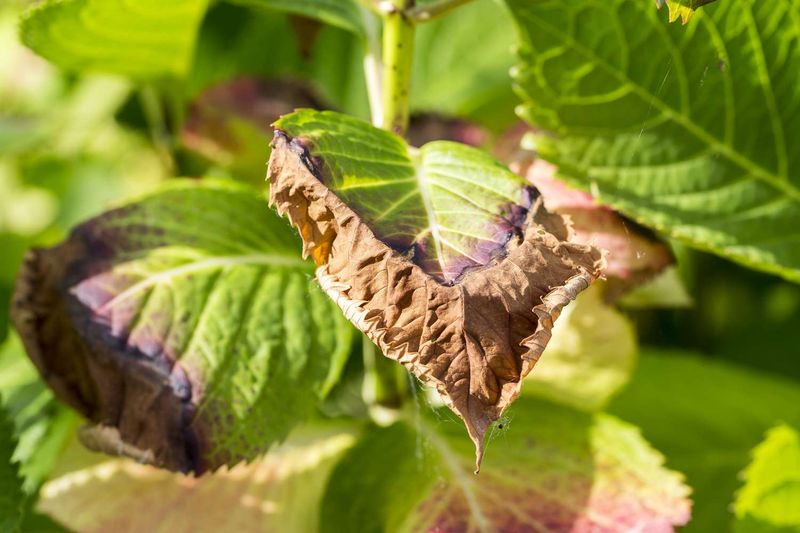
Here is a twist that surprises many gardeners. Roots damaged by too much water cannot do their job, so the leaves can look dry and crispy even though the soil is wet.
Brown leaf edges and leaf drop can both be signs of overwatering.
Oregon State University Extension points out that slow-draining, soggy soil can harm hydrangea roots. Because the symptoms resemble drought, adding more water can make things worse.
Think about your site. Does water puddle after rain?
Is the shrub in a low corner, near a downspout, or in heavy clay that stays damp for days? A sprinkler that runs every morning can create the same soggy effect.
Do the soil check again, but this time pay attention to wetness. Push a finger or small trowel several inches down.
If the soil feels cool, muddy, or soaked days after the last watering, hold off.
If drainage is the issue, you have a few low-cost options. Pause extra watering, redirect runoff away from the base, and avoid piling mulch against the stems.
For a shrub that stays soggy in a bad spot, moving it in a later season may be worth considering.
Spots, stippling, and webbing offer different clues
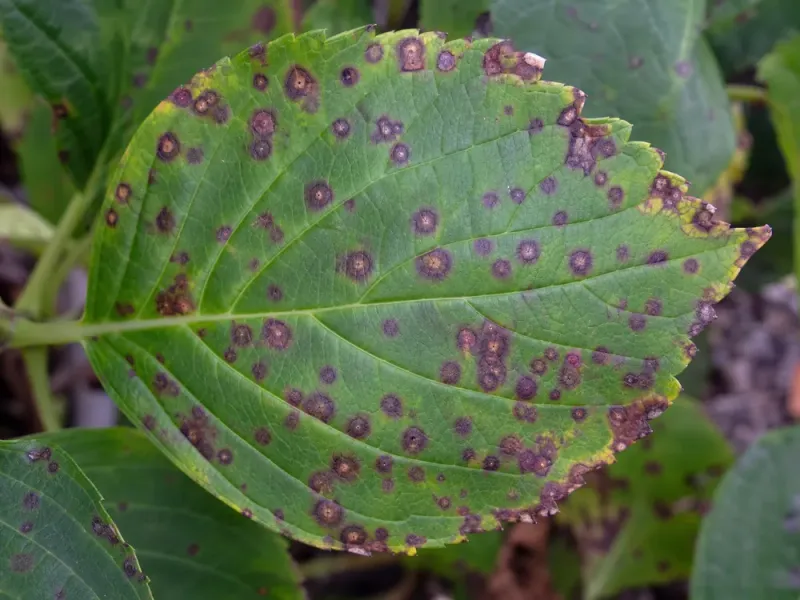
Marked leaves are not all the same problem. Look closely at the pattern, because round spots and fine speckling point to different causes.
Cercospora leaf spot typically produces tan spots with reddish-brown borders, according to UConn Home Garden Education. Reducing prolonged leaf wetness helps, and removing diseased debris can be appropriate.
Spots do not prove a serious infection. University of Maryland Extension notes that many hydrangea leaf spots are cosmetic and rarely cause serious damage late in the season.
Severe cases and repeated early leaf loss are the ones to watch.
Spider mites look different. They are more consistent with stippling, or leaves that look bronzed or yellowed, along with fine webbing.
They are most common in hot, dry conditions.
Do not guess mites from brown margins alone. Flip a few leaves over and check the undersides, ideally with a hand lens.
Tiny moving specks, speckled tissue, or silky threads are real clues.
Neither pattern automatically calls for a spray. Start with gentler steps such as cleaning up fallen leaves, watering at the soil instead of overhead, and rinsing the leaves with water if mites are present.
Treating without a plausible cause can waste money and may harm the plant.
Recent fertilizer, salt, or spray can explain damaged leaves
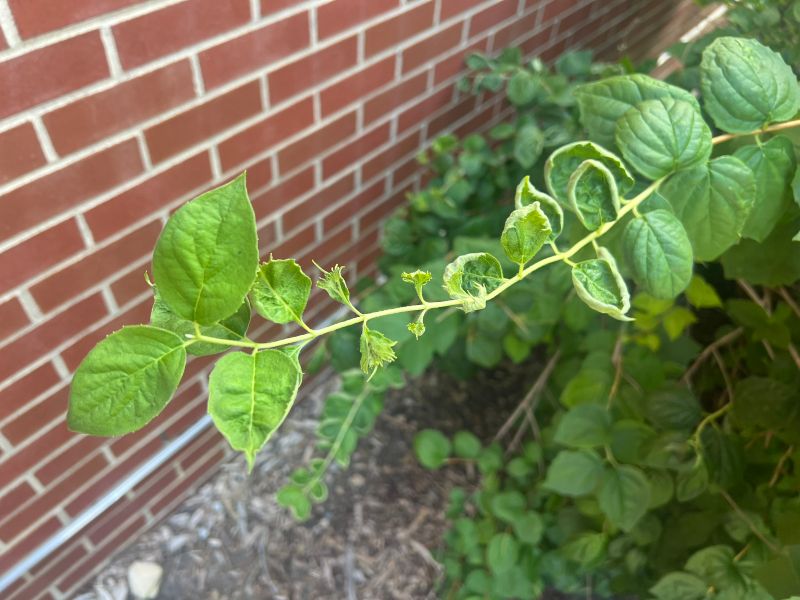
Sometimes the cause is something you or a neighbor did a few weeks ago. Excess fertilizer and de-icing salt can both cause browned leaf margins or scorch, according to University of Maryland Extension.
A hydrangea near a salted driveway or sidewalk is a classic example.
Think back over the season. Did you apply granular fertilizer heavily, or more than once?
Did runoff from a treated lawn or road reach the bed? Fertilizer will not cure browning, and more of it can make things worse.
Herbicide injury looks different. It is more likely when new growth is twisted, cupped, or distorted, sometimes followed by browning.
University of Minnesota Extension covers curled, cupped, and distorted hydrangea leaves, and University of Maryland Extension explains that chemical exposure can injure garden plants.
Ask a few simple questions before you reach for any product. Was anything sprayed nearby, even on a breezy day?
Did you use a lawn product close to the bed?
If a recent exposure fits, the low-risk response is patience and good watering habits. Skip extra fertilizer and extra pesticide.
Keep notes for next season so you can avoid repeating the exposure.
Check the soil before you try to fix the leaves
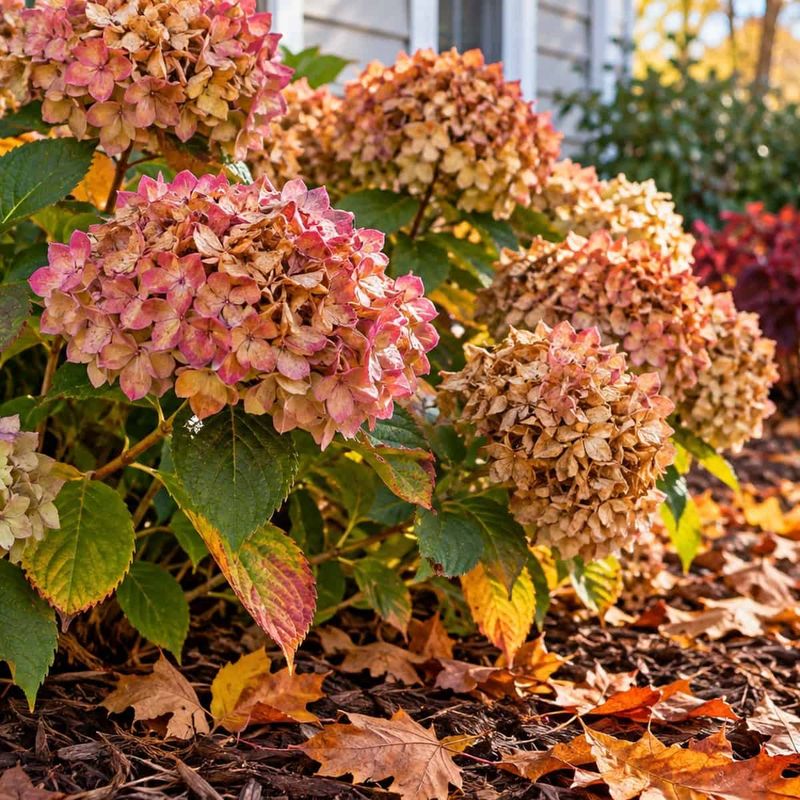
Once you have read the clues, the safest fall plan is simple. Start with the soil.
Check the root zone a few inches down. Water deeply at the roots only if it is dry.
University of Maryland Extension recommends monitoring soil moisture, especially for recently planted shrubs and during extended dry spells. Skip a fixed schedule, and never leave roots sitting in standing water.
If leaf spots are the issue, cleanup can help. UConn Home Garden Education suggests removing diseased debris when appropriate and recommends chemical control only after other methods fail.
Brown leaves alone are not a reason to spray, since several different problems look alike.
Hold off on hard pruning, too. Bigleaf hydrangeas set next year’s flower buds in late summer to early fall, so a big haircut now could remove them.
University of Minnesota Extension’s pruning guidance explains that hydrangea types differ in when and how they should be pruned.
Not sure which type you have? Leave the shrub alone for now.
Removing a few dead or damaged leaves and stems is fine, but a heavy cut is something to decide only after you know what you are growing.
Let the pattern—not the brown color alone—guide your next step
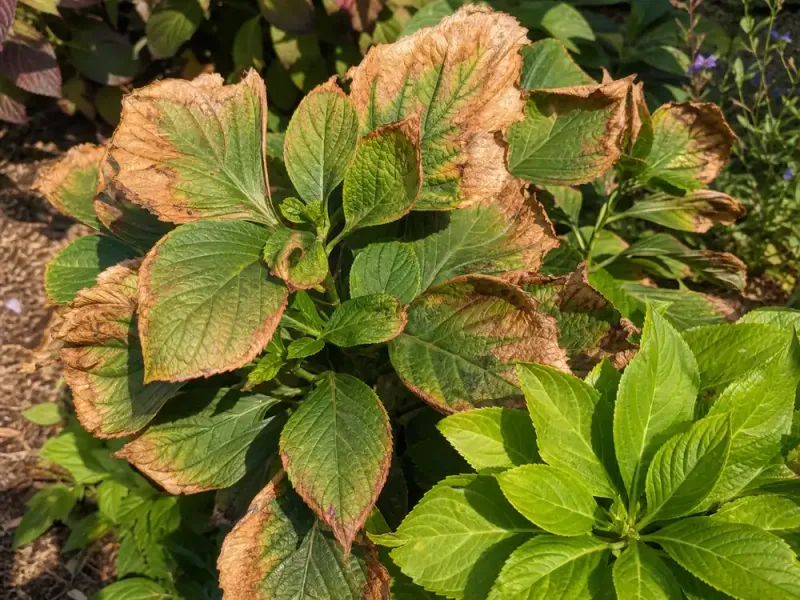
Here is the simple rule. If the change comes with cold nights and frost, and the whole shrub fades together, accept it as part of the season, as described by UC Statewide IPM.
If it comes early or with a clear pattern, look closer.
Today, walk out and inspect a few leaves and check the soil by hand. Maryland Extension’s watering guidance backs that soil check before any change in watering.
A brown leaf is a clue, not a verdict.