
Hardy Cyclamen Brings Fall Flowers and Winter Foliage to North Carolina Shade Gardens
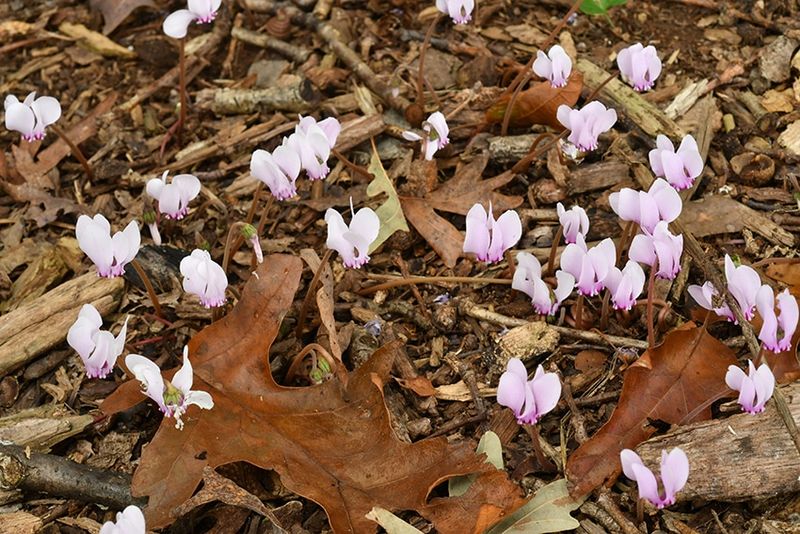
Under the oaks and maples of a North Carolina yard, a tiny pink flower can pop up from bare ground in early fall. Hardy cyclamen, Cyclamen hederifolium, is a small tuber that blooms first and grows its patterned leaves afterward.
It asks for little, but it does have needs around drainage, planting depth, and safety. Here is how to decide whether it belongs in your shade bed.
Fall flowers give way to winter foliage
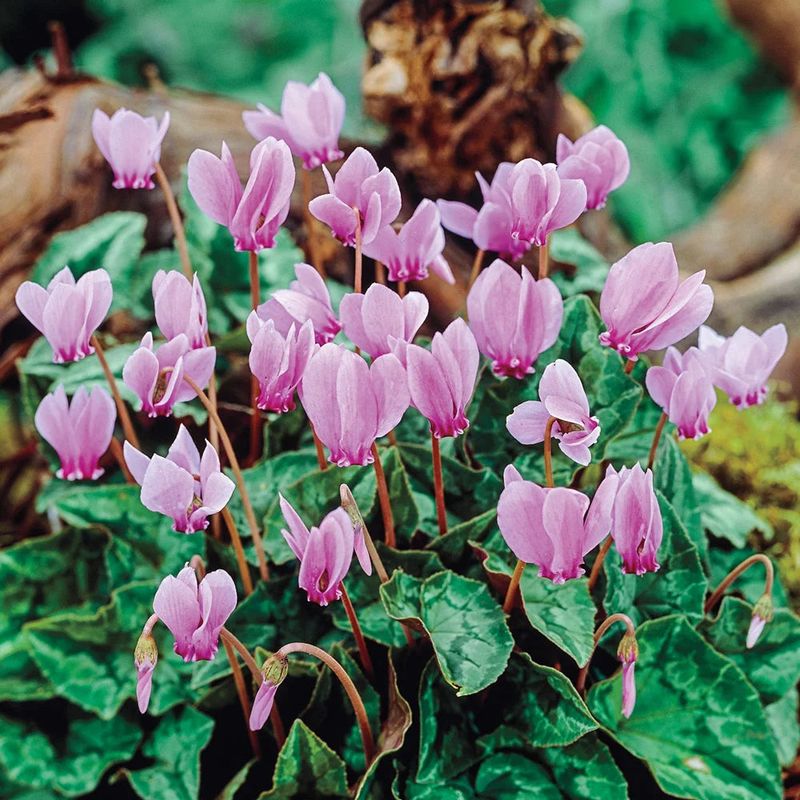
Picture a patch of bare, shaded soil in September. Then slender stems push up, each topped with a nodding pink or white flower whose petals sweep backward like tiny wind-blown sails.
That is Cyclamen hederifolium, and N.C. State Extension places its bloom period in September and October, or late summer into early fall.
The flowers are only the opening act. As they fade, the leaves take over.
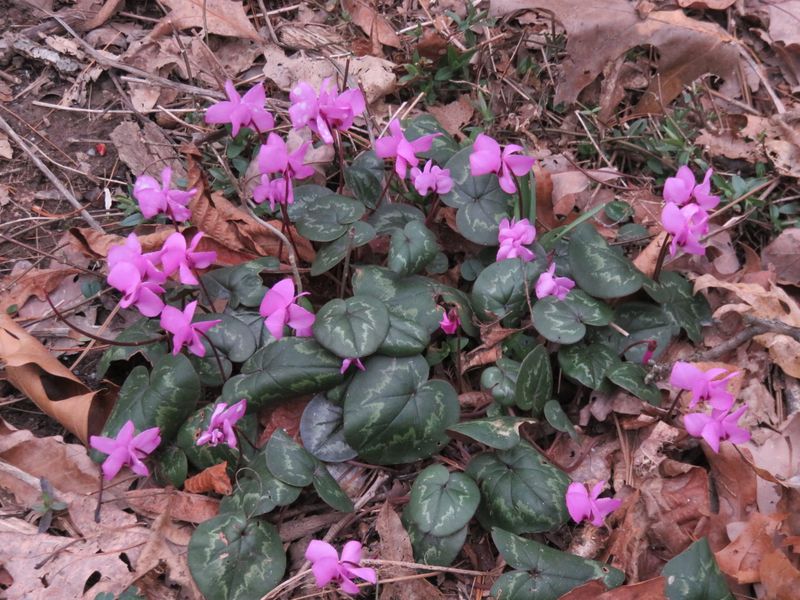
They are shaped like ivy or hearts and marked with silver or white patterns, so each one looks hand-painted. No two plants carry exactly the same design, which makes a small group more interesting than you might expect.
Those marbled leaves grow through the winter months, adding a fresh, patterned layer to beds that might otherwise look empty. Think of it as winter foliage rather than year-round greenery.
When late spring or early summer arrives, the leaves die back and the plant slips into dormancy, leaving only the tuber underground.
Because of that rhythm, the plant works best when you treat it as a seasonal accent. Enjoy flowers in early fall, leaves from autumn through winter, and a quiet gap in summer.
Please do not count on blooms in November. The local timing points to September and October, and any flowers beyond that are a bonus rather than a promise.
Once you know the sequence, spotting it becomes a small seasonal ritual. Flowers first, then leaves, then a rest.
That order is the easiest way to recognize hardy cyclamen in a neighbor’s garden or at a nursery.
A small plant needs time and the right site
Hardy cyclamen is a petite plant. According to N.C.
State Extension, a mature plant stands about 4 to 6 inches tall and spreads roughly 6 to 12 inches wide. It grows slowly, so one tuber will not blanket a bed in a season or two.
Over the years it may spread by self-seeding, especially where the soil is left undisturbed. That means raking hard or digging around the tubers can slow the process.
A broad carpet takes patience, several starting plants, and conditions the seedlings like.
Choose a spot with partial shade, such as the edge of a tree canopy or a bed on the north side of the house. Soil rich in humus, the dark crumbly material from decayed leaves, suits it well.
Leaf litter from your own oaks and maples can help build that kind of soil over time.
Drainage matters more than almost anything else. Cyclamen can handle some dry shade, but soil that stays soggy is a serious risk, especially in summer.
After a heavy rain, watch the spot. If water pools for hours, pick a higher place or build up the bed a bit.
Extension lists the species for the Coastal Plain, Piedmont, and Mountains of North Carolina, and for USDA zones 5a through 9b. Treat that as a helpful guide, not a guarantee.
Your own slope, soil, and winter conditions still decide how it does.
Set the tuber at a suitable depth
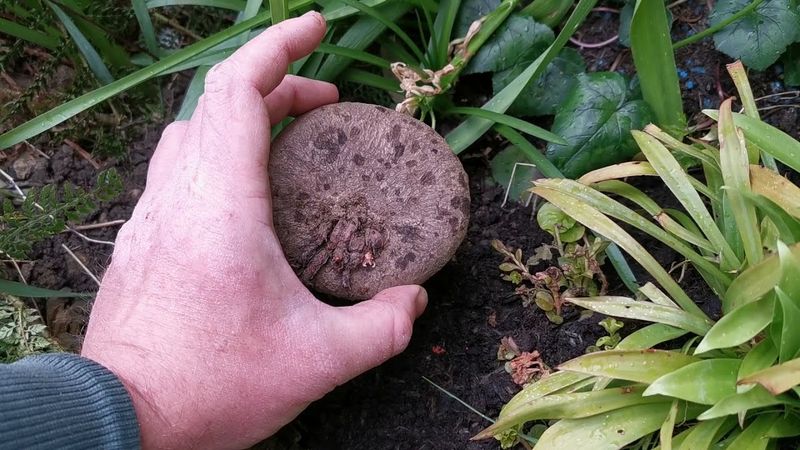
Depth is where advice differs a little. The tuber should sit in loose soil with its shoulders, the rounded upper edges, covered.
Beyond that, sources give slightly different numbers, so it helps to know both.
N.C. State Extension recommends planting about 1 inch deep.
The Royal Horticultural Society suggests 1 1/4 to 2 inches, and it cautions against planting too deeply.
Those two ranges overlap in spirit. Cover the shoulders, but do not bury the tuber under a thick blanket of soil.
If you are unsure, err on the shallow side and add a light layer of leaf mold rather than packing in more soil.
When the tubers come from a nursery or mail-order supplier, read the label or the packing slip. If the supplier gives directions for that particular tuber, follow them.
Growers know how their own stock was raised, and their notes beat a general rule.
Before planting, loosen the soil and mix in some leaf compost to help drainage. Space tubers several inches apart so each has room to grow.
Then water lightly to settle the soil, without leaving the bed soggy.
Keep dormant tubers on the dry side
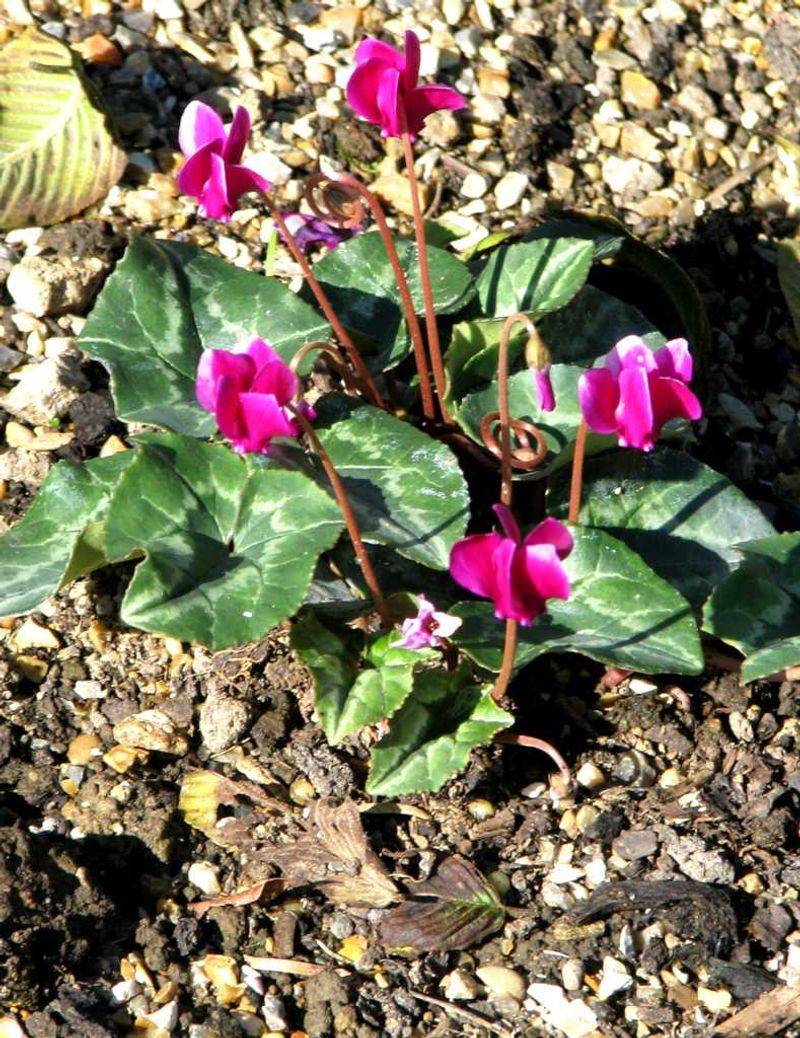
Hardy cyclamen lives on a calendar that runs backward from many garden plants. Leaves grow through winter, then yellow and die back in late spring or before summer.
Do not panic when that happens. The plant is not dead, it is resting as a tuber under the soil.
During that summer rest, the tuber is most at risk from wet ground. N.C.
State Extension warns that poorly drained soil is a problem, particularly while the plant is dormant. Keeping dormant tubers on the dry side helps prevent rot.
In a humid North Carolina summer, that means thinking about where water goes. Avoid siting tubers where a downspout empties or where a sprinkler soaks the bed every few days.
If you water nearby plants, aim at them and not at the cyclamen patch.
Dry does not mean never watered under any circumstance. During the growing season, the Royal Horticultural Society advises moist but not saturated conditions.
A long dry spell in fall or winter may call for a light drink, while a soggy bed calls for better drainage.
A useful clue: if the soil feels cool and damp a few inches down and stays that way for days, hold off. If it crumbles and drains quickly, you are in the right range.
Choose it as an ornamental, not a native substitute
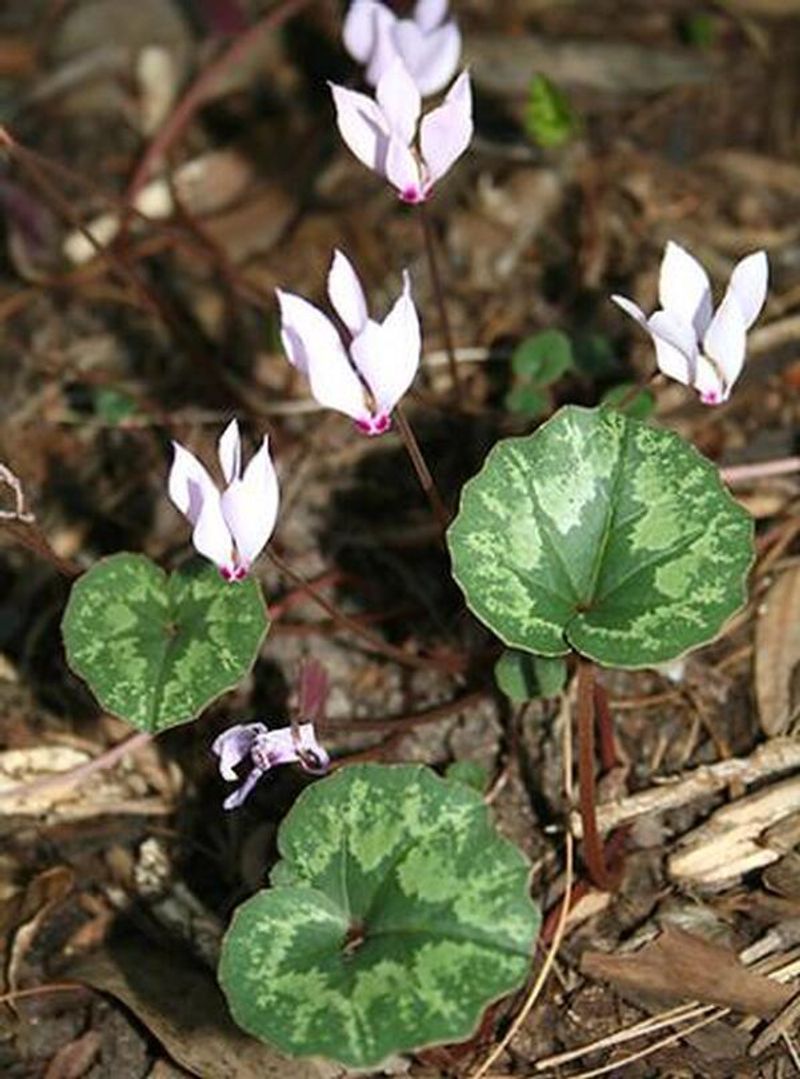
Hardy cyclamen comes from the Mediterranean region, not from North Carolina woods. It is a pretty non-native ornamental, and N.C.
State Extension notes that it is not native here. It can self-seed and naturalize, which is part of its charm and part of the reason to be thoughtful.
For a yard steward, the honest label matters. Do not think of it as a swap for a native wildflower or as a plant that restores habitat.
Extension does record that bees visit it, but a visit from a bee does not make it ecologically equal to a plant that evolved with our local wildlife.
You may wonder whether it appears on a state invasive list. It does not show up by name in the North Carolina Native Plant Society invasive species list reviewed for this article.
That absence is not proof that it cannot spread, so keep an eye on seedlings that pop up beyond the bed.
A balanced approach is simple. Plant it as a small accent near the house, where you can watch it, and pull stray seedlings that wander into natural areas.
Build the bulk of the bed from native shade plants such as ferns and woodland wildflowers, and let the cyclamen be the garnish.
Keep the plant away from mouths
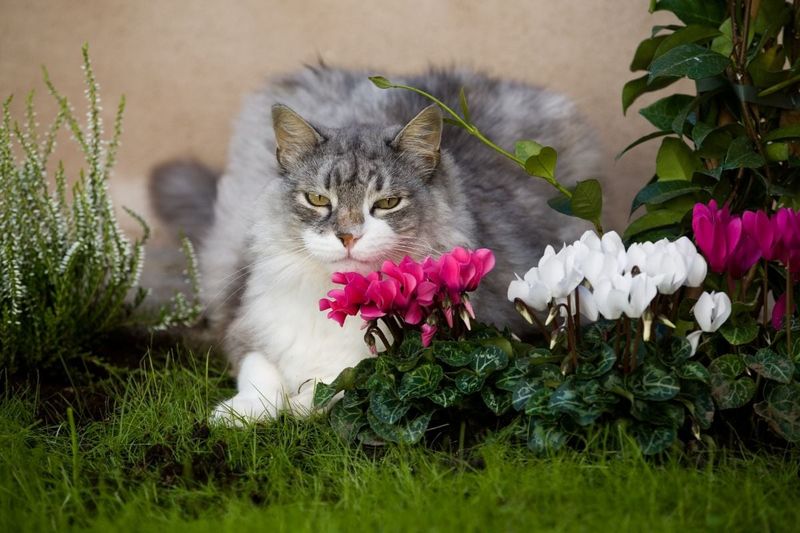
Pretty does not mean safe. Cyclamen is toxic if eaten, and N.C.
State Extension warns about ingestion by people, including children, and by pets. A garden setting does not change that.
The ASPCA lists Cyclamen species as toxic to dogs, cats, and horses. The tubers are of particular concern when an animal eats a large amount.
Puppies and diggers that like to pull things from the soil deserve extra attention.
Think about placement. Choose a bed that is out of reach of a toddler who tastes everything or a dog that patrols the yard.
A raised bed, a fenced border, or a spot near a path your pet does not use can all help.
If you suspect that a child or pet has chewed or swallowed any part of the plant, act quickly. Contact a veterinarian or a poison-control service for advice instead of waiting for symptoms.
Bring the plant name with you, since Cyclamen hederifolium is easy to describe.
When you plant or divide tubers, wear gloves and wash your hands afterward. Store any spare tubers where children and pets cannot reach them.
Expect seasonal color and gradual spread
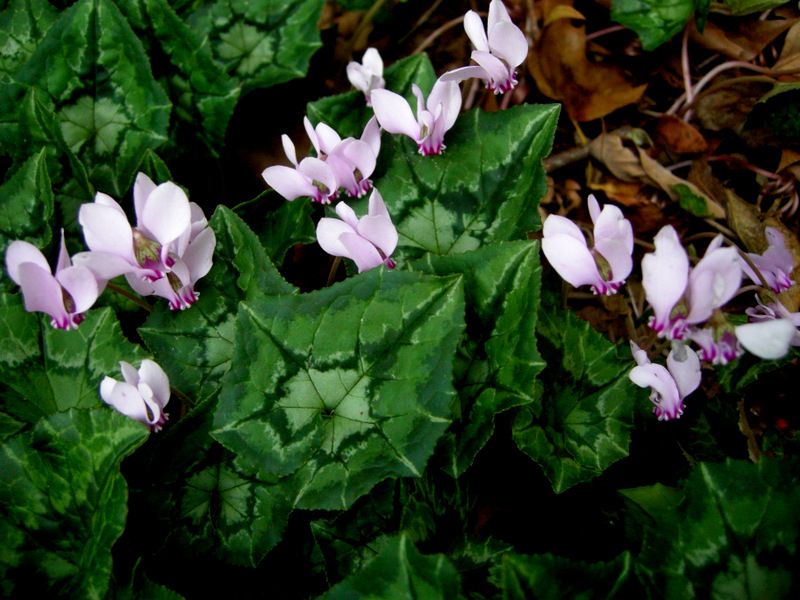
Hardy cyclamen suits a gardener who enjoys small pleasures. If you have a shaded spot with good drainage and you want fall flowers, winter foliage, and slow spread, it fits the job nicely.
N.C. State Extension describes it as a low plant that grows slowly.
If you want a bed filled fast, look elsewhere. This plant stays small, rests through summer, and rewards patience.
Plant a few tubers, keep the site dry in the dormant season, and let time do the work.
Some seasons you will barely notice it, and then one September morning the flowers will be back.