
12 Sugar-Water Alternatives That Bring Hummingbirds Flocking (And 6 You Should Never Offer)
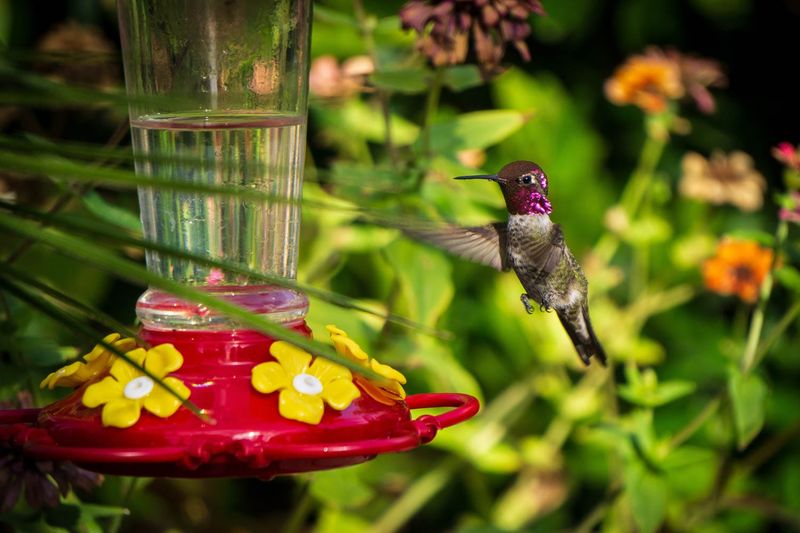
Hummingbirds are tiny bundles of energy that need fast fuel, and sugar water is only part of the story. If you want a yard buzzing with these little jewels, there are plenty of natural foods and helpers you can offer beyond the usual feeder. Some choices pull hummingbirds in like magnets, while a few common ones can actually hurt them. Here are twelve smart alternatives worth trying and six you should keep far away from your feathered visitors.
1. Native Tubular Flowers Like Trumpet Vine
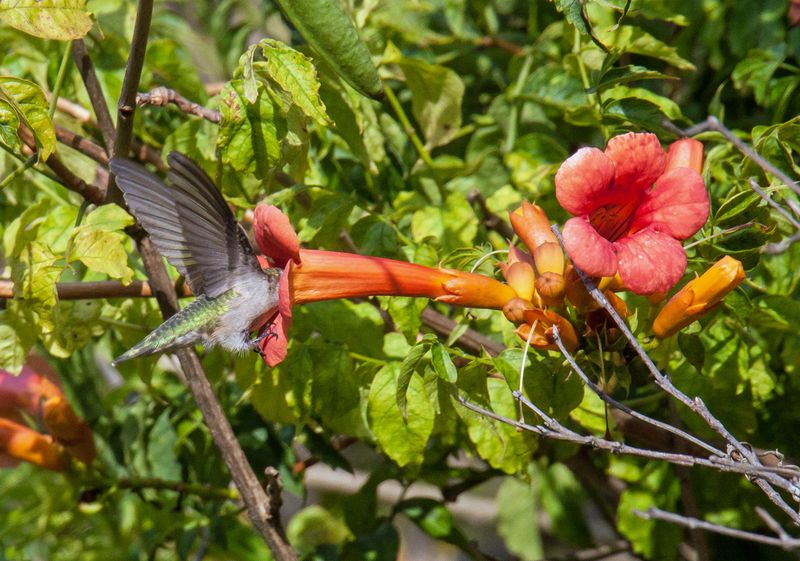
Nothing beats a wall of trumpet vine when it comes to grabbing a hummingbird’s attention. The long, orange-red blooms are shaped almost like a perfect landing pad for a hovering bird’s slender bill.
Trumpet vine (Campsis radicans) grows well across much of the eastern and central United States, and it produces nectar without any effort from you. Once it climbs a fence or trellis, it flowers for weeks and refills its own sugar supply naturally.
The nectar inside real flowers carries trace nutrients and amino acids that plain sugar water simply cannot match. That makes native tubular blooms a healthier fuel source than anything poured from a bottle. Plant it in a sunny spot and give it something sturdy to climb, because this vigorous vine can get heavy fast.
2. Bee Balm
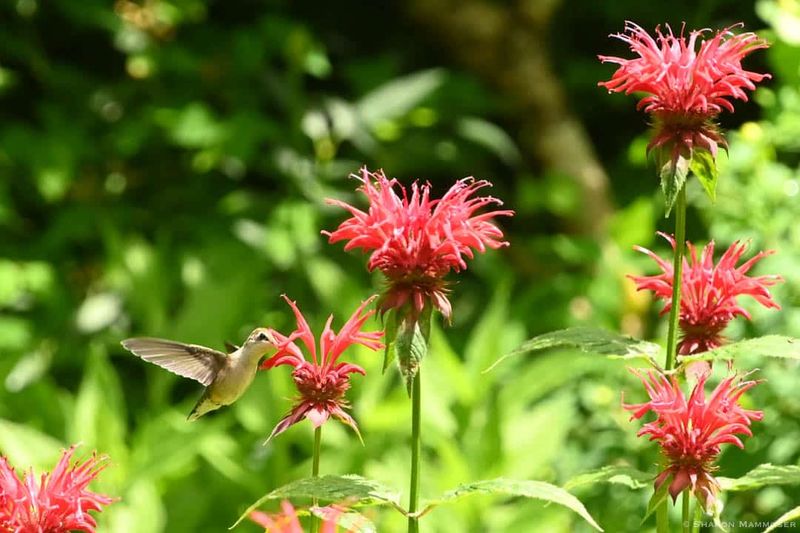
Ask any backyard gardener in the Midwest which flower brings the most hummingbird traffic, and bee balm usually tops the list. Its shaggy red and pink blooms sit at just the right height for a quick sip.
Bee balm (Monarda) is a native perennial that thrives in zones 4 through 9, spreading into cheerful clumps year after year. Beyond nectar, it pulls in tiny insects that hummingbirds also snack on for protein.
A patch of bee balm doubles as a mini buffet, offering both sweet nectar and a bug snack in one stop. Give it morning sun and decent airflow to keep powdery mildew off the leaves, and you will have blooms all summer long.
3. Tiny Soft-Bodied Insects
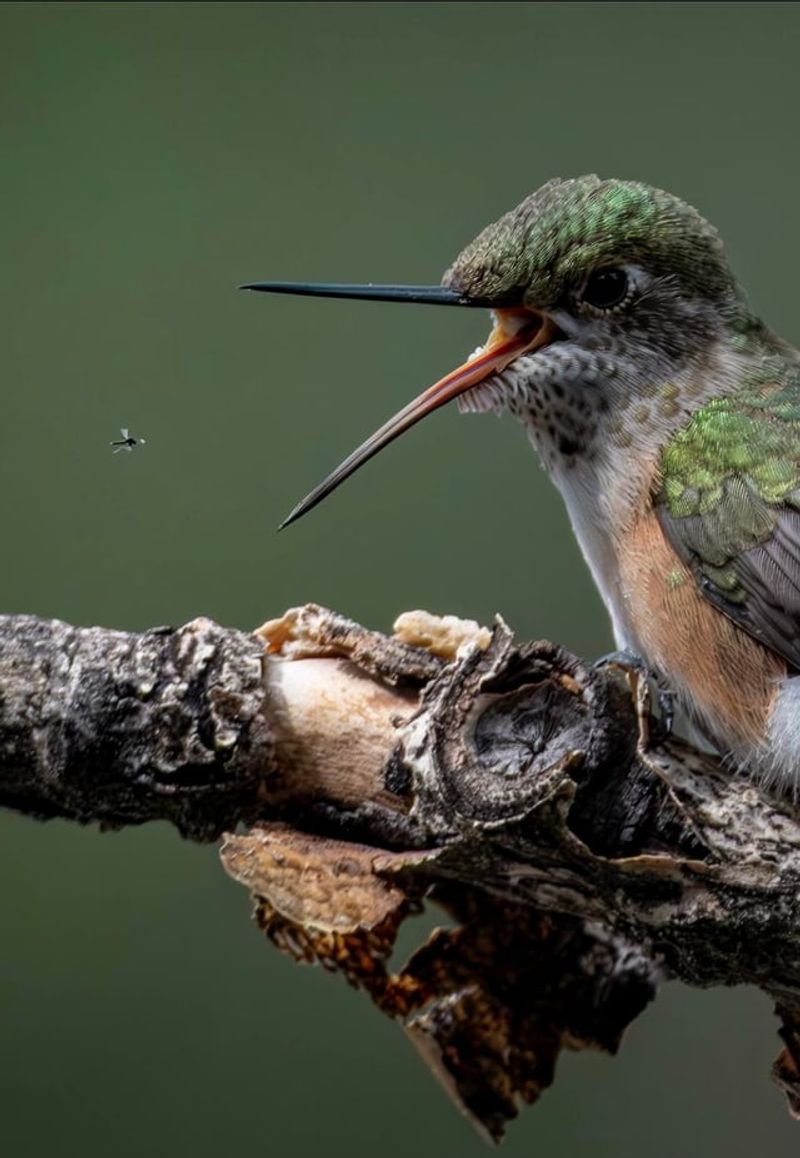
Here is a fact that surprises a lot of people: hummingbirds eat far more than sugar. Roughly half their diet comes from small insects and spiders that supply the protein they cannot get from nectar alone.
Gnats, fruit flies, aphids, and tiny spiders all end up on the menu, especially when a female is feeding growing chicks. A yard that welcomes a few harmless bugs is a yard that keeps hummingbirds coming back.
You can encourage this natural food source by skipping broad pesticide sprays and leaving a few insect-friendly plants alone. Letting nature stock the pantry is one of the easiest things you can do for these birds.
4. Cardinal Flower
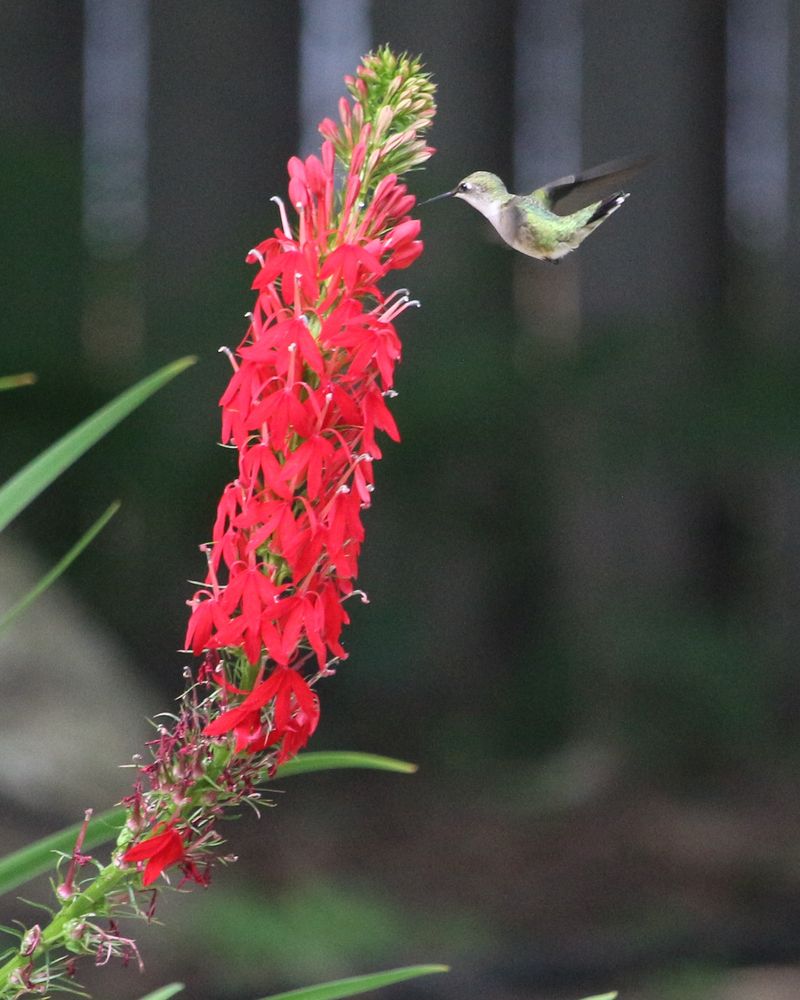
If you have a damp corner or a spot near a rain garden, cardinal flower turns it into a hummingbird hotspot. Its flaming scarlet spikes rise tall and practically glow in the late-summer light.
Cardinal flower (Lobelia cardinalis) blooms from July into September, filling a gap when many spring flowers have faded. That timing lines up perfectly with the fall migration when hummingbirds are fueling up for the long trip south.
Bees mostly ignore its deep blooms, which means hummingbirds get the nectar nearly to themselves. Plant it in moist, rich soil with partial shade, and it will reward you with one of the most reliable late-season draws around.
5. Salvia and Sage Varieties
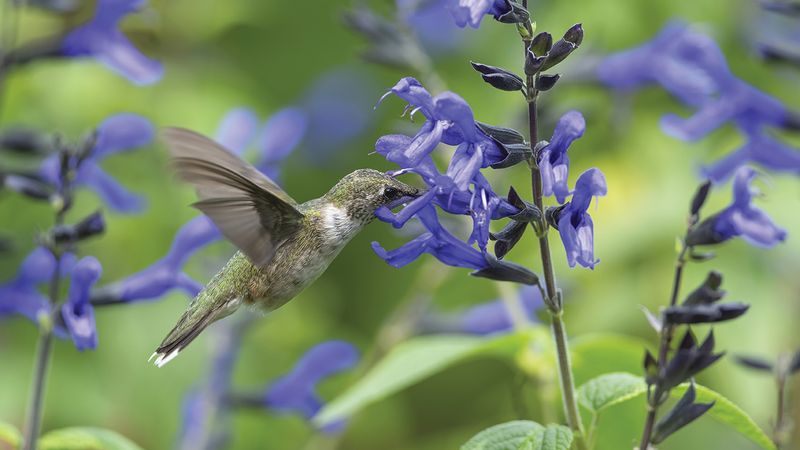
Gardeners who want blooms from spring straight through fall swear by salvia. This big family of plants keeps pumping out tube-shaped flowers in reds, purples, and blues that hummingbirds cannot resist.
Many salvias handle heat and drought like champs, which makes them a smart pick for hot US backyards where other flowers fizzle. Pineapple sage and autumn sage are two favorites that bloom late into the season.
Because different salvia types peak at different times, mixing a few varieties gives you nonstop nectar for months. Snip off spent flowers now and then and the plants will push out fresh blooms with hardly any fuss.
6. Overripe Fruit Fly Station
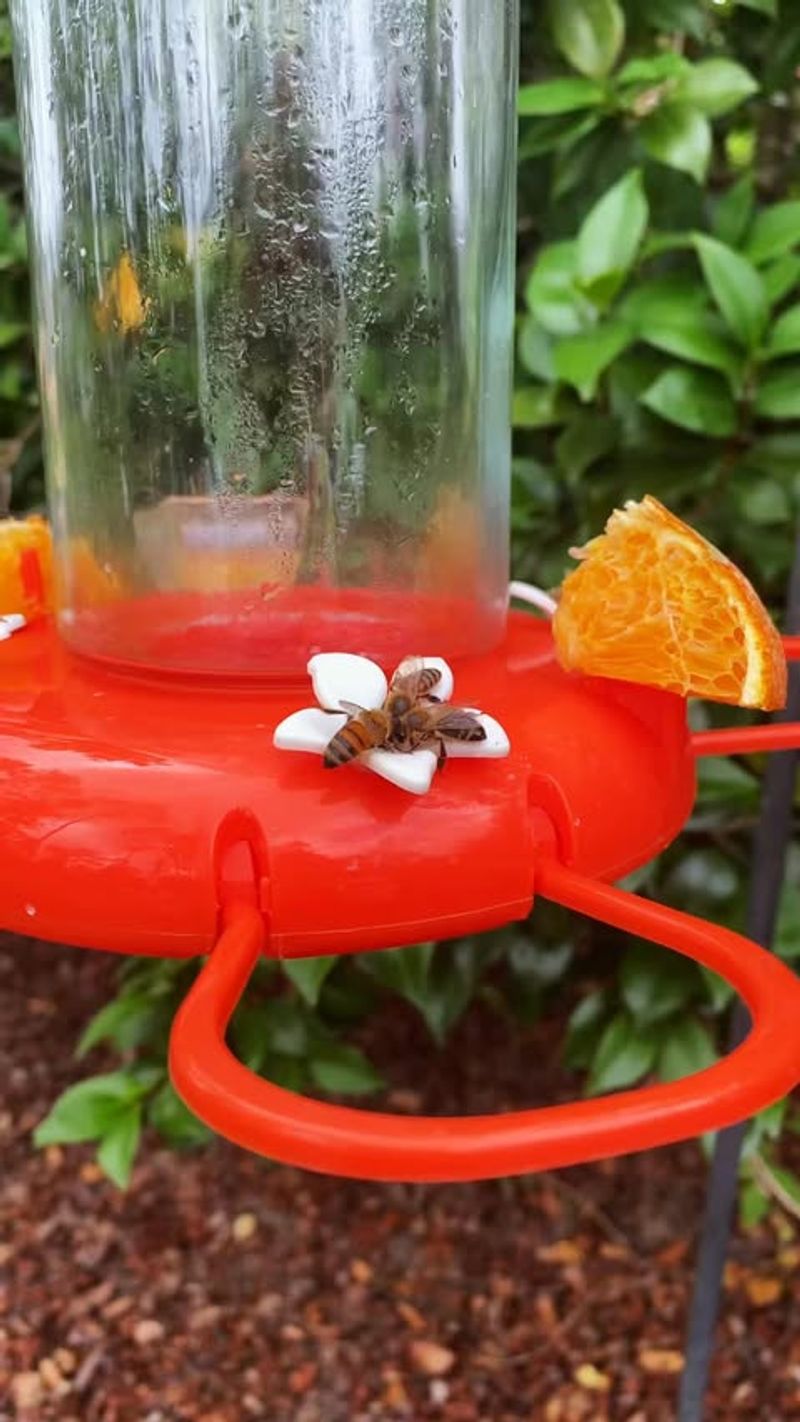
Picture a shallow dish of banana peels and cut melon set out in a shady corner. Within a day or two it becomes a buzzing cloud of fruit flies, and that cloud is basically a floating snack bar for hummingbirds.
Hummingbirds swoop through gnat and fruit fly swarms to grab the protein they need, so you are feeding them without offering any sugar at all. It is a clever trick that mimics what happens naturally around fallen fruit.
Keep the fruit dish away from your porch so the flies do not bother you, and refresh it every few days. A little rot in the right spot can do wonders for insect-hungry birds.
7. Columbine
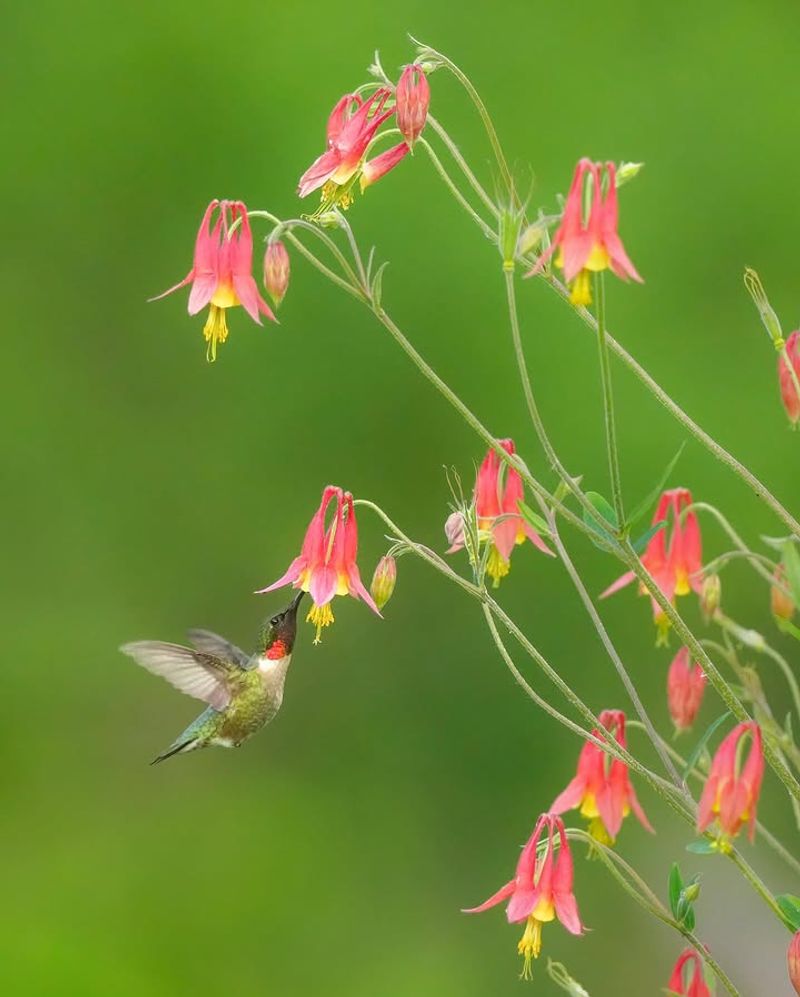
Early in the season, when hummingbirds first arrive back from migration, columbine is often the flower waiting for them. Its nodding, spurred blossoms hold nectar tucked in long tubes that seem custom-built for a hummingbird bill.
Columbine (Aquilegia) comes in wild reds and yellows as well as garden hybrids in nearly every color. The native red-and-yellow types are especially good at pulling in birds hungry after a long flight.
It grows happily in partial shade and woodland edges, spots where other nectar plants struggle. Because it blooms so early, columbine fills the hungry gap before summer flowers take over.
8. A Gentle Water Mister
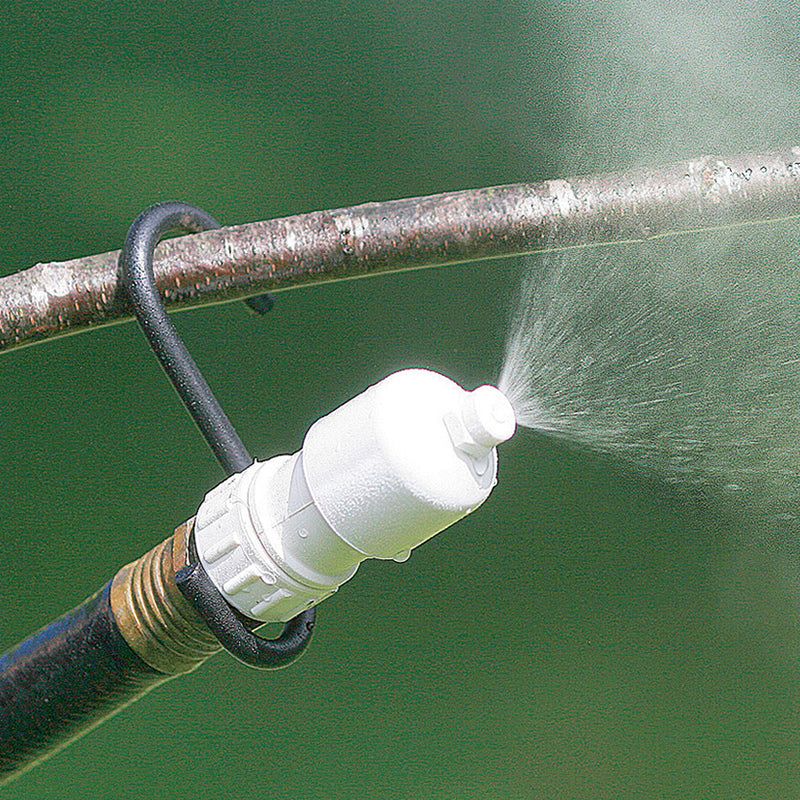
Water is not food, but it might be the surprise feature that seals the deal for hummingbirds. These birds adore flying through a fine mist to bathe, and a mister can turn an ordinary yard into a favorite hangout.
Because their tiny feet are not built for standing in birdbaths, hummingbirds prefer moving water, leaf drips, and light spray. A small solar mister clipped near your plants delivers exactly that.
On a hot afternoon you may spot them zipping back and forth through the spray, wings flashing in the droplets. Pair a mister with nearby nectar flowers and you have built a spot they will visit again and again.
9. Coral Honeysuckle
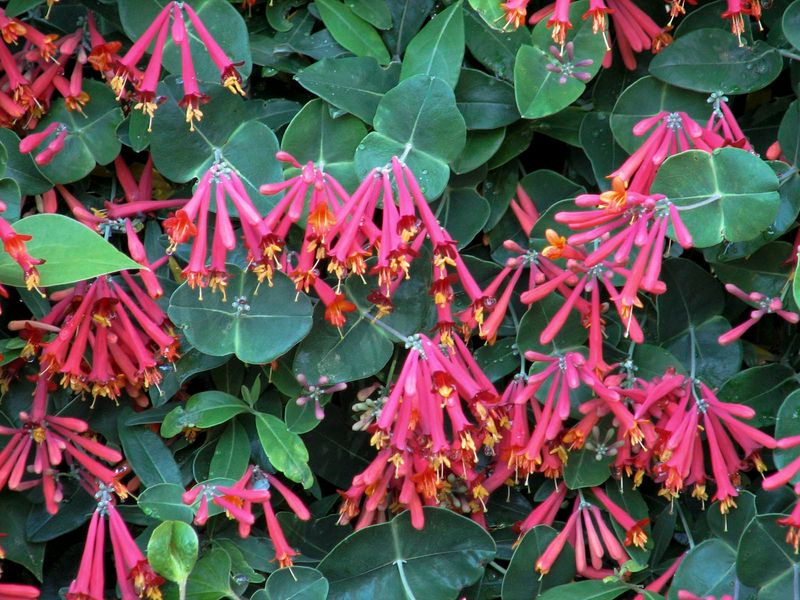
Unlike its invasive cousin, coral honeysuckle behaves itself in the garden while still drawing crowds of hummingbirds. Clusters of slim red-orange trumpets bloom for months and reload with nectar as fast as the birds drain them.
Coral honeysuckle (Lonicera sempervirens) is native across much of the eastern and southern US and stays polite instead of swallowing your fence. It climbs neatly on a trellis or arbor with minimal pruning.
The blooms start in spring and can keep going into fall, giving hummingbirds a long stretch of steady feeding. As a bonus, the plant later produces red berries that other songbirds enjoy.
10. Tree Sap and Sap Wells
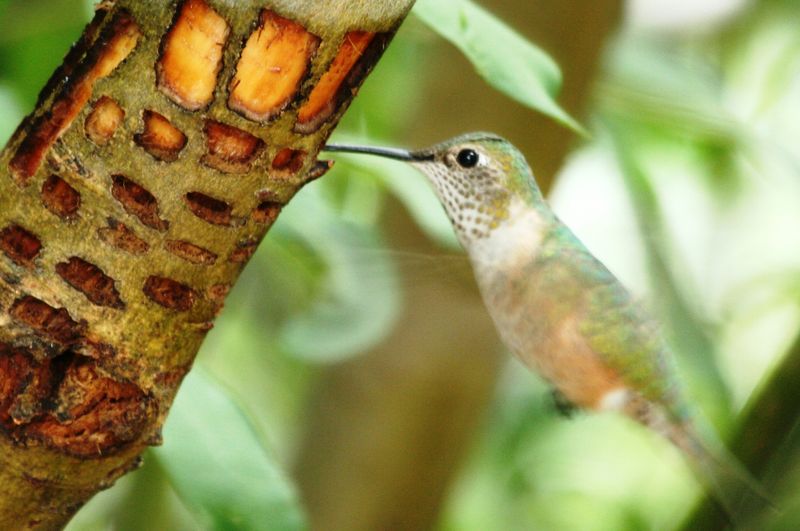
Long before feeders existed, hummingbirds followed woodpeckers to get an early spring meal. Sapsuckers drill neat rows of holes in trees, and hummingbirds sip the sweet sap that oozes out.
Sap contains natural sugars much like nectar, and it flows early in the year when few flowers have opened. Migrating hummingbirds often time their arrival to match the sap season.
If you have maples, birches, or other sap-producing trees with sapsucker activity, you already offer a wild food source. Leaving those trees and their sap wells undisturbed helps hummingbirds bridge the gap before blooms arrive.
11. Fuchsia in Hanging Baskets
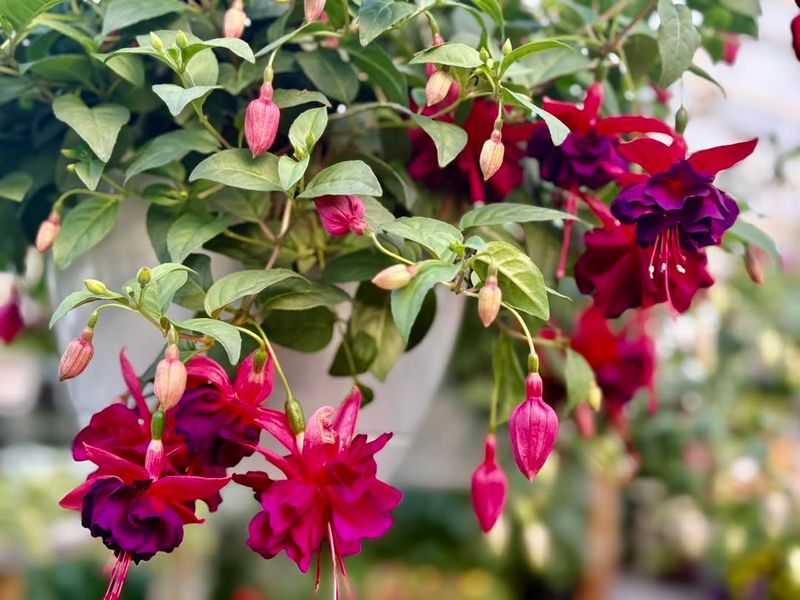
Renters and small-space gardeners, this one is for you. A single hanging basket of fuchsia dangling from a porch hook can bring hummingbirds right up to your window.
Fuchsia’s dangling, two-toned flowers look like tiny ballerinas and stay loaded with nectar throughout the warm months. The trailing shape puts the blooms at a perfect angle for a hovering bird.
These plants love cooler, partly shaded spots and reward regular watering with nonstop flowers. Because they thrive in containers, fuchsia lets anyone create a hummingbird stopover without a single garden bed.
12. Zinnias for a Landing Buffet
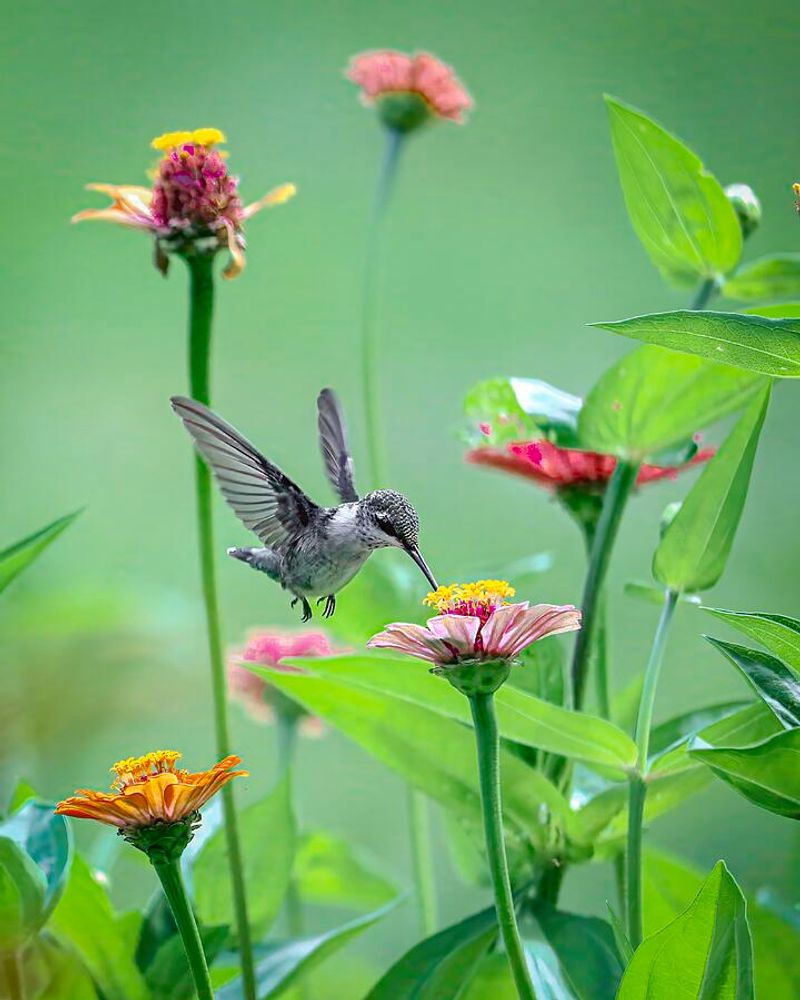
Cheerful and almost impossible to kill, zinnias earn a spot in any hummingbird-friendly yard. Their flat, bright faces do double duty as landing perches and as magnets for the small insects hummingbirds eat.
While zinnias are not the deepest nectar source, the tall red and pink varieties still catch a passing bird’s eye. More importantly, they pull in gnats and tiny beetles that add protein to the diet.
Zinnias sprout from seed in days and bloom all summer with barely any care, making them ideal for beginners. Scatter a few among your nectar plants and you create a mixed feeding ground that hummingbirds happily patrol.
13. Never Offer Honey Water
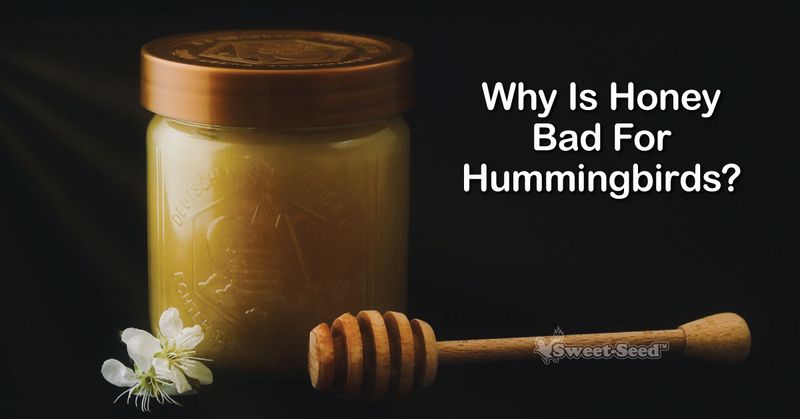
It seems logical that honey, being natural and sweet, would make a great hummingbird treat. Unfortunately, this is one of the most dangerous mistakes a well-meaning bird lover can make.
When honey is mixed with water, it ferments quickly and grows a fungus that can cause a fatal tongue infection in hummingbirds. The warm weather that hummingbirds love only speeds up that spoilage.
Stick to plain white table sugar dissolved in water if you use a feeder, and skip honey entirely. What is healthy for us can be deadly for a bird weighing less than a nickel.
14. Never Use Red Food Dye
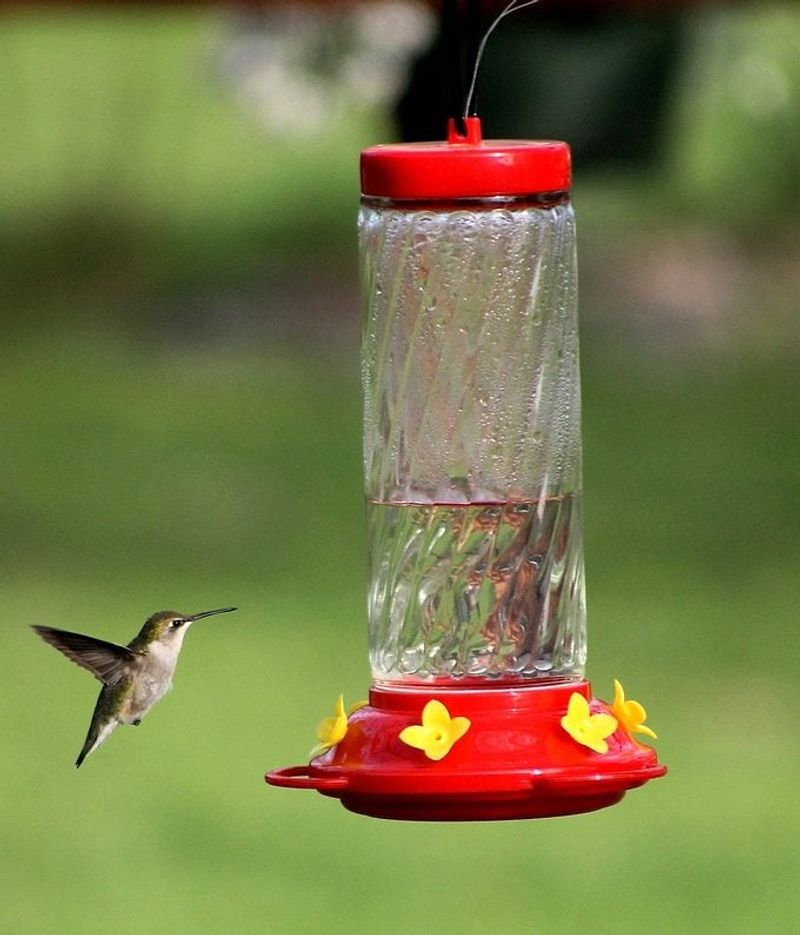
Store shelves are full of red nectar mixes, and the bright color does look festive. The trouble is that the dye adds nothing helpful and may put the birds at risk over time.
Researchers worry that the chemicals in artificial red dye could stress a hummingbird’s tiny body, and there is simply no benefit to justify the gamble. Hummingbirds find feeders by spotting the red plastic parts, not red liquid.
Choose a feeder with red on it and fill it with clear sugar water instead. The birds will still zoom right in, and you skip an ingredient they do not need.
15. Never Offer Brown Sugar or Molasses
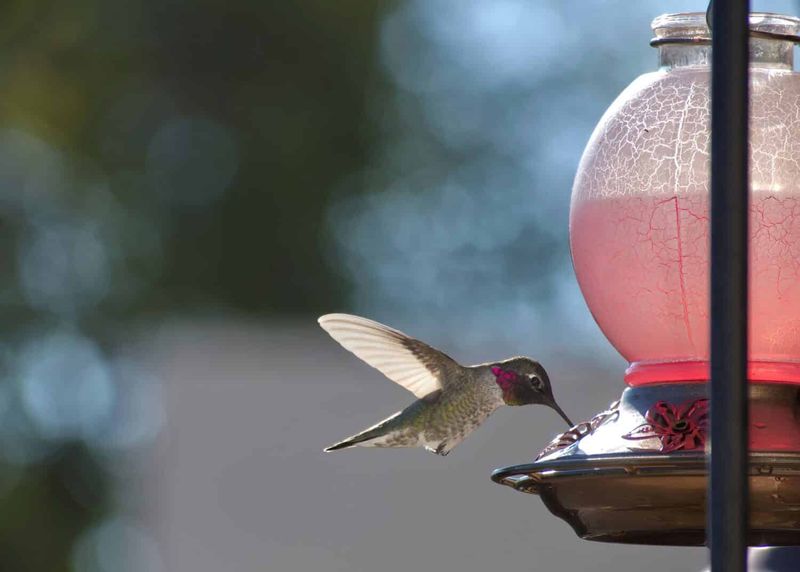
Reaching for brown sugar because it seems more wholesome is an easy trap to fall into. The problem hides in what makes brown sugar brown in the first place.
Brown sugar, molasses, and raw sugars contain higher levels of iron, and hummingbirds cannot process much iron at all. Too much can build up in their organs and cause a deadly condition called iron overload.
Plain refined white sugar is the safest match for the natural nectar hummingbirds evolved to drink. When it comes to their feeder, boring white sugar truly is best.
16. Never Offer Artificial Sweeteners
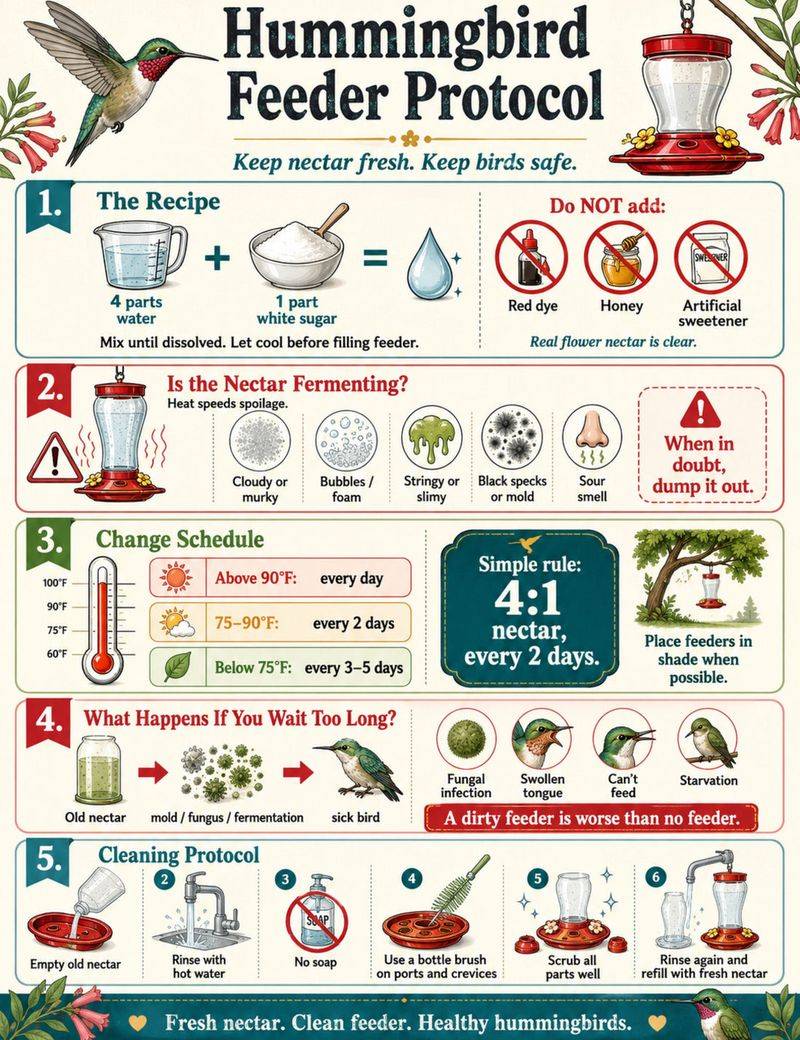
Someone might assume a sugar-free sweetener is a lighter, safer option, but the opposite is true for hummingbirds. These birds burn energy at a blistering pace and need real calories to survive.
Sweeteners like those found in diet drinks and sugar substitutes have zero food value for a hummingbird. A bird that fills up on fake sugar could actually starve while its belly feels full.
Never pour anything labeled sugar-free, low-calorie, or diet into a feeder. Only genuine white sugar gives them the fuel their racing hearts demand.
17. Never Set Out Spoiled or Fermented Nectar
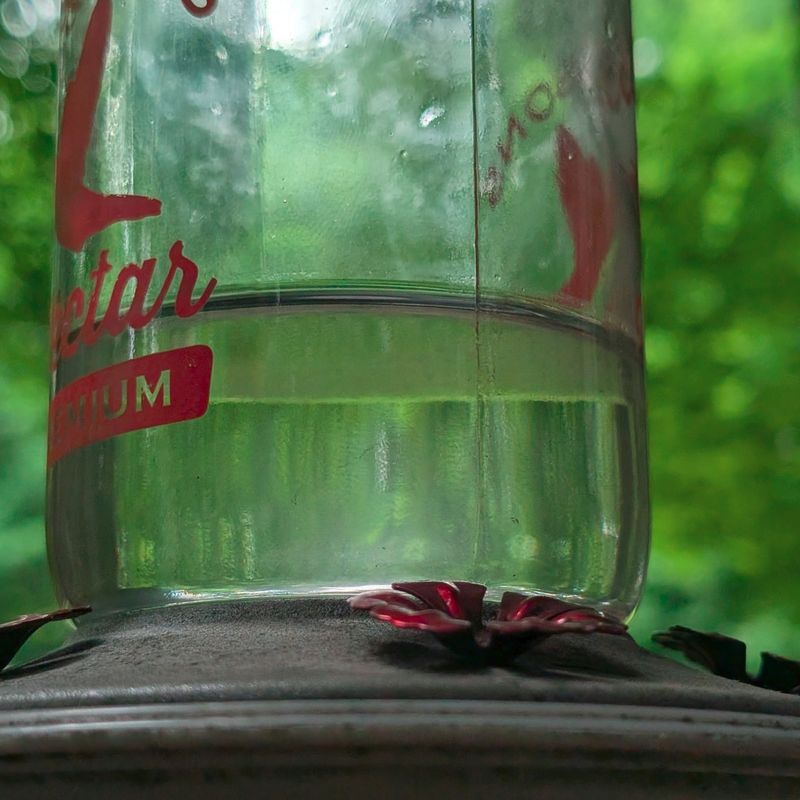
A feeder that has baked in the July sun for a week may look fine, but it can turn into a health hazard. Warm sugar water spoils fast, growing mold and dangerous bacteria that make hummingbirds sick.
Cloudy liquid, black specks, or a sour smell are all signs the nectar has gone bad and needs to be dumped immediately. In hot US summers you should change feeder liquid every two days to stay safe.
Scrub the feeder with hot water and a bottle brush at each refill, skipping soap residue. Fresh, clean nectar keeps your visitors healthy instead of harming the very birds you hoped to help.
18. Never Coat Feeders With Oil or Grease
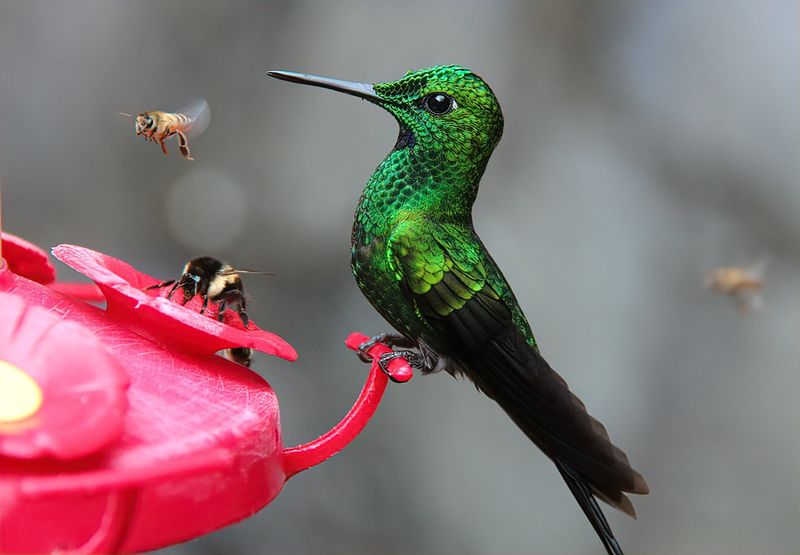
Ant invasions and bee crowds drive plenty of people to smear petroleum jelly, cooking oil, or other grease around a feeder port. It feels like a quick fix, but it can backfire in a terrible way.
If any of that oily coating gets onto a hummingbird’s feathers, it wrecks the delicate structure that keeps them waterproof and able to fly. A greased-up bird can quickly become grounded and vulnerable.
Use an ant moat filled with plain water and a bee-resistant feeder design instead of slathering on grease. Keeping feeders oil-free protects the birds’ feathers, which are their lifeline in the air.