
16 Fast-Growing Flowers To Plant Now That Hummingbirds Can’t Resist
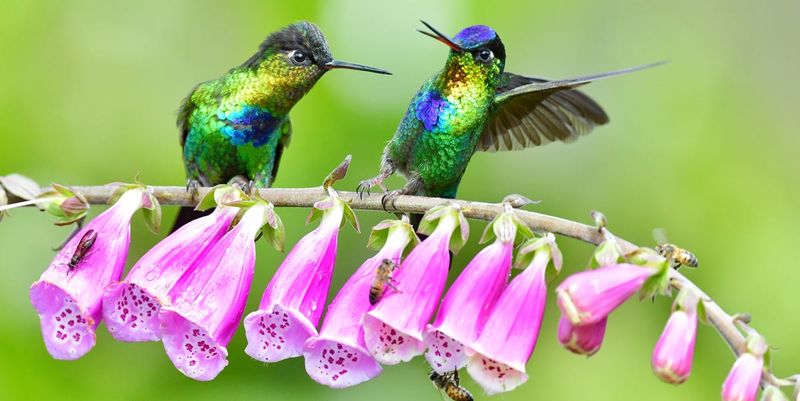
Watching a hummingbird zip through your yard feels like a tiny reward for all the work you put into your garden. The good news is that you don’t need to wait years to make it happen, because plenty of flowers grow fast and bloom generously the same season you plant them.
Most of the picks below thrive in full sun, sip up nectar-hungry visitors, and forgive a beginner’s mistakes. Get a few of these in the ground now, and you’ll have a busy little flight path buzzing by summer.
1. Scarlet Sage (Salvia coccinea)
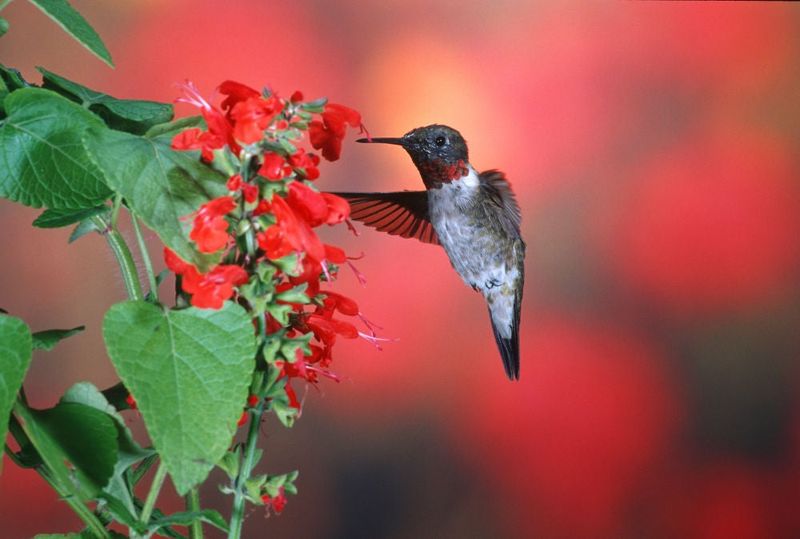
If you want the closest thing to a guaranteed hummingbird magnet, start here. Scarlet Sage sends up slender spikes of tubular red flowers shaped almost perfectly for a hummingbird’s beak, and the birds figure that out fast.
Native to the southeastern U.S., it establishes quickly and keeps re-blooming from late spring right up until the first hard frost. That long window means your feathered visitors have a reliable stop for months, not just weeks.
Give it full sun to part sun and well-draining soil, and it settles in at roughly 1 to 3 feet tall and 1 to 2 feet wide. It shrugs off heat and asks very little from you, which makes it one of the simplest wins on this whole list.
2. Lantana
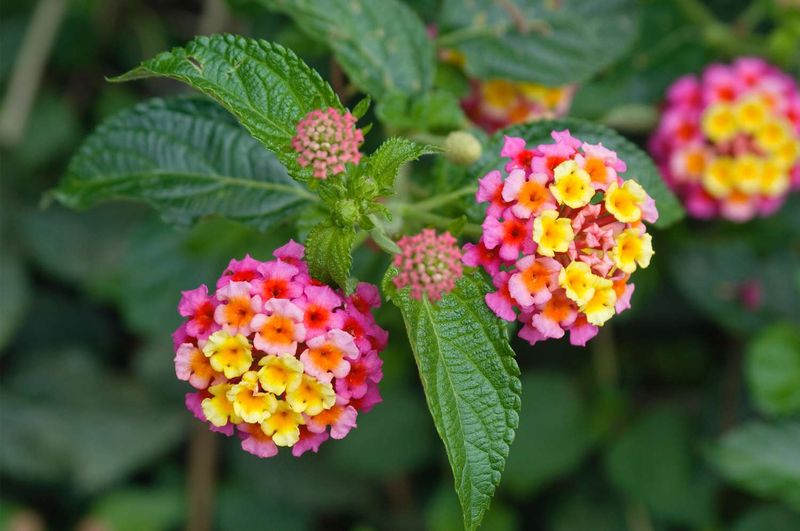
Few flowers laugh at a heat wave the way Lantana does. While other blooms wilt and sulk in July, these dense mounds of warm-toned clusters keep pumping out nectar through the hottest, driest stretch of summer.
Each little flower head is a landing pad packed with tiny blooms, so hummingbirds get plenty of sips per visit. Depending on your zone, you might grow it as an annual, though some cultivars hold on as perennials down to zone 7b.
Plan for a plant that reaches 1 to 4 feet tall and 1 to 3 feet wide in full sun and well-draining soil. If your yard has a baking hot spot where nothing seems happy, Lantana is the flower that finally fills it.
3. Cuphea (Firecracker Plant)
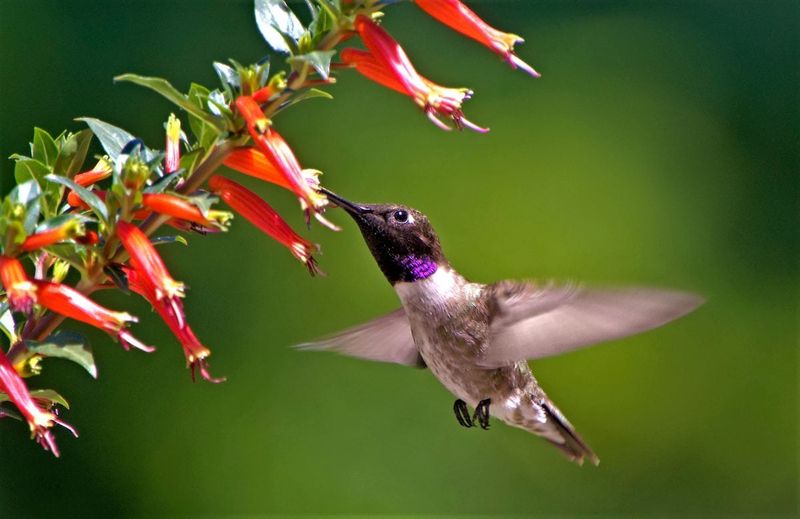
Nicknamed the Firecracker Plant for good reason, Cuphea shoots out vibrant tubular flowers on tall stems that seem custom-built for hovering birds. Gardeners are catching on fast, and it has quickly become a favorite for pulling hummingbirds into container gardens.
The variety ‘Vermillionaire’ is a standout, with cute orange tubes that hummingbirds slip into with almost no effort. Drop it into a pot as a thriller or a filler, and it delivers nonstop color all season.
It loves full sun and keeps flowering right through the first few light frosts, so you get bonus weeks after most annuals have quit. That stubborn stamina is exactly why it earns a spot here.
4. Petunias (Supertunia Vista Bubblegum II)
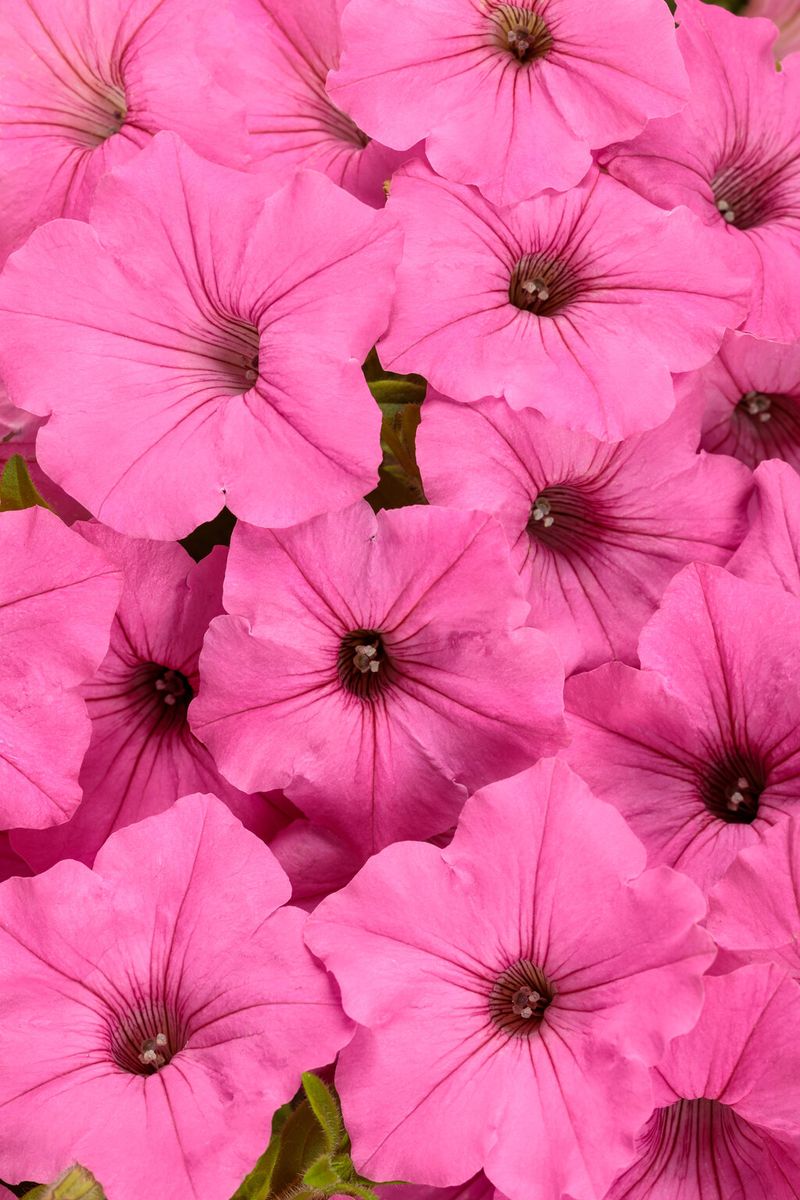
Chances are you already trust petunias, and hummingbirds happen to trust them too. Vigorous varieties like Supertunia Vista Bubblegum II tumble out of hanging baskets and containers with a wall of bright pink blooms that birds spot from across the yard.
What sets these apart is sheer output. They grow fast, spread wide, and keep the color coming for months with almost no fuss, so your porch turns into a nectar station without much effort.
Since so many gardeners already grow petunias, this is an easy, familiar way to invite hummingbirds without learning a brand-new plant. Just keep them watered and fed, and they’ll reward you all summer long.
5. Zinnias
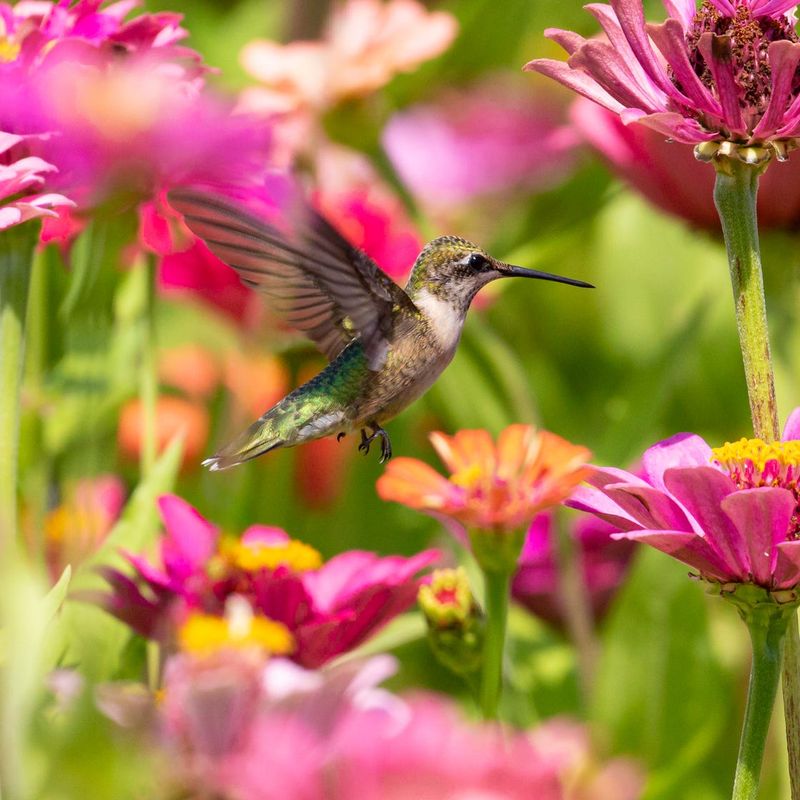
Beginner gardeners, this one is for you. Zinnias sprout easily from seed sown right into the ground, and within weeks you have cheerful, saturated blooms that butterflies adore and hummingbirds visit too.
Wait to plant until late spring, once nighttime temperatures stay reliably above 50 degrees Fahrenheit, and the seeds practically leap out of the soil. From there they grow fast and bloom hard.
Because they are so cheap and forgiving to start, zinnias let you fill a big patch of color for the price of a seed packet. Cut a few for a vase and the plants respond by making even more, which keeps the buffet open for weeks.
6. Flowering Tobacco (Nicotiana alata)
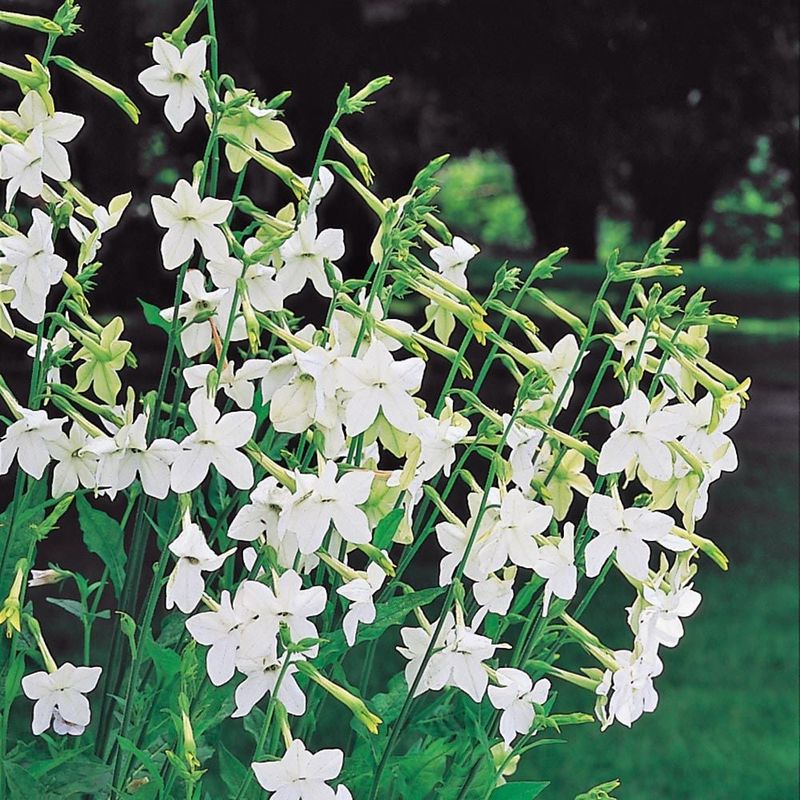
Underrated and a little old-fashioned, Flowering Tobacco brings a graceful set of tubular flowers that hummingbirds can’t seem to pass up. The long throats of the blooms line up neatly with a hummingbird’s reach.
Its seeds are almost dust-fine, yet the plants rise up a respectable 1 to 3 feet tall by season’s end. Like zinnias, they go in during late spring when night temperatures hold steady above 50 degrees Fahrenheit.
Beyond the birds, the flowers often release a soft evening fragrance that makes the garden feel a bit magical after dark. Plant it near a patio and enjoy the perfume while the hummingbirds handle the daytime shift.
7. Million Bells (Calibrachoa)
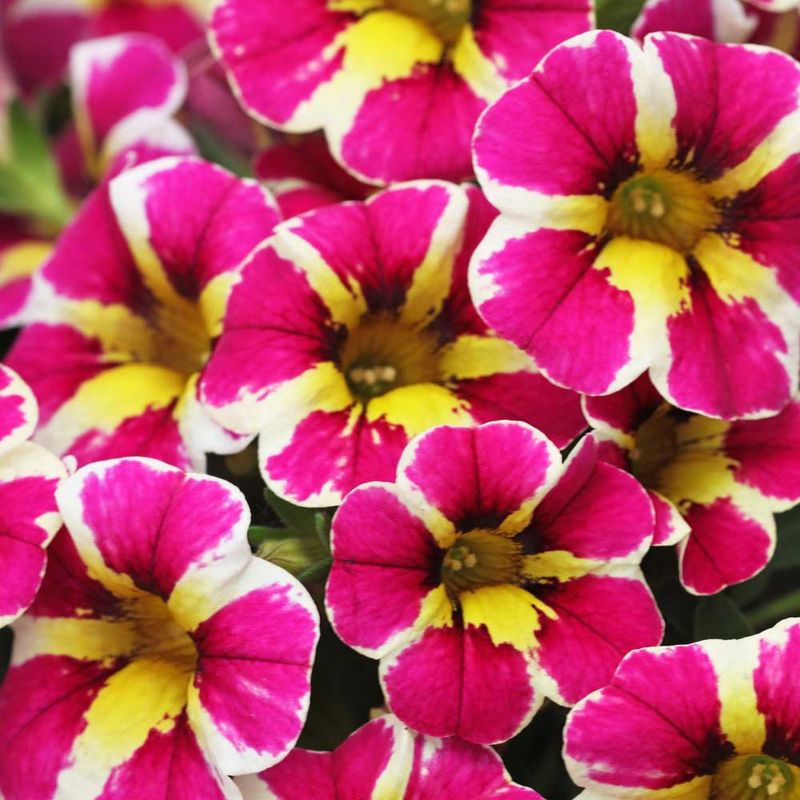
Think of Million Bells as petunias’ tidy little cousin. These Calibrachoa annuals cover themselves in dozens of small, mounding blooms and grow fast enough to fill a basket or window box in no time.
Their vigorous, spilling habit makes them a go-to filler wherever you need quick color, and hummingbirds work the tiny flowers one by one. No deadheading required, which is a relief for busy gardeners.
Tuck them into containers and hanging baskets where their trailing shape really shines. Keep them fed and in plenty of sun, and they stay covered in blooms straight through the season.
8. Snapdragons
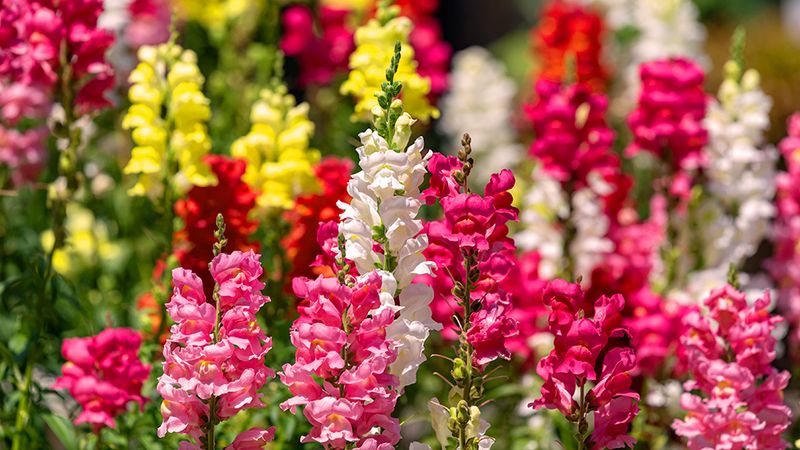
There’s something playful about a snapdragon, and hummingbirds appreciate them for more than looks. The funnel and cup-shaped flowers stack up the stem in exactly the deep reds, pinks, oranges, and magentas that catch a hummingbird’s eye.
As annuals, they grow quickly and give you tall spikes of color that read from a distance. The rich, warm shades are the ones birds home in on most.
Kids love pinching the blooms to make the dragon ‘mouth’ open and close, which makes these a fun family plant as well as a functional one. Plant a row and you get color, entertainment, and regular hummingbird traffic all at once.
9. Mexican Sunflower (Tithonia rotundifolia)
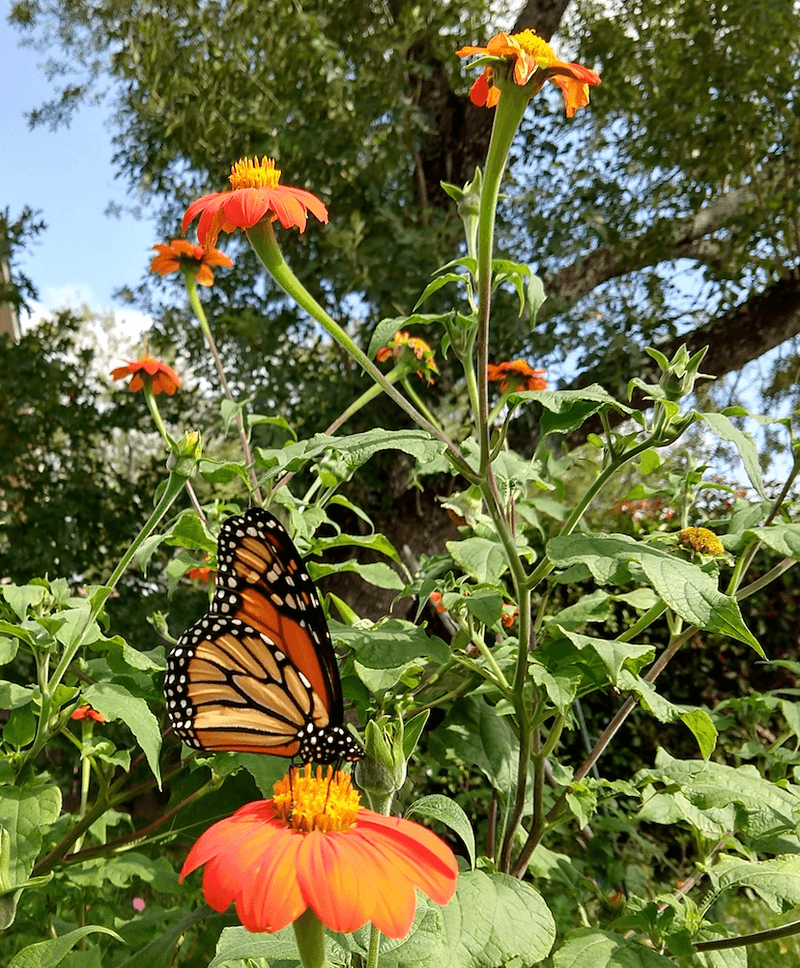
Big, bold, and impossible to ignore, the Mexican Sunflower brings a jolt of fiery orange to the back of a border. This non-native annual grows tall and fast, turning into a nectar tower by late summer.
Hummingbirds recognize its blooms from their southern migration, so it feels familiar and safe to them as they pass through. That connection makes it a dependable pit stop during travel season.
Give it room, because it can get large and branchy, and pair it with shorter plants up front. Once it hits its stride, it draws hummingbirds and butterflies in equal measure.
10. Morning Glory
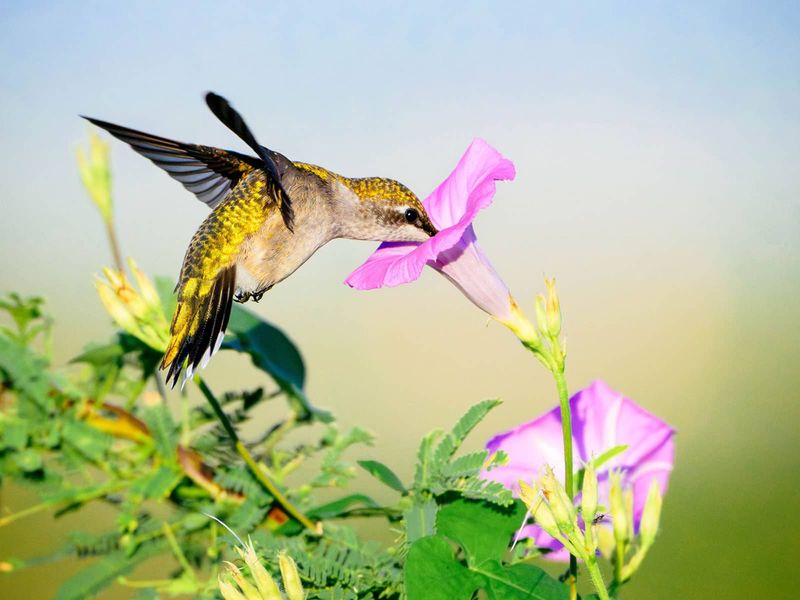
Want vertical color in a hurry? Morning Glory is the annual vine that climbs a trellis or fence at a startling pace and rewards you with trumpet-shaped blooms that hummingbirds love to explore.
The flowers open with the morning sun, feeding pollinators through the summer season before they close up again. That daily show gives your garden a living rhythm.
Because it grows so fast, a single packet of seeds can cover an ugly fence or bare arbor in one season. Plant it where you want quick coverage and a steady stream of hovering visitors.
11. Four O’Clock (Mirabilis jalapa)
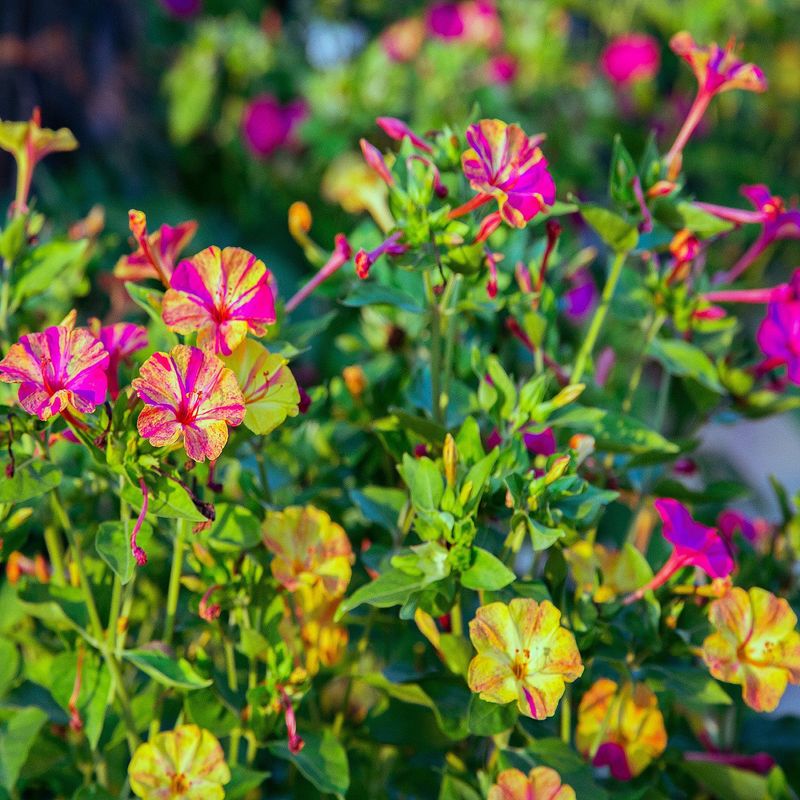
Named for the hour its flowers tend to open, Four O’Clock keeps the garden busy with hummingbirds from early season all the way to late. The blooms unfurl in the afternoon and evening, offering nectar right when many other flowers are winding down.
As an annual it provides steady, continuous nectar throughout its blooming season, so there’s rarely a gap in the action. That reliability is its real gift.
The plants often come in a mix of bright colors on the same bush, which adds a fun, unpredictable pop to a bed. Plant them and you extend the daily feeding window well into the evening.
12. Scarlet Runner Bean (Phaseolus coccineus)
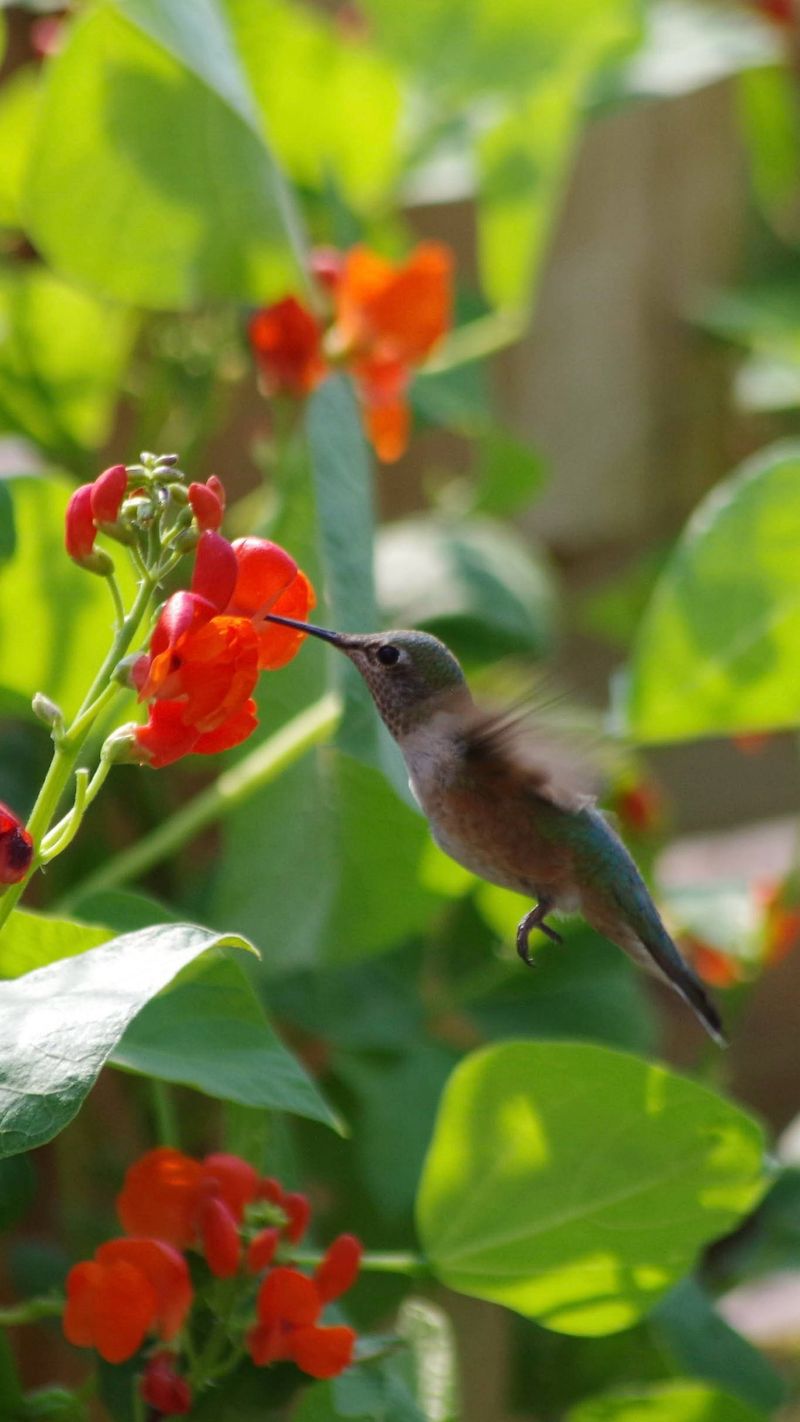
Two jobs, one plant. The Scarlet Runner Bean races up a trellis as a fast-growing vine while dangling clusters of red flowers that hummingbirds find irresistible.
Those bright red blooms are a beacon, and the vertical growth adds height and structure that a flat flower bed can’t offer. Train it up a teepee of stakes and you get a living green screen buzzing with visitors.
As a bonus, the flowers eventually give way to edible beans, so you feed the birds and your kitchen from the same row. Few plants pull double duty this cheerfully.
13. Bee Balm (Monarda fistulosa)
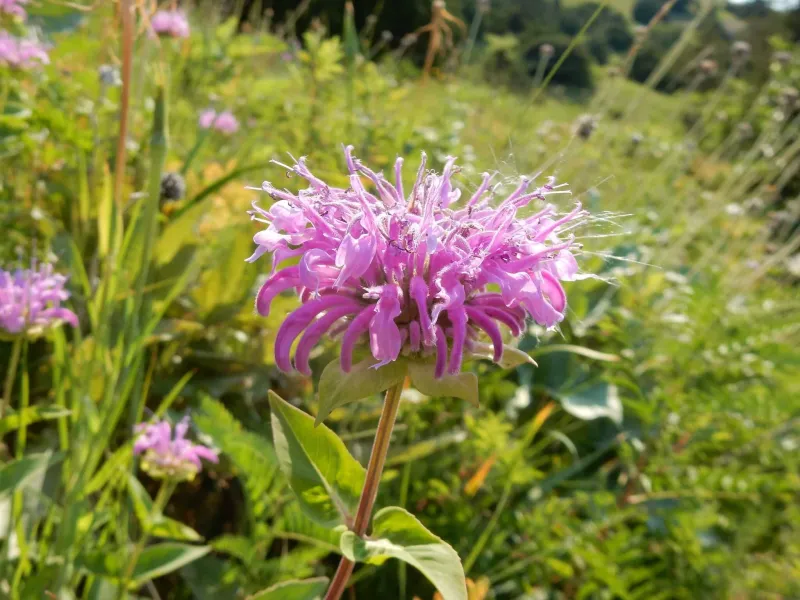
Shaggy, wild, and rich with nectar, Bee Balm brings a burst of lavender-pink to the mid- to late-summer garden. Also called Wild Bergamot, it’s native to much of the U.S. and blooms right when hummingbirds are working hardest to feed their young.
Beyond the nectar, it pulls in small insects that give hummingbirds the protein they need while raising a family. So it feeds the birds in two different ways at once.
Adaptable to well-draining soils and drought-tolerant once settled, it grows 2 to 4 feet tall and 2 to 3 feet wide in full sun to part shade across Zones 3 to 9. Plant it once and this perennial comes back to greet the birds year after year.
14. Giant Hyssop (Agastache)
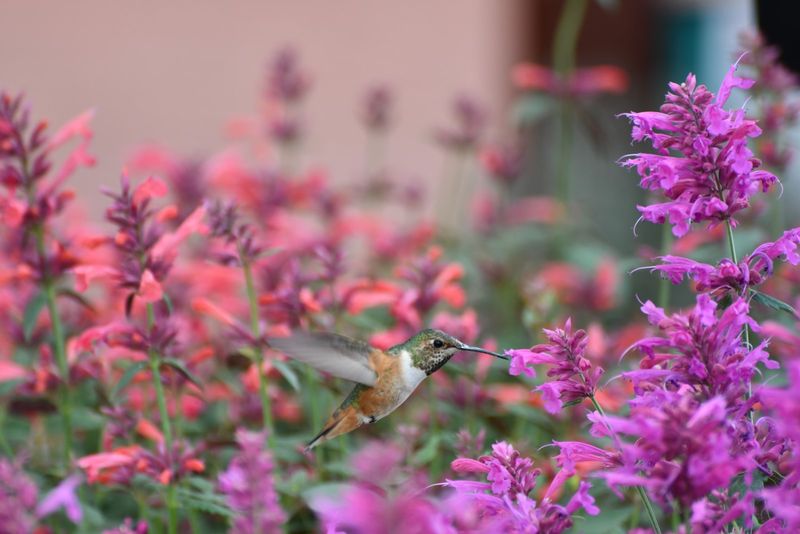
The nickname Hummingbird Mint says it all. Giant Hyssop, or Agastache, throws up spires of purple-pink tubular flowers that bloom from late spring through frost and read like a dinner bell to passing hummingbirds.
What makes it special is speed for a perennial. It often blooms in its very first year, so you don’t have to wait a season to see results the way you do with many other perennials.
Hardy to Zone 6, it settles in at 16 to 24 inches tall and 12 to 18 inches wide in full sun and well-draining soil. The foliage carries a pleasant minty, herbal scent, giving you fragrance alongside a marathon bloom season.
15. Columbine (Aquilegia spp.)
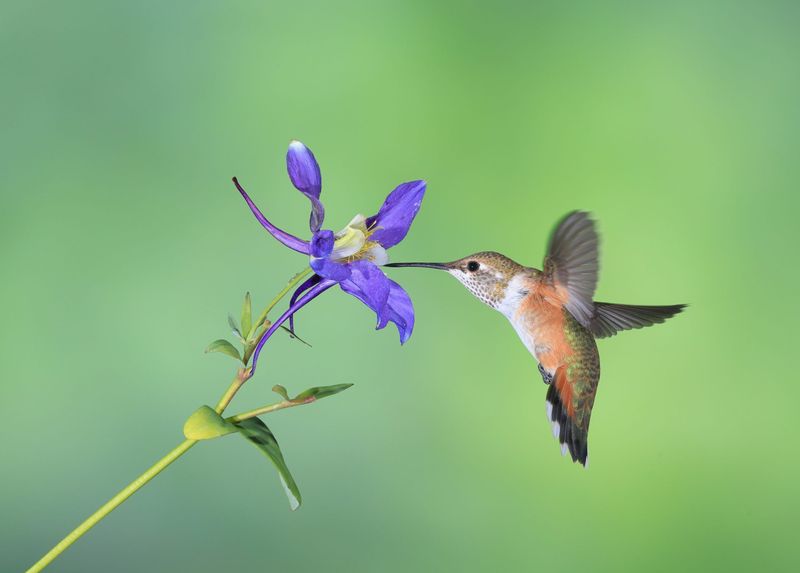
For the earliest hummingbird action of the year, Columbine is hard to beat. This short-lived perennial blooms early in the growing season, well before most annuals have gotten going, giving returning birds a much-needed first meal.
Its flowers are genuinely unusual, with dangling spurred petals in purples, crimsons, and other rich shades that look like little lanterns. Easy to grow from seed, it fills the shoulder season when the garden is otherwise quiet.
Because it may be short-lived, let it self-sow and it will keep coming back on its own. That timing, right at the start of migration, is exactly why it deserves a place in your beds.
16. Fuchsia
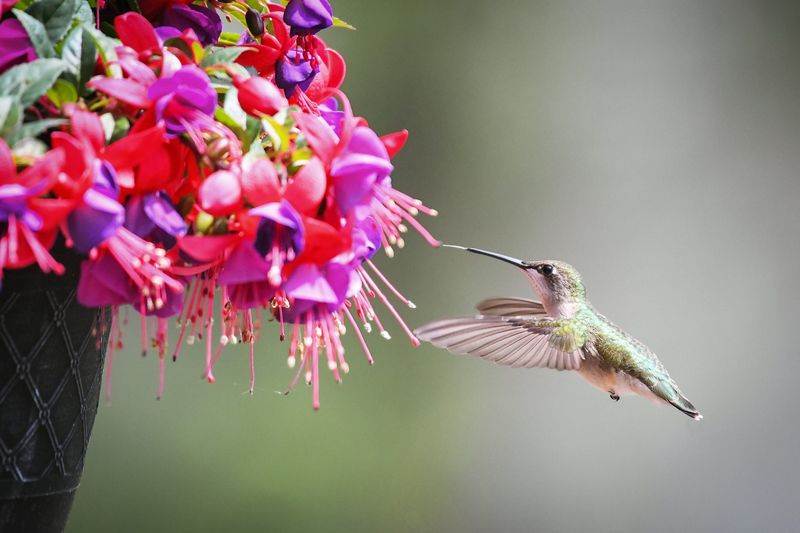
Dangling like tiny jeweled lanterns, Fuchsia flowers seem designed with hovering hummingbirds in mind. The magenta and pink hanging blooms give hovering birds easy access while making it tough for bees or wasps to reach the nectar first.
You’ll find both annual and hardy perennial types, so there’s a fuchsia for almost any garden situation. That flexibility means you can match one to your climate without much guesswork.
Hardy fuchsias are a rare gift for shady spots, thriving in part shade to full shade where many hummingbird flowers refuse to bloom. If your yard is short on sun, this is the plant that still keeps the birds coming back.