
16 Signs Your Zinnias Are Quietly Stressed—And How To Keep Them Blooming Strong Through The Heat
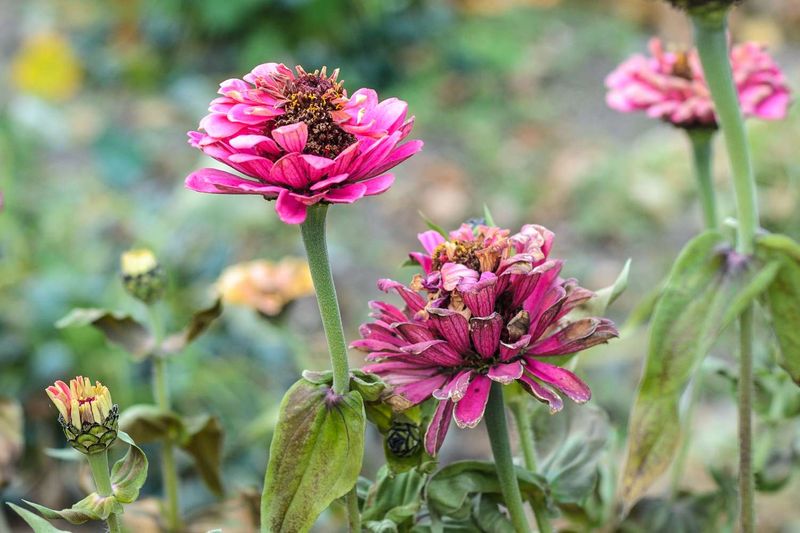
Zinnias look tough with their bright, cheerful blooms, but they often send out quiet distress signals long before they collapse. If you learn to read those early warning signs, you can step in and fix problems while your plants still have the energy to bounce back. Most of these clues show up right on the leaves, stems, and flowers, so a quick daily glance is all it takes. Here are 16 signs your zinnias are stressed, plus simple ways to keep them blooming strong all season.
1. Lower Leaves Turning Pale Yellow
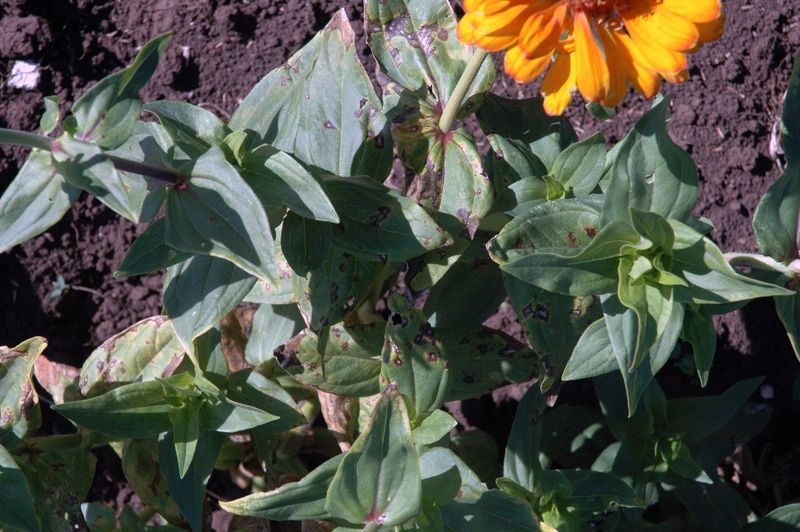
Before a zinnia ever droops, the oldest leaves near the base often fade to a soft, buttery yellow. That color shift is the plant quietly pulling nitrogen out of its tired leaves and shipping it up to feed newer growth.
Think of it as your zinnia rationing supplies. A little bottom yellowing is normal as the plant matures, but if it creeps upward fast, the soil is running low on nutrients.
A balanced, gentle feeding every few weeks usually reverses it. Skip the heavy nitrogen-only fertilizers, though, because too much pushes leafy growth and fewer flowers, which is the opposite of what most backyard growers want.
2. White Powdery Film Dusting The Foliage
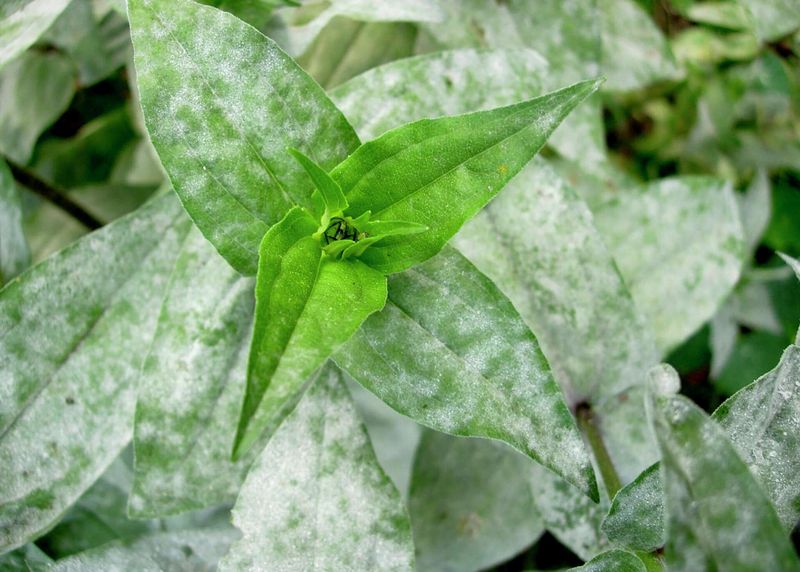
You reach out to snap a bloom and notice the leaves look like someone shook powdered sugar over them. That chalky coating is powdery mildew, and zinnias are famously prone to it, especially where nights turn muggy.
The fungus feeds on crowded, damp foliage that never fully dries out. Once it spreads, photosynthesis slows and the whole plant loses steam.
Improving airflow is your best defense. Space plants generously, thin out crowded stems, and water at the soil line so leaves stay dry. A homemade spray of one teaspoon baking soda per quart of water with a drop of dish soap can slow early outbreaks on the plants you catch soon enough.
3. Smaller Blooms Than Last Month
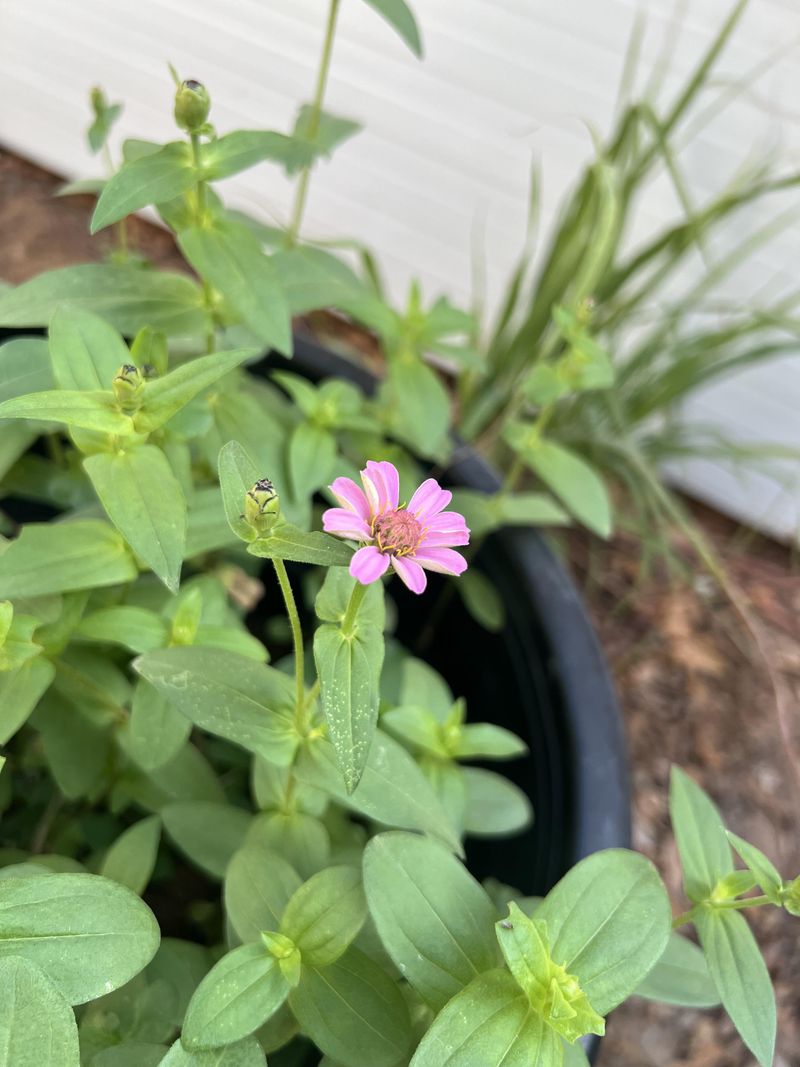
Nothing says a plant is coasting on empty like flowers that keep shrinking each week. Early summer might give you saucer-sized blooms, then suddenly you are getting quarters instead of silver dollars.
Shrinking flowers usually point to depleted soil or a plant that is exhausting itself trying to set seed. Every spent bloom left on the stem tells the zinnia its job is done.
Deadheading faded flowers redirects that energy back into fresh, full-size buds. Pair regular snipping with a light dose of a bloom-boosting fertilizer higher in phosphorus and potassium, and the flower size often rebounds within a couple of weeks.
4. Reddish Or Purple Tint On Leaf Undersides
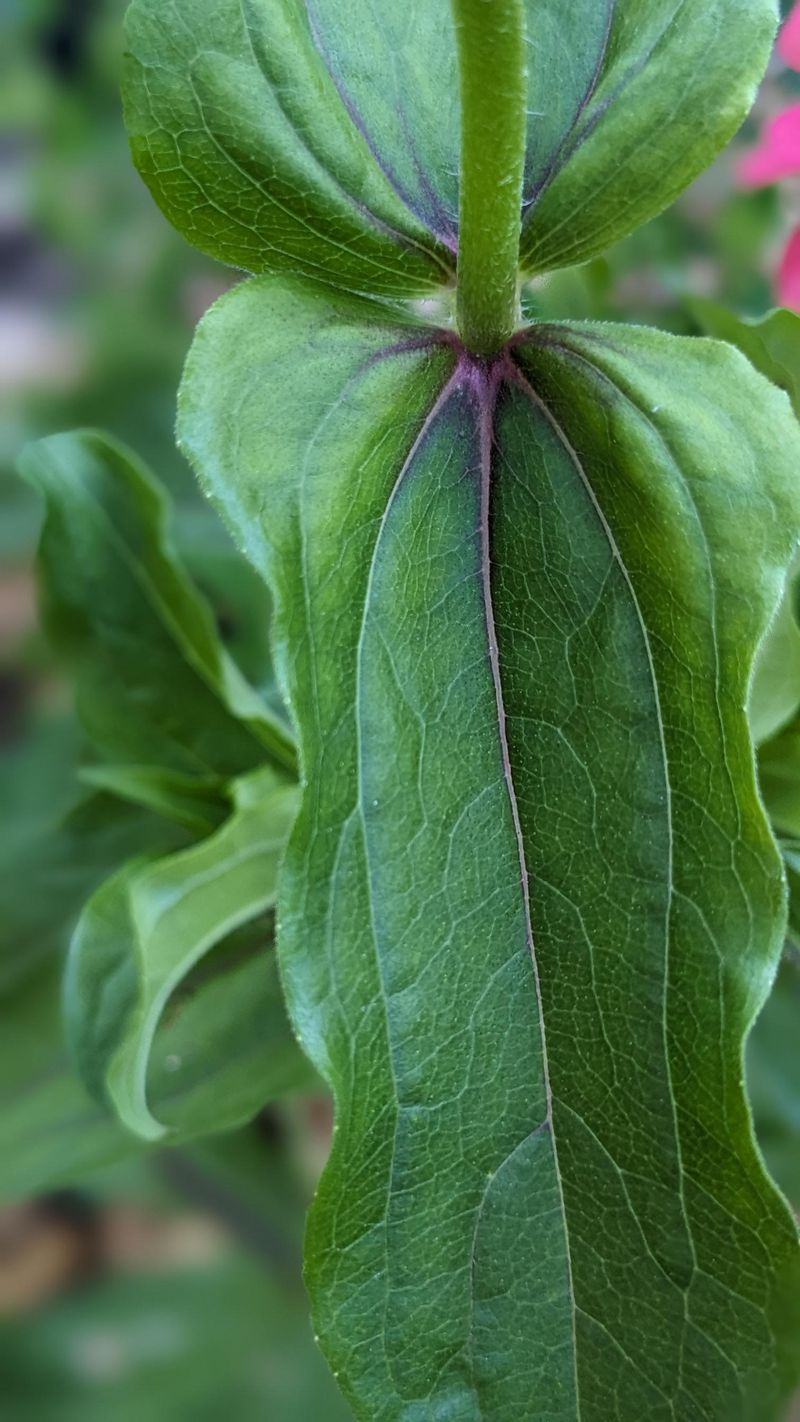
Flip a struggling zinnia leaf over and you might spot an odd reddish-purple blush spreading along the veins. Gardeners often mistake it for a natural color trait, but on green zinnias it is a coded message.
That purpling frequently signals a phosphorus shortage, which limits how well the plant can build strong roots and set buds. Cold snaps or compacted soil that locks up phosphorus can trigger it too.
Loosening the soil and mixing in a little bone meal or a balanced flower fertilizer can help correct the imbalance. Warmer, well-drained beds also make phosphorus easier for roots to grab, so the color usually eases once conditions improve.
5. Tiny Speckled Stippling On Upper Leaves
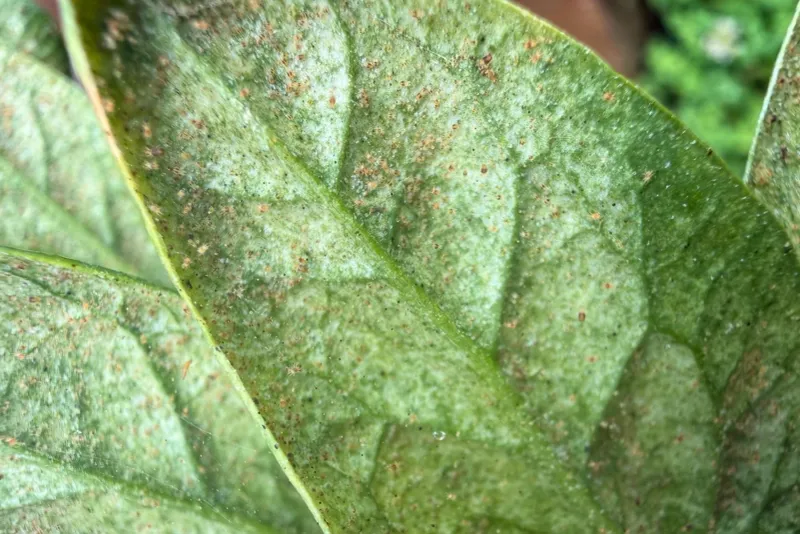
Look closely and you may see a fine scatter of pale dots across the leaf surface, almost like someone tapped it with a bleach-tipped pin. Those tiny speckles are the calling card of spider mites, and they thrive when things get hot and dry.
Each speck is a spot where a mite pierced a cell and drained it. Left alone, the stippling merges into a bronzed, dusty look, sometimes with faint webbing tucked in the leaf joints.
A firm spray of water on the leaf undersides knocks many mites loose and raises the humidity they hate. For stubborn colonies, insecticidal soap applied in the cool morning may help bring numbers down before the population explodes.
6. Buds That Form But Never Open
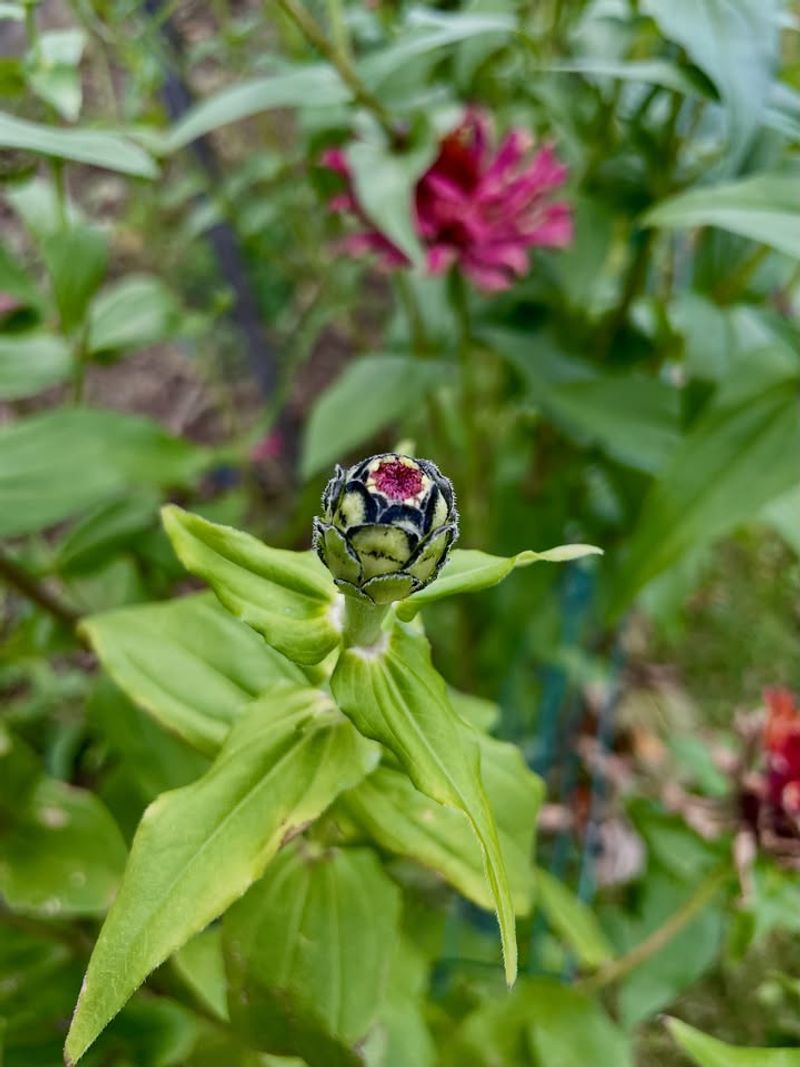
Few things are more frustrating than watching plump buds sit for days and simply refuse to unfurl. When zinnias stall at the bud stage, they are usually telling you something upstream is off.
Bud blast, as growers call it, often traces back to inconsistent watering, sudden heat spikes, or hungry thrips feeding inside the developing flower. The plant essentially freezes the bud to conserve resources.
Steady moisture and a light mulch to buffer soil temperature swings can encourage those buds to finish opening. If you peel one back and find tiny slivered insects wriggling inside, thrips are the culprit, and removing affected buds slows their spread.
7. Brown Crispy Leaf Edges
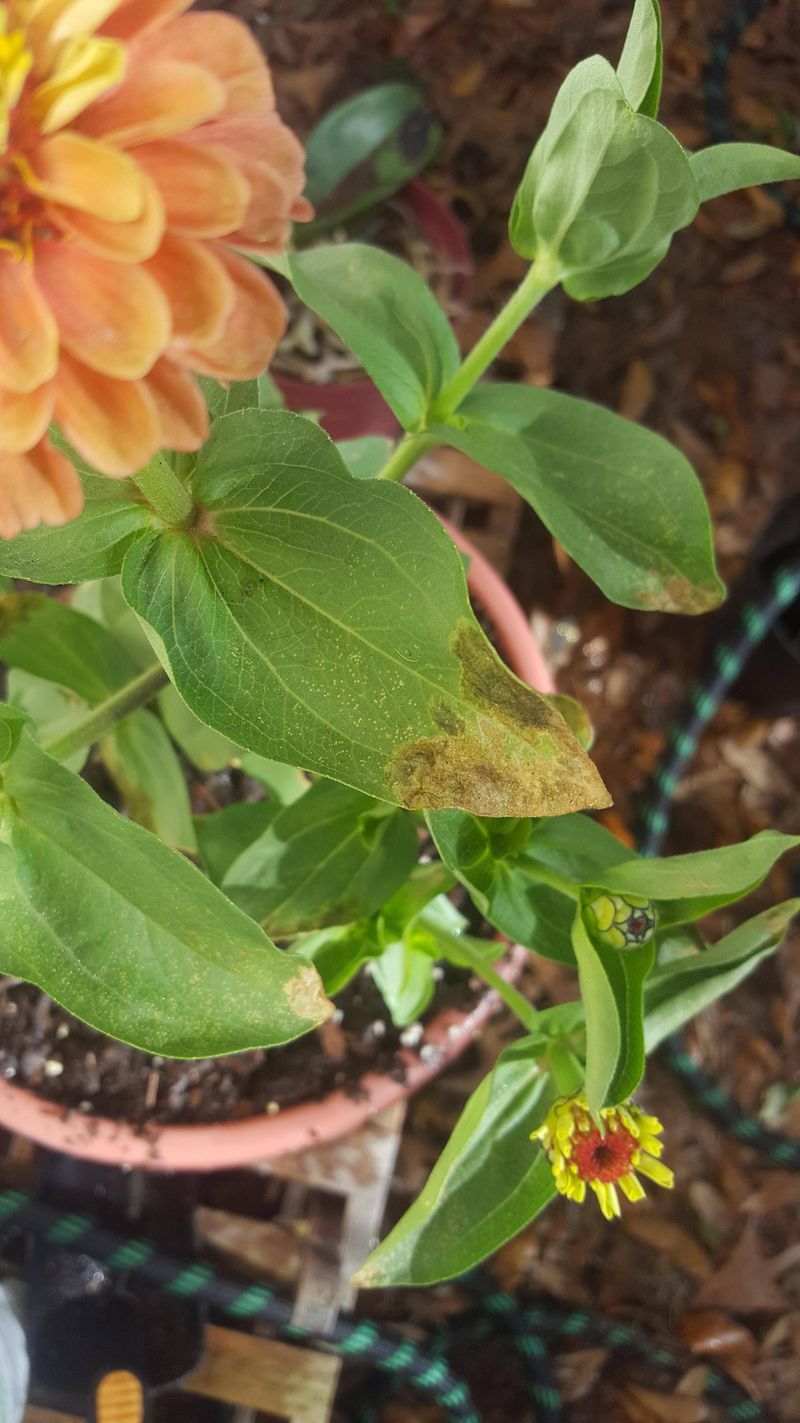
Run your fingers along a stressed zinnia and the leaf margins may feel papery and brittle, browned like the edge of a toasted marshmallow. That crisping around the rim is a classic sign the plant lost water faster than its roots could resupply.
Sometimes it comes from a missed watering during a scorcher, and sometimes from salt buildup after heavy fertilizing. Either way, the outer edges dry first because they are farthest from the leaf’s water supply.
Deep, consistent watering at the base helps roots stay hydrated instead of gasping. If you fertilize with granular products, flushing the bed with plain water now and then rinses away the salts that can burn those delicate margins.
8. Leaves Curling Upward Like Cups
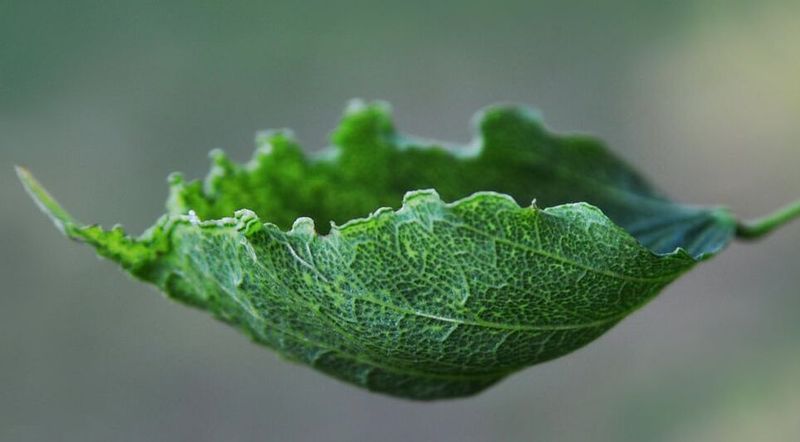
Healthy zinnia leaves lie flat and open, so when they start folding upward into little cups or taco shapes, the plant is clearly bracing for trouble. Curling is a protective reflex that shrinks the surface area losing moisture to the air.
Intense afternoon sun, drying wind, or even certain herbicide drift from a neighbor’s yard can spark the cupping. The leaf is basically hunkering down to survive.
Offering a bit of afternoon shade during the harshest stretch of the day gives the plant relief. Checking that no lawn weed spray blew onto the bed matters too, since chemical drift can twist and cup zinnia foliage for weeks.
9. Dark Spots Ringed With Yellow Halos
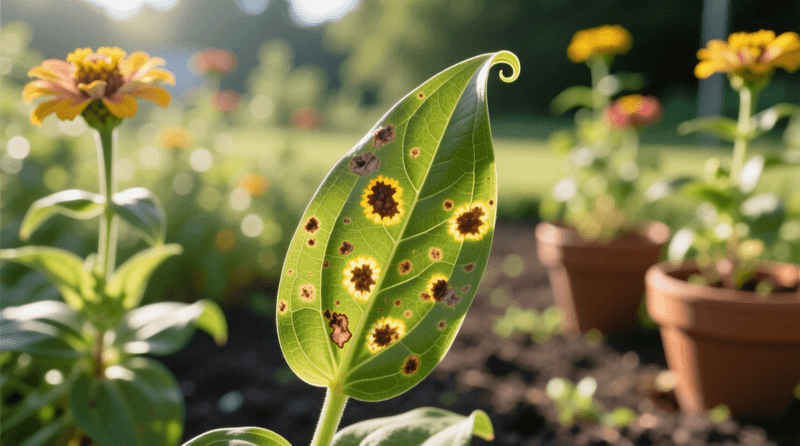
Spot a leaf freckled with brown or gray blotches, each rimmed by a soft yellow ring, and you are likely looking at a fungal leaf spot like Alternaria. Zinnias catch it easily when foliage stays wet overnight.
The halo forms as the leaf tissue dies in the center while the surrounding cells react to the infection. Over time the spots merge and leaves drop, leaving bare, leggy stems.
Removing and trashing infected leaves, never composting them, slows the spread to healthy foliage. Watering early so leaves dry by evening, plus giving plants elbow room, does more to prevent these spots than any spray after the fact.
10. Stems Growing Tall And Floppy
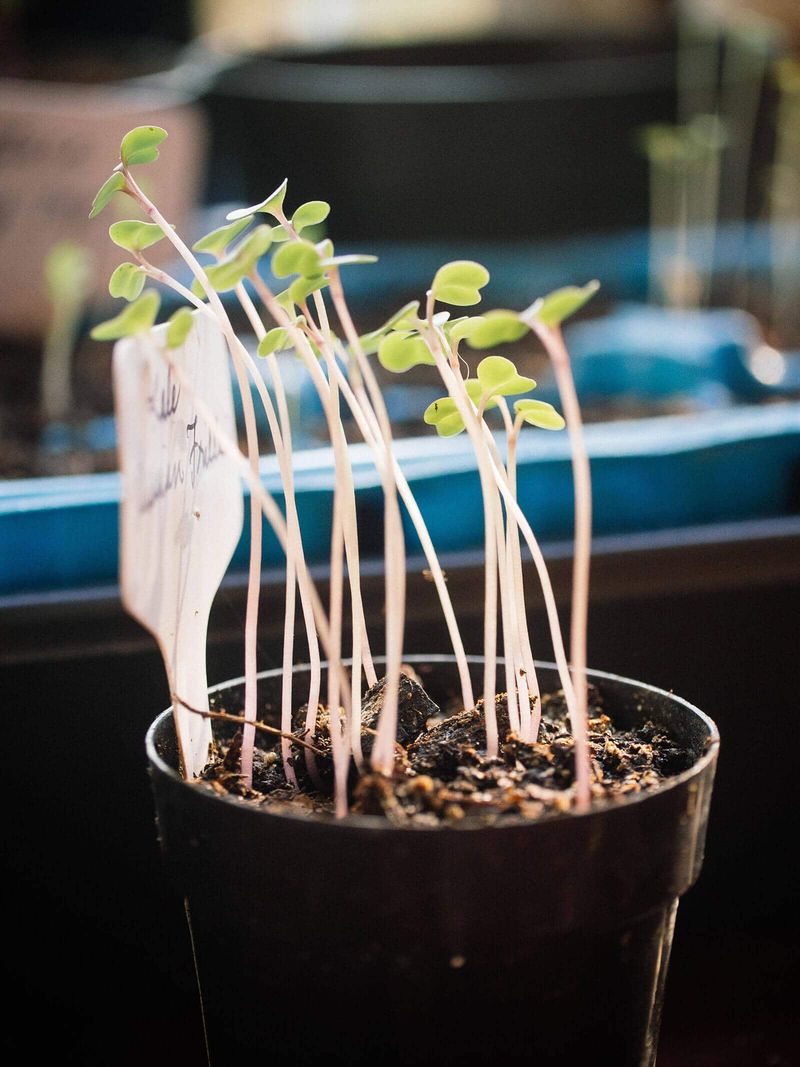
When a zinnia stretches skyward with long, spindly stems and wide gaps between leaves, it is reaching for something it is not getting. That leggy, floppy growth almost always means not enough direct sunlight.
Zinnias are sun lovers that want at least six hours of bright light. In too much shade they sacrifice sturdiness and blooms just to chase the sun.
Pinching the growing tips early in the season encourages branching and a bushier, stronger plant. For zinnias already tall and toppling, a simple stake or a low grow-through support keeps them upright until you can move future plantings to a sunnier spot.
11. Chewed, Ragged Leaf Holes
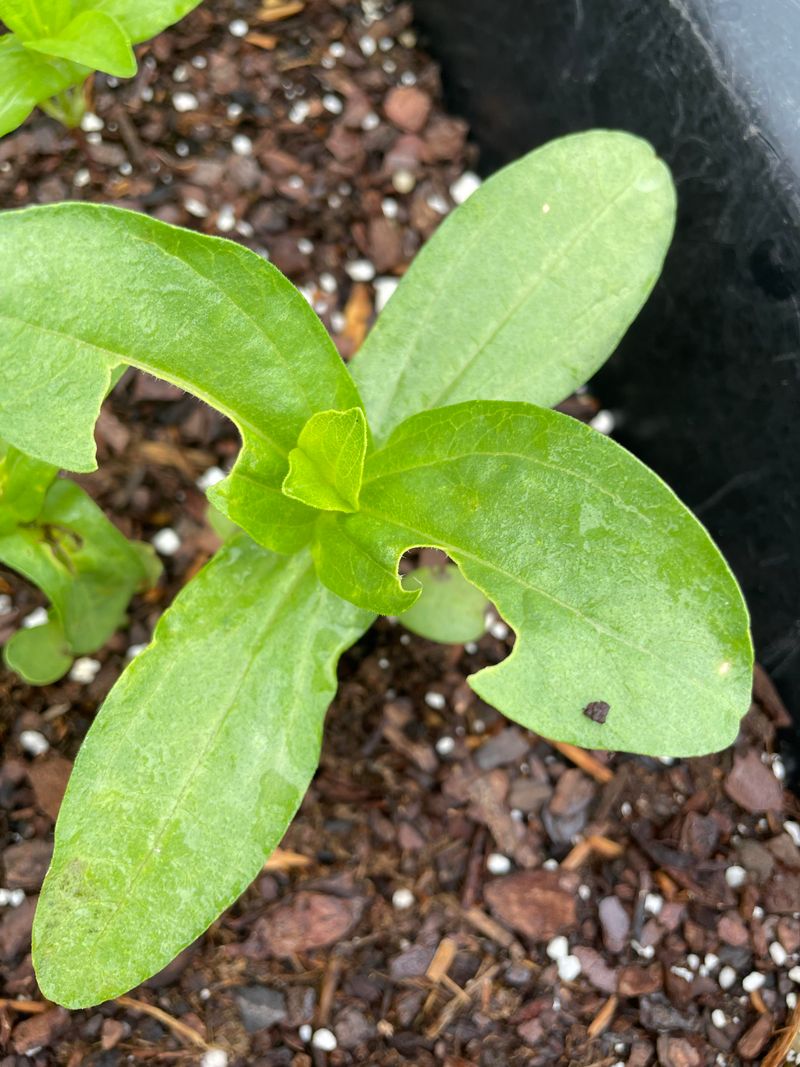
Come out one morning to find your zinnia leaves looking like they went through a hole punch, and something has been snacking overnight. Ragged, irregular holes usually point to caterpillars, beetles, or slugs working the night shift.
Japanese beetles skeletonize leaves down to lacy veins, while slugs leave shiny slime trails and smooth-edged bites low on the plant. Reading the style of damage helps you name the culprit.
Handpicking beetles into soapy water at dawn thins them fast, since they are sluggish in the cool air. Setting out a shallow dish of beer near the base can lure slugs away from your prized blooms, and a scatter of crushed eggshells may discourage their soft bellies from crossing.
12. Petals Fading Or Bleaching In Color
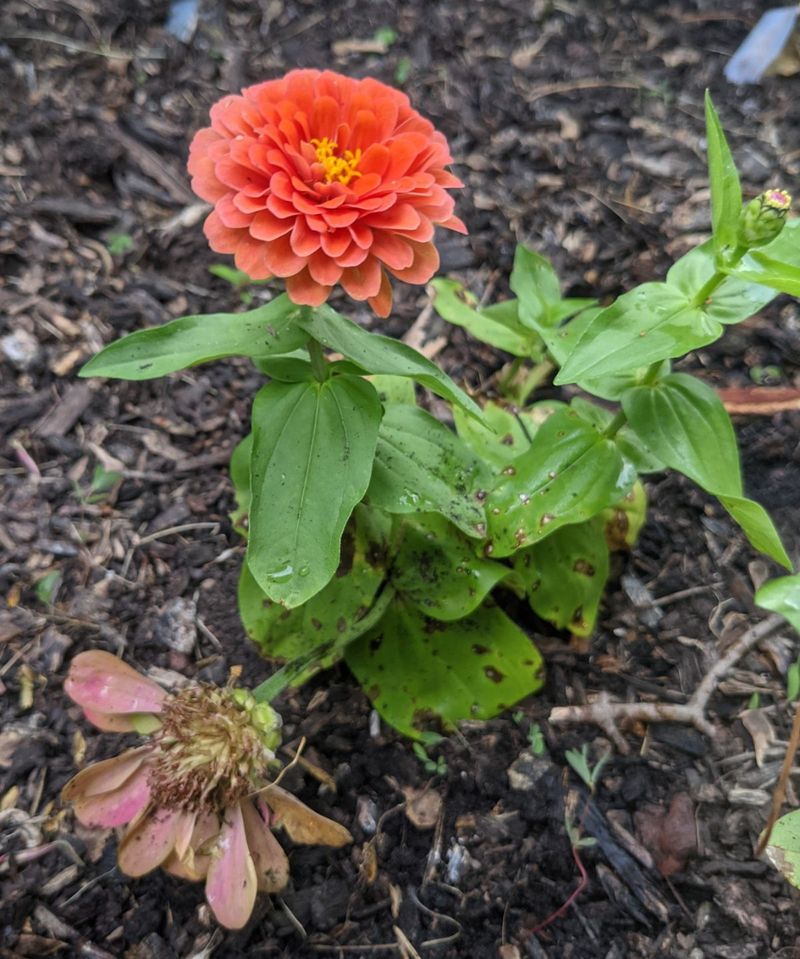
A zinnia that once glowed hot pink or fiery orange can slowly wash out to a tired, faded pastel, and that loss of punch is a stress signal too. Bleached petals often follow relentless sun on flowers that are running low on the reserves needed for rich pigment.
Heat also speeds up how fast each bloom ages, so flowers pass their prime before you get to enjoy them. The color drains right as the petals thin.
Keeping the plant well fed and hydrated helps it produce deeper, longer-lasting color in the next flush of blooms. Cutting fresh flowers for a vase before they fully open also lets you enjoy peak color indoors, away from the punishing midday glare.
13. A Fuzzy Gray Mold On Spent Blooms
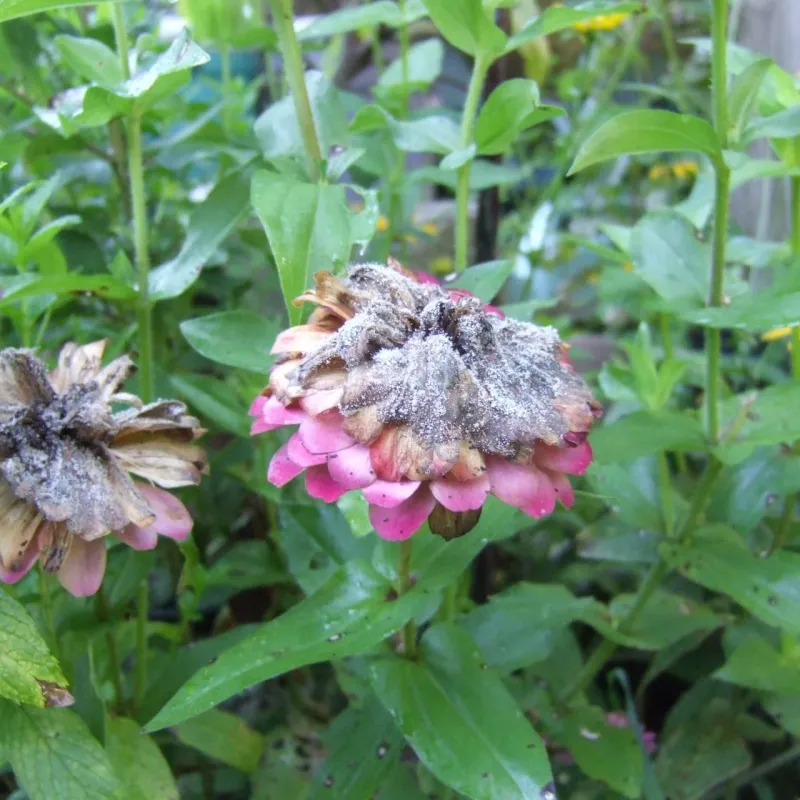
Leave a few faded flowers on the plant during a damp spell and you might find them cloaked in a fuzzy gray fuzz almost overnight. That gray mold is botrytis, and it loves the soft, dying tissue of old zinnia blooms.
Once it takes hold, the mold can march from a mushy flower down into healthy stems and buds. Crowded, humid plantings give it the perfect launchpad.
Regular deadheading removes its favorite feeding ground before it can settle in. Clearing fallen petals and debris off the soil, plus spacing plants so breezes move through, keeps the fuzzy invader from getting comfortable in the first place.
14. Sticky Residue And Clustered Aphids On New Growth
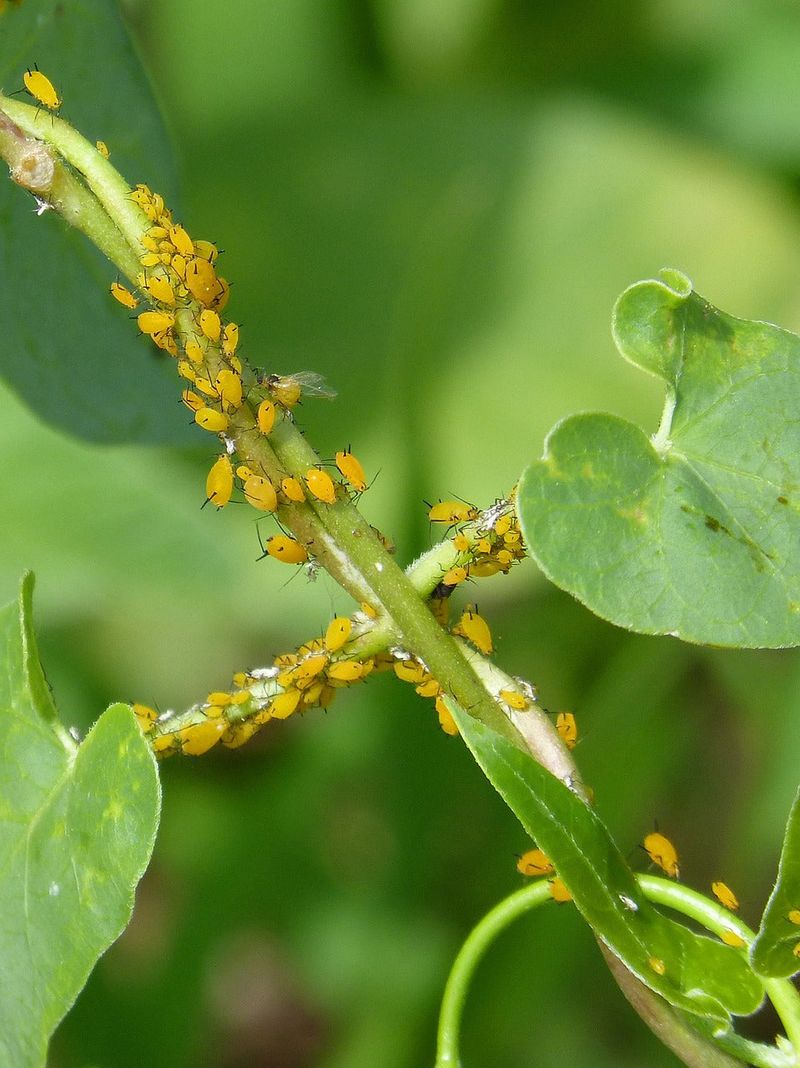
Touch the tender tips of your zinnias and feel a strange stickiness, and you have probably found aphids. Those tiny pear-shaped insects cluster on the softest new growth and leave behind a shiny, sugary goo called honeydew.
Beyond weakening the plant by sucking sap, the honeydew invites a black sooty mold that coats the leaves. Ants often patrol the colonies, farming them for the sweet residue.
A strong jet of water blasts most aphids off before they multiply out of control. Inviting ladybugs and lacewings into the garden gives you a free cleanup crew, since a single ladybug can eat dozens of aphids a day and keep your new growth clean.
15. Fewer Bees And Butterflies Visiting
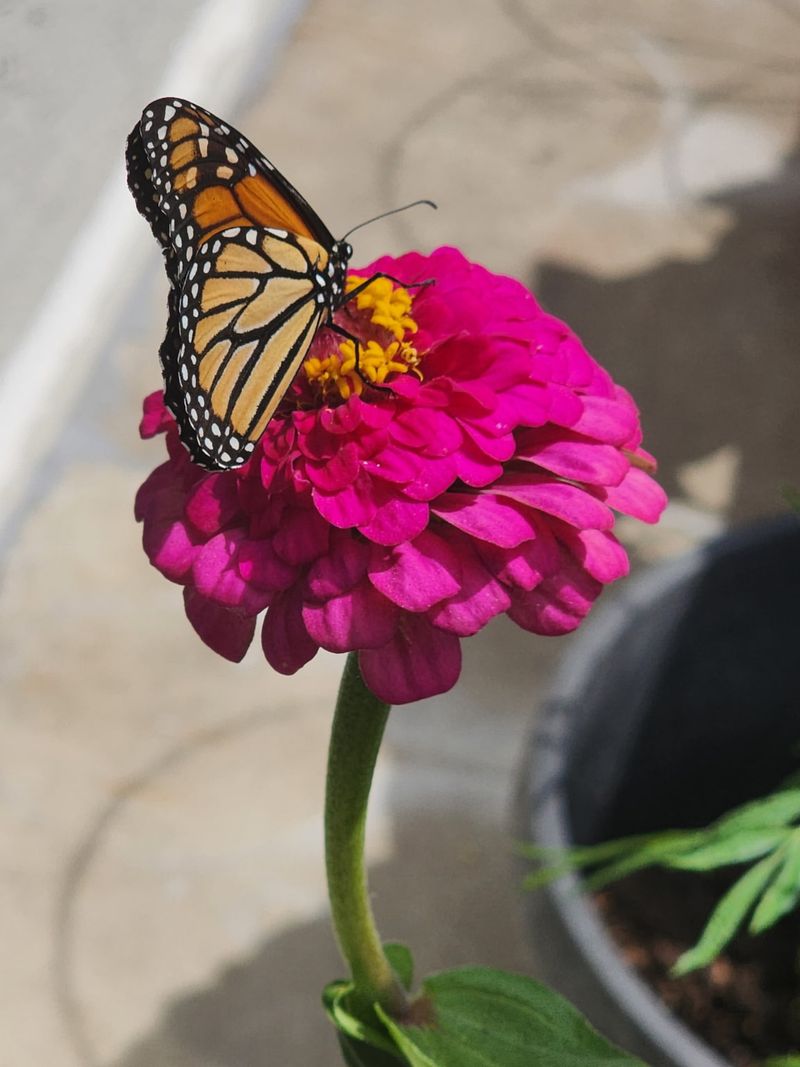
Zinnias are magnets for pollinators, so an eerie quiet where there used to be busy wings can mean the plants are underperforming. When blooms shrink, fade, or dry out from stress, they offer less nectar and pollen to draw visitors in.
A drop in bee and butterfly traffic often mirrors what is happening beneath the surface. Healthy, well-fed zinnias practically hum with activity all afternoon.
Planting single-petal or open-centered varieties keeps the nectar easy for pollinators to reach, unlike some fluffy doubles. Keeping a steady succession of fresh blooms through deadheading gives your winged guests a reason to keep coming back, and their return is a good sign the plants have rebounded.
16. Mushy, Darkened Stems Near The Soil Line
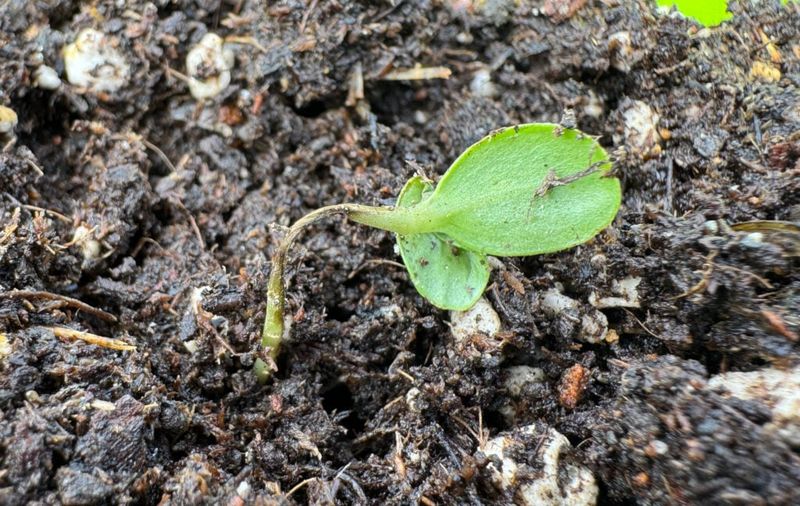
Give a wobbly zinnia a gentle wiggle and if the stem feels soft, dark, and squishy right where it meets the dirt, the plant is in real trouble. Mushy stem bases point to stem rot, usually from soil that stays waterlogged too long.
Roots need air as much as water, and constant sogginess suffocates them while fungi move in on the weakened tissue. Once the stem collapses at the base, there is often no saving that plant.
Prevention is everything here. Planting in loose, well-draining soil and letting the top inch dry between waterings keeps roots breathing. Raised beds or amended containers give zinnias the drainage they crave, and pulling any rotted plant quickly protects the healthy neighbors around it.