
Feed Your Hydrangeas This Way And Watch Them Pour Their Energy Into Bigger, Fuller Flowers
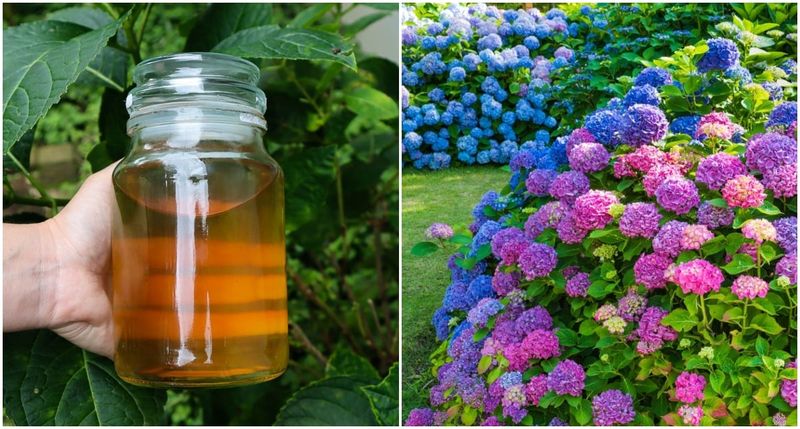
Hydrangeas are some of the most rewarding shrubs you can grow, but when the flowers come in sparse or small, it is tempting to reach straight for a bag of fertilizer. The truth is, feeding is only one piece of the puzzle, and applying it without checking a few basics first can actually make things worse. Understanding what your plant really needs, starting with what type of hydrangea you have and how your soil is doing, puts you in a much better position to support healthy, full blooms.
Identify the Hydrangea Before You Reach for Fertilizer
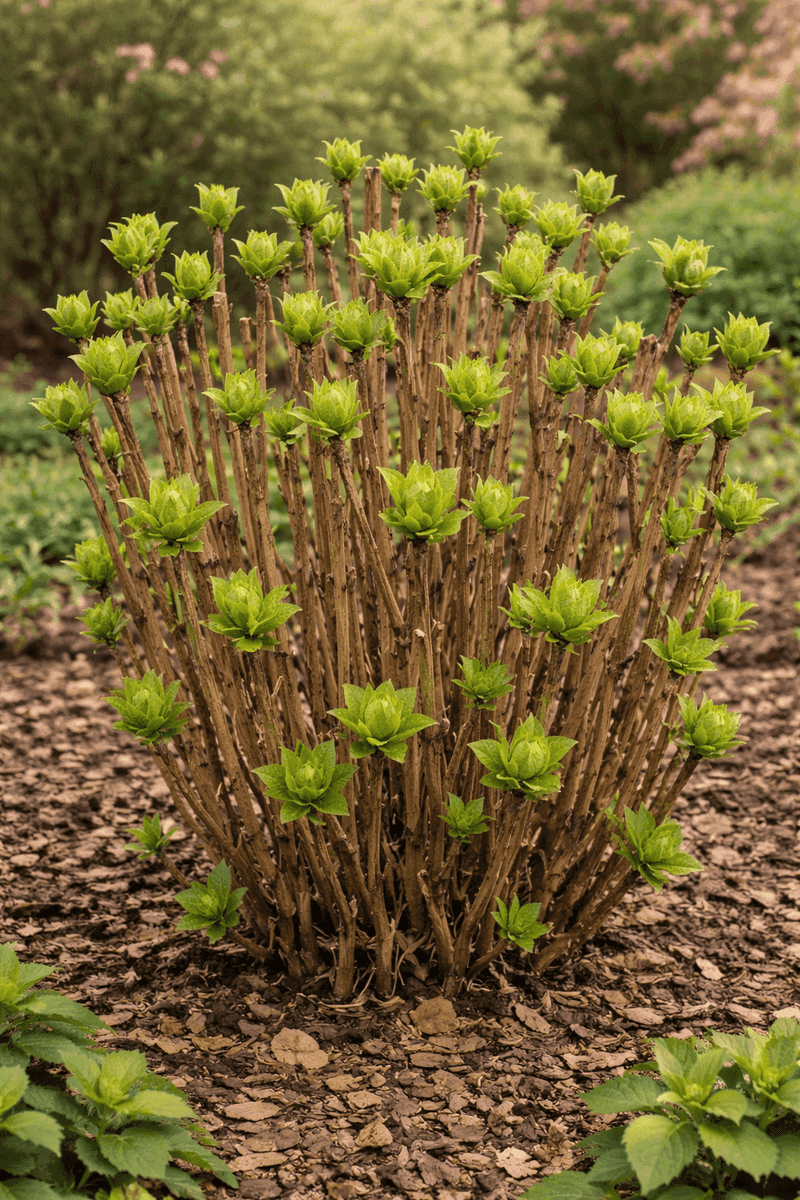
Knowing which hydrangea you are growing is the single most useful thing you can do before deciding whether, when, or how to feed it. Bigleaf hydrangeas (Hydrangea macrophylla) and oakleaf hydrangeas (H. quercifolia) generally bloom on old wood, meaning they set their flower buds on stems that grew the previous season. Smooth hydrangeas (H. arborescens) and panicle hydrangeas (H. paniculata) generally bloom on new wood, producing buds on stems that grow in the current season.
That distinction matters enormously when you are troubleshooting poor flowering. Penn State Extension guidance on pruning hydrangea species explains that cutting back an old-wood type in fall, winter, or early spring can remove the very buds that would have opened the following summer. No amount of fertilizer will bring those buds back once they are gone. New-wood types are more forgiving about pruning timing because they rebuild their flowering potential each spring.
For old-wood bloomers, protecting existing stems through winter is often more important than any feeding decision. If your bigleaf hydrangea reliably leafs out but rarely flowers, check your pruning calendar before you check your fertilizer shelf. If you have been cutting it back hard in late summer or fall, that is likely the problem, not a nutrient shortage.
Feeding fits into the picture as a supporting measure for a plant that is otherwise well-matched to its site and correctly managed for its type. University of Georgia Cooperative Extension guidance on growing bigleaf hydrangea identifies mistimed pruning, winter damage, excess shade, and excess nitrogen as recognized causes of poor flowering in bigleaf hydrangeas, which shows that fertilizer is one variable among several rather than the default fix. Getting the plant’s identity and pruning timing right first means fertilizer can actually do its job when you do apply it.
Use Plant Vigor and Soil Tests to Guide Feeding

A hydrangea that is putting out strong new growth, holding deep green leaves, and flowering reasonably well is probably not running low on nutrients. Oregon State University states that ornamental shrubs already growing vigorously generally do not require fertilization, and its hydrangea-specific guidance reinforces that fertilizer is not always necessary. Adding fertilizer to a plant that does not need it does not produce better flowers; it adds unnecessary salts to the soil and can encourage excessive soft growth.
When growth looks weak, leaves appear pale or off-color, or the plant seems stuck, a soil test is a practical next step. University of Minnesota Extension guidance on choosing the right fertilizer recommends testing before adding phosphorus, potassium, or large amounts of nitrogen, because existing nutrient levels vary widely from one yard to the next. A test gives you something concrete to act on rather than guessing at what the soil might be missing.
That said, a soil test result alone does not settle every feeding question. It can tell you whether phosphorus or potassium is low, high, or in a reasonable range, but it does not automatically tell you how much nitrogen your hydrangea needs or whether the plant truly needs feeding at all. Use the test results alongside your observations of plant vigor, your local soil conditions, and any regional guidance from your state extension service.
The practical approach is to treat feeding as a response to a demonstrated need rather than a standing annual ritual. Check how the plant grew last season. Look at the leaves. Take a soil sample if you have not done one recently, especially if you are working with a new bed or a plant that has been struggling for more than one season.
Those steps, combined, give you a much clearer picture than any general fertilizer schedule can provide on its own.
Use a Modest Spring Feeding to Support, Not Force, Blooming
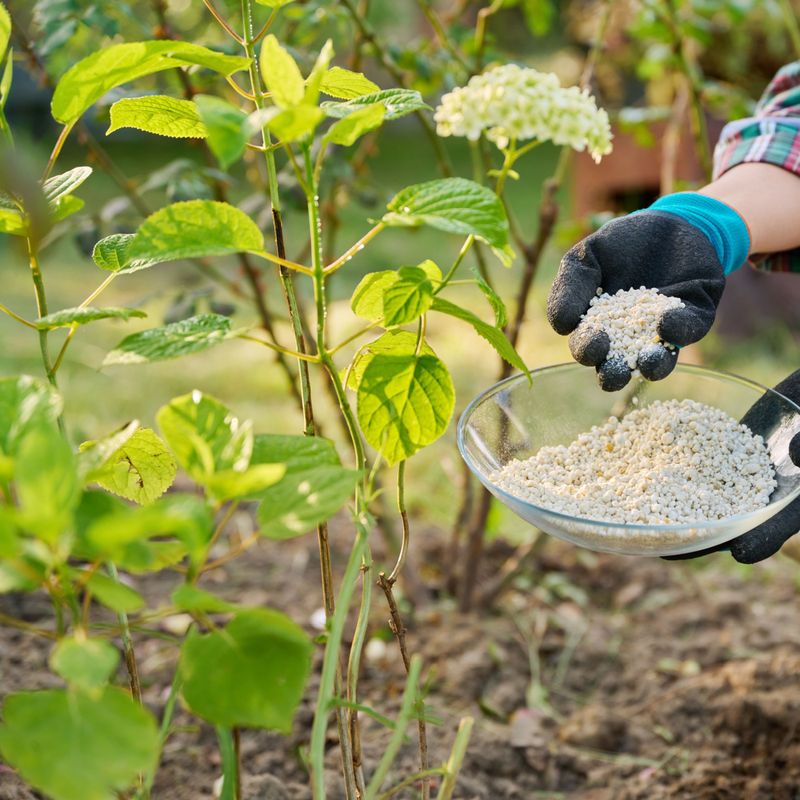
Spring is generally the safest window to feed an established landscape hydrangea, and keeping the application modest is the key to making it useful rather than harmful. Oregon State University Extension notes that many hydrangeas actually bloom better when not overfertilized, and its guidance recommends a slow-release, balanced fertilizer applied in spring when feeding is warranted. A balanced product, one with roughly equal nitrogen, phosphorus, and potassium numbers on the label, supports overall plant health without pushing any one nutrient out of proportion.
Slow-release formulas are a practical choice for in-ground shrubs because they deliver nutrients gradually as the plant grows, rather than flooding the root zone all at once. That steady supply reduces the risk of salt buildup and means you are less likely to accidentally overfeed if you apply the label-directed rate. The label rate is the right rate; adding extra does not produce proportionally better results and can damage roots.
After spreading granular fertilizer around the base of the plant, water it in according to the product’s label directions. UGA Cooperative Extension specifically advises watering after applying granular fertilizer to help dissolve it and move it into the soil where roots can reach it. Leaving dry granules on the surface slows uptake and can concentrate salts near the crown.
What spring feeding can do is support a plant that has a genuine nutrient shortage, helping it put out healthy stems, leaves, and eventually flowers. University of Minnesota Extension’s quick guide to fertilizing plants points out that plants absorb nutrients as ions regardless of whether the source is organic or synthetic, so the nutrient content, rate, and timing matter more than the product’s marketing language. Feed lightly, water it in, and let the plant respond before deciding whether any additional application is needed later in the season.
Why a Bloom Booster Is Not the Default Answer
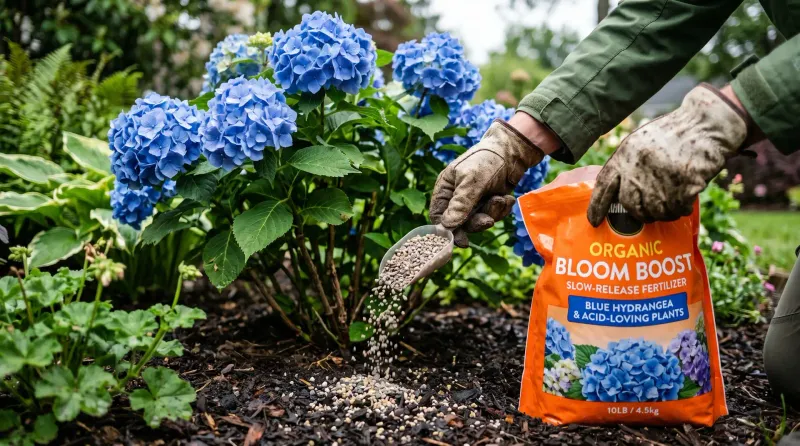
High-phosphorus fertilizers marketed as bloom boosters are a popular product, but reaching for one before you know your soil’s phosphorus level is a bit like taking a supplement for a deficiency you have never tested for. Phosphorus does play a role in root development and flowering, and it belongs in a fertilizer plan when a soil test shows the soil is genuinely low. The problem is that many established garden soils already have adequate or even excess phosphorus from years of fertilizer applications and decomposing organic matter.
University of Minnesota Extension’s guidance on phosphorus fertilizers explains that excess phosphorus can create nutrient imbalances, contribute to salt buildup in the soil, and move off the property through runoff or leaching, where it can affect local water quality. Adding more phosphorus to soil that already has enough does not translate into more or bigger flowers; it just adds unnecessary inputs with potential downsides.
For bigleaf hydrangeas specifically, there is an additional reason to be cautious with high-phosphate products. Oregon State University’s general hydrangea care guidance notes that high phosphate levels can reduce aluminum availability in the soil, which can interfere with the blue or purple flower color in bigleaf hydrangeas that naturally develop those tones. If you are trying to maintain blue flowers on a bigleaf hydrangea, a low-phosphate fertilizer may actually serve you better than a bloom booster.
That color relationship does not apply across all hydrangea types. UGA Lincoln County Extension’s hydrangea overview makes clear that white-flowered bigleaf hydrangeas generally remain white regardless of soil pH, and panicle hydrangeas such as ‘Limelight’ are not managed for blue-versus-pink color through soil chemistry at all. Keep flower quantity, flower size, and flower color as three separate considerations, and let a soil test guide whether phosphorus is actually needed before you spend money on a specialized product.
Adjust the Routine for Container Hydrangeas
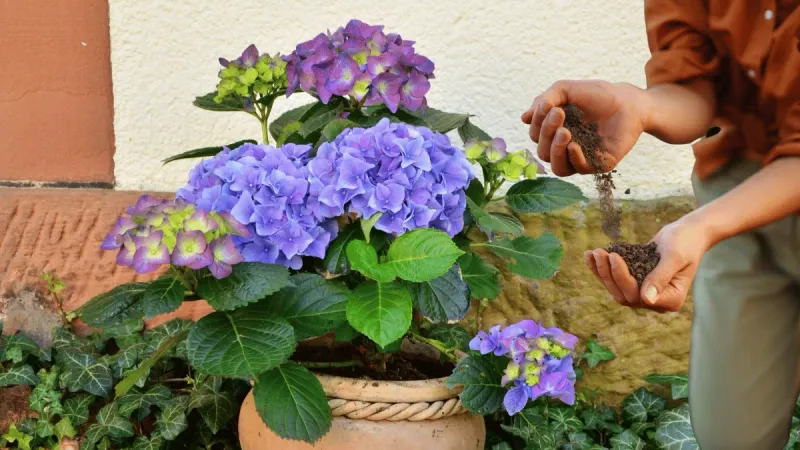
Container growing changes the nutrient equation in one straightforward way: water goes in frequently, and nutrients go out with it. Every time you water a potted hydrangea, some of the soluble nutrients in the potting mix get pushed through the drainage holes and lost. Over a full growing season, that repeated leaching can leave a container plant genuinely short on nutrients even when an in-ground shrub in the same yard is doing fine without any feeding.
University of Minnesota Extension guidance on fertilizing and watering container plants explains that containers may need more frequent, lower-rate feeding than landscape plants for exactly this reason. The key phrase there is lower-rate: more frequent does not mean heavier. Applying a small amount of fertilizer on a regular schedule, following the product label for container use, keeps nutrients available without overloading the root zone.
Overfertilizing a container hydrangea is a real risk, and it is easier to do than most gardeners expect. Roots in a pot have nowhere to go if salt levels climb, and excess fertilizer can cause root burn, wilting, and leaf scorch that looks superficially similar to underwatering. If you see brown leaf edges on a container plant you have been feeding regularly, ease back on the fertilizer and flush the pot thoroughly with water before adding anything else.
Choose a fertilizer formulated for container use or one that specifies a container application rate on the label, and stick to that rate. A slow-release granular product mixed into the potting medium at the start of the season can provide a steady baseline, with a dilute liquid feed added mid-season if the plant shows signs of slowing down. Monitor how the plant responds and let that guide any adjustments rather than following a fixed calendar schedule.
Protect the Flowering Factors Fertilizer Cannot Replace
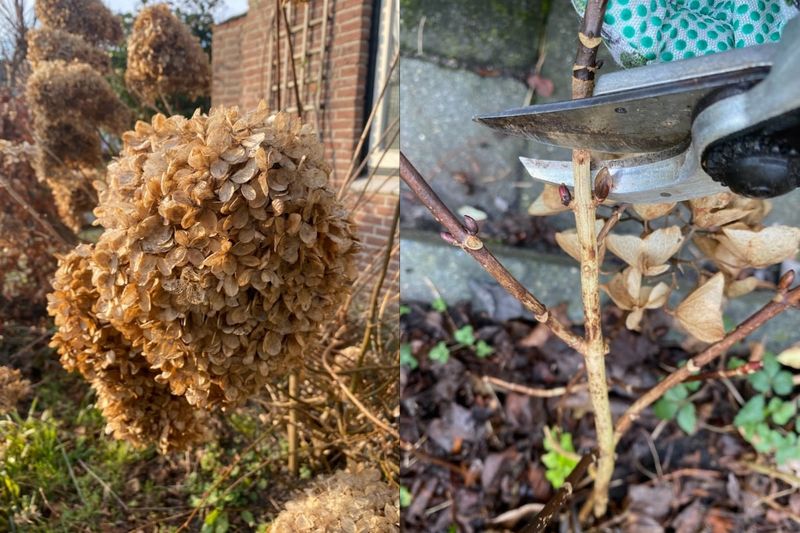
Before adding fertilizer to a hydrangea that is not flowering well, run through a short checklist of the factors that fertilizer genuinely cannot fix. Poor flowering in hydrangeas has several well-documented causes that have nothing to do with nutrient levels, and identifying the right one saves time, money, and the risk of making things worse with unnecessary applications.
Pruning at the wrong time is one of the most common culprits for old-wood bloomers. Bigleaf hydrangeas form next season’s flower buds in late summer, so cutting stems back in fall, late winter, or early spring removes those buds before they ever open. UGA’s bigleaf hydrangea guide lists mistimed pruning as a recognized cause of flowering failure, and no fertilizer program can restore buds that have already been cut away. If this is your situation, the fix is adjusting when you prune, not what you feed.
Winter and late-frost damage is another frequent explanation, especially in colder regions. A bigleaf hydrangea may leaf out beautifully in spring while the flower buds on its old wood were quietly killed by a hard freeze months earlier. Penn State Extension’s guidance on why hydrangeas fail to bloom points to winter injury as a primary reason that old-wood types skip flowering in some years. Protecting stems with a light layer of straw or burlap in colder climates is a more direct solution than any spring fertilizer application.
Shade is worth examining too. Hydrangeas generally need several hours of direct or bright indirect light daily to flower well, and a plant that has gradually been shaded out by a growing tree canopy may simply lack the energy to produce buds regardless of soil fertility. University of Minnesota Extension’s pruning guide for best bloom reinforces that light, pruning timing, and plant type all interact to determine flowering outcomes. Consistent moisture during bud development also matters; water stress at the wrong moment can affect flowering even in a well-fed plant.
Diagnosing which of these factors is at work in your garden gives you a much clearer path forward than reaching for a fertilizer bag first.
Set a Realistic Expectation for Bigger, Fuller Flowers
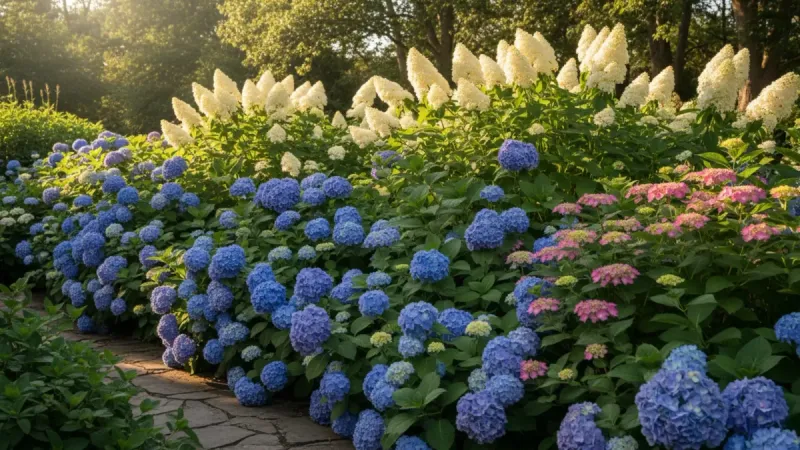
Modest, soil-informed feeding can help a nutrient-limited hydrangea produce healthier growth and support flowering when a genuine shortage is holding the plant back. What it cannot do is serve as a universal switch that reliably produces bigger or fuller blooms in every garden situation.
A controlled study tracked by the USDA Agricultural Research Service on nitrogen fertilization and hydrangea growth did find that higher nitrogen increased plant growth, leaf area, flower number, and flower size in one bigleaf cultivar grown in containers under nursery-style management. That is genuinely interesting, but it applies to a specific production setting, not automatically to an established shrub growing in your backyard bed with its own soil, light conditions, and pruning history.
Oregon State University Extension’s hydrangea guidance puts it plainly: feed only when the plant’s vigor and conditions suggest a need, apply a balanced product lightly in spring, and do not expect fertilizer to compensate for problems involving plant type, pruning timing, light, winter conditions, or moisture. A hydrangea that gets those basics right, and receives a careful, label-directed feeding when the soil genuinely calls for it, is already set up for the best flowering it can realistically achieve. The soil, the site, and the seasons do most of the work.