
18 Reasons Your Lawn Keeps Turning Brown In Patches This Summer—And The Hidden Stressor Behind Most Of Them
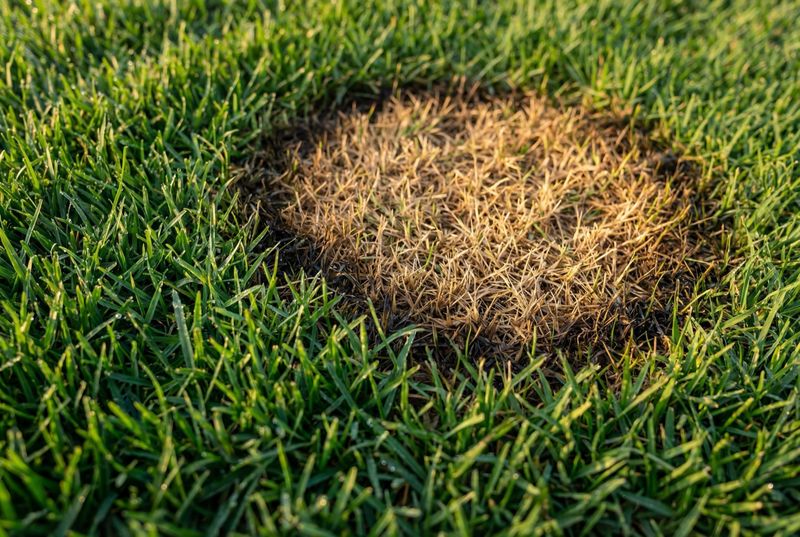
Every summer, patches of green lawn seem to give up and turn a crispy shade of brown, and it feels like a mystery you can never solve. The truth is, most of those ugly spots trace back to a handful of causes, and many of them share one hidden troublemaker working behind the scenes. Once you learn to read the clues your grass leaves behind, fixing the problem gets a whole lot easier. Here are 18 reasons your lawn keeps browning in patches, plus the sneaky stressor tying most of them together.
1. Compacted Soil Choking the Roots
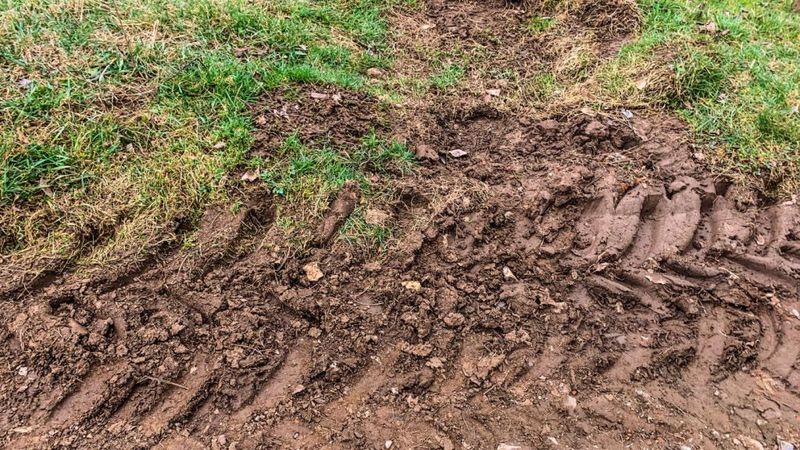
Walk across the same spot in your yard a few hundred times and the ground underneath slowly turns hard as a sidewalk. Grass roots need air pockets and loose soil to breathe, and when the dirt gets squeezed tight, water and oxygen simply cannot reach them.
The brown patches from compaction usually show up along walkways, near the mailbox, or wherever the dog runs its daily laps. Push a screwdriver into a healthy area versus a brown one, and if it slides easily in one spot but fights you in the other, you have found your culprit.
Core aeration in fall is the classic fix, pulling little plugs of soil to let the ground loosen up. Compaction is also the quiet root of many other problems on this list, because stressed roots can not defend themselves against pests, drought, or disease.
2. Grubs Munching Beneath the Surface
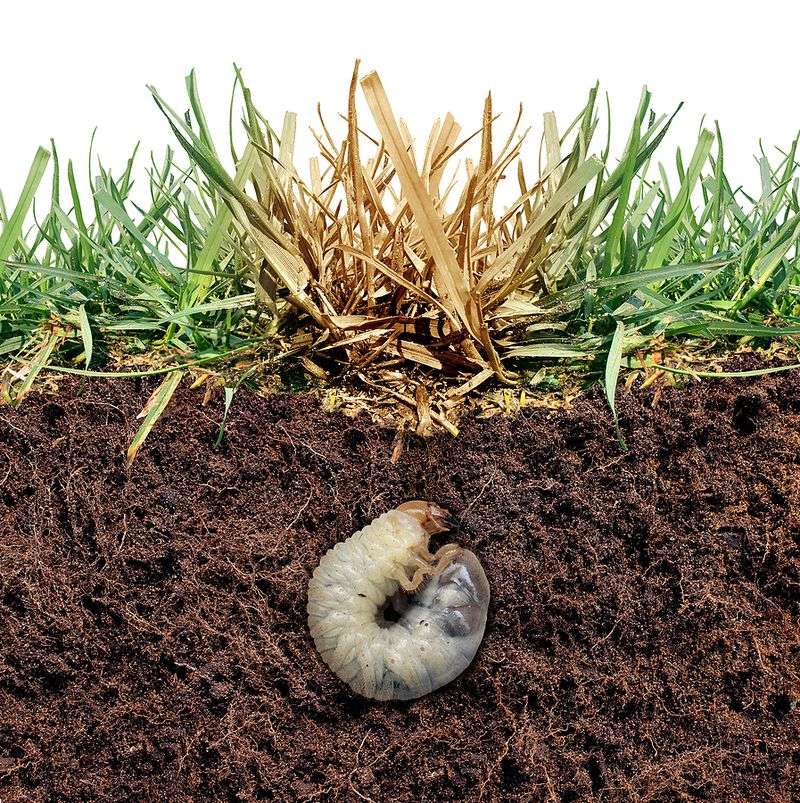
Peel back a browning section of turf like a rug, and if it lifts up with no resistance, you might find fat, C-shaped white grubs squirming underneath. These beetle larvae feast on grass roots, and by the time the surface goes brown, they have already been dining for weeks.
A telltale sign is spongy turf that you can roll back with your hands. Skunks, raccoons, and birds digging up your yard at night are also a giveaway, because they are hunting the very same buffet.
Ten or more grubs per square foot usually means it is time to act, whether with beneficial nematodes or a targeted treatment. Keeping your lawn thick and well-rooted makes grub damage less noticeable, since strong grass can outgrow a bit of munching.
3. Fungal Brown Patch Disease
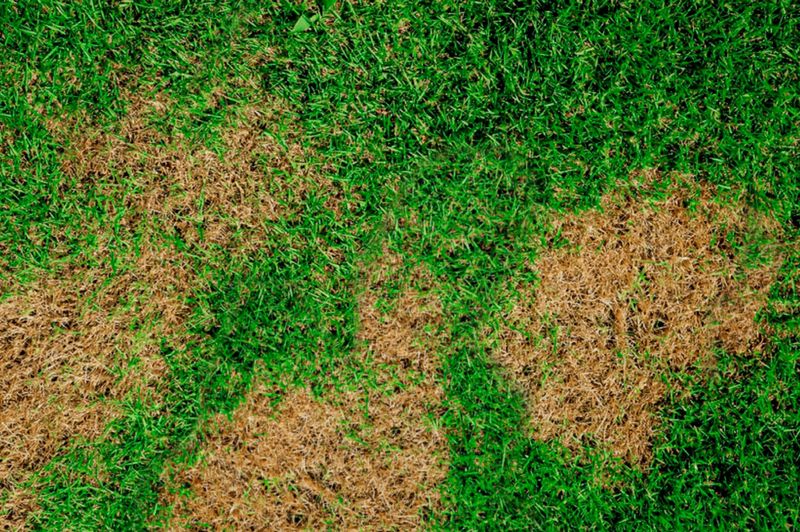
Warm nights, morning dew, and humid air create the perfect party conditions for fungus, and brown patch disease crashes it every summer. Circular or irregular brown rings, sometimes with a smoky gray edge in the early morning, are its signature look.
The disease loves lawns that stay wet overnight, which is why evening watering is basically an invitation. You may notice the grass blades have tan lesions with darker borders when you look up close.
Watering early in the day so blades dry by dusk is one of the simplest defenses. Improving airflow, easing up on nitrogen fertilizer, and mowing with a sharp blade all help keep this fungus from spreading across the yard in one soggy week.
4. Dog Urine Burn Spots

Man’s best friend can be a lawn’s worst enemy, at least in the potty department. Dog urine is packed with nitrogen and salts, and when it lands in the same spot repeatedly, it scorches the grass like an overdose of fertilizer.
The classic look is a dead brown center ringed by a suspiciously lush, extra-green halo where the diluted edges actually fed the grass. Female dogs tend to squat in one place, which is why their spots are often the most dramatic.
Rinsing the area with water soon after your pup goes can dilute the damage before it sets in. Training a designated bathroom zone with mulch or gravel spares the rest of the turf, and reseeding the burned centers refreshes the look.
5. Dull Mower Blades Shredding Grass
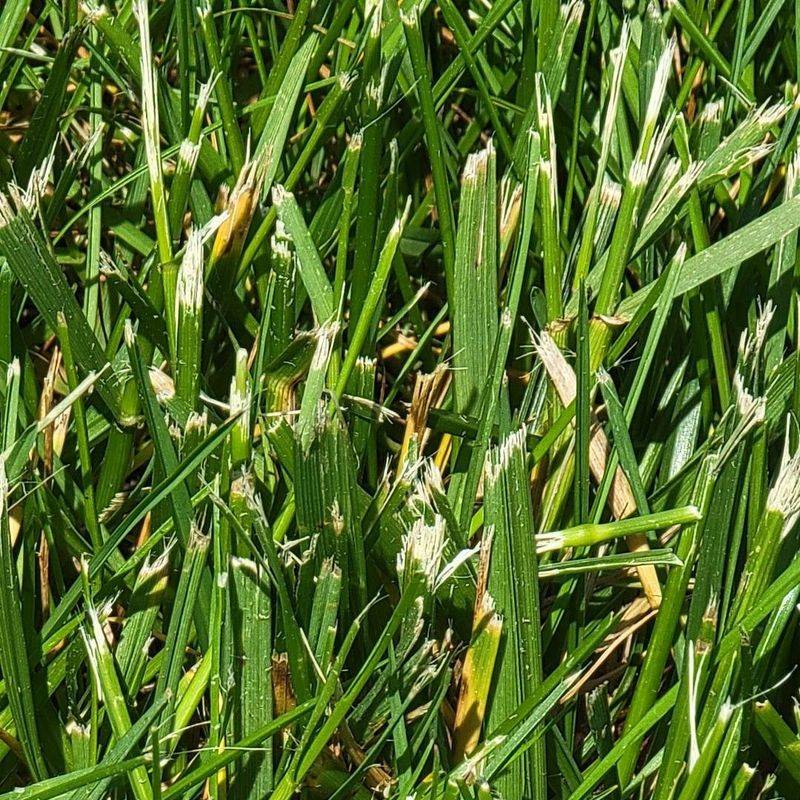
Here is a sneaky one that hides in plain sight: your mower. A dull blade does not slice grass cleanly, it tears and bruises each blade tip, leaving a ragged wound that dries out and turns tan across the whole lawn.
Look closely at your grass a day after mowing. If the tips are frayed and whitish-brown instead of cleanly cut, your blade is begging for a sharpening.
A quick sharpen once or twice a season keeps cuts clean and helps grass hold its moisture. Bonus points for never scalping the lawn too short, since taller grass shades its own roots and stays greener when the heat cranks up.
6. Buried Rocks and Debris Creating Hot Spots
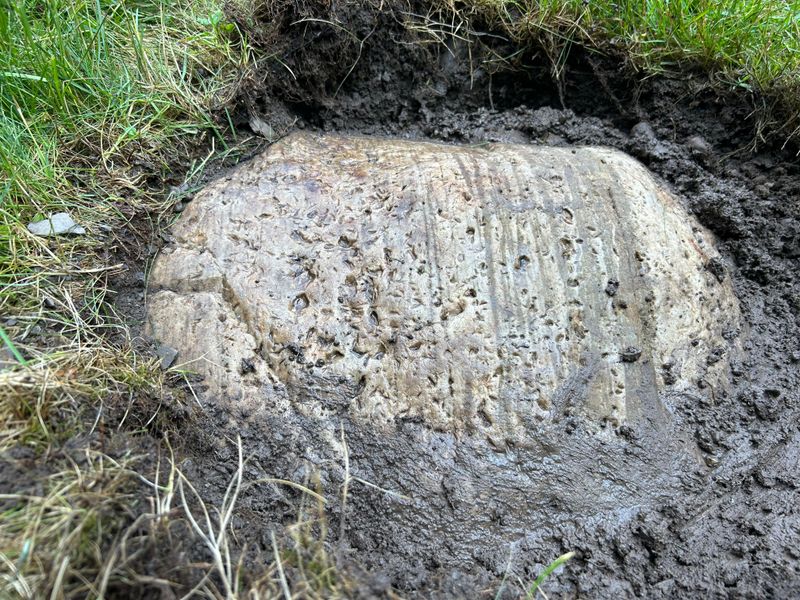
Sometimes the answer is literally underground. Leftover concrete chunks, old bricks, or a forgotten slab of patio buried just below the surface leaves a thin layer of soil on top that dries out faster than everywhere else.
These spots turn brown first in a heat wave and stay brown longest, often in oddly straight lines or squares that hint at something man-made below. Grass over shallow soil simply can not hold enough water to survive the afternoon sun.
Probing with a screwdriver or shovel usually reveals the hidden obstruction. Digging it out and backfilling with quality topsoil gives roots room to spread, turning a stubborn dead zone back into living lawn.
7. Fertilizer Spilled or Over-Applied
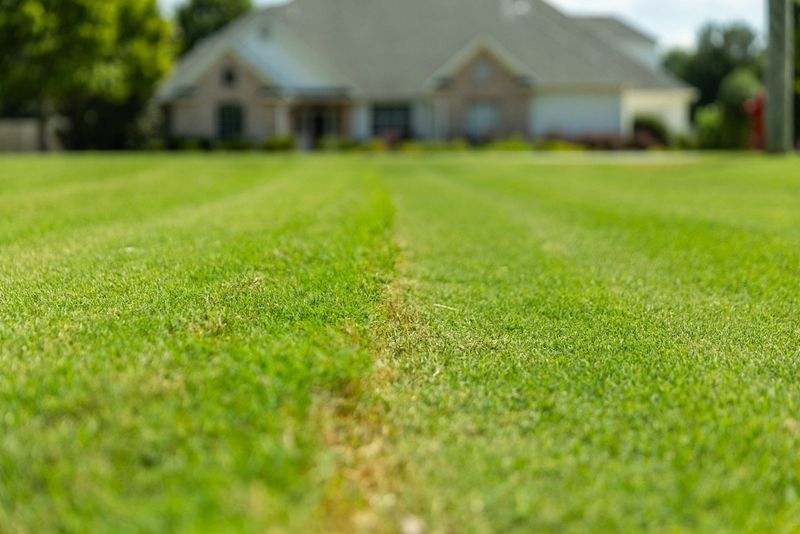
Too much of a good thing can burn just as badly as too little. Fertilizer is basically concentrated salt and nitrogen, and a spill from a leaky spreader or a heavy-handed application scorches grass into crispy brown streaks.
The pattern often gives it away, showing up as suspicious stripes that match your walking path or a big blotch right where you paused to refill the hopper. The edges may look normal while the center is toast.
Flushing the area heavily with water can leach out excess salts if you catch it early. Going forward, use a well-calibrated spreader, sweep up spills right away, and remember that light and even always beats a big greedy dose.
8. Chinch Bugs Sucking the Life Out
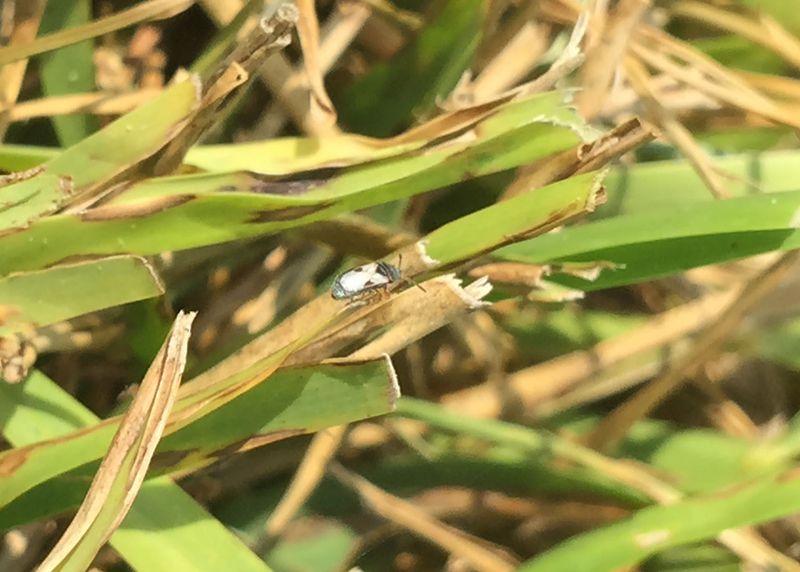
Tiny but mighty, chinch bugs are barely the size of a pinhead, yet a colony can drain a sunny patch of lawn until it looks bone dry. They pierce grass blades and suck out the juices while injecting a toxin that keeps the plant from moving water.
Their favorite haunts are hot, sunny spots along driveways and sidewalks, and their damage looks a lot like drought that just will not respond to watering. Part the grass at the edge of a brown patch and watch for little black-and-white insects scurrying at the soil line.
A simple float test, pushing a bottomless can into the soil and filling it with water, brings hidden chinch bugs bobbing to the surface. Healthy, dethatched turf resists them best, since they thrive in thick thatch layers.
9. Thatch Buildup Blocking Water
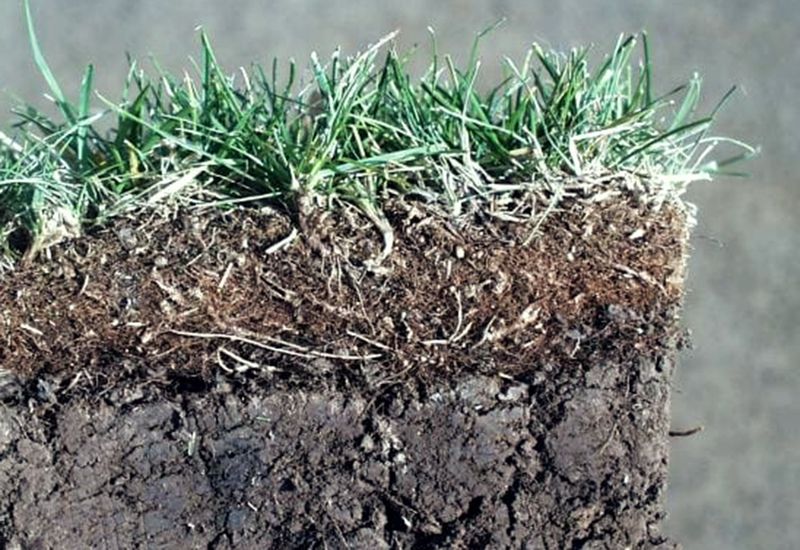
Between the green blades and the soil lies a spongy tan layer of old stems and roots called thatch, and a little is healthy. Let it grow thicker than about half an inch, though, and it turns into a thirsty sponge that soaks up water before it ever reaches the roots.
Lawns with heavy thatch feel bouncy underfoot and dry out in uneven patches even when you water regularly. The roots start growing up into the thatch instead of down into the soil, leaving them exposed to summer heat.
Raking hard with a dethatching rake or running a power dethatcher clears the buildup and lets water flow freely again. Regular aeration keeps thatch from returning and rebuilds that healthy connection between grass and ground.
10. Shallow Watering That Trains Weak Roots
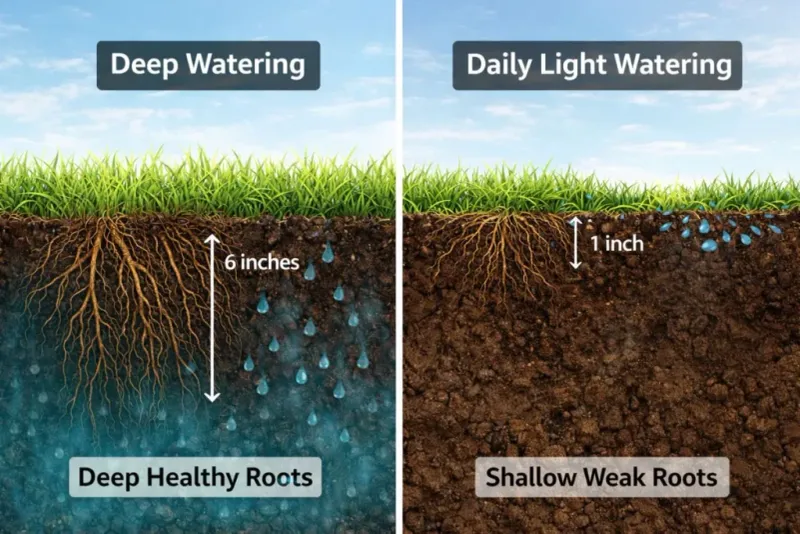
Giving your lawn a quick daily sprinkle feels caring, but it actually teaches grass to grow lazy roots. When only the top inch of soil ever gets wet, roots stay near the surface where they cook the moment the sun blazes down.
The result is patchy browning that seems baffling because you swear you water all the time. Shallow roots simply can not reach the cool, moist soil deeper down when a dry spell hits.
Deep and infrequent watering is the smarter move, soaking the soil six inches down a couple times a week so roots chase the moisture downward. A stronger root system is the single best insurance against nearly every brown-patch cause on this list.
11. Fairy Rings and Mushroom Circles

Ever notice a near-perfect ring of dark green grass, dead brown turf, or popping mushrooms curving through your yard? Folklore blamed dancing fairies, but the real cause is a fungus feeding on decaying organic matter buried in the soil.
As the fungus grows outward in a circle, it can create a band of brown where it hogs nutrients and water or makes the soil repel moisture. The ring slowly expands year after year, sometimes reaching several feet across.
Aerating the ring and soaking it deeply with a wetting agent helps water penetrate the fungal barrier. In stubborn cases, digging out and replacing the affected soil breaks the cycle, though patience and steady moisture often win in the end.
12. Salt Damage Near Driveways
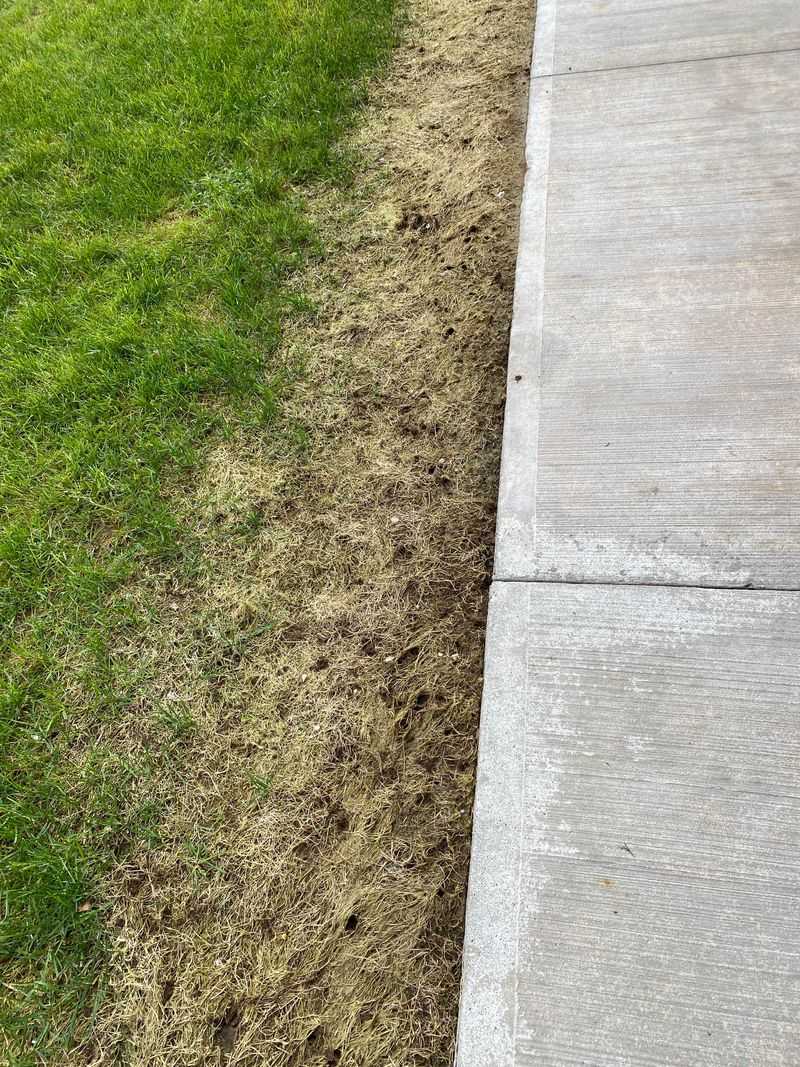
Leftover winter de-icing salt does not just vanish when the snow melts. It lingers in the soil along driveways, sidewalks, and road edges, then reappears as brown, stunted grass once summer heat pulls moisture up through the ground.
Salt-damaged turf often forms a scorched border hugging the pavement, with grass getting healthier the farther you move away. The salt messes with the plant’s ability to drink water, so blades dry out even in decent conditions.
A deep spring soaking helps rinse accumulated salts down and away from the root zone. Switching to lawn-friendly de-icers next winter, or planting salt-tolerant grass along the edges, keeps the problem from returning each year.
13. Mowing Too Short in the Heat
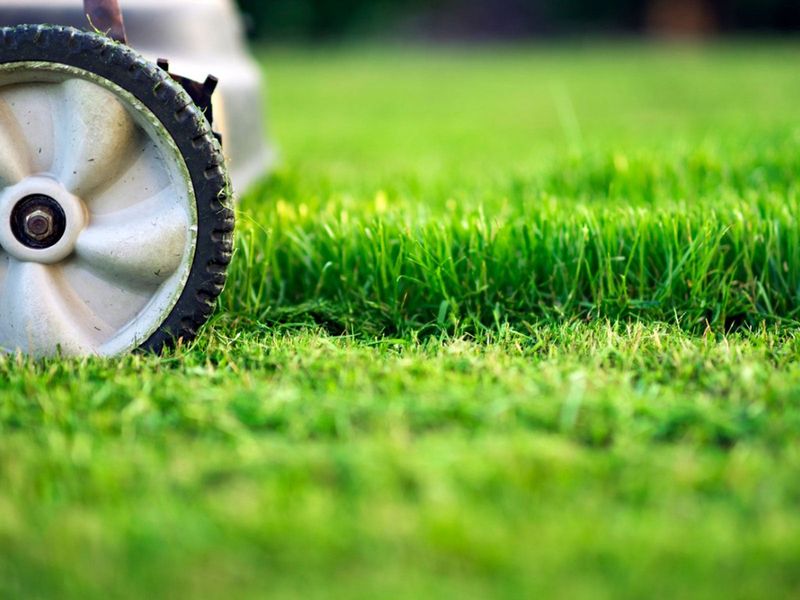
Buzzing the lawn super low seems like it buys you extra time between mows, but in summer it backfires hard. Scalped grass loses the leaf surface it needs to shade its own roots and feed itself, so those short spots brown out fast under a hot sun.
Uneven ground makes it worse, since mower blades scalp the high bumps while missing the dips, creating a patchwork of brown crowns across the yard. The exposed soil heats up and dries the roots right below it.
Raising the mower deck so you cut off no more than the top third of the blade keeps grass tall enough to protect itself. Cool-season lawns especially thrive when left around three inches during the hottest stretches of the year.
14. Dry Spots From Sprinkler Blind Zones
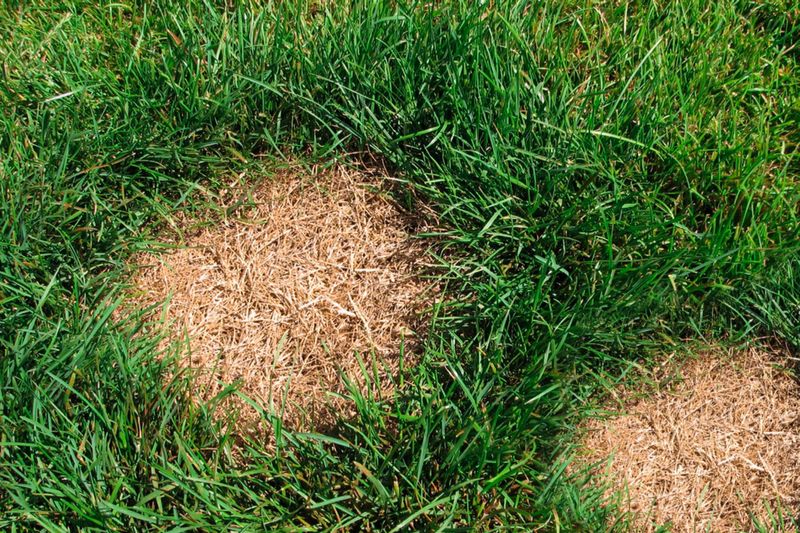
Your irrigation system might be working perfectly and still leave dead patches behind. A clogged nozzle, a head blocked by an overgrown shrub, or two sprinklers with a gap between their spray patterns can leave certain spots getting almost no water at all.
These dry zones brown out in geometric shapes or wedges that mirror the reach of your sprinkler heads. Everything around them stays green, which is the biggest clue that it is a coverage issue rather than a disease.
Running a catch-cup test with tuna cans scattered across the lawn reveals exactly where the water is and is not landing. Adjusting heads, clearing clogs, and overlapping spray zones evens out the coverage and revives those forgotten corners.
15. Pet Paths and Foot Traffic Trails
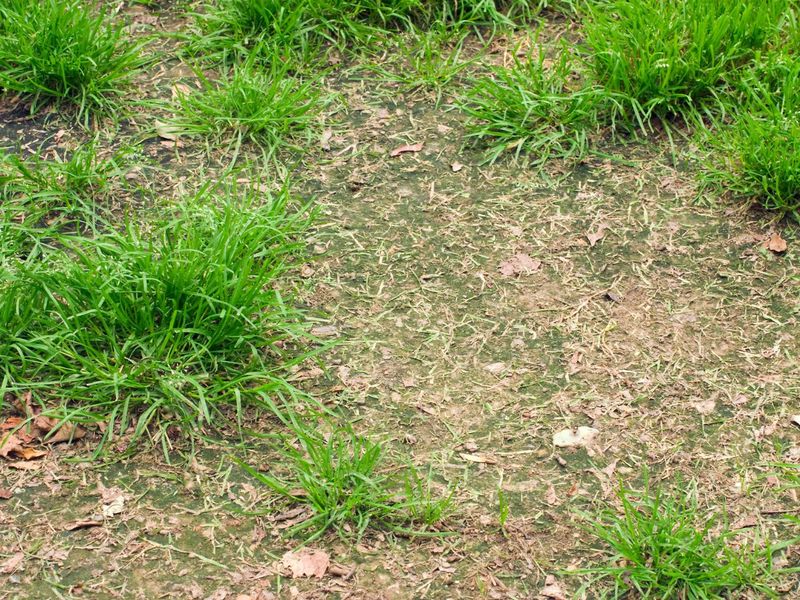
Grass is tougher than it looks, but it can only take so many footsteps before it throws in the towel. Repeated traffic from kids racing to the trampoline, the dog patrolling the fence line, or the shortcut across the yard grinds the crowns of the grass into the dirt.
The damage shows up as brown trails and worn ribbons that trace exactly where feet and paws go most. Beneath those paths, the soil is usually packed tight, doubling the trouble with compaction.
Stepping stones or a mulch path along the busiest routes give the grass a break and actually look intentional. For the rest, aerating and reseeding the worn strips brings them back once the constant pounding eases up.
16. The Wrong Grass for Your Yard
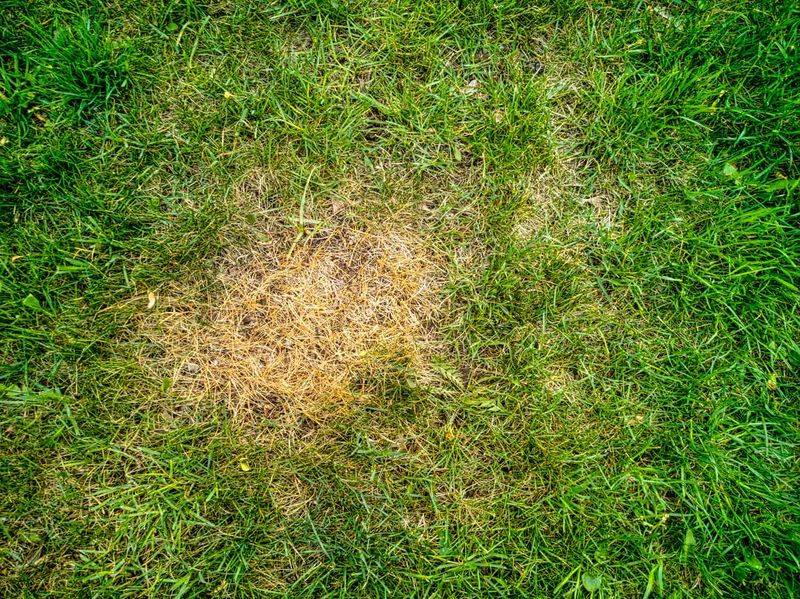
Planting a sun-loving grass in a shady corner is like asking a fish to climb a tree. If a section of your lawn browns and thins every summer no matter what you do, the grass type itself may simply be mismatched to the light, soil, or climate of that spot.
Cool-season grasses like fescue and bluegrass struggle in scorching southern summers, while warm-season types like Bermuda turn brown the moment cool weather arrives. Shady zones often need shade-tolerant blends that most standard seed mixes lack.
Matching the seed to the site is half the battle won before you ever plant. Overseeding thin areas with a variety suited to that microclimate turns chronic problem spots into some of the most reliable turf in the yard.
17. Chemical Spills From Gas and Oil
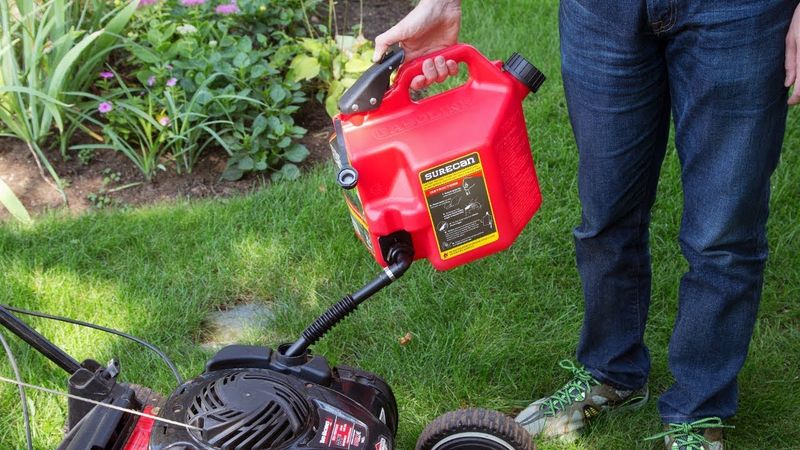
The lawn is a surprisingly common victim of the garage. A tipped gas can while filling the mower, a drip of motor oil, or a splash of weed killer that drifts off target leaves a sharply outlined dead patch that no amount of watering will revive.
Petroleum and harsh chemicals poison the soil itself, killing not just the grass but the microbes that keep the ground healthy. The spot often has crisp, unnatural edges right where the liquid pooled.
For small spills, digging out the contaminated soil and replacing it with fresh topsoil is the surest reset. Handling fuel and chemicals over the driveway instead of the grass prevents the whole heartbreak in the first place.
18. Heat-Stressed Roots: The Hidden Stressor Behind Most of Them
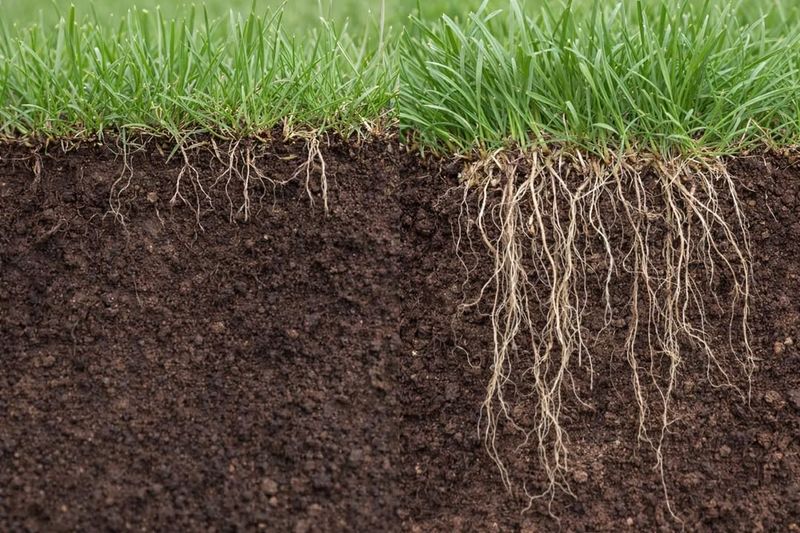
Here is the thread that ties this whole list together. Behind grubs, fungus, chinch bugs, shallow watering, and half the other troublemakers lurks one shared weakness: a root system stressed and struggling beneath the soil.
When roots are shallow, compacted, or cooked by heat, the grass loses its ability to bounce back from any single problem. A healthy, deep-rooted lawn shrugs off a few grubs or a dry weekend, while a stressed one collapses into brown patches at the first insult.
Fixing the surface symptom rarely lasts if the roots stay weak underneath. Focus on the fundamentals that build strong roots, deep watering, seasonal aeration, proper mowing height, and balanced feeding, and you address the true cause behind most of these eighteen reasons at once. Take care of what is happening below ground, and the green up top tends to take care of itself.