
16 Things To Know About Watering Hydrangeas The Right Way (Timing Matters More Than You Think)
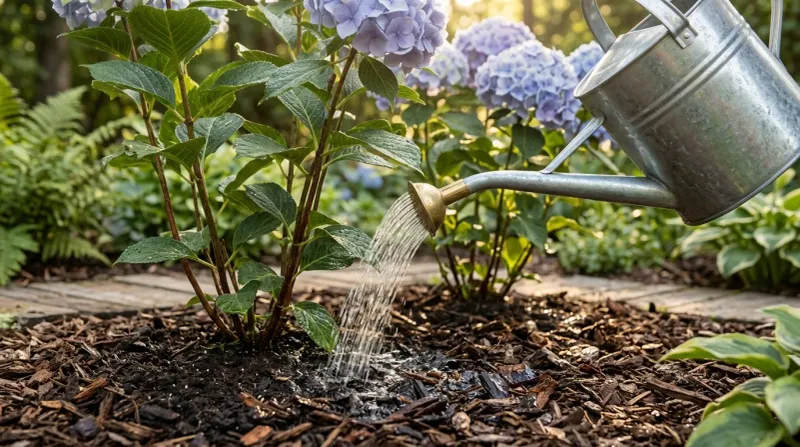
Hydrangeas can go from lush and blooming to droopy and brown faster than almost any other backyard shrub, and most gardeners immediately blame their watering. The truth is that how you water matters just as much as when you do it, and a rigid daily schedule can actually make things worse.
Getting a few key habits right, starting with how you check the soil, can take a lot of the guesswork out of keeping your hydrangeas healthy all season.
Aim for moist soil, not a daily watering ritual
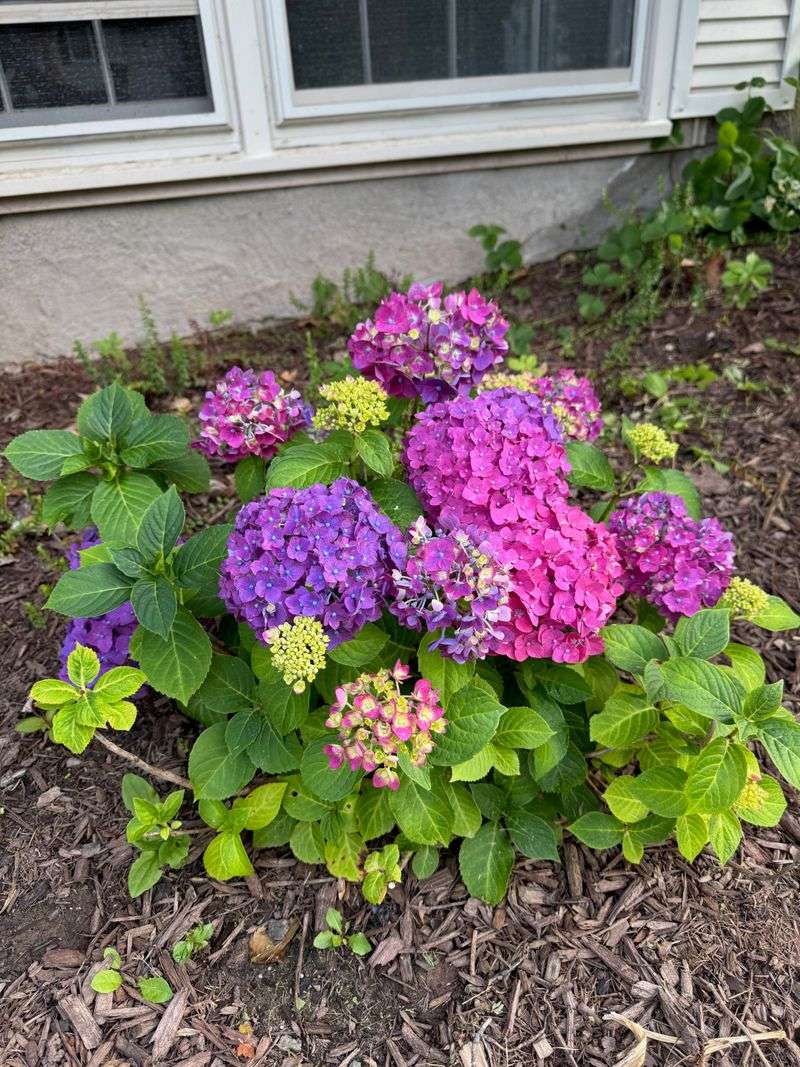
Hydrangeas have a reputation for being thirsty plants, and that reputation is earned. But “thirsty” does not mean “water every single day no matter what.” The standard that actually keeps them healthy is simple: the root zone should stay consistently moist but well drained.
Both drought and roots sitting in soggy, saturated soil can cause serious problems, including wilting, leaf decline, and reduced flowering.
A clock or a calendar cannot tell you whether your hydrangea needs water today. Rainfall, soil texture, sun exposure, wind, air temperature, mulch depth, plant size, and how long the shrub has been in the ground all change how quickly the root zone dries out.
A plant growing in sandy soil under full afternoon sun in a hot, dry July week will need attention far more often than the same species tucked into rich, loamy soil with afternoon shade and a recent rain. OSU Extension’s hydrangea care guidance emphasizes that correct watering frequency depends on all of these conditions together, not on a fixed routine.
Saturated soil is just as dangerous as dry soil. When roots sit in standing water or compacted, poorly drained ground for too long, they lose access to oxygen and begin to break down.
A plant with damaged roots cannot take up water efficiently, which can produce the same wilting and leaf symptoms that drought causes. Repeatedly adding water to soil that never fully drains only makes that situation worse.
The practical standard to carry through the rest of this guide is straightforward. Moist but well drained means the soil feels damp a few inches down but does not hold standing water or feel muddy for days after watering.
That condition, not a particular day of the week or time on the clock, is what your hydrangea is actually asking for.
Check the root zone before you reach for the hose
Leaf appearance alone is a poor guide to whether a hydrangea needs water. Leaves can droop from heat stress even when the soil is perfectly moist, and foliage can look fine for a day or two while the root zone dries out below the surface.
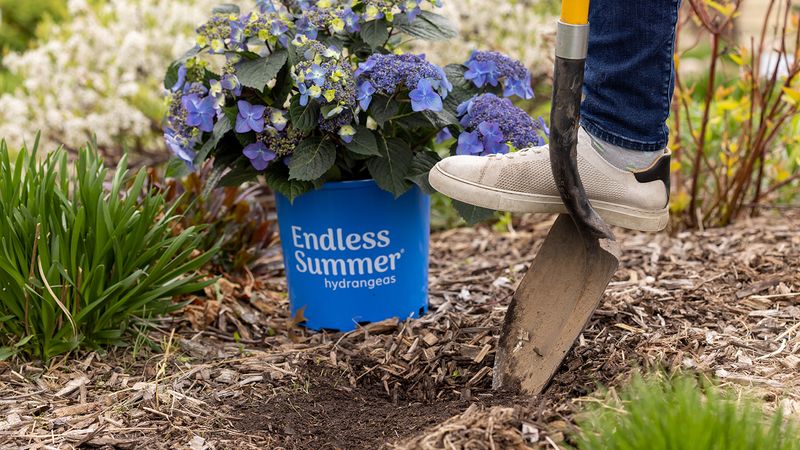
The most reliable check takes about thirty seconds and requires nothing more than a trowel or a sturdy finger.
Push a trowel or your finger several inches into the soil a few inches away from the base of the plant. University of Minnesota Extension guidance on established shrubs recommends checking roughly the top 6 to 9 inches of the root zone and watering when that layer feels dry.
If the soil at that depth still feels cool and slightly damp, you can hold off. If it feels dry and crumbly, that is your cue to water.
Several factors will change how quickly that zone dries out between checks. Sandy or gravelly soil drains faster and dries sooner than clay-heavy soil, which can hold moisture for days longer.
A 3- to 4-inch layer of organic mulch slows evaporation considerably, so a mulched plant may stay moist for a day or two longer than an unmulched one in the same spot. Recent rainfall obviously resets the clock, but a brief summer shower may only wet the top inch of soil while leaving the root zone dry underneath.
Sun exposure and wind speed up drying significantly. A hydrangea in dappled shade with calm air needs checking less often than one sitting in several hours of afternoon sun on a breezy day.
The point of the soil check is to let actual conditions, not a preset schedule, drive your watering decision. Once you make this check a habit, you will stop second-guessing your plant and start responding to what it actually needs.
Use morning as the default, not as a hard deadline
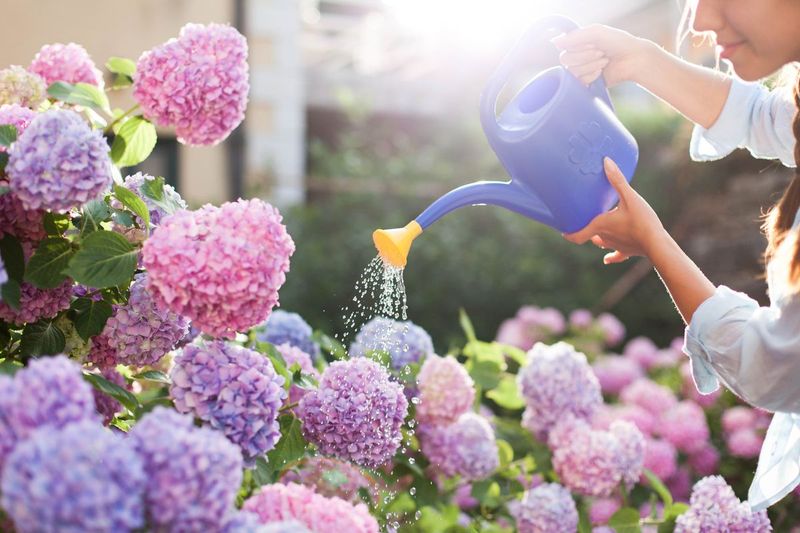
Early morning is genuinely the best time to water hydrangeas as a routine habit, and there are solid reasons for that preference. Temperatures are cooler, wind is typically calmer, and evaporation rates are lower, so more of the water you apply actually reaches the root zone instead of disappearing into the air.
Watering in the morning also means any moisture that lands on foliage has the rest of the day to evaporate, which reduces the amount of time leaves stay wet.
OSU Extension’s watering basics resource identifies early morning as the preferred window but also makes clear that plants should be watered when they need it, even if that is not morning. That distinction matters.
If you check the soil on a hot Tuesday afternoon and find the root zone is genuinely dry, waiting until the next morning to water is not the safer choice. A hydrangea under real drought stress needs water promptly, regardless of the hour.
Evening watering sometimes gets treated as a gardening mistake, but the concern is more specific than a blanket rule against it. The real issue is prolonged wetness on leaves and flowers, which can create conditions favorable to fungal and bacterial disease.
If you water the soil at the base of the plant in the evening and keep the spray off the foliage, the risk is much lower than overhead watering that soaks the leaves right before a warm, humid night.
University of Maryland Extension’s hydrangea problem guide advises timing or avoiding overhead irrigation to minimize leaf wetness rather than banning evening watering altogether. The practical takeaway is to aim for morning when you can, direct water to the soil rather than the plant, and water a dry hydrangea whenever the soil check calls for it rather than waiting for the clock to match your preference.
Water slowly and deeply at the base
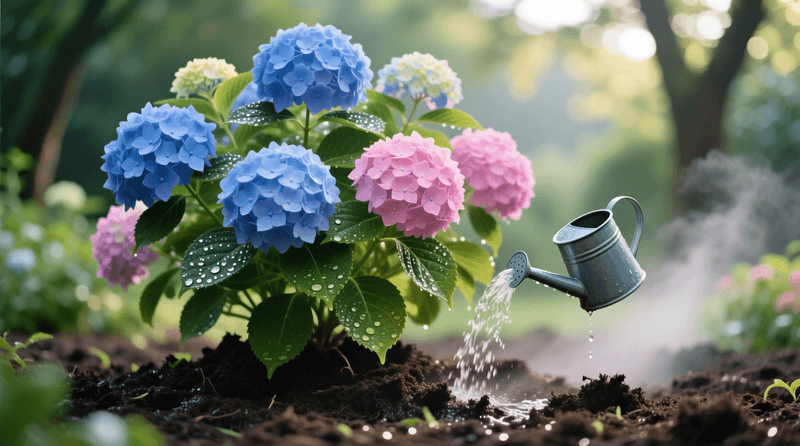
Once the soil check tells you it is time to water, how you apply that water shapes how useful it actually is. Frequent shallow watering, a quick spray that wets only the top inch or two of soil, trains roots to stay near the surface where they are most vulnerable to drying out between waterings.
Deep, slow watering encourages roots to grow further down into the soil, where moisture tends to last longer and temperatures stay more stable.
The goal is to move water down through the root zone rather than just across the surface. Watering slowly at the base of the plant, using a drip line, a soaker hose, or a hose set to a gentle flow, gives water time to percolate into the soil before it runs off.
OSU Extension’s general hydrangea care guidance specifically recommends drip irrigation or soaker hoses because they deliver water directly to the root zone while keeping foliage dry, which reduces disease pressure from overhead wetting.
There is no universal number of gallons or minutes that works for every hydrangea in every garden. Sandy soil absorbs water quickly but drains fast; clay soil takes water slowly and holds it longer.
A large established shrub has a much wider root zone than a small new planting. The practical measure of a thorough watering is that the soil feels moist when you check it several inches down, not that you ran the hose for a set number of minutes.
Keeping water off the leaves and flower heads also protects the blooms themselves. Overhead irrigation that regularly soaks the foliage can spread leaf-spot pathogens and cause flower heads to brown faster than they otherwise would.
Illinois Extension’s hydrangea care overview notes that while proper watering can reduce drought stress and support plant performance, it cannot guarantee blooms on its own, since light, pruning, and the plant’s overall health all contribute to flowering.
Treat wilting as a symptom to investigate
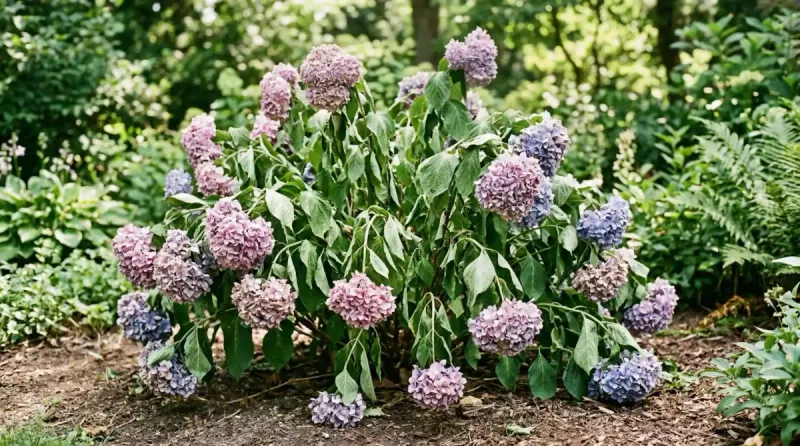
Seeing a hydrangea droop on a hot afternoon is alarming, and the instinct to grab the hose is understandable. But watering a wilted plant without first checking the soil is one of the most common ways gardeners accidentally make things worse.
Wilting is a symptom with several possible causes, and more water is only the right answer for one of them.
Bigleaf hydrangeas in particular are known to wilt during intense afternoon heat even when the soil is adequately moist. The plant is losing water through its leaves faster than its roots can replace it, and by evening, once temperatures drop, it typically recovers on its own.
University of Maryland Extension’s hydrangea problem resource specifically notes this heat-wilt pattern and warns that adding more water to soil that is already moist can push the root zone toward saturation, which creates a new problem rather than solving the original one.
Overwatering and poor drainage can also produce wilt-like symptoms. When roots sit in soggy soil for extended periods, they lose the ability to take up water efficiently, and the plant begins to decline even though the soil around it is wet.
Brown leaf edges, yellowing lower leaves, and a generally limp appearance can all point to too much water rather than too little.
The safe response sequence when you see a wilted hydrangea is straightforward. First, check the soil several inches down with a trowel.
If the root zone feels dry, water slowly and deeply at the base. If the soil feels moist or wet, hold off, assess the drainage around the plant, and watch whether the plant recovers as the day cools.
OSU Extension’s care guide lists brown leaf edges and leaf drop as possible signs of overwatering, a reminder that the treatment for drought stress is the opposite of the treatment for root damage, and applying the wrong one consistently will cost you the plant.
Adjust care for new plantings, containers, and hydrangea types
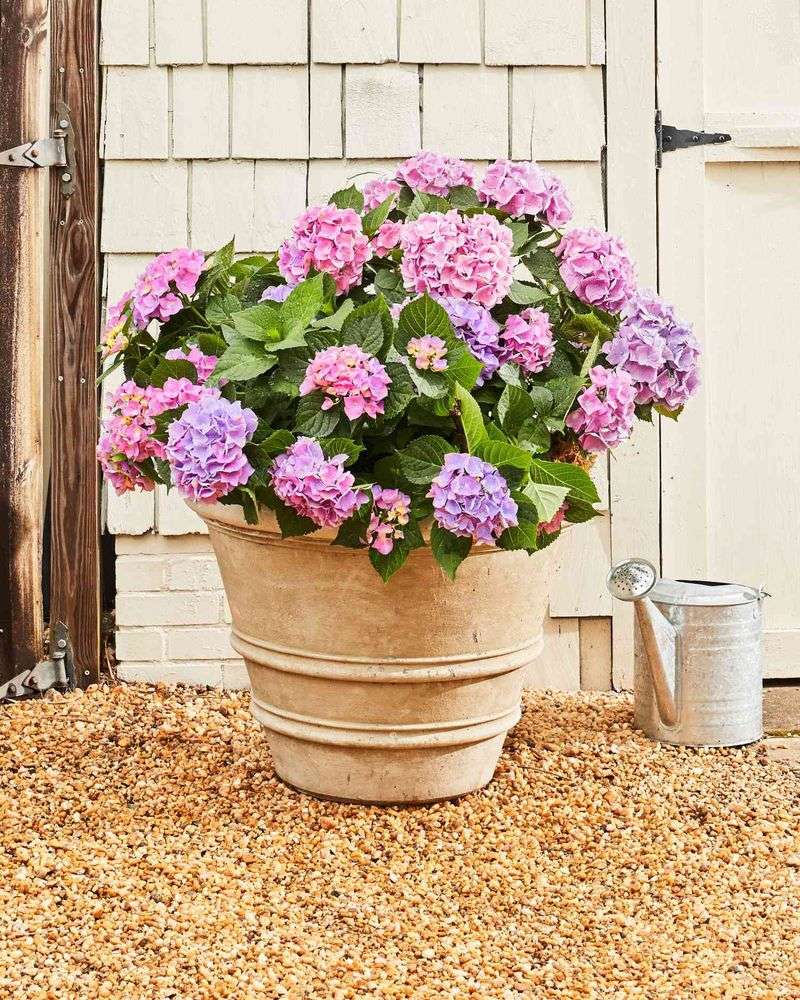
A single watering pattern cannot work for every hydrangea in every situation. The plant’s age, whether it is in the ground or a pot, and the species or cultivar all change how often you need to check and how you should respond.
Newly planted hydrangeas need closer attention than established shrubs because their root systems are small and have not yet spread into the surrounding soil. The root ball can dry out quickly even when the surrounding garden bed feels moist.
Water thoroughly right after planting to settle the soil, and then check the root ball itself frequently during the first season, especially during hot or dry stretches. University of Maryland Extension specifically advises keeping the root zone of newly planted hydrangeas adequately moist through the establishment period, which typically spans the first growing season.
Container hydrangeas dry out much faster than in-ground plants because the limited volume of potting mix heats up quickly and holds less total moisture. During hot weather, a potted hydrangea may need checking every day.
Water until excess runs freely from the drainage holes, which confirms that the entire root zone has been moistened. Iowa State University Extension’s container plant guidance cautions against leaving any pot sitting in a saucer full of standing water, since that keeps the bottom of the root zone permanently saturated.
Species differences also matter for watering decisions. Bigleaf and oakleaf hydrangeas typically prefer partial shade and consistently moist soil, and they show drought stress quickly.
Panicle hydrangeas generally tolerate more sun and somewhat drier conditions, though they still benefit from deep watering during dry spells. Smooth hydrangeas fall somewhere in between.
Knowing which type you have helps you set realistic expectations for how often it will need attention and how it will behave during a hot week.
Protect moisture with drainage and mulch
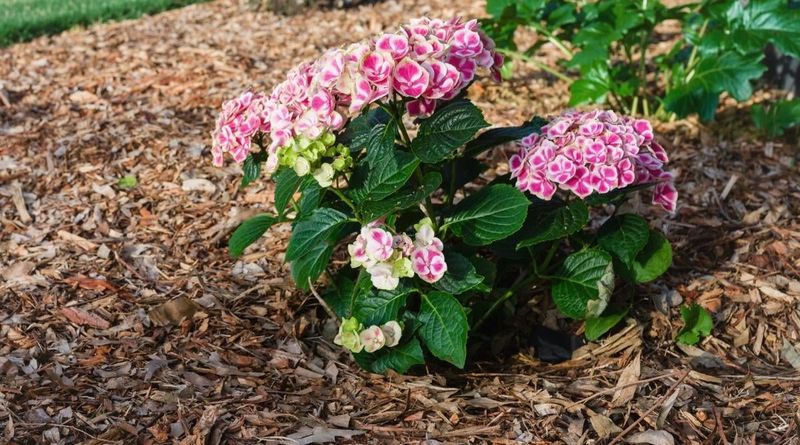
What happens to water after you apply it depends heavily on the site itself. Two hydrangeas can receive identical amounts of water and end up in very different conditions depending on how well the soil drains and whether the root zone is protected from rapid evaporation.
Poor drainage is one of the most overlooked causes of hydrangea decline. When water cannot move through the soil and away from the root zone, it accumulates and cuts off the oxygen supply that roots need to function.
The resulting root damage can look a lot like drought: wilting, browning leaf edges, and general decline. OSU Extension notes that brown leaf edges and leaf drop can signal overwatering just as readily as underwatering.
Before adding more water to a struggling plant, check whether the soil around the roots stays wet for an unusually long time after rain or irrigation. If it does, improving drainage, whether through amending the soil, raising the planting area, or relocating the plant, will do more good than any watering adjustment.
Organic mulch addresses the opposite problem by slowing evaporation and moderating soil temperature, which helps the root zone stay moist longer between waterings. University of Georgia Cooperative Extension’s bigleaf hydrangea guide recommends 3 to 5 inches of organic mulch as a practical range for that species, though the right depth for any plant depends on the material, climate, and site conditions.
Shredded bark, wood chips, and pine straw are all commonly used options.
One consistent rule across every mulch recommendation is to keep the material away from the stems and crown of the plant. Mulch piled directly against the base traps moisture against the bark, which can encourage rot and invite disease.
Leave a clear gap of a few inches around the stem, and spread the mulch out toward the drip line of the shrub instead.
Good watering supports blooms but cannot solve every failure
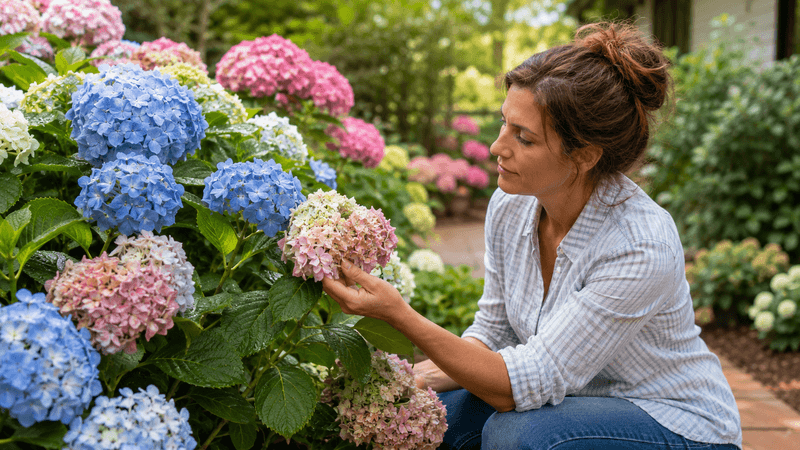
Consistent, well-timed watering reduces drought stress and gives hydrangeas a better chance to flower fully, but water alone cannot guarantee a season of blooms. Several other factors play an equally large role, and understanding them saves a lot of frustration when watering seems correct but flowers still fail to appear.
Inadequate light is one of the most common hidden reasons for poor flowering. Most hydrangeas need several hours of direct sun each day to produce flower buds reliably, and plants growing in heavy shade often produce lush foliage with few or no blooms regardless of how carefully they are watered.
Pruning at the wrong time of year is another frequent culprit. Illinois Extension’s hydrangea care guide explains the critical difference between old-wood and new-wood bloomers: bigleaf and oakleaf hydrangeas generally form their flower buds on the previous season’s growth, so cutting stems back in fall or early spring removes the buds before they ever open.
Smooth and panicle hydrangeas bloom on new growth produced in the current season, making them much more forgiving of late pruning.
Winter damage and late spring frosts can kill the flower buds on old-wood bloomers even when the plant itself survives. Deer browsing on branch tips removes the same bud-bearing growth.
University of Maryland Extension also points out that brown blooms and browning flower heads can result from heat, sun exposure, frost, or normal aging rather than from underwatering, which is an important distinction before you reach for the hose.
The practical checklist that supports flowering comes down to a few consistent habits: check the soil before watering, apply water slowly and deeply at the base when the root zone is dry, prefer morning for routine sessions, and make sure drainage is working. A hydrangea that gets those basics right has everything it needs from you – what happens next depends on light, pruning, and the season it was given.