
21 Trees That Keep Goldfinches Fed And Sheltered All Year (Miss These And They Skip Your Yard)
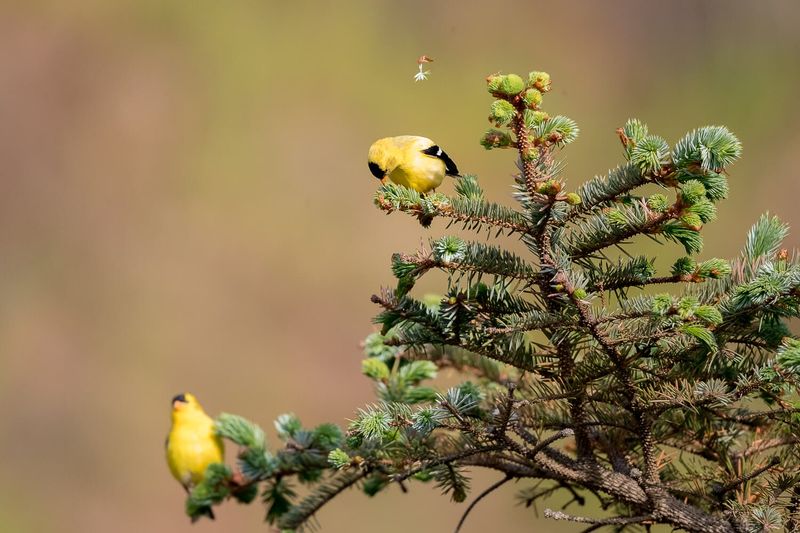
Goldfinches are those bright little yellow birds that seem to light up a backyard, but they only stick around if your yard gives them what they need. They eat seeds almost year-round and rely on thick branches to hide from hawks and cold winter winds.
Planting the right trees is the easiest way to turn your yard into a goldfinch hangout instead of a place they fly right past. Here are 21 trees and large shrubs that keep these cheerful visitors fed, safe, and coming back season after season.
1. Birch (Betula spp.)
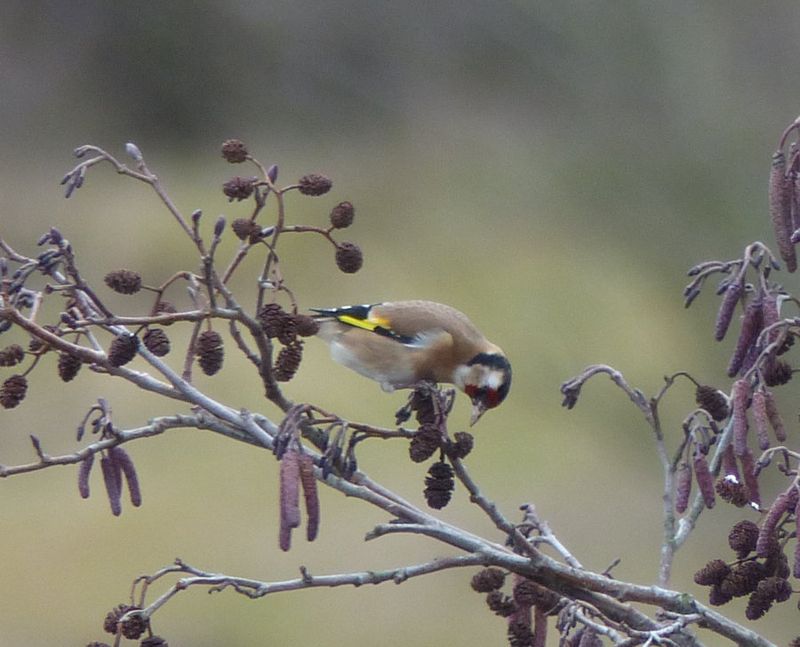
When winter strips the yard bare and food gets hard to find, birch trees quietly step up. Their tiny seeds hang in slim catkins that goldfinches cling to and pick apart, even when snow covers the ground.
Birches are a lifeline during the coldest stretch of the year. While other food sources vanish, a birch keeps offering meals right when your finches need them most.
The papery bark and slender branches also make birches easy on the eyes. You get a graceful shade tree that doubles as a winter feeding station, which is a hard combo to beat for a bird-friendly yard.
2. Alder (Alnus spp.)
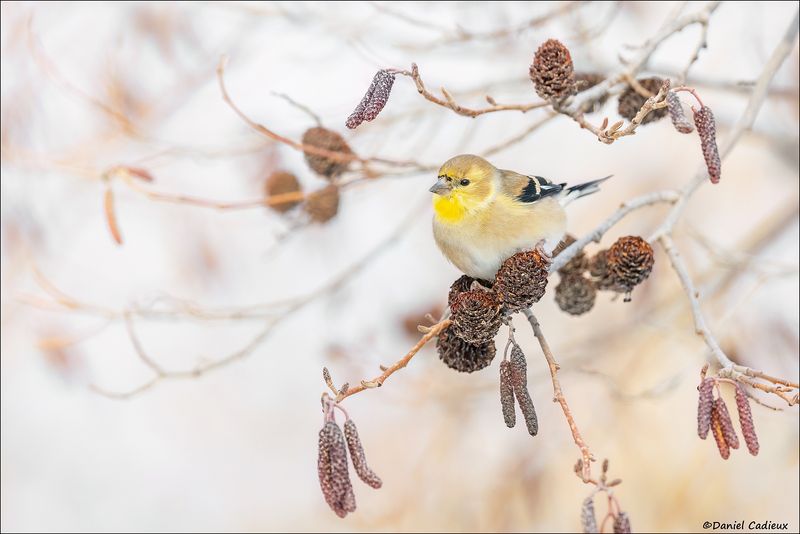
Picture a small tree that keeps its seed pods dangling all winter like little snacks on a shelf, and you have the alder. Goldfinches flock to those woody, cone-like catkins when the ground is frozen and pickings are slim.
Alders love damp spots, so if you have a soggy corner where nothing else thrives, this is your answer. That wet-tolerant streak makes it a problem-solver as much as a bird magnet.
Beyond the winter buffet, alders actually improve your soil by pulling nitrogen from the air. Your finches eat well, and the tree quietly feeds the ground around it too.
3. Elm (Ulmus spp.)
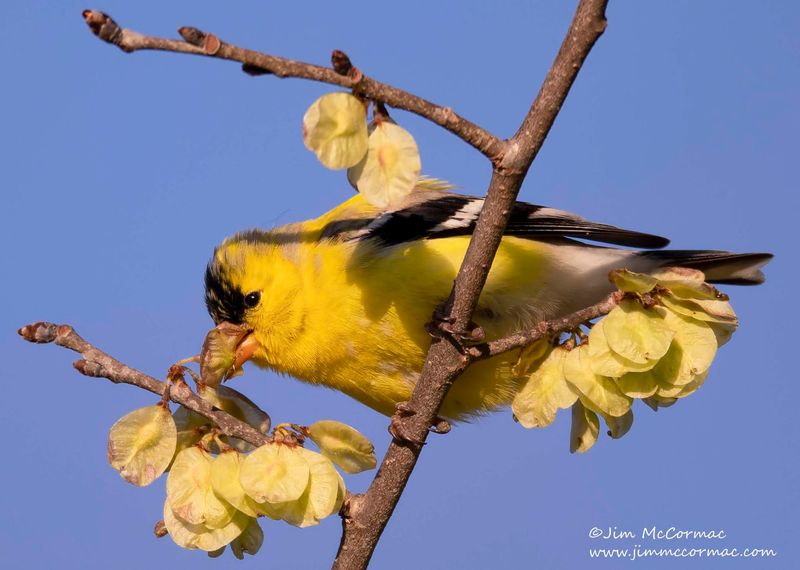
Long before most trees wake up in spring, elms are already putting out clusters of flat, papery seeds. Goldfinches take advantage of that early timing, nibbling seeds and flower buds when few other trees have anything to offer.
That early-season food fills a gap that a lot of gardeners overlook. Spring can be a hungry time for birds, and an elm helps bridge it.
Elms grow into big, arching shade trees with plenty of perching room. So while the seeds feed your finches, the wide canopy gives them a place to rest and watch for danger.
4. Arborvitae (Thuja spp.)
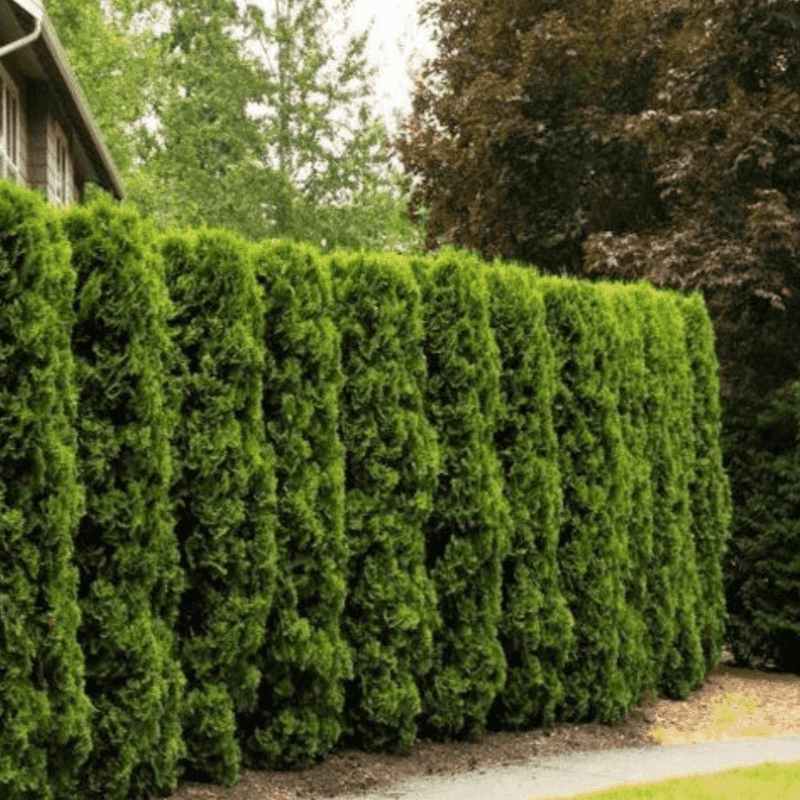
Also known as western red cedar or northern white cedar, arborvitae is the workhorse of a bird-friendly yard. Its dense, feathery evergreen foliage forms a wall of cover that goldfinches duck into when hawks circle or storms roll through.
The small seed-bearing cones add a little food to the deal, but the real gift here is shelter. Nothing hides a nervous finch quite like a thick arborvitae.
Gardeners love these for privacy hedges, and it turns out birds love them for the exact same reason. Plant a row and you create both a screen for your yard and a safe haven for your finches all winter long.
5. Spruce (Picea spp.)
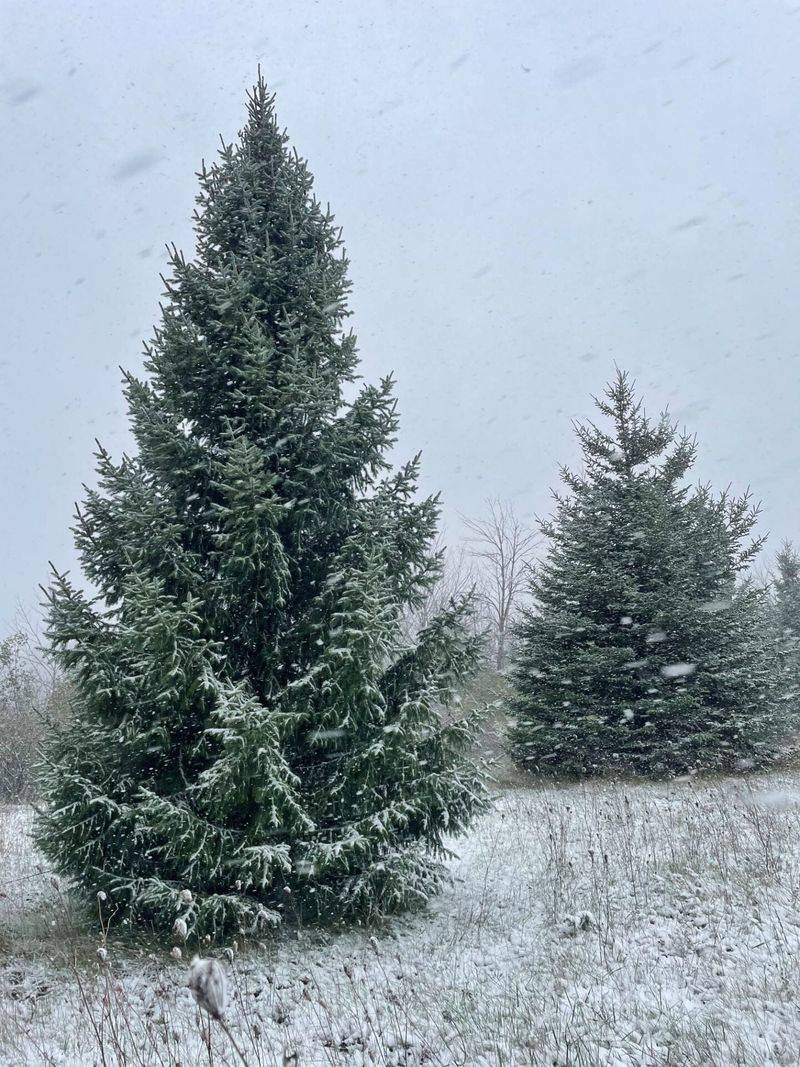
Sturdy and thickly needled, spruce trees pull double duty for goldfinches in a way few trees can match. The hanging cones hold seeds the birds pry loose, while the dense evergreen branches block wind, snow, and prying predator eyes.
A mature spruce is basically a year-round apartment building for birds. Food on the outside, shelter on the inside, and no vacancy sign in sight.
Because spruce keeps its needles all year, it stays useful when deciduous trees go bare. That reliability is exactly what keeps finches loyal to a yard through the harshest months.
6. Pine (Pinus spp.)
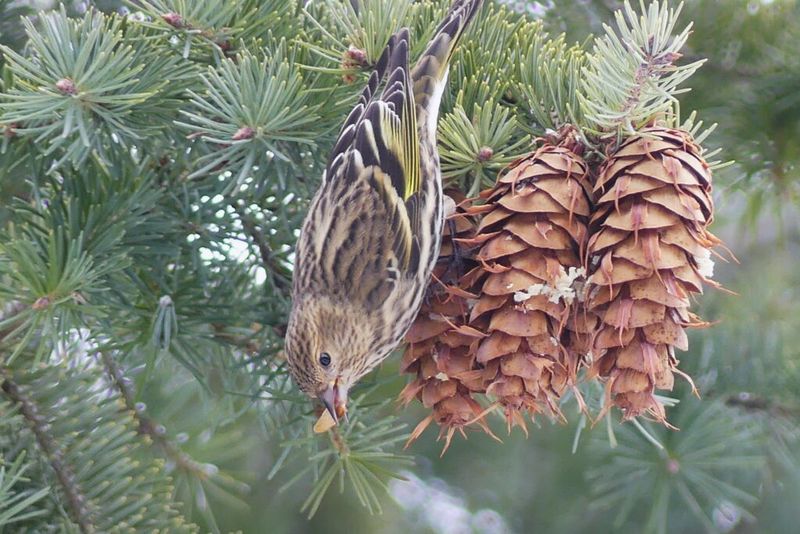
Few trees say cozy winter refuge like a big old pine. Goldfinches work the cones for their seeds and tuck into the evergreen branches when the weather turns nasty.
Pines also happen to be favorite nesting spots. The soft needles and sheltered forks give finches a hidden, protected place to raise their young.
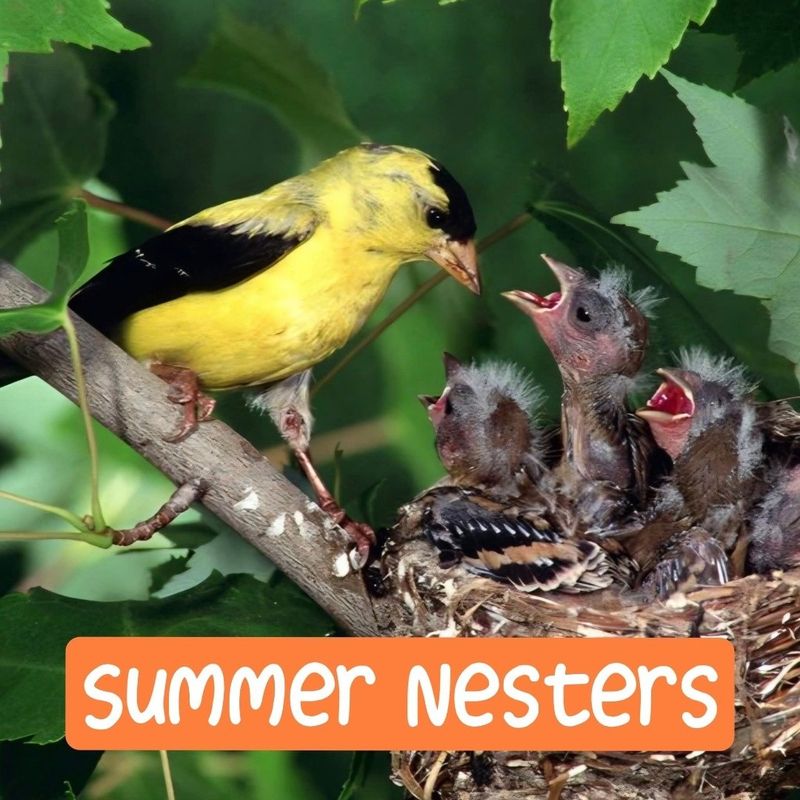
Did you know goldfinches nest surprisingly late, often into midsummer? A pine that stays leafy and thick all season gives them that steady cover right when they need it for their chicks.
7. Hemlock (Tsuga spp.)
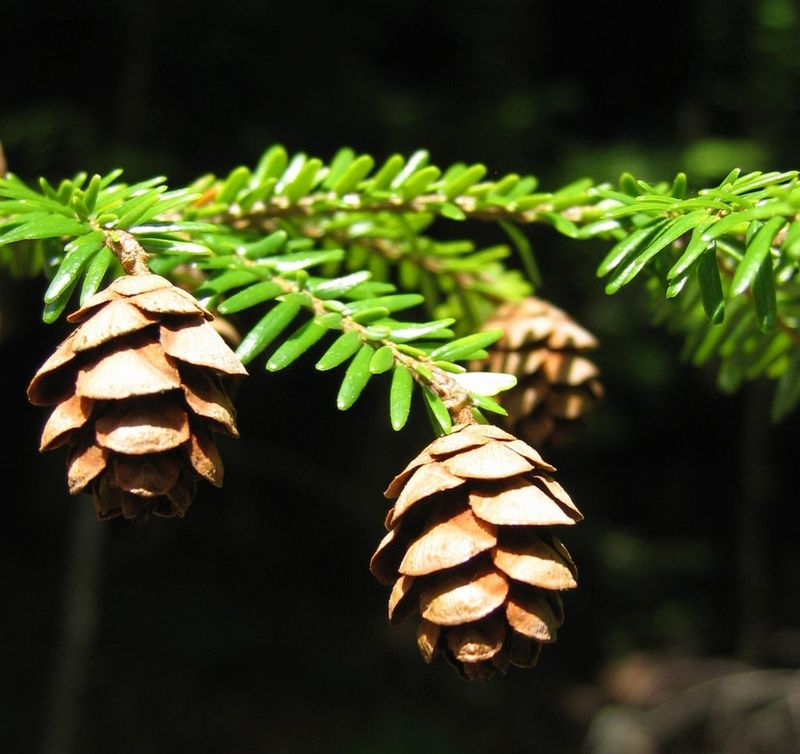
Soft, drooping branches and tiny cones make hemlock one of the gentlest-looking evergreens you can plant. Goldfinches pull seeds from those small cones and slip into the layered foliage for cover when they feel exposed.
Hemlocks handle shade better than most conifers, so that awkward dim corner of your yard finally has a purpose. It becomes a quiet, sheltered nook birds can rely on.
The dense, feathery needles trap warmth and block wind, which matters a lot on a bitter night. For finches riding out a cold snap, a hemlock feels like the safest room in the house.
8. Fir (Abies spp.)
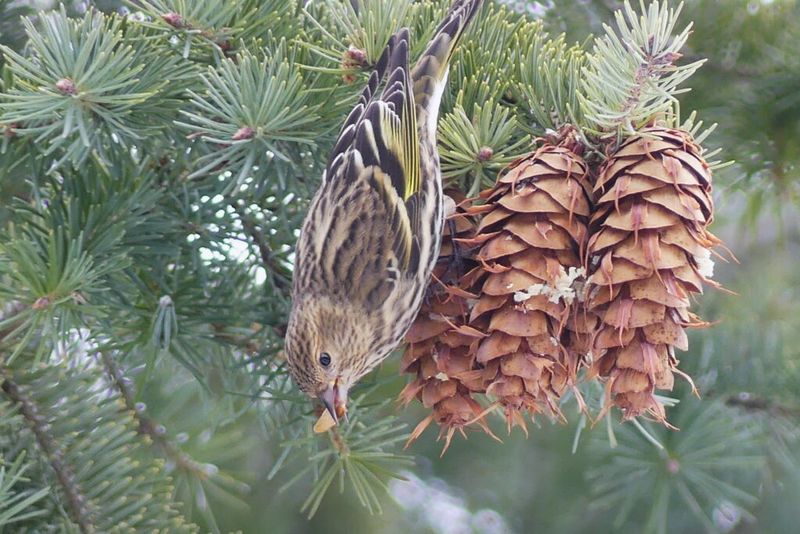
Stately and full-bodied, fir trees offer goldfinches a steady supply of cone seeds plus some of the thickest shelter around. The upright cones and flat, fragrant needles create a dense canopy birds trust.
Firs keep their good looks and their protective foliage through every season. That means a finch fleeing a sharp-shinned hawk in January has the same safe branches it did in July.
If you want a tree that feels like a classic evergreen and also earns its keep with birds, fir delivers. It is beauty and function packed into one reliable trunk.
9. Cypress (Cupressus or Taxodium spp.)
Whether you plant a tall evergreen cypress or a feathery bald cypress, this group gives goldfinches a mix of cover and the occasional seed snack. The fine, scaly foliage forms a screen that hides small birds well.
Bald cypress in particular loves wet ground, so it thrives where other trees would drown. That makes it a smart pick for rain-prone or low-lying yards.
Many cypress varieties grow tall and narrow, fitting into tight spaces along fences or property lines. You get vertical shelter without eating up half the yard, and the finches get another safe place to land.
10. Yew (Taxus spp.)
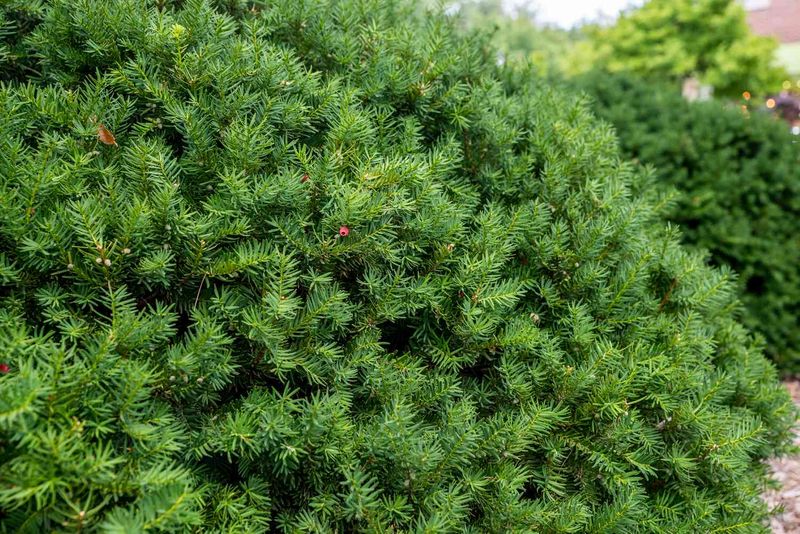
Slow, dense, and endlessly shapeable, yew is the evergreen that keeps giving cover no matter how you trim it. Goldfinches slip into its thick, dark-green needles for year-round shelter and pick at its small seeds.
A word of caution: yew berries and foliage are toxic to people and pets, so plant thoughtfully if kids or dogs roam the yard. The birds, however, navigate it just fine.
Because yew tolerates heavy pruning, it works as a tight hedge or a rounded shrub. That flexibility lets you build finch shelter into almost any garden layout you like.
11. Redwood or Giant Sequoia (Sequoia and Sequoiadendron)
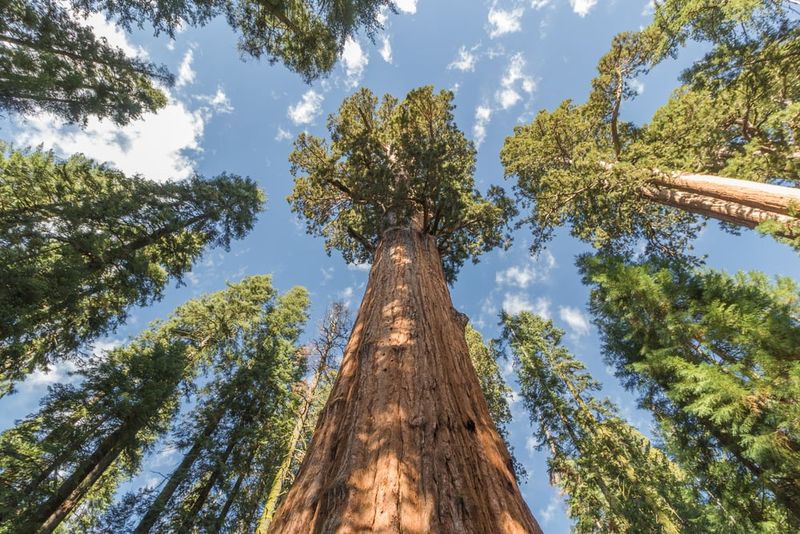
Go big or go home, right? Redwoods and giant sequoias are the giants of the tree world, and their sheer size makes them shelter powerhouses for birds lucky enough to live nearby.
These evergreens create massive, layered canopies where goldfinches can perch, hide, and escape rough weather. The scale alone offers protection few other trees can match.
They do need space and the right climate, so they suit larger properties in milder regions. But if you have the room, few trees provide such lasting, towering cover for your feathered visitors.
12. Sumac (Rhus spp.)
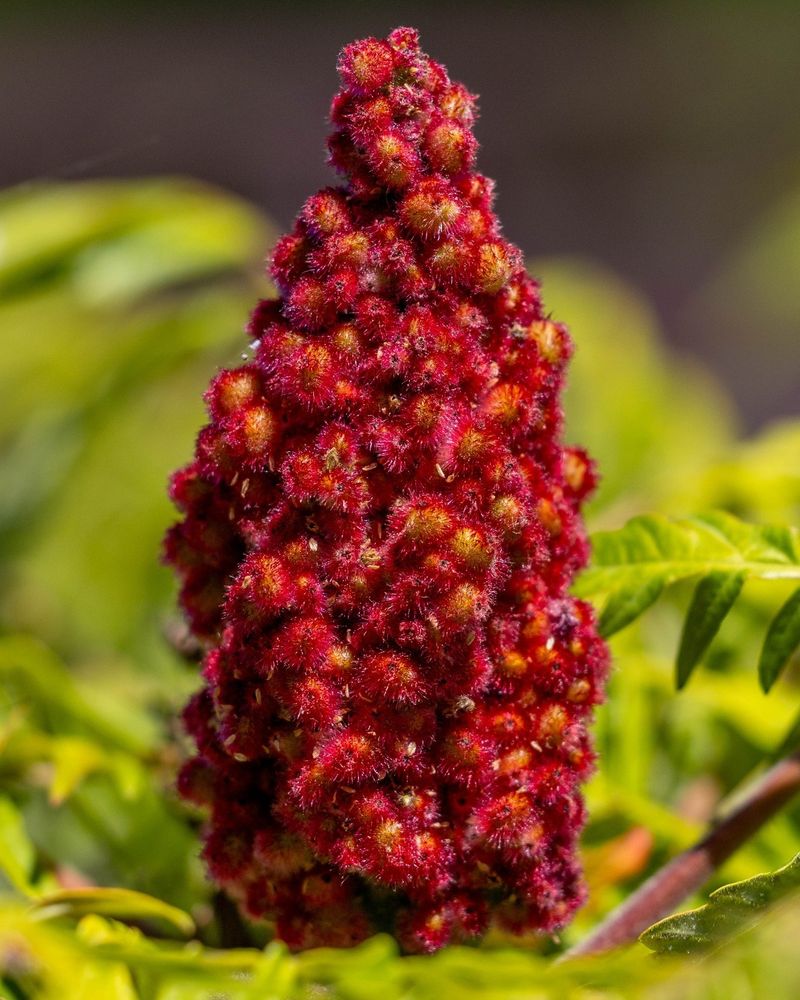
Those fuzzy red seed clusters standing up like torches all winter? Goldfinches notice them, and sumac earns a spot on this list for the food it keeps offering when the cold sets in.
Sumac spreads easily and thrives in poor, dry soil where fussier plants sulk. That toughness makes it a low-effort way to add both fall color and winter bird food.
The brilliant red autumn leaves are a bonus for you, while the seed heads are a bonus for the finches. Everybody wins, and you barely have to lift a finger.
13. Dogwood (Cornus spp.)
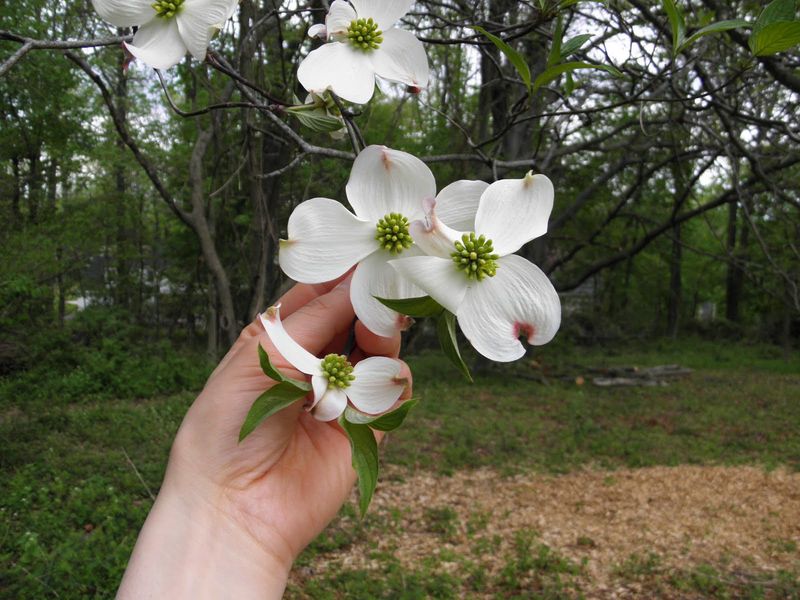
Come nesting season, dogwoods become prime real estate for goldfinches. The birds often tuck their cup-shaped nests into the forks of dogwood branches, where dense growth hides the eggs from wandering predators.
Dogwoods bring more than a nursery, though. Their berries feed a whole crowd of songbirds, and their spring flowers brighten the yard before most trees leaf out.
With four seasons of interest and solid bird cover, dogwood is one of those trees that quietly does everything. Plant one and you support finches while giving yourself something lovely to look at year-round.
14. Elderberry (Sambucus spp.)
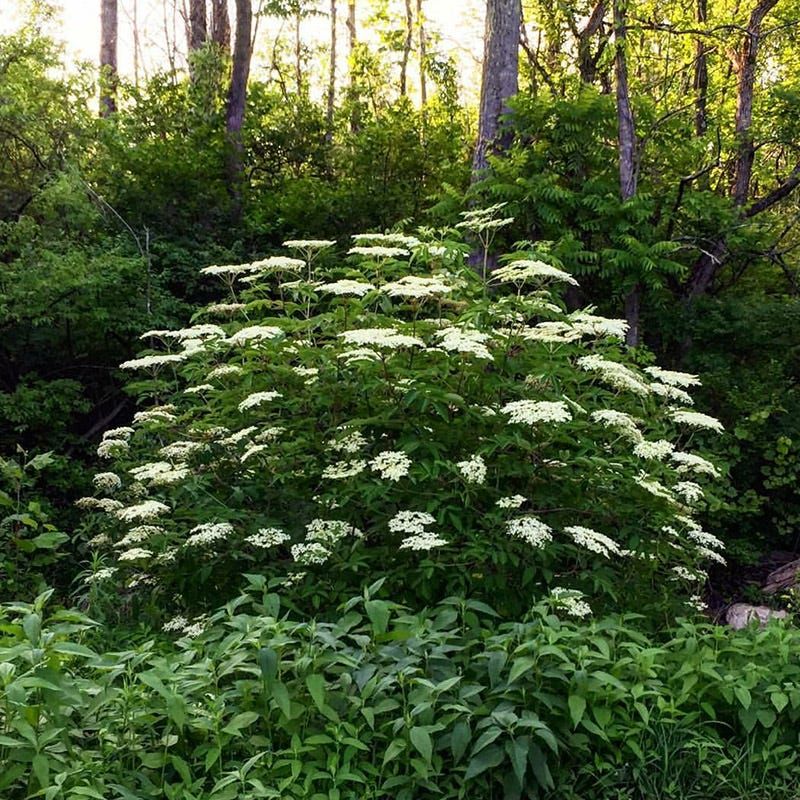
Loose, arching, and generously leafy, elderberry gives goldfinches a shrubby maze to nest and hide in. The tangle of stems creates protected pockets where finches feel safe from hawks and cats alike.
Elderberry also pumps out clouds of tiny white flowers followed by dark berries that draw a parade of birds. Even if finches favor seeds, the busy activity turns your yard into a lively bird hub.
Fast-growing and forgiving, elderberry fills in quickly if you want cover in a hurry. Within a season or two, you have a thriving thicket that birds treat like home.
15. Hawthorn (Crataegus spp.)
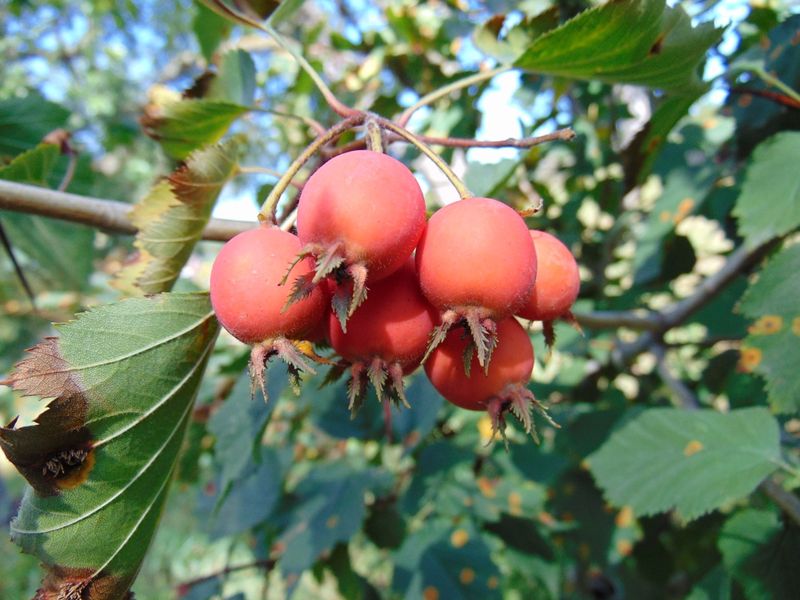
Armed with sharp thorns and packed with twiggy branches, hawthorn is basically a fortress for nesting finches. Predators think twice before pushing through those spines, and that built-in security is exactly why goldfinches settle in.
The dense branching gives nests solid support and heavy cover. Add in spring flowers and fall berries, and hawthorn keeps the yard busy with birds across the seasons.
Small enough for modest yards yet tough as nails, hawthorn fits almost anywhere. It is the kind of no-nonsense tree that protects its tenants without asking much from you.
16. Willow (Salix spp.)
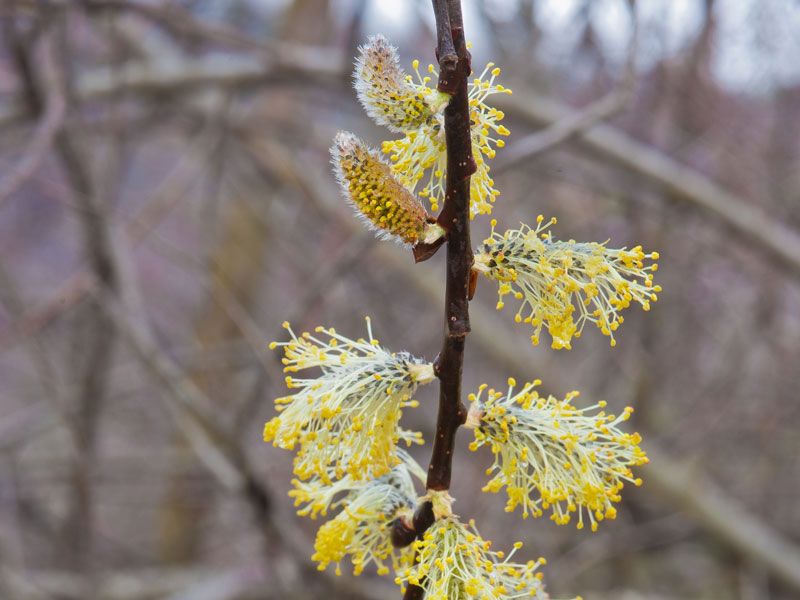
Down by a pond or stream, willows sway with a soft, drooping grace that lesser goldfinches especially adore. These finches often build their nests in willow branches, drawn to the shelter and the nearby water.
Willows grow fast, so a bare spot near water can become a leafy retreat in just a few years. That quick payoff makes them a satisfying choice for impatient gardeners.
The fluffy willow seeds even give finches soft nesting material to line their homes. It is one of those trees that provides shelter and building supplies in the same package.
17. Monterey Pine (Pinus radiata)
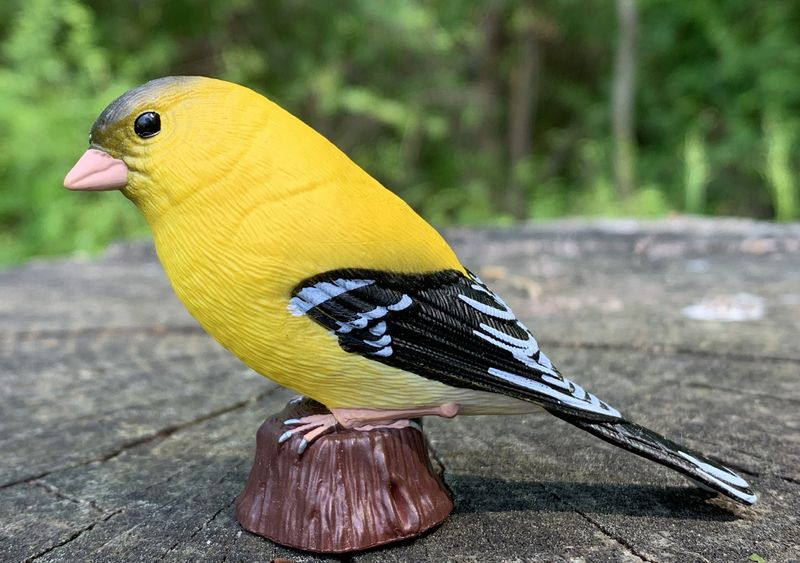
Not every pine is created equal, and the Monterey pine has a special reputation as a goldfinch nesting favorite. Its dense, dark-green needles and sturdy branches give finches a hidden, well-protected place to raise a family.
Monterey pines grow quickly and hold their thick foliage year-round. That means steady cover for finches whether they are nesting in summer or hiding from a winter storm.
Best suited to milder coastal climates, this pine rewards the right region with fast, generous shelter. Where it thrives, it becomes a go-to home base for local finches.
18. Fruit Trees (Apple, Cherry, Pear)
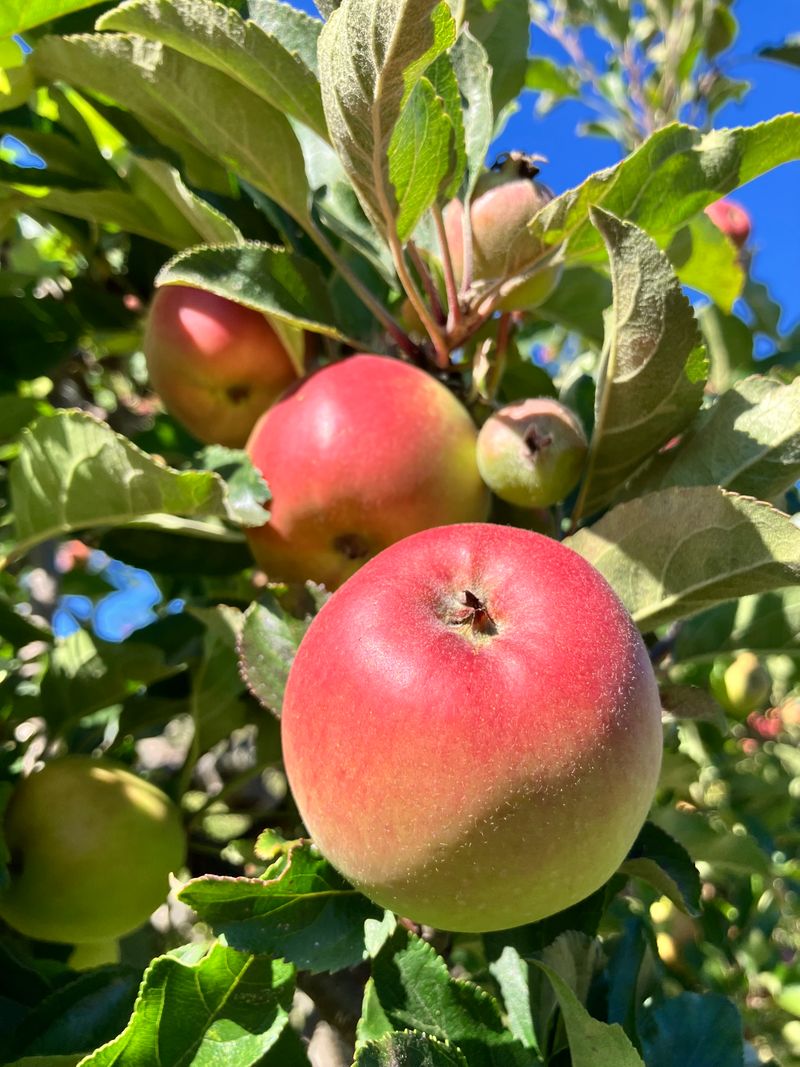
Your backyard apple or cherry tree does more than feed you. The strong, well-spaced branches give goldfinches secure spots to build their nests, tucked safely among the leaves.
Spring blossoms draw insects, blooms brighten the yard, and the whole tree hums with life the birds enjoy. Even the fruit you do not pick becomes part of the backyard buffet for wildlife.
Fruit trees prove you do not need anything exotic to help finches. A common tree many gardeners already grow can quietly serve as a nursery for these bright little birds.
19. Holly (Ilex spp.)
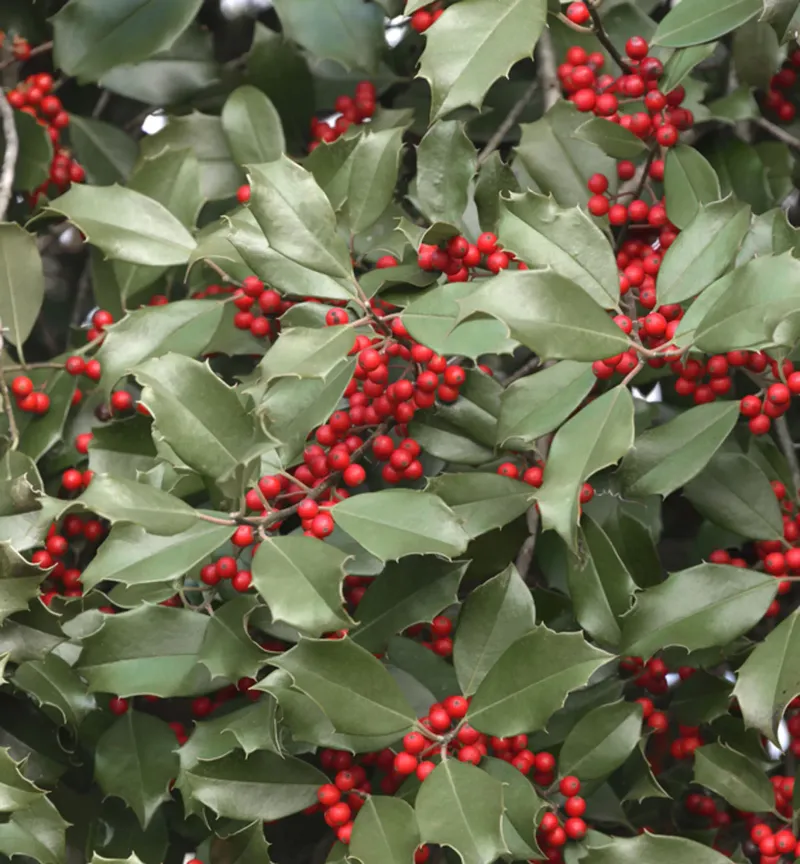
Glossy leaves, bright berries, and prickly edges give holly a look that says the holidays and a function that says safe haven. Many hollies stay evergreen, so goldfinches get year-round shelter and nesting spots inside the spiny foliage.
The stiff, sharp leaves keep predators at a distance, which makes finches feel secure enough to settle in. That protective quality is holly’s quiet superpower.
You will usually need both a male and female plant if you want those famous berries. But even without a berry crop, the dense evergreen cover alone is worth the space for your finches.
20. Viburnum (Viburnum spp.)
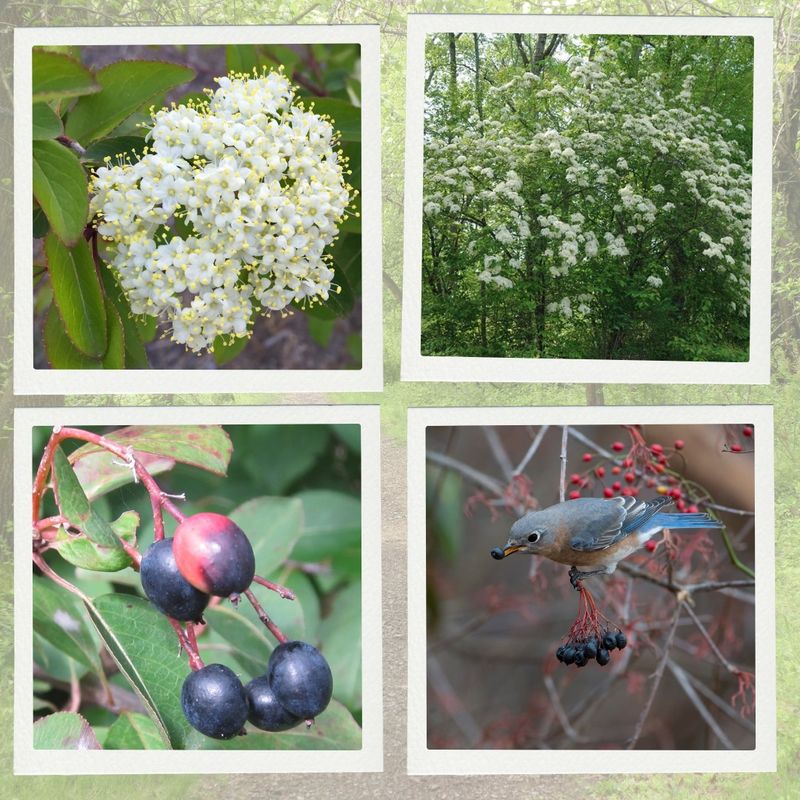
Bushy, adaptable, and covered in flowers, viburnum is the easygoing shrub that fits almost any yard and still pleases the birds. Its thick branching gives goldfinches solid cover and tucked-away nesting nooks.
Clusters of berries follow the blooms, turning viburnum into a snack stop for a wide range of songbirds. The constant activity makes your yard feel alive with wings and chatter.
With so many species to choose from, there is a viburnum for nearly every climate and space. That variety makes it one of the simplest ways to add reliable bird shelter without fuss.
21. Shade Giants (Oak, Maple, Ash, Sweet Gum)
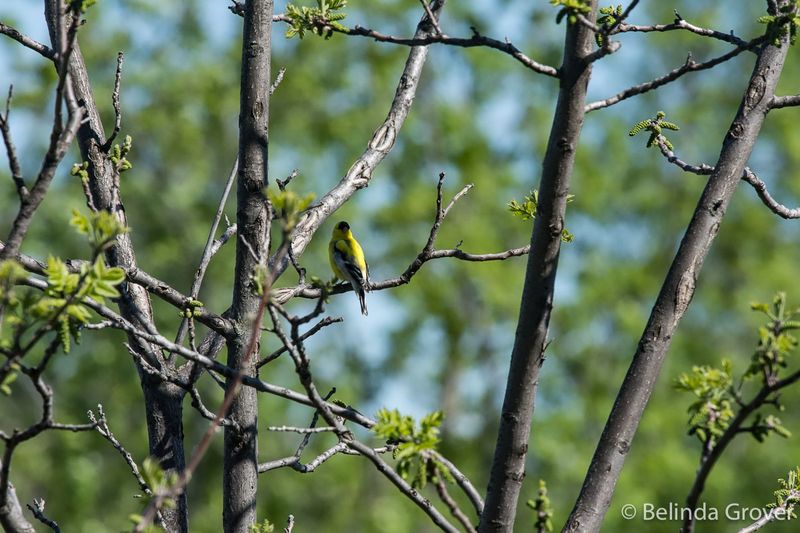
Big deciduous trees like oak, maple, white ash, box elder, and sweet gum are not the seed factories finches flock to for meals. What they bring instead is sheer presence, offering towering perches, nesting room, and a leafy backdrop that ties a bird-friendly yard together.
Goldfinches use these giants as lookout posts and safe pathways between smaller feeding shrubs. The height gives them a clear view of approaching hawks and a quick escape route.
Sweet gum in particular drops spiky seed balls that a few finches will pick at, adding a small food bonus. Round out your yard with one of these shade trees and you complete the mix of food, shelter, and space that keeps goldfinches around for good.