
22 Flowering Shrubs That Outshine Hydrangeas When Yours Keep Disappointing You
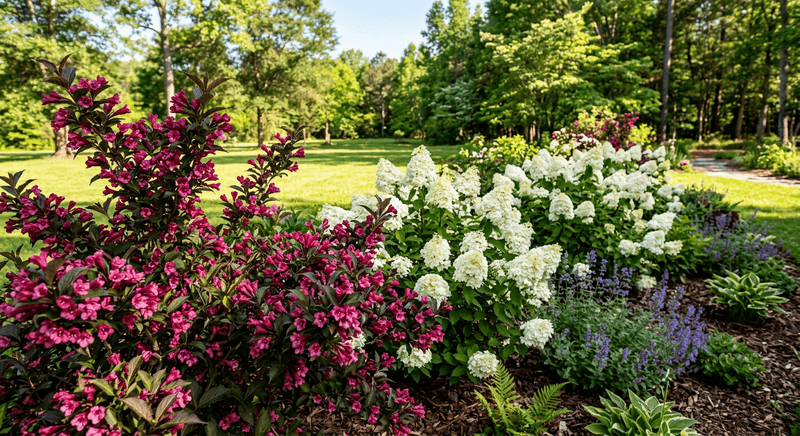
Hydrangeas get all the fame, but they can also drive you a little crazy when they refuse to bloom or flop over after one hot afternoon. The good news is that plenty of other flowering shrubs deliver just as much color with far less fuss in a typical backyard. Some bloom for months, some smell amazing, and a few even shrug off the deer and drought that wear hydrangeas down. Here are 22 dependable choices worth a spot in your beds when your hydrangeas keep letting you down.
1. Rose of Sharon (Hibiscus syriacus)
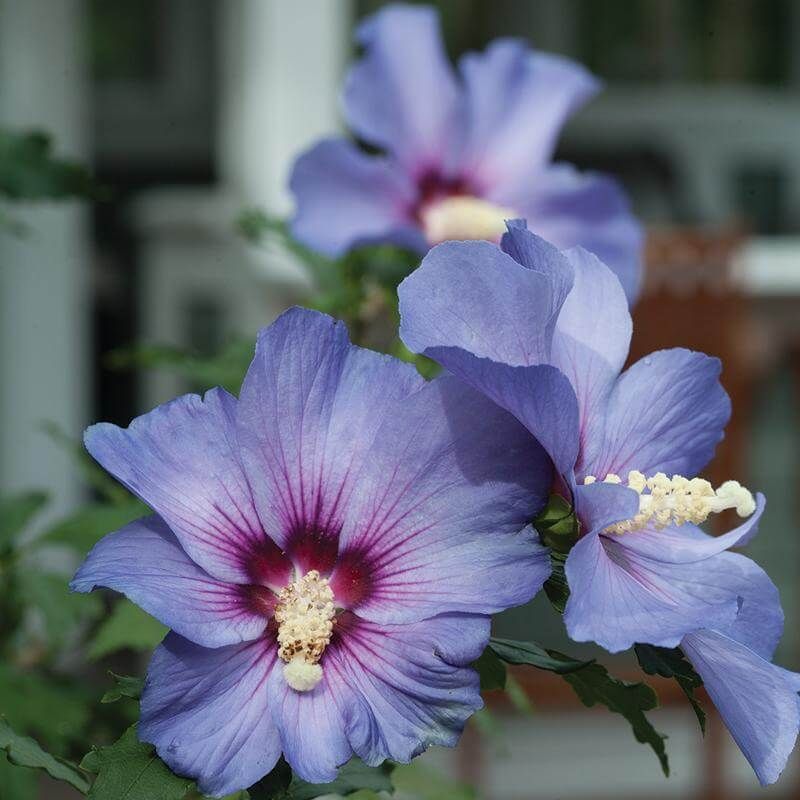
Picture a tropical hibiscus flower that survives a Midwest winter, and you have Rose of Sharon in a nutshell. It hands you those big papery blooms from midsummer straight into fall, long after most shrubs have called it quits.
What sets it apart on this list is its stubborn toughness. It handles clay, city pollution, and skipped waterings without sulking, which is more than most hydrangeas can promise.
Colors run from soft lavender to white to a rich violet-blue, and bees adore every one of them. Fun fact: it is the national flower of South Korea, where it is called mugunghwa, meaning the flower of eternity.
If you want a variety that will not seed itself all over the yard, look for sterile types like the Chiffon or Satin series.
2. Butterfly Bush (Buddleia)
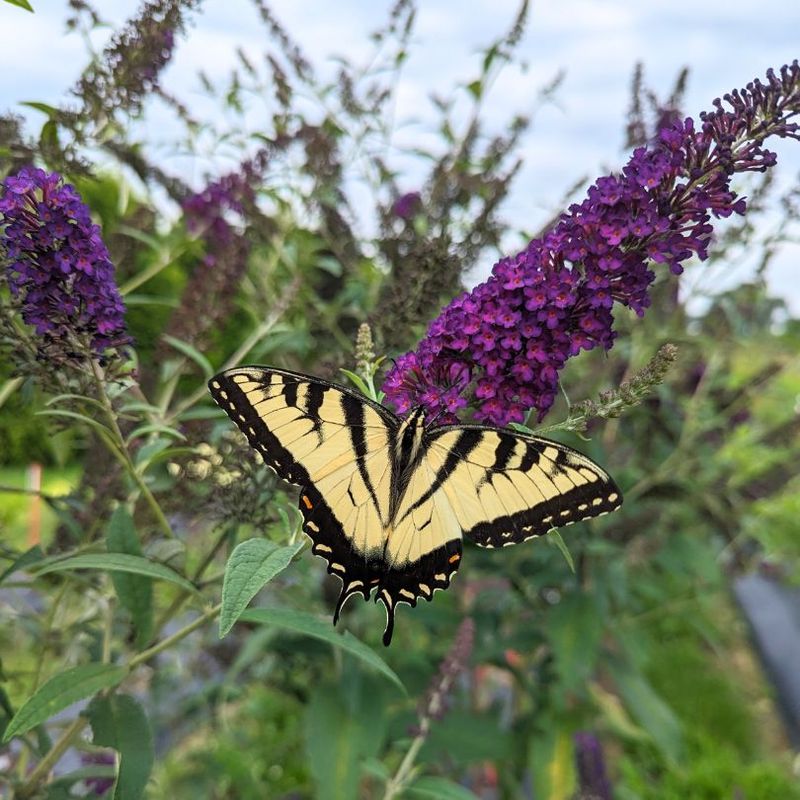
If you have ever wished your garden looked like a butterfly convention, this is the shrub that makes it happen. Long cone-shaped flower spikes drip with nectar, and swallowtails and painted ladies show up almost the moment it opens.
Unlike a hydrangea that quits after a heat wave, butterfly bush keeps pumping out fresh blooms from June until frost, especially if you snip off the spent spikes. Purple, pink, white, and even sunset-orange varieties are easy to find.
A quick heads-up for US gardeners: the older types can self-seed aggressively in some regions, so choose seedless cultivars like Lo and Behold or Miss Molly to stay on the neighborly side.
Give it full sun and well-drained soil, then mostly leave it alone. Fussing over it usually does more harm than good.
3. Weigela
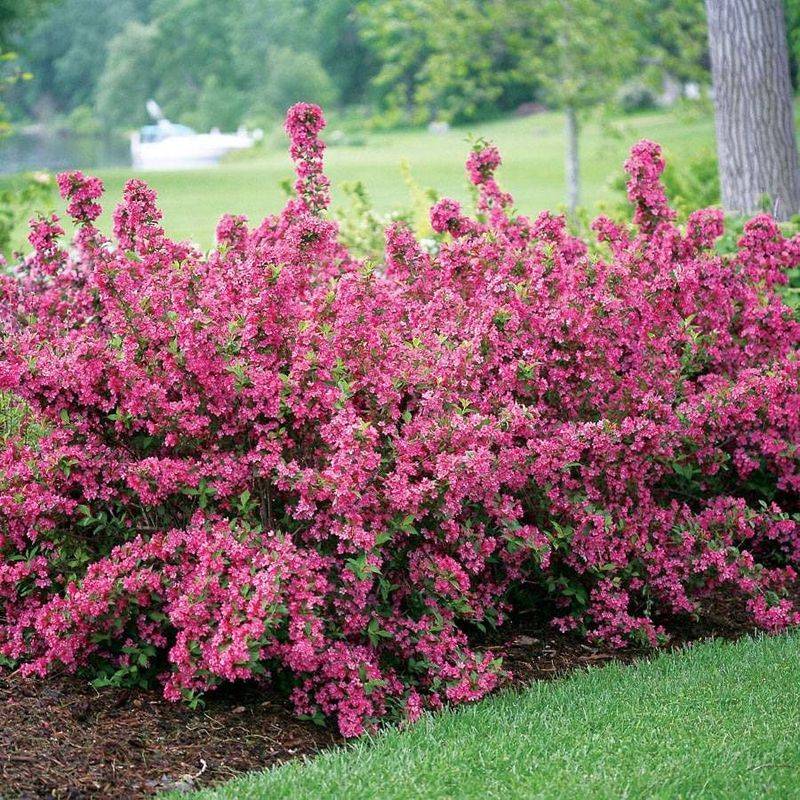
Old-fashioned charm meets modern toughness in Weigela, a shrub your grandmother probably grew and hummingbirds still line up to visit. In late spring it covers itself in trumpet-shaped blooms of pink, red, or white.
Newer varieties earn their keep with jaw-dropping foliage too. Wine and Roses shows off deep burgundy leaves against bright pink flowers, so the plant looks good even between blooms.
It asks for very little: some sun, average soil, and a light trim after flowering. Deer tend to browse right past it, which is a relief if you garden in bunny-and-deer country.
Many types rebloom lightly in late summer, giving you a bonus round of color when the rest of the border looks tired.
4. Spirea
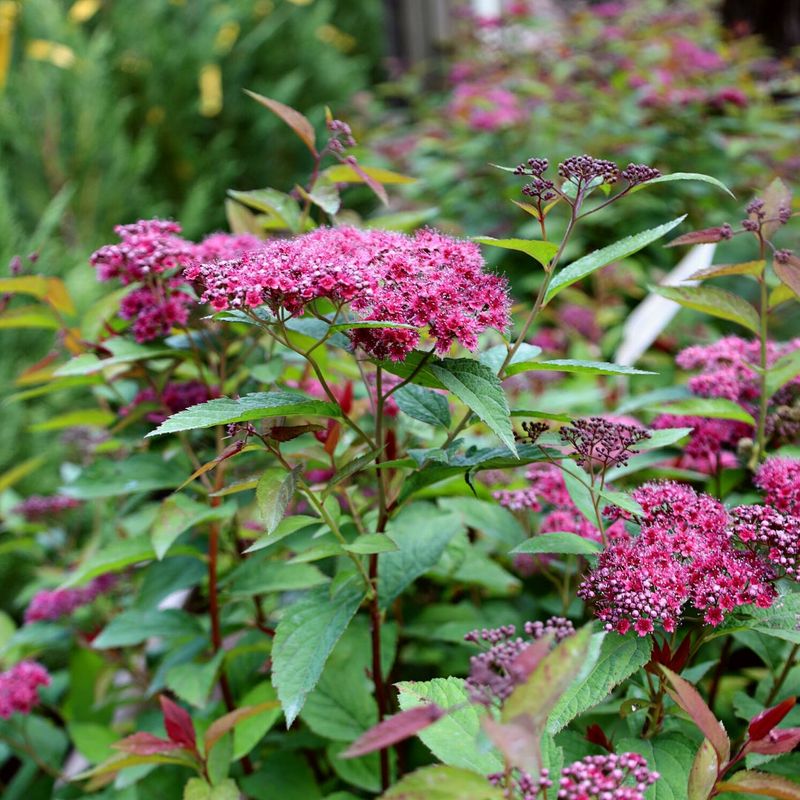
Some shrubs make you work for their beauty, and then there is Spirea, which basically thrives on neglect. Flat clusters or fuzzy plumes of pink and white flowers blanket the plant in late spring and early summer.
Compact types like Little Princess and Goldflame stay tidy and small, so they fit into tight spots where a hydrangea would sprawl. The golden and orange-tinged foliage of certain varieties adds warmth long after the flowers fade.
Trim it back after the first flush and many spireas reward you with a second wave of blooms. Pollinators treat those flower clusters like an all-you-can-eat buffet.
It tolerates poor soil, heat, and drought once established, making it a smart pick for that spot where nothing else seems happy.
5. Lilac (Syringa)
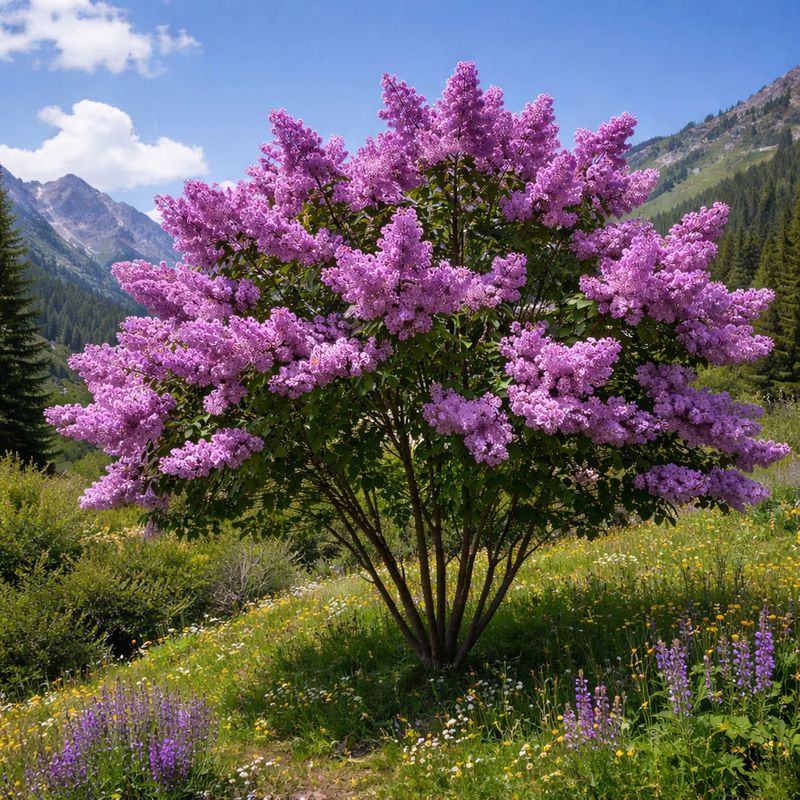
One whiff of a lilac in bloom and you understand why people plant it for the scent alone. That heady spring perfume can carry clear across the yard on a warm afternoon.
Classic French lilacs put on a purple show in mid-spring, and reblooming types like Bloomerang stretch the flower season into summer and fall. Colors range from deep violet to pink, white, and pale blue.
Give it plenty of sun and good drainage and it will outlive you, since some lilacs have thrived on old homesteads for a century. It is happiest in the cooler northern half of the US, so gardeners in hot southern zones may want a heat-tolerant variety.
Cut a few branches for the kitchen table and the whole house smells like spring.
6. Ninebark (Physocarpus)
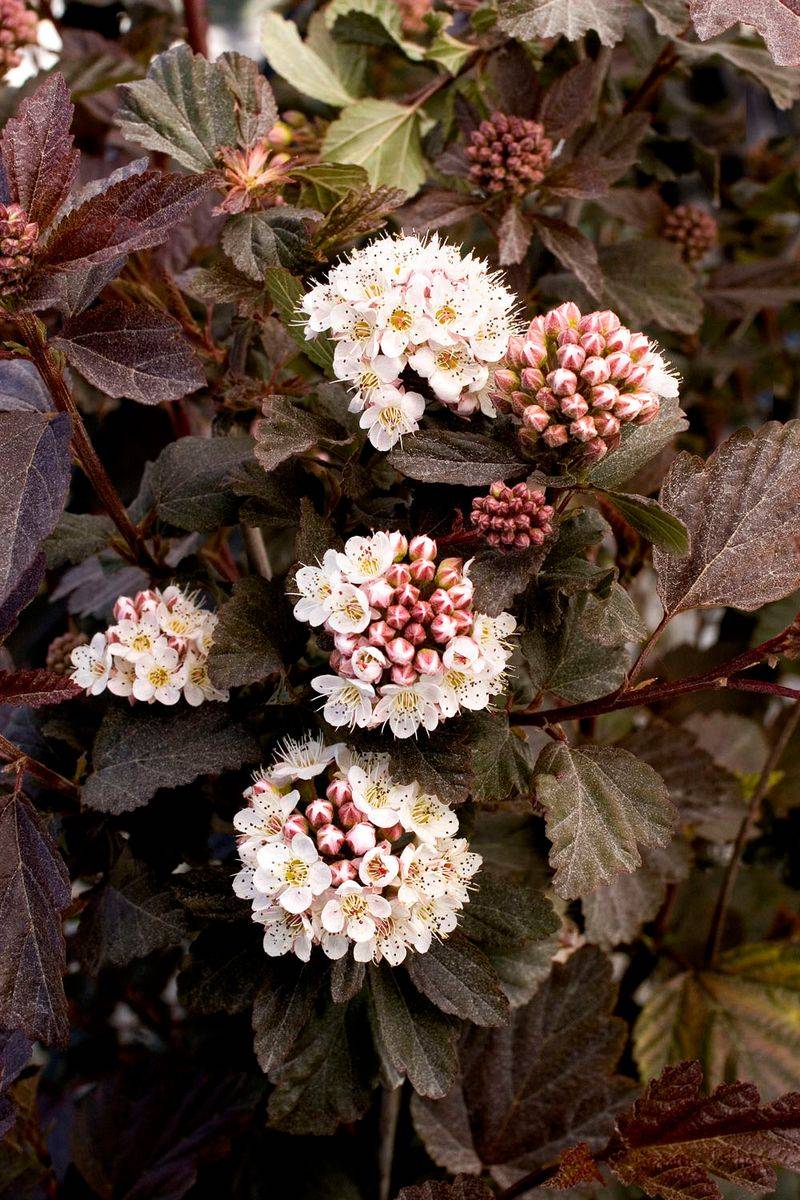
Native to much of North America, Ninebark brings a rugged good looks that shrugs off conditions that would flatten a fussier plant. Its clusters of white or pink flowers appear in early summer, followed by reddish seed pods.
The real draw is the foliage, which comes in burgundy, copper, and lime depending on the variety. Diablo and Coppertina practically glow in a sunny border.
Peeling, papery bark gives it winter interest too, which is where the name ninebark comes from. Because it is a native, it supports local pollinators and asks almost nothing in return.
Cold-hardy, drought-tolerant, and largely pest-free, it is the low-maintenance backbone many US yards are missing.
7. Potentilla (Shrubby Cinquefoil)
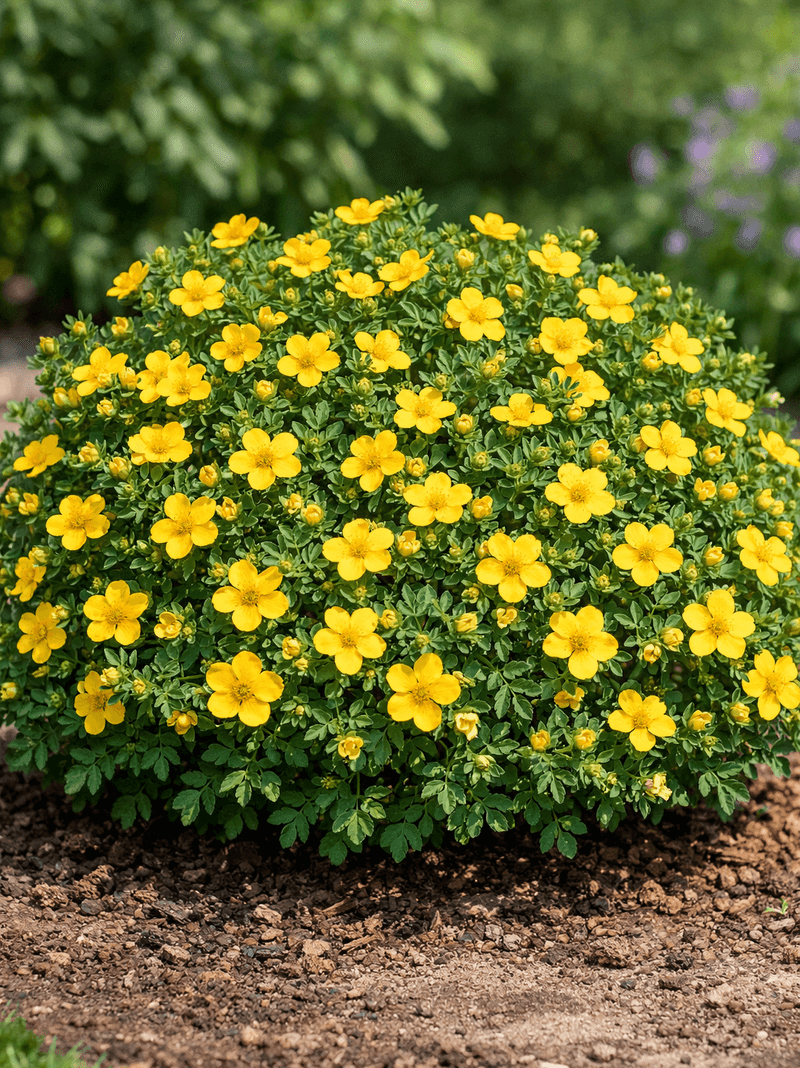
Talk about a workhorse: Potentilla blooms nonstop from late spring until frost without ever demanding a fuss. Its cheerful little buttercup-shaped flowers cover the plant in yellow, white, pink, or orange.
It stays small and mounded, so it slots neatly into foundation plantings and low hedges where a hydrangea would be too big and floppy. Cold-hardy down to some of the chilliest US zones, it laughs at winters that kill lesser shrubs.
Poor soil, wind, road salt, and drought barely register with this tough native relative. Pollinators visit steadily thanks to that months-long bloom window.
Give it sun and forget about it, which is exactly what a busy gardener wants to hear.
8. Camellia
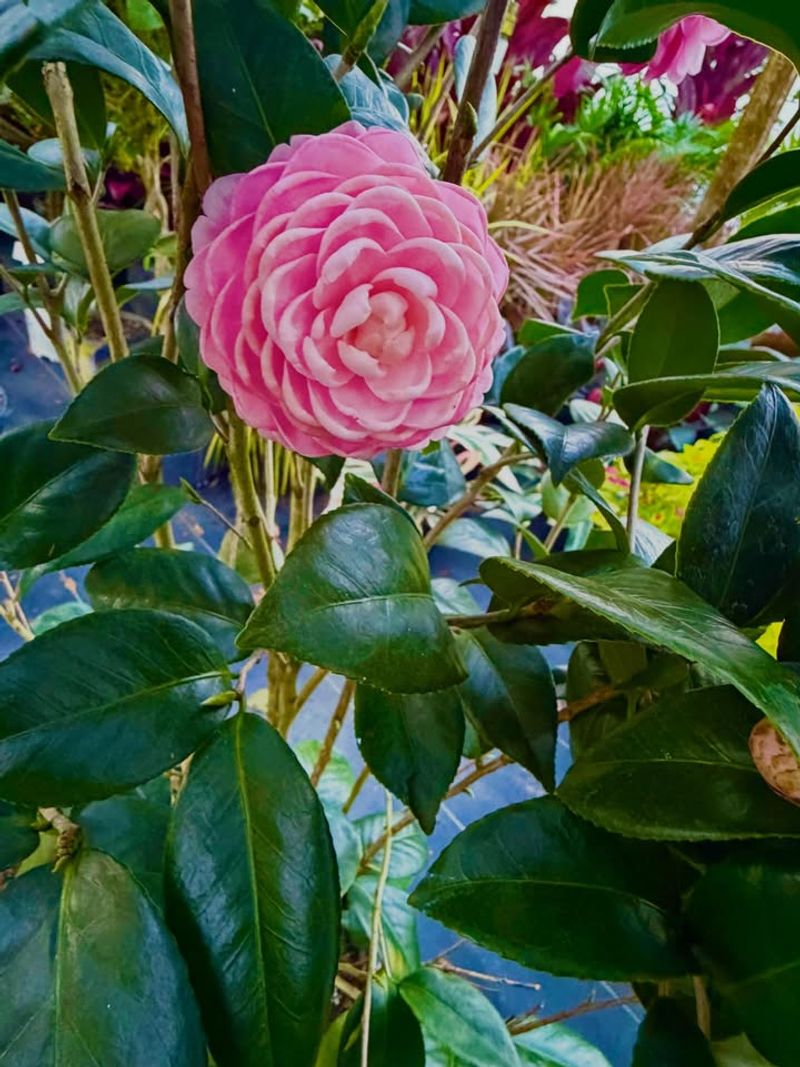
When most shrubs are bare and sleeping, Camellia steps up with roselike blooms in the dead of winter or earliest spring. Its glossy evergreen leaves look sharp all year, giving your garden bones even in the off-season.
Southern gardeners treasure it for that off-season color, with flowers in white, pink, and deep red set against dark, waxy foliage. Sasanqua types bloom in fall while japonica types carry the winter show.
It prefers dappled shade and acidic, well-drained soil, much like a hydrangea but far more elegant when in flower. Once settled, established plants can live for generations.
Fun bit of history: the tea you drink comes from a close cousin, Camellia sinensis.
9. Forsythia
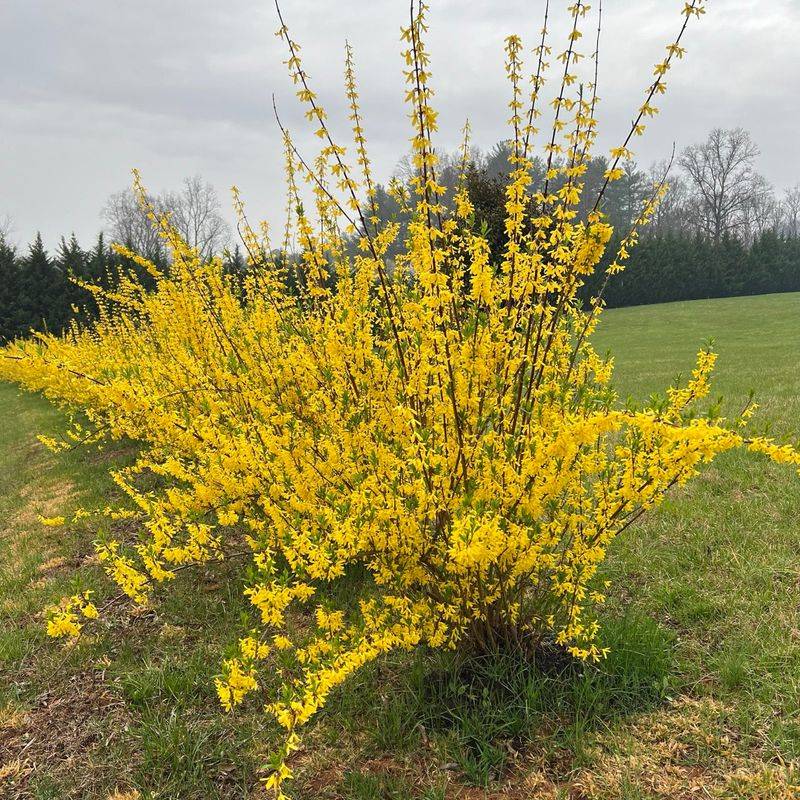
Nothing announces that winter is finally over like a Forsythia exploding into golden yellow. Before its leaves even appear, the bare branches light up with hundreds of tiny sunny flowers.
It is one of the earliest bloomers you can grow, a burst of cheer when everything else still looks gray and tired. As a hedge it forms a bright fountain of arching stems, and it grows fast enough to fill space in a hurry.
Undemanding to a fault, it puts up with poor soil, pollution, and cold with a shrug. Prune it right after the flowers fade so you do not snip off next year’s buds.
Clip a few branches in late winter and force them indoors for early spring in a vase.
10. Abelia
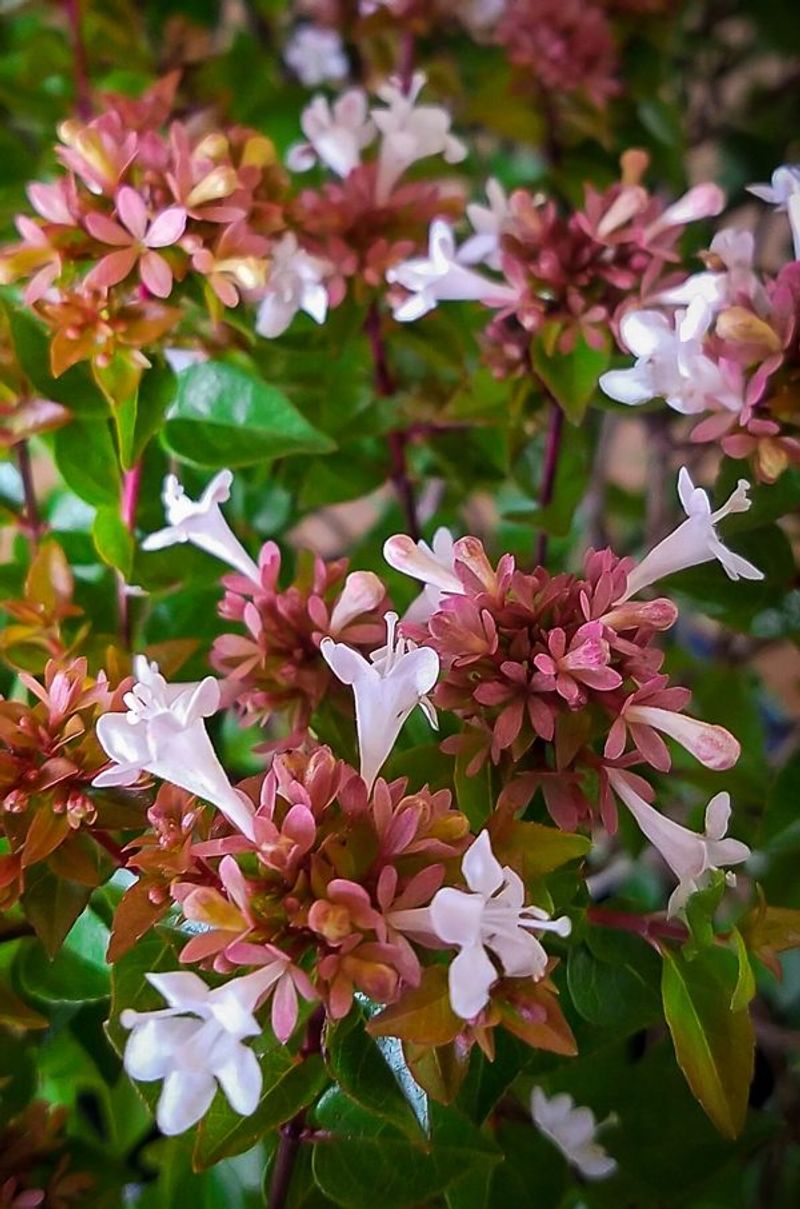
Quietly reliable, Abelia keeps producing dainty bell-shaped flowers from summer well into fall while asking for almost nothing. Bees and butterflies drift to those tiny fragrant blooms all season.
Its semi-evergreen leaves often blush pink, bronze, or gold, so the shrub earns its spot even between flushes of flowers. Kaleidoscope and Rose Creek are compact favorites that fit smaller US yards.
Heat, humidity, and drought do not faze it once it settles in, which makes it a champ in the South and beyond. Deer usually leave it alone too.
Give it sun for the best color and let it arch gracefully, or shear it into a neat low hedge.
11. Mock Orange (Philadelphus)
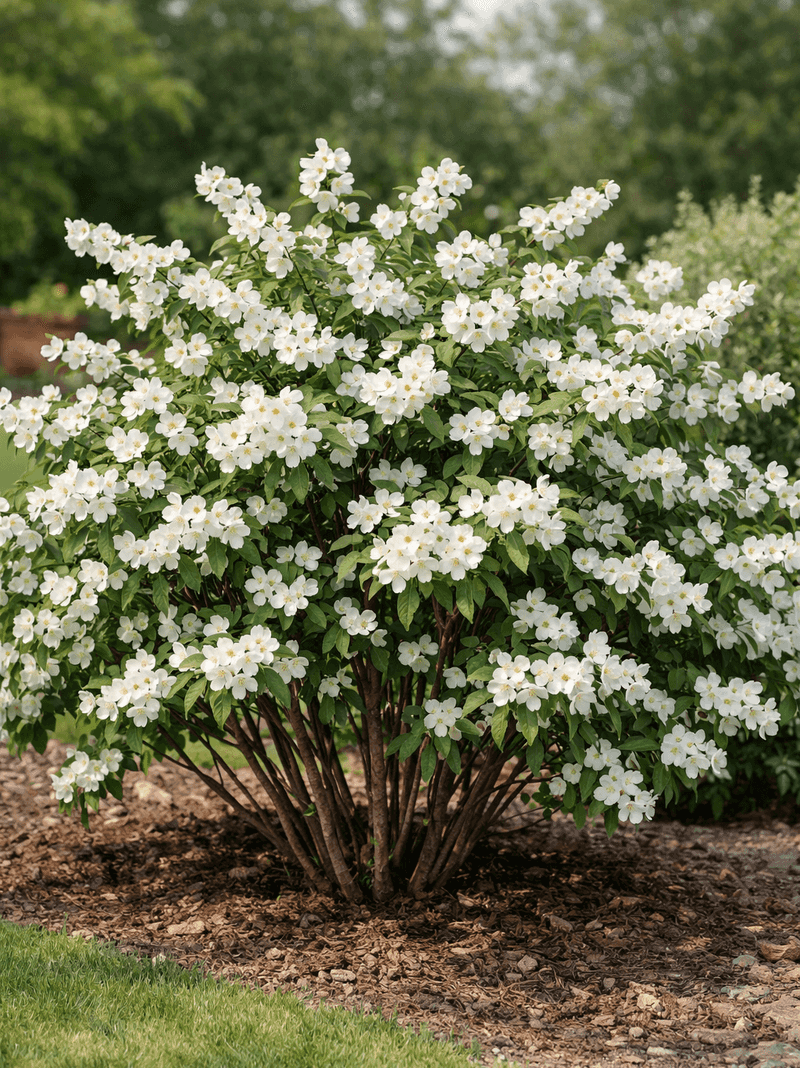
Close your eyes near a blooming Mock Orange and you would swear a citrus grove moved in next door. Its pure white flowers release a sweet, orange-blossom fragrance that stops passersby in their tracks.
Late spring brings a heavy flush of those crisp white blooms against fresh green leaves. It is an old-fashioned favorite for good reason, thriving in average soil with minimal babying.
Full sun to part shade suits it fine, and it tolerates a range of US climates without complaint. Prune right after flowering to keep it shapely and encourage next year’s buds.
Plant one near a window or patio so the perfume drifts indoors on warm evenings.
12. Rhododendron
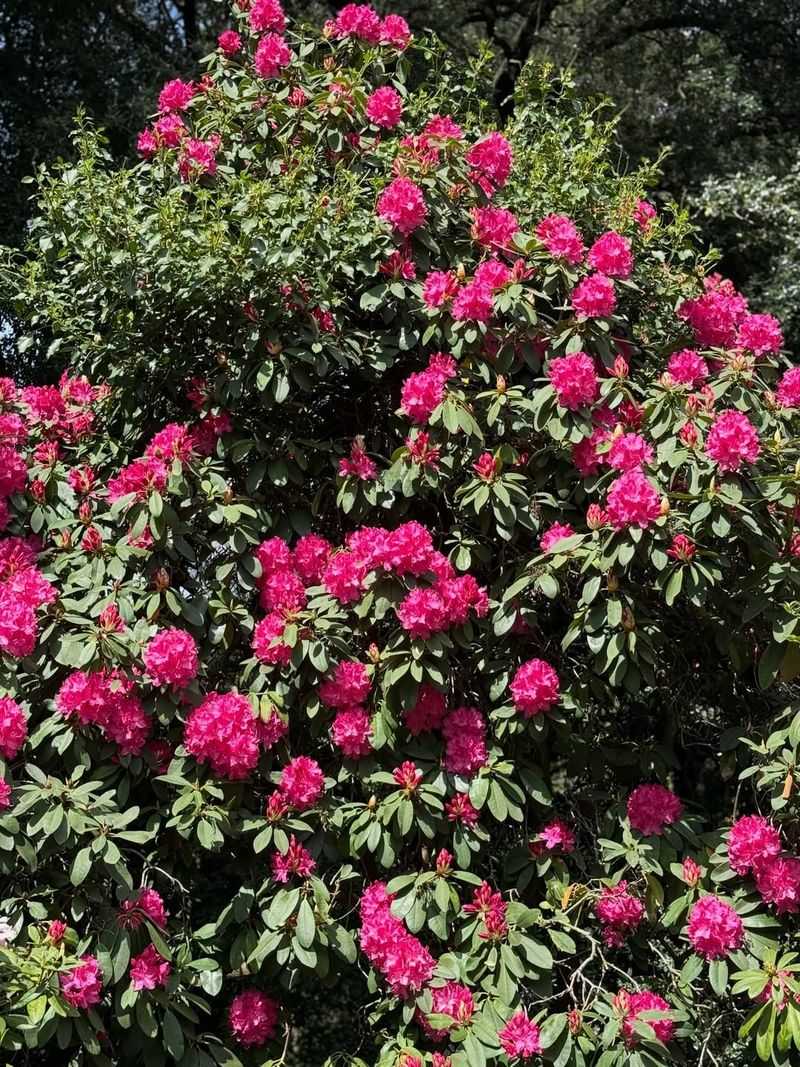
Few shrubs make as grand an entrance as a mature Rhododendron loaded with softball-sized flower clusters. Those spring trusses come in pinks, purples, reds, and whites that stop you cold.
Broad evergreen leaves mean it looks like a plant even in the depths of winter, holding structure when hydrangeas are just bare sticks. It thrives in the dappled shade and acidic soil found under tall trees across much of the US.
Give it good drainage, since soggy roots are the fastest way to lose one. Once happy, it can grow into a lush centerpiece that lasts decades.
Cooler regions of the Northeast and Pacific Northwest are true rhododendron country, though many hardy hybrids widen the map.
13. Azalea
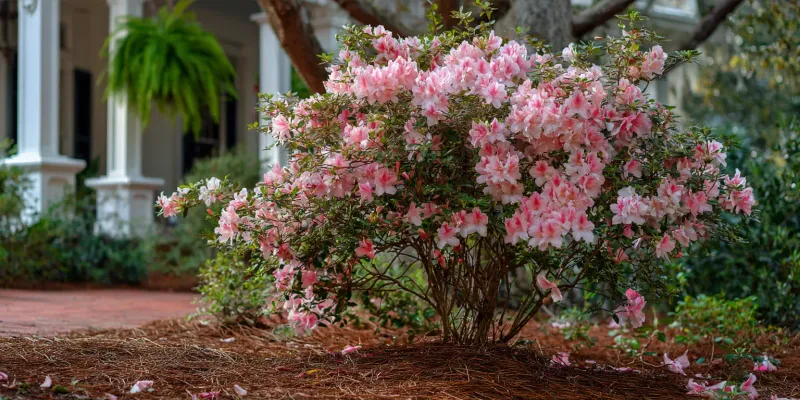
Come spring, an azalea in full bloom can practically vanish behind its own flowers. The plant becomes a solid wall of color in coral, pink, white, red, or purple.
A close cousin of the rhododendron, it tends to stay smaller and tucks neatly into foundation beds and woodland edges. Encore varieties changed the game by reblooming in summer and fall instead of the single spring show.
Dappled shade and acidic, well-drained soil keep it happiest, echoing hydrangea needs but with far more flower power. Southern gardeners lean on it heavily for that unforgettable spring spectacle.
Mulch its shallow roots well and avoid deep planting, and it will reward you year after year.
14. Knock Out Roses
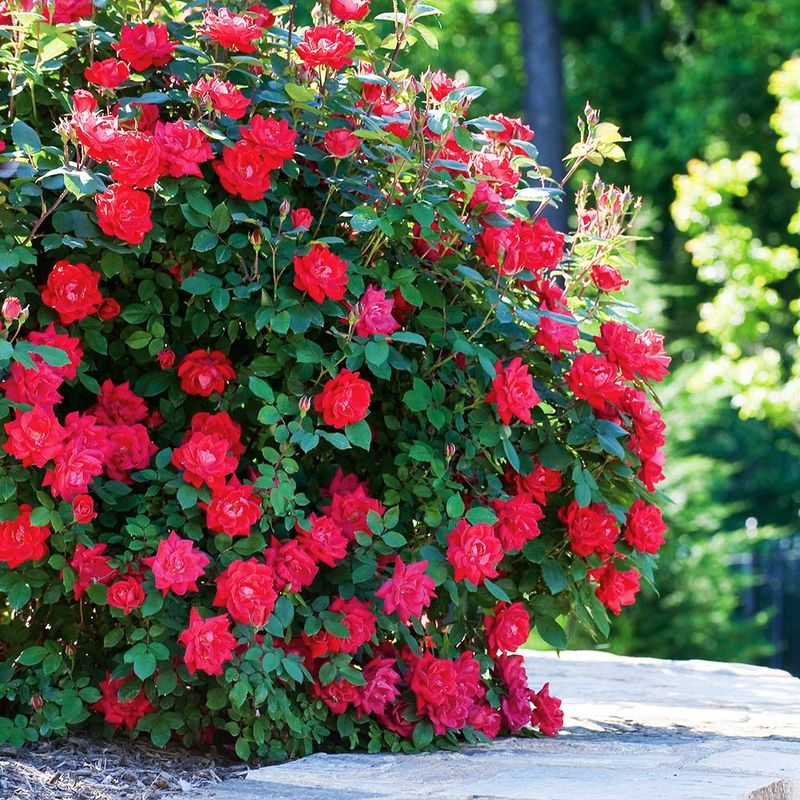
Roses have a reputation for being divas, and then Knock Out Roses came along and rewrote the rules. Bred for toughness, they bloom in flushes from spring until frost with barely any care.
No deadheading required, and they shrug off the black spot and mildew that plague finicky hybrid teas. Cherry red, pink, coral, and yellow varieties keep beds glowing for months.
They handle heat, humidity, and cold across most of the US, making them one of the most forgiving flowering shrubs you can buy. A single hard prune in late winter is about all they ask.
Plant a row for a low hedge that blooms nonstop and watch the neighbors take notes.
15. Beautyberry (Callicarpa)
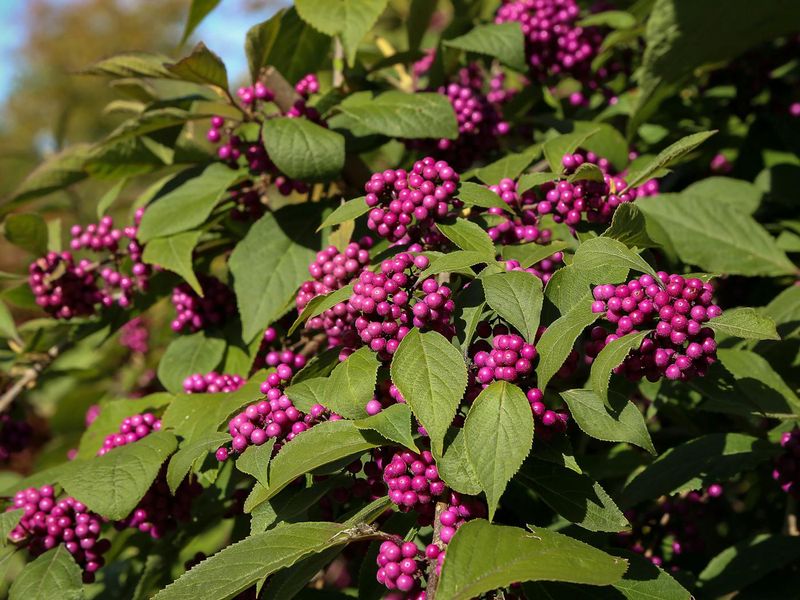
Most shrubs on this list dazzle with flowers, but Beautyberry saves its showstopper for fall: clusters of electric-purple berries that look almost fake. Small pink summer flowers set the stage, then those jewel-toned berries hug the stems well into autumn.
Birds flock to the fruit, so it doubles as a wildlife magnet in a US backyard. The native American beautyberry is especially tough and adaptable across the South and East.
Interesting tidbit: crushed beautyberry leaves have a long folk history as a mosquito deterrent, and researchers have looked into the compounds behind it. That may help make it a handy plant to brush against on a buggy evening.
Give it sun to part shade and enjoy a shrub that peaks when others fade.
16. Deutzia
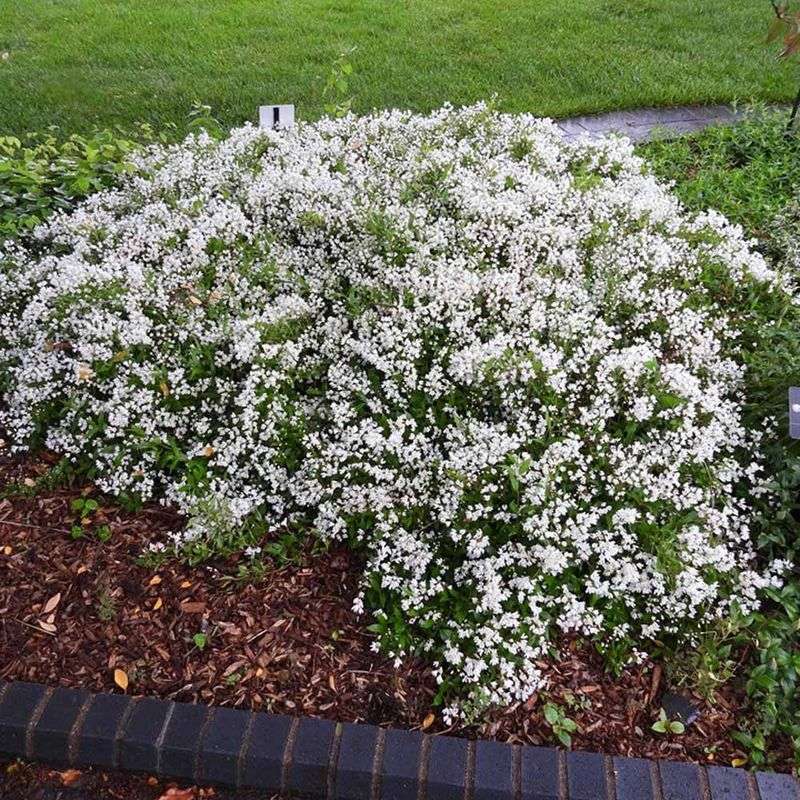
An underrated gem, Deutzia carpets itself in delicate star-shaped flowers each spring like a dusting of fresh snow. The arching or low-mounded stems disappear beneath white or pink blooms.
Compact varieties like Nikko and Yuki Cherry Blossom hug the ground, making excellent flowering groundcovers or edging. The foliage often turns burgundy in fall for a second season of interest.
Easygoing about soil and light, it grows well in sun or part shade across a wide swath of the US. Bees appreciate the early nectar when few other shrubs are open.
Trim lightly after bloom to keep it neat, and it will spread into a soft flowering mat.
17. Chokeberry (Aronia)
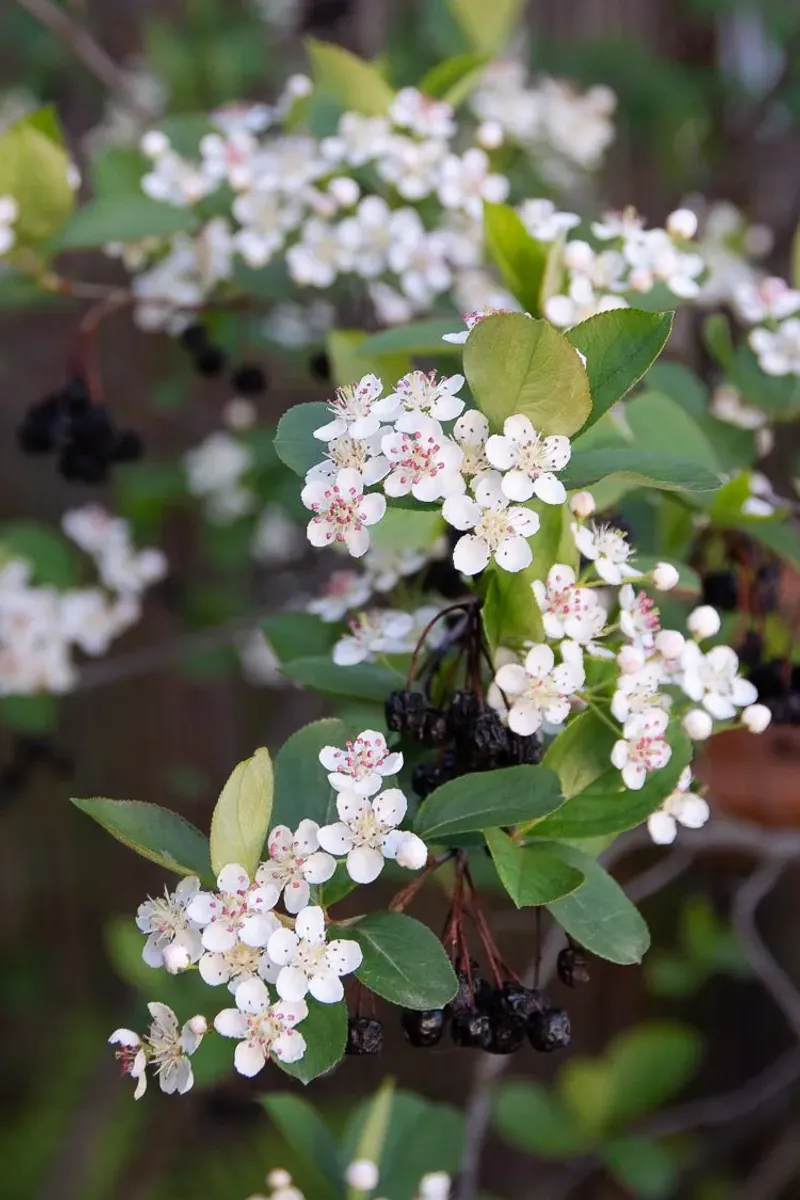
Hardworking and native, Chokeberry pulls triple duty with spring flowers, fall fruit, and fiery autumn foliage. White blossoms in spring give way to glossy dark berries that birds devour.
Come fall, the leaves blaze scarlet and orange, rivaling any maple in the yard. It tolerates wet spots, dry spots, and poor soil that would sink most ornamentals.
The berries are famously high in antioxidants, and some folks brew them into juice and jam once frost sweetens them. As a North American native, it supports pollinators and songbirds alike.
Plant it where you want reliable four-season interest with almost zero maintenance.
18. Bottlebrush (Callistemon)
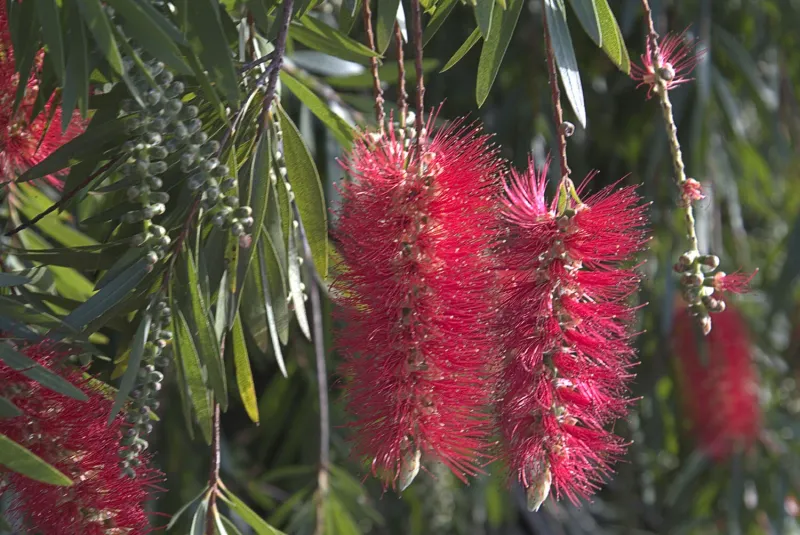
The name says it all: Bottlebrush blooms look exactly like the brush you use to clean a baby’s bottle, in vivid red or hot pink. Hummingbirds and bees cannot resist those fuzzy cylindrical flowers.
Warm-climate gardeners in the South and West love it for its long bloom season and evergreen leaves. It handles heat and drought once established, staying lush when other shrubs crisp up.
Full sun brings out the most flowers, and it tolerates a range of soils as long as drainage is decent. Some varieties can even be trained into small trees.
Plant it near a patio and watch the hummingbird traffic pick up almost immediately.
19. Smokebush (Cotinus)
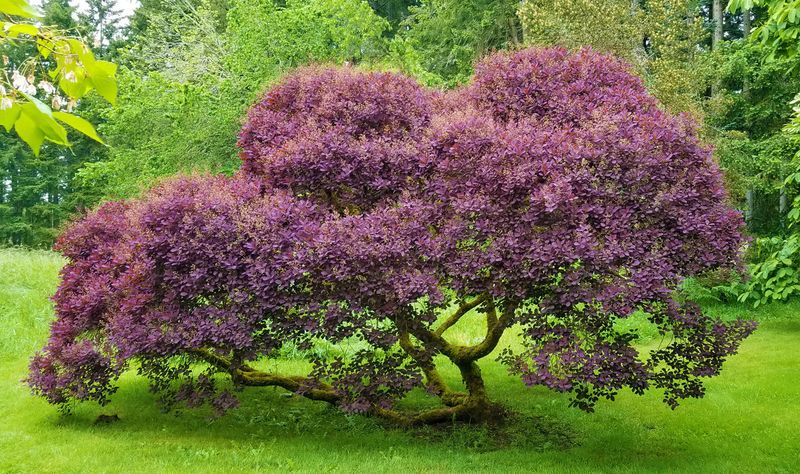
Instead of ordinary flowers, Smokebush produces airy, hazy plumes that make the whole shrub look wrapped in colored fog. Those wispy seed clusters glow pink, purple, or smoky gray in summer light.
Deep burgundy or golden foliage, depending on the variety, keeps the drama going all season long. Royal Purple and Grace are standout picks for a bold focal point.
It thrives in poor, dry soil and full sun, actually coloring up better when you do not baby it. Deer generally pass it by, and pests rarely bother it.
Prune hard in late winter for bigger leaves, or leave it to bloom for that signature smoky haze.
20. Fothergilla
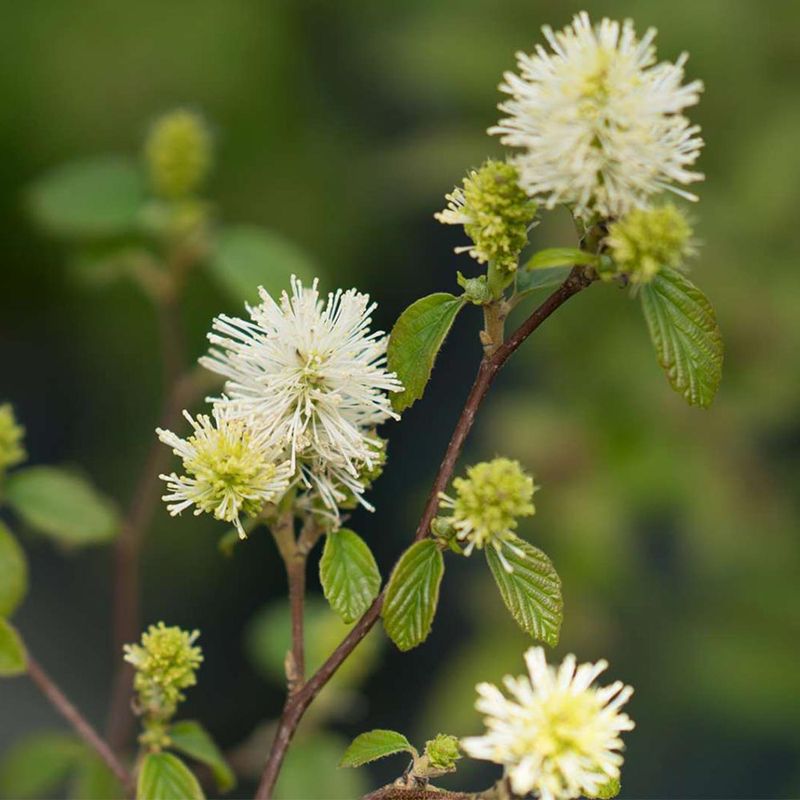
Sweet-smelling and shockingly colorful in fall, Fothergilla is a native shrub that deserves way more attention than it gets. In spring it produces fuzzy white bottlebrush flowers with a honey scent before the leaves emerge.
The real fireworks come in autumn, when a single plant can turn yellow, orange, and red all at once. That multicolor foliage puts on a show few shrubs can match.
Native to the southeastern US, it thrives in acidic, moist, well-drained soil and dappled sun. It stays compact and mannerly, so it never outgrows its welcome in a small bed.
Pair it with rhododendrons or azaleas for a native-friendly, low-care corner.
21. Chinese Fringe Flower (Loropetalum)
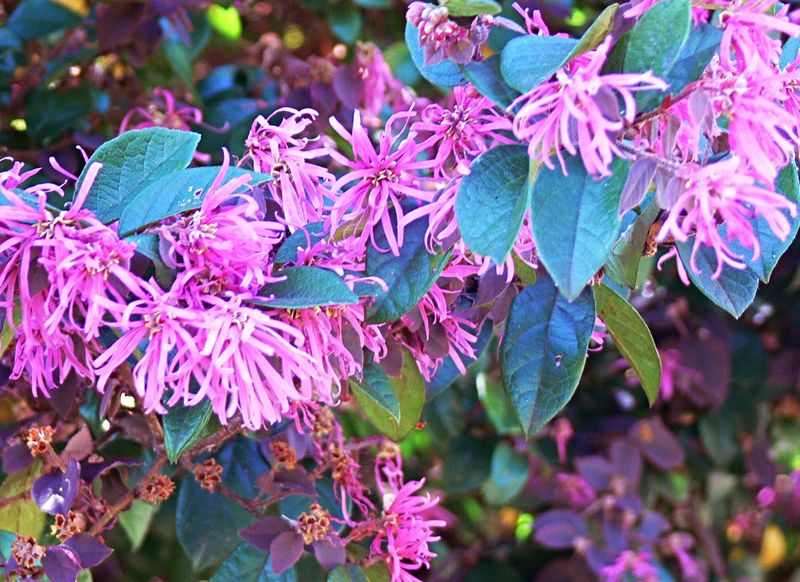
Feathery, ribbon-like blooms in hot pink or white spill across Loropetalum in spring, and often again in flushes through the year. The spidery flowers look unlike anything else in the border.
Deep burgundy foliage on popular varieties like Ever Red keeps the color coming even when it is not in bloom. Evergreen in mild climates, it holds its leaves and shape year-round.
Southern and West Coast gardeners rely on it for reliable color in sun or part shade. It tolerates heat and, once rooted in, moderate drought.
Use it as a colorful hedge, a foundation plant, or a bold container specimen on the porch.
22. Summersweet (Clethra)
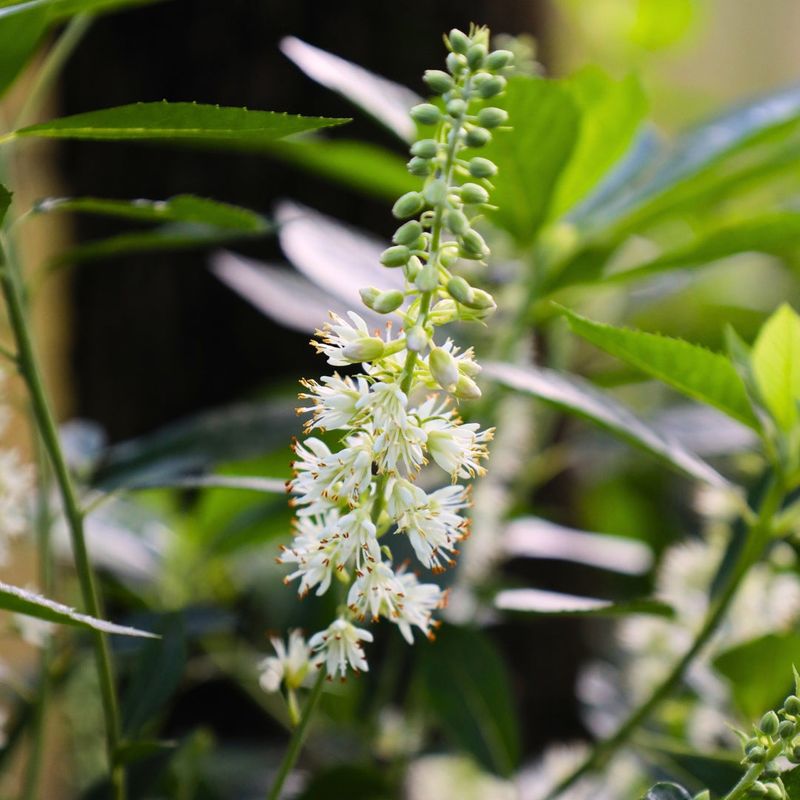
Blooming right when the summer garden hits a lull, Summersweet unfurls fragrant flower spikes that hum with bees. Those white or pink bottlebrush blooms carry a sweet, spicy perfume you can smell from yards away.
A North American native, it actually welcomes the damp, shady spots where many flowering shrubs sulk. Rain gardens, pond edges, and soggy corners suit it perfectly.
Butterflies and pollinators treat it as a late-season fueling station when little else is open. Hummingbird Clethra is a compact favorite for smaller US yards.
Golden fall foliage rounds out the season, so it earns its keep long after the fragrance fades.