
4 Watering Tips That Turn Struggling Petunias Into Lush, Nonstop Bloomers
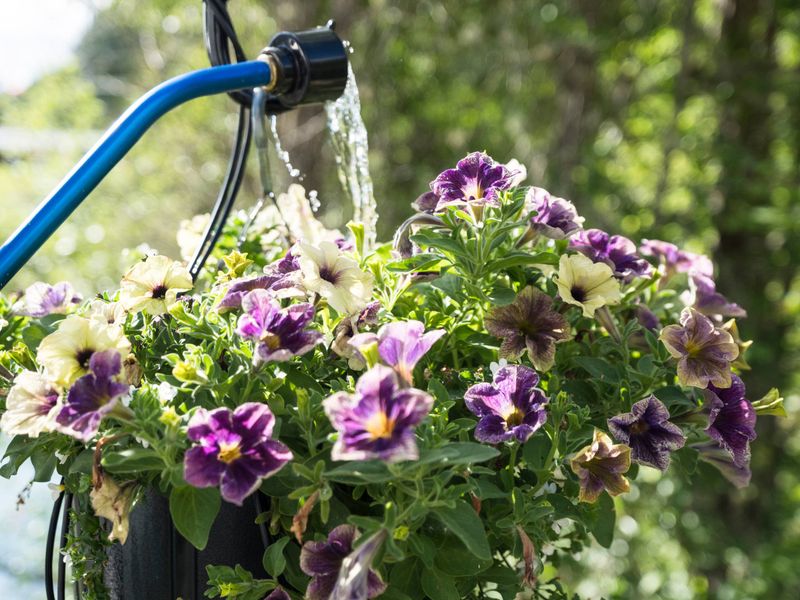
Petunias can go from perky to pitiful surprisingly fast, and watering habits are often a big part of why. Too little moisture at the roots slows growth and knocks buds off before they even open, while too much can be just as damaging. Getting the balance right is not complicated, but it does take a little know-how. These four watering practices can help remove some of the most common water-related barriers standing between you and a fuller, more floriferous plant.
Four watering practices can remove common barriers to flowering
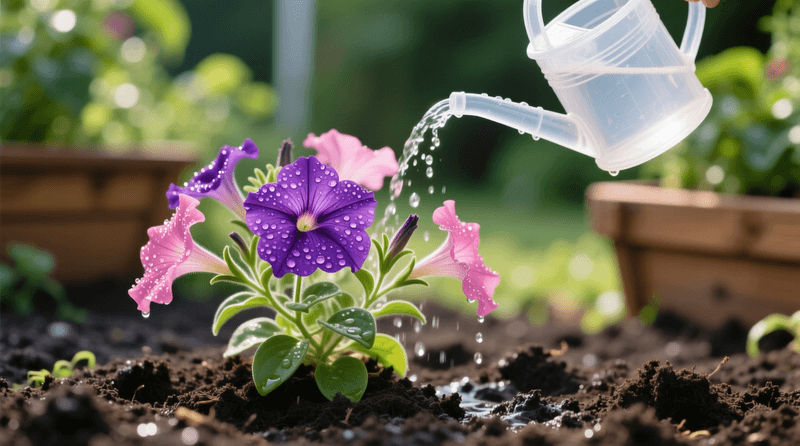
Watering is one of the most controllable parts of growing petunias, but it is not a magic switch. Fixing how you water can genuinely help if inconsistent moisture, drought stress, or waterlogged roots are holding your plants back. What it cannot do is guarantee lush or nonstop blooms all season, because flowering also depends on how much sun the plant receives, how well the soil drains, what cultivar you chose, how regularly you fertilize, and whether pests, disease, or extreme heat have entered the picture.
Petunia roots need two things at once: moisture and oxygen. When the growing medium stays too dry for too long, roots cannot pull up the water and nutrients the plant needs to push out new growth and flowers. When it stays saturated, oxygen gets squeezed out of the soil pores and roots begin to suffer even if the medium looks plenty wet. The goal is a middle ground where the root zone is evenly moist but never perpetually soaked.
Research confirms that water stress can meaningfully set back petunia performance. A greenhouse study on drought stress in Petunia hybrida found that moderate drought delayed budding and flowering, while severe stress triggered some abnormal early flowering followed by bud loss and a stop in bloom production. Those findings come from controlled greenhouse pots, so they do not translate directly into a universal outdoor watering rule, but they do show why letting petunias go dry repeatedly is worth avoiding.
The four practices covered here, checking moisture below the surface, watering the full root zone, matching frequency to the plant’s situation, and protecting roots with good drainage, address the most common water-related barriers. University of Minnesota Extension guidance on growing petunias makes clear that full sun, moist and well-drained soil, regular feeding, and proper maintenance all play roles alongside watering in keeping petunias performing well.
Check the root zone before you reach for the hose
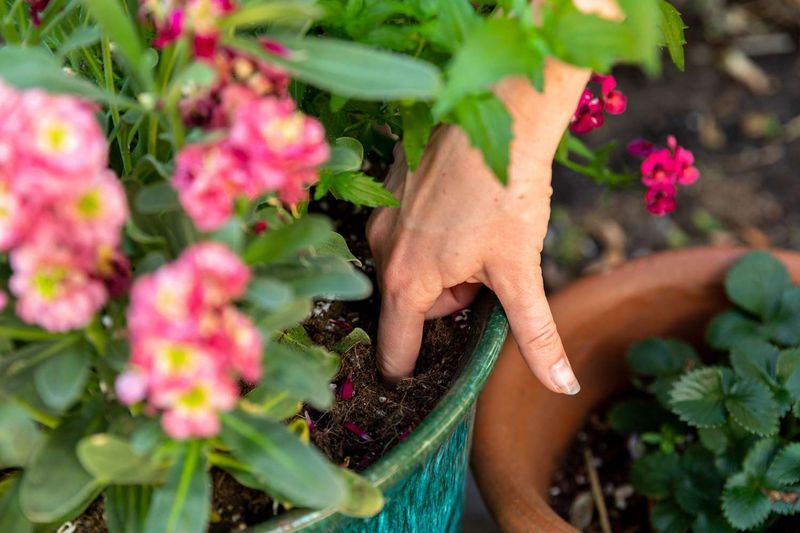
Before you water, take ten seconds to actually check whether the plant needs it. A fixed calendar schedule sounds convenient, but containers dry at wildly different rates depending on pot size, material, how root-bound the plant is, how hot and windy it has been, and how much sun the spot receives. Watering on a rigid schedule means you will sometimes add water to already-moist soil and sometimes let the root zone go dry without realizing it.
The simplest check is to push your finger or a wooden dowel about two inches into the potting mix. If it comes out damp, wait and check again tomorrow. If it comes out dry or barely cool, the plant is ready for water. UMN Extension’s container gardening guidance notes that the top inch of soil can mislead you because the surface dries faster than the root zone below.
A plant can look dry on top while the lower portion of a larger pot is still adequately moist, or the reverse can happen when a dried-out potting mix has pulled away from the container walls and water runs straight down the sides without wetting the core.
Pot weight is another useful tool, especially for hanging baskets. Lift the basket right after a good watering and notice how heavy it feels. Then lift it again the next day and the day after. When it feels noticeably lighter, the root zone is getting dry.
With a little practice you can judge moisture by feel without digging into the soil at all.
One thing that should not trigger an automatic watering is wilting. A drooping petunia can mean the roots are dry, but it can also mean the roots are sitting in saturated, oxygen-depleted soil or have been damaged by root disease. University of Maryland Extension advises checking the growing medium before watering a wilted plant, because adding more water to an already-wet container with root problems will make things worse, not better. Check below the surface first, and if the mix is wet and the plant is still limp, consider root damage as a possibility rather than drought.
Soak the full root zone, not just the surface
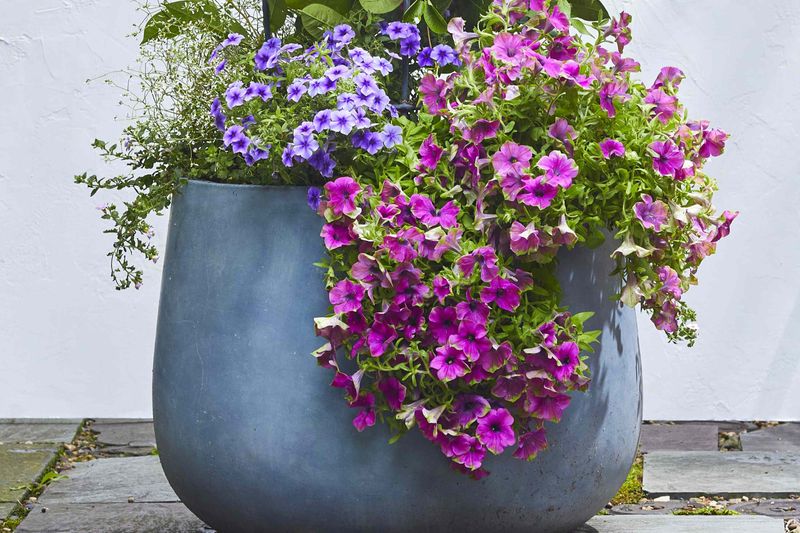
A quick splash of water over the top of a container might look like watering, but it often does little more than wet the top inch of potting mix. The roots that matter most are spread through the lower portion of the container, and a surface sprinkle may never reach them. Over time, shallow watering trains roots to stay near the surface where they are more vulnerable to heat and drying, and it can leave dry pockets lower in the pot that silently limit growth.
Thorough watering means applying water slowly enough that it has time to move through the potting mix and reach the full root zone. University of Maryland Extension recommends watering containers until excess begins to drain from the bottom, then allowing that drainage to happen freely before the container is moved or set back on a saucer. That drainage confirms that the water has moved through the medium rather than running down one side and out without wetting the middle.
The pace matters too. A slow, steady flow from a watering can with a breaker head or a hose with a bubbler attachment gives water time to penetrate rather than sheet across the surface. UMN Extension’s vegetable garden watering guidance recommends a gentle flow specifically to reduce runoff and encourage even penetration. If water pools on the surface and runs off the sides, slow down even more or pause and let it soak in before continuing.
Thorough watering does not mean flooding or insisting that every container must produce heavy runoff at every session. RHS research on watering containers found that plants could perform well with daily applications that did not produce drainage, and that overwatering actually reduced plant quality. The goal is to re-moisten the root zone, not to push maximum water through the pot at every watering. For in-ground beds, aim to wet the soil to about six to eight inches deep, which is where established petunia roots are doing most of their work.
Match watering frequency to the plant’s situation
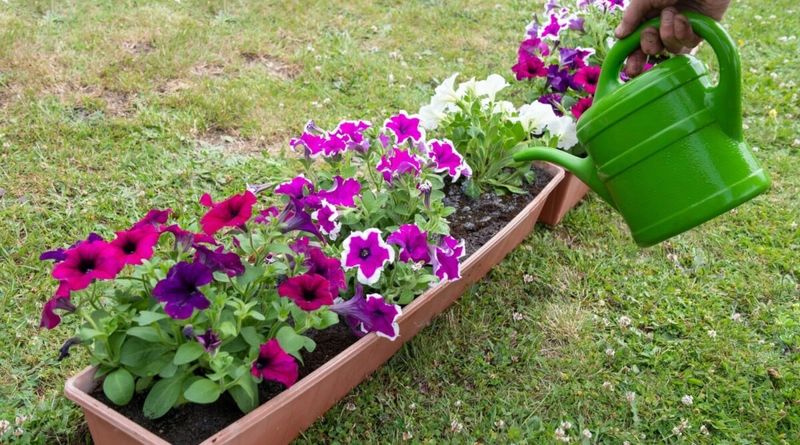
There is no single watering schedule that works for every petunia in every situation. A small hanging basket in full sun on a breezy porch and an established spreading petunia in a garden bed have almost nothing in common when it comes to how quickly they dry out. Applying the same schedule to both will leave one chronically dry and the other perpetually wet.
Small containers and hanging baskets are the most demanding. Their limited soil volume heats up and dries out quickly, especially in summer sun. University of Minnesota Extension notes that hanging baskets and containers may need watering as often as daily, depending on their size and how much soil they hold. Colorado State University Extension goes further, noting that even plastic containers can require daily or twice-daily watering as plants grow larger and roots fill the pot.
That is not a rule for all containers, but it is a real possibility for small baskets in hot, dry weather, and it is worth checking every morning during a heat stretch rather than assuming the previous day’s watering is still holding.
Spreading or wave-type petunias are vigorous growers with high water demand compared to many upright varieties. Their rapid growth rate means they consume moisture quickly, so if you are growing a spreading type in a moderately sized pot, expect to check it more often than you might for a compact upright in the same container. UMN Extension’s container plant guidance reinforces that plant maturity and container volume both influence how quickly a pot dries, not just the petunia type.
In-ground petunias in a garden bed follow a different rhythm. Established plants in garden soil generally need less frequent but still thorough watering. UMN recommends soaking garden soil to roughly six to eight inches when watering and suggests that non-spreading types may need only about weekly thorough watering except during unusually hot or dry stretches. The practical approach is to check a few inches into the soil before watering, increase your checks during heat waves or windy periods, and back off when recent rain has kept the soil moist.
Frequency is something you reassess continuously, not something you set once at the start of the season.
Keep water moving through the container
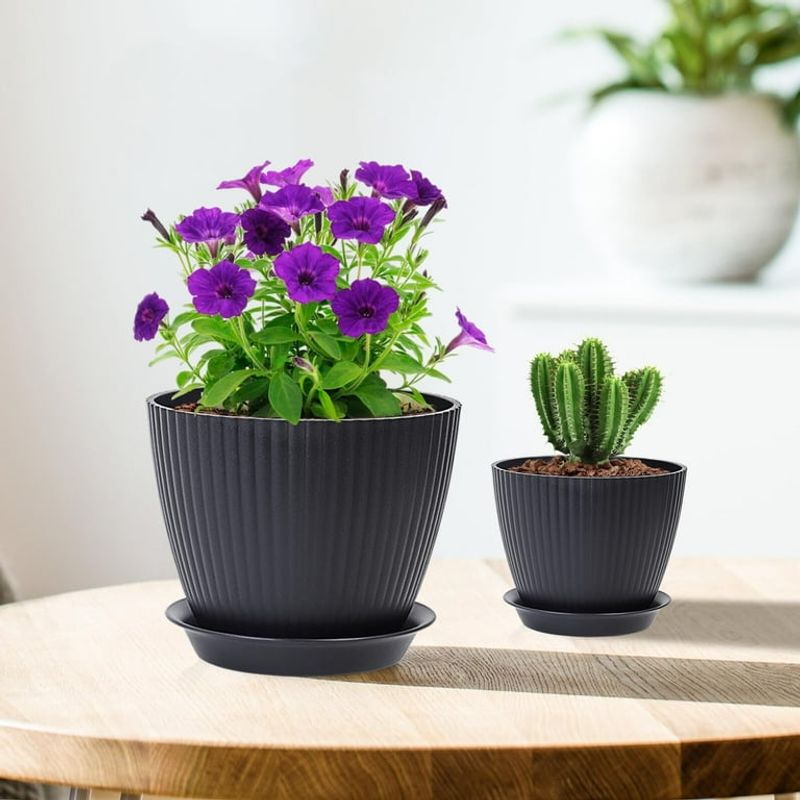
Good drainage is not just a nice feature in a container, it is what keeps roots alive when you water thoroughly. Without drainage holes, water collects at the bottom of the pot and the potting mix stays saturated. Roots sitting in that stagnant zone are cut off from oxygen and become vulnerable to rot. Colorado State University Extension is direct on this point: containers need drainage holes, and saucers or trays that collect and hold water should be emptied if the water has been sitting long enough to keep the medium saturated.
A saucer under a container is fine for protecting a deck or patio surface, but it should not become a reservoir. After watering, check the saucer and tip it out if water is still standing an hour or two later. Leaving roots submerged in saucer water undoes the benefit of good drainage and raises the same root-health risks as a pot with no holes at all.
Where you direct the water also matters. Watering at the soil line, using a drip system, or applying water directly at the base of the plant keeps foliage drier than overhead watering. Prolonged leaf wetness creates conditions that favor foliar diseases, so reducing how often and how long leaves stay wet is a practical way to lower that risk. UMN Extension’s water-wisely guidance recommends watering at the base of plants when possible for exactly this reason.
If you do use overhead watering or a sprinkler, morning is a sensible default. Leaves that get wet in the morning have hours of daylight and airflow to dry before nightfall, which limits the window for disease to take hold. For drip irrigation or base watering, however, the time of day is much less important. Penn State Extension research on drip irrigation timing makes clear that the amount and frequency of water applied matter far more than whether you run the system at 7 a.m. or 2 p.m.
Morning is a useful habit for overhead irrigation, but it is not a flowering treatment in itself.
When better watering does not solve the problem
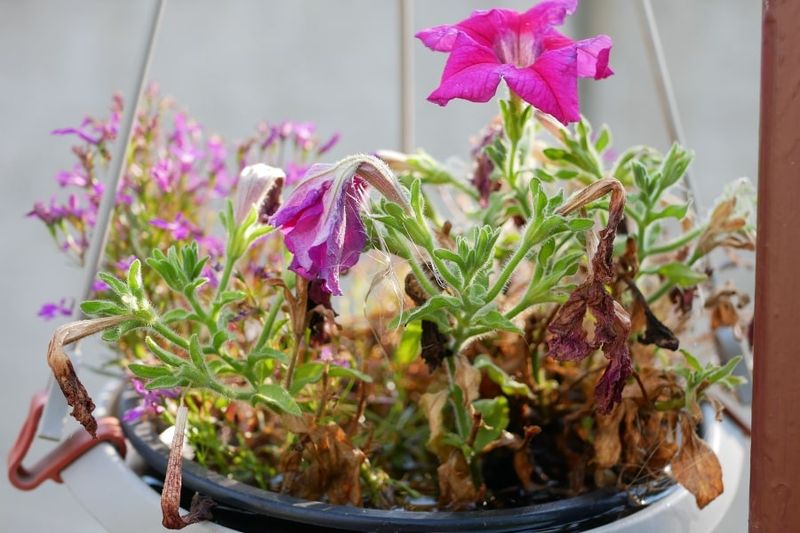
Sometimes you tighten up your watering routine and the petunias still look limp, sparse, or stubbornly flowerless. That is a signal to look past irrigation and consider what else might be limiting the plant. Watering can only fix a water problem, and petunias have several other requirements that, when unmet, produce symptoms that look a lot like drought stress.
Light is the most commonly underestimated factor. UMN Extension’s petunia growing guide specifies full sun as a core requirement, meaning at least six hours of direct sunlight per day. A petunia in a spot that gets only partial sun or shifting shade will produce fewer flowers regardless of how carefully it is watered. If the plant looks healthy but is not blooming freely, count the actual hours of direct sun it receives before blaming irrigation.
Nutrition is another common gap, especially in containers. Potting mix loses available nutrients relatively quickly, and petunias in containers that have not been fed in several weeks may simply run out of the resources needed to produce buds. University of Maryland Extension emphasizes that container plants need regular fertilizing because nutrients leach out with each watering. A balanced liquid fertilizer applied on a regular schedule through the growing season can make a visible difference in bloom production.
Root disease is a possibility that gardeners often overlook. A petunia with root rot can wilt and look drought-stressed even when the potting mix is wet, because damaged roots simply cannot take up water. UMass Extension’s documentation on petunia root rot shows how root damage can mimic water stress above ground. If a plant stays wilted despite adequate moisture, carefully remove it from the pot and inspect the roots.
Healthy roots are white or cream-colored and firm; rotted roots are brown, mushy, or black.
One last thing worth mentioning: some gardeners wonder whether deliberately withholding water might push petunias into producing more flowers. The drought stress study in Petunia hybrida found that severe water deficit triggered some early flowering responses, but those were followed by bud loss and a halt in flowering, not a sustained flush of blooms. Deliberate drought stress is not a reliable flowering technique and carries real risk of damaging the plant. Pruning back leggy stems, deadheading spent blooms, and addressing pest pressure are far safer ways to encourage a new flush of growth.
Use consistent moisture to support, not guarantee, flowering
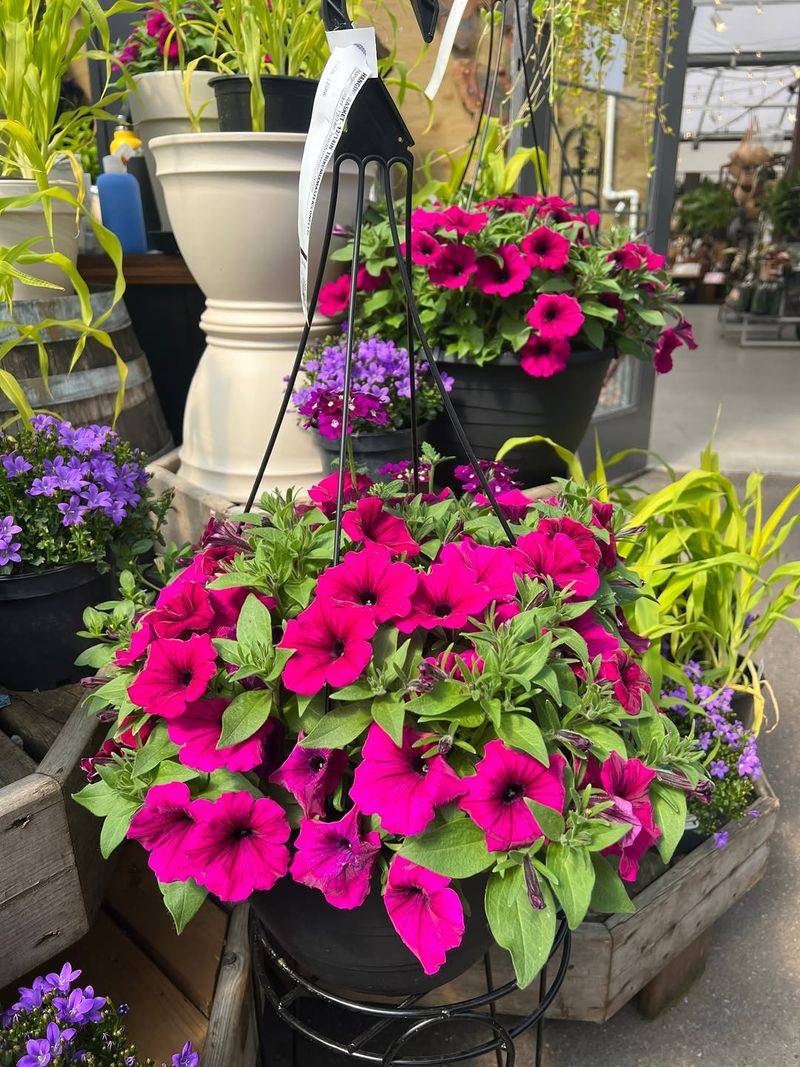
Pulling the watering practices together into a repeatable routine is simpler than it sounds. Before you water, check two inches below the surface or assess pot weight. When the root zone is getting dry, apply water slowly and steadily at the soil line until the medium is thoroughly re-moistened, then let any excess drain freely and empty the saucer if water collects. Revisit frequency as the season changes, the plant grows, and the weather shifts, because the right interval in May is rarely the right interval in July.
Pair that irrigation routine with the conditions petunias genuinely need. UMN Extension highlights full sun, moist and well-drained soil, and regular feeding as foundational requirements alongside consistent watering. Illinois Extension adds that pruning or cutting back leggy growth can rejuvenate a tired plant and encourage a fresh round of blooming. Mulching around in-ground beds and larger containers can also slow evaporation and moderate soil temperature, giving your watering a longer-lasting effect.
Well-calibrated moisture removes one of the most fixable barriers to strong petunia performance. Pair it with sun, drainage, feeding, and a little timely pruning, and you give your plants a genuinely better chance at a full, colorful season.