
5 Reasons Your Hanging Petunias Droop By Afternoon (And The Quick Midday Rescue)
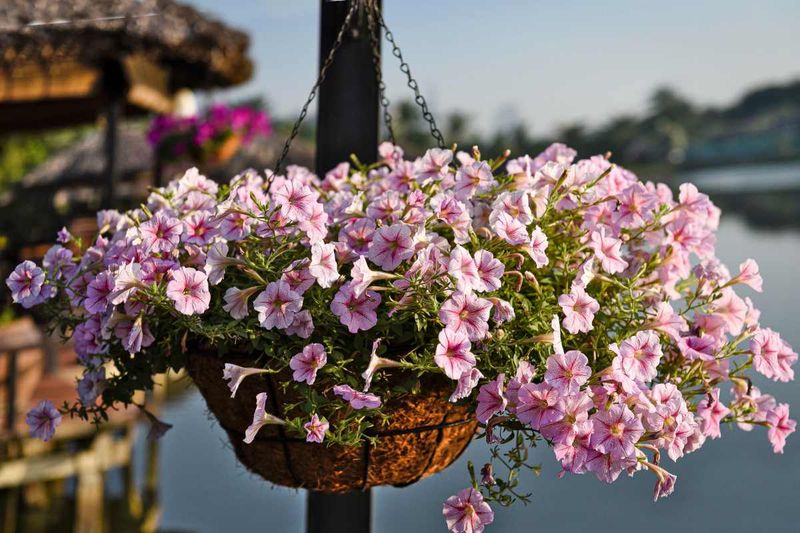
Watching your hanging petunias go limp by early afternoon can feel alarming, especially when they looked perfectly fine that morning. The good news is that afternoon droop does not always mean your plants are in serious trouble.
Before you grab the hose or move the basket, a quick two-step check of the potting mix and the plant’s overnight recovery can tell you exactly what your petunias actually need.
Read the afternoon pattern before you act
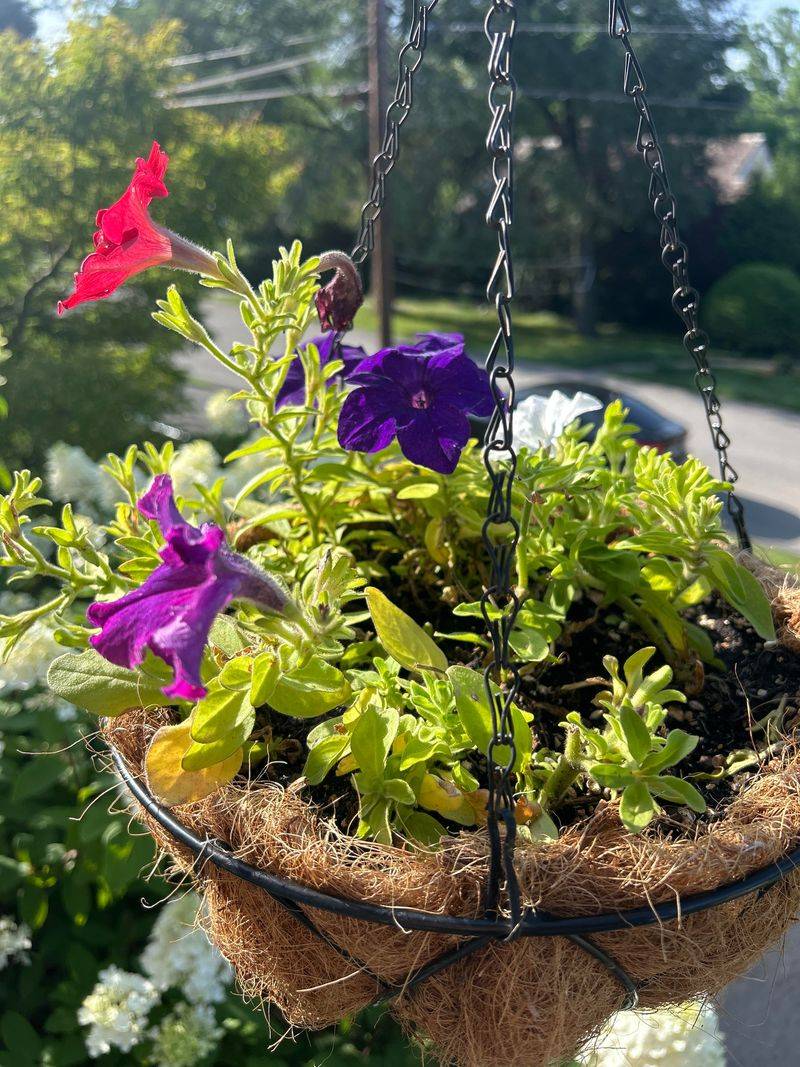
Petunias are tougher than they look, and an afternoon slump does not automatically signal a crisis. When a basket droops during the hottest hours of the day and then firms back up by evening or the following morning, the plant is most likely experiencing a temporary mismatch between how fast it loses water through its leaves and how quickly the root zone can resupply that water during peak heat.
Virginia Tech Extension identifies this daytime-only pattern, where the plant recovers overnight, as a sign that moisture may be present but roots cannot keep pace with rapid transpiration during the hottest part of the day.
The pattern itself is your first diagnostic clue. A basket that droops only from roughly noon to late afternoon and then perks back up on its own is behaving differently from one that stays wilted through the night, looks worse each morning, or shows yellowing leaves and soft stems.
Those second-type symptoms point toward a more serious problem that extra water alone will not fix.
Before you water, shade, or move anything, take 30 seconds to observe two things: how the potting mix feels about an inch below the surface, and whether the plant was firm again by the time you checked it this morning. University of Minnesota Extension notes that hanging baskets may need watering as often as daily depending on basket size and soil volume, but frequency alone is not the whole picture.
The mix-and-recovery check is the decision rule this article builds on, and it applies every time your petunias droop in the afternoon heat.
Five stresses can make a basket droop
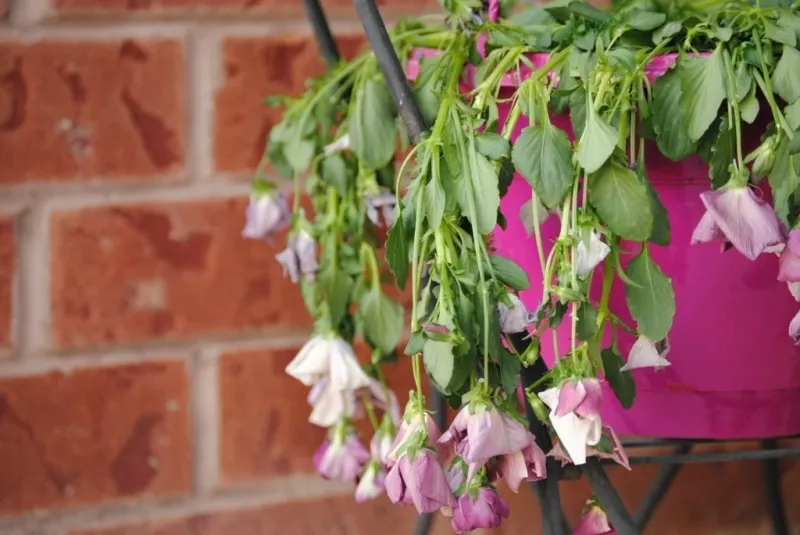
Afternoon wilt in a hanging basket rarely has just one explanation, and the symptom alone cannot tell you which cause you are dealing with. Knowing the five most common stresses helps you narrow the list before you act.
The first and most straightforward cause is rapid drying. Illinois Extension explains that container size, plant size, potting mix, sun, wind, container material, and temperature all affect how fast a basket dries out, so there is no single reliable watering schedule.
A basket with limited potting-mix volume and exposed sides loses moisture far faster than an in-ground planting, and a large, well-rooted plant in a small container can exhaust available moisture by midday even after a morning watering.
The second stress is heat and high transpiration. Even when moisture is present, the rate at which leaves release water vapor on a hot, breezy afternoon can temporarily outpace the rate at which roots deliver water upward.
The plant droops as a protective response, not because the mix is bone dry.
Third, the container itself can become a heat source. Illinois Extension’s container guidance points out that dark containers exposed to full summer sun absorb significant heat, which can raise root-zone temperatures enough to stress roots and accelerate moisture loss.
Colorado State University Extension echoes this, noting that exposed container walls magnify the challenge of keeping roots healthy in hot weather.
Fourth, waterlogged or damaged roots can cause wilt even when the potting mix feels wet. Roots deprived of oxygen by poor drainage lose their ability to move water into the plant, producing the same drooping appearance as drought.
Fifth, plant-health problems such as root disease, pest feeding, or fertilizer salt buildup can restrict water uptake and cause wilting that has nothing to do with how often you water. UMN Extension confirms that petunias generally tolerate heat well, but hanging baskets remain more exposed and variable than in-ground plantings, making them vulnerable to all five of these stresses at once.
Check the potting mix before reaching for water
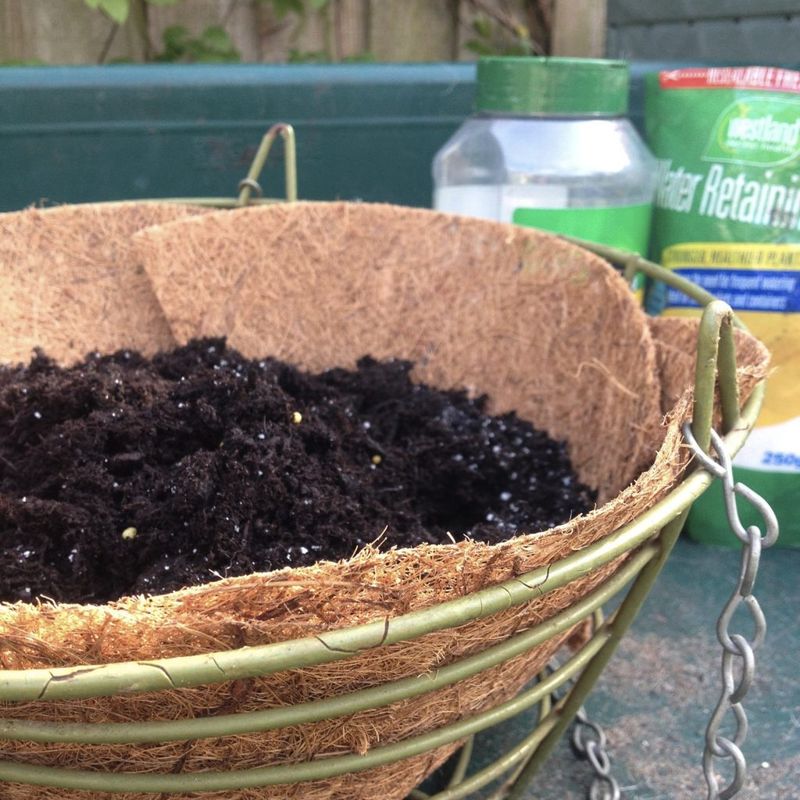
The fastest midday diagnostic costs you nothing and takes under a minute. Push your finger into the potting mix about one inch below the surface and hold it there for a moment.
What you feel guides every decision that follows.
A mix that feels dry or barely damp at that depth is a clear signal that the root zone needs water now. Illinois Extension presents this finger-test as the practical standard for home gardeners, and University of Wisconsin Extension’s petunia guidance reinforces checking soil moisture before watering rather than following a fixed calendar.
The test is not infallible, because potting mix can stay cool and damp near the surface while drying out deeper down, but it gives you a reliable starting point that a quick glance at the leaves never can.
A mix that feels damp or wet at one inch tells a different story. Wilt in a moist basket is not a call for more water; it is a prompt to look elsewhere.
Virginia Tech Extension notes that both drought and overwatering-related root dysfunction can trigger stress signals and wilting, meaning a soggy basket can droop for the same outward reason as a parched one. Adding water to a moist basket risks compounding the problem by further reducing oxygen around the roots.
While your finger is in the mix, check the drainage holes at the bottom of the basket. If water pools at the surface when you pour a small amount in, or if the basket feels unusually heavy and the holes appear blocked, drainage is likely part of the problem.
A basket that drains normally, has a damp mix, and droops only during peak heat is a candidate for the cooling strategies covered in the next two sections. A basket with a dry mix is a candidate for the thorough watering described right after this one.
Re-wet a genuinely dry basket slowly and thoroughly
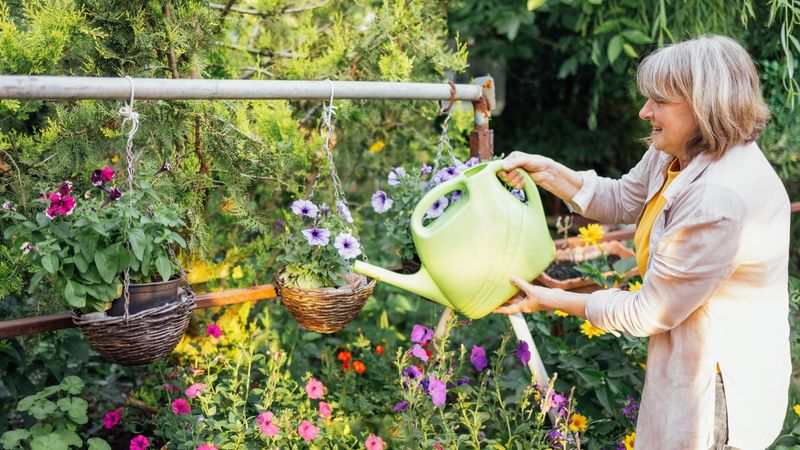
A dry basket needs water at the root zone, not a light sprinkle over the flowers. Hold the watering can or hose nozzle low and direct the flow to the surface of the potting mix rather than over the foliage.
Keeping the leaves dry as you water is a small habit that can reduce the risk of foliar disease over the season.
Illinois Extension recommends applying water deeply enough to moisten the whole root zone rather than just the top layer. Pour slowly and steadily so the mix can absorb moisture rather than letting it rush straight out the drainage holes before the roots benefit.
When the mix has dried out significantly, the first application may not penetrate evenly; it can channel down the sides of the container and escape without fully re-wetting the center.
If you notice water running quickly around the edges of the basket or the potting mix pulling away from the container sides, that is a sign the mix has become hydrophobic. Illinois Extension’s hanging-basket watering guidance specifically advises a second, slower application in this situation to give the mix time to absorb and re-wet fully through the root zone.
Some gardeners worry about watering in the afternoon heat, but Illinois Extension’s hot-weather watering guidance makes the priority clear: a genuinely wilted, dry basket should be watered when you discover it rather than left dry until the following morning. Waiting only extends the stress.
Morning watering has real advantages because it supplies moisture before peak heat arrives and allows foliage to dry, but those advantages do not outweigh the cost of leaving a dry basket untreated for hours.
One more note on thoroughness: the goal is to moisten the root zone fully, not to keep the mix saturated. You do not need to water until water streams heavily from the basket on every watering.
What matters is that the entire potting mix, from the surface down to the drainage holes, receives enough moisture to support the roots through the next heat cycle.
Cool a moist basket only when it recovers overnight
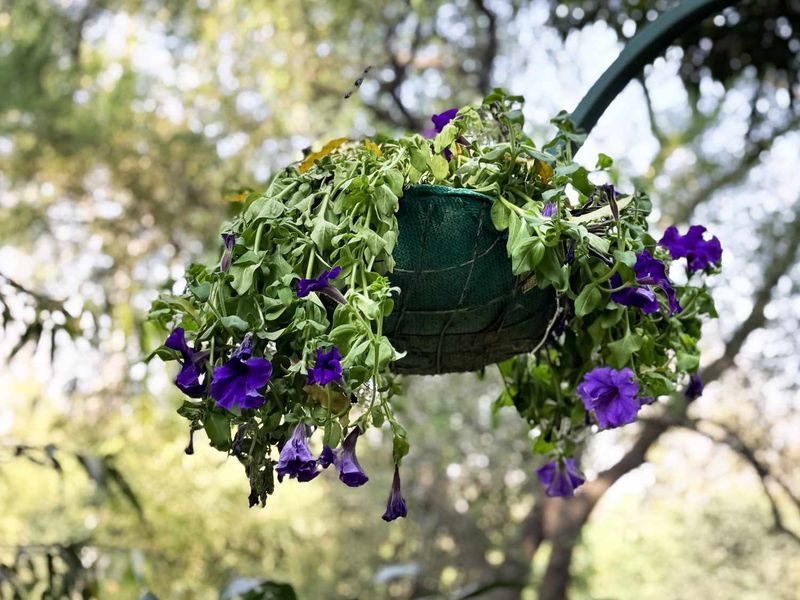
A moist basket that droops during the hottest part of the day and then firms up on its own by evening or morning is telling you something specific: moisture is present, but the plant’s leaves are releasing water faster than the root zone can resupply it during peak transpiration. Virginia Tech Extension identifies this daytime-only wilt-and-recovery pattern as a sign of heat and transpiration stress rather than a water-supply failure at the root level.
For baskets that consistently show this pattern during heat waves, temporary afternoon protection is a reasonable response. UMN Extension’s heat-stress gardening guidance recommends moving containers to morning sun and afternoon shade during periods of extreme heat.
A few hours of shade from roughly 1 p.m. to 4 p.m. can reduce the peak transpiration load without depriving the plant of the strong light it needs for flowering. Petunias thrive in full sun and produce their best blooms with substantial light exposure, so a permanent move to deep shade is not the answer.
Protecting the container itself from direct sun also helps. Illinois Extension notes that dark containers exposed to full summer sun can absorb enough heat to raise root-zone temperatures significantly.
Draping a light cloth over the container, choosing a lighter-colored basket, or hanging the basket where a wall or overhang provides afternoon shelter can moderate root-zone heat without shading the plant itself.
The critical distinction here is between a moist basket that recovers overnight and one that does not. A moist basket that stays wilted through the night, shows no improvement by morning, or gets progressively worse is not a candidate for more shade or more water.
That pattern calls for inspection of drainage, the condition of the roots, possible disease, pest activity, or fertilizer salt buildup. Adding shade or water to a basket with an underlying structural problem delays the diagnosis and can make things worse.
The next section covers those warning signs and how to match each one to the right response.
Match persistent symptoms to the right warning sign
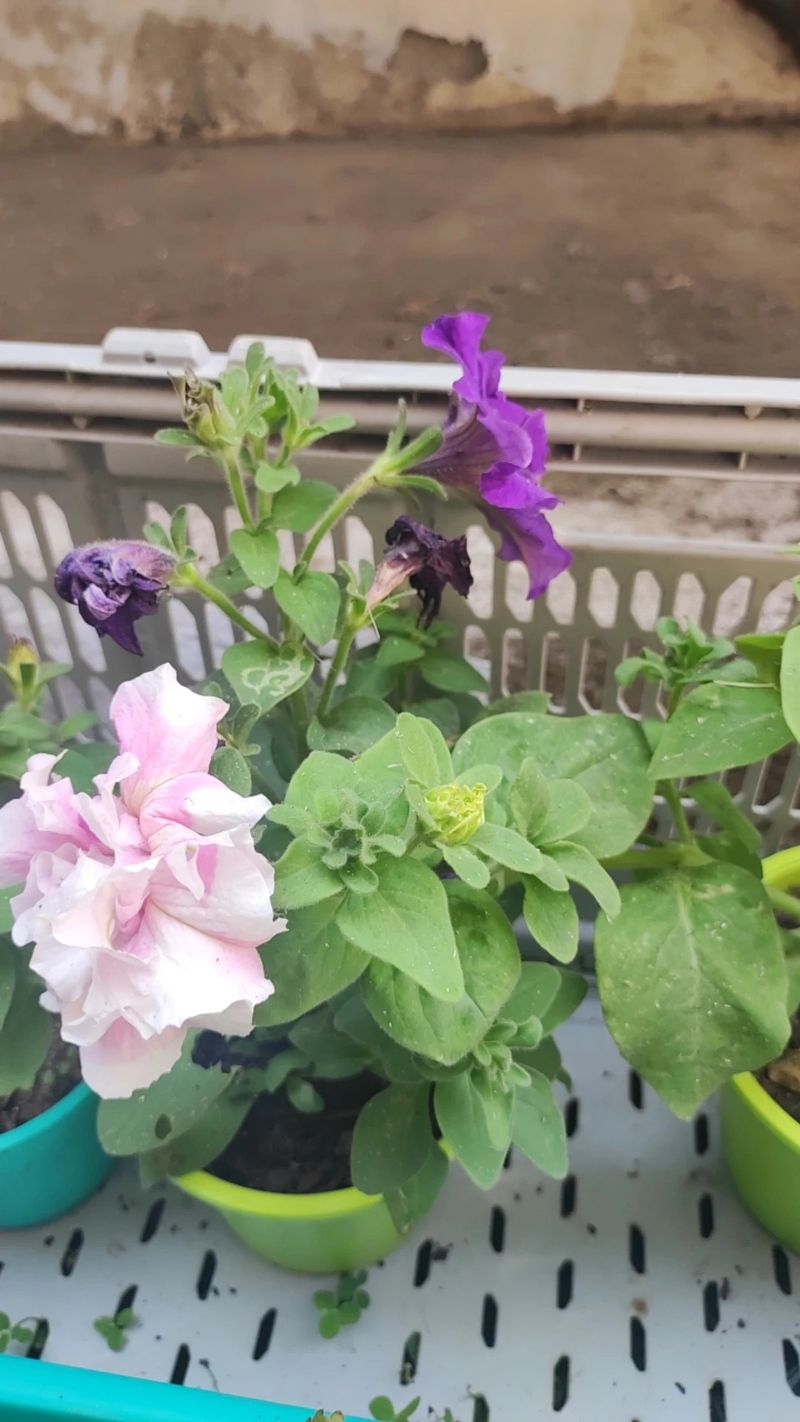
Afternoon wilt that clears up overnight is one thing. A basket that remains wilted in the morning, declines steadily over several days, or shows physical changes beyond drooping is a different problem entirely, and it requires closer inspection rather than more water or more shade.
Start with drainage and the roots themselves. Lift the basket and check whether the drainage holes are open and functioning.
A basket that feels extremely heavy, has holes that are blocked or slow, or holds water at the surface is likely waterlogged. If you can inspect the roots, healthy roots are firm and pale or tan.
Roots that appear black, brown, soft, or mushy suggest root rot, which can develop when potting mix stays saturated for extended periods. Ask Extension’s petunia problem database and University of Maryland Extension’s bedding plant disease resources document Phytophthora and black root rot as problems associated with petunias in conditions where media stays wet or becomes contaminated.
One plant wilting while neighboring baskets stay healthy deserves particular attention, since root diseases can affect individual plants while others remain unaffected.
If drainage looks fine and the roots appear healthy, consider fertilizer history. Salt buildup from overapplication can restrict water uptake and produce drought-like wilting even when moisture is present.
Look for white crusty deposits on the container surface or soil, and check the leaf margins for browning or burning. Colorado State University Extension’s saline-soil guidance explains how excess fertilizer salts interfere with plant water uptake, and Penn State Extension notes that overfertilization is a documented stressor for bedding plants.
Wilt alone cannot confirm salt injury; the combination of wilting, leaf-edge burn, and a history of frequent or heavy fertilizer applications is what points in that direction.
For pest-related wilt, look beyond the drooping leaves at the leaf surfaces themselves. UMN Extension’s petunia diagnostic tool associates spider mites with stippling (tiny pale dots), bronzing, leaf drop, and fine webbing, especially in hot and dry conditions.
These clues are distinct from plain afternoon thirst. Illinois Extension reinforces that wilt alone is not a diagnosis; the symptom must be matched to its supporting clues before any response makes sense.
Persistent morning wilt, discolored roots, soft stems, a continuously wet container, or visible pest damage each point toward a specific problem that adding water will not solve.
Use the same check before the next hot afternoon
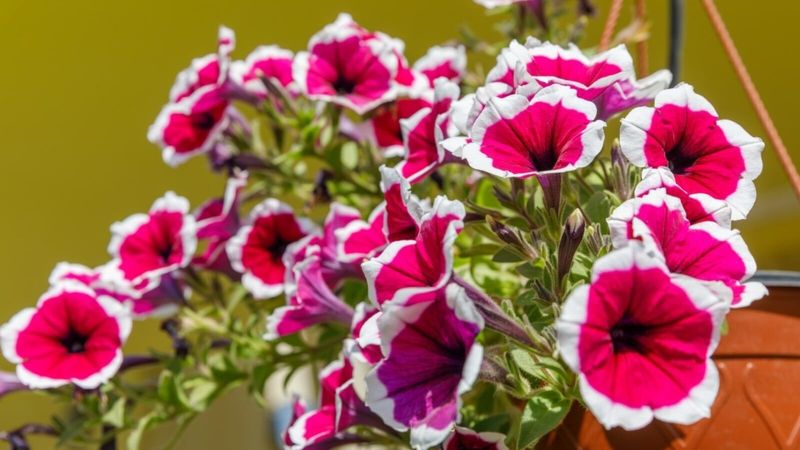
Every afternoon droop starts the same way: dry mix or moist mix, recovered overnight or still wilted. Running through that two-part check each morning takes less than a minute and gives you everything you need to make the right call before the heat peaks again.
Dry mix means slow, thorough root-zone watering applied now, even if it is midday. Illinois Extension consistently frames hands-on soil checks as the reliable guide for container watering frequency, because no fixed schedule accounts for all the variables that change day to day.
Moist mix plus overnight recovery means temporary afternoon cooling or shade, protecting the container from direct sun, or considering a larger basket that holds more potting mix and buffers temperature swings better. Virginia Tech Extension frames this pattern as a transpiration-demand issue, not a watering failure, which means the fix is reducing peak demand rather than increasing water input.
Moist mix plus persistent wilt means checking drainage, examining roots, reviewing fertilizer use, and looking at leaf surfaces for pest clues before doing anything else. UMN Extension notes that petunias perform best in well-drained soil with consistent attention, and that the basket’s exposed, limited root zone makes regular observation more important than any single watering event.
One practical note on water volume: thorough root-zone wetting when the mix is dry is the right goal, but RHS container-watering research found that petunias do not need to be watered to heavy runoff every time for good performance. The aim is a fully moist root zone, not a saturated one.
A petunia that droops in the afternoon and recovers by morning is not dying; it is responding to a predictable summer stress that a quick daily check can usually manage without drama.