
How To Pinch, Cut Back, And Deadhead Petunias For Fuller Plants And More Flowers
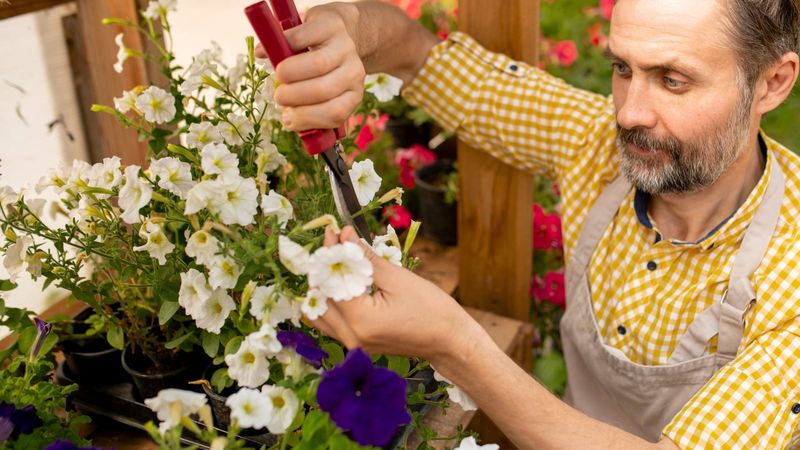
Your petunias looked great in May, but now they are long, stringy, and barely blooming. Many gardeners keep doing the same thing and wonder why the flowers never come back the way they did.
The fix is simpler than you think, but it depends on which type of petunia you have and what the plant actually looks like right now. Knowing whether to pinch, cut back, or deadhead makes all the difference between a plant that fills out and one that keeps struggling.
The right cut depends on the petunia in front of you
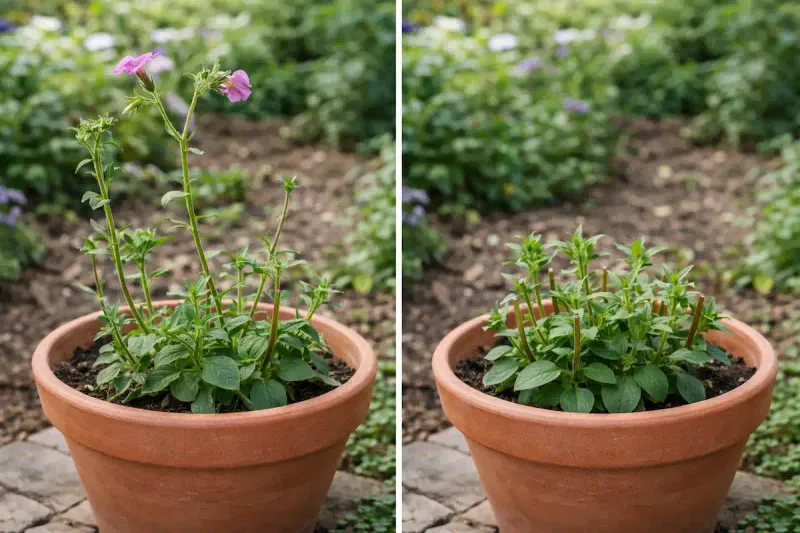
Long bare stems near the base, a handful of flowers crowded at the tips, and a plant that looks more like a vine than a mound – these are the signs that something needs to change. Before you reach for the scissors, though, the most useful thing you can do is look at the plant in front of you and figure out what it actually needs, because the right cut for one petunia can be the wrong cut for another.
Three separate operations are covered in this guide: pinching, rejuvenation cutback pruning, and deadheading. Pinching removes the actively growing shoot tip on a young plant to encourage side branches.
Cutback pruning resets a mature plant that has stretched out and stopped flowering near the base. Deadheading removes spent flowers and the seed-producing structure beneath them to keep the plant tidy and redirect its energy.
These are not three versions of the same thing, and mixing them up is one of the most common reasons petunias stay sparse.
University of Minnesota Extension guidance on growing petunias draws a clear line between cultivar types, noting that upright grandiflora and multiflora petunias respond well to early pinching while milliflora and spreading types do not need it. The cultivar on your porch or in your garden bed matters as much as the technique.
The honest payoff from getting this right is a fuller plant and, when growing conditions are good, more flowers over the season. A peer-reviewed petunia pinching study found that repeated pinching increased flower number, plant spread, and branching, while unpinched plants actually produced larger individual flowers and longer flower stalks.
Pinching builds fullness and flower count, not bigger blooms – and no pruning technique can guarantee uninterrupted flowering when heat, drought, or disease step in.
Pinch young upright petunias to encourage branching
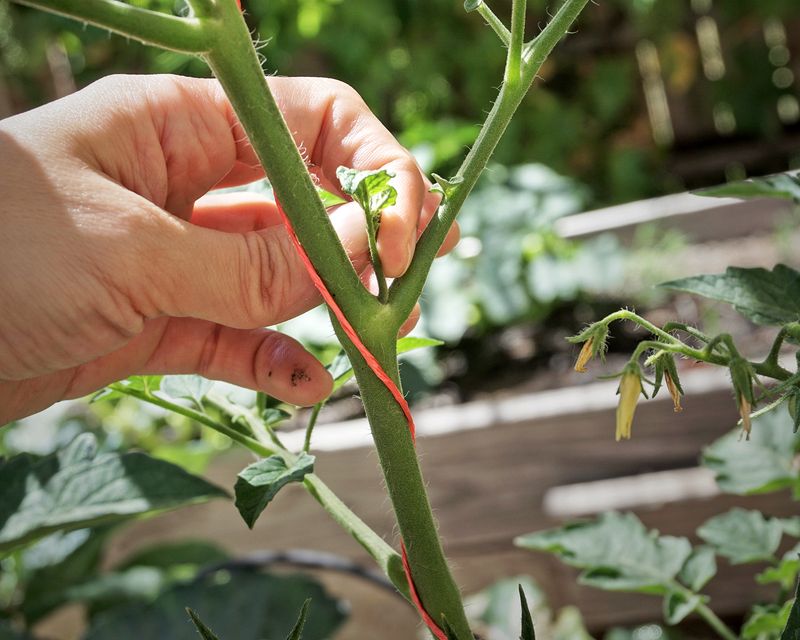
Pinching is a precise action with a specific target: the soft, actively growing shoot tip at the very end of a stem. Removing it signals the plant to activate buds lower on the stem, and those buds grow into side shoots.
The result is more stems, more branching points, and a plant that fills out instead of reaching straight up. Illinois Extension describes pinching as removing the growing tip to encourage more branching and a compact shape, which is exactly the goal for a young upright petunia at the start of the season.
For grandiflora and multiflora petunias, the right time to pinch is when the plant reaches roughly 6 inches tall. At that point, remove about the top inch of the stem.
Try to make the cut just above a leaf node or a pair of leaves when possible, because active buds sit at those nodes and will develop into the side shoots you want. You do not need special tools for this – clean fingernails or small, clean scissors both work fine on soft young growth.
Minnesota Extension and UF/IFAS Gardening Solutions both point to this early intervention as the standard recommendation for upright types. The plant may look a little spare for a week or two after the pinch, but the side shoots that develop will carry more flower buds than the single original stem would have.
What pinching reliably delivers is a wider, fuller plant with more flowering stems. Research on the topic found that pinched petunias produced more flowers and spread wider than unpinched ones, while the unpinched plants had somewhat larger individual blooms.
So if your goal is a plant that covers more ground and puts out more flowers, an early pinch on a young upright petunia is well supported. Pinching at the 6-inch stage is an early intervention, and the evidence for a flowering delay comes mainly from late or repeated pinching in greenhouse production settings, not from a single early pinch in a home garden.
Leave spreading and milliflora types mostly unpinched
Checking the plant label before you pinch anything is not optional – it is the step that keeps you from accidentally working against the plant’s natural habit. Upright grandiflora and multiflora petunias are the clearest candidates for early pinching because they tend to grow tall and straight without encouragement to branch.
Spreading and trailing types are built differently, and treating them the same way can create problems rather than solve them.
University of Minnesota Extension specifically advises gardeners not to pinch milliflora or spreading petunias. These cultivars branch naturally, fill containers and hanging baskets on their own, and may look uneven or patchy after unnecessary tip removal.
Removing the growing tips of a plant that was already going to spread on its own can interrupt its natural branching pattern without giving you anything in return.
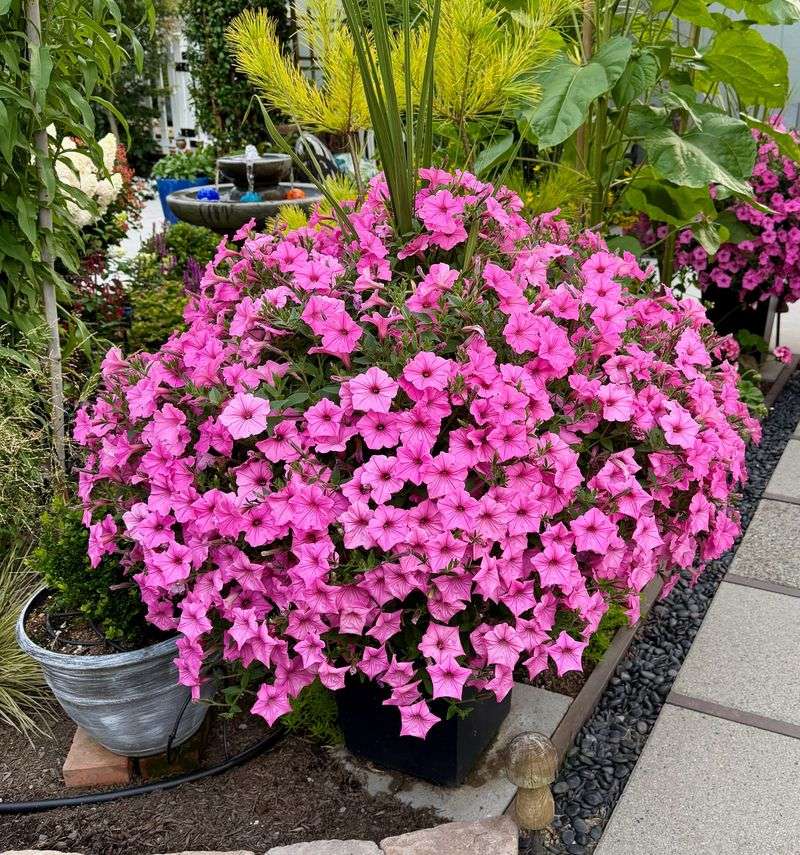
Wave petunias, Supertunia varieties, and other trailing or self-cleaning types belong in this category. University of Wisconsin Extension guidance on petunias notes that many modern spreading cultivars need little or no routine deadheading either, because they drop spent flowers on their own and continue blooming without intervention.
A practical way to identify your petunia’s habit before the label disappears: watch how the plant grows for the first few weeks. Upright types grow tall and tend to get leggy.
Trailing types cascade and fill outward. Mounding types stay compact and rounded without much help.
If the plant is already mounding or trailing on its own, leave the growing tips alone. Save your pinching for the upright growers that genuinely need the push to branch, and you will avoid one of the most common and well-meaning pruning mistakes in the summer garden.
Reset a leggy midsummer plant with an even cutback
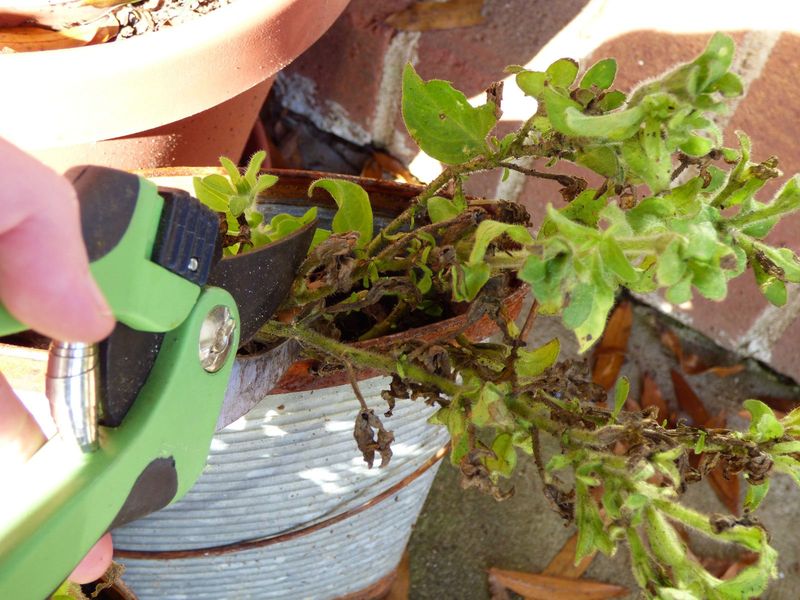
A plant that has been in the ground or in a container since spring looks very different by July than it did in May. Stems that were once compact and full of buds can stretch to a foot or more, with all the flowers pushed to the very tips and the lower half of the plant bare and woody-looking.
Pinching the tips of those long stems will not fix this problem – the plant has already passed the stage where tip removal produces useful branching near the base.
What a leggy midsummer petunia needs is a rejuvenation cutback, which is a different operation from pinching. Rather than removing just the growing tip, you reduce the length of the stems significantly.
Missouri Extension recommends cutting leggy, non-blooming petunias to a few inches from the base, and Clemson Cooperative Extension gives similar guidance for midsummer rejuvenation of annuals. The goal is to leave several inches of stem with healthy nodes intact so the plant has material to regrow from.
How severe the cut should be depends on the plant’s condition. A plant with some green growth lower on the stems can often be cut back by about half and recover quickly.
A plant that is almost entirely bare below the flowers may need a harder cut, down to a few inches above the base. In either case, Penn State Extension advises distributing cuts evenly across the plant rather than cutting heavily on one side and leaving the other long, so the new growth comes in with a balanced shape.
After the cutback, water the plant thoroughly and apply a balanced fertilizer to support the regrowth. The plant will lose its flowers temporarily – that is expected and not a sign that something went wrong.
Illinois Extension notes that new growth and a fresh flush of flowers follow once the plant recovers. The timeline varies with weather and plant health, but a few weeks is a reasonable expectation for a well-fed plant in good light.
Deadhead traditional petunias completely
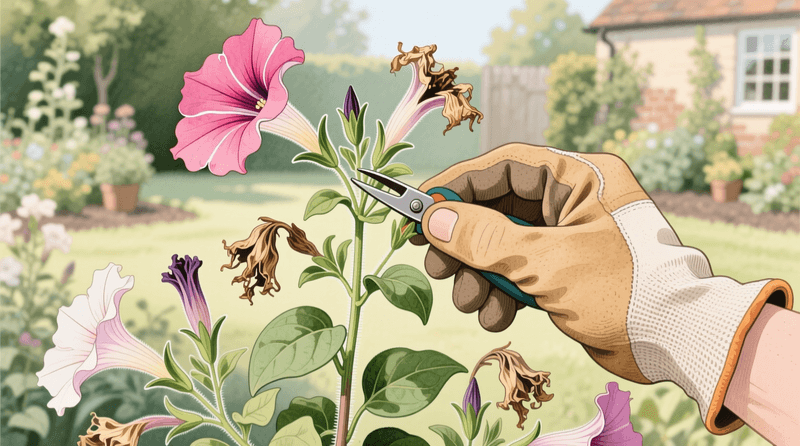
Deadheading is not the same as pinching, and it is not the same as pulling off brown petals. For traditional large-flowered and double petunias, a complete deadhead means removing the faded flower together with the swollen, green, seed-producing structure sitting just beneath it on the stem.
That structure is the ovary, and if it stays attached, the plant puts energy into forming seeds rather than pushing out new flower buds.
Mississippi State University Extension warns specifically that removing only the petals can leave the seed source attached, which means the plant continues directing resources toward seed development rather than blooming. Pinch or snip just behind the swollen base of the spent flower, removing both the bloom and the ovary together.
A weekly walk through the garden to check for spent flowers keeps this manageable before the ovaries have time to swell noticeably.
The practical goal is tidiness and sustained flowering through the season. As long as spent blooms and their ovaries are removed before seeds develop, the plant has less reason to slow its flower production.
This is most valuable for older, large-flowered grandiflora types and double-flowered cultivars, which do not drop their spent blooms cleanly on their own.
Many modern cultivars work differently. University of Wisconsin Extension notes that spreading, Wave, and many newer petunia types are self-cleaning and need little or no routine deadheading.
Oklahoma State University describes Supertunia Vista Bubblegum as self-deadheading but notes it can still respond well to a light midsummer trim if it becomes rangy. Self-cleaning does not mean the plant never benefits from attention – it just means weekly deadheading is not required for it to keep flowering.
Fix the growing conditions before blaming the pruning
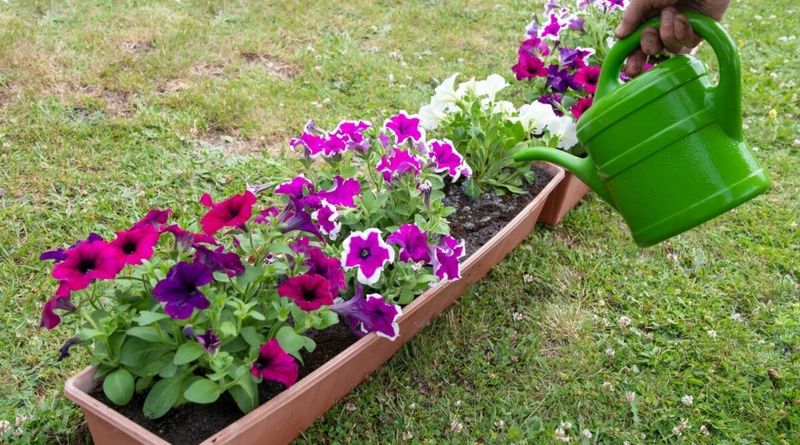
Sparse flowers and weak growth are not always a pruning problem. A petunia that is sitting in too much shade, growing in waterlogged soil, or running low on nutrients will stay sparse no matter how carefully you pinch or cut it back.
Pruning a stressed plant aggressively can make things worse, not better, so checking the growing conditions first is the most useful diagnostic step before reaching for the scissors.
Petunias generally need full sun – at least six hours of direct light per day. University of Minnesota Extension lists full sun as a basic requirement for good petunia performance, and a plant receiving less than that will produce fewer flowers regardless of pruning.
Well-drained soil is equally important. Roots sitting in waterlogged soil cannot take up the water and nutrients the plant needs, and root problems from poor drainage can look like drought stress from above.
UC Statewide IPM guidance on petunias identifies inadequate light, drought, waterlogged soil, depleted media, pests, and disease as causes of poor flowering that pruning alone will not correct.
Watering needs some care, especially for containers and hanging baskets. UF/IFAS Gardening Solutions cautions against shallow, frequent watering because it encourages roots to stay near the surface rather than growing deeper.
Containers dry faster than garden beds, particularly in hot or windy weather, but the right watering frequency still depends on your container size, drainage, weather, and how quickly the soil actually dries out. Water thoroughly when you do water, letting it reach the root zone, and check soil moisture before watering again rather than following a fixed daily schedule.
During humid or rainy stretches, water at soil level rather than overhead when possible. Wet foliage and petals during warm, humid weather can encourage petal blight and other moisture-related problems.
If the plant is showing signs of disease or pest damage – distorted leaves, sticky residue, discolored foliage – address those issues before pruning, since cutting back a plant that is already under stress from pests or disease adds another burden at a difficult time.
Match the intervention to the symptom
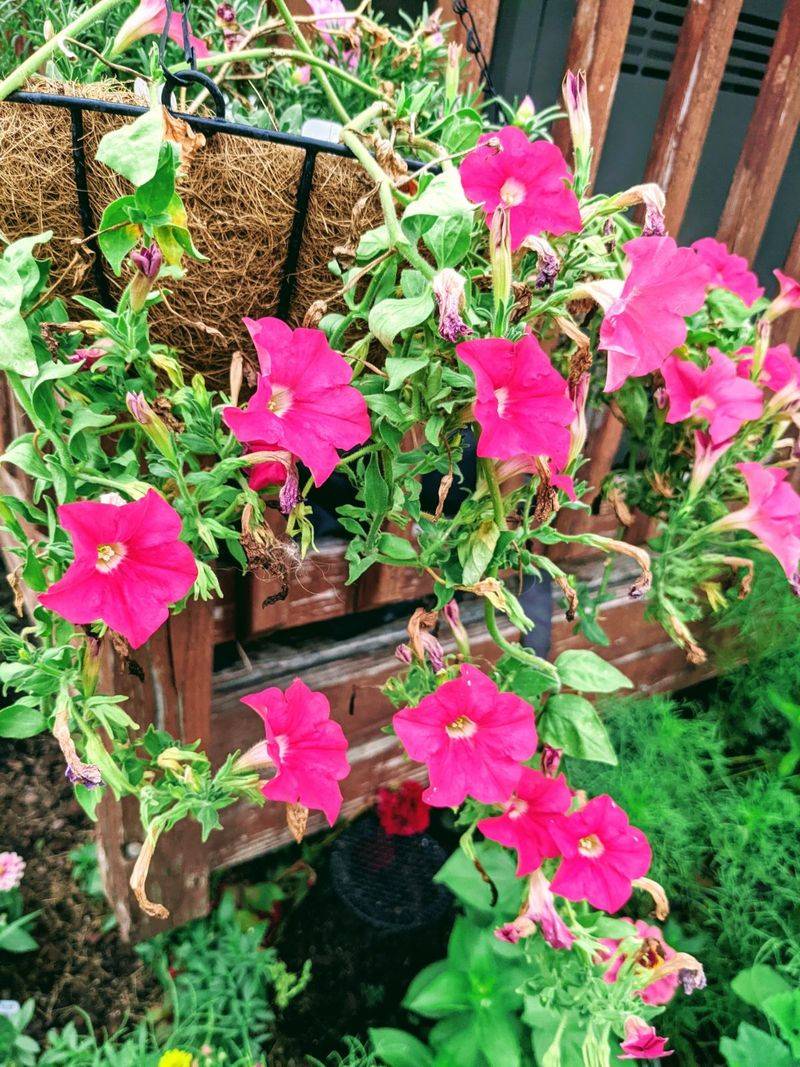
Before touching any petunia, identify the cultivar type. A young upright grandiflora or multiflora at around 6 inches tall is the right candidate for a tip pinch just above a leaf node.
Minnesota Extension is clear that milliflora and spreading types should be left unpinched, since they branch naturally and do not need the intervention.
For a mature plant with long, bare stems and flowers only at the tips, skip the tip pinch and go straight to an even cutback. Reduce the stems to several inches, keep healthy nodes on what remains, and distribute cuts evenly across the plant.
Missouri Extension supports cutting leggy petunias back hard when they stop blooming near the base. Water and feed after the cutback, and expect a temporary loss of flowers before new growth develops.
For traditional large-flowered or double petunias with spent blooms accumulating, Mississippi State Extension guidance makes the deadheading method clear: remove the faded flower and the swollen seed-producing structure beneath it, not just the petals. Many modern spreading cultivars need little of this routine work.
Matching the technique to the plant type and its actual condition is what produces results. Research on petunia pinching shows the payoff is a fuller plant with more flowers rather than larger individual blooms – and even that benefit depends on good light, consistent moisture, healthy soil, and reasonable weather.
A plant that gets the right cut at the right time, in the right conditions, tends to reward you with the bushy, flower-covered display you were hoping for when you planted it in spring.