
5 Reasons Your Hanging Petunias Wilt By Afternoon (And The Quick Midday Rescue)
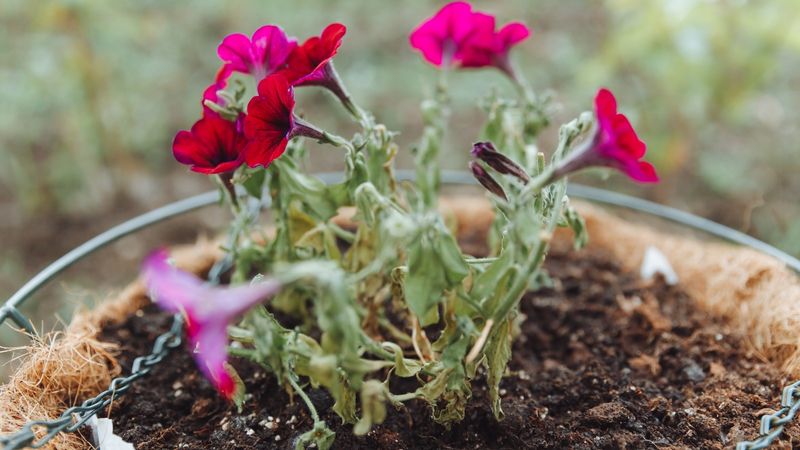
You water your hanging petunias in the morning, then walk outside after lunch and find them flopped over like they gave up on life. It is one of the most frustrating things a gardener can see, especially when those blooms looked perfect just hours ago.
The good news is that afternoon wilting usually points to one of five common problems, and most of them have a fast fix you can do right now. Let’s walk through what is really going on and how to bring your basket back to life by dinnertime.
1. Heat Stress and Rapid Water Loss
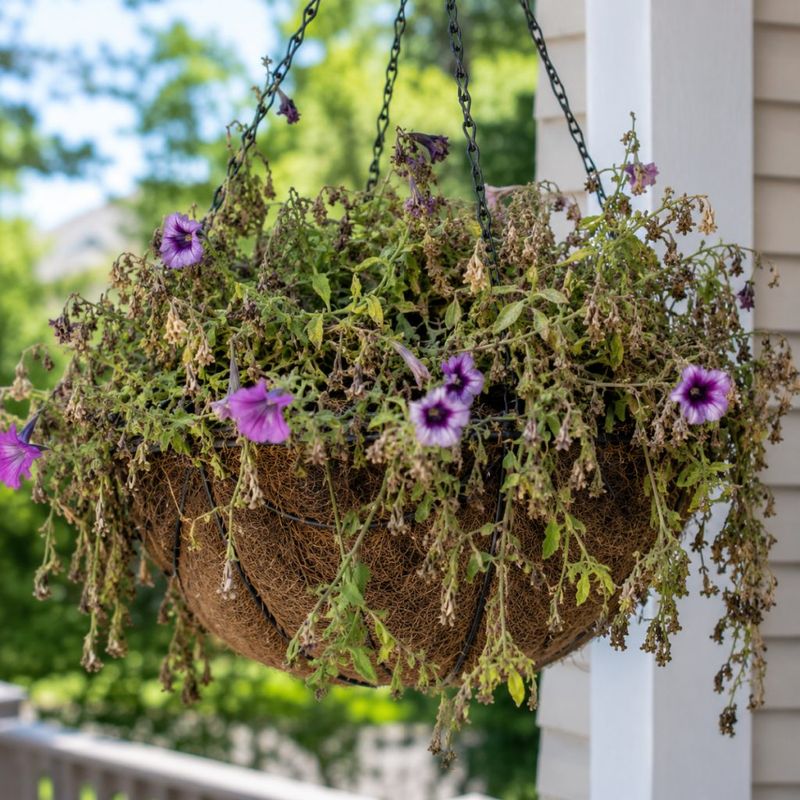
Picture your petunias as tiny straws pulling water up from their roots. When the thermometer climbs past 90 degrees and the sun beats straight down, the leaves lose water faster than the roots can push it back up.
The result is a droopy, sad-looking basket by early afternoon.
Here is the reassuring part. If your petunias bounce back and perk up on their own once the evening cools off or by the next morning, you are simply dealing with temporary heat stress.
The plant is not dying, it is just catching its breath.
Breezes and direct exposure make this worse, since moving air pulls moisture off the leaves even quicker. Baskets hanging in wide-open, sunbaked spots feel it the hardest.
Before you panic and drown them in water, watch how they behave once temperatures drop. A plant that recovers overnight rarely needs anything more than a little afternoon relief from the heat.
2. Underwatering From Fast-Drying Baskets
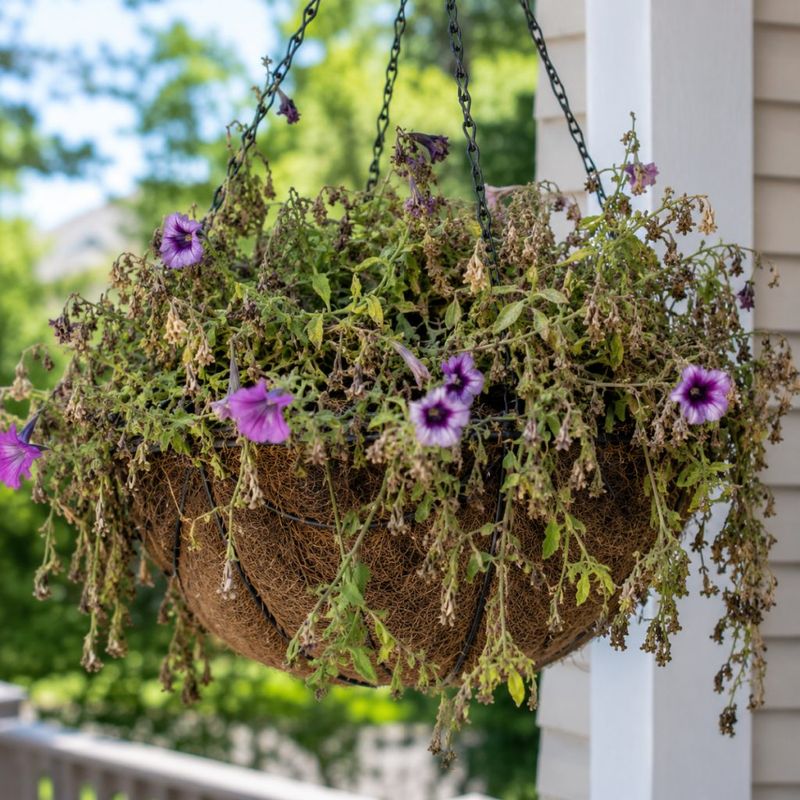
Hanging baskets are notorious water hogs, and there is a simple reason why. They hold a small amount of potting mix and sit fully exposed to sun and air on every side, so they dry out far quicker than a plant tucked into a garden bed.
Poke your finger an inch or two into the soil. If it feels dry and crumbly, your petunias are thirsty and that is almost certainly why they collapsed.
Chronic thirst does more than cause an afternoon flop. Over time it leaves you with bare, leggy stems and flower buds that shrivel up before they ever open.
Worse, potting mix that gets bone dry can turn hydrophobic, meaning it shrinks away from the pot walls and water pours straight through without soaking in. If you notice water running out the bottom the second you pour it, that dry-and-repel cycle is likely the culprit behind your wilting blooms.
3. Root Crowding in a Packed Basket
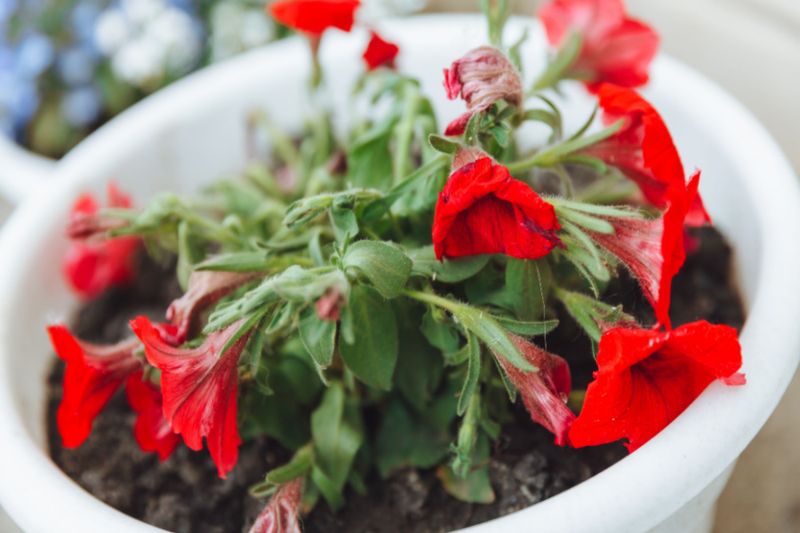
Growers love stuffing several petunia plants into one basket for that full, spilling-over look, but all those roots come at a cost. As the season rolls on, the roots multiply and fill every corner of the container, pushing out the very potting mix that stores water.
Less soil means less moisture reserve. A root-bound basket simply cannot hold enough water to carry the plant through a hot afternoon, so it wilts even when you swear you watered it well.
Small baskets crammed with vigorous, fast-growing petunias are the biggest offenders here. If you find yourself watering twice a day and the plant still sulks by noon, gently slide the root ball out and take a look.
A dense, tangled mass of roots with barely any dirt left is your answer. Moving the plant into a slightly larger basket with fresh mix gives those roots room to breathe and a bigger water tank to draw from.
4. Overwatering and Root Rot
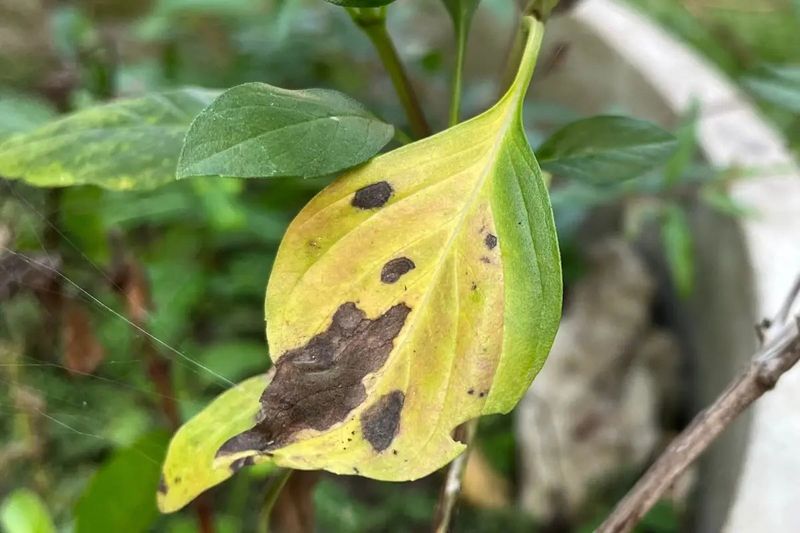
It sounds backward, but soaking your petunias too often can make them wilt just as badly as letting them go dry. When potting mix stays soggy for days, the roots get starved of oxygen and slowly begin to rot away.
Damaged roots cannot pull up water no matter how wet the soil is, so the plant droops even while sitting in a puddle. That is the confusing part that trips up so many gardeners.
Watch for the telltale signs that separate this from simple thirst. Yellowing leaves, mushy or blackened stems, and a sour, foul smell rising from the soil all point to root rot rather than a lack of water.
If you check the soil during an afternoon wilt and it feels wet and heavy, resist the urge to add more. The fix here runs the opposite direction: let it dry out and make sure that water has somewhere to escape.
5. Salt Buildup From Fertilizer
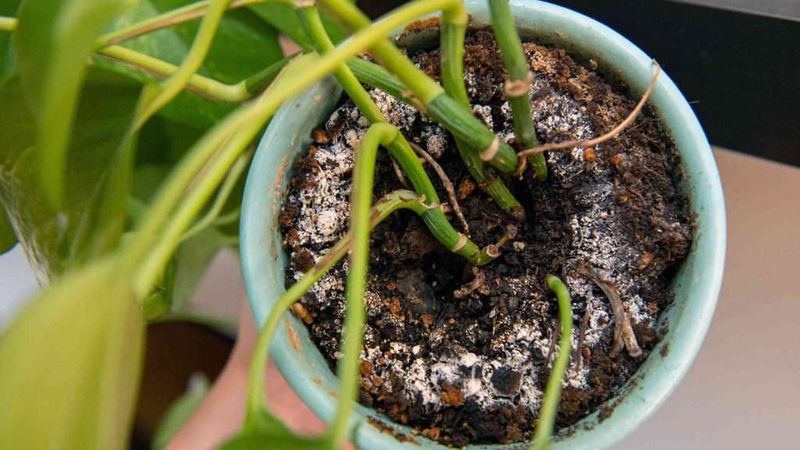
Feeding your petunias helps them bloom their hearts out, but too much of a good thing leaves an invisible problem behind. Every time you fertilize without flushing the basket, tiny salt deposits collect in the potting mix.
Let those salts pile up and you create what gardeners call a chemical drought. Even with moist soil, the plant cannot pull water into its roots because the salt concentration works against it, and the petunia wilts as if it were parched.
The mistake many folks make is reaching for more fertilizer when they see a stressed, drooping plant. That only adds fuel to the fire and pushes the salt levels even higher.
If you feed frequently and your petunias wilt despite reasonable watering, look for a white crust on the soil surface or around the drainage holes. The cure is a good flush: run plain water through the basket several times to rinse those salts out and give your plant a clean slate.