
5 Reasons Your Hanging Petunias Wilt By Afternoon (And The Quick Reset That Revives Them)
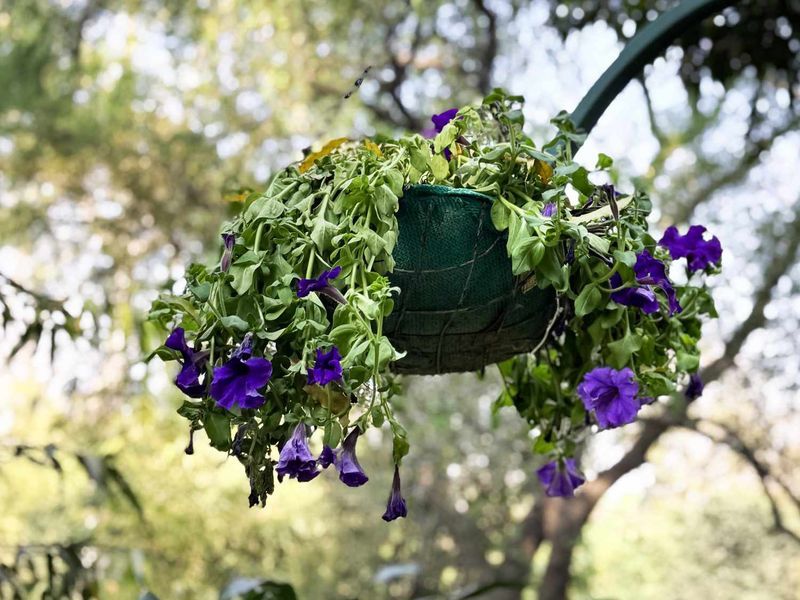
You walk past your hanging petunias in the morning and they look picture-perfect, then by 2 p.m. they’re flopped over like they’ve given up on life. It’s frustrating, and it makes you wonder if you’re accidentally killing them.
The good news is that afternoon wilting almost always comes down to a handful of fixable causes, and most of them have a quick reset you can do today. Let’s walk through the five reasons your baskets droop and how to bring them back to life.
1. Underwatering and Rapid Water Loss
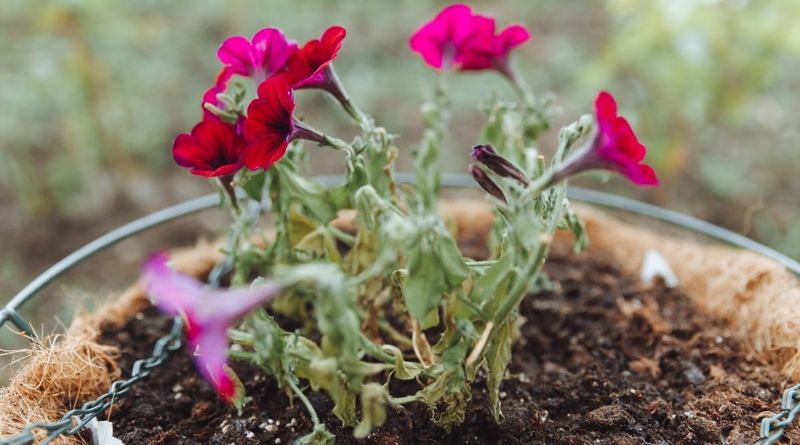
Picture a small pot of soil dangling in mid-air with sun hitting it from nearly every angle. That’s your hanging basket, and it’s the single biggest reason petunias faint by afternoon.
Baskets hold way less potting mix than a garden bed, so there’s simply not much water in reserve. On a hot day, the leaves lose moisture faster than the roots can pull it up from soil that’s already gone bone-dry.
By early afternoon the tank is empty and the plant collapses.
The quick reset here is refreshingly simple. Stick your finger about one to two inches into the mix, and if it feels dry, water deeply at the base until you see it draining out the bottom of the basket.
Soaking the whole root ball, rather than splashing the surface, encourages roots to grow down and hold more moisture for the next scorcher.
During peak summer, many baskets need a drink once in the morning and a second check in the early evening. It may feel like a lot, but this is the most common cause of afternoon droop and usually the easiest to erase.
2. Heat Stress
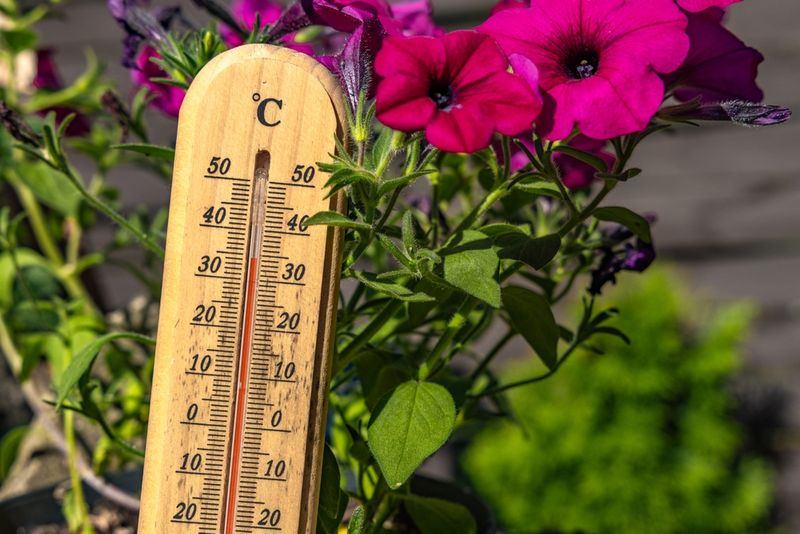
Here’s a twist that catches a lot of gardeners off guard: sometimes your petunias wilt even when the soil is perfectly moist. Blame the heat.
Petunias love sun and generally shrug off warm weather, but when the thermometer climbs past 85°F and a dry breeze kicks in, the leaves can release water faster than the roots can replace it. The plant droops as a survival move, closing up shop to slow the loss.
Notice something wonderful, though: as the evening cools, these same plants often perk back up on their own without you lifting a finger.
The reset for true heat stress isn’t more water, since that can backfire. Instead, give the basket a break from the harshest afternoon rays by moving it to a spot with dappled or partial shade between roughly noon and 4 p.m.
A shepherd’s hook near an east-facing wall or under a tree branch works great, letting your petunias catch morning light and skip the brutal midday blast.
3. Crowded, Root-Bound Plants
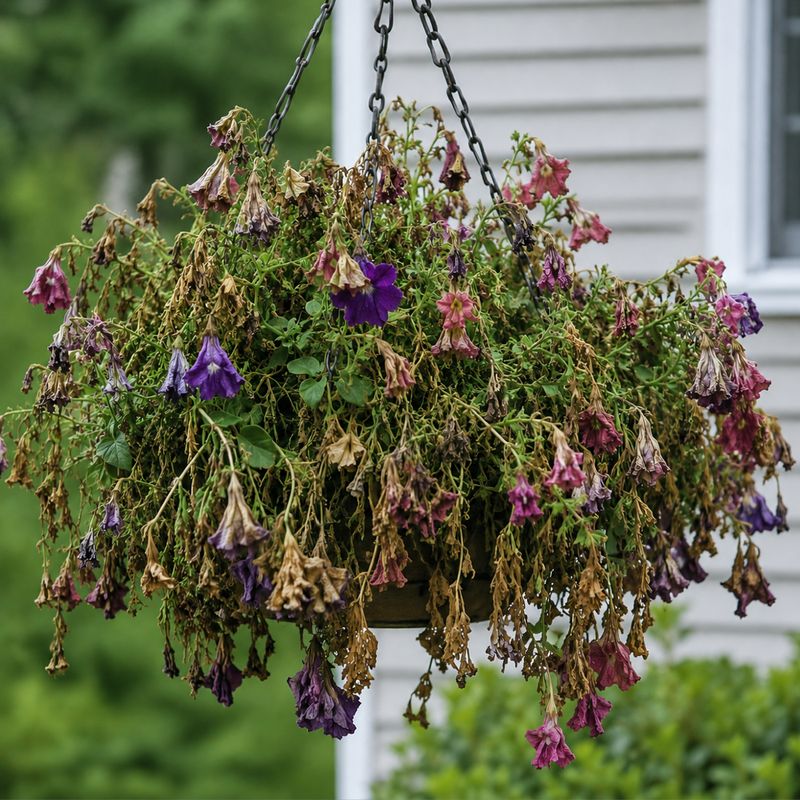
A basket that watered just fine in June can start wilting like clockwork by August, and the culprit is often hidden underground. Over the season, petunia roots grow and grow until they’ve packed the container solid.
Those crowded roots shove aside the very potting mix that used to hold your water reserve. Less soil means less moisture stored, so even a good watering runs out fast on a hot afternoon.
If you tip the basket and see a dense mat of roots circling the sides, you’ve found your answer.
To reset a root-bound basket, bump up your watering frequency to match the shrinking reservoir, and feed with a diluted liquid fertilizer since crowded roots run through nutrients quickly. For a longer-term fix, you can gently slide the plant out, tease apart the outer roots, and repot into a larger basket with fresh mix.
A quick trim of leggy stems also helps the plant balance its top growth with the roots it has left.
4. Overwatering and Poor Drainage
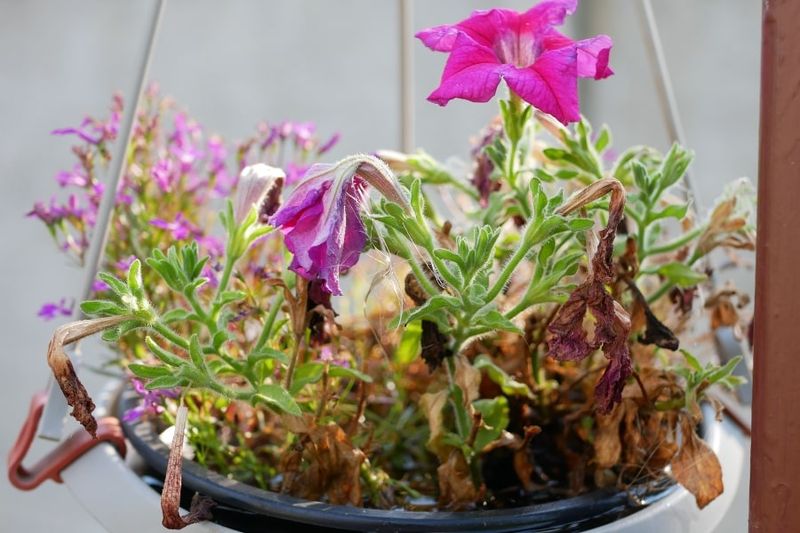
Believe it or not, drowning your petunias looks almost identical to underwatering them. Both leave you staring at a sad, droopy basket by afternoon.
When soil stays soggy, the roots can’t breathe and slowly begin to rot. Rotted roots can’t drink, so the plant wilts even while sitting in wet mix.
It’s a cruel trick, and it fools plenty of well-meaning gardeners who respond by watering even more.
Check the drainage before you reach for the hose. Your basket needs open holes at the bottom, and the soil should never feel swampy hours after you water.
If it does, let it dry out until the top inch feels dry to the touch before watering again.
A basket with a soggy bottom that won’t drain may need holes poked through the liner or a switch to a lighter, better-draining potting mix. Getting air back to those roots is what turns the droop around.
5. Shallow Watering Practices
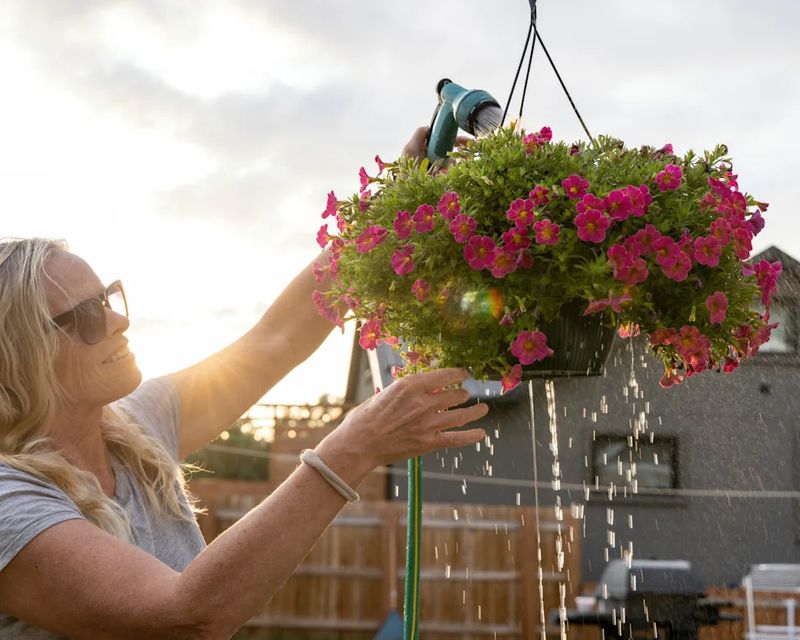
Little sips all day long feels caring, but it can quietly set your petunias up to fail. When you only wet the top layer of soil, the roots stay shallow because they never have a reason to reach deeper.
Shallow roots are lazy roots, and they can’t tap the moisture sitting lower in the basket. So the moment a hot afternoon rolls in, those surface roots dry out fast and the whole plant faints.
You end up watering more and more, yet the wilting keeps coming back.
Reset the habit by watering deeply and less often. Give the basket a slow, thorough soak until water pours from the bottom, then wait until the top inch or two dries before doing it again.
If your mix has dried out so hard that water runs straight through, lower the entire basket into a tub of water for about 30 minutes so the soil can rehydrate all the way through. And whenever possible, water first thing in the morning so the plant fuels up before the heat arrives and the leaves have time to dry, which helps prevent fungal trouble.