
5 Reasons Your Hanging Petunias Wilt By Afternoon-And What To Do Before Midday
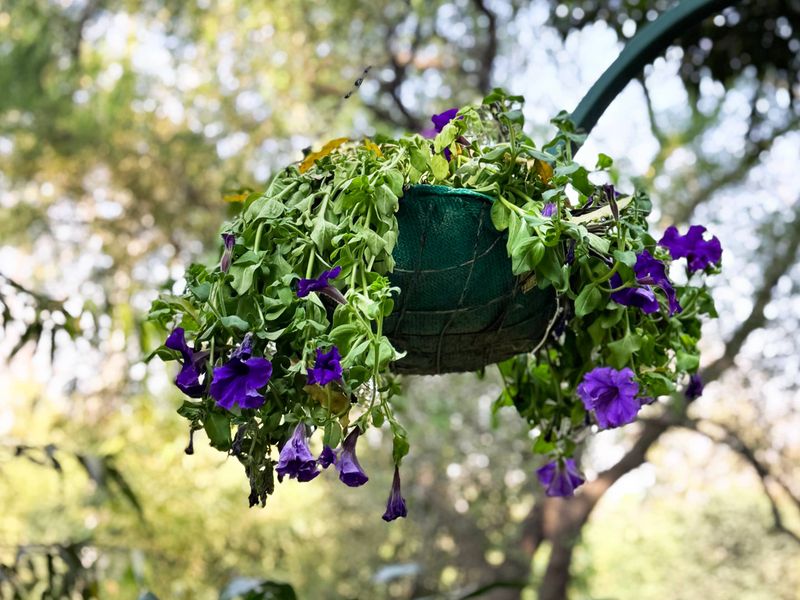
You water your hanging petunias in the morning, and by lunchtime they look sad and floppy, like they gave up on the whole day. It feels like a mystery, but the causes are usually simple once you know where to look. Baskets dry out faster than pots in the ground, so small mistakes get punished quickly. Here are five reasons your petunias droop by afternoon and the fixes you can knock out before midday.
1. The Basket Is Too Small For Thirsty Roots
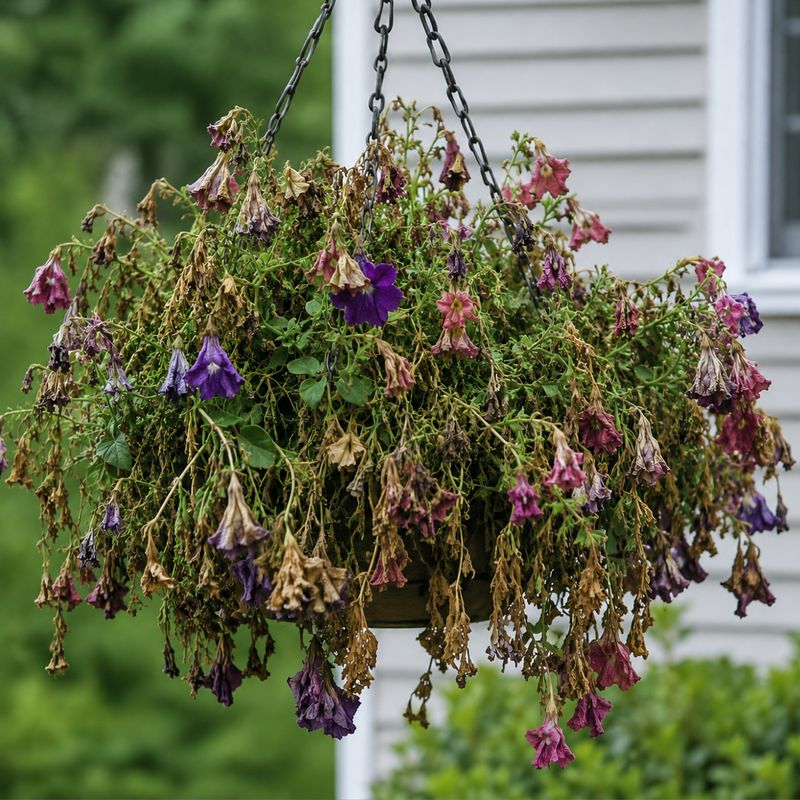
Ever notice how the prettiest baskets at the garden center are often the ones that suffer most at home? A petunia that has filled out beautifully is also packing a dense mat of roots into a container that might only hold a few cups of soil.
Once roots crowd out the potting mix, there is almost no room left to store water. You pour it in at 8 a.m., the plant slurps it up, and by 1 p.m. the reservoir is bone dry. That is why an 8-inch basket can wilt daily while a 14-inch basket sails through the same heat.
Before midday, gently slide the root ball out and check it. If you see a solid wall of white roots circling the outside, the plant has outgrown its home. Bump it up to a wider, deeper basket with fresh mix, or split one crowded basket into two. A bigger soil volume simply holds more moisture, which buys your petunias hours of breathing room during the hottest stretch of the day.
2. The Potting Mix Has Turned Water-Repellent
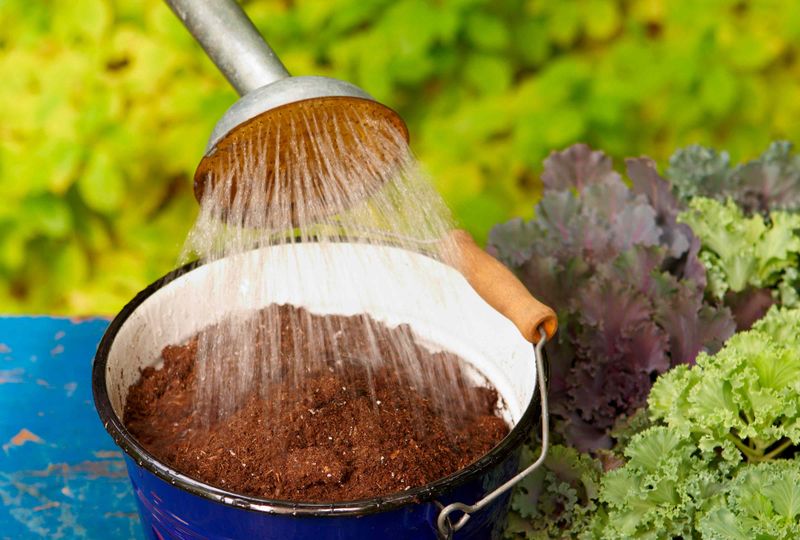
Here is a sneaky one that fools even careful gardeners. When peat-based potting mix dries out completely, it can become hydrophobic, meaning it actually pushes water away instead of soaking it up.
You will see the telltale sign: water races straight down the sides and out the bottom drainage holes in seconds, and the plant looks watered while the root ball stays dust-dry inside. The petunia keeps wilting no matter how many times you tip the watering can, and it is easy to blame the sun when the real culprit is the soil texture.
Test it before noon by poking a finger two inches deep. If the surface is wet but the center is powdery, your mix has gone water-repellent. The rescue is a slow soak: set the whole basket in a tub or bucket of water for fifteen to twenty minutes so the mix rehydrates from the bottom up. Adding a small squirt of dish soap to the water can help break the surface tension.
Going forward, a pinch of coconut coir or a wetting agent mixed in helps the soil grab and hold moisture instead of shedding it.
3. Afternoon Sun Is Cooking The Container
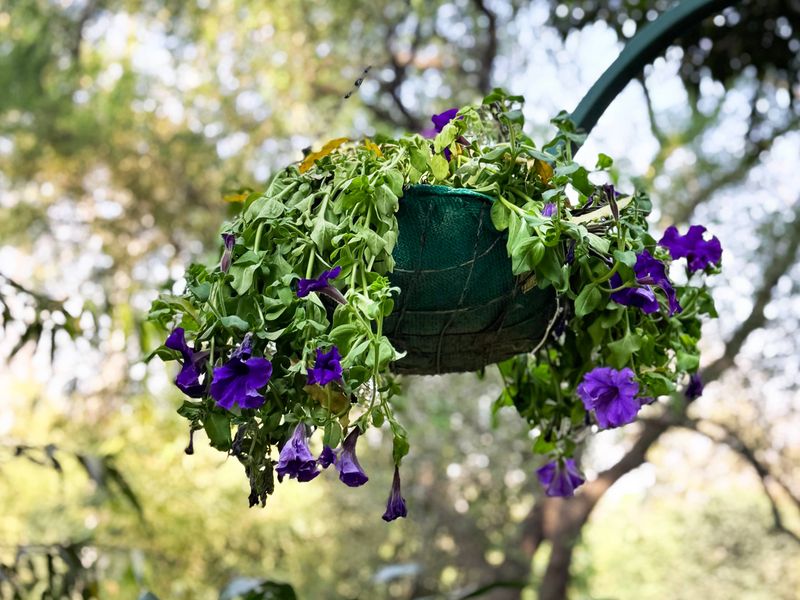
Petunias love sunshine, but there is a difference between the plant loving light and the basket loving heat. A dark plastic or metal container hanging in full afternoon sun can heat the soil like a little oven, and roots baking at high temperatures cannot pull water fast enough to keep the leaves firm.
Southern and western exposures across most of the US get the harshest rays from about 1 p.m. onward, exactly when your petunias start to sag. The leaves droop as a defense, folding to lose less moisture, but that constant stress fades the blooms and slows new buds.
Move quickly in the morning while the plant is still perky. Relocate the basket so it catches strong morning light but gets a little shade during the fiercest afternoon hours, such as under an eave or the east side of a porch. If moving it is not practical, slip the plastic pot inside a lighter-colored decorative cover, or double-pot it so the outer layer takes the heat. Cooler roots mean a plant that stays upright right through supper.
4. You Are Skipping The Snip That Saves Water
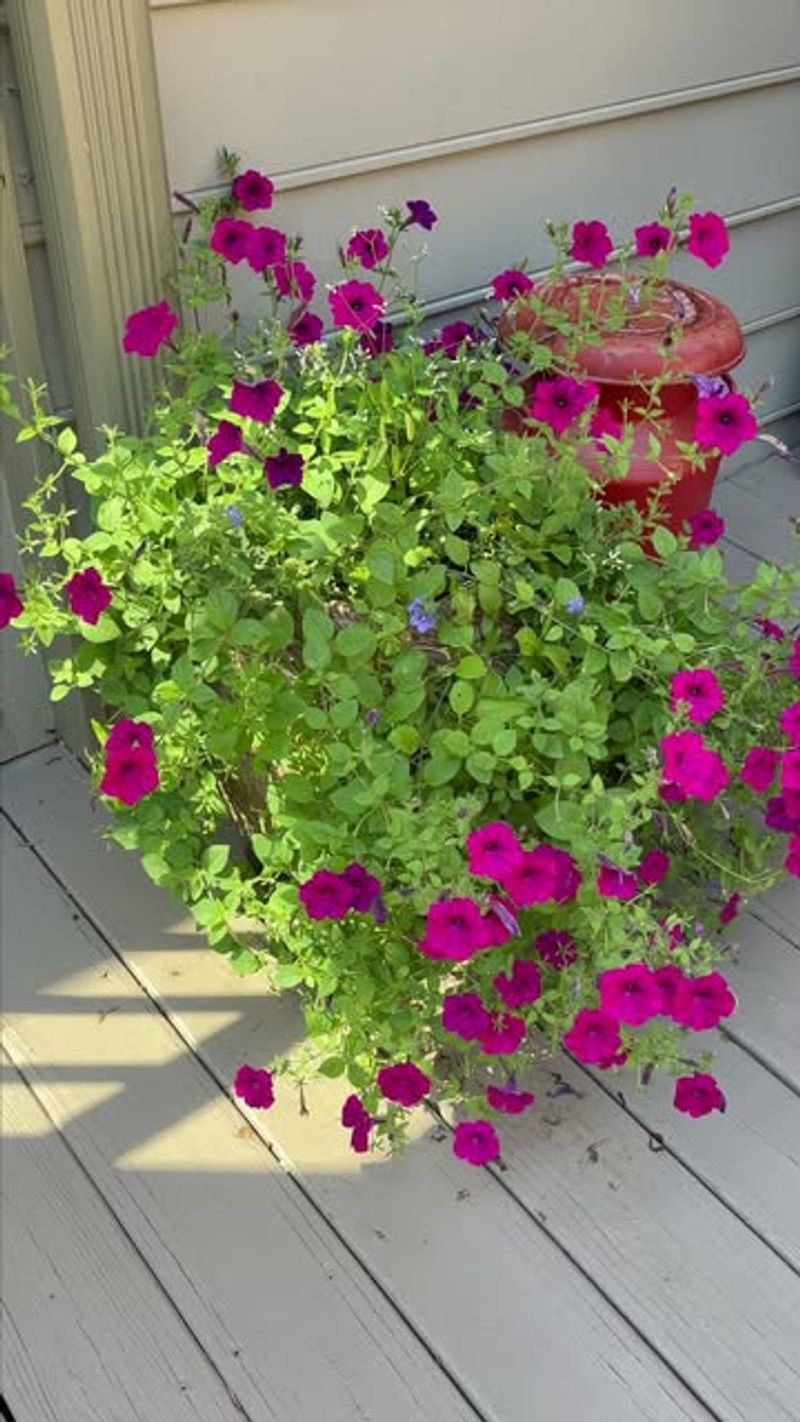
Leggy, overgrown petunias are secretly working against you. Every long, trailing stem and every spent flower is a mouth demanding water, and an unpruned basket asks its tiny soil supply to support way too much foliage at once.
By late June and July, many baskets look stringy on top with bare centers, and all that stretched-out growth transpires moisture faster than the roots can replace it on a hot day. The plant tips into wilt not because it is dying, but because it is spread too thin.
Grab clean scissors in the cool of the morning and give the whole basket a haircut, trimming stems back by about a third and pinching off dead blooms. It feels harsh, but petunias bounce back with bushier, more compact growth within a week or two. Less leaf area means less water loss, so the same morning watering carries the plant much deeper into the afternoon. A quick liquid feed after trimming helps it push out fresh flowers instead of sulking.
5. Salt And Fertilizer Buildup Is Burning The Roots
Frequent watering has an invisible side effect that catches up by midsummer. Every drink leaves behind a little fertilizer salt, and in a basket that never gets flushed, those salts pile up until they start injuring the fine feeder roots that actually absorb water.
Damaged roots cannot keep up with the leaves, so the plant wilts in the afternoon even when the soil feels moist, which is the confusing clue that separates this problem from simple dryness. Watch for a crusty white ring on the soil surface or along the pot rim, plus leaf edges that look scorched and brown despite regular watering.
The fix takes just a few minutes before noon. Flush the basket thoroughly, running clean water through the soil until it pours freely from the drainage holes, and repeat two or three times to rinse the built-up salts away. Then ease off the constant feeding and switch to a lighter, more diluted fertilizer schedule. Healthy roots pull water the way they should, and your petunias stop fainting every afternoon.
Did you know petunias are cousins of tomatoes and tobacco, all members of the nightshade family, which is part of why they are such hungry, fast-growing feeders.